
Review · KYOTO
Kyoto: Calligraphy class at Buddhist temple in city center
Slow down and make something you can keep. This 70-minute Kyoto calligraphy class brings you into a traditional Buddhist temple in the city center, where you learn basic brush strokes, choose a Japanese word, and create a finished piece on special square cardboard. I especially like the small group size, limited to six people, and the chance to work with a Japanese calligraphy teacher through a translator. The setting, with tatami flooring and traditional rooms, gives the class more feeling than a standard craft workshop.
I also like that the finished work is genuinely yours, complete with the uneven lines and small signs of learning that make it personal. The teacher creates a keychain with your chosen character as an extra gift, and guides have taken photos for participants during the class. The main drawback is practical: most of the class takes place seated on the floor with a zabuton cushion, which may strain your legs if you are not used to sitting this way.
The Details That Matter Most
- A rare temple setting: You meet outside Seigan-ji Temple in the covered Shinkyogoku shopping street, then enter a traditional Japanese room for the class.
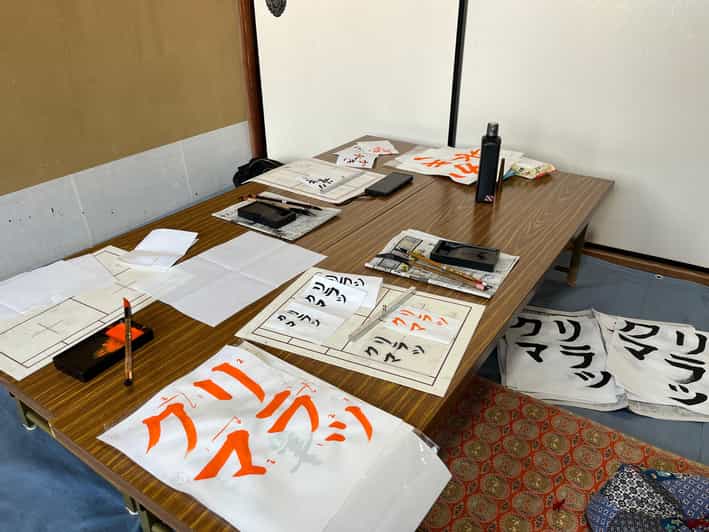
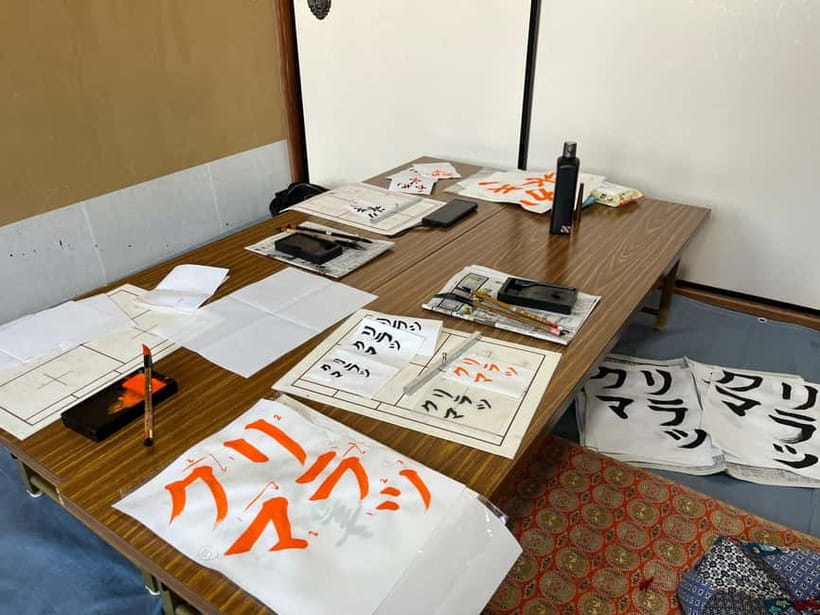
- A finished souvenir: You write your chosen word or kanji on a shikishi, a special square board designed for display.
- Small groups, personal help: The class accepts no more than six participants, allowing time for individual guidance.
- English and other languages: Instruction is available in English, Spanish, Japanese, and Dutch through the teacher and translators.
- A useful preparation tip: Think of several words or kanji before arriving, since choosing one can take more time than you expect.
- A floor-seating warning: Tatami and zabuton are part of the setting, but limited desks are available for those who need them.
Meeting at Seigan-ji Temple in Shinkyogoku
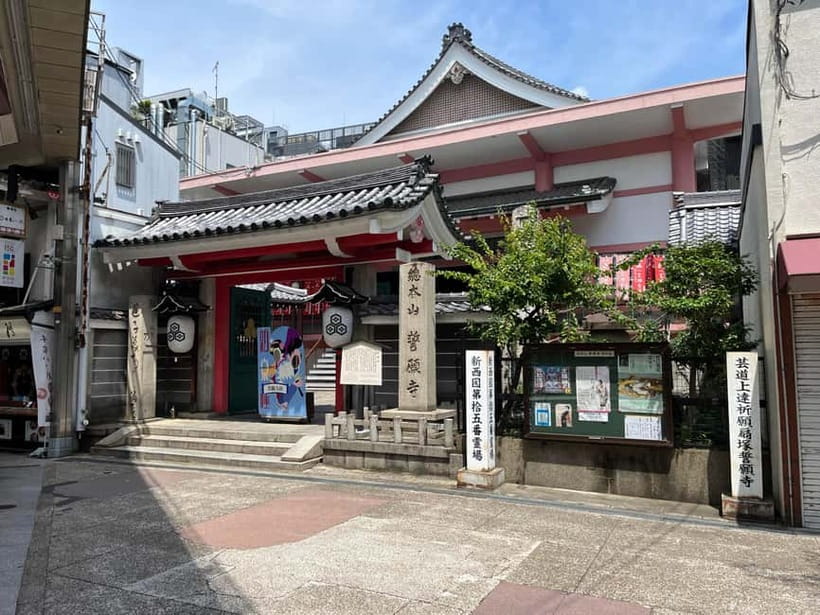
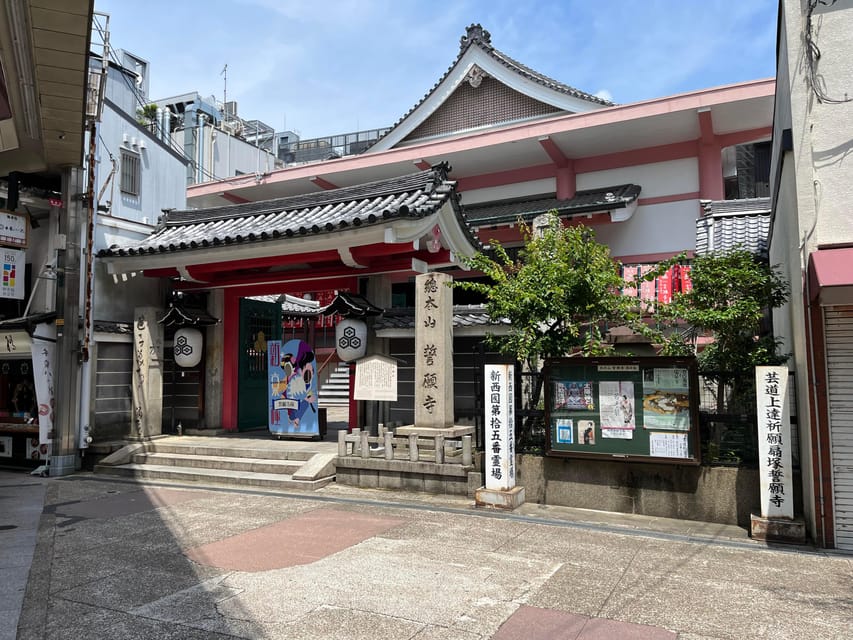
The meeting point is easy to miss if you are expecting a large tour desk. Look for the person holding a red lantern on a stick under the roof of the Shinkyogoku shopping street, directly in front of Seigan-ji Temple.
Do not climb the temple steps to search for the class. Do not ask the monks or other temple workers if you are in the right place. Simply wait outside for the person with the red lantern. This instruction matters because the class organizers handle the meeting themselves, and the temple is an active religious site rather than a normal attraction entrance.
The central Kyoto location is useful. You can fit the class into a day of shopping, sightseeing, or eating in the nearby market area without giving up a full morning or afternoon. Since the session lasts about 70 minutes, it works well as a calm break between busier plans.
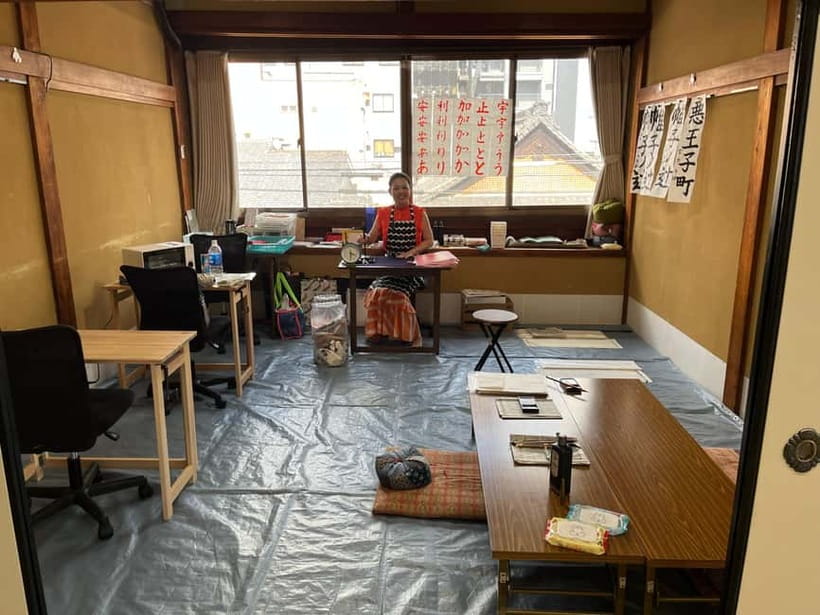
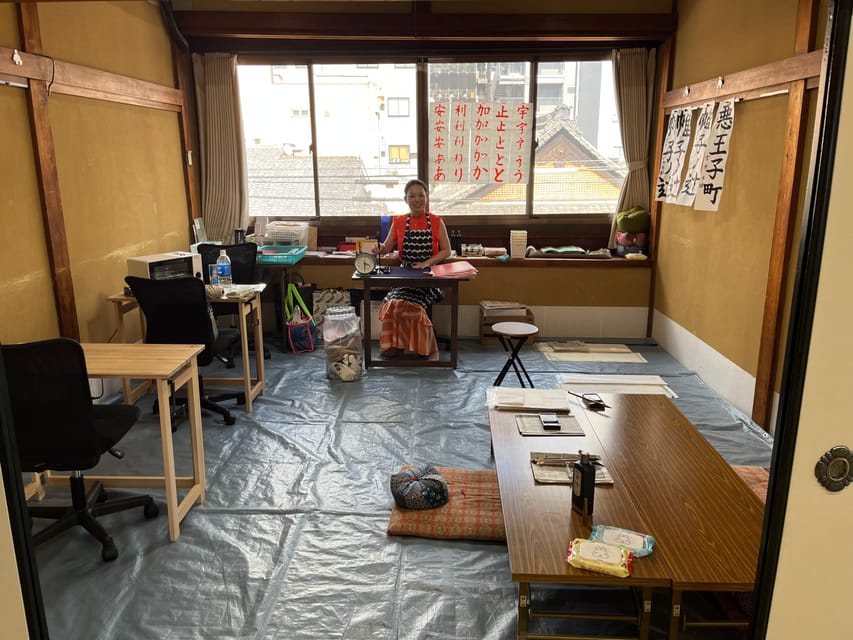
The temple itself adds a sense of place from the start. The class takes place in a Japanese-style room with tatami flooring, sliding doors, and traditional interior details. Several participants have found the room itself memorable, especially if this is your first time inside a Buddhist temple.
A few more temple visits around Kyoto worth a look
- Chinese Kungfu class in old temple beside Forbidden Ci
★ 4.8 · 53 reviews - Seoul: Vegan Temple Food Class, Jogyesa & Changdeokgung Tour
★ 4.6 · 34 reviews - Bali: Full-Day Private Water Temple Ritual & Yoga Class
★ 4.6 · 31 reviews
What Happens During the 70-Minute Class
The class follows a clear progression, which helps beginners avoid feeling lost. You start with introductions to the teacher and translator. The Japanese instructor leads the calligraphy, while the translator explains the steps and helps with questions.
The first creative decision is choosing the word or kanji you want to write. You can select from example characters, but I strongly suggest arriving with a few ideas. You might choose a word connected to your trip, a personal value, a name, or a character whose shape appeals to you.
This decision has more weight than it first seems. A simple character can be easier to finish neatly, while a complicated one may require more strokes and more practice. If you are writing a name or a word from another language, the teacher and translator can guide you toward an appropriate character choice based on the available examples.
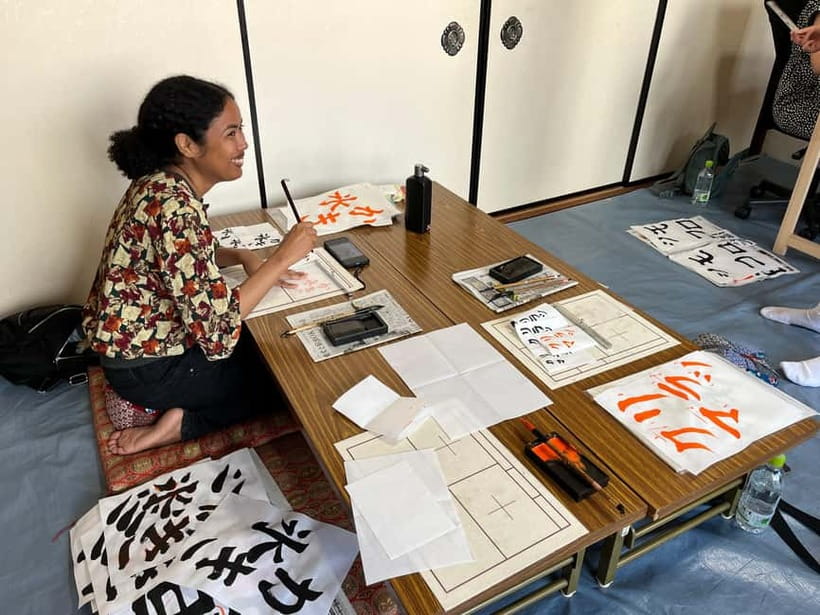
Next comes an explanation of the equipment. Your materials include washi paper, a brush, ink, bunchi, and shitakami. You do not need to bring a calligraphy kit. The teacher explains how to hold and use the tools before you begin.
The class then moves to basic lines. This is the quiet, methodical part of the session. You practice pressure, direction, and the movement of the brush. The instructor demonstrates the strokes, and you repeat them while receiving corrections.
Only after this warm-up do you work on your chosen character. The teacher builds the lesson step by step, making the process approachable even if you have never held a calligraphy brush before. Participants with no artistic background can take part, but the activity is not effortless. Several people found it harder than it looked, which is part of the fun.
Why the Teacher and Translator Make a Difference
The teacher, Imai Sensei, has practiced calligraphy for more than a decade, with one participant noting 15 years of experience. She is described as patient, encouraging, and attentive, and she gives individual advice while people practice.
The translator is not just there to repeat words. The strongest sessions depend on the translator connecting the teacher’s demonstrations to each participant’s work. Jose has helped with English and Spanish, and Saskia has also assisted with translation. Participants have appreciated their warmth, explanations, practical tips, and willingness to take photographs.
The language arrangement is worth understanding before you book. The calligraphy instructor teaches in Japanese, so the translator carries the explanations into English, Spanish, or Dutch depending on your selected session. This worked well for beginners because the instruction is visual and hands-on, but you should choose the correct language when booking.
The small group format matters here. With no more than six participants, the teacher can look at your strokes and offer personal guidance. Groups may be smaller, sometimes only two or three people, which can mean more individual attention. If you are nervous about making mistakes, the supportive tone helps.
Making Your Shikishi Souvenir
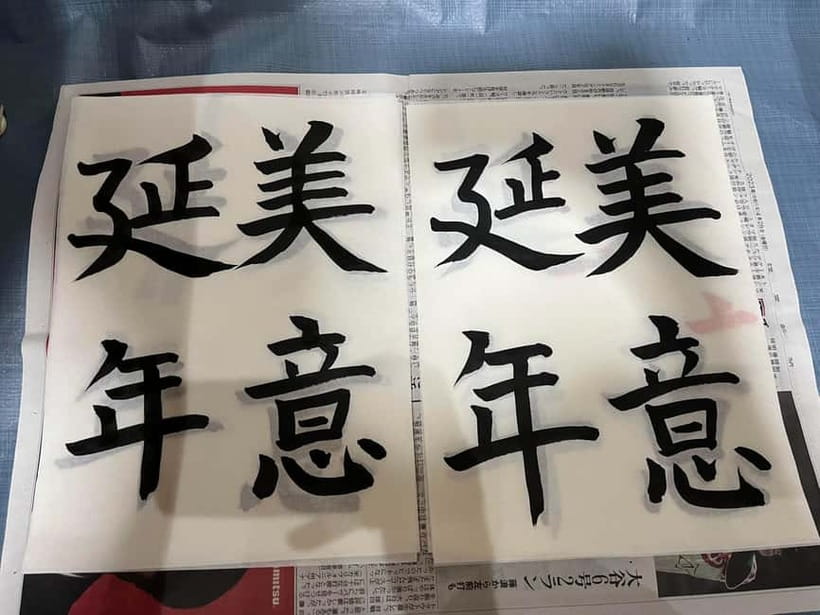
After practice, you move to the final piece. You write your selected character on a shikishi, a firm, decorative square board made for calligraphy and display.
This is the point where the advice about pacing becomes important. The organizers explain that practice is necessary, but too much practice can tire your arm and hurt the quality of your final work. Brush calligraphy uses muscles and movements that may feel unfamiliar, so you should not treat every practice sheet as a test of endurance.
The goal is not a perfect copy of the teacher’s work. I like that the class lets you produce a personal piece rather than simply watching a demonstration. Your final board records what you learned during that hour, including the small variations that show a human hand made it.
You take the finished shikishi home. It is light and easy to pack compared with many souvenirs, and it can be displayed on a wall, shelf, or mantel. If you are buying gifts, this is more personal than a mass-produced item because you made it yourself.
You also receive a keychain featuring your chosen character, made by the teacher. It is a small detail, but it gives you a second souvenir and a reminder of the class. The guides may also take photographs while you work, giving you a record of the activity without having to stop and manage your own camera.
Same place, a different morning at the gates:
- Kyoto: Tea Ceremony Ju-An at Jotokuji Temple
★ 4.9 · 3,207 reviews - Osaka/Kyoto:Kinkakuji,Arashiyama,FushimiInariShrine,NaraPark
★ 4.1 · 1,596 reviews - Kyoto Arashiyama Walking Tour: Bamboo, Monkeys, Gardens & Secrets
★ 5.0 · 1,216 reviews - Arashiyama Bamboo, Temple, Monkeys, or Secret Sake Brewery
★ 4.8 · 886 reviews
The Tatami Room and Floor-Seating Question
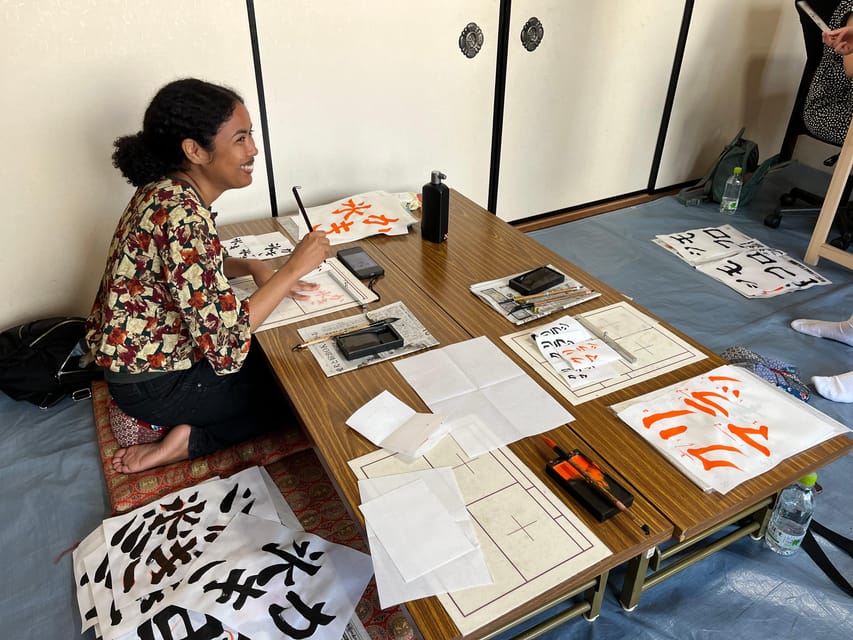
The class takes place in a washitsu, a traditional Japanese room with tatami flooring. This is one of the strongest parts of the setting, especially if you have not experienced a tatami room before.
Most participants sit on the floor using a zabuton cushion. A limited number of desks are available, but they cannot be promised for everyone. If you have knee, hip, or back problems, consider this before booking and contact the provider if you need clarification.
The floor seating creates a quieter, more traditional atmosphere, but it is not automatically comfortable for every body. You may be concentrating on your brush strokes while also trying to shift your legs. That is the clearest practical limitation of the class.
The room is not completely silent. People talk, receive instruction, and ask questions. Still, the activity tends to become quiet because everyone is concentrating on making careful lines. If you want a loud, social craft session, this may feel restrained. If you want a peaceful hour away from city noise, the mood should suit you.
Bare feet are not allowed, so wear socks or shoes that are easy to remove if needed. Smoking, vaping, alcohol, and drugs are also prohibited.
Is $55 a Good Value?
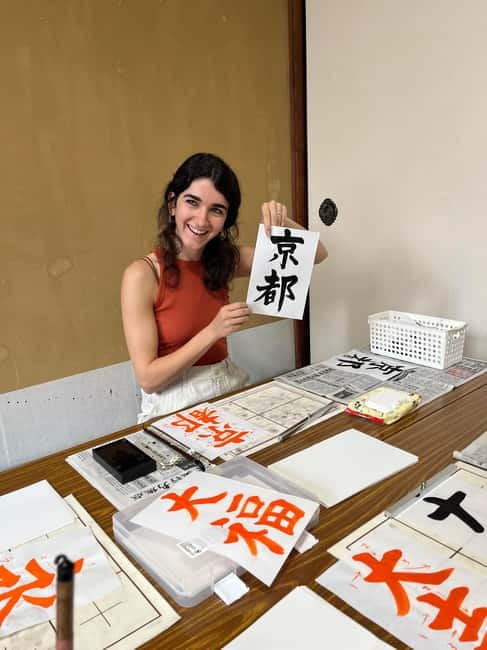
At $55 per person, the class is not the cheapest souvenir activity in Kyoto. The price includes the instruction, translator support, all calligraphy materials, the shikishi board, practice time, and the teacher-made keychain.
I think the value comes from the combination rather than any single item. You are paying for a guided introduction to an important Japanese art, a temple setting, a small group, and a finished piece to take home. A short demonstration without personal help would feel less worthwhile, but this class gives you time to practice and receive corrections.
The 70-minute length also keeps the cost reasonable for a busy Kyoto schedule. You do not have to sacrifice half a day, and the session can provide a welcome pause after walking through the city. If you are mainly seeking a low-cost souvenir, you can find cheaper options in shops. If you want to learn a skill and make something yourself, the price is easier to justify.
I would also count the small group as part of the value. A crowded class could turn calligraphy into a worksheet exercise. Here, the limited attendance gives the teacher and translator time to encourage each person.
Who Will Enjoy This Class Most?
This class suits first-time learners, couples, solo visitors, and families with well-behaved older children. It works particularly well for people who want a hands-on cultural activity rather than another sightseeing stop.
You do not need to be artistic. In fact, beginners may get the most from the gradual practice. The teacher demonstrates the strokes, you try them, and the translator helps explain how to improve. The activity can also appeal to anyone who enjoys quiet, focused work.
It is a good choice for a rainy day or for an afternoon when your legs need a break from temples and shopping. It also gives families a shared task without requiring advanced Japanese.
The booking information says the class is not suitable for children under five or for visually impaired participants. The experience is listed as wheelchair accessible, but floor seating is central and desks are limited, so anyone with mobility needs should confirm the arrangements in advance.
Left-handed participants can take part, though the brush technique may feel more challenging. One left-handed participant found the class manageable but had to think carefully about the movements and even try using the right hand. If you are left-handed, tell the teacher and translator at the beginning so they can help you adjust.
How to Prepare Before You Arrive
The most useful preparation is choosing a few possible words or kanji. Do not worry about being an expert in Japanese. Bring ideas rather than a final decision, and use the examples provided during the class to settle on a character.
Think about how you want to display the finished board. A short, bold character may be easier to write and more visually striking than a long phrase. If you want to write a personal name or concept, ask for guidance before committing it to the final shikishi.
Wear clothing that allows comfortable sitting on the floor. Bring socks, since bare feet are not allowed. Food and drinks are not provided, though vending machines are available outside the temple.
Read the voucher carefully after booking. It contains essential information about the exact meeting place and workshop arrangements. At the meeting point, wait for the person with the red lantern instead of entering the temple to ask for help.
Free cancellation is available up to 24 hours before the class, and you can reserve now and pay later. Starting times depend on availability, so check the schedule before building the rest of your Kyoto day around it.
Should You Book This Kyoto Calligraphy Class?
I would book it if you want a personal souvenir, a calm cultural activity, and a small-group lesson in a traditional setting. The patient teacher, helpful translators, finished shikishi, and extra keychain give the class more substance than a quick tourist craft.
I would hesitate only if you dislike floor seating, need a fully adapted workstation, or prefer watching cultural demonstrations to practicing yourself. Calligraphy takes concentration, and the final piece may not look as polished as the instructor’s example.
For most people, that imperfection is the point. You leave with a board made by your own hand, a better sense of how Japanese brushwork works, and a memory tied to a quiet room inside central Kyoto. Think of your word before you arrive, wear socks, and let the first few crooked lines be part of the lesson.
FAQ
How long does the Kyoto calligraphy class last?
The class lasts about 70 minutes.
How much does the class cost?
The price is $55 per person.
Where do I meet the group?
Meet in front of Seigan-ji Temple in the covered Shinkyogoku shopping street. Look for the person holding a red lantern on a stick under the roofed street.
Should I enter the temple to find the class?
No. Do not climb the stairs or ask the monks and temple workers about the workshop. Wait outside for the person holding the red lantern.
What languages are available?
The class is available in English, Spanish, Japanese, and Dutch.
What will I make during the class?
You will practice basic brush strokes and create a final calligraphy piece on a shikishi, a special square cardboard board. You can take the finished work home.
Is a souvenir included?
Yes. You take home your calligraphy work and receive a keychain made by the teacher with your chosen character.
Do I need to bring calligraphy materials?
No. Washi, a brush, ink, bunchi, and shitakami are provided.
Is the class suitable for young children and people with mobility needs?
The activity is not suitable for children under five or for visually impaired people. It is listed as wheelchair accessible, but most seating is on the floor with a zabuton and only a limited number of desks are available.
Just added around Kyoto
- Kyoto: Kiyomizudera, Sanjusangendo, Ginkakuji and Higashiyama.★ 5.0 · 3 reviews
- Kyoto: Shakyo & Matcha in Historic Temple Garden★ 5.0 · 4 reviews
- Kyoto:Kiyomizu-dera Temple Rent a kimono and ride a rickshaw★ 4.8 · 7 reviews
- KYOTO: Tempio Kiyomizu Pagode Gion “Geisya” (Guida Italiana)★ 4.7 · 17 reviews
- Kyoto:Quiet Arashiyama and Sagano Temples★ 4.8 · 5 reviews
- Kyoto: Kifune Shrine and the Sacred Kifune Valley Day Trip★ 4.4 · 4 reviews
- KYOTO: Golden Pagoda, Bamboo Forest, Arashiyama (Italian)★ 4.9 · 5 reviews
- KYOTO: Tour guidato tra i tesori della città (in italiano)★ 5.0 · 5 reviews
Workshops, compared.
Chinese Kungfu class in old temple beside Forbidden Ci
Read our review →
Vegan Temple Food Class, Jogyesa & Changdeokgung Tour
Read our review →
Full-Day Private Water Temple Ritual & Yoga Class
Read our review →

My Son Hindu Temples & Terracotta Workshop PRIVATE TOUR
Read our review →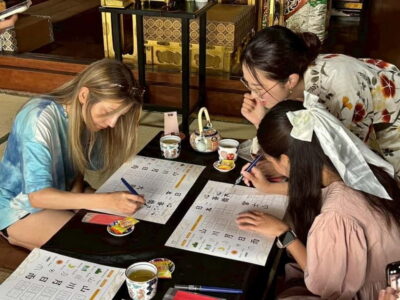
Kanazawa: Samurai Swordsmanship Lesson at a rented temple
Read our review →
Cooking Class in a former Artist Monastery in the Heart of Monopoli
Read our review →Browse the lists this tour appears in