
Review · JAPAN
Kanazawa: Samurai Swordsmanship Lesson at a rented temple
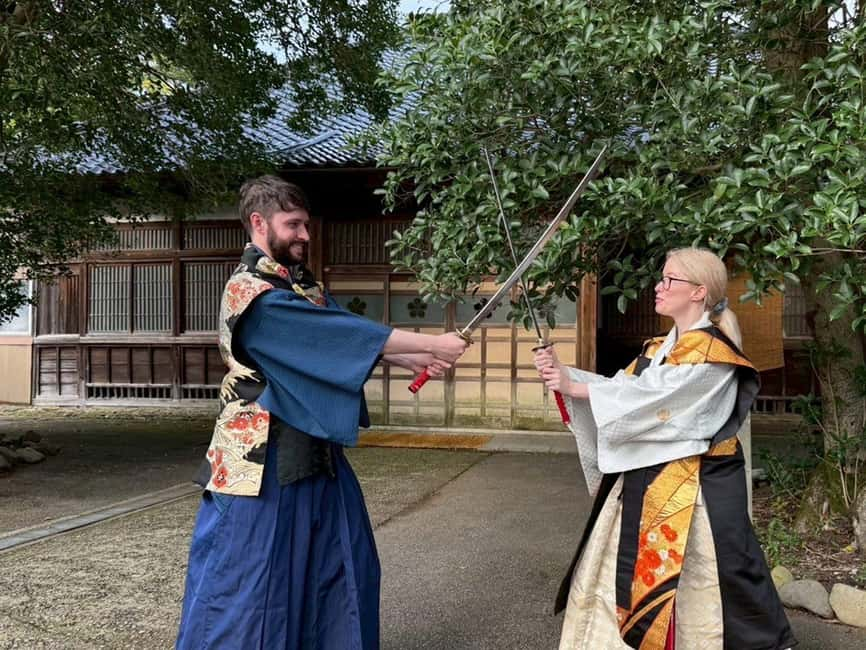
Step into Kanazawa’s samurai past. This one-hour private lesson gives you a kimono, a sword, and a quiet temple setting where instructor Shin teaches basic samurai movements. I like the private format, which gives your group room to ask questions and enjoy the session without an audience. I also like the photos and training videos, since they preserve more than a quick souvenir snapshot.
The main consideration is communication. Instruction is offered in Japanese and English, but the English is described as clumsy and supported by an instructional script. An interpretation service is available for an extra fee. That may matter if you want detailed historical discussion, though the practical sword movements are designed to be easy to follow.
For $80 per person, this is not a cheap photo stop, but it is a full activity with clothing, instruction, a temple visit, and digital keepsakes included. The minimum booking is two people, and children under 12 cannot take part.
Key points to know before booking
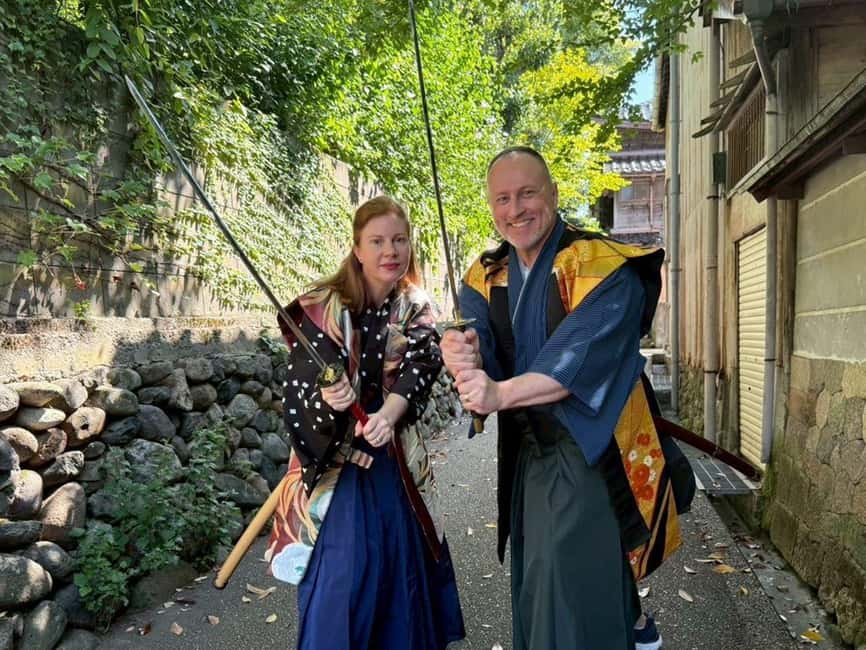
- A private temple sets the mood: You meet near FamilyMart Kanazawa Saiwai-cho, then walk or drive to a nearby old temple for the lesson.
- Shin leads the sword training: His friendly style, humor, and patience are a major part of the experience.
- The hour has a clear rhythm: Allow about 10 minutes for the kimono, 10 minutes for explanation, 30 minutes for training, and 10 minutes for photos.
- You practice with guidance: The lesson covers basic sword handling, movements, and techniques rather than advanced combat.
- Your digital mementos come later: Training photos and videos are emailed after the activity.
- English support has limits: Shin can teach in English, but an interpreter costs extra and may be useful for detailed questions.
Why Kanazawa is a fitting place for samurai practice
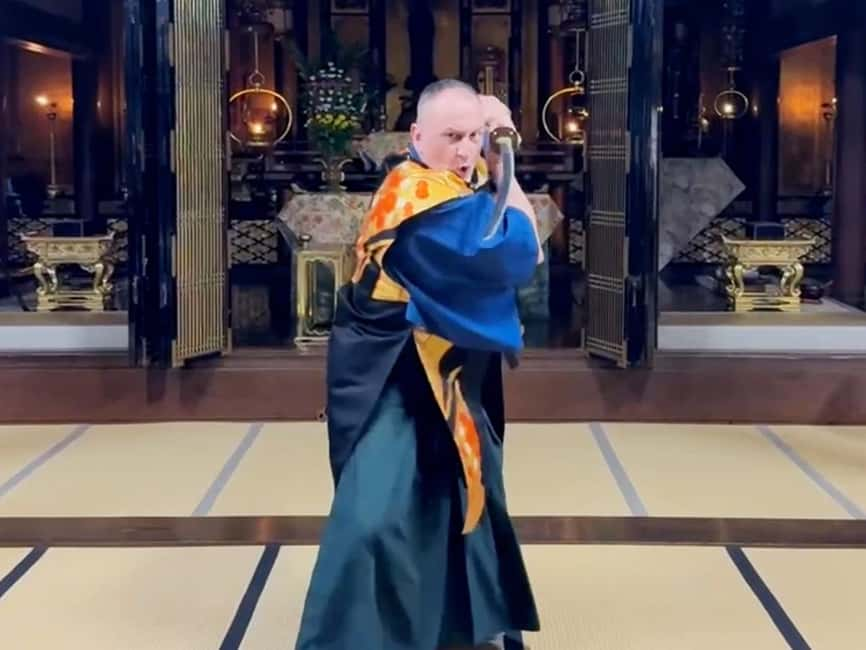
Kanazawa is not just a convenient Japanese city for this activity. It was a samurai town for about 400 years, and that past still shapes its cultural identity. A lesson in swordsmanship here feels more connected to the place than the same class in a hotel room or modern studio.
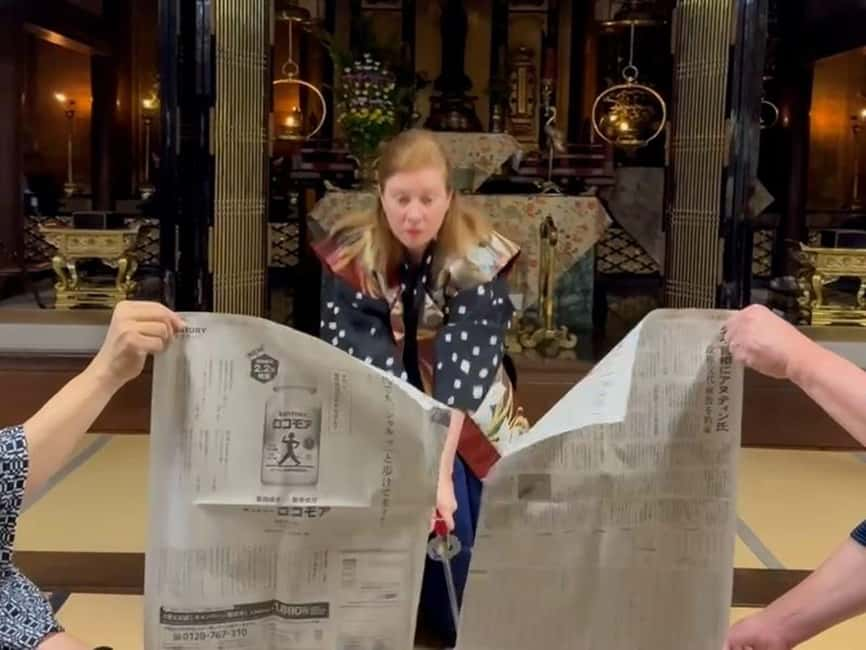
The temple setting does a lot of the work. You change into a traditional samurai kimono, then practice inside or around an old religious site rented for the private session. The surroundings give the activity a sense of occasion without requiring a long excursion outside Kanazawa.
I would set aside one hour for the lesson itself, plus a little extra time for meeting up and reaching the temple. The meeting point is the parking lot at the FamilyMart Kanazawa Saiwai-cho store. Staff wait with a sign showing your name, then guide you to the nearby temple by walking or driving.
That arrangement is useful, but it also means you should not simply arrive at a temple and expect to find the class. Go first to the stated meeting point. If you are unsure of the area, allow time to locate the convenience store and parking lot.
A few more temple visits around Japan worth a look
- Kyoto: Calligraphy class at Buddhist temple in city center
★ 5.0 · 167 reviews - Osaka: Temple Tour and Traditional Calligraphy Lesson
★ 4.9 · 24 reviews - Chinese Kungfu class in old temple beside Forbidden Ci
★ 4.8 · 53 reviews
Changing into a samurai kimono takes about 10 minutes
The experience begins with the traditional clothing. Kimono rental is included in the $80 price, so you do not need to arrange a costume separately. Wear comfortable clothes underneath, since you will be changing before the lesson begins.
The kimono is more than decoration. It changes the feel of the session and makes the photographs much more memorable. You are not holding a sword in ordinary street clothes while someone snaps a picture. You are dressed for the role, inside a temple, with an instructor guiding the activity.
The change takes about 10 minutes. That is a short time, so you may want to arrive ready to move rather than carrying bulky bags or wearing awkward clothing. The supplied instructions specifically ask you to bring comfortable clothes.
The outfit may feel formal at first, but the lesson is built around basic movements. You are not expected to arrive with martial arts experience. The activity is aimed at beginners who want a structured introduction and a bit of theatrical fun.
Shin’s 10-minute introduction gives the lesson context
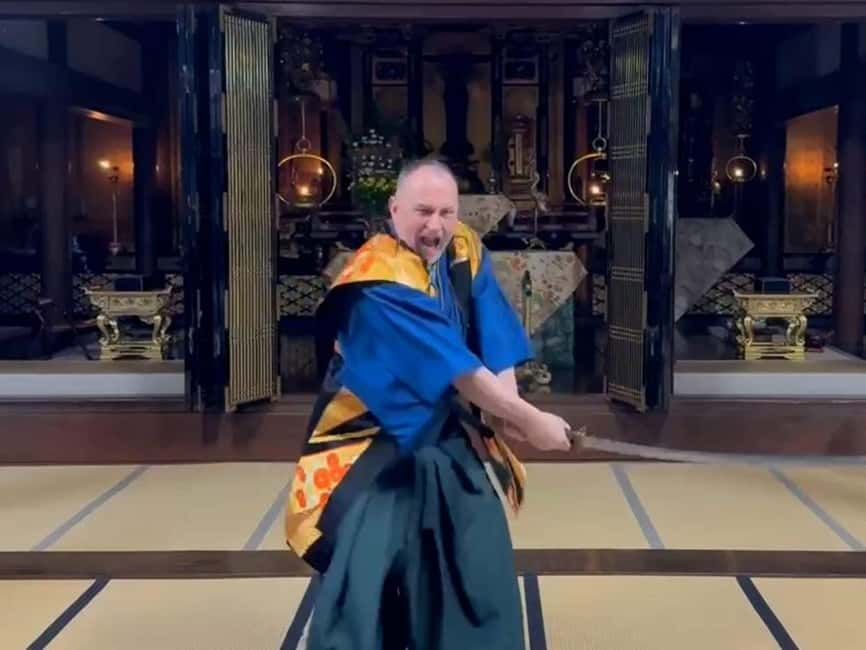
After changing, the instructor explains the basics of samurai swordsmanship. Shin also talks about the katana, samurai culture, and the temple itself. This opening portion matters because it keeps the activity from becoming a simple costume photo session.
You get a little context before picking up the sword. That helps you understand why the movements are controlled and disciplined rather than wild swinging. The tone appears to be friendly and entertaining, but the activity still treats the subject with respect.
Shin’s personality is a major strength. He is described as funny, kind, encouraging, and patient. His approach works well for families and couples because it leaves room for laughter without turning the lesson into a joke.
One family also appreciated his help during stormy weather, when he allowed the wife and daughter to shelter at the temple. That is a small detail, but it tells you something useful about the host’s manner. The setting is not treated as a rushed backdrop. It becomes a comfortable place to spend time.
English instruction is available, but you should set your expectations correctly. The English has been described as Japlish, with an instructional script supporting the explanations. For simple movements, this should be manageable. If you want a detailed discussion about Japanese history or sword terminology, pay for the optional interpreter.
Thirty minutes of basic swordsmanship
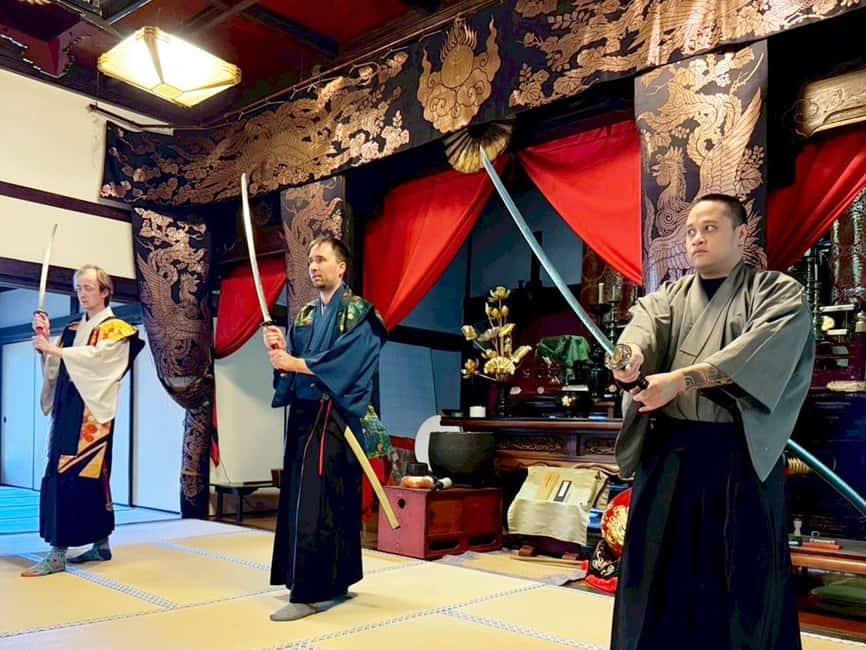
The central part of the experience lasts about 30 minutes. You learn how to handle a katana and practice a series of basic movements and techniques under Shin’s direction.
This is not a professional sword-fighting course. It is a beginner lesson designed to give you the feel of samurai training in a controlled setting. You will likely spend more time learning posture, movement, and sequence than testing speed or strength.
That distinction helps you decide if the activity suits you. If you want historical explanation, a dramatic costume, and a guided physical activity, the format is a good match. If you expect advanced martial arts training or a long technical class, one hour will feel brief.
The private group format is especially helpful here. You can focus on your own movements, ask for a demonstration again, and take turns without strangers watching. Couples, families with older children, and small groups of friends can enjoy the lesson at their own pace.
The age rule is clear: children under 12 cannot participate. For families with teenagers, the class can work well, especially if everyone is willing to follow instructions and treat the sword practice seriously. One family enjoyed the activity together, and another child even used Japanese phrases learned from Dragon Ball while speaking with Shin.
That detail hints at the relaxed atmosphere. You do not need to be an expert in Japanese culture to join in. Curiosity and a willingness to follow directions are more important.
Same place, a different morning at the gates:
- Kyoto: Tea Ceremony Ju-An at Jotokuji Temple
★ 4.9 · 3,207 reviews - Osaka/Kyoto:Kinkakuji,Arashiyama,FushimiInariShrine,NaraPark
★ 4.1 · 1,596 reviews - Tokyo: Asakusa Walking Tour with Sensoji Temple Visit
★ 4.8 · 1,583 reviews - Nikko: Kegon Falls, Lake Chuzenji & Toshogu Temple
★ 4.6 · 1,577 reviews
The temple gives the activity its strongest sense of place
The old temple is the best reason to choose this experience over a generic samurai show. You are not simply renting a costume in a commercial room. You are training in a traditional setting connected to Kanazawa’s past.
The temple is also useful if the weather turns bad. One family found it a welcome shelter during a storm, and another described the setting as beautiful on a rainy day. Kanazawa can be wet, so an indoor cultural activity is a smart option when outdoor sightseeing becomes unpleasant.
The exact temple name and the indoor arrangement are not specified, so I would avoid booking this expecting a particular famous monument. The value comes from the atmosphere of an old temple and the private use of the space, not from checking off a major landmark.
You should also remember that respectful behavior matters. Follow Shin’s instructions about where to stand, how to handle the sword, and where photographs are allowed. The setting is part of the appeal, so treating it carefully makes the experience better for everyone.
Ten minutes for photographs in full samurai dress
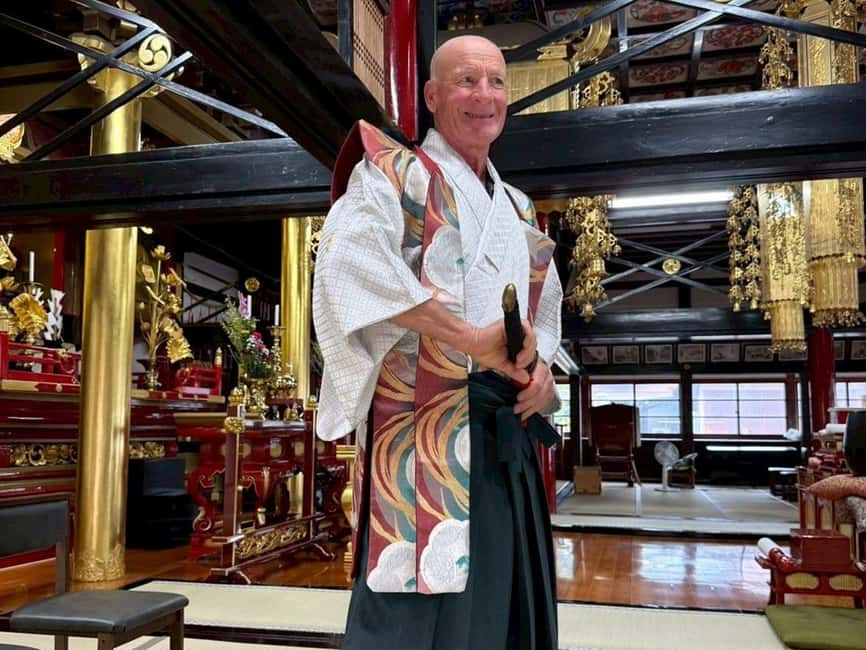
The last 10 minutes are set aside for commemorative photos. You can pose in the samurai kimono and temple setting, giving the session a clear finish rather than ending as soon as the training ends.
Photos and videos are included, and the provider sends them by email afterward. An assistant may take pictures and record parts of the lesson while Shin teaches. This is a real advantage for couples and families, since everyone can be in the frame instead of relying on a stranger to take one hurried photograph.
The digital files also capture the activity itself. You may receive images of your group in full costume as well as training footage. One participant noted that downloading the photos was not immediate, so check your email later and give the files time to arrive.
I would not count on receiving printed photographs on the spot. The included keepsakes are digital, and you should make sure the provider has the correct email address before you leave.
Is $80 per person good value?
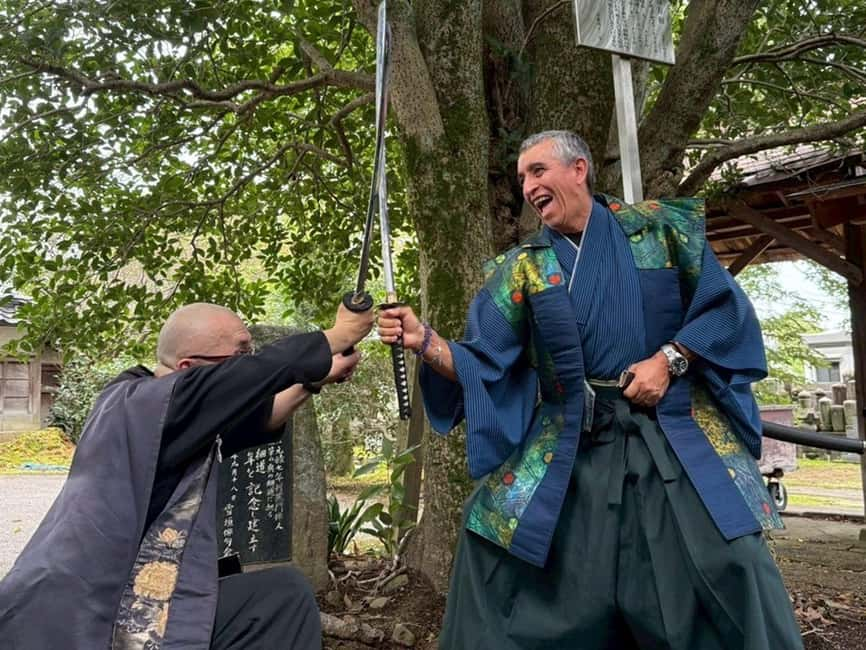
At $80 per person, the price sits above a basic costume rental but includes several parts that would cost extra if arranged separately. You receive the kimono, private instruction, access to the rented temple setting, and training photos and videos.
The private group is important to the value. You are paying for attention from Shin rather than joining a large demonstration where you simply copy a leader from the back. The instructor’s patience and humor also matter, especially if your group includes beginners who need encouragement.
The one-hour length keeps the activity easy to fit into a Kanazawa sightseeing day. You can schedule it between other visits without giving up a whole afternoon. At the same time, the short duration means the lesson cannot cover everything. Think of it as a focused cultural activity and a memorable photo experience, not a full study of samurai history.
The interpretation fee is not included. If detailed English communication is important to you, add that cost before comparing this with other activities. For basic instruction, many people will find Shin’s English and visual demonstrations sufficient.
Tips are also not included. They are optional, but you may wish to budget for one if Shin gives your group particularly attentive help.
Who will enjoy this activity most?
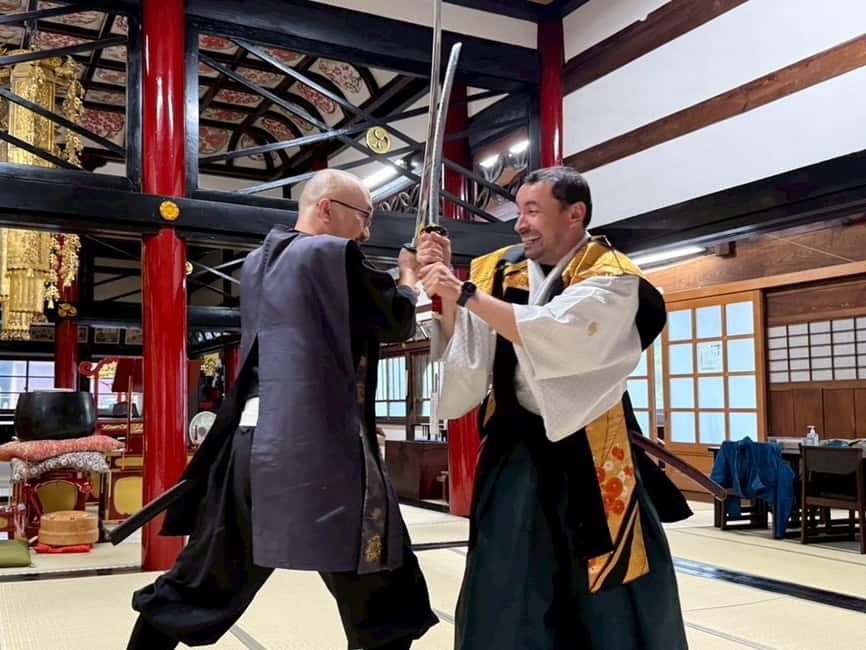
I would recommend it most strongly to:
- Couples looking for a private cultural activity with photos
- Families with children aged 12 and older
- First-time visitors who want a hands-on introduction to samurai culture
- Friends who enjoy dressing up and trying something physical
- People seeking an indoor plan for a rainy Kanazawa day
It is less suitable if you dislike costumes, have little interest in swordsmanship, or need detailed English interpretation without paying extra. It also may not satisfy someone searching for an advanced martial arts course.
The activity has a playful side, but it is not just a novelty. Shin explains the history and techniques with enthusiasm, and the temple setting gives the lesson some weight. You can laugh at your first awkward movements while still learning something about Japanese culture.
Practical planning for your Kanazawa day
Book for at least two people, since that is the minimum number of participants. The activity is private, so the people in your booking form your group.
Choose comfortable clothing that is easy to change out of. You do not need to bring a costume or sword. Kimono rental and the lesson are included.
Plan to meet at the FamilyMart Kanazawa Saiwai-cho parking lot. Look for the staff member holding a sign with your name. From there, you will walk or drive to the temple, so do not arrange another appointment immediately after the stated end time.
The activity lasts one hour, with approximate timing as follows:
- 10 minutes for changing into the kimono
- 10 minutes for explanation and background
- 30 minutes for swordsmanship practice
- 10 minutes for commemorative photographs
The provider offers free cancellation up to 24 hours before the start time, and you can reserve now and pay later. That flexibility helps if your Kanazawa schedule depends on weather or train plans.
Final verdict: should you book it?
Book this lesson if you want a private, hands-on cultural activity with a strong setting and useful digital mementos. Shin’s friendly teaching, the rented temple, and the chance to wear a samurai kimono give the hour more substance than a standard photo session.
I would especially choose it for a rainy day, a family outing with children over 12, or a couple looking for something different from temples and gardens. The main caution is the limited English and the extra charge for interpretation. If you accept that, $80 is a fair price for the clothing, instruction, private setting, and photos and videos.
FAQ
How long does the samurai swordsmanship lesson last?
The activity lasts one hour. The schedule allows about 10 minutes for changing into the kimono, 10 minutes for explanations, 30 minutes for swordsmanship practice, and 10 minutes for photographs.
What is included in the price?
The $80 price includes a samurai kimono rental, the swordsmanship lesson, and training photos and videos sent by email later.
Where do you meet for the activity?
You meet in the parking lot of the FamilyMart Kanazawa Saiwai-cho store. Staff wait with a sign displaying your name, then take you by foot or car to a nearby temple.
Is the lesson available in English?
Yes. The instructor can teach in Japanese and English. The English is described as clumsy and supported by an instructional script. An interpreter can accompany you for an additional fee.
Can children join the lesson?
Children under 12 are not permitted to participate. The minimum number of participants is two.
Do I need to bring anything?
Bring comfortable clothes for changing into the samurai kimono. The kimono and swordsmanship lesson are provided.
Just added around Japan
- Private guided tour: Mt. Aso volcano, grasslands, Aso Shrine★ 5.0 · 19 reviews
- Takayama Inari Shrine Tour with Private Transportation★ 5.0 · 5 reviews
- From Asakusa: Old Tokyo, Temples, Gardens and Pop Culture★ 5.0 · 47 reviews
- Goshuin Collecting tour at Asakusa Local Temples & Shrines, Tokyo★ 5.0 · 8 reviews
- :Tokyo,Shibuya /Meiji Shrine tour in KIMONO/English-friendly★ 5.0 · 4 reviews
- Tokyo: Snow Monkey and Zenkoji Temple Day Trip In Low Price★ 5.0 · 5 reviews
- Tokyo War History Tour: Yasukuni Shrine & War Museum★ 4.5 · 6 reviews
- Tokyo: Gotokuji Culture Walk & Lucky Cat Temple Experience★ 4.9 · 5 reviews
Workshops, compared.
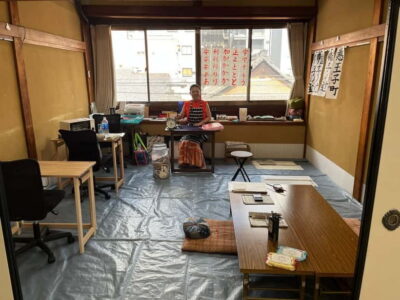
Calligraphy class at Buddhist temple in city center
Read our review →
Chinese Kungfu class in old temple beside Forbidden Ci
Read our review →
Vegan Temple Food Class, Jogyesa & Changdeokgung Tour
Read our review →
Full-Day Private Water Temple Ritual & Yoga Class
Read our review →

My Son Hindu Temples & Terracotta Workshop PRIVATE TOUR
Read our review →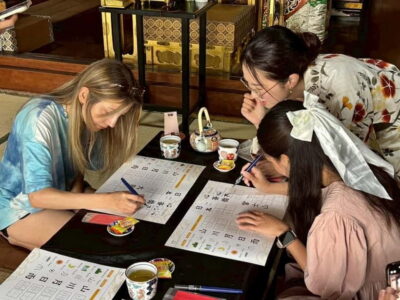

Cooking Class in a former Artist Monastery in the Heart of Monopoli
Read our review →Browse the lists this tour appears in