
Review · JAPAN
Goshuin Collecting tour at Asakusa Local Temples & Shrines, Tokyo
Small shrines reveal another Asakusa. This private walking tour combines goshuin collecting with four very different religious sites, from the grand Sensō-ji complex to quiet shrines known for lucky cats, daikon symbols, and a miniature Mount Fuji. I especially like the access to places that are easy to miss on a first visit, and the chance to have a guide explain the customs behind each stamp.
The tour also works well for a small party because the $140 price covers up to three people. My main caution is the walking: three hours on foot, with limited time at some stops, can feel demanding in hot, rainy, or humid weather. Guide quality may also vary, since one experience included helpful explanations while another found the answers and translation support limited.
Key points at a glance
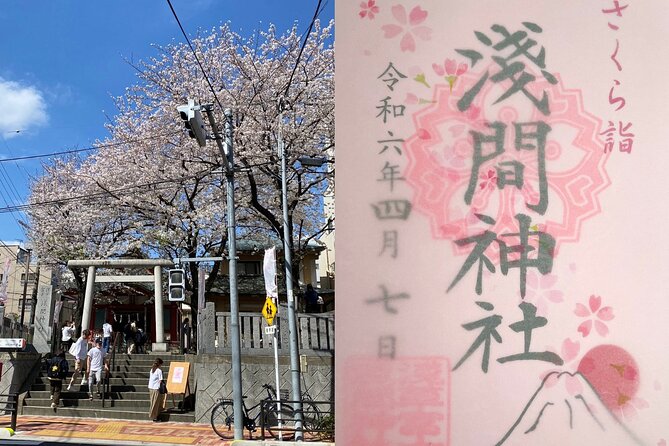
- Four very different sacred sites: You visit Sensō-ji, Imado Shrine, Matsuchiyama Shoden, and Asakusa Fuji Sengen-jinja.
- A useful introduction to goshuin: The guide helps you collect temple and shrine stamps, while the actual stamps and book cost extra.
- Private format for up to three people: Your group does not share the activity with other participants.
- Cat lovers have a clear reason to come: Imado Shrine is associated with lucky cats, and cats may be seen around the grounds.
- A miniature Mount Fuji adds a memorable twist: Asakusa Fuji Sengen-jinja has a Fuji-zuka made with lava from Mount Fuji.
- Good value for a small group: At the full group price, three people pay about $46.67 each, before stamp or souvenir costs.
What the Asakusa goshuin tour is really about
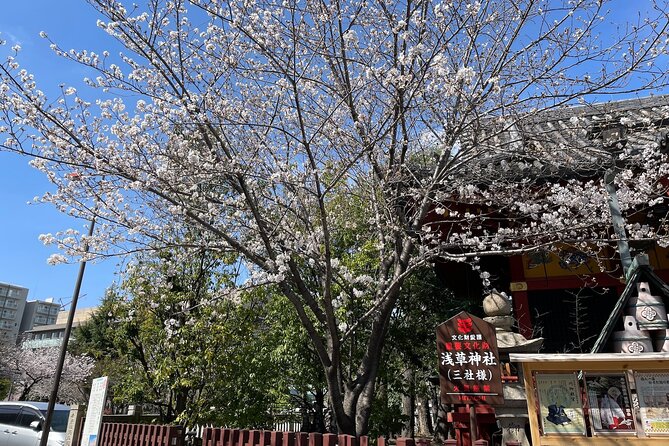
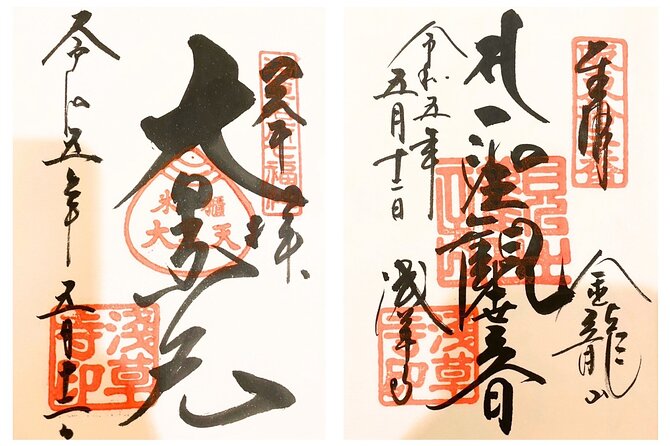
A goshuin is a calligraphic stamp and inscription received at a Buddhist temple or Shinto shrine. It is usually collected in a goshuin-cho, a special book designed for this purpose. The appeal is not just the finished page. Each stamp marks a visit to a particular sacred place, making the book a personal record of your time in Japan.
This tour gives you a practical way to begin or continue that collection. You are not left to search for stamp counters on your own, and the guide can direct you through four sites with different traditions and visual styles. That matters in Asakusa, where the famous streets can draw your attention away from quieter corners.
You should know that goshuin, goshuin-cho, and omamori amulets are not included in the price. Bring money for the items you want to purchase. The tour fee pays for the professional guide and the private walking experience, not the stamps themselves.
The format is simple: about three hours, starting and ending at 1-chōme-1-3 Asakusa, Taito City. A mobile ticket is provided, and the tour is private for your group of up to three people. That arrangement is especially useful if you want to move at your own pace or ask questions without holding up a large party.
More Meiji Shrine and Senso-ji Tours in Japan:
- Tokyo: Asakusa Walking Tour with Sensoji Temple Visit
★ 4.8 · 1,583 reviews - Tokyo Panoramic 1 Day: Meiji Shrine, Asakusa, Odaiba and SKYTREE®
★ 4.5 · 1,222 reviews - Asakusa Senso-ji Temple and Old Tokyo Walking Tour
★ 5.0 · 560 reviews
Sensō-ji and Nakamise-dori: begin with Asakusa’s grand stage
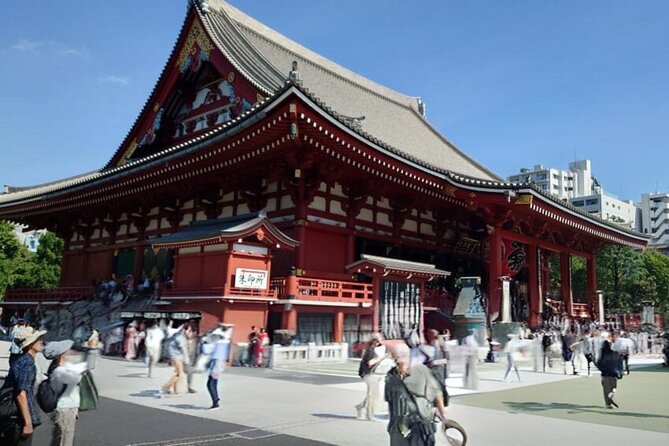
The tour opens at Sensō-ji, the best-known Buddhist temple in Asakusa. The stop includes Sensō-ji, Asakusa Shrine, and Nakamise-dori, with about an hour assigned to this part of the walk.
This is the busiest and most visually striking section of the tour. You will see the Kaminarimon gate, the long approach of Nakamise-dori, and the main temple area. The guide can help connect the buildings and customs to the wider story of Asakusa, rather than leaving you to take photos and move on.
The experience also includes Asakusa Shrine, sometimes called Asakusa Jinja. A ceremony may be taking place during your visit, as happened for one group, and that can make the stop feel much more immediate than a simple sightseeing visit. If this occurs, follow the guide’s lead and observe respectfully.
One important detail: the itinerary names the Kaminarimon Temple, but Kaminarimon is generally known as a gate associated with Sensō-ji. Either way, you should expect the famous entrance area and the temple precinct rather than a separate major temple stop.
Sensō-ji is free to enter, but free admission does not mean a quiet visit. This is the portion most exposed to crowds, shops, and photo stops. I like that the tour begins here because it gives you the famous Asakusa landmarks first, then moves into smaller sites where the mood changes.
If you already know Sensō-ji well, the first hour may feel familiar. Its value depends on how much context and goshuin help you want. For a first visit, it gives you a firm base. For a return visit, the guide’s explanations and the visit to Asakusa Shrine may add more interest.
Imado Shrine: lucky cats and a quieter mood
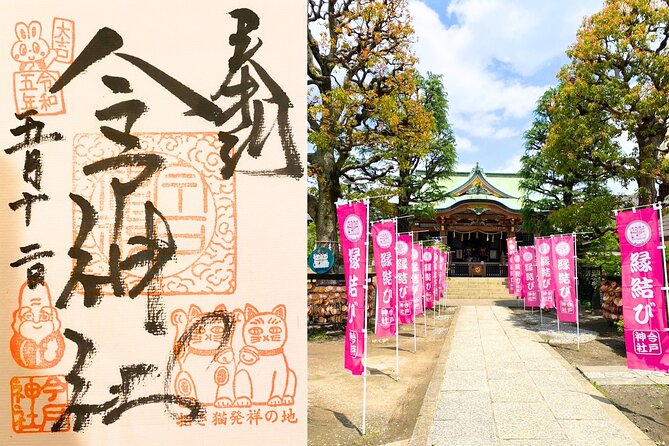
The second stop is Imado Shrine, with about 15 minutes set aside for the visit. The shrine is linked with lucky cats and is presented as a place connected with love. It has also been used as a filming location for a Japanese drama.
The cat theme is not a minor decoration here. Cat motifs appear around the shrine, and cats may be present on the grounds. That gives Imado a softer, more relaxed feeling after the grand scale of Sensō-ji. If you like photography, this is one of the stops where small visual details matter more than sweeping architecture.
The short timing is both a strength and a limitation. Fifteen minutes is enough to look around and collect a stamp, but it does not allow for a long, unhurried visit. If cats are outside, their presence cannot be guaranteed, so treat them as a possible bonus rather than the main reason to book.
You may also want to ask the guide about proper behavior before taking photos. A peaceful shrine is still a place of worship, and the right approach is to keep your voice low and avoid disturbing anyone praying.
Matsuchiyama Shoden: the daikon symbol
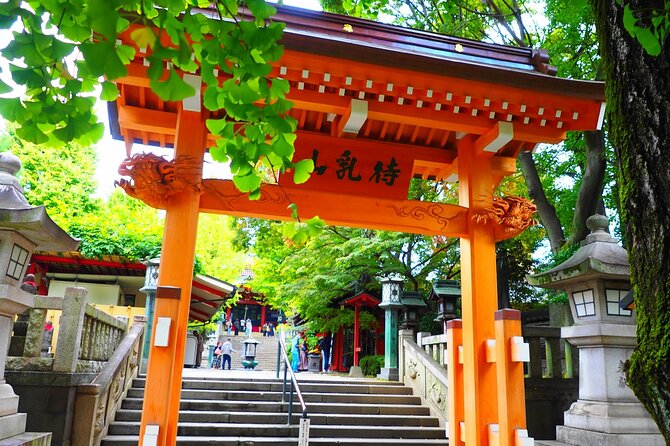
Matsuchiyama Shoden Honryuin is another short stop, also planned for about 15 minutes. Its distinctive symbol is the daikon radish, known here as Shoden Daikon. It represents family harmony and good health.
This is the kind of detail that makes a local walking tour worthwhile. Without an explanation, a radish decoration might seem amusing but random. With context, it becomes a symbol you can recognize and remember. The shrine may also occasionally offer free daikon, although that is not something you should count on during your visit.
The setting includes a Japanese garden, giving this stop a different visual character from Sensō-ji and the cat-centered Imado Shrine. You will not spend a long time here, but the short visit adds variety to the route and gives you another example of how everyday objects can carry religious meaning.
The practical issue is pace. If you enjoy reading every sign, taking careful photographs, or sitting quietly in gardens, 15 minutes can pass quickly. The guide’s job is useful here because you can focus on the key symbol instead of trying to work out its meaning on your own.
A few more temple visits around Japan worth a look
- Kyoto: Tea Ceremony Ju-An at Jotokuji Temple
★ 4.9 · 3,207 reviews - Nikko: Kegon Falls, Lake Chuzenji & Toshogu Temple
★ 4.6 · 1,577 reviews - Tokyo: Nikko Toshogu Shrine and Kegon Waterfall Tour
★ 4.5 · 1,266 reviews - 1-Day Snow Monkeys, Zenko-ji Temple & Sake in Nagano
★ 5.0 · 1,020 reviews
Asakusa Fuji Sengen-jinja: climb a small Mount Fuji
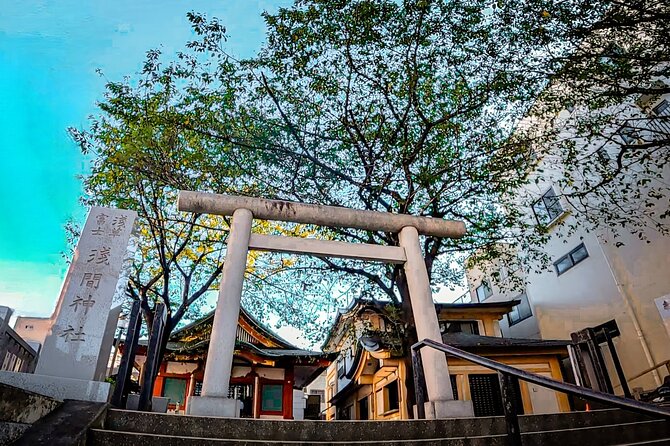
The final listed stop is Asakusa Fuji Sengen-jinja Shrine. It has a small Fuji-zuka, an artificial mound built with lava from Mount Fuji. By symbolically climbing it, visitors can seek blessings associated with reaching the real mountain.
This is one of the most unusual parts of the walk. You do not need a mountain trip to understand the basic idea. The Fuji-zuka gives you a compact way to take part in a tradition connected with Mount Fuji, while staying in central Tokyo.
Again, the planned visit is only about 15 minutes. That is enough to see the mound, hear the explanation, and collect a stamp, but not enough for a slow study of the entire shrine area. You should think of the tour as a carefully chosen introduction rather than a full research visit to each site.
Taken together, these short stops create a pleasing progression. Sensō-ji offers famous gates and a major temple complex. Imado brings lucky cats and romance. Matsuchiyama adds the daikon symbol. Asakusa Fuji Sengen-jinja finishes with a small-scale version of a major Japanese pilgrimage idea.
How much guidance can you expect?
The best guide moments appear to be practical and personal: explaining symbols, answering questions, helping with photographs, and making sure you reach each stamp location. One guide, Kayukawa-san, was praised for explaining a ceremony at Asakusa Shrine and making the visit more meaningful.
Another guide helped a group that had trouble finding the meeting point. That is worth noting because the starting address is precise, but urban Tokyo meeting places can still be confusing. Keep your mobile ticket available and allow time to get your bearings before the start.
The feedback is not perfectly uniform. One experience found the shrine explanations acceptable but said the guide could not answer some questions and did not help with certain translation requests. I would book this tour for access, organization, and local context, but not assume every guide will function as a professional interpreter for complex conversations.
Since this is a private tour, you have a better chance to ask questions than you would in a large group. Ask early and clearly if you want help understanding a goshuin, an inscription, or shrine etiquette. The more specific your questions, the more useful the walking time is likely to be.
Walking, weather, and the three-hour schedule
The tour requires a moderate level of fitness and a significant amount of walking. The listed stop times total about one hour and 45 minutes, leaving the rest of the three-hour period for walking, transitions, explanations, and stamp collection.
Wear comfortable shoes. Bring water, rain gear, and whatever you need to stay comfortable outdoors. Tokyo weather can make a short walk feel much longer, especially in summer or during wet conditions.
The tour requires good weather. If poor weather causes cancellation, you are offered another date or a full refund. The activity also requires a minimum number of participants, although the format remains private for your own group if it operates.
Service animals are allowed, and the meeting point is near public transportation. The tour ends back at the same meeting point, which makes it easier to plan the rest of your day in Asakusa.
Is $140 good value for up to three people?
The price is $140 per group, not per person, for up to three people. For three participants, that works out to about $46.67 each. For two people, it is $70 each. A solo participant pays the full group price, so the value improves sharply when you fill all three places.
The fee is reasonable if you want a guide focused on goshuin and smaller religious sites. You are paying for route planning, local explanations, private attention, and help navigating the stamp-collecting process. You are not paying for admissions, since the listed sites are free, and you must add the cost of stamps, books, or amulets.
I see the best value for a couple or a small family group that wants one organized cultural walk. If you are comfortable reading maps, observing shrine etiquette, and finding goshuin counters yourself, you could visit the sites independently for less. The tour earns its price through guidance, not paid entry.
Who should book this Asakusa walk?
I would recommend it to you if you already collect goshuin, want to start a book, or prefer small cultural details to a checklist of famous sights. Cat fans will especially enjoy Imado Shrine, while anyone curious about Japanese symbols may appreciate the daikon and Fuji-zuka explanations.
It also suits a first-time visitor who wants to see Sensō-ji but does not want the whole Asakusa experience to stop at the main temple. The private format gives you room to ask questions and take photographs without joining a large group.
I would hesitate if you dislike walking, need a flexible indoor schedule, or want long visits at each site. The tour moves through four locations in about three hours, and two of the stops receive only 15 minutes. It is also not the best choice if your main goal is a guaranteed encounter with cats or a particular stamp design.
For the smoothest outing, wear good shoes, carry water, bring rain protection, and decide in advance whether you want a goshuin-cho or amulets. The stamps themselves are extra, so plan for that cost.
Should you book this tour?
Book it if you want a guided introduction to Asakusa’s lesser-known religious corners, especially with a small group of two or three people. The mix of Sensō-ji, lucky cats, daikon symbolism, and a miniature Mount Fuji gives the walk more character than a basic temple visit.
Skip it if you prefer exploring alone or need slow, extended time at every shrine. The route is active, the weather matters, and guide support may vary. For the right person, though, this is a practical way to turn a goshuin book into a record of several distinct Asakusa experiences.
FAQ
How long does the goshuin tour last?
The tour lasts approximately three hours.
How many people can join the private tour?
The price covers one group of up to three people. Only your group participates in the activity.
Where does the tour start and finish?
It starts at 1-chōme-1-3 Asakusa, Taito City, Tokyo 111-0032, Japan, and ends back at the same meeting point.
Which temples and shrines are included?
The route includes Sensō-ji, Asakusa Shrine, Nakamise-dori, Imado Shrine, Matsuchiyama Shoden Honryuin, and Asakusa Fuji Sengen-jinja Shrine.
Are the goshuin included in the tour price?
No. Goshuin, goshuin-cho stamp books, and omamori amulets are not included.
Are admission tickets required for the stops?
The listed stops have free admission.
Is the tour suitable for people with limited mobility?
The activity requires a moderate physical fitness level and significant walking. Consider your ability to walk for about three hours before booking.
What happens if bad weather cancels the tour?
If poor weather causes cancellation, you are offered a different date or a full refund.
Can I cancel for a full refund?
Yes. You must cancel at least 24 hours before the experience start time for a full refund. Changes or cancellations made less than 24 hours before the start are not accepted for a refund.
Just added around Japan
- Private guided tour: Mt. Aso volcano, grasslands, Aso Shrine★ 5.0 · 19 reviews
- Takayama Inari Shrine Tour with Private Transportation★ 5.0 · 5 reviews
- From Asakusa: Old Tokyo, Temples, Gardens and Pop Culture★ 5.0 · 47 reviews
- :Tokyo,Shibuya /Meiji Shrine tour in KIMONO/English-friendly★ 5.0 · 4 reviews
- Tokyo: Snow Monkey and Zenkoji Temple Day Trip In Low Price★ 5.0 · 5 reviews
- Tokyo: Gotokuji Culture Walk & Lucky Cat Temple Experience★ 4.9 · 5 reviews
- Tokyo War History Tour: Yasukuni Shrine & War Museum★ 4.5 · 6 reviews
- Tokyo: Shibuya Sky, Harajuku & Meiji Shrine Highlights Tour★ 4.5 · 9 reviews
Meiji Shrine & Senso-ji Tours, compared.
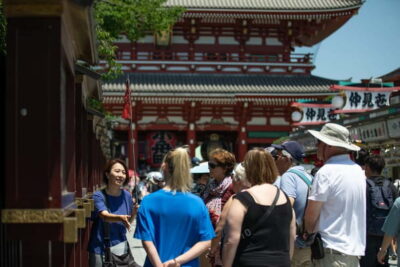
Asakusa Walking Tour with Sensoji Temple Visit
Read our review →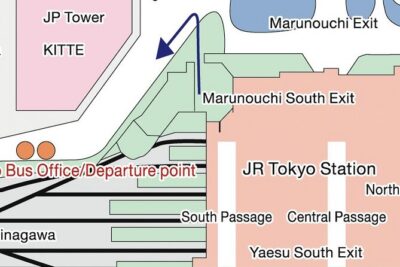
Tokyo Panoramic 1 Day: Meiji Shrine, Asakusa, Odaiba and SKYTREE®
Read our review →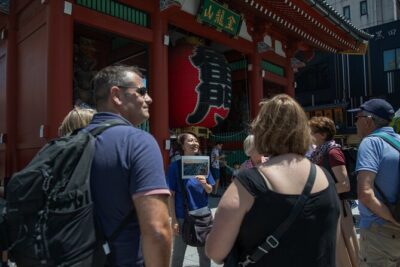
Asakusa Senso-ji Temple and Old Tokyo Walking Tour
Read our review →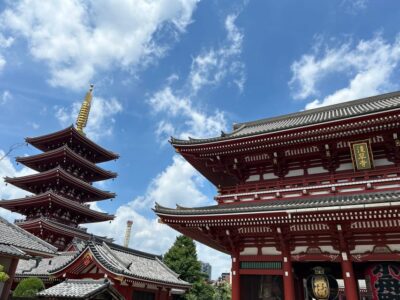
Asakusa and Tokyo’s Oldest Temple Senso-ji Tour
Read our review →
Meiji Shrine Walking Tour — Shinto & Imperial System
Read our review →
Meiji Jingu Shrine and Shinto Culture Walking Tour
Read our review →
Meiji Shrine Walking Tour — Shintoism & Imperial System
Read our review →Browse the lists this tour appears in