
Review · JAPAN
From Asakusa: Old Tokyo, Temples, Gardens and Pop Culture
Tokyo changes block by block. This four-hour walk links Senso-ji, Ueno, Akihabara, and Koishikawa Korakuen in one compact outing, giving you a useful first look at both traditional and modern Tokyo. I like the small maximum of eight people, and I like that local train rides and garden admission are listed in the price. The main concern is the brisk schedule, plus one report of unclear train-cost handling.
The tour also gets strong marks for its guides. Taka, Ken, Hiro, Yapi, Michelle, and others are praised for clear explanations, humor, patience, and adapting the walk to personal interests. Still, Asakusa can be packed, and one poor experience involved a late start, a guide who was hard to hear, and a rushed pace. Your enjoyment will depend partly on the guide assigned that day.
Key points to know before booking
- Senso-ji opens the tour with temple customs: You learn how to approach the Buddhist temple, use the grounds respectfully, and understand the meaning behind what you see.
- The route crosses several sides of Tokyo: Asakusa feels old and devotional, Ueno has markets and food stalls, Akihabara brings anime and electronics, and Koishikawa Korakuen offers quiet garden paths.
- The group is limited to eight people: That makes it easier to ask questions, move through narrow areas, and request small changes to the route.
- The four-hour schedule is full: Each main stop receives about 45 minutes, with a shorter 15-minute visit listed for Senso-ji Temple itself, plus train rides between areas.
- Koishikawa Korakuen admission is included: Food and drinks are not, so plan to eat before or after the walk.
- The tour ends near Akihabara Station: It does not return you to Asakusa, which is useful if you plan to continue exploring Akihabara.
Why this Tokyo walk works as an introduction
Tokyo can feel confusing at first because its neighborhoods change so quickly. A short ride can take you from a temple courtyard to an arcade-lined street, then on to a carefully planned garden. This tour makes that contrast the main point.
I like the way the route gives you a cultural framework instead of simply dropping you at famous sights. At Senso-ji, you learn basic temple etiquette and traditions. In Ueno, you see an older commercial side of the city. Akihabara introduces modern Japanese pop culture, while Koishikawa Korakuen slows the pace with ponds, bridges, and Edo-period design.
The guide is an important part of the experience. Strong guides such as Ken, Taka, Hiro, Yapi, and Michelle have been praised for explaining Japanese customs in clear English, answering questions, and adjusting the pace. Some people even ended up with a private walk when no other bookings joined, though you should not count on that.
This is not a museum tour with long indoor stops. It is a walking and local-train experience, so you need to be comfortable on your feet and ready for crowds. The route covers a lot in four hours. That is its strength, but also its limit.
More Meiji Shrine and Senso-ji Tours in Japan:
- Tokyo: Asakusa Walking Tour with Sensoji Temple Visit
★ 4.8 · 1,583 reviews - Tokyo Panoramic 1 Day: Meiji Shrine, Asakusa, Odaiba and SKYTREE®
★ 4.5 · 1,222 reviews - Asakusa Senso-ji Temple and Old Tokyo Walking Tour
★ 5.0 · 560 reviews
Starting in Asakusa at Senso-ji
The meeting point is in Asakusa, at 1-chome near Kaminarimon and Senso-ji. The area is served by public transportation, but allow time to find the exact building. A prompt arrival matters because the schedule is tight and the group may move on quickly.
Asakusa is the right place to begin. It gives you a clear sense of old Tokyo before the tour shifts toward electronics, anime, and modern city life. The neighborhood around Senso-ji has a strong traditional feel, though it is also one of Tokyo’s busiest sightseeing areas.
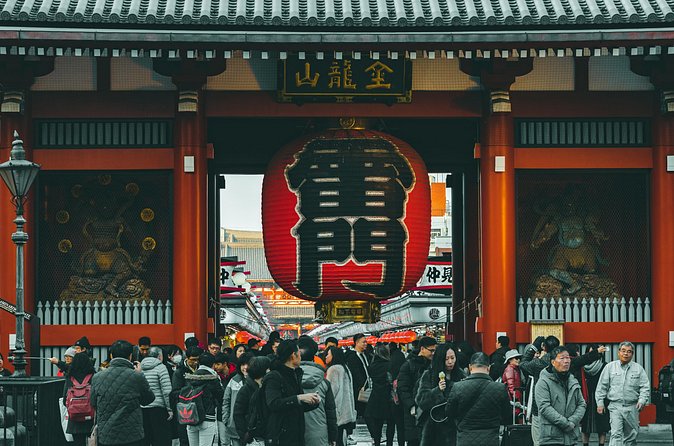
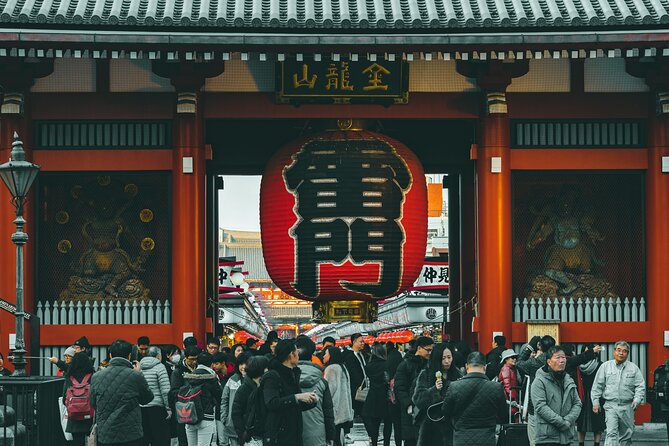
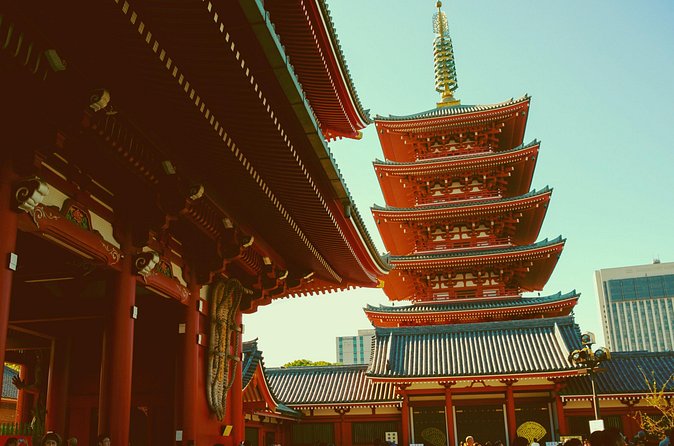
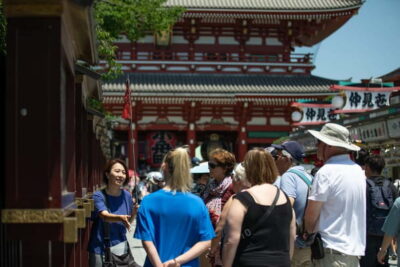
The tour spends about 45 minutes in Asakusa. Your guide explains the temple’s background and points out details you could easily pass without understanding. This may include the approach through Kaminarimon, the famous Thunder Gate, the Nakamise shopping street, and the temple grounds beyond it.
The value here is not just seeing the buildings. Japanese temples have customs that can be easy to miss or handle incorrectly when you are on your own. A guide can explain how to behave at the entrance, what the objects around the temple mean, and how the space is used by worshippers.
One particularly useful detail from the tour is its attention to temple etiquette. You may learn about cleansing rituals, statues, ropes, and other features that otherwise look like decoration. One guide also explained the giant rope sandals associated with protection from evil spirits, a detail that helps turn a quick photo stop into something memorable.
Senso-ji can be difficult for a guide to manage at peak times. The approach is crowded, and a group of eight can become spread out. Stay alert, keep the guide in sight, and speak up at once if you cannot hear. One negative account described a guide moving ahead through the crowd without speaking loudly enough, so this is a fair point to watch.
Ueno and the older commercial side of Tokyo
From Asakusa, the route continues toward Ueno by local train. Train transportation is listed among the standard costs, although one person reported paying separately for the rides. I would confirm this point with the provider before departure, especially if the instructions you receive do not make the arrangement clear.
Ueno receives about 45 minutes. This area has long been associated with street sellers, shops, and everyday food. It offers a different view of Tokyo from the polished temple entrance and major tourist sights of Asakusa.
The appeal is ordinary city life. You see a place shaped by trade and quick meals rather than formal ceremony. Your guide can add context about how the district developed and point out the kinds of shops you might not notice while navigating on your own.
This is also where a small group helps. A large tour can become awkward on crowded sidewalks or around market stalls. With no more than eight people, you have a better chance of staying together and asking about something that catches your eye.
The schedule does not leave much room for extended shopping. One guest especially appreciated having time to browse markets with Taka, but the exact amount of free time may depend on the group and guide. If buying food or souvenirs matters to you, say so at the beginning rather than hoping the schedule will open up later.
Akihabara, from electronics to anime culture
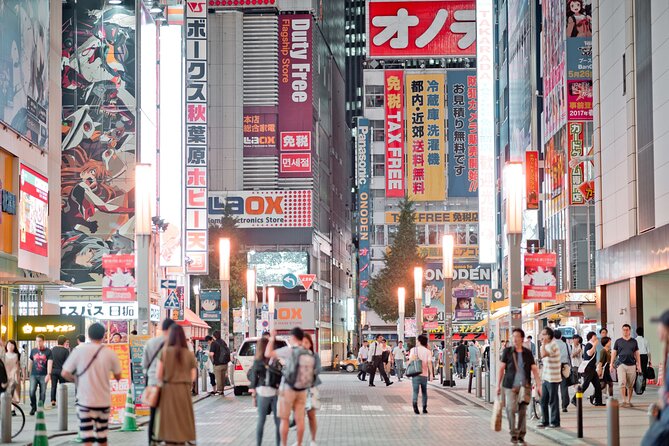
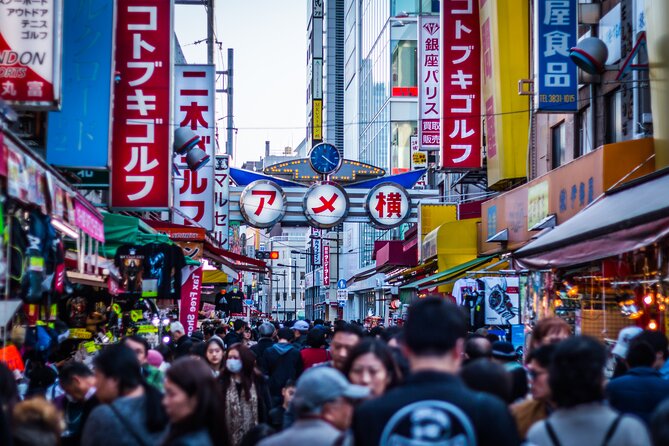
Akihabara receives another 45 minutes and gives the tour its pop-culture element. The district was known for electronics before becoming a major center for anime, manga, games, and maid cafés. The tour uses this area to show how Japan’s modern identity grew alongside its older traditions.
Do not expect a full shopping tour. The route may take you to anime stores and explain the district’s culture, but the time is limited. One less satisfied person felt that this part amounted mainly to being dropped at several shops. That criticism is worth taking seriously if your main goal is detailed shopping advice or a long visit inside specialty stores.
For most people, Akihabara works best as a short introduction. The contrast with Senso-ji is the point. Earlier, you were learning how to behave in a centuries-old religious setting. Here, you see a district shaped by technology and pop culture.
A guide can also help explain things that may seem strange or confusing, including maid cafés and the social ideas surrounding them. One solo participant specifically valued learning about this side of Japanese culture, which they would not have understood by simply walking past the storefronts.
If you already know Akihabara well, this may be the least essential section for you. If you are visiting Tokyo for the first time, it adds useful context without requiring you to plan a separate outing.
A few more temple visits around Japan worth a look
- Kyoto: Tea Ceremony Ju-An at Jotokuji Temple
★ 4.9 · 3,207 reviews - Nikko: Kegon Falls, Lake Chuzenji & Toshogu Temple
★ 4.6 · 1,577 reviews - Tokyo: Nikko Toshogu Shrine and Kegon Waterfall Tour
★ 4.5 · 1,266 reviews - 1-Day Snow Monkeys, Zenko-ji Temple & Sake in Nagano
★ 5.0 · 1,020 reviews
Koishikawa Korakuen, the quiet finish
The final major stop is Koishikawa Korakuen Garden, with about 45 minutes inside. Admission is included, and this is the only listed stop with a separate admission charge.
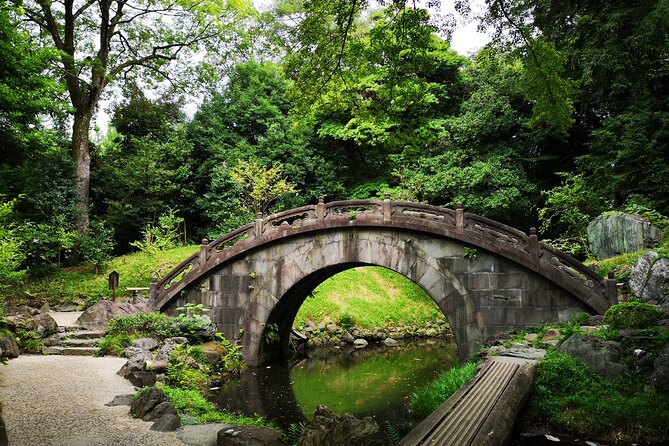
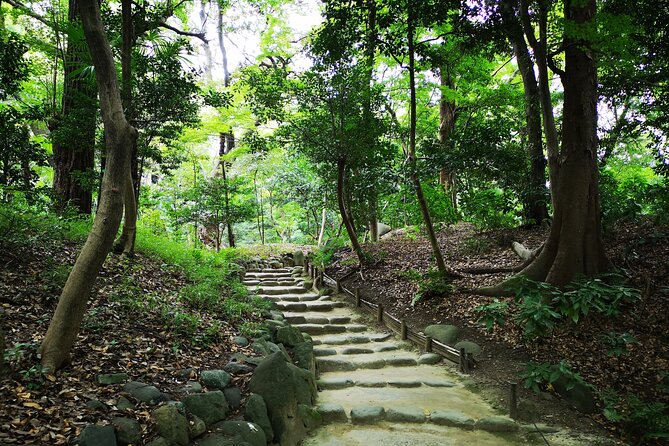
The change from Akihabara to the garden is dramatic. Koishikawa Korakuen dates from the Edo period and was influenced by Confucian poetry and Chinese-style garden ideas. Its ponds, bridges, paths, and carefully arranged views were designed for strolling, reflection, and changing scenes as you walk.
This is where the tour’s pace finally relaxes. After crowded streets, markets, trains, and neon signs, the garden gives you room to look closely. You might find this the most peaceful part of the afternoon, especially if temples and gardens interest you more than pop culture.
A guide adds value by explaining why the garden is arranged as it is. Without context, you may see attractive water features and trees. With context, you begin to notice how the path controls what appears next and how the garden reflects older ideas about beauty and order.
The garden is also a good reason to choose this tour over a basic Asakusa walk. Many short Tokyo tours stay around one neighborhood. This one connects a famous temple with a formal garden and the modern districts between them.
How the four-hour schedule feels
The tour lasts about four hours, but the listed stop times add up to roughly three hours and 15 minutes. The remaining time covers walking, local trains, transfers, and moving through crowded areas.
That makes the schedule efficient rather than leisurely. You will see many parts of Tokyo, but you will not have long, unplanned breaks at every stop. People who enjoy a clear route and steady movement should appreciate the format.
Families can do well here, and one family described the experience as informative and enjoyable for children. Still, children who tire easily may struggle by the final garden stop. The tour requires moderate physical fitness, and the combination of walking, standing, stairs, and train movement can add up.
You should wear comfortable shoes and carry water. Food and drinks are not included. Since the route passes through areas known for shops and food, you may find opportunities to buy something, but do not rely on a formal meal break.
The guide may tailor sections to your interests. Yeman was praised for keeping a comfortable pace around the group’s preferences, while Taka and Ken were noted for changing the focus when people had particular questions. Tell your guide early if you care most about temples, markets, trains, history, anime, or gardens.
The small-group advantage
The maximum group size is eight. That is small enough for a more personal exchange, though the actual group can be smaller or, in some cases, private if other bookings do not attend.
This format suits people who want help but dislike a large flag-following group. You can ask why a ritual is performed, request a photo stop, or ask for a restaurant suggestion without interrupting a crowd.
Guide quality appears to be a major strength. Taka is praised for humor, local familiarity, and very good English. Ken is praised for history, culture, patience, and help with the train system. Hiro and Hiroshi receive praise for taking people to places they might not find alone. Yapi is described as patient and detailed, while Michelle is praised as warm and flexible.
That range matters because the experience is not fully fixed. Your guide’s communication style affects how comfortable you feel in crowds and how much context you receive. If you have trouble hearing or walking quickly, say so at the start.
One poor experience included a 15 to 20 minute late departure because the guide was dealing with no-shows. That is not the norm suggested by the overall rating, but it shows why arriving on time and confirming the meeting instructions are worthwhile.
Is $70.49 a fair price?
At $70.49 per person, the tour is not the cheapest way to see Senso-ji or walk through Akihabara. You could visit several of these areas independently for little money, especially if you already understand Tokyo’s train system and temple etiquette.
The price makes more sense if you value interpretation and efficient routing. You receive about four hours with a guide, a small group, local train rides as listed, and admission to Koishikawa Korakuen. The guide also helps connect four very different districts into one story.
It is particularly good value early in your Tokyo stay. Several guides have helped people understand the train system, recommend places to eat, and suggest what to do during the rest of a Japan visit. That practical advice can save time later.
The value is weaker for independent explorers who prefer wandering without a fixed pace. You may feel hurried at Senso-ji or disappointed by the short Akihabara section. Also, because one account says train fares were paid separately despite the stated inclusion, confirm that detail before booking.
Who should book this walk?
I would choose this tour if you are visiting Tokyo for the first time, want help with cultural etiquette, or have only a short window to see several districts. It suits couples, families with reasonably active children, and solo visitors who prefer company without a large group.
It is also a good choice if you are staying in modern Tokyo neighborhoods such as Shibuya and want to see a more traditional side of the city. The route gives you temples, market streets, pop culture, and a Japanese garden in one half-day.
I would hesitate if you want long shopping stops, a slow photographic walk, or a detailed study of one temple. The pace is full, the crowds can be hard, and the Akihabara portion may feel brief.
Free cancellation is available up to 24 hours before the start time. Changes or cancellations inside that window are not refunded, and poor weather may lead to a new date or a full refund.
Final verdict: a useful first taste of East Tokyo
This is a smart way to get your bearings in Tokyo. The route has a clear rhythm: old temple, commercial streets, modern pop culture, then a quiet garden. I especially like the chance to learn temple manners at Senso-ji and finish at Koishikawa Korakuen rather than spending the whole afternoon in crowded shopping districts.
Book it if you want a friendly guide, a small group, and a broad introduction in four hours. Just wear good shoes, expect a steady pace, confirm the train-cost details, and tell your guide what interests you most. With the right guide, this walk can give you both useful Tokyo skills and a memorable sense of how many different cities exist inside one city.
FAQ
How long does the tour last?
The tour lasts approximately four hours.
Where does the tour begin?
It begins in Asakusa at Japan, 111-0032 Tokyo, Taito City, Asakusa, 1-chōme 11, near the listed Kamiy a Building meeting point.
Where does the tour end?
It ends near Akihabara Station at 1 Chome Sotokanda, Chiyoda City, Tokyo 101-0028.
What places are visited?
The route includes Asakusa, Senso-ji Temple, Ueno, Akihabara, and Koishikawa Korakuen Garden.
How large is the group?
The tour has a maximum of eight participants.
Are train rides included?
Local train rides are listed among the standard costs included in the tour. One booking account reported paying separately, so it is sensible to confirm the arrangement before departure.
Is food included?
No. Food and drinks are not included.
Is garden admission included?
Yes. Admission to Koishikawa Korakuen Garden is included, along with all listed fees and taxes.
What happens if the weather is poor?
The tour requires good weather. If it is canceled because of poor weather, you will be offered another date or a full refund.
Just added around Japan
- Private guided tour: Mt. Aso volcano, grasslands, Aso Shrine★ 5.0 · 19 reviews
- Takayama Inari Shrine Tour with Private Transportation★ 5.0 · 5 reviews
- Goshuin Collecting tour at Asakusa Local Temples & Shrines, Tokyo★ 5.0 · 8 reviews
- :Tokyo,Shibuya /Meiji Shrine tour in KIMONO/English-friendly★ 5.0 · 4 reviews
- Tokyo: Snow Monkey and Zenkoji Temple Day Trip In Low Price★ 5.0 · 5 reviews
- Tokyo War History Tour: Yasukuni Shrine & War Museum★ 4.5 · 6 reviews
- Tokyo: Gotokuji Culture Walk & Lucky Cat Temple Experience★ 4.9 · 5 reviews
- Tokyo: Visit 5 Shrines & Collect Goshuin on Private Tour★ 5.0 · 3 reviews
Meiji Shrine & Senso-ji Tours, compared.
Asakusa Walking Tour with Sensoji Temple Visit
Read our review →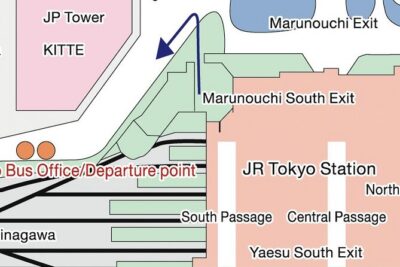
Tokyo Panoramic 1 Day: Meiji Shrine, Asakusa, Odaiba and SKYTREE®
Read our review →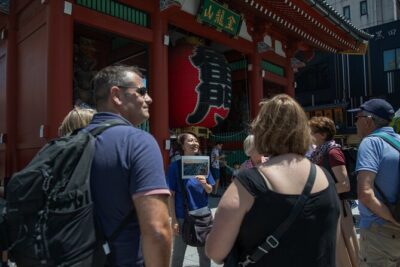
Asakusa Senso-ji Temple and Old Tokyo Walking Tour
Read our review →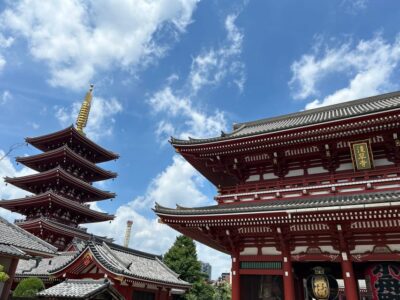
Asakusa and Tokyo’s Oldest Temple Senso-ji Tour
Read our review →
Meiji Shrine Walking Tour — Shinto & Imperial System
Read our review →
Meiji Jingu Shrine and Shinto Culture Walking Tour
Read our review →
Meiji Shrine Walking Tour — Shintoism & Imperial System
Read our review →Browse the lists this tour appears in