
Review · TOKYO
Tokyo War History Tour: Yasukuni Shrine & War Museum
History can feel uncomfortably close here. This private Tokyo tour brings you into Yasukuni Shrine and the Yushukan War Museum, two places where religion, military memory, and national identity meet. I like the private format, which gives you room to ask serious questions, and I like the effort to explain Japan’s wartime past from more than one angle. The main drawback is clear: the museum presents a particular Japanese interpretation of war, so you need to listen critically rather than treat every display as a complete account.
The tour is best for anyone who wants more than attractive shrine buildings and quick photographs. You will spend much of the time walking, listening, and thinking about difficult subjects. The optional visit to Chidorigafuchi National Cemetery makes the experience even more useful by placing a religious memorial beside a secular one.
Key points to know before booking
- Yasukuni Shrine was founded in 1869: It commemorates people who died in conflicts from the Meiji Restoration through the Asia-Pacific War.
- The Yushukan offers a distinct wartime narrative: Your guide helps place its displays, photographs, documents, and military objects in wider historical context.
- The extended route adds Chidorigafuchi: This state-administered cemetery provides a useful contrast to Yasukuni’s Shinto approach to remembrance.
- A private English-speaking guide shapes the experience: You can ask direct questions about religion, empire, nationalism, and modern Japanese society.
- The tour takes 150 to 210 minutes: The shorter format covers Yasukuni and the museum, while the longer version adds the cemetery.
- Comfortable shoes matter: Expect moderate walking, with about 40 minutes at the shrine and roughly 110 minutes inside the museum.
Why Yasukuni Shrine matters
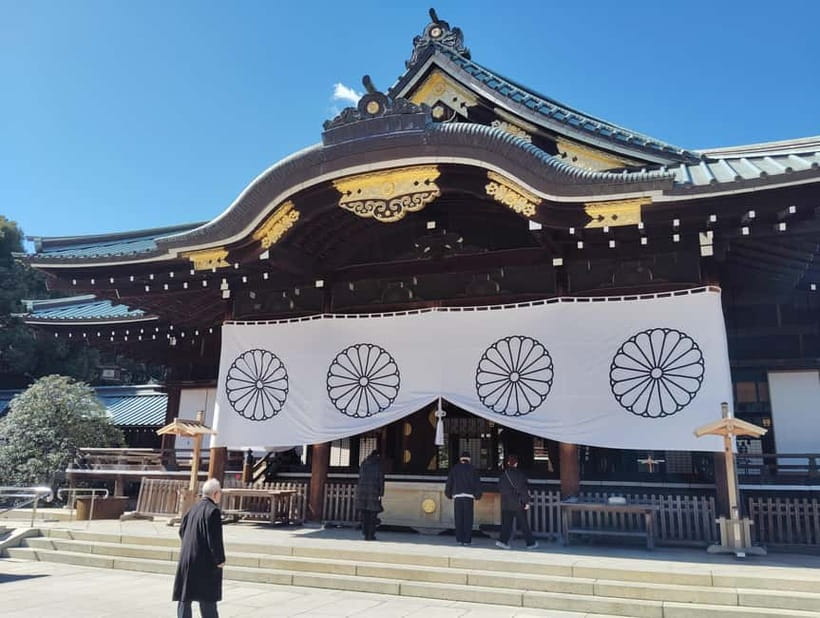
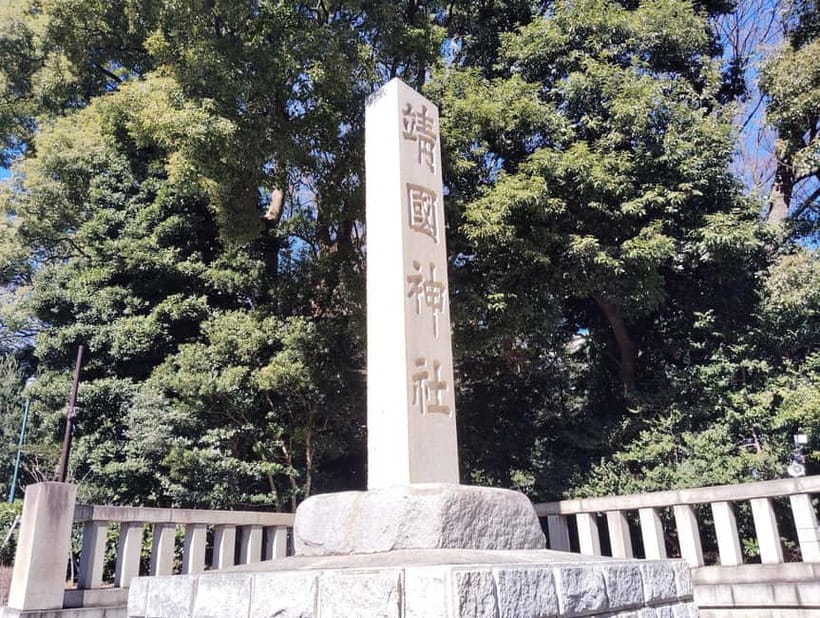
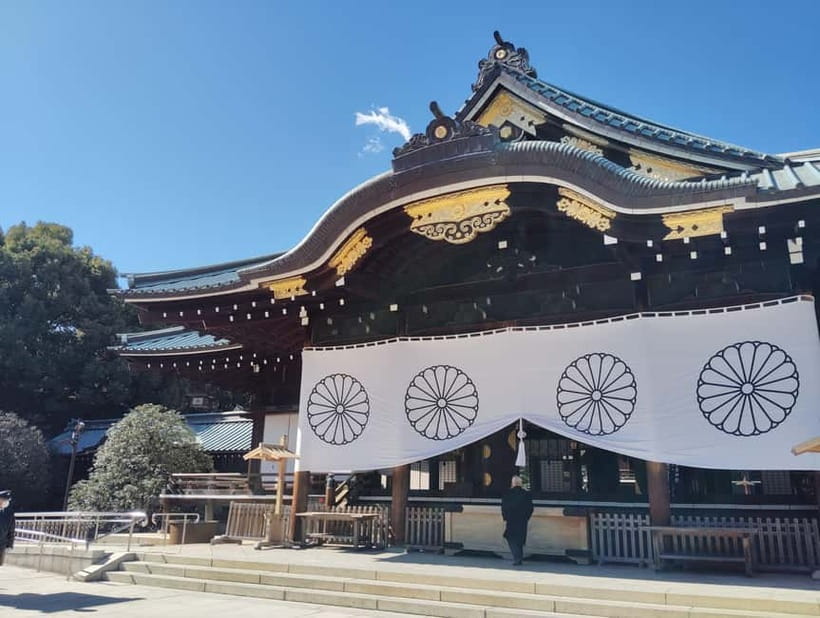
Yasukuni is not simply another Tokyo shrine. Founded in 1869, it was created to honor those who died in conflicts connected with Japan’s transformation from a feudal society into a modern nation-state. The people enshrined here are treated as spirits, giving the site a religious role that differs from a standard monument or military cemetery.
That distinction is the key to understanding the place. Yasukuni is a Shinto shrine, but its purpose is closely tied to war, sacrifice, and the state. It links personal grief with national memory. For some Japanese families, it remains a place to mourn relatives lost in war. For others, it raises difficult questions about the way Japan remembers its military past.
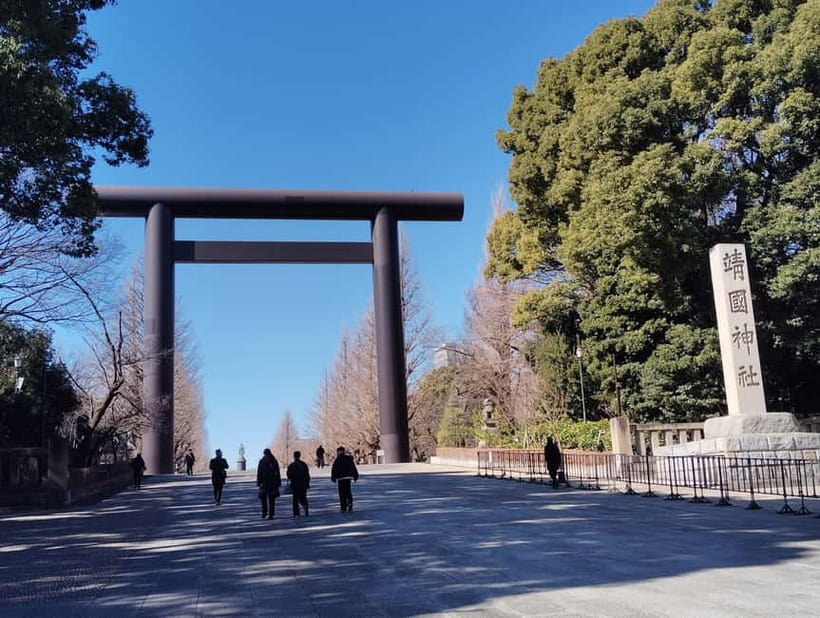
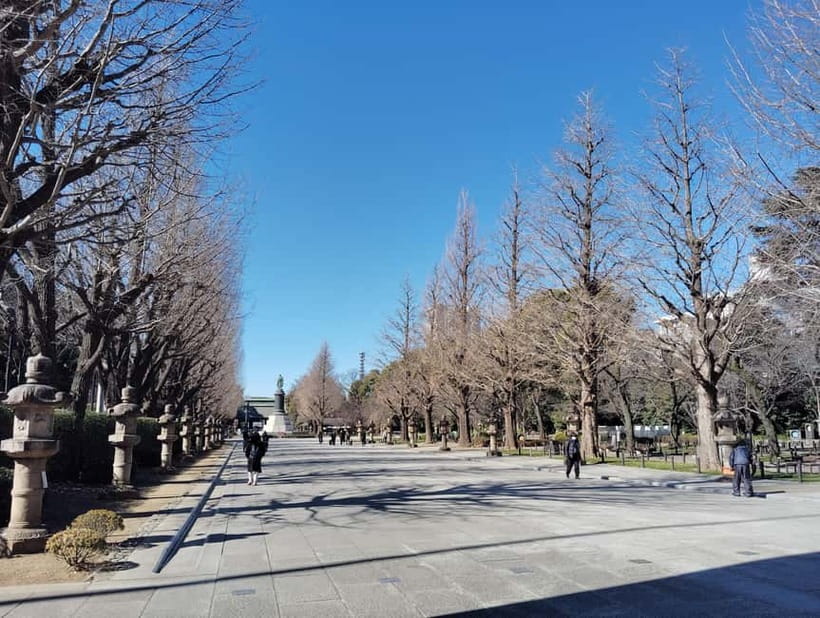
You begin at the large first torii, the imposing gate that introduces the shrine approach. From there, your guide explains how the site connects to the Meiji Restoration, the creation of a modern Japanese state, and the growth of imperial military power. The setting gives these ideas a physical form. You are not only hearing about the past in a classroom. You are walking through a place built to shape how that past is understood.
The shrine portion lasts about 40 minutes. That is enough time to learn the basic rituals, observe the grounds, and discuss the site’s historical purpose without turning the visit into a long religious ceremony. Your guide can also explain traditional shrine etiquette, including how to behave respectfully at the worship area.
I like this part because it helps you read the shrine on two levels. First, it is a living religious site where people come to pray and remember family members. Second, it is tied to an official vision of Japan’s modern history. Keeping both points in view prevents the visit from becoming either a simple patriotic story or a one-sided condemnation.
More Museum Visits in Tokyo:
- Tokyo: Mt. Fuji, Owakudani, Hakone Shrine, & Open-Air Museum
★ 4.7 · 25 reviews - Montserrat Museum and Monastery Entry Ticket
★ 4.5 · 1,740 reviews - Lisbon: Belem, Jeronimos Monastery, and Coach Museum Tour
★ 4.8 · 478 reviews
Shrine etiquette and the meaning of ritual
The guide includes an introduction to traditional shrine practice, so you can take part respectfully rather than wander through without context. The ritual itself is simple, but the explanation gives it weight. You learn how an action performed in the present can connect people with those who died generations ago.
That connection is especially important at Yasukuni. The shrine does not commemorate war dead in the same way as a secular cemetery. It enshrines spirits within a religious framework. The result is a site where ritual, national history, and private mourning overlap.
You should also remember that this is an active place of worship. Keep your voice low, follow your guide’s instructions, and treat photography with care. The tour information specifically prohibits smoking and flash photography, and respectful behavior is essential at a site connected with grief.
Inside the Yushukan War Museum
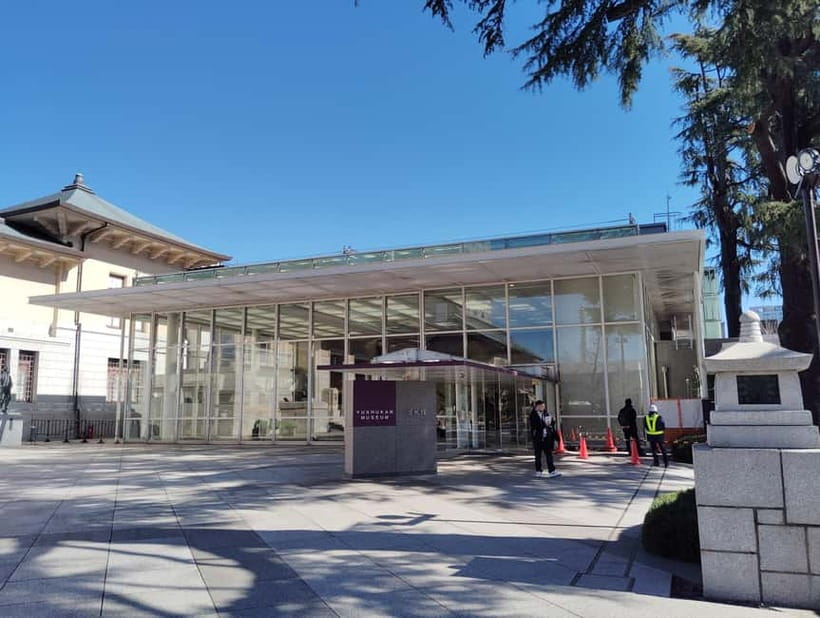
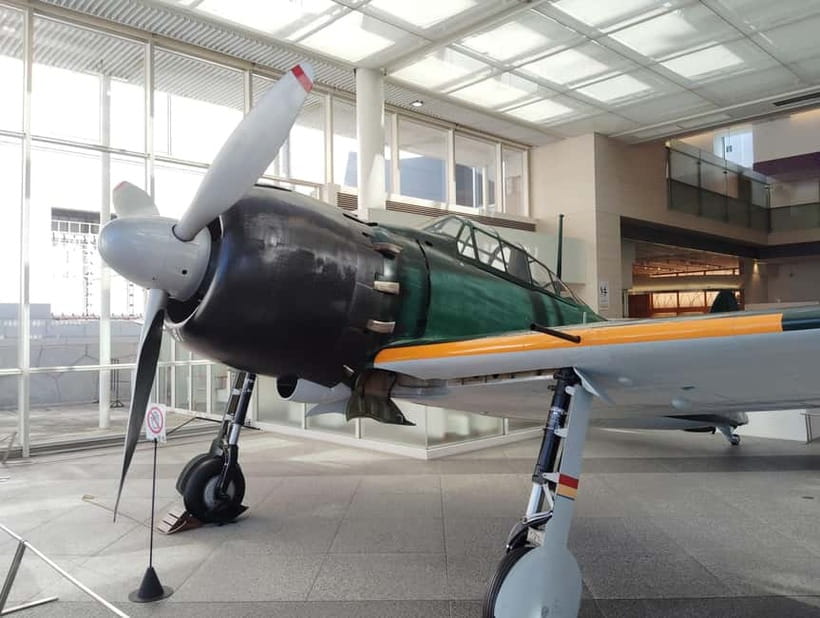
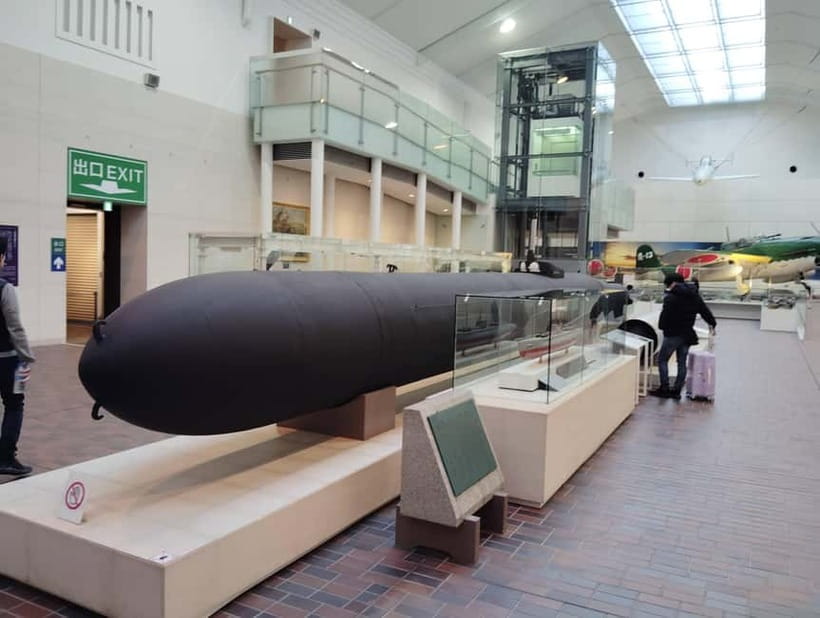
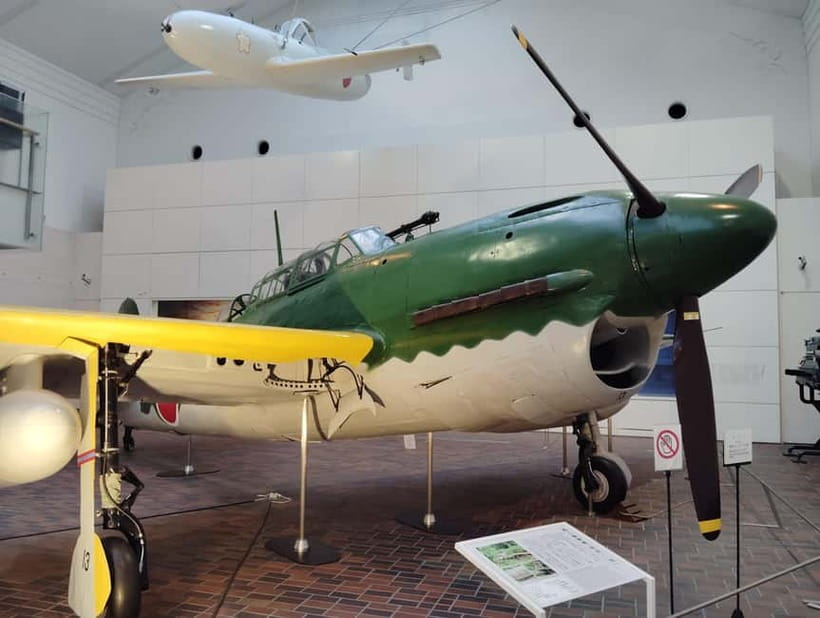
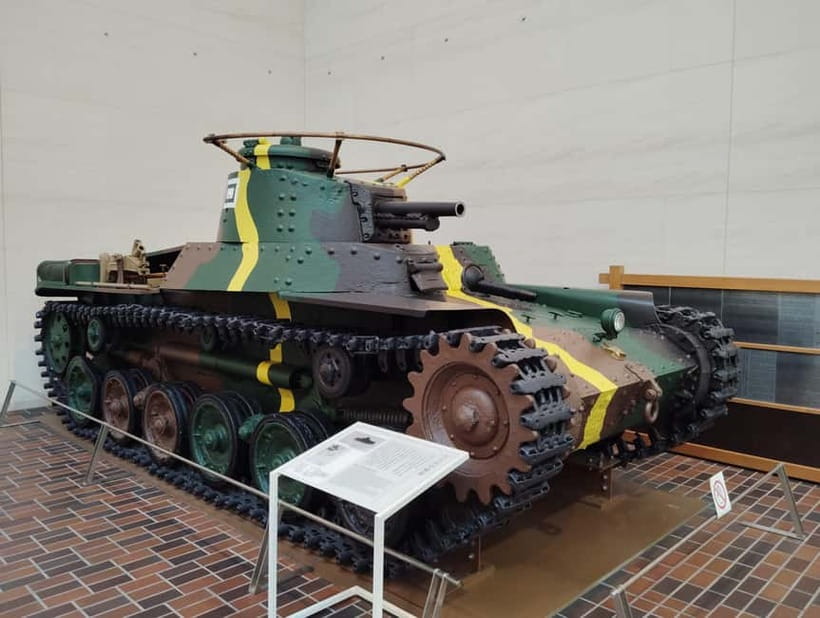
The Yushukan takes up the largest part of the standard tour, with about 110 minutes set aside for the museum. That timing matters. You are not rushing through a few display cases. You have enough time to look at military objects, photographs, documents, and exhibits covering Japan’s military development from the late Tokugawa period through World War II.
The museum presents Japan’s wars through a distinct national narrative. It includes the Pacific War and the period often called the Greater East Asia War in Japan. Some displays may place greater emphasis on Japanese sacrifice, military service, or the country’s stated aims than museums in other countries would.
That does not make the museum useless. In fact, it is one reason to visit with a guide. The value comes from seeing how Japan has chosen to present its own past, then asking what is included, what receives less attention, and how the language of commemoration shapes your understanding.
Your guide provides context rather than asking you to accept one official interpretation. The conversation can cover modernization, samurai ethics, imperial ideology, military expansion, and the human cost of conflict. You can ask how Japan’s memory differs from the way the same events are described in China, Korea, the United States, or Europe.
The displays also give the history a personal dimension. Photographs and documents can make military policy feel less abstract. Objects associated with soldiers and wartime life can raise questions about duty, family, obedience, and the pressure placed on individuals by the state.
A memorable detail from the tour’s feedback concerns a guide named Tatsuo, who was praised for explaining Japanese history in a clear and engaging way. Another guide helped connect a small everyday custom, standing on the left side of escalators in Japan, with older social and historical habits rather than modern traffic rules. That sort of connection is valuable because it shows how historical patterns can survive in ordinary behavior.
You should not expect the museum to provide a neutral, international textbook account. Its viewpoint is part of what you are studying. If you approach it with curiosity and a willingness to compare interpretations, the museum becomes much more revealing.
The extended route to Chidorigafuchi
The longer option adds about one hour at Chidorigafuchi National Cemetery. Established in 1959, this secular, state-administered memorial honors unidentified war dead brought back from overseas battlefields.
This stop changes the tone of the tour. Yasukuni uses Shinto enshrinement and connects the dead to a religious institution. Chidorigafuchi uses a government memorial setting for people whose identities were not known or whose remains could not be returned to their families. The two places remember war in different ways.
That contrast is one of the strongest reasons to choose the extended option. Instead of discussing religious and state commemoration as an abstract idea, you see both forms in the same part of Tokyo. The comparison helps explain why memorials can become political, emotional, and personal at the same time.
Chidorigafuchi is also a more subdued conclusion to the visit. After the museum’s objects and arguments, the cemetery brings attention back to loss and uncertainty. Unknown soldiers do not fit neatly into a national story. Their anonymity raises a different question: how does a country remember people when their names, stories, or final resting places are missing?
If you have the time, I would choose the extended route. The additional hour adds real substance rather than simply making the tour longer. It gives you a second framework for understanding the meaning of war memorials in postwar Japan.
More History Tours in Tokyo:
- Mt. Fuji Heritage Tour: Traditional Villages, Lakes & Shrine
★ 4.5 · 509 reviews - Tokyo History: Sensoji Temple & Asakusa District Private Tour
★ 5.0 · 28 reviews - Chiang Mai: Historic Temples and City Guided Walking Tour
★ 4.7 · 650 reviews - Malta: Prehistoric Temples, Limestone Heritage & Blue Grotto
★ 4.2 · 412 reviews
What the private format adds
A private group is important for this subject. War memory can produce awkward questions, and you may want to ask about imperialism, military responsibility, religious practice, or why certain figures are commemorated. A private guide can adjust the pace and address your group’s interests instead of following a fixed script for a large crowd.
The English-speaking guide is licensed, and the tour is designed around explanation rather than passive sightseeing. You can ask for clarification when a term is unfamiliar or when the museum’s presentation feels incomplete. That exchange is much harder in a large group.
The private format also suits different levels of background knowledge. A student of international relations may want to discuss state memory and regional politics. A first-time visitor to Japan may need a basic explanation of the Meiji Restoration and Shinto practice. The same route can work for both, provided you tell the guide what interests you.
The tour has received a 4.5 rating from six verified bookings, with strong praise for the guides’ historical explanations and friendly manner. Tatsuo is specifically praised for teaching a great deal about Japan’s past, while another guide is described as experienced and able to connect early Japanese history with the modern period. Those comments match the tour’s main strength: the guide is not just there to point out buildings.
Is $87 a fair price?
At $87 per person, this is not a bargain sightseeing walk. It is also more than you would pay to enter a shrine on your own. The value depends on how much you want from the visit.
The Yushukan admission fee is included, along with the licensed English-speaking guide and the guided visits to both Yasukuni and the museum. You still need to arrange your own transport to the meeting point, and food and drinks are not included. The price makes the most sense if you want interpretation, not just admission.
For a casual visitor who has little interest in modern history, the cost may feel high. You could visit the shrine independently, and the museum may be enough for someone who prefers to read the displays alone. But if you want help sorting fact from presentation, a private guide offers useful value.
The longer option is particularly appealing if the added cost is reasonable when you book. Chidorigafuchi gives the tour a stronger structure and helps you compare two types of memorial. Without it, you still receive a serious visit to Yasukuni and the Yushukan. With it, you get a fuller look at how postwar Japan handles remembrance.
Timing, walking, and practical preparation
The total duration ranges from 150 to 210 minutes. The 150-minute version covers Yasukuni Shrine and the Yushukan. The 210-minute version adds Chidorigafuchi National Cemetery.
The meeting point is at the first torii of Yasukuni Shrine, though the exact starting arrangement can vary by the option you book. Possible end points include Chidorigafuchi National Cemetery or the Yushukan. Check those details before setting out, especially if you have another appointment afterward.
Wear comfortable shoes. The tour includes outdoor walking through the shrine grounds and extended time inside the museum. Bring water, a hat, and sunscreen, particularly in warm weather. A camera is permitted in suitable areas, but flash photography is not allowed and some museum rooms may restrict photography altogether.
There is no food break built into the experience, so eat beforehand if you need a proper meal. The subject matter is also serious. You will hear about war, sacrifice, death, imperial ideology, and contested memory. This is not a light cultural outing, and it may not suit young children or anyone looking for a relaxed introduction to Tokyo.
Free cancellation is available up to 24 hours before the start time, and you can reserve now while paying later. Those policies help if your Tokyo plans are still shifting, but the main booking decision should be your interest in the subject.
Who should book this tour?
I would recommend it to students, history readers, researchers, and anyone interested in Japan’s modern identity. It also suits you if you enjoy visiting places that reveal disagreement rather than tidy answers.
The tour is a good match for people studying international relations because Yasukuni remains tied to Japan’s relationships with its neighbors. It works for anyone interested in memory studies because the shrine and cemetery show two ways a country can honor war dead. And it is useful for culturally curious visitors who want to understand how religion and government can overlap in public life.
I would be more cautious if you dislike museums with a strong national viewpoint. The Yushukan may challenge your expectations, and some displays may feel selective or uncomfortable. That is not a reason to avoid it, but it is a reason to arrive prepared and use the guide’s explanations.
Final verdict: book it for context, not easy answers
Book this tour if you want to understand why Yasukuni Shrine matters and how Japan remembers its wars. The private guide, substantial museum time, and optional visit to Chidorigafuchi give you more than a standard shrine stop.
Choose the extended version if possible. The comparison between Yasukuni’s religious enshrinement and Chidorigafuchi’s secular memorial is the clearest way to grasp the subject.
Skip it if you want a simple, cheerful sightseeing activity or a completely neutral museum account. For serious history, though, this is a thoughtful use of half a day in Tokyo, especially when you treat the museum’s viewpoint as something to examine rather than simply accept.
FAQ
How long does the Tokyo War History Tour take?
The tour lasts between 150 and 210 minutes. The shorter option includes Yasukuni Shrine and the Yushukan War Museum. The longer option also visits Chidorigafuchi National Cemetery.
What sites are included?
The tour includes Yasukuni Shrine and the Yushukan War Museum. The extended option adds Chidorigafuchi National Cemetery.
Is the tour private?
Yes. Only your group participates, and the tour is led by a licensed English-speaking guide.
Is the Yushukan Museum admission included?
Yes. The admission fee for the Yushukan War Museum is included in the tour price.
What language is the tour offered in?
The live tour guide speaks English.
Where does the tour meet?
The meeting point is at the first torii of Yasukuni Shrine, although the precise meeting arrangement may vary depending on the option booked.
What should I bring?
Bring comfortable shoes, water, a hat, sunscreen, and a camera if you wish. Flash photography is not allowed, and photography may be restricted in some museum areas.
Can I cancel the tour for a refund?
Yes. You can cancel up to 24 hours in advance for a full refund.
Just added around Tokyo
- :Tokyo,Shibuya /Meiji Shrine tour in KIMONO/English-friendly★ 5.0 · 4 reviews
- Tokyo: Snow Monkey and Zenkoji Temple Day Trip In Low Price★ 5.0 · 5 reviews
- Tokyo: Gotokuji Culture Walk & Lucky Cat Temple Experience★ 4.9 · 5 reviews
- Tokyo: Shibuya Sky, Harajuku & Meiji Shrine Highlights Tour★ 4.5 · 9 reviews
- Tokyo: Visit 5 Shrines & Collect Goshuin on Private Tour★ 5.0 · 3 reviews
- Tokyo: Sensoji Temple & Street Food: Private Tour with guide★ 4.6 · 8 reviews
- Tokyo’s Kitchen: Tsukiji Market Food & Culture Walk★ 4.7 · 74 reviews
- Tokyo: Nikko Day Tour Shrines, Lake Chūzenji & Kegon Falls★ 4.9 · 26 reviews
Museums, compared.
Belem, Jeronimos Monastery, and Coach Museum Tour
Read our review →
Rila Monastery and Optional Museum, Cave or Spa
Read our review →
Takua Pa: Food Market, Tsunami Museum, Temple, & Old Town
Read our review →
Phnom Penh City Tour, Silver Pagoda, Genocide Museum, Killing Fields
Read our review →
Archeology Museum, Gunung Kawi & Goa Gajah Temple Tour
Read our review →
Golden Temple, Jallianwala Bagh, Partition Museum & Wagha Border – #Travellouge
Read our review →
Paestum: Private Tour of Greek Temples and Archaeological Museum
Read our review →Browse the lists this tour appears in