
Review · TOKYO
Mt. Fuji Heritage Tour: Traditional Villages, Lakes & Shrine
This 10-hour outing packs traditional villages, Lake Kawaguchi, Arakura Sengen Shrine, Chureito Pagoda, and Oshino Hakkai into one well-organized day from Tokyo. I especially like the mix of classic Fuji photo stops and quieter cultural places, plus the low $50 price includes transport, a guide, driver, parking, and admission to Saiko Iyashi no Sato Nenba.
I also like how guides such as Sia, Kazi, Wanting, Alex, and Rachel have kept groups on time while helping with meeting points and photo locations. The main caution is simple: Mt. Fuji may hide behind clouds, and weekend traffic can make the return to Tokyo late. Lunch is not included, and several stops give you enough time for highlights rather than a slow, unhurried visit.
Five details worth knowing before you book
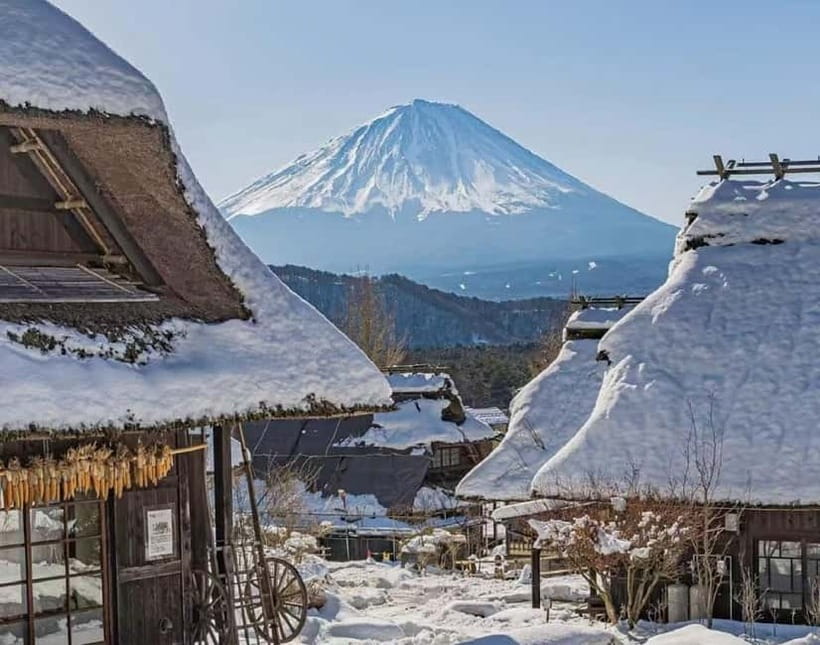
- The Fuji view is never guaranteed: Clear weather can produce exceptional views, but clouds may cover the mountain at any stop.
- The autumn plan changes: From October 26 to November 20, the tour visits the Maple Corridor during peak foliage and does not go to Oishi Park.
- You get many major sights in one day: The route covers Saiko, Lake Kawaguchi, Arakurayama, and Oshino Hakkai without changing trains or arranging local buses.
- The pagoda requires an uphill walk: Arakurayama Sengen Park and Chureito Pagoda are reached on foot, so comfortable shoes matter.
- Bring cash and food: Some places may not accept cards, and lunch is an extra cost.
- The guides are a major part of the value: Clear timing, friendly help, and multilingual explanations are praised repeatedly, especially from guides including Sia and Kazi.
Why this $50 Fuji day trip can be good value
At $50 per person, this is an unusually inexpensive way to reach several places around Mt. Fuji from central Tokyo. The price includes a coach, driver, tour guide, parking, pickup and drop-off at the designated meeting point, and admission to Saiko Iyashi no Sato Nenba.
You are paying for convenience more than luxury. A shared coach lets you avoid piecing together regional trains and buses, which can be awkward when you want to combine Saiko, Lake Kawaguchi, Arakurayama, and Oshino Hakkai in a single day.
The trade-off is a long day, roughly five hours of total bus travel according to the planned schedule. The ride from Tokyo to the Fuji area takes about two and a half hours, followed by another two and a half hours back. That sounds heavy on paper, but the stops break up the day well.
You should also expect a group schedule. The guide needs to keep everyone moving, and some visits last only 15 to 40 minutes. That works well for first-time visitors who want the main views. It is less suitable if you prefer to sit beside a lake, explore every shop, or spend an entire afternoon at one shrine.
More History Tours in Tokyo:
- Tokyo History: Sensoji Temple & Asakusa District Private Tour
★ 5.0 · 28 reviews - Tokyo War History Tour: Yasukuni Shrine & War Museum
★ 4.5 · 6 reviews - Chiang Mai: Historic Temples and City Guided Walking Tour
★ 4.7 · 650 reviews
Saiko Iyashi no Sato Nenba brings old Japan into the frame
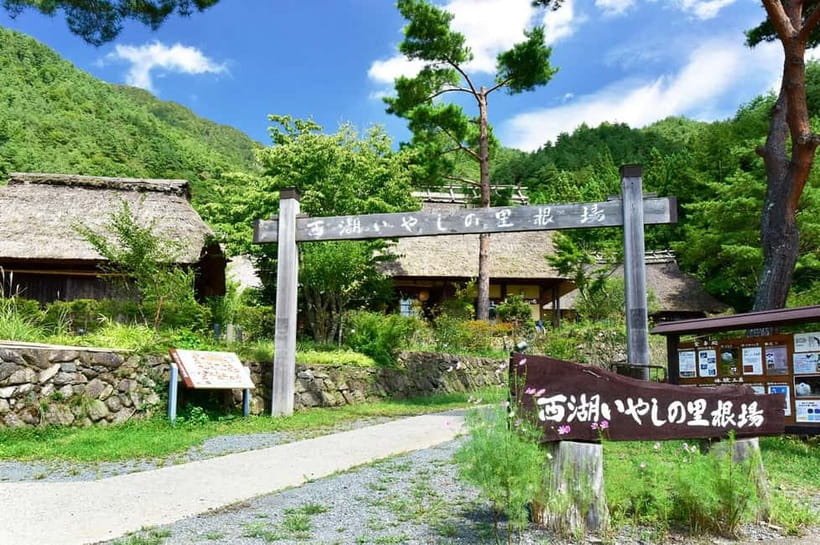
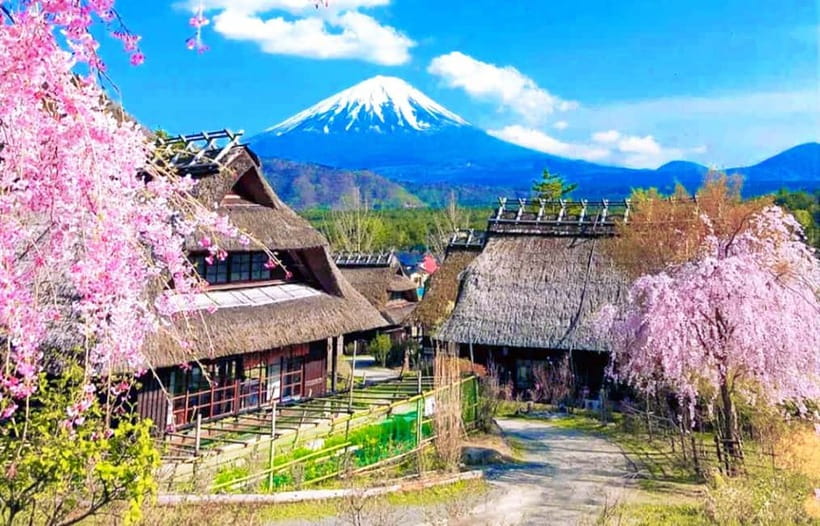
The first major stop is Saiko Iyashi no Sato Nenba, a reconstructed traditional village beside Lake Saiko. Its thatched-roof houses create the kind of Fuji scene that looks made for a travel poster, particularly when the mountain appears behind the rooftops.
You get about an hour here, enough to walk through the village, take photographs, and look inside some of the traditional buildings. The combination of dark thatch, wooden structures, open views, and Mt. Fuji gives this stop more character than a simple roadside photo break.
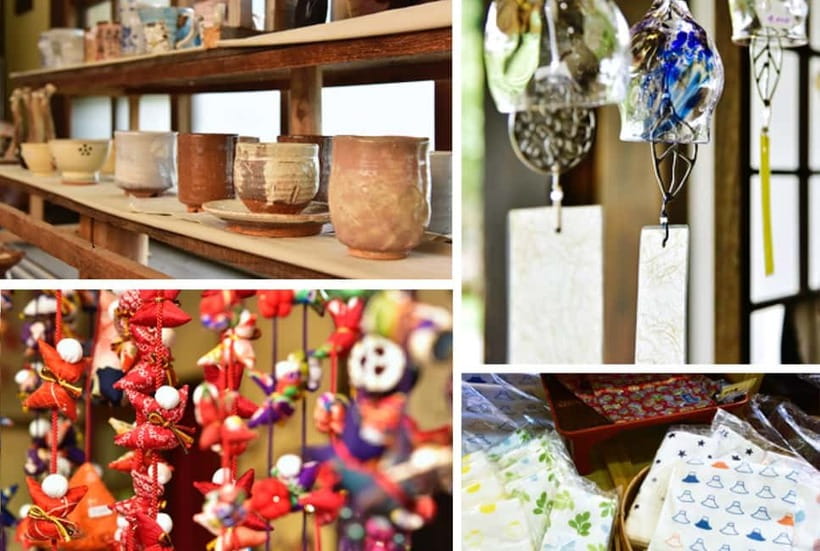
There are Japanese snacks near the entrance, and you can buy food before continuing. A ninja costume rental is also available for an extra fee, which may appeal to families or anyone who wants a playful photo rather than a solemn shrine portrait.
The visit is not only about the mountain. If clouds cover Fuji, the village still offers traditional architecture and a different feel from the more commercial stops later in the day. One person enjoyed buying artwork from an artist here, so leave room in your bag if local crafts interest you.
Oishi Park and the Maple Corridor depend on the calendar
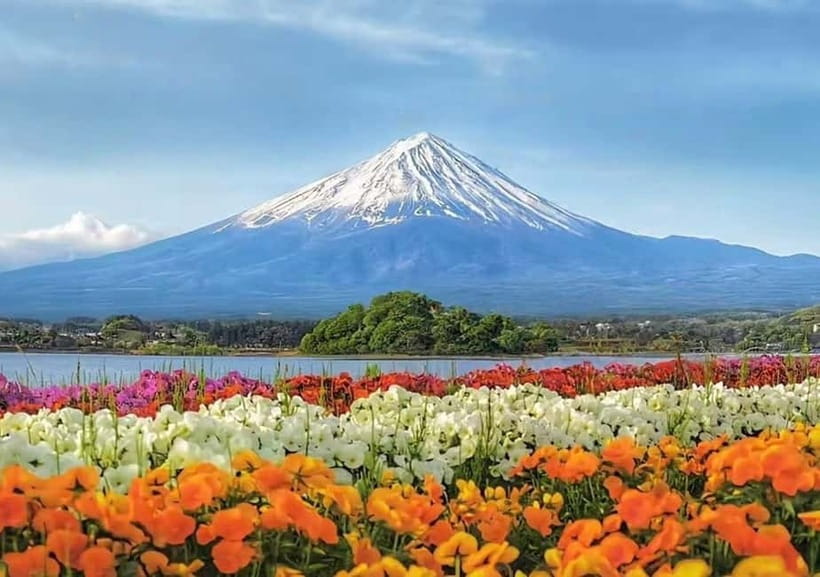
The next part of the route centers on Lake Kawaguchi, one of the best-known viewing areas around Mt. Fuji. Oishi Park sits along the lake and is valued for its seasonal planting and open mountain views.
In summer, lavender fills parts of the park with color and fragrance. In autumn, red broom grass changes the character of the grounds. The planned visit is about 40 minutes, which gives you time for photographs and a short walk, but not a leisurely park outing.
The schedule changes during peak autumn foliage. From October 26 through November 20, the tour goes to the Lake Kawaguchi Maple Corridor instead of Oishi Park. This is an important booking detail. The corridor is prized for its fiery fall leaves and Fuji views, but you should not expect both Oishi Park and the Maple Corridor during that period.
The foliage dates are not a guarantee of perfect color. Weather and the season can shift, but the stated window gives you a useful guide for planning. If your main goal is autumn leaves, this is the strongest time to consider the tour. If you want lavender, summer is the better fit.
At Lake Kawaguchi, the mountain can appear clearly in the morning and disappear behind clouds later. Several people had that experience, seeing Fuji at some stops before the weather changed. Check the forecast, but treat it as a guide rather than a promise.
Arakurayama Sengen Park delivers the famous postcard
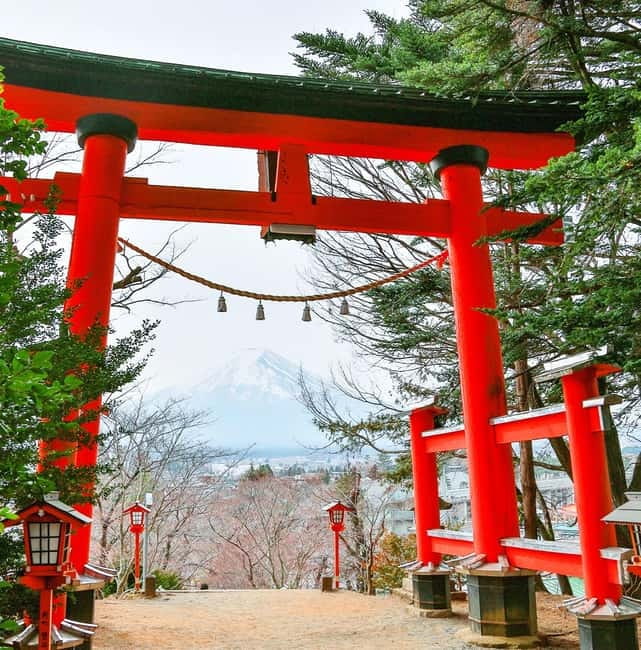
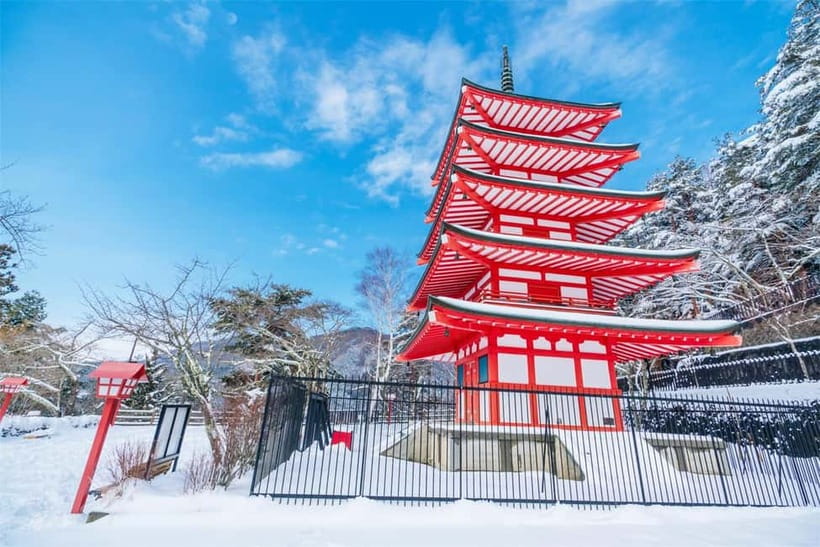
Arakurayama Sengen Park is the tour’s big image-making stop. The view of Chureito Pagoda with Mt. Fuji behind it has become one of Japan’s most recognized photographs.
To reach the main viewpoint, you walk uphill through the park and climb steps. The effort is manageable for many people, but it is not a flat sightseeing stop. Wear shoes with a good grip, take your time, and keep some energy in reserve for the rest of the day.
The planned visit to Arakurayama Sengen Park lasts about 40 minutes. That includes time for the walk, shrine area, pagoda, and photographs. The separate schedule lists about 15 minutes for Arakura Fuji Sengen Shrine and another 15 minutes for Chureito Pagoda, so you need to move with purpose.
The shrine gives the stop more depth than a quick photo hunt. You can pause for a prayer, look at the architecture, and enjoy the wooded approach before reaching the view. One useful tip concerns goshuin, the calligraphy stamp associated with Japanese temples and shrines. If you want one from the pagoda area, submit your book before climbing the steps, since the wait may take longer than your allotted time.
This is also the most timing-sensitive stop. The view is popular, and the tour cannot wait indefinitely for every photograph. If the mountain is hidden, the pagoda and shrine still make a worthwhile visit, but the famous composition loses its main subject.
A few more temple visits around Tokyo worth a look
- Tokyo: Asakusa Walking Tour with Sensoji Temple Visit
★ 4.8 · 1,583 reviews - Nikko: Kegon Falls, Lake Chuzenji & Toshogu Temple
★ 4.6 · 1,577 reviews - Tokyo: Nikko Toshogu Shrine and Kegon Waterfall Tour
★ 4.5 · 1,266 reviews - Tokyo Panoramic 1 Day: Meiji Shrine, Asakusa, Odaiba and SKYTREE®
★ 4.5 · 1,222 reviews
Oshino Hakkai finishes the day with clear water and local snacks
Oshino Hakkai is a group of eight spring ponds fed by melted snow from Mt. Fuji. The water is known for its clarity, and the ponds offer a calmer final stop after the busier photo locations.
You have about 70 minutes here, the longest sightseeing period on the route. That gives you time to walk between the ponds, look at reflections, visit nearby shops, and sample local food.
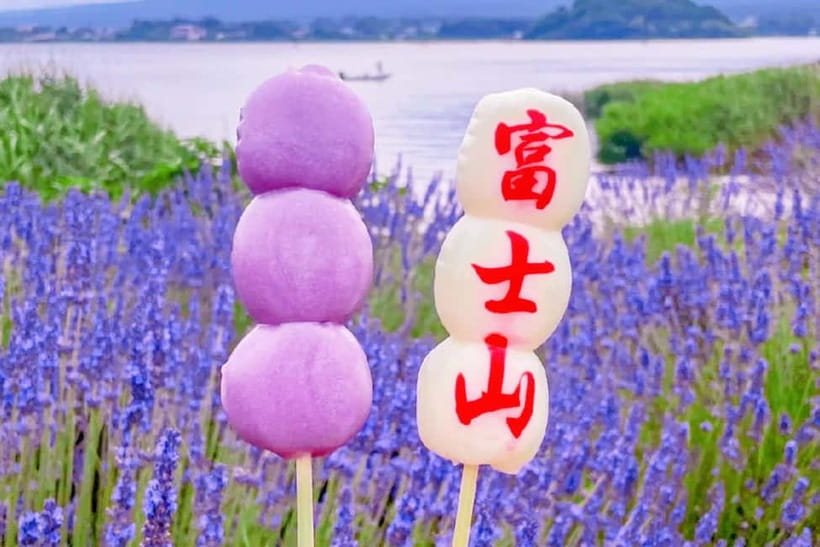
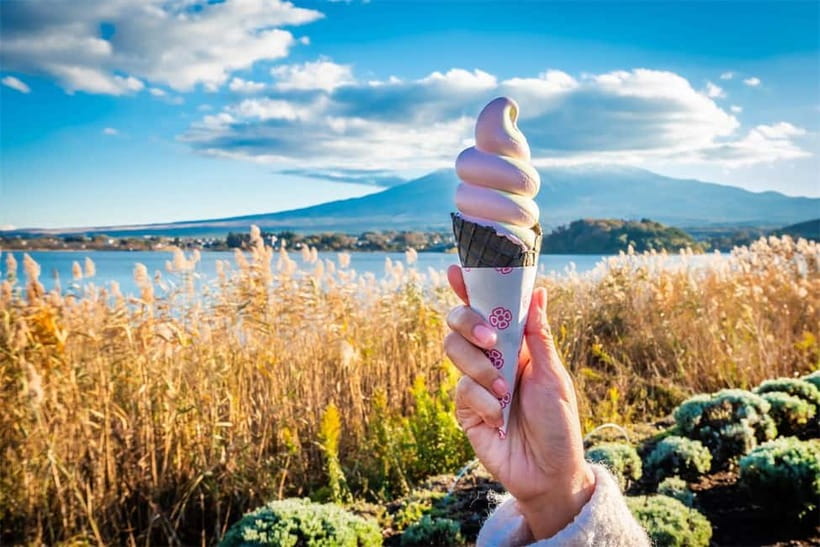
Try freshly made rice crackers if you want something familiar with a Japanese twist. Wasabi ice cream is the more adventurous choice. It is exactly the sort of small local taste that makes a short stop memorable, even if you decide one spoonful is enough.
Oshino Hakkai can feel more commercial than Saiko Iyashi no Sato Nenba, with souvenir shops and food stalls around the ponds. That is not necessarily a flaw, but it helps to set expectations. You are visiting a scenic cultural attraction with shopping, not a remote mountain spring.
The ponds remain useful even if Fuji is hidden. Clear water, traditional buildings, and small paths give you something to see without depending entirely on the mountain.
The bus ride, timing, and lunch require planning
The coach is the practical backbone of this experience. You board near Tokyo MODE Gakuen at 1-5-1 Marunouchi, unless your booked option gives a different meeting point, and return to the same designated location.
Arrive 15 minutes early. Late arrival or a missed departure is not refunded, and finding a large coach in central Tokyo is easier when you are already at the meeting point rather than rushing in at the last minute.
The guide sends contact information and the vehicle license plate number the night before. Save those details to your phone. Guides have also used live meeting locations and clear return times, which helps at stops where many buses and visitors may be present.
Lunch is not included. You can bring food, buy something at one of the attractions, or use a restaurant recommended by the guide. The scheduled restaurant break is about 40 minutes, but food quality and choice may not suit everyone. One person found the restaurant underwhelming, while others appreciated having a proper sit-down break.
My advice is to carry a small meal or substantial snack. Bring water too. That gives you control over both cost and timing, especially if the restaurant menu is limited or the stop feels rushed.
Weekend and holiday traffic in Japan can delay the return to Tokyo. Do not schedule a flight, show, expensive dinner reservation, or other fixed appointment immediately afterward. The attraction times may also be shortened, changed, or canceled when traffic or conditions require it.
The guides keep this fast-moving day together
The strongest part of the experience is often the guide. Sia receives especially warm praise for being friendly, organized, clear, and attentive. She has helped groups find bathrooms, understand return times, order lunch in advance, learn basic Japanese phrases, and locate good photo spots.
Kazi is also praised for keeping the group informed and moving while remaining patient and friendly. Wanting has helped families and even people carrying large suitcases, while Rachel has been appreciated for answering questions about Japanese customs and Mt. Fuji.
Alex, Sawaki, Feng, and other guides have also been described as helpful and well organized. The experience is offered in English, Japanese, and Traditional Chinese, with explanations delivered in multiple languages. That means commentary may be shared across the group rather than delivered continuously in just one language.
A few people wanted more information during the drive, while others were happy with the amount of commentary. If you want a full lecture on Fuji’s geology or detailed shrine history, this may feel light. If you mainly need practical guidance, cultural context, and clear instructions, the format works well.
The drivers have also earned praise for smooth, safe transport. That matters on a day with long highway stretches and a tight schedule.
What the weather can and cannot change
Mt. Fuji is the star, but it does not take reservations. Clouds may block the summit or cover the entire mountain, even when the forecast looked promising.
The tour still has value in poor weather because the village, shrines, pagoda, ponds, food, and seasonal plants do not disappear. However, you should be honest about your priorities. If your only goal is the classic Fuji and Chureito photograph, postponing for a clearer forecast may make sense if your schedule allows.
The best strategy is to enjoy each stop on its own terms. Saiko is about traditional buildings, Arakurayama is about shrine and pagoda, Oshino is about springs and food, and Lake Kawaguchi is about open views and seasonal color. Fuji is the bonus that ties them together.
Who should book this Mt. Fuji tour?
I would choose this trip if you have one free day in Tokyo and want broad coverage without handling several local connections. It suits first-time visitors, families who appreciate a guide, photographers collecting the major Fuji viewpoints, and anyone seeking a low-cost introduction to the region.
It also works well for multigenerational groups. Guides have handled children, older family members, and groups of 11 with patience and clear instructions.
I would be more cautious if you use a wheelchair, since the activity is not suitable for wheelchair users. I would also hesitate if you dislike early starts, long coach rides, fixed schedules, or short visits.
Should you book it?
Book this tour if you want maximum Fuji-area coverage for $50 and accept that the day will be busy. The route gives you traditional village scenery, seasonal parks, a shrine and pagoda, famous photo points, clear spring ponds, and local snacks in one outing.
Skip it if you want a slow, private day or cannot tolerate uncertain weather. For everyone else, the combination of strong organization, helpful multilingual guides, and included transport makes this a sensible first look at Mt. Fuji. Pack lunch, wear proper shoes, keep the evening free, and hope the clouds cooperate.
FAQ
How long does the Mt. Fuji Heritage Tour last?
The tour lasts 10 hours, including coach travel from Tokyo to the Mt. Fuji area and back.
What is the tour price?
The listed price is $50 per person.
Is lunch included?
No. You can bring food, buy lunch at the attractions, or eat at a restaurant suggested by the guide.
Where does the tour start and finish?
The listed meeting and drop-off location is Tokyo MODE Gakuen, 1-5-1 Marunouchi. The exact meeting point may vary depending on the option booked.
What languages are available?
The tour offers live guidance in English, Japanese, and Traditional Chinese.
Is the Maple Corridor visited every day?
No. From October 26 to November 20, the tour visits the Maple Corridor during peak autumn foliage and does not go to Oishi Park.
Is admission to Saiko Iyashi no Sato Nenba included?
Yes. Admission to Saiko Iyashi no Sato Nenba, the guide, driver, parking, and pickup and drop-off at the designated meeting point are included.
Can I cancel the tour for a refund?
You can cancel up to 24 hours in advance for a full refund. The tour also offers a reserve-now-and-pay-later option.
Just added around Tokyo
- :Tokyo,Shibuya /Meiji Shrine tour in KIMONO/English-friendly★ 5.0 · 4 reviews
- Tokyo: Snow Monkey and Zenkoji Temple Day Trip In Low Price★ 5.0 · 5 reviews
- Tokyo War History Tour: Yasukuni Shrine & War Museum★ 4.5 · 6 reviews
- Tokyo: Gotokuji Culture Walk & Lucky Cat Temple Experience★ 4.9 · 5 reviews
- Tokyo: Shibuya Sky, Harajuku & Meiji Shrine Highlights Tour★ 4.5 · 9 reviews
- Tokyo: Visit 5 Shrines & Collect Goshuin on Private Tour★ 5.0 · 3 reviews
- Tokyo: Sensoji Temple & Street Food: Private Tour with guide★ 4.6 · 8 reviews
- Tokyo’s Kitchen: Tsukiji Market Food & Culture Walk★ 4.7 · 74 reviews
Historical Tours, compared.

Malta: Prehistoric Temples, Limestone Heritage & Blue Grotto
Read our review →
Day Trip From Addis Ababa See Historical Monastery,Stunning Nature,Animals,Birds
Read our review →
Beijing Historical Tour II including Summer Palace, Lama Temple & Panda Garden
Read our review →
“Porto: Fado Show with Guided Tour in a Historic Monastery”
Read our review →
Private Half-Day Temples and Cultural Tour in Kuala Lumpur
Read our review →
Beijing Historical Tour I – Forbidden City, Tiananmen Square & Temple of Heaven
Read our review →
Gyeongju: UNESCO Heritage Tour Including Bulguksa Temple
Read our review →Browse the lists this tour appears in