
Review · KYOTO
Kyoto: Kiyomizudera, Sanjusangendo, Ginkakuji and Higashiyama.
Kyoto’s finest temples fit into one thoughtful day. This small Spanish-language tour links Sanjusangendo, Kiyomizudera, Higashiyama, Yasaka Shrine, and Ginkakuji, with a guide to explain what you are seeing instead of leaving you to decode every gate and statue alone. I especially like the mix of grand temples and ordinary Kyoto streets, plus the capped group of 10, which should keep the day personal. The main drawback is pace: seven hours of walking, stairs, temple visits, and public transport may feel long if you prefer slow, unplanned sightseeing.
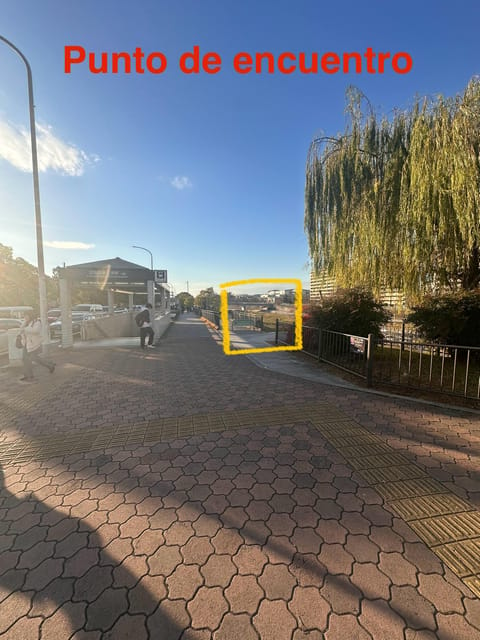
I also like that three major temple admissions are included in the $95 price. You will need extra cash or an ICOCA, SUICA, or PASMO card for buses and local trains, and you should wear proper walking shoes. The meeting point is Shichijo Station Exit 1 at 9 a.m., so punctuality matters.
Key points to know before booking
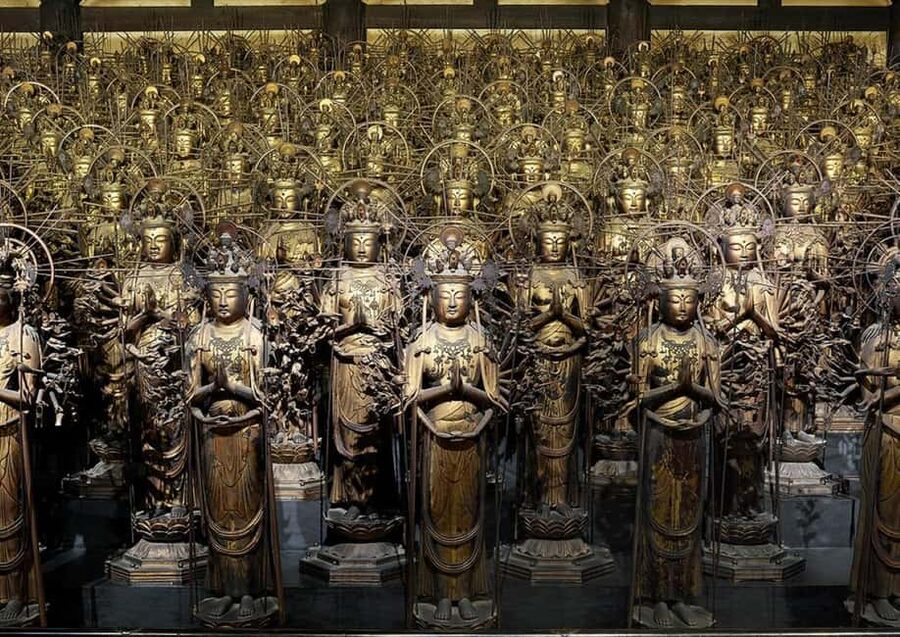
- Sanjusangendo’s 1,001 Kannon statues provide the day’s most striking indoor temple experience.
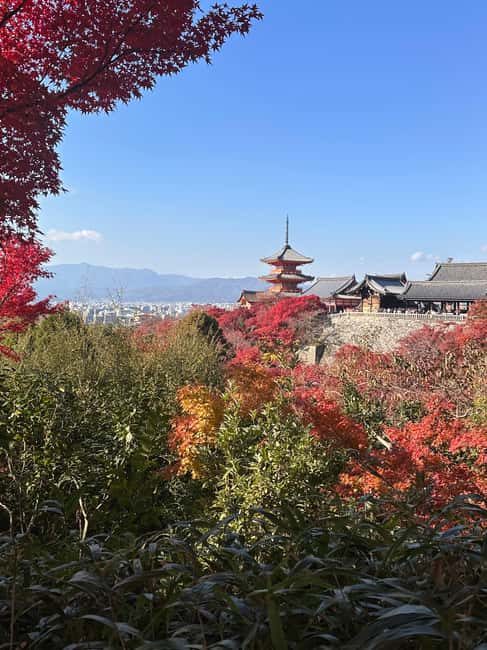
- Kiyomizudera and Higashiyama bring together Kyoto views, old lanes, Yasaka Pagoda, and Yasaka Shrine.
- Ginkakuji’s Zen gardens offer a quieter finish than the busy streets around Kiyomizudera.
- Philosopher’s Walk adds a relaxed stroll between temple visits rather than another quick photo stop.
- Spanish guidance and a group limited to 10 suit families and couples who want explanations without a large coach party.
- Transport costs extra, with about 230 yen recommended for buses, so carry cash or a transit card.
Why this Kyoto temple route works
Kyoto has enough temples to fill several days, but that choice can become a problem. You can spend half a morning comparing maps, bus routes, and opening hours, then arrive at a famous site without knowing why it matters. This route solves that problem by giving you a clear east and northeast Kyoto plan in seven hours.
You begin near Shichijo Station and finish around Higashiyama according to the detailed route, while the meeting information also says the activity ends back at the meeting point. I would confirm the final drop-off before booking, since the two descriptions do not match perfectly.
The route also has a useful rhythm. Sanjusangendo gives you a calm interior visit first. Kiyomizudera supplies the famous views and a larger crowd. Higashiyama and Yasaka Pagoda turn the walk into a neighborhood visit. Public transport then carries you toward Ginkakuji and Philosopher’s Walk, where the mood becomes quieter.
That variety is the real value. You are not seeing four temples that blur together. You are comparing different forms of Japanese religious architecture, gardens, statues, streets, and shrine life across one day.
More Fushimi Inari Shrine Tours in Kyoto:
- Osaka/Kyoto:Kinkakuji,Arashiyama,FushimiInariShrine,NaraPark
★ 4.1 · 1,596 reviews - Osaka/Kyoto: Arashiyama, Nara & Fushimi Inari Shrine w/Lunch
★ 4.4 · 754 reviews - Kyoto: 3-Hour Fushimi Inari Shrine Hidden Hiking Tour
★ 4.9 · 270 reviews
Sanjusangendo and its 1,001 Kannon figures
The first formal stop is Sanjusangendo, with about an hour for a guided visit. The temple is best known for its long hall filled with 1,001 statues of Kannon, the Buddhist figure associated with compassion.
This is a strong opening stop because the experience depends on scale and order. The statues are not something you fully grasp from a quick picture online. Inside the long hall, the repeated figures create a very different effect from Kyoto’s open-air gardens and mountain views. A guide can also give the room context, helping you understand why this temple deserves a place on a first visit to Kyoto.
The interior setting makes this part of the day feel sheltered and focused. That can be welcome if the weather is poor, though you should remember that the visit is still one hour within a full seven-hour program. You will not have unlimited time to linger over every figure.
I would pay attention here to how the tour begins with an indoor temple rather than rushing straight to Kiyomizudera. It gives you a clear point of comparison later in the day. Sanjusangendo is about repetition, stillness, and the power of a single long hall. Kiyomizudera will feel much more open and scenic.
The 20-minute walk toward Kiyomizudera
After Sanjusangendo, the group walks for about 20 minutes to Kiyomizudera. That distance is manageable for most people who are comfortable walking, but it is also the first reminder that this is an active sightseeing day.
I like this transition because you are not being moved from one entrance to another by coach. A short walk helps connect the temples to Kyoto’s streets and makes the day feel like a city visit rather than a string of isolated attractions. Still, comfortable shoes are essential. The tour description specifically recommends comfortable clothing and footwear, and I would take that advice seriously.
There are no baby carriages allowed on the activity, so families should consider that before booking. The provided information does not give more detail about child arrangements, so parents should plan around the walking and temple access rather than assume a stroller will work.
Kiyomizudera, Kyoto’s famous hillside temple
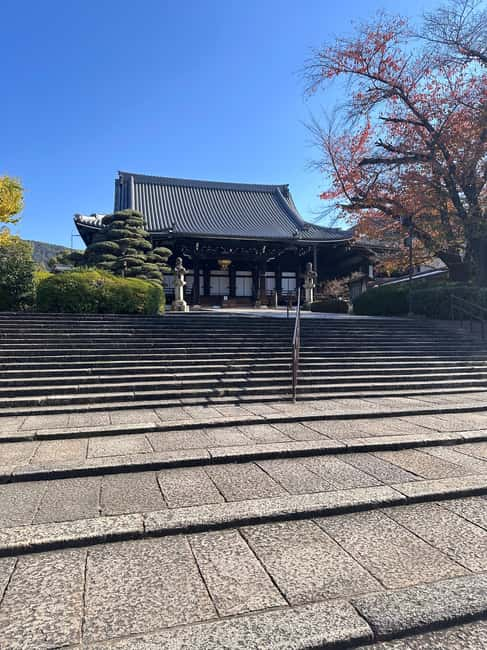
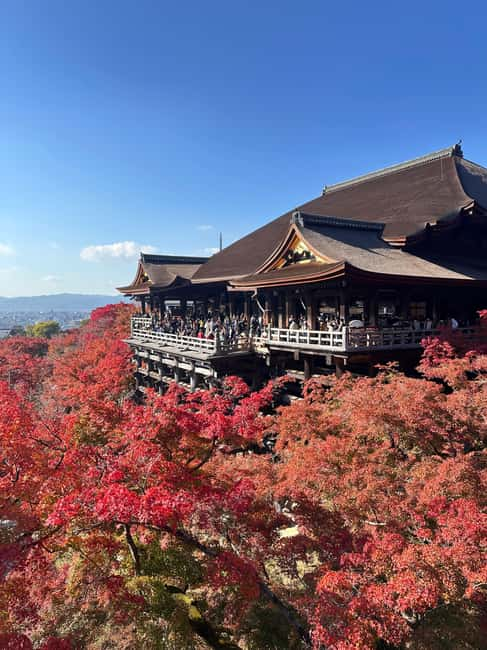
Kiyomizudera receives about an hour of guided time. It is one of Kyoto’s best-known temples, and for good reason: the setting, the wooden construction, and the approach through Higashiyama give it a strong sense of place.
The key advantage of seeing Kiyomizudera with a Spanish-speaking guide is that the visit can move beyond the standard photo stop. You can ask questions and get help sorting out the temple’s religious meaning, layout, and customs. The available feedback repeatedly praises the guide’s personal attention and friendly teaching style. One family member who could not attend the day personally said that guide Manuel kept the group engaged and helped them learn a great deal, which is a useful clue about the tone of the experience.
An hour is enough for a guided introduction, but not for every corner of the complex. You should expect a focused visit rather than a slow, independent exploration. If Kiyomizudera is your main reason for coming to Kyoto, you may want separate free time on another day.
The approach and temple grounds also involve walking and likely uneven sections, so do not treat this as a seated sightseeing trip. Bring water and be ready to keep moving when the group does.
Same place, a different morning at the gates:
- Kyoto: Tea Ceremony Ju-An at Jotokuji Temple
★ 4.9 · 3,207 reviews - Kyoto Arashiyama Walking Tour: Bamboo, Monkeys, Gardens & Secrets
★ 5.0 · 1,216 reviews - Arashiyama Bamboo, Temple, Monkeys, or Secret Sake Brewery
★ 4.8 · 886 reviews - Kyoto: Arashiyama Bamboo Forest, Monkeys, Matcha & Temple Tour
★ 5.0 · 759 reviews
Higashiyama and the Yasaka Pagoda
The route then spends about an hour sightseeing through Higashiyama, followed by a 30-minute guided visit at Hōkan-ji Temple, better known for its Yasaka Pagoda. This is one of the most appealing parts of the day because it places major religious sites within a historic Kyoto district rather than isolating them behind a ticket gate.
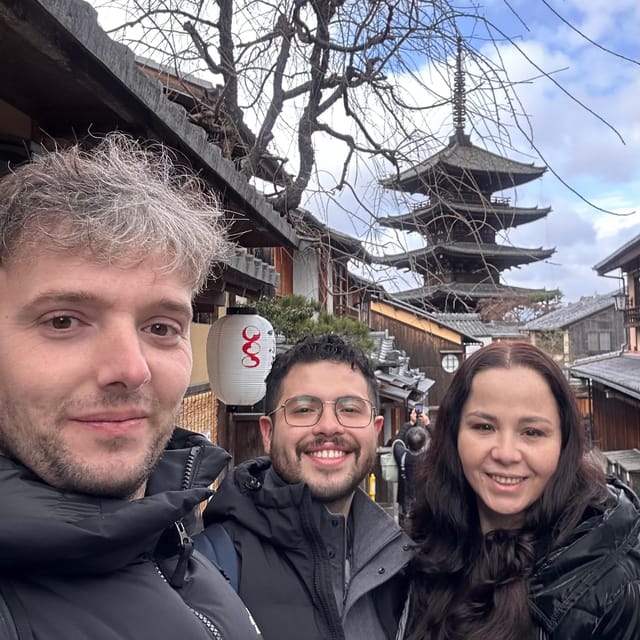
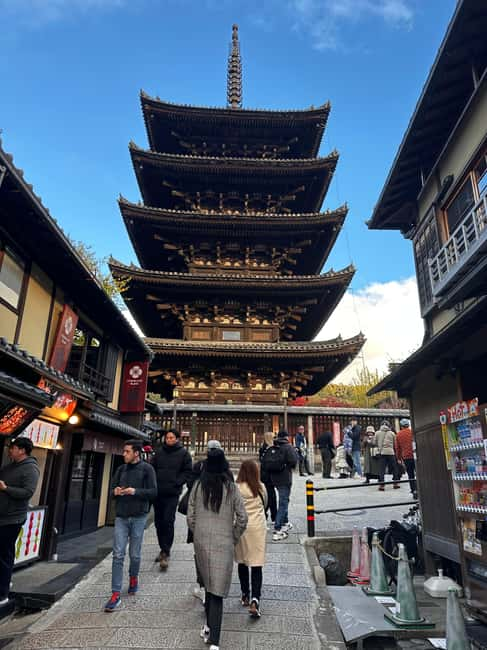
Higashiyama is where the tour can feel most connected to everyday Kyoto. You walk through the district, see the five-story Yasaka Pagoda, and visit Yasaka Shrine. The old-style streets provide a change from the grand scale of Sanjusangendo and Kiyomizudera.
The one-hour neighborhood stop gives you time to look around, but the schedule remains organized. You should not expect a long shopping break or a leisurely café visit. The guide’s job is to keep the group moving toward the next timed stop.
Hōkan-ji’s 30-minute guided visit is short, yet useful. The pagoda gives you a strong visual marker in the Higashiyama area, and the guide can help explain why this building matters within the district. If you like architectural details and street photography, keep your eyes open during this section. If you prefer long periods in one temple, the half-hour may feel brief.
Yasaka Shrine and the shift from temple to shrine
Yasaka Shrine receives another 30-minute guided visit. This is a good addition because Japanese temples and shrines are not the same thing, even though first-time visitors often group them together.
The stop gives you a chance to see a Shinto shrine within the same broad sightseeing day as several Buddhist temples. That contrast adds value to the route. Rather than simply counting famous buildings, you get a broader look at Kyoto’s religious traditions.
Thirty minutes is enough for an introduction and a look around, but not a deep study of the shrine grounds. I would listen closely to the guide here, since the distinctions between Buddhist and Shinto spaces may be easier to understand with a short explanation than from signs alone.
The schedule has already included several major stops by this point. If you are tired, Yasaka Shrine may feel like one more monument on a long list. Its value depends on your interest in seeing how Kyoto’s sacred places differ from one another.
Public transport to Ginkakuji
The route uses public transport for about 30 minutes before reaching the Silver Pavilion, or Ginkakuji. Buses or local train lines are not included in the $95 price, so you should carry around 230 yen for bus fares or use an ICOCA, SUICA, or PASMO card.
This is a small cost, but it matters because the advertised tour price is not the total amount you will spend during the day. The extra transport fare is modest, and I consider it reasonable for a city tour of this length. Just do not arrive with no cash and assume every part of the trip is covered.
Using public transport also gives you a more ordinary view of Kyoto. You are not sealed inside a private vehicle, and the route reflects how many people actually move around the city. The tradeoff is less control over timing. Crowded buses, boarding delays, or a slower transfer can make the schedule feel tight.
The tour information says the group uses buses and local train lines, but it does not specify exactly which service operates on the day. A transit card is the easiest option if you already have one.
Ginkakuji and its carefully shaped Zen gardens
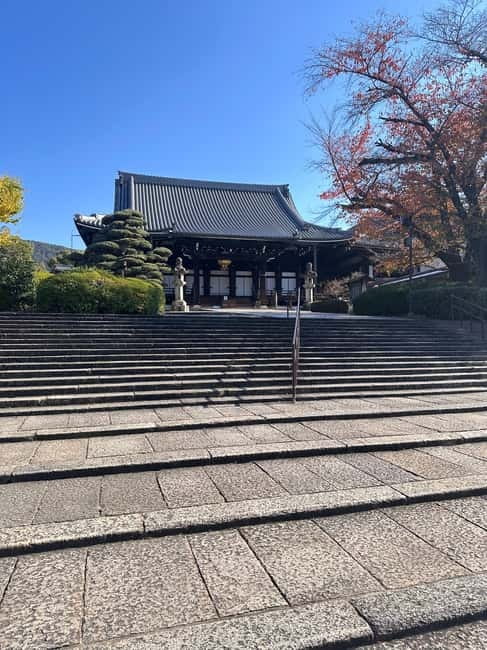
Ginkakuji, the Silver Pavilion, receives about an hour of guided time. Despite its name, it is not covered in silver. Its appeal comes from the restrained architecture and the Zen gardens around it, which offer a softer finish after the visual intensity of Kiyomizudera and Higashiyama.
I like this final major temple because it broadens your idea of what a famous Kyoto site can be. Kiyomizudera makes a strong impression through height, views, and movement. Ginkakuji works through proportion, open space, and garden design.
The guided hour should help you notice details you might otherwise pass without understanding. The gardens are not merely empty space around a building. Their arrangement is central to the experience, and a guide can point out what deserves your attention.
Still, do not expect the quietest possible Ginkakuji visit. You are arriving as part of a daytime group, and the temple is one of Kyoto’s best-known sights. The tour gives you structure and explanation, but not complete solitude.
Philosopher’s Walk and the final stretch
The experience includes the famous Philosopher’s Walk, described as a chance to relax during a more reflective stroll. This is a welcome change after several guided visits and transport connections.
The route information does not assign a separate timed stop to every part of the walk, so I would think of it as part of the Ginkakuji and northern Higashiyama section rather than a long independent hike. You get a chance to slow down, notice the street, and let the day’s temples settle in.
This is also where the tour’s walking requirement becomes clear. Even if each individual leg sounds reasonable, the full day combines a 20-minute walk, temple grounds, district sightseeing, and transfers. Wear shoes that you can use comfortably for seven hours.
The detailed route ends in Higashiyama, while the meeting information says you return to the meeting point. Confirm that detail before arranging dinner, a train, or another timed activity.
Is $95 a fair price?
At $95 per person, the tour is priced for convenience, guidance, and included admissions rather than for transport alone. Entrance fees to Sanjusangendo, Kiyomizudera, and Ginkakuji are included. Local transportation, food, and souvenirs are not.
The value improves if you want Spanish explanations. A small group capped at 10 people is also more appealing than a large coach tour, especially when the day includes narrow streets, temple grounds, and public transport. The strongest praise focuses on the guide’s personal attention, with Manuel specifically described as attentive and able to make the day enjoyable and educational.
The price is less attractive if you already know Kyoto well, speak Japanese comfortably, or prefer to set your own pace. You could spend a day visiting fewer places and lingering longer at each one. This experience is built for coverage and context.
There are no meals included, so plan to buy food separately. The provided details mention Japanese street food in a different Kyoto route, but this experience does not promise those stops. Do not book this tour expecting food tastings.
Who should book this experience?
I would choose this tour if you have one full day for Kyoto highlights and want help in Spanish. It fits first-time visitors who want a clear route through major temples, couples who prefer guided sightseeing, and families whose members would benefit from a patient guide. The small group size should also make it easier to ask questions.
It is a particularly good match if you like seeing contrasts: indoor statues at Sanjusangendo, a famous hillside temple at Kiyomizudera, traditional streets in Higashiyama, a Shinto shrine, and Zen gardens at Ginkakuji.
I would hesitate if you dislike walking, need a stroller, or want long unplanned breaks. The tour is not a relaxed temple retreat. It is a full sightseeing day with a fixed sequence and public transport.
Book it if the Spanish guide and broad coverage matter more to you than complete freedom. Skip it if you would rather choose one or two temples and explore them slowly. Before paying, confirm the ending location and make sure the seven-hour schedule fits your energy level.
FAQ
How long does the Kyoto temple tour last?
The activity lasts seven hours.
What time does the tour start?
The meeting time is 9 a.m. at Shichijo Station Exit 1.
Where does the tour begin?
It begins at Shichijo Station Exit 1.
What language is the tour conducted in?
The live tour guide provides the experience in Spanish.
How many people can join the group?
The group is limited to 10 participants.
Which entrance fees are included?
Admission to Sanjusangendo, Kiyomizudera, and Ginkakuji, also called the Silver Pavilion, is included.
Is transportation included in the price?
No. Participants use local buses or train lines, and those fares are paid separately.
How much money should I bring for transportation?
The guidance recommends about 230 yen for buses, or a usable ICOCA, SUICA, or PASMO transport card.
What should I wear and bring?
Bring comfortable shoes and comfortable clothing because the day includes walking and public transport.
Are baby carriages allowed?
No, baby carriages are not allowed on this activity.
Just added around Kyoto
- Kyoto:Kiyomizu-dera Temple Rent a kimono and ride a rickshaw★ 4.8 · 7 reviews
- Kyoto: Shakyo & Matcha in Historic Temple Garden★ 5.0 · 4 reviews
- KYOTO: Tempio Kiyomizu Pagode Gion “Geisya” (Guida Italiana)★ 4.7 · 17 reviews
- Kyoto:Quiet Arashiyama and Sagano Temples★ 4.8 · 5 reviews
- Kyoto: Kifune Shrine and the Sacred Kifune Valley Day Trip★ 4.4 · 4 reviews
- KYOTO: Golden Pagoda, Bamboo Forest, Arashiyama (Italian)★ 4.9 · 5 reviews
- KYOTO: Tour guidato tra i tesori della città (in italiano)★ 5.0 · 5 reviews
- Kyoto : Kiyomizu-dera Temple : kimono and Indoor photo shoot★ 4.6 · 5 reviews
Fushimi Inari Shrine Tours, compared.
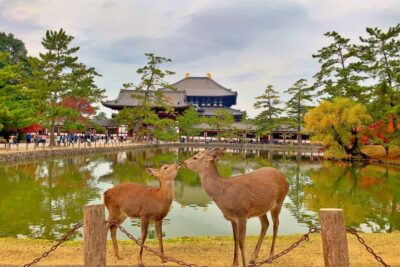
Osaka/Kyoto:Kinkakuji,Arashiyama,FushimiInariShrine,NaraPark
Read our review →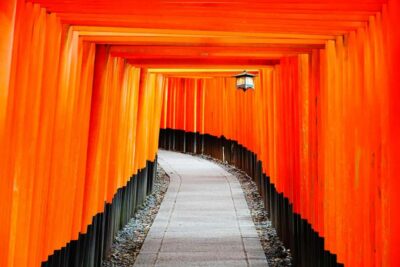
Osaka/Kyoto: Arashiyama, Nara & Fushimi Inari Shrine w/Lunch
Read our review →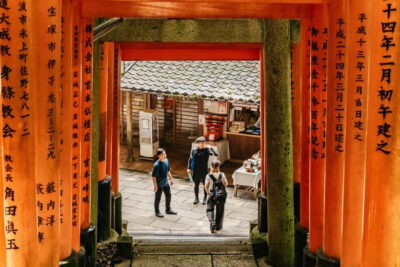
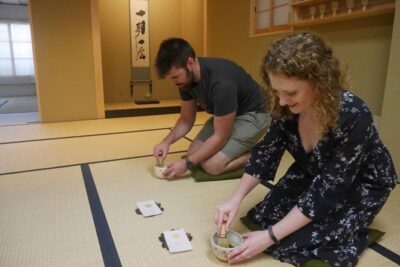
Kyoto Tea Ceremony & Kiyomizu-dera Temple Walking Tour
Read our review →Full Day Kyoto Tour : Bamboo Forest, Golden Temple, Fushimi Inari
Read our review →
Fushimi Inari Shrine and Tofukuji Temple E-Bike Tour
Read our review →
Early Morning Fushimi Inari Shrine – Beat the Crowds
Read our review →Browse the lists this tour appears in