
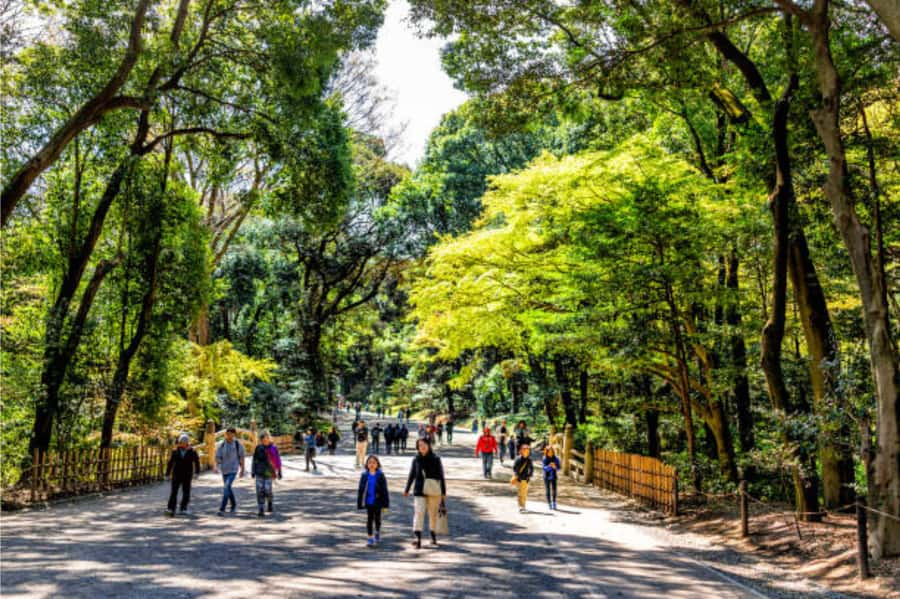
Review · TOKYO
Tokyo: Meiji Shrine Walking Tour with Local Guide
Tokyo’s quietest surprise sits beside Harajuku. This $20 walking tour leads you through Meiji Shrine’s sacred forest, where I like the clear instruction on bowing, cleansing, and praying, plus the chance to reach the little-known Imperial Fishing Platform. My one caution: it is a walking experience, and the tour is conducted in English, so it may feel less useful if you prefer a broad, fast-paced Tokyo overview.
I also like how the route goes beyond the main hall. You learn why people keep to the left side of the approach, see the back of the shrine, and hear about the turtle stone and sazare stone. The tour ends near Harajuku Station, which makes it easy to continue to Takeshita Street or another Tokyo stop.
- Traditional shrine manners: Learn how to bow at a torii, cleanse your hands and mouth, and pray in the customary way.
- A quieter Meiji Shrine: Walk through the forest and away from the busiest parts of central Tokyo.
- The Imperial Fishing Platform: Visit a calm corner linked to the Emperor’s pastimes.
- Details most people miss: See the back of the main hall, turtle stone, and sazare stone.
- Useful Harajuku finish: End near Harajuku Station with easy access to your next activity.
- Low-cost guided context: For $20, you get a local guide, cultural explanations, walking guidance, and photo stops.
Why This Meiji Shrine Walk Is Worth Your Time
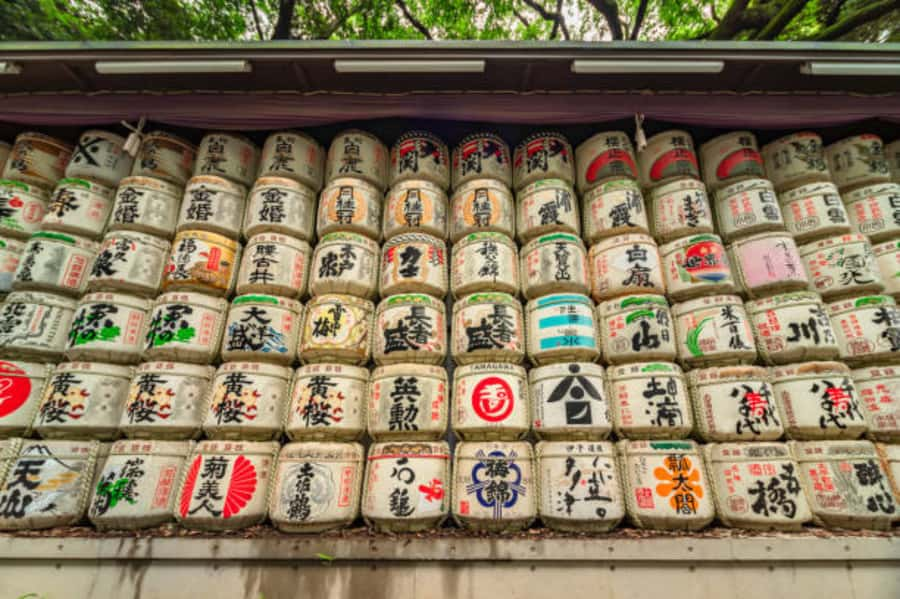
Meiji Shrine is easy to visit on your own. You can follow the broad forest approach, reach the worship hall, take a few pictures, and leave. The problem is that a self-guided visit can blur together: torii gate, gravel path, wooden buildings, bow, photograph, exit.
This tour gives those actions meaning. You learn what to do before you reach the worship hall, rather than copying the person in front of you and hoping you got it right. That small difference changes the visit from a quick stop into a more thoughtful introduction to Shinto customs.
I especially like the balance between famous sights and less obvious corners. The guide covers the main worship area, but the route also includes the back of the main hall, the turtle stone, the sazare stone, and the Imperial Fishing Platform. Those details give you reasons to slow down and look around.
The tour also places Meiji Shrine in modern Tokyo. You finish by the bicycle parking area, a plain everyday space where local routines meet an old religious site. That contrast is useful. Tokyo is not divided neatly into ancient Japan in one district and modern Japan in another. The two sit next to each other, often within the same few steps.
Entering the Forest Near Harajuku
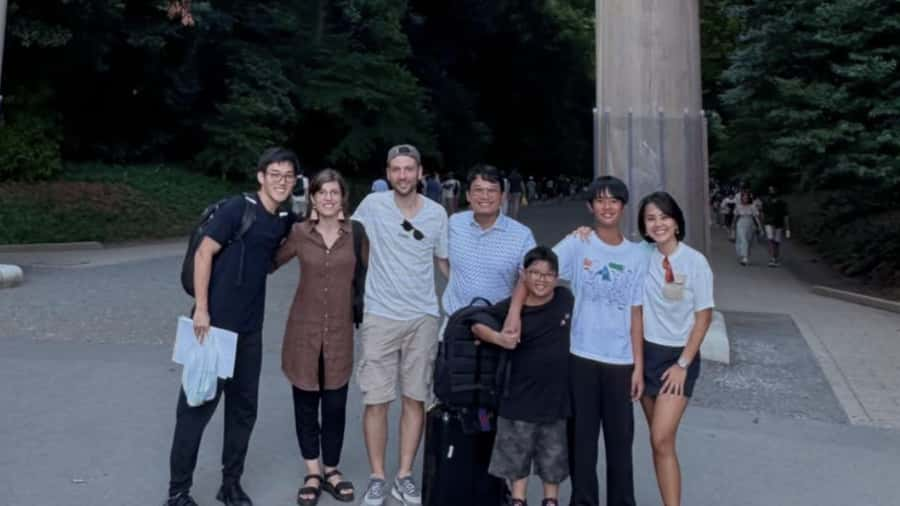
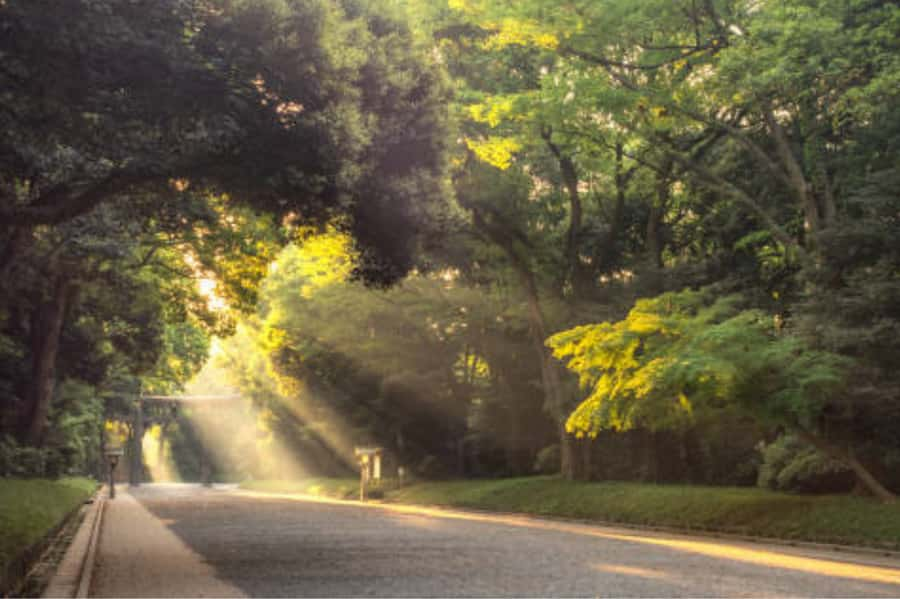
The shrine area offers a sharp change from the streets around Harajuku. You move from one of Tokyo’s best-known youth culture areas into a broad, wooded approach that feels more removed than its location suggests.
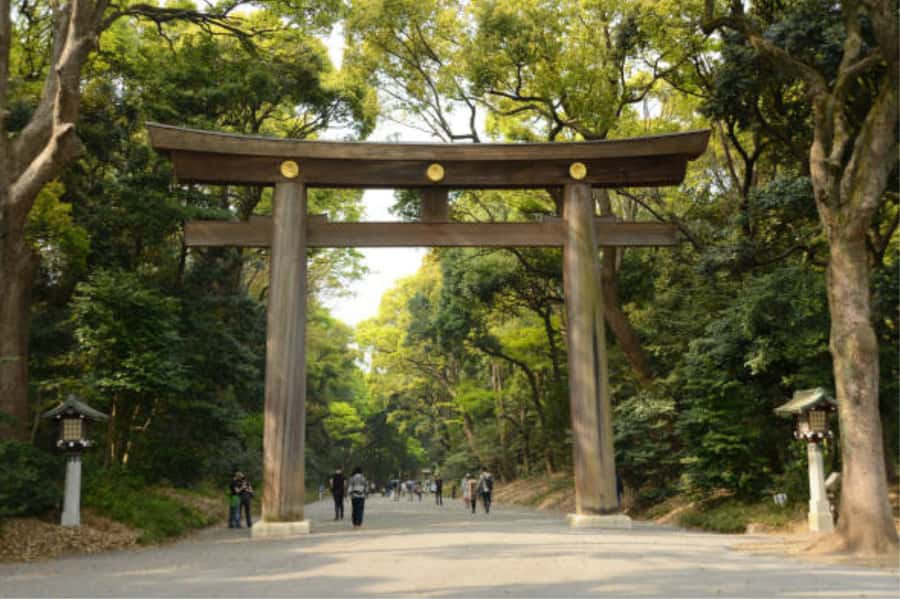
The appeal is not only the trees. The approach was designed to create a sacred setting, and the guide explains how that setting shapes the visit. You get a chance to notice the long approach, the torii gates, and the way the path prepares you for the worship hall.
One practical point matters here: this is a walking tour, not a vehicle-based sightseeing ride. Bring comfortable shoes. The exact duration is not provided, so I would avoid squeezing it between two tightly timed reservations.
The meeting point is identified by the guide holding a blue A4-sized board. That is a useful detail in a busy part of Tokyo, where several streets and station exits can quickly feel alike. Look for the person with the blue board rather than relying only on a general description of the area.
More Temple Walking Tours in Japan
- Tokyo: Asakusa Walking Tour with Sensoji Temple Visit
★ 4.8 · 1,583 reviews - Tokyo: Meiji Shrine Walking Tour — Shinto & Imperial System
★ 4.9 · 266 reviews - Tokyo: Meiji Jingu Shrine and Shinto Culture Walking Tour
★ 5.0 · 245 reviews
Learning the Bow at the Torii Gate
One of the most useful parts of the experience comes before the main shrine buildings. You learn about bowing when passing through the torii gate, a gesture that marks entry into sacred grounds.
You also learn why the central part of the approach is treated differently. According to the explanation given on the tour, the center is where the gods walk, so people should keep to the left side. This is the kind of detail you might miss entirely on a solo visit, yet it gives the long approach a clear purpose.
I like this early lesson because it is practical without being difficult. You do not need prior knowledge of Shinto, and you are not expected to perform a complicated ritual. You are simply shown how to behave respectfully in a place that still matters to local worshippers.
The guide also explains the torii and the approach itself. This helps you read the setting instead of seeing it as a decorative entrance. Take your time here. The approach is one of the places where the peaceful mood builds gradually, so rushing toward the main hall would miss part of the experience.
Cleansing and Praying at the Outer Worship Hall
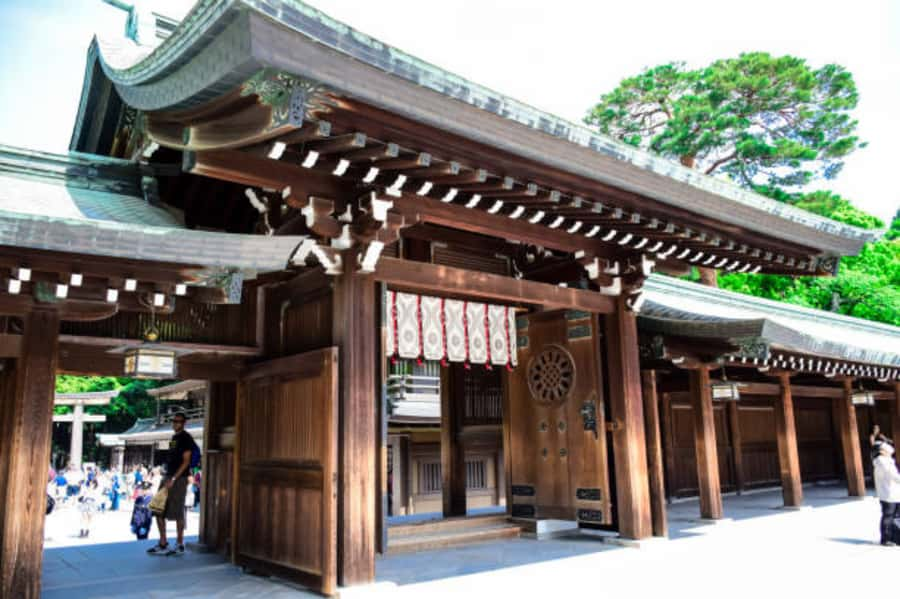
The Outer Worship Hall is the central stop for learning shrine etiquette. Here, you see where people come to make wishes and show respect, including those who visit during New Year’s.
The guide explains how to cleanse before worship, then how to bow and pray in the traditional manner. The exact gestures are easier to remember when you see them in the place where they are used. If you are visiting a shrine later in Japan, this lesson can also help you feel more at ease at other sites.
This is not a religious conversion exercise. It is a short cultural lesson that explains why people pause, cleanse, and pray in a particular order. You can take part respectfully or simply observe. The value comes from understanding what is happening around you.
The Outer Worship Hall can also be the busiest part of the visit. It is the main point for wishes, respect, and photographs, so you may encounter more activity here than along the forest approach. The guide helps you focus on the ritual and history rather than treating the stop as a photo opportunity alone.
Finding the Back of the Main Hall
A particularly good feature of the route is the visit to the back of the main hall. Most first-time visitors naturally focus on the front, where the main act of worship takes place. The rear area offers a different view and gives the guide room to point out features you could easily pass without noticing.
Among those details are the turtle stone and the sazare stone. The information provided does not give a full explanation of each feature, so you should listen closely when the guide introduces them. Their inclusion shows the strength of a guided visit: the route is not only about reaching the largest building, but also about noticing smaller elements with cultural meaning.
This stop may appeal most to people who enjoy details and symbols. If your ideal shrine visit is a quick walk to the main hall, you might find the extra explanations slower than necessary. If you like knowing why a particular stone, path, or building matters, this is where the $20 guide fee begins to earn its keep.
More Temple Walking Tours in Tokyo
- Tokyo: Meiji Shrine and Shinto Culture Walking Tour
★ 5.0 · 225 reviews - Tokyo: Meiji Shrine Walking Tour — Shintoism & Imperial System
★ 5.0 · 209 reviews - Tokyo: Asakusa Temple & Shrine Walking Tour with Local Guide
★ 5.0 · 105 reviews - Tokyo’s Kitchen: Tsukiji Market Food & Culture Walk
★ 4.7 · 74 reviews
The Imperial Fishing Platform, Meiji Shrine’s Quiet Corner
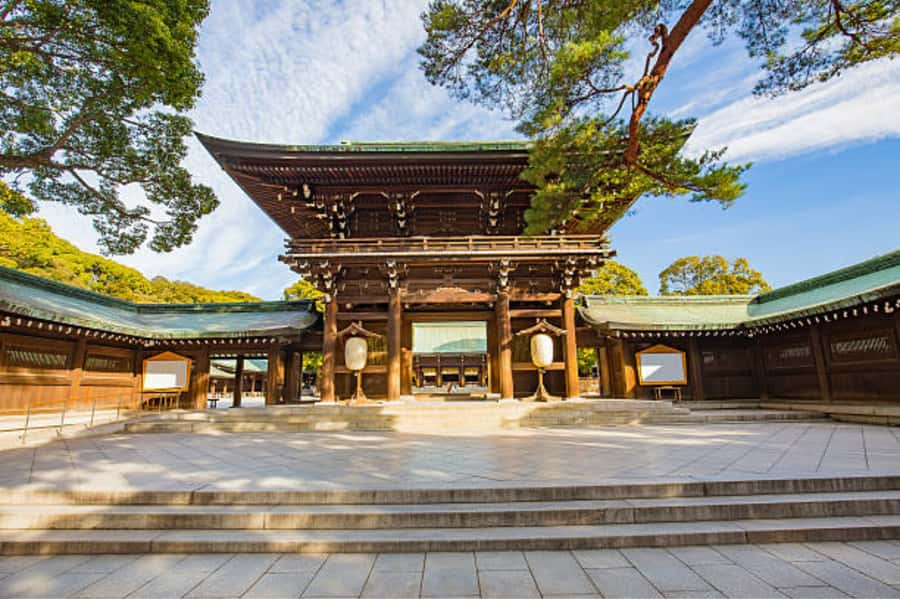
The Imperial Fishing Platform is the tour’s most unusual stop. It is described as a quiet, almost secret place within the shrine grounds, connected with the Emperor’s pastimes and Japan’s respect for nature.
That makes it different from the standard Meiji Shrine visit. Most people come for the torii, forest, and main worship hall. Few arrive expecting a calm corner related to fishing. I like the way this stop broadens your understanding of the site. The shrine is not presented only as a formal religious space, but also as a place where nature and imperial life have a quieter connection.
Do not expect a major attraction with grand displays or a long list of things to do. Its value is in the atmosphere and the story. The platform gives you a reason to pause, and the relative calm makes it a good photo stop.
Because the tour is built around walking, the guide can explain the setting as you go instead of dropping you at a single landmark and moving on. That creates a slower, more observant experience. It also means you should wear shoes that are comfortable for a forest route and shrine grounds.
Everyday Tokyo at the Bicycle Parking Area
The final stop sounds ordinary, and that is exactly why it works. The tour finishes at the bicycle parking area, where daily Tokyo life sits beside the traditions of Meiji Shrine.
I appreciate this ending more than a grand final speech at the main hall. It shows how locals can move between modern routines and old customs without treating them as separate worlds. A bicycle parking area is not a famous sight, but it helps you understand the neighborhood as a lived-in part of Tokyo.
This is also a practical end point. The activity finishes near Harajuku Station, giving you easy access to whatever comes next. You can continue exploring the Harajuku area, head toward another attraction, or simply use the station to continue across Tokyo.
The supplied meeting information also says the activity ends back at the meeting point, while the route description places the finish near Harajuku Station. Check the exact end instructions when you reserve, especially if you have a timed plan afterward.
What $20 Gets You
At $20 per person, this is a modestly priced guided experience for central Tokyo. You receive a local guide, a walking route, cultural explanations, and photo stops. The price is not paying for entry to a special attraction or a long list of included extras. It is paying for interpretation.
That distinction matters. Meiji Shrine itself is a place you can visit without this tour, so the tour is best value if you want help understanding etiquette, symbols, and less obvious locations. The guide shows you how to approach the shrine respectfully and directs your attention to places you might not reach alone.
The value is also strong for a first visit. You learn the basics of shrine behavior in one setting, including bowing at the torii, walking on the left side, cleansing, and praying. That knowledge can make later shrine visits around Japan feel more natural.
The price may feel less worthwhile if you already know Japanese shrine customs or prefer to explore silently at your own speed. The experience is conducted in English, and the route depends on listening as well as walking. It is a cultural orientation, not simply a stroll through trees.
Who Will Get the Most From This Experience
I would recommend this tour to first-time visitors who want a gentle introduction to Japanese shrine customs. It suits people who enjoy cultural context but do not want a full-day history lecture.
It also works well for photographers. You get the forest approach, shrine architecture, quiet corners, stones, the Imperial Fishing Platform, and useful photo stops. The guide can help you notice angles and details that might otherwise pass by.
Families and older participants should consider the walking requirement. Comfortable shoes are specifically recommended, and the available information does not give a duration or accessibility details. If anyone in your group has limited mobility, ask for current route information before booking.
The tour is less suitable if you need a fast, tightly timed stop at Meiji Shrine. The exact pace depends on the guide and the walking group, and the experience gains much of its value from stopping for explanations. Give yourself room before your next reservation.
Language, Planning, and Small Practical Details
The tour is conducted in English, with Japanese and English listed among the available languages. If you are booking for someone who does not speak English comfortably, confirm the language arrangement before paying.
Bring a camera, but keep it secondary to the setting. The best parts of the route are the moments when you notice the approach, hear why people stay to the left, or learn the ritual sequence at the worship hall.
You can reserve now and pay later, which helps if your Tokyo schedule is still shifting. Cancellation is allowed up to 24 hours in advance for a full refund. Those terms are useful for a city itinerary where weather, jet lag, and train plans can change your day.
The activity has a 4.9 rating based on 9 reviews, a small sample but a strong signal of satisfaction. The most praised elements are the explanation of Meiji Jingu’s history and customs, the sacred approach, and access to places such as the back of the main hall and the turtle and sazare stones.
Should You Book the Meiji Shrine Walking Tour?
Book it if you want more than a quick look at Meiji Shrine. For $20, you get clear guidance on shrine manners, a local perspective, access to quieter corners, and a useful finish near Harajuku Station. The Imperial Fishing Platform and the back-of-the-main-hall stops give the route more character than a standard entrance-to-exit visit.
Skip it if you already understand shrine rituals, dislike guided pacing, or have only a narrow time window. You can visit Meiji Shrine independently, but you will likely miss some of the small details that make this tour worthwhile.
For a first visit, I think the strongest reason to book is simple: you learn how to enter, walk, cleanse, and pray with respect, then see parts of the shrine you might not find alone. That is a fair return for a $20 walking tour in one of Tokyo’s most visited areas.
FAQ
Where does the Meiji Shrine walking tour start?
The guide is identified as the person holding a blue A4-sized board.
Where does the tour finish?
The activity ends near Harajuku Station according to the route information. The meeting details also describe the activity as ending back at the meeting point, so check the exact end instructions when booking.
What language is the tour conducted in?
The tour is conducted in English. Japanese and English are listed as available languages.
What should I bring?
Bring comfortable shoes because the experience involves walking. A camera is also recommended.
Does the tour include shrine rituals?
Yes. The guide explains how to bow, cleanse, and pray in the traditional way, including customs connected with passing through the torii gate and approaching the worship hall.
Can I cancel for a full refund?
Yes. You can cancel up to 24 hours in advance for a full refund.
More Meiji Shrine and Senso-ji Tours in Tokyo
- Tokyo Panoramic 1 Day: Meiji Shrine, Asakusa, Odaiba and SKYTREE®
★ 4.5 · 1,222 reviews - Tokyo: Asakusa and Tokyo’s Oldest Temple Senso-ji Tour
★ 4.9 · 352 reviews - Tokyo Morning Tour: Asakusa, Meiji Shrine and Tsukiji Fish Market
★ 5.0 · 128 reviews - Tokyo Morning Tour: Meiji Shrine, Asakusa & Fish Market
★ 4.9 · 44 reviews
Just added around Tokyo
- :Tokyo,Shibuya /Meiji Shrine tour in KIMONO/English-friendly★ 5.0 · 4 reviews
- Tokyo: Snow Monkey and Zenkoji Temple Day Trip In Low Price★ 5.0 · 5 reviews
- Tokyo War History Tour: Yasukuni Shrine & War Museum★ 4.5 · 6 reviews
- Tokyo: Gotokuji Culture Walk & Lucky Cat Temple Experience★ 4.9 · 5 reviews
- Tokyo: Shibuya Sky, Harajuku & Meiji Shrine Highlights Tour★ 4.5 · 9 reviews
- Tokyo: Visit 5 Shrines & Collect Goshuin on Private Tour★ 5.0 · 3 reviews
- Tokyo: Sensoji Temple & Street Food: Private Tour with guide★ 4.6 · 8 reviews
- Tokyo’s Kitchen: Tsukiji Market Food & Culture Walk★ 4.7 · 74 reviews
Meiji Shrine & Senso-ji Tours, compared.
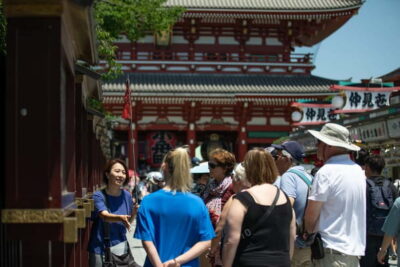
Asakusa Walking Tour with Sensoji Temple Visit
Read our review →
Tokyo Panoramic 1 Day: Meiji Shrine, Asakusa, Odaiba and SKYTREE®
Read our review →
Asakusa Senso-ji Temple and Old Tokyo Walking Tour
Read our review →
Asakusa and Tokyo’s Oldest Temple Senso-ji Tour
Read our review →
Meiji Shrine Walking Tour — Shinto & Imperial System
Read our review →
Meiji Jingu Shrine and Shinto Culture Walking Tour
Read our review →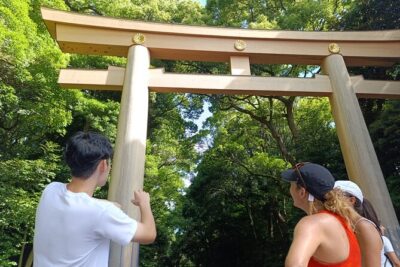
Meiji Shrine Walking Tour — Shintoism & Imperial System
Read our review →Browse the lists this tour appears in