
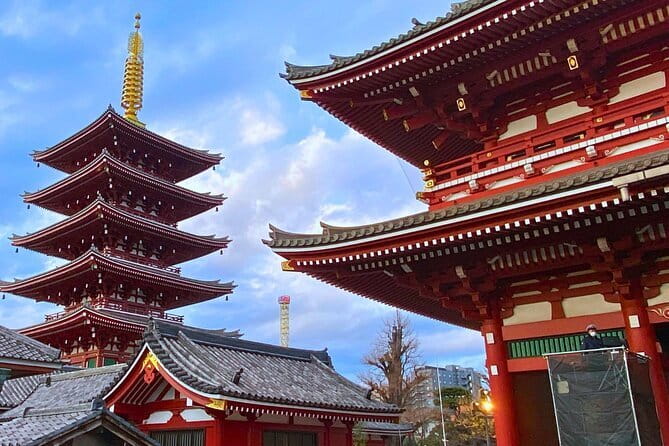
Review · TOKYO
Tokyo: Asakusa Temple & Shrine Walking Tour with Local Guide
The best Tokyo tours explain what you are seeing. This two-hour walk makes Asakusa easier to understand, from the gold sculpture locals call the golden poop to the rituals at Sensoji and Asakusa Shrine. I like the small groups of up to eight and the chance to ask a guide about almost anything in Tokyo. I also like the riverside start and the elevated view of the temple grounds, two useful ways to get your bearings before entering the crowds.
The main consideration is the pace. You cover several religious sites, a shopping street, and two major landmarks in two hours, all on foot. The route is not suitable for wheelchair users, people with mobility impairments, or anyone with a low level of fitness. On hot days, rain or shine, comfortable shoes and water matter.
Five things to know before you book
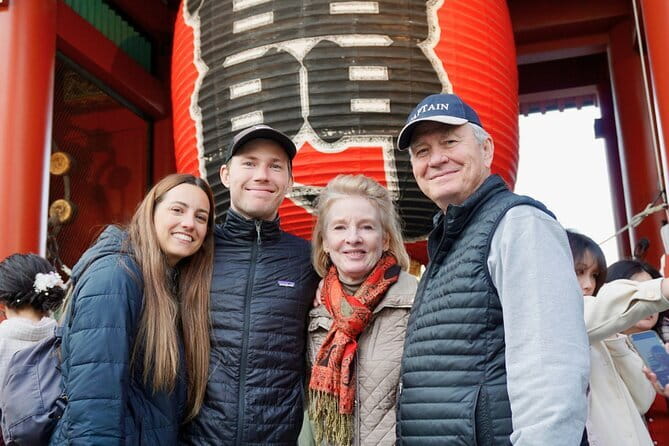
- The tour begins beside the Sumida River, with views toward Tokyo Skytree and the famous gold sculpture across the water.
- The Asakusa Culture Tourist Information Center provides a high viewpoint, a useful photo stop before the crowds around Kaminarimon Gate.
- You learn the difference between Buddhist and Shinto customs, including hand washing, incense, bowing, prayer, and torii etiquette.
- The group is limited to eight people, so you can ask questions and request help with translations or photos.
- Guides are the tour’s strongest feature, with names such as Nicolas, Erik, Nana, Ayaka, and Joe praised for friendly explanations and patient pacing.
- At $30 per person, the value is strong, especially if this is your first visit to a Japanese temple or shrine.
Why this Asakusa walk is worth two hours
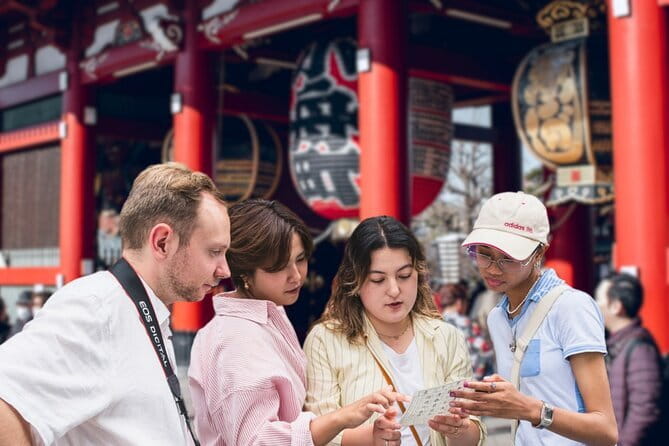
Asakusa can feel confusing at first. You have a famous red gate, a long souvenir street, Buddhist temple buildings, Shinto shrine structures, fortune slips, incense smoke, and crowds moving in every direction. It is easy to take a few pictures and leave without understanding what you have seen.
This tour gives those sights a clear order. You begin outside the main temple zone, look back at it from above, enter through Kaminarimon, walk along Nakamise, and then spend time with the religious customs at Sensoji and Asakusa Shrine. That progression helps you see Asakusa as more than a photo stop.
I especially like the focus on participation. You do not just hear about temizu, the hand-washing ritual, or omikuji fortune telling. You get to try them with guidance. You can also use the incense smoke ritual, which is traditionally associated with physical and mental healing.
The guide explains how to bow, where to walk near torii gates, and how Buddhist prayer differs from Shinto prayer. These are small details, but they help you behave respectfully during the rest of your Japan trip.
More Temple Walking Tours in Japan
- Tokyo: Asakusa Walking Tour with Sensoji Temple Visit
★ 4.8 · 1,583 reviews - Tokyo: Meiji Shrine Walking Tour — Shinto & Imperial System
★ 4.9 · 266 reviews - Tokyo: Meiji Jingu Shrine and Shinto Culture Walking Tour
★ 5.0 · 245 reviews
Starting by Azumabashi Bridge and the Sumida River
The meeting point is near Burger King Asakusa Azumabashi, though the exact starting point can depend on the option you book. From there, the walk heads toward Azumabashi Bridge for a short riverside stop.
This opening gives you a useful contrast. Tokyo Skytree rises in the distance, while the Asakusa temple district sits nearby with its older religious buildings and traditional shopping street. You also get a view of the gold sculpture on the Asahi building, widely nicknamed the golden poop by locals because of its shape.
The guide uses this first stop to explain the area and point out photo angles. It is a relaxed beginning, not a rushed march toward the temple. If you want a picture with Skytree, this is one of the places to ask your guide for help.
The bridge stop lasts about 10 minutes. That is enough for an introduction, but not enough for a long riverside stroll. If you hoped for a full Sumida River walk, you will need to explore on your own afterward.
The high view from Asakusa Culture Tourist Information Center
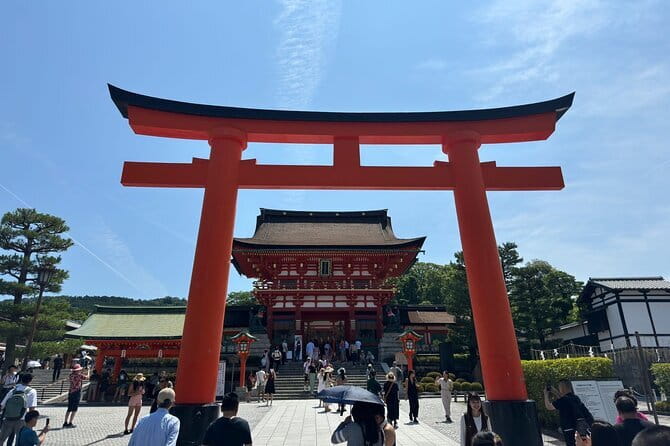
Next comes one of the most useful stops: the upper level of the Asakusa Culture Tourist Information Center. From this viewpoint, you can see the temple area from above, including the approach toward Kaminarimon and the wider arrangement of the grounds.
I like this stop because it gives context before you enter the busiest part of Asakusa. From street level, Kaminarimon, Nakamise, Hozomon Gate, and Sensoji can feel like one continuous crowd. From above, you can understand how the route fits together.
It is also a practical photo stop. Ask the guide where to stand and what to frame. The tour team makes a point of knowing useful picture locations, and several guides have also taken photos for couples and families during the walk.
The stop lasts around 15 minutes. It is not a long museum visit, and the tour does not promise an extended presentation inside the center. Its value comes from the view and the quick orientation.
Kaminarimon and the 700-kilogram lantern
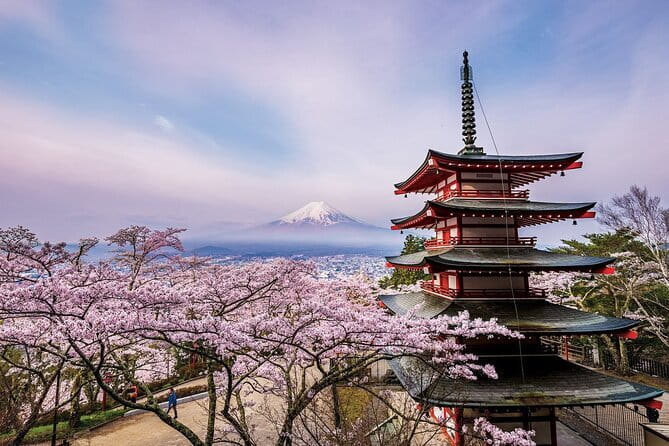
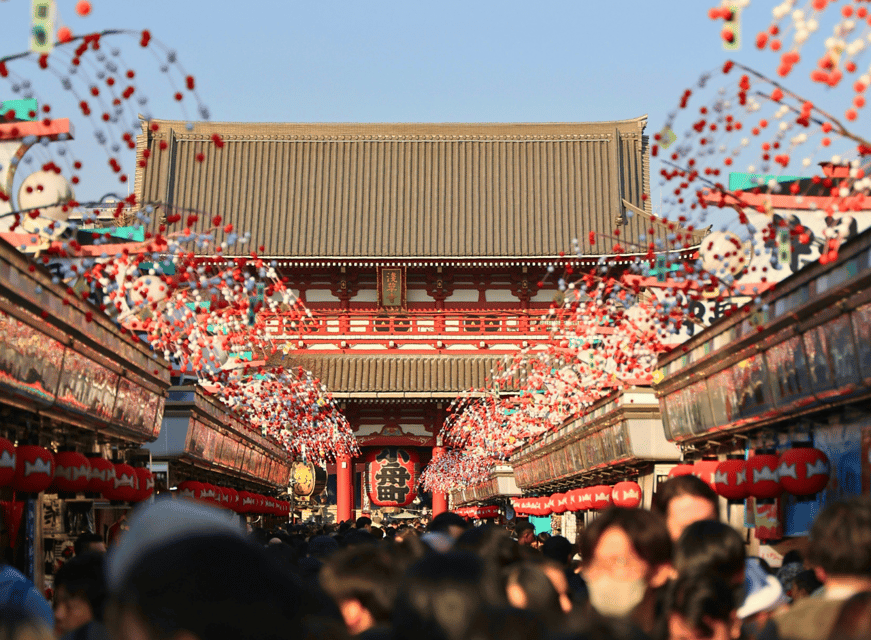
Kaminarimon means Thunder Gate. Its huge red lantern weighs about 700 kilograms, and it creates an unmistakable entrance to Asakusa’s old temple district.
Here, your guide explains the story behind the gate, the name, and the lantern. This is where a local explanation helps. You can see the gate on your own, but a short talk gives the object more meaning than a quick photograph can provide.
The stop takes about 10 minutes. Expect people around you and limited space for lingering. Asakusa is one of Tokyo’s most popular sightseeing areas, so the group may need to keep moving and wait for a clear moment for pictures.
The guide can also help with translations during the walk. That matters on Nakamise and around the religious sites, where signs and instructions may not always be easy to interpret.
More Temple Walking Tours in Tokyo
- Tokyo: Meiji Shrine and Shinto Culture Walking Tour
★ 5.0 · 225 reviews - Tokyo: Meiji Shrine Walking Tour — Shintoism & Imperial System
★ 5.0 · 209 reviews - Tokyo’s Kitchen: Tsukiji Market Food & Culture Walk
★ 4.7 · 74 reviews - Tokyo: Asakusa & Tokyo’s Oldest Temple Senso-ji Walking Tour
★ 4.6 · 21 reviews
Nakamise Shopping Street and the useful side of souvenirs
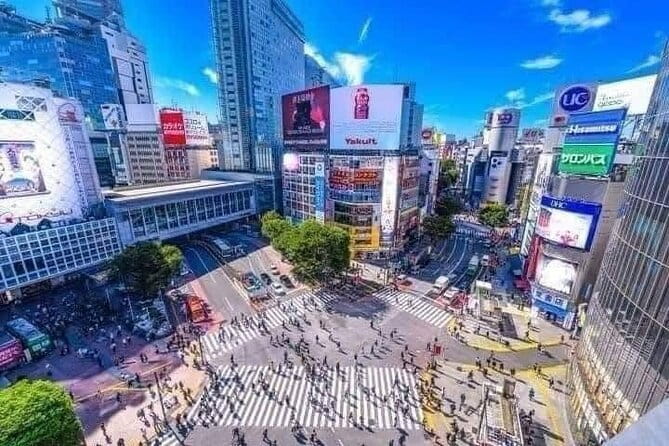
From Kaminarimon, you walk along Nakamise Shopping Street toward the temple. This is the main commercial approach to Sensoji, lined with small shops selling snacks, sweets, crafts, toys, clothing, and souvenirs.
The tour does not treat Nakamise as something to rush through. Your guide explains the cultural role of the treats and points out where to look for worthwhile purchases. That can save you from buying the first souvenir you see, especially when many shops carry similar items.
You should still set expectations. The walk includes sightseeing and shopping, but it is not a dedicated food tour or shopping tour. The scheduled stop is about 15 minutes, so you may have time to look and ask questions, not conduct a major shopping trip.
Families often benefit from this stretch because it breaks up the temple explanations with snacks and colorful shop windows. Children can also ask questions while walking, and guide Nana received particular praise for keeping two young children, ages five and eight, involved.
If you want a longer look at Nakamise, come early or return after the tour. The guide’s suggestions can help you decide what deserves another visit.
Hozomon Gate and the smaller religious sites
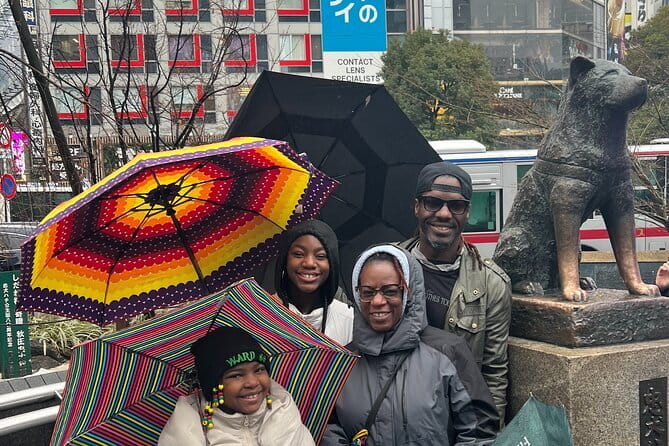
Hozomon Gate is the second major gate on the approach to Sensoji. After the noise and merchandise of Nakamise, the gate marks a shift toward the temple’s more formal religious space.
The tour also visits smaller temple and shrine sites that many people pass without noticing. The supplied route does not name every one, so you should think of this part as an introduction to less obvious corners rather than a fixed list of famous buildings.
That is one of the better reasons to join a guide. Asakusa’s main route is easy to find, but its smaller religious sites are easier to skip. The guide explains what you are looking at and how these places fit into the area’s spiritual life.
You also learn basic etiquette before reaching the main temple. The guide shows you how to wash your hands, how to approach a sacred site, and how to walk near a torii gate. These instructions are simple and practical, not a formal religious lesson.
Sensoji Temple and hands-on Buddhist customs
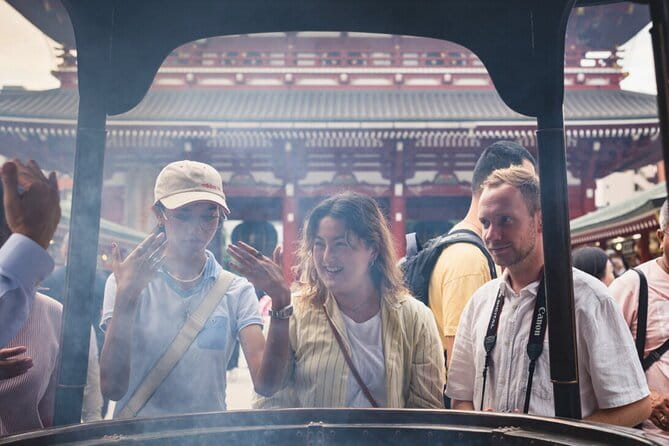
Sensoji is the heart of the walk. It is Tokyo’s oldest temple and the reason most people come to Asakusa. The tour spends about 30 minutes here, the longest scheduled stop.
The guide explains the temple’s history and architecture, then shows you how to pray in the Buddhist style. That process differs from the one used at the neighboring Asakusa Shrine, and learning the difference is one of the tour’s clearest benefits.
You can also try omikuji, the traditional fortune-telling slips. If you receive an unfavorable fortune, the guide can explain what people traditionally do with it. The tour also includes incense, with an explanation of its association with healing for both body and mind.
These rituals can feel awkward if you do not know the steps. The guide removes that uncertainty. You can participate as a cultural experience without pretending to be a practicing Buddhist.
Several guides have been praised for explaining spirituality in plain language. Nicolas, in particular, has been described as especially strong at explaining the relationship between Buddhism and Shinto. Erik has helped visitors with temple etiquette, including offering coins when a participant did not have any.
Sensoji is also the busiest part of the walk. The guide may adjust the pace to avoid the thickest crowds, but you should not expect quiet contemplation at all times. The reward is access to a famous place with enough explanation to make it more meaningful.
Asakusa Shrine and the meeting of two traditions
The final major stop is Asakusa Shrine, located close to Sensoji. Its proximity makes Asakusa a useful place to understand how Buddhism and Shinto coexist in Japan.
The tour explains that the two traditions have different customs and prayer styles, then lets you visit both sites in sequence. You learn how to bow at a shrine, how to approach the torii, and how this differs from praying at Sensoji.
The scheduled visit lasts about 15 minutes. That is enough for an introduction and questions, though not a full study of Shinto practice. The guide’s role is to help you notice the difference without turning the stop into a lecture.
This section may be the most valuable for first-time visitors. Once you know the basic rules, later visits to shrines and temples across Japan become less intimidating. You can also recognize why Japanese religious life does not always fit neatly into one category.
Guides, group size, and the feel of the walk
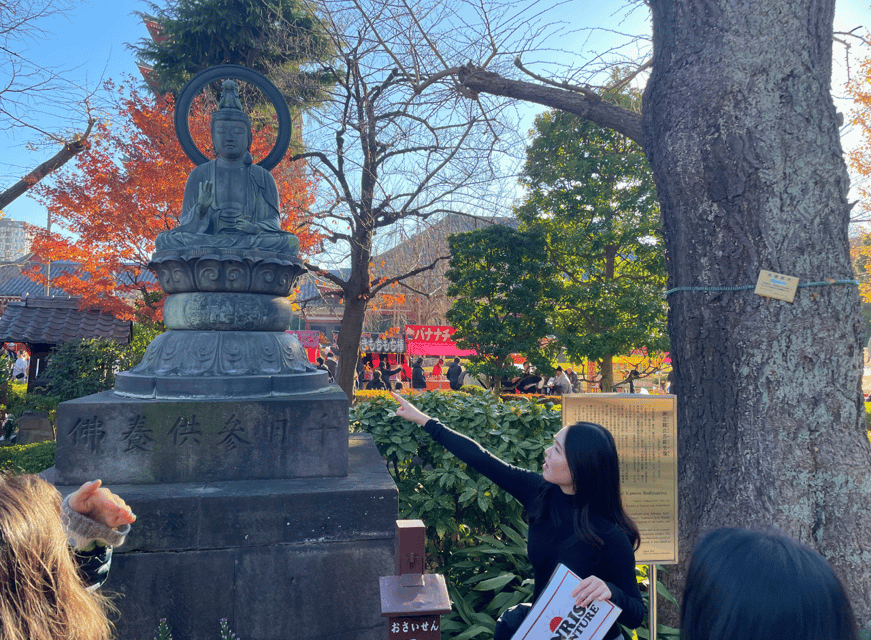
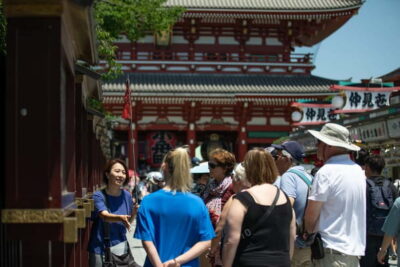
The group limit is eight people, which is a good size for Asakusa. You can hear the guide more easily than in a large group, and there is a real chance to ask follow-up questions.
The guides named in feedback include Nicolas, Erik, Lino, Nana, Diane, Ayaka, Joe, Arief, Somi, and Ariel. Their styles differ, but the repeated strengths are friendly conversation, clear explanations, and a willingness to adjust the pace.
The tour can feel almost private when fewer people book. One participant found the group consisted only of the guide and one guest. That is not guaranteed, but the small maximum leaves room for a personal experience.
You can ask questions beyond the formal route. Guides have helped with restaurant suggestions, directions to Kappabashi Street, kimono rental information, and general Tokyo advice. This is useful if you schedule the tour early in your visit and want local help shaping the next few days.
English and French are offered. The tour is also friendly to tattoos and has no dress code, which makes it easy to fit into a normal sightseeing day. You should still dress for the weather and wear shoes suitable for two hours of walking.
Price, timing, and who gets the best value
At $30 per person, this is a reasonable price for a two-hour small-group walk in central Tokyo. You are paying for more than access to Sensoji, which is free to visit. The value comes from the guide’s explanations, the viewpoint, etiquette instruction, smaller sites, and help with questions and photos.
I would consider it especially good value for a first Tokyo visit. You get cultural basics that can improve every temple and shrine visit afterward. It also helps solo visitors, couples, and families make sense of a crowded district without having to research each ritual in advance.
The price is less compelling if you already know Japanese religious customs or have spent several days studying Asakusa. In that case, you may prefer to walk the area at your own pace and spend more time shopping or photographing.
The tour runs for two hours, with departures based on availability. Comfortable shoes are essential. Bring water, particularly in hot weather, though vending machines are available during the walk.
Free cancellation is available up to 24 hours before the start, and you can reserve now and pay later. The meeting point can vary by booking option, so check your confirmation carefully.
Should you book the Asakusa walking tour?
Book it if you want a friendly cultural introduction rather than a checklist of sights. The strongest parts are the small group, the clear explanation of Buddhist and Shinto customs, and the guide’s ability to point out details you might miss alone.
It is a particularly good fit for first-time visitors, solo visitors who want company, families with older children, and anyone unsure how to behave at Japanese religious sites. Ask for photo help, translation help, or Tokyo suggestions. That is where the personal format pays off.
Skip it if you dislike guided walks, need step-free access, or want a slow, unstructured afternoon. The route is on foot, the main sites can be crowded, and two hours leaves limited time for shopping.
For most visitors, $30 is a fair trade for better cultural understanding and a more confident visit to Asakusa. You will still want extra time afterward for Nakamise, nearby shopping, or another look at Sensoji, but the tour gives you the tools to enjoy those places with more purpose.
FAQ
How long is the Asakusa Temple and Shrine Walking Tour?
The tour lasts two hours.
How many people can join the tour?
It is a small-group tour limited to eight participants.
Which languages are available?
The live tour guide service is available in English and French.
Does the tour visit Sensoji Temple and Asakusa Shrine?
Yes. The route includes both Sensoji Temple and Asakusa Shrine, along with smaller local temple and shrine sites.
What rituals will I learn?
You can learn and take part in temizu hand washing, omikuji fortune telling, incense rituals, Buddhist prayer, Shinto prayer, bowing, and torii etiquette.
Is there a dress code, and are tattoos allowed?
There is no dress code, and tattoos are welcome.
Is the tour suitable for wheelchair users or people with mobility impairments?
No. The tour is not suitable for wheelchair users, people with mobility impairments, or people with a low level of fitness. Comfortable walking shoes are recommended.
More Meiji Shrine and Senso-ji Tours in Tokyo
- Tokyo Panoramic 1 Day: Meiji Shrine, Asakusa, Odaiba and SKYTREE®
★ 4.5 · 1,222 reviews - Tokyo: Asakusa and Tokyo’s Oldest Temple Senso-ji Tour
★ 4.9 · 352 reviews - Tokyo Morning Tour: Asakusa, Meiji Shrine and Tsukiji Fish Market
★ 5.0 · 128 reviews - Tokyo Morning Tour: Meiji Shrine, Asakusa & Fish Market
★ 4.9 · 44 reviews
Just added around Tokyo
- :Tokyo,Shibuya /Meiji Shrine tour in KIMONO/English-friendly★ 5.0 · 4 reviews
- Tokyo: Snow Monkey and Zenkoji Temple Day Trip In Low Price★ 5.0 · 5 reviews
- Tokyo War History Tour: Yasukuni Shrine & War Museum★ 4.5 · 6 reviews
- Tokyo: Gotokuji Culture Walk & Lucky Cat Temple Experience★ 4.9 · 5 reviews
- Tokyo: Shibuya Sky, Harajuku & Meiji Shrine Highlights Tour★ 4.5 · 9 reviews
- Tokyo: Visit 5 Shrines & Collect Goshuin on Private Tour★ 5.0 · 3 reviews
- Tokyo: Sensoji Temple & Street Food: Private Tour with guide★ 4.6 · 8 reviews
- Tokyo’s Kitchen: Tsukiji Market Food & Culture Walk★ 4.7 · 74 reviews
Meiji Shrine & Senso-ji Tours, compared.
Asakusa Walking Tour with Sensoji Temple Visit
Read our review →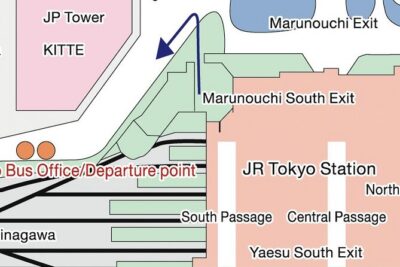
Tokyo Panoramic 1 Day: Meiji Shrine, Asakusa, Odaiba and SKYTREE®
Read our review →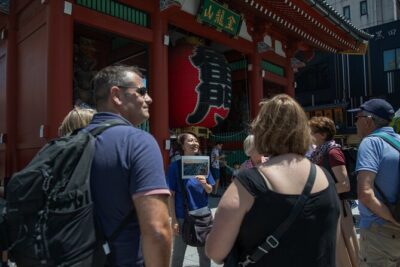
Asakusa Senso-ji Temple and Old Tokyo Walking Tour
Read our review →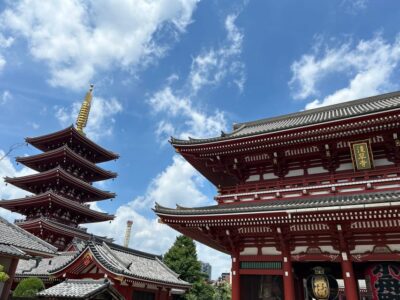
Asakusa and Tokyo’s Oldest Temple Senso-ji Tour
Read our review →
Meiji Shrine Walking Tour — Shinto & Imperial System
Read our review →
Meiji Jingu Shrine and Shinto Culture Walking Tour
Read our review →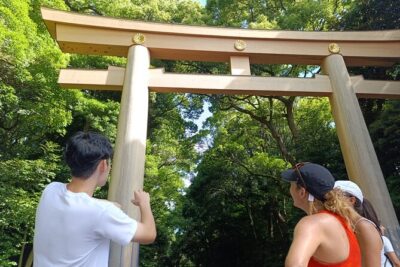
Meiji Shrine Walking Tour — Shintoism & Imperial System
Read our review →Browse the lists this tour appears in