
Review · TOKYO
Tokyo: Asakusa & Tokyo’s Oldest Temple Senso-ji Walking Tour
Old Tokyo begins at a red gate. This $11 walking tour gives you an easy introduction to Asakusa, centered on Senso-ji, Tokyo’s oldest temple, and the shopping street that leads to it. I like the clear focus: you spend two hours in one historic district instead of wasting time crossing the city. I also like the small-group limit of 10, which gives the guide a fair chance to answer questions and shape the walk around the group.
The main caution is that this is a compact tour in one neighborhood. If you want a broad survey of Tokyo or a long, detailed temple lecture, this may feel limited. One review also found that a newer guide needed to build a stronger story around the sights, so the quality may depend on who leads your group. Guides Lax and Shoma received especially warm praise for their friendly manner, strong English, and personal approach.
Key Points At a Glance
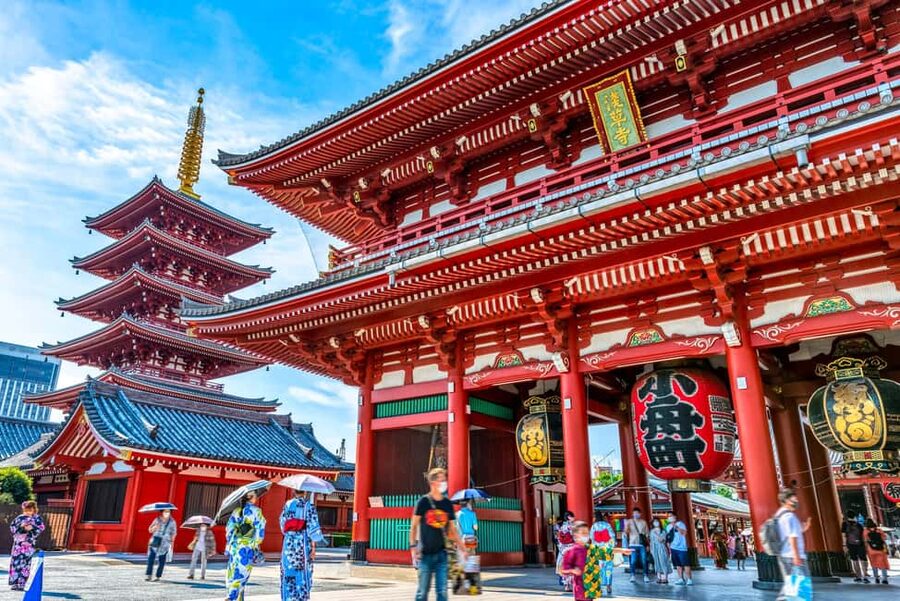
- Senso-ji takes center stage: You pass through Kaminarimon Gate, follow Nakamise Shopping Street, and spend time around Tokyo’s most celebrated Buddhist temple.
- A practical first look at Asakusa: The route introduces old streets, shops, temple customs, legends, and local culture without requiring much planning.
- Small groups keep it personal: With no more than 10 participants, you have a better chance to hear the guide and ask questions.
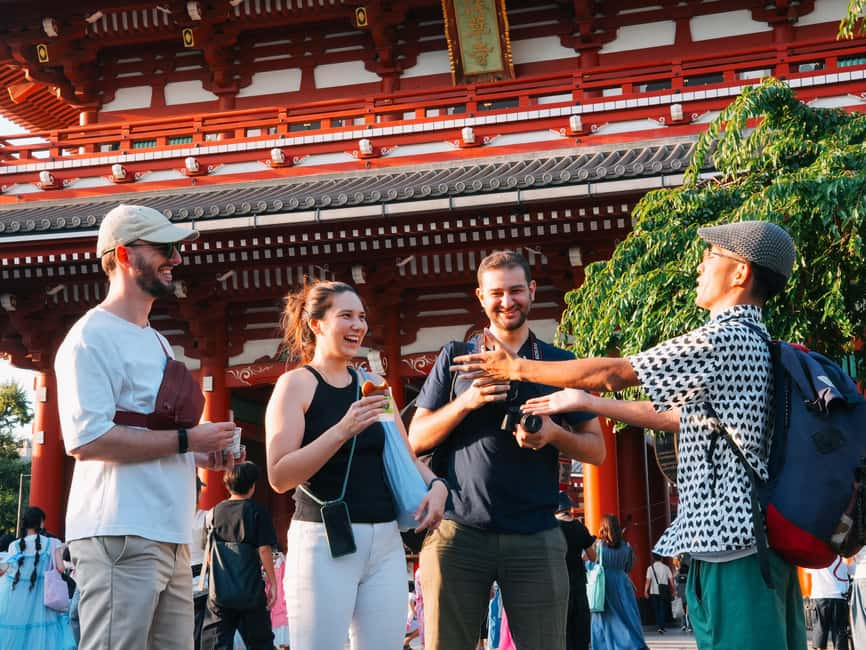
- Lax and Shoma earned strong praise: Lax was described as fun, passionate, and friendly, while Shoma was praised for clear English and his explanations of Japanese and Anglo culture.
- The price is easy on the budget: At $11 per person, the tour offers a low-cost way to add context to sights you could visit on your own.
- Expect a focused walk: Nearly all of the time is spent in Asakusa, so the experience suits depth in one district rather than citywide coverage.
Why Asakusa Makes a Good First Tokyo Walk
Tokyo can feel hard to grasp at street level. The city is enormous, fast-moving, and full of districts with different personalities. Asakusa gives you a more manageable starting point, with its famous temple, traditional shopping lane, gates, and old neighborhood atmosphere all close together.
This walk is useful because it gives those sights a story. Without some background, Kaminarimon may look like a fine photo stop, Nakamise may seem like a row of souvenir shops, and Senso-ji may become one more large temple on a long Japan itinerary. A guide can connect these places to the old Edo period, the former geisha quarters, hidden shrines, samurai strongholds, and the district’s post-war revival.
I particularly like the fact that the tour does not pretend Asakusa is a preserved museum piece. The area has changed over time, and the point is to see how older customs and modern Tokyo occupy the same streets. That makes the walk more useful than a simple list of dates and building names.
You should also keep your expectations in check. This is not a private historical seminar. It costs $11 and lasts two hours, so the experience is best understood as a friendly orientation with cultural context. You will see the essential sights and hear stories, but the depth may vary with the guide.
More Temple Walking Tours in Japan
- Tokyo: Asakusa Walking Tour with Sensoji Temple Visit
★ 4.8 · 1,583 reviews - Tokyo: Meiji Shrine Walking Tour — Shinto & Imperial System
★ 4.9 · 266 reviews - Tokyo: Meiji Jingu Shrine and Shinto Culture Walking Tour
★ 5.0 · 245 reviews
Meeting at Kaminarimon Police Station
The tour begins at 雷門交番, identified in English as Kaminarimon Police Station. This is a practical meeting point because it places you directly beside one of Asakusa’s best-known entrances and near the start of the walking route.
I recommend arriving with the meeting point written in both English and Japanese. The supplied details identify the location clearly, but the Japanese name, 雷門交番, may be easier to show on your phone if you need help finding it. Since the tour does not include hotel pickup or drop-off, you are responsible for reaching the station yourself.
Starting here also saves time. You are not gathering in a distant office or spending the first part of the tour on transport. Once the group meets, the guide can move quickly toward the gates and shopping street.
The small group matters at this point. A group of up to 10 people is still large enough to have conversation, but much easier to keep together than a major coach tour. It also gives you a reasonable chance to ask about temple customs, food, architecture, or Japanese history as you go.
Kaminarimon Gate and the Start of the Story
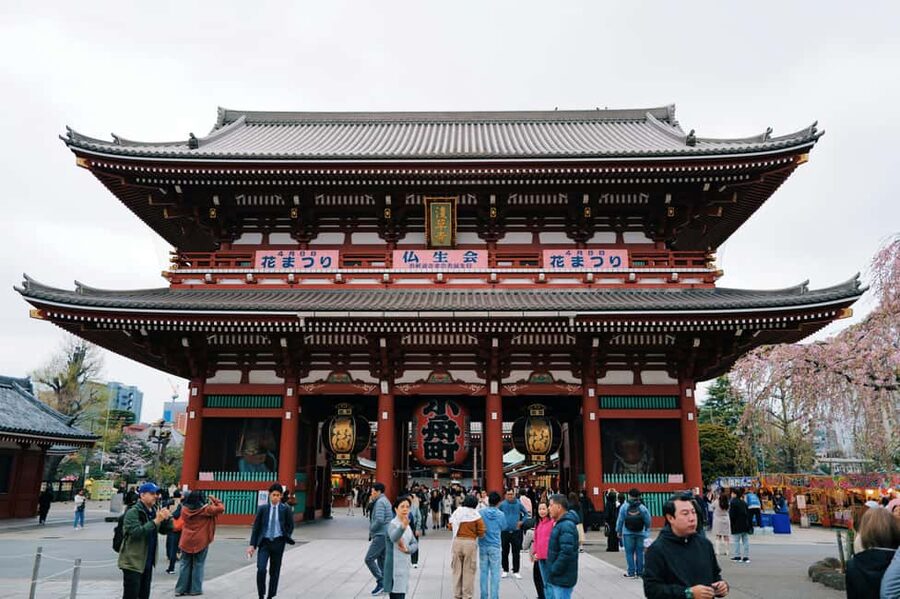
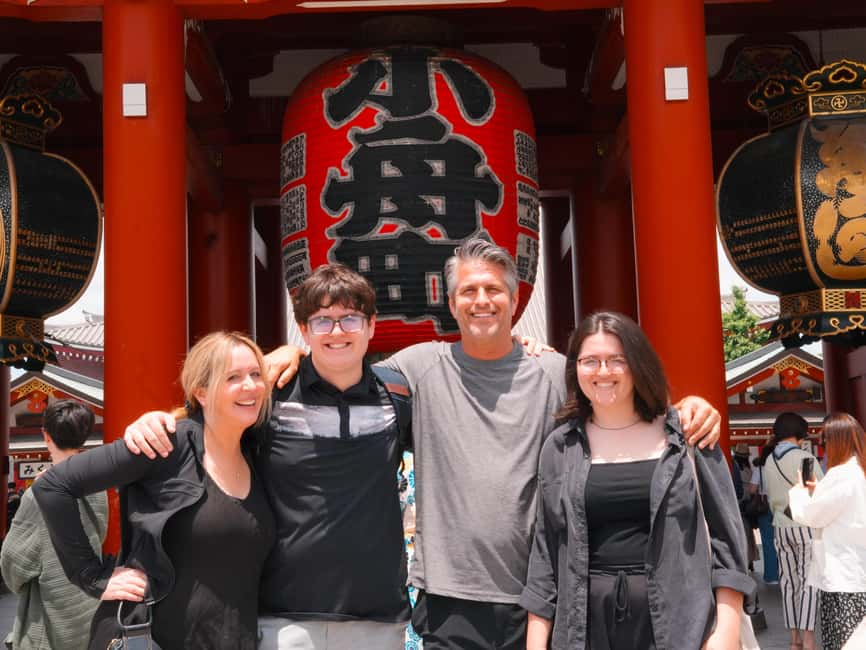
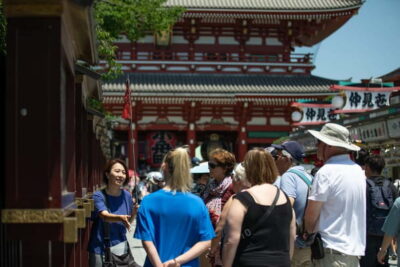
The dramatic Kaminarimon Gate serves as the natural opening scene. Its large lantern and powerful gate structure create the kind of arrival that makes Asakusa feel different from Tokyo’s glass towers and commercial centers.
The value of seeing the gate with a guide is not only the photograph. You can learn why this entrance matters, how it relates to Senso-ji, and how the district developed around the temple. The tour description also promises legends and stories, which should help turn the first few minutes into more than a quick stop for pictures.
This is a good place to get your camera ready, but do not let the photo stop swallow the experience. The gate can be crowded, and the best part of a guided walk is hearing what you are looking at. Stay close enough to hear the guide before moving forward with the group.
The route then leads toward Nakamise Shopping Street. That gradual approach is important. Rather than appearing suddenly at the temple, Senso-ji unfolds through a busy lane lined with traditional shops and food stalls.
Nakamise Shopping Street, One Hour Among Shops and Snacks
Nakamise is scheduled for about one hour, making it the longest named stop on the route. That gives you time to browse rather than simply walk through on the way to Senso-ji.
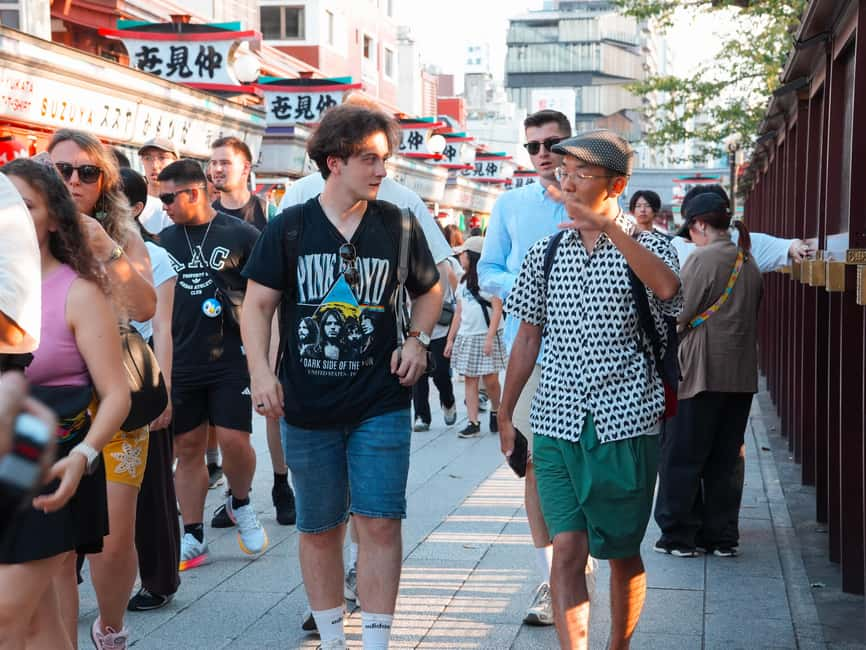
The street is known for traditional shops, glowing lanterns, handmade sweets, and street snacks. You may find this is the most sensory part of the tour, with food aromas and displays competing for your attention. It is a place to look closely at small objects, seasonal treats, and the way commerce has grown around a major religious site.
A guide adds value here by helping you understand what you are seeing. You can ask about local foods, customs, and the role of Nakamise in the wider temple approach. If you are unsure what to buy, your guide may also help you make sense of the choices, though the supplied information does not promise food tastings or shopping discounts.
I like the balance of history and everyday life at this stop. The temple is solemn, but Nakamise is social and commercial. You get a better picture of Asakusa by seeing both sides together.
There is also a possible drawback. An hour on a shopping street can feel long if you are not interested in souvenirs or snacks. The exact pace will depend on the guide and group, so you should not assume you will have a completely free hour to shop alone. This remains a guided walking tour, not an independent market break.
If you want to buy something, keep purchases modest during the walk. You will continue on foot, and large bags can become annoying quickly. The information provided does not specify whether a later shopping stop is available, so handle anything you buy with the rest of the route in mind.
More Temple Walking Tours in Tokyo
- Tokyo: Meiji Shrine and Shinto Culture Walking Tour
★ 5.0 · 225 reviews - Tokyo: Meiji Shrine Walking Tour — Shintoism & Imperial System
★ 5.0 · 209 reviews - Tokyo: Asakusa Temple & Shrine Walking Tour with Local Guide
★ 5.0 · 105 reviews - Tokyo’s Kitchen: Tsukiji Market Food & Culture Walk
★ 4.7 · 74 reviews
Senso-ji Temple and Tokyo’s Longest View Back
Senso-ji is the heart of the experience. The temple dates to the 7th century and is described as Tokyo’s oldest and most celebrated temple. Its importance gives the walk a clear purpose: you are not just touring a neighborhood, you are following one of the city’s major cultural threads.
The schedule allows about one hour for Senso-ji, including a photo stop, sightseeing, and shopping. That is enough time to take in the major temple setting while hearing about its religious and historical role. A good guide can explain how to behave respectfully, point out notable features, and connect the temple to the legends and changes that shaped Asakusa.
I value the cultural explanation here more than a rapid list of facts. Japanese Buddhist temples can be confusing on a first visit, especially if you are not sure which actions are religious customs and which are simply part of the tourist experience. The guide can give you a better sense of what you are seeing without asking you to plan every detail yourself.
The temple also provides the strongest link between past and present. The neighborhood has survived major changes, including war and post-war rebuilding, yet Senso-ji remains a central part of Asakusa’s identity. The tour’s emphasis on transformation helps you understand that old Tokyo is not frozen in time.
Do remember that this is a public religious site, not a private attraction reserved for the tour. You will share the area with other visitors, worshippers, and shoppers. The guide can explain the setting, but cannot control the crowd or guarantee quiet viewing.
Asakusa Beyond the Main Route
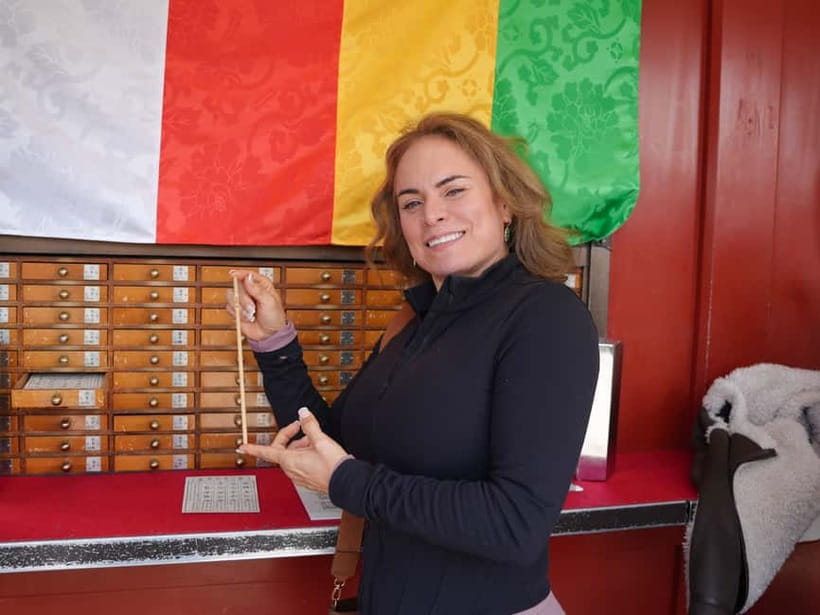
The itinerary gives Asakusa another 80 minutes, which suggests that the tour is not limited to a straight line between the gate, Nakamise, and Senso-ji. The stated focus includes old streets, hidden shrines, former geisha areas, and the district’s changing identity.
This wider neighborhood time is where the tour can become more personal. The headline sights are easy to find on a map. Smaller streets and local details are harder to place without someone explaining why they matter. I like the promise of seeing parts of Asakusa that many people might pass without noticing, even though the exact side streets and stops are not specified.
The historical range is also appealing. You may hear about Asakusa as an Edo-era center, its links to samurai power, its former entertainment districts, and its revival after the war. These subjects give the neighborhood more depth than its souvenir shops and temple photographs suggest.
Still, the exact quality of this section depends heavily on the guide. One participant felt that a newer guide was pleasant but relied too much on leading the route, with too little connecting narrative. That is fair criticism. A walking tour in one small area needs a clear story, or the stops can begin to feel like a series of directions.
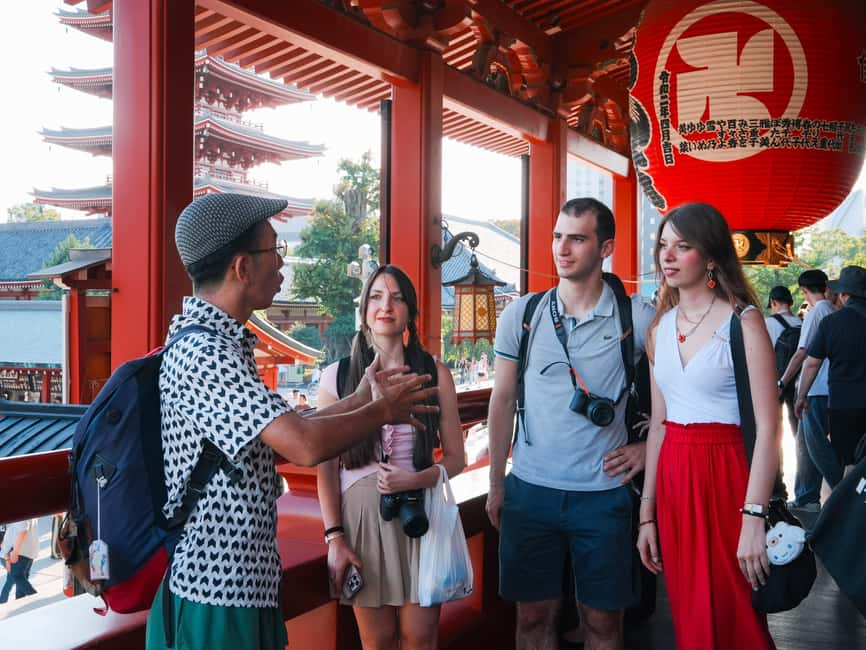
The strongest guide feedback came from Lax and Shoma. Lax was praised for making the tour fun, sharing his love of the city, and giving a personalized visit when the group was very small. Shoma was praised for his clear English, kindness, punctuality, and ability to explain differences between Japanese and Anglo culture and ways of thinking. Those comments suggest that the best version of this tour is conversational, not simply a march between landmarks.
What the $11 Price Really Buys You
At $11 per person, this is a low-cost guided experience. The value is not in exclusive entry or luxury treatment. You are paying for a live English-speaking guide, a planned route, historical context, and the convenience of having someone organize the two-hour walk.
You could visit Kaminarimon, Nakamise, and Senso-ji without paying for a tour. That is important to say plainly. The paid element earns its keep only if the guide adds stories, explains customs, answers questions, and helps you notice more than you would alone.
At this price, the risk is small. A merely adequate two-hour walk is unlikely to damage your budget, while a strong guide can make Asakusa much easier to understand. The 4.6 rating from 21 reviews points to generally strong satisfaction, though the smaller number of ratings means you should not treat it as a guarantee.
The tour also offers free cancellation up to 24 hours before the start and a reserve-now, pay-later option. Those terms are useful if your Tokyo plans are still shifting. Starting times vary, so you need to check availability for the date you want.
Who Will Get the Most From This Walk
I would choose this tour for a first visit to Tokyo, especially if you want an easy introduction to Japanese temples and old neighborhood culture. It is also a good fit for anyone who prefers a short guided walk over a large bus excursion.
History fans should appreciate the links between Edo, samurai power, geisha quarters, post-war recovery, and modern Asakusa. Culture-focused visitors may get the most from the temple explanations and the contrast between religious space and shopping street.
The tour can also work well for a flexible first day in Tokyo. Two hours is long enough to orient yourself without taking over the day. Afterward, you can continue exploring Asakusa independently, return to a favorite shop, or move on to another district.
I would hesitate if you already know Senso-ji and Asakusa well, or if you want a tour built around food tastings, private access, or several parts of Tokyo. The advertised experience is a walking introduction, not a food tour or a citywide history tour.
Because guide quality matters, I would also choose a date and time that works with your plans rather than expecting a specific person. Lax and Shoma received the strongest praise, but the guide assigned to your booking may be different.
Practical Details Before You Book
The tour lasts two hours and is offered in English with a live guide. The group is limited to 10 participants, and the walking route returns to Kaminarimon Police Station at the end.
Admission to Asakusa, Senso-ji, and Nakamise Shopping Street is included in the tour details. Hotel pickup and drop-off are not included, so plan your own transport to the meeting point and from the finish.
Wear comfortable shoes and leave room for pauses. The route includes shopping, sightseeing, photo stops, and neighborhood walking, so you will want to move easily while staying with the group. The supplied information does not specify accessibility arrangements, so contact the provider if that is important for your plans.
The tour is operated by Goen Japan. English is the only language listed, and the experience is designed for a small group rather than a private booking.
Should You Book This Asakusa Tour?
Book it if you want an inexpensive, focused introduction to old Tokyo with a live English-speaking guide. The route covers the sights most first-time visitors want, while the history of Edo, the temple traditions, and Asakusa’s changes over time give the walk more purpose than a self-guided photo stop.
I would especially consider it if you are unsure how to approach Senso-ji or want help understanding Japanese culture without committing to a full-day tour. The low price and two-hour length make it an easy addition to a Tokyo itinerary.
Skip it if you want a broad tour of the city, a quiet private temple visit, or guaranteed expert-level storytelling at every stop. The experience is affordable and generally well received, but the guide makes a real difference. If you get a guide with the warmth and clarity praised in Lax and Shoma, this can be a very good value.
FAQ
How long does the Asakusa walking tour last?
The tour lasts two hours.
What language is the tour offered in?
The tour is offered in English with a live English-speaking guide.
Where does the tour meet?
The meeting point is Kaminarimon Police Station, identified in Japanese as 雷門交番.
Where does the tour finish?
The tour returns to Kaminarimon Police Station.
What sights are included?
The route includes Nakamise Shopping Street, Senso-ji Temple, and the wider Asakusa area.
Is Senso-ji Temple included?
Yes. Admission to Senso-ji Temple is included in the tour details.
Is Nakamise Shopping Street included?
Yes. The tour includes access to Nakamise Shopping Street, with time for shopping and sightseeing.
How many people are in the group?
The group is limited to 10 participants.
Is hotel pickup included?
No. Hotel pickup and drop-off are not included.
Can I cancel for a full refund?
Yes. You can cancel up to 24 hours in advance for a full refund.
Do I have to pay when I book?
No. The reserve-now, pay-later option lets you reserve your place without paying immediately.
More Meiji Shrine and Senso-ji Tours in Tokyo
- Tokyo Panoramic 1 Day: Meiji Shrine, Asakusa, Odaiba and SKYTREE®
★ 4.5 · 1,222 reviews - Tokyo: Asakusa and Tokyo’s Oldest Temple Senso-ji Tour
★ 4.9 · 352 reviews - Tokyo Morning Tour: Asakusa, Meiji Shrine and Tsukiji Fish Market
★ 5.0 · 128 reviews - Tokyo Morning Tour: Meiji Shrine, Asakusa & Fish Market
★ 4.9 · 44 reviews
Just added around Tokyo
- :Tokyo,Shibuya /Meiji Shrine tour in KIMONO/English-friendly★ 5.0 · 4 reviews
- Tokyo: Snow Monkey and Zenkoji Temple Day Trip In Low Price★ 5.0 · 5 reviews
- Tokyo War History Tour: Yasukuni Shrine & War Museum★ 4.5 · 6 reviews
- Tokyo: Gotokuji Culture Walk & Lucky Cat Temple Experience★ 4.9 · 5 reviews
- Tokyo: Shibuya Sky, Harajuku & Meiji Shrine Highlights Tour★ 4.5 · 9 reviews
- Tokyo: Visit 5 Shrines & Collect Goshuin on Private Tour★ 5.0 · 3 reviews
- Tokyo’s Kitchen: Tsukiji Market Food & Culture Walk★ 4.7 · 74 reviews
- Tokyo: Sensoji Temple & Street Food: Private Tour with guide★ 4.6 · 8 reviews
Meiji Shrine & Senso-ji Tours, compared.
Asakusa Walking Tour with Sensoji Temple Visit
Read our review →
Tokyo Panoramic 1 Day: Meiji Shrine, Asakusa, Odaiba and SKYTREE®
Read our review →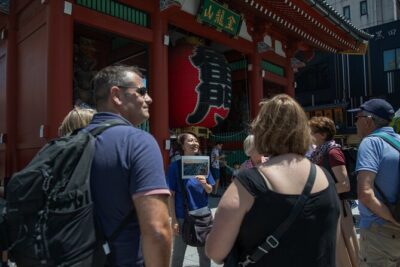
Asakusa Senso-ji Temple and Old Tokyo Walking Tour
Read our review →
Asakusa and Tokyo’s Oldest Temple Senso-ji Tour
Read our review →
Meiji Shrine Walking Tour — Shinto & Imperial System
Read our review →
Meiji Jingu Shrine and Shinto Culture Walking Tour
Read our review →
Meiji Shrine Walking Tour — Shintoism & Imperial System
Read our review →Browse the lists this tour appears in