
Review · TOKYO
Tokyo Morning Tour: Asakusa, Meiji Shrine and Tsukiji Fish Market
Tokyo rewards an early start. This four-hour tour links Meiji Shrine, Tsukiji Market, and Senso-ji Temple before much of the city gets moving, giving you a useful first look at Tokyo without wrestling with maps and train connections.
I like the small maximum of eight people and the guide-led route, which keeps the morning personal and efficient. I also like that guides such as Ryota, Yota, and Andres Burgos are praised for timing, local insight, and finding good photo spots. The trade-off is clear: $157 is a serious price for four hours, and public transport, food, and drinks cost extra.
Key points to know before booking
- Three major Tokyo sights in one morning: You visit Meiji Jingu Shrine, Tsukiji Fish Market, and Senso-ji Temple.
- Early timing helps: The morning schedule is designed to reach popular places before the biggest crowds.
- Small group, maximum eight people: This should make it easier to hear the guide and ask questions.
- You finish in Asakusa: The tour ends near Senso-ji, so you can keep exploring the district afterward.
- Transport costs extra: Budget about 600 yen for public transportation during the tour.
- Photos are included: Your guide takes pictures during the morning, useful if you want more than hurried snapshots.
Why this three-stop Tokyo tour works
Tokyo can feel like several cities stitched together. One district is modern and polished, another is devoted to temples, and another revolves around food. This tour gives you a quick introduction to three very different sides of the city in about four hours.
I particularly like the route for a first morning in Tokyo. Meiji Shrine gives you quiet woodland paths, Tsukiji shows you the city’s food culture, and Senso-ji brings you into old Asakusa. The stops do not blur together because each has a distinct mood and purpose.
The guide matters here. You are not simply being dropped at three famous addresses. An English-speaking guide leads the way, supplies historical context, and takes photos. That can save time and remove the small stresses of figuring out entrances, directions, and the best places to pause.
Still, this is a brisk outing. Each main stop receives about an hour, with transportation between districts included in the four-hour estimate. You will see a lot, but you will not have time to explore every side street, shop, stall, or shrine building at length.
More Meiji Shrine and Senso-ji Tours in Tokyo:
- Tokyo: Asakusa Walking Tour with Sensoji Temple Visit
★ 4.8 · 1,583 reviews - Tokyo Panoramic 1 Day: Meiji Shrine, Asakusa, Odaiba and SKYTREE®
★ 4.5 · 1,222 reviews - Tokyo: Asakusa and Tokyo’s Oldest Temple Senso-ji Tour
★ 4.9 · 352 reviews
Meeting at Harajuku for Meiji Shrine
The tour begins at Starbucks Coffee in the WITH HARAJUKU building, at 1-14-30 Jingumae, Shibuya. This is a practical starting point for Meiji Shrine, though you should allow time to locate the exact meeting place before the scheduled start.
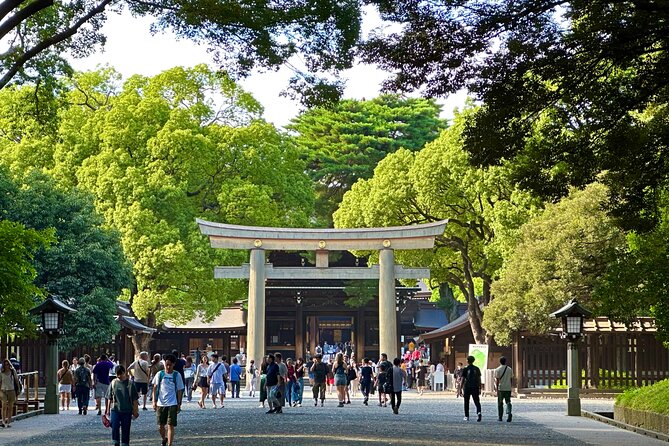
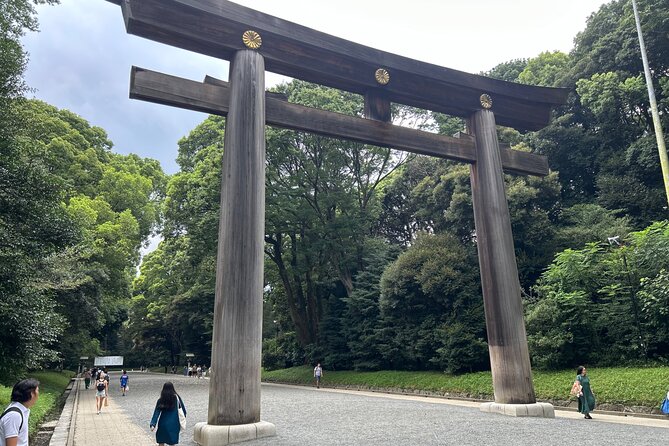
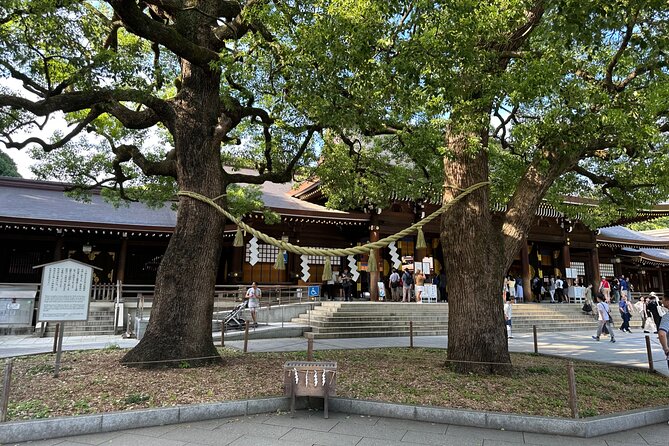
Meiji Jingu is a striking change from the busy streets around Harajuku. You enter a broad wooded setting and follow calm paths toward the shrine. Large torii gates mark the approach, and the setting gives you a chance to slow down before the city’s louder districts take over.
The shrine honors Emperor Meiji and Empress Shoken. Your guide can explain the customs connected with a Shinto shrine, helping you understand what you are seeing rather than treating the visit as a quick photo stop.
I like this opening because it sets a respectful tone. The forested grounds offer space and quiet, while the shrine itself introduces an important part of Japanese religious and cultural life. If you have just arrived in Tokyo, it is also a gentle way to begin a full day.
The hour here is enough for the main approach and a guided visit, but not for an unhurried wander through every path. Stay close to the group, since the tour has a fixed schedule and two more major stops ahead.
Tsukiji Market and Tokyo’s food culture
Tsukiji Fish Market provides the biggest change of pace. The market is known for seafood and fresh ingredients, with a working connection to Tokyo’s chefs and restaurants. You may see displays that include tuna, octopus, and other produce as you move through the area.
Tsukiji was once the city’s wholesale seafood center and was known as the world’s largest wholesale seafood market. The wholesale function has changed, but Tsukiji remains an important place for food shopping and culinary culture. The tour presents it as a place where locals and chefs still seek quality ingredients.
This stop is best understood as a food district rather than a single attraction with one grand entrance. Your guide helps you make sense of the market area and points out details you could easily miss while walking on your own.
I like having Tsukiji in the middle of the morning. After the quiet of Meiji Shrine, the market brings you back into Tokyo’s daily rhythm. It also gives the tour a taste of ordinary city life, not just famous monuments.
Food and drinks are not included, so bring extra money if you want to buy something. The supplied information does not promise a meal or tasting, so you should treat any purchase as optional and separate from the tour price.
The market can also be the most crowded and compact part of the morning. Keep your belongings close and follow the guide’s pace. An hour offers a useful introduction, but it is not enough for a long food crawl or a relaxed shopping session.
Senso-ji and the old streets of Asakusa
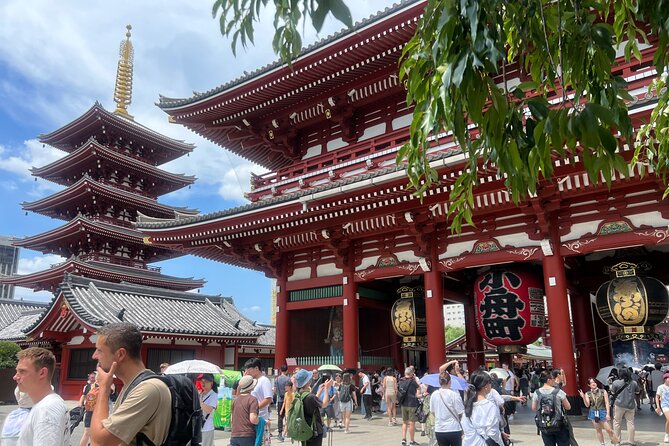
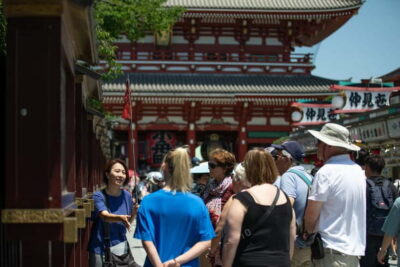
The final stop is Senso-ji Temple in Asakusa. This is Tokyo’s oldest temple and one of the city’s most recognizable sights. The approach begins at the red Kaminarimon Gate, then continues along Nakamise shopping street toward the temple.
Senso-ji gives you a very different picture of Tokyo from Meiji Shrine. Here, the setting feels more urban and public, with shops, visitors, and a strong sense of ceremony around the temple approach. Your guide adds context about the district and the temple, which helps connect the buildings with Asakusa’s place in Tokyo.
Nakamise is part of the experience. It is a lively shopping street leading toward Senso-ji, with plenty to look at as you walk. Since the tour ends in Asakusa, you can return later for more time at the temple, browse the shops, or continue exploring the district at your own speed.
I consider the ending especially practical. You are not returned to the starting point, so the tour finishes in an area where you can keep sightseeing. That makes the experience work well as the first part of a full day in eastern Tokyo.
Again, the one-hour visit is a sampler. You will get the main gate, shopping street, and temple setting, but you will need additional time if you want to explore Asakusa properly.
More Market Visits in Tokyo:
- Tokyo’s Kitchen: Tsukiji Market Food & Culture Walk
★ 4.7 · 74 reviews - Tokyo Morning Tour: Meiji Shrine, Asakusa & Fish Market
★ 4.9 · 44 reviews - Bangkok: City Highlights Temple and Market Walking Tour
★ 4.5 · 3,990 reviews - Mini Group Xian Day Tour to Terracotta Army, City Wall, Pagoda and Muslim Bazaar
★ 5.0 · 1,320 reviews
A small group makes the morning easier
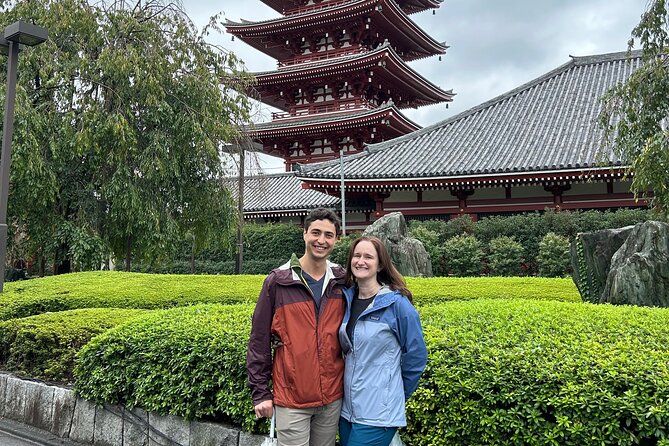
The maximum group size is eight. That is a strong feature for a route with three districts, especially when the guide needs to keep everyone together through transport connections and crowded public places.
A small group also makes questions easier. You can ask about shrine customs, market traditions, or the differences between Meiji Shrine and Senso-ji without trying to speak over a large crowd.
Several named guides receive especially strong praise. Ryota is described as attentive, well organized, and good at finding photo locations. Yota is noted for an approachable manner and broad knowledge of the places visited. Andres Burgos is praised for making the full tour enjoyable and informative.
The consistent theme is timing. One account specifically points out that the schedule was handled so the group reached places before other groups arrived. That is important in Tokyo, where an early visit can change how much space you have at a famous gate or shrine approach.
The photo service is another useful touch. Your guide takes pictures during the tour, so you do not have to choose between joining the group and taking self-portraits. The information does not specify how many photos you receive or how they are delivered, so ask the provider if that matters to you.
What $157 gets you
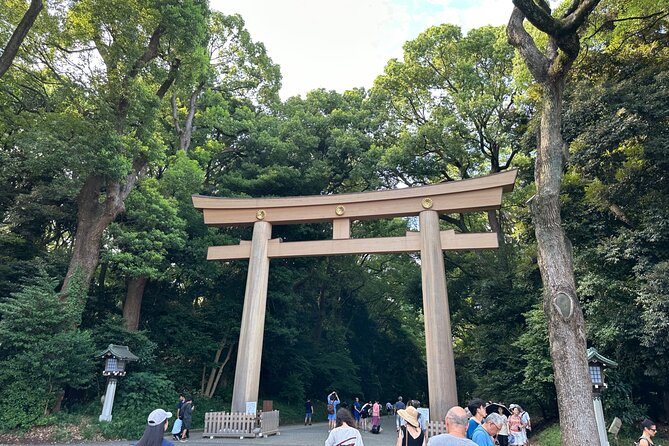
At $157, this is not a budget walk. The value depends on how much you want structure, explanation, and time savings.
You are paying for an English-speaking guide, a small group, historical context, route planning, and photos. The experience also links three districts that would require your own planning and public transport connections. For a short first visit, that convenience can be worthwhile.
The price is harder to justify if you already know Tokyo well, enjoy planning train routes, or want to spend a long time at one site. You could visit these districts independently and control your own pace, though you would give up the guide’s commentary and the convenience of a planned morning.
Public transportation is not included. Set aside about 600 yen for the required transport, and remember that food and drinks are also separate. The mobile ticket is convenient, but it does not cover these extra costs.
I would view this as an orientation tour rather than a full cultural program. It gives you a framework for Tokyo, then leaves you in Asakusa with the rest of the day open.
Timing, pace, and practical trade-offs
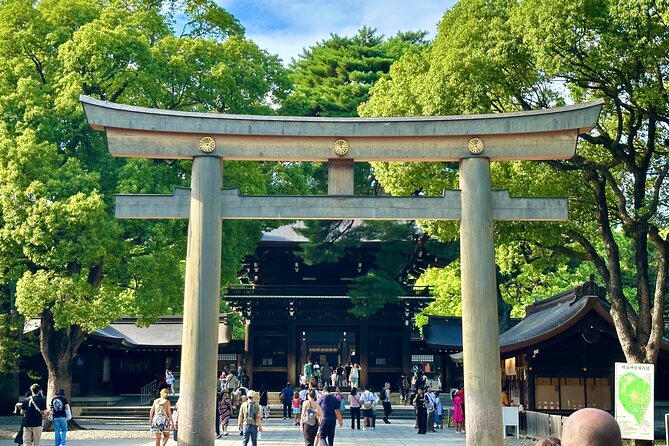
The tour lasts about four hours, with roughly one hour at each main stop. The remaining time is used for moving between districts and organizing the group.
The early start is a key part of the value. It helps avoid the worst crowds and gives the guide a better chance to keep the group on schedule. If you prefer late mornings, this may feel demanding, but the early timing is one of the reasons the route can fit so much into half a day.
Wear comfortable shoes and be ready to walk between sights and transport points. The supplied details confirm that the tour is near public transportation and that most people can participate, but they do not provide a precise walking distance or accessibility plan.
The tour starts in Harajuku and ends in Asakusa. That one-way design is efficient, but it means you should plan your day around the finish rather than expecting to return to Harajuku. Asakusa is a useful place to continue sightseeing, so the ending is more advantage than problem for most people.
You receive confirmation when booking, and free cancellation is available up to 24 hours before the start time. Within 24 hours, refunds are not available and changes are not accepted. The experience also requires a minimum number of participants, so a cancellation for that reason results in an alternative date or experience, or a full refund.
Who will get the most from this experience
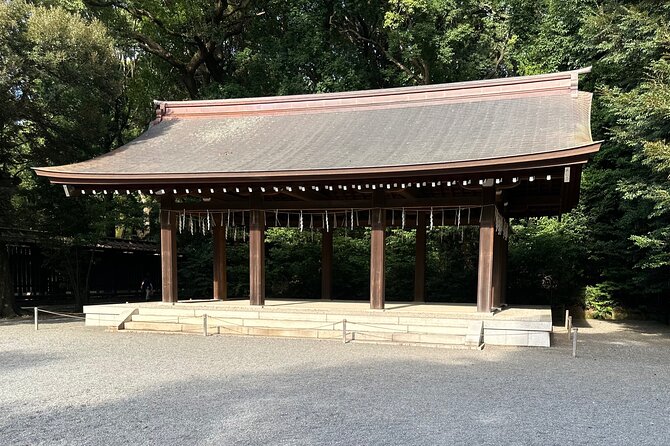
I would recommend this tour to a first-time Tokyo visitor with limited time. It is also a good fit if you want a guide to handle the route, explain customs, and keep the morning moving.
It suits people who prefer a small group to a large coach tour. The maximum of eight keeps the format more personal and should make it easier to hear the guide.
Families and older visitors may appreciate the organized route, though the exact accessibility details are not provided. Most people can participate, but you should confirm any specific mobility needs before booking.
Independent explorers may find the price too high. If your priority is eating slowly at Tsukiji, taking detailed photos at Senso-ji, or wandering Meiji Shrine for several hours, this schedule will feel too tight.
How to make the morning better
Arrive at the Harajuku meeting point early enough to find the Starbucks inside WITH HARAJUKU. A late arrival could be difficult because the group has a fixed route and public transport connections.
Keep your morning flexible after the tour. Since you finish in Asakusa, you can continue at Senso-ji, explore Nakamise, or use the district as your base for the next part of the day.
Bring money for transport and any market purchases. Food and drinks are not included, and the market is one of the places where you may want to buy something.
Use the guide’s photo service, but still take your own pictures when there is time. The guide can capture group or individual moments, while your own camera lets you focus on small details that catch your eye.
Most important, treat each stop as an introduction. The tour cannot cover every corner of three major Tokyo districts in four hours. Its strength is showing you where you may want to return.
Should you book this Tokyo morning tour?
I would book it if you have only a short time in Tokyo and want three major sights explained by a guide in one organized morning. The early start, small group, photo help, and well-managed timing make the high price easier to accept.
I would skip it if you prefer complete independence or want to focus deeply on one district. The $157 fee, plus about 600 yen for transport and your own food, is a premium for convenience.
For a first morning in Tokyo, though, the route is smart. You see a shrine, a food market, and a historic temple, then finish in Asakusa with the rest of the day still available.
FAQ
How long does the Tokyo morning tour last?
The tour lasts approximately four hours.
Which places does the tour visit?
It visits Meiji Jingu Shrine, Tsukiji Fish Market, and Senso-ji Temple in Asakusa.
Where does the tour start?
The meeting point is Starbucks Coffee in the WITH HARAJUKU building at 1-14-30 Jingumae, Shibuya, Tokyo.
Where does the tour end?
The tour ends in Asakusa, Taito City, Tokyo.
Is public transportation included?
No. Public transportation is not included. The estimated additional cost is around 600 yen.
Are food and drinks included?
No. Food and drinks are not included in the tour price.
Is the tour conducted in English?
Yes. An English-speaking guide leads the experience.
How large is the group?
The tour has a maximum of eight participants.
Can I cancel for a full refund?
Yes, if you cancel at least 24 hours before the scheduled start time. Cancellations or changes made within 24 hours are not refunded.
More Shopping Tours in Tokyo
- Bangkok: Railway and Floating Market Tour with Dragon Temple
★ 4.6 · 1,225 reviews - Bangkok: Night Bike Tour with Temples & Flower Market Visit
★ 4.8 · 751 reviews - Seoul: Palace, Temple and Market Guided Foodie Tour at Night
★ 4.9 · 750 reviews - Old Delhi Food-Spice Market-Temples Tour Soon Featured on NETFLIX
★ 5.0 · 304 reviews
Just added around Tokyo
- Tokyo: Snow Monkey and Zenkoji Temple Day Trip In Low Price★ 5.0 · 5 reviews
- :Tokyo,Shibuya /Meiji Shrine tour in KIMONO/English-friendly★ 5.0 · 4 reviews
- Tokyo War History Tour: Yasukuni Shrine & War Museum★ 4.5 · 6 reviews
- Tokyo: Gotokuji Culture Walk & Lucky Cat Temple Experience★ 4.9 · 5 reviews
- Tokyo: Shibuya Sky, Harajuku & Meiji Shrine Highlights Tour★ 4.5 · 9 reviews
- Tokyo: Visit 5 Shrines & Collect Goshuin on Private Tour★ 5.0 · 3 reviews
- Tokyo: Sensoji Temple & Street Food: Private Tour with guide★ 4.6 · 8 reviews
- Tokyo’s Kitchen: Tsukiji Market Food & Culture Walk★ 4.7 · 74 reviews
Meiji Shrine & Senso-ji Tours, compared.
Asakusa Walking Tour with Sensoji Temple Visit
Read our review →
Tokyo Panoramic 1 Day: Meiji Shrine, Asakusa, Odaiba and SKYTREE®
Read our review →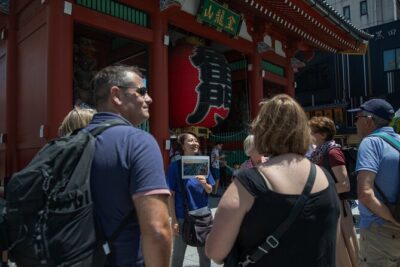
Asakusa Senso-ji Temple and Old Tokyo Walking Tour
Read our review →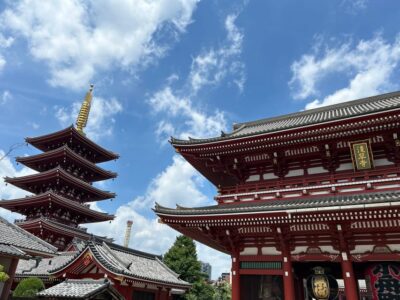
Asakusa and Tokyo’s Oldest Temple Senso-ji Tour
Read our review →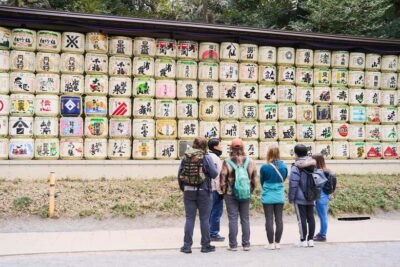
Meiji Shrine Walking Tour — Shinto & Imperial System
Read our review →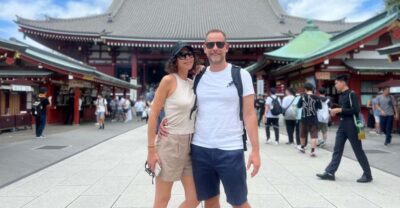
Meiji Jingu Shrine and Shinto Culture Walking Tour
Read our review →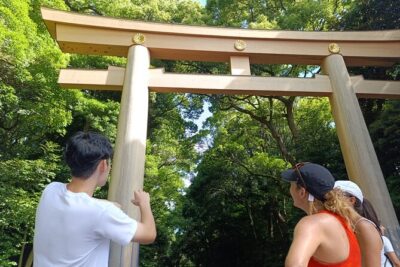
Meiji Shrine Walking Tour — Shintoism & Imperial System
Read our review →Browse the lists this tour appears in