
Review · TOKYO
Tokyo: Asakusa Walking Tour -Sumida River to Senso-ji Temple
Asakusa rewards slow walking. I like the Sumida River setting and the easy route into Senso-ji, where Tokyo’s old merchant quarter still feels tied to everyday city life. I also like the small group limit of 10, which should make it easier to hear the English-speaking guide and ask questions. The main drawback is time: 90 minutes gives you a useful introduction, but not enough time to fully explore the temple, market, and nearby sights.
The meeting point is specific but not especially famous: in front of the Kuramae 2-Chome Police Box beside Umaya Bridge. Look for the guide holding a sign marked gotcha. At $42 per person, this is best value for a first visit to Asakusa, especially if you want context rather than simply taking photos and moving on.
Key points before you book
- A river-to-temple route: The walk starts near the Sumida River and leads toward Senso-ji, giving the tour a clear sense of place rather than a string of unrelated stops.
- A compact 90-minute introduction: You can see the Kaminarimon Gate, Nakamise Shopping Street, and the temple grounds without giving up an entire morning or afternoon.
- Small groups capped at 10: This is a useful size for narrow lanes, market streets, and questions along the way.
- English guidance: The tour is offered in English. Past guide feedback highlights Miho’s clear explanations, while Haruka has also led tours in fluent Spanish.
- A fortune prediction is included: This gives the visit a small connection to Japanese temple custom, though the exact form of the fortune is not specified.
- Food is part of the Asakusa story: Traditional snacks, tempura, yakitori, and melon pan with ice cream are mentioned around the route, but you should confirm what is included and carry money for anything you want to buy.
Why this short Asakusa walk works
Asakusa can feel confusing on a first visit. The streets around Senso-ji branch in several directions, the Sumida River adds another reference point, and the famous temple precinct can be crowded. This route gives you a simple line to follow: begin near the water, pass through local streets and alleys, then arrive at one of Tokyo’s best-known religious sites.
I like that the tour is not built around Senso-ji alone. Starting by the river gives the visit some breathing room. You get a sense of how Asakusa is arranged before reaching the main gate, and the contrast is useful. The riverfront is open and relatively calm, while the approach to Senso-ji grows more active as shops, visitors, and temple buildings gather around you.
The pace should suit you if you want orientation without a long walking day. Ninety minutes is long enough to explain the main sights, but short enough to fit before lunch, after arriving in Tokyo, or ahead of another stop such as Tokyo Skytree. One past guide, Miho, recommended Skytree after the tour, and that pairing makes practical sense because both sights are in the same broad part of eastern Tokyo.
More Temple Walking Tours in Japan
- Tokyo: Asakusa Walking Tour with Sensoji Temple Visit
★ 4.8 · 1,583 reviews - Tokyo: Meiji Shrine Walking Tour — Shinto & Imperial System
★ 4.9 · 266 reviews - Tokyo: Meiji Jingu Shrine and Shinto Culture Walking Tour
★ 5.0 · 245 reviews
Meeting the guide beside Umaya Bridge
Your starting point is in front of the Kuramae 2-Chome Police Box, next to Umaya Bridge, at approximately 35.7046293, 139.7941848. The guide carries a sign with gotcha written on it.
This is a point where I would allow extra time. A police box is easy to identify once you are there, but the meeting point is not at Senso-ji’s main gate and may not be the place you picture when thinking of Asakusa. Check your route before leaving and keep the coordinates handy. The tour does not begin at the temple, so arriving at Kaminarimon Gate first would put you in the wrong place.
The small group format matters here. A group of up to 10 people can gather near the river and move through side streets without the stop-and-start feel of a large coach tour. It also gives you a better chance to ask about customs, buildings, food, or the neighborhood’s past.
The guide language is English. The available feedback is especially positive about guide clarity. Miho was praised for explaining the Sumida River, Senso-ji, the shrine, and the market in clear English. Haruka was described as speaking Spanish comfortably, while another tour was conducted in English and Japanese and remained easy to follow. If you need a language other than English, do not assume it is guaranteed for every departure. Ask when booking.
Walking beside the Sumida River
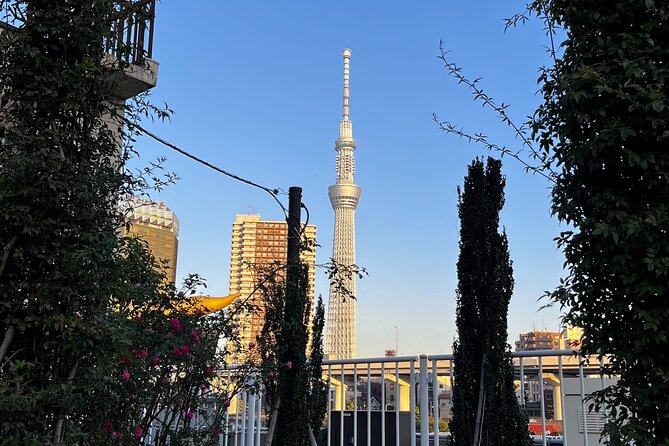
The first section follows the Sumida River, one of the tour’s strongest features. You get open views and a calmer start before entering the tighter streets of Asakusa. That change of mood helps you understand the district as more than a temple and shopping lane.
The route is also a good reminder that Tokyo is not only towers, train stations, and crowded crossings. Along the river, you can pause to look across the water and hear how the guide connects the area to Tokyo’s past. The description refers to samurai and merchant life, giving the walk a historical frame without requiring you to spend hours in a museum.
I would keep your expectations measured. This is a guided stroll, not a dedicated river cruise or a long waterfront hike. The tour uses the river as a starting point and setting before moving toward Senso-ji. If you want an extended walk along the Sumida, you will need extra time after the official tour.
The route’s value is in the transition. You begin with space around you, then move through neighborhoods and alleys where the city feels closer and more detailed. That gradual approach makes the temple arrival more satisfying than stepping directly from a train station into the main gate.
Local streets, alleys, and Asakusa’s older character
The walk continues through quaint neighborhoods and smaller lanes. These sections may be less visually famous than Senso-ji, but they do useful work. They show you the district at street level, where the old and new parts of Tokyo sit close together.
A guide can point out details you might otherwise pass without noticing. The supplied tour description links the area to samurai courage and merchant success, so you can expect the commentary to connect present-day streets with earlier chapters of Asakusa. That context is one reason to choose this tour rather than simply following a map from the river to the temple.
The route also lets you get your bearings. Asakusa is easy to enjoy but not always easy to read. A guide-led walk can show you how the river, temple, shopping street, and surrounding neighborhood fit together. Afterward, you can return to the places that caught your eye without spending your first hour figuring out where you are.
The tradeoff is that a 90-minute route cannot cover every side street or nearby attraction. You will receive an introduction, not a complete neighborhood study. Think of it as a well-organized first look that leaves room for your own wandering later.
More Temple Walking Tours in Tokyo
- Tokyo: Meiji Shrine and Shinto Culture Walking Tour
★ 5.0 · 225 reviews - Tokyo: Meiji Shrine Walking Tour — Shintoism & Imperial System
★ 5.0 · 209 reviews - Tokyo: Asakusa Temple & Shrine Walking Tour with Local Guide
★ 5.0 · 105 reviews - Tokyo’s Kitchen: Tsukiji Market Food & Culture Walk
★ 4.7 · 74 reviews
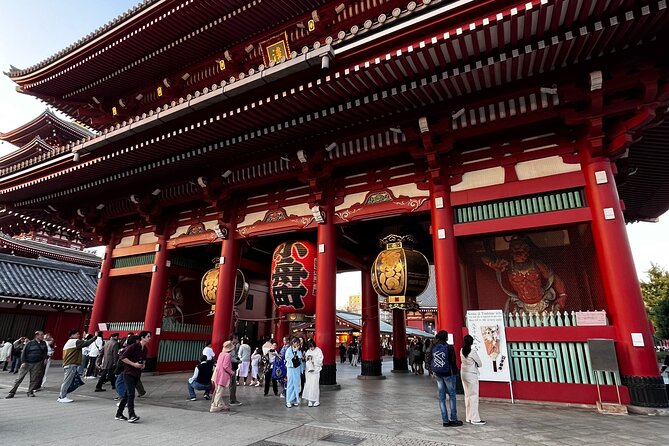
Passing through Kaminarimon Gate

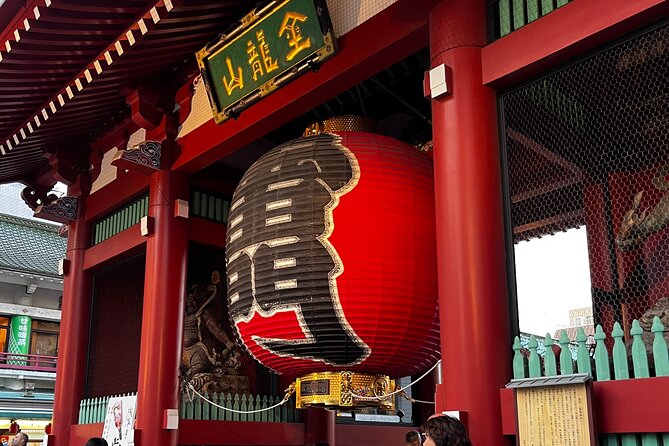
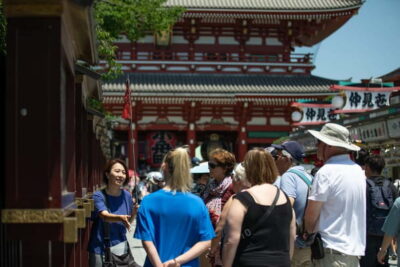
The arrival at Kaminarimon Gate is the visual high point of the route. Its name means Thunder Gate, and the entrance is associated with the guardian figures Fujin and Raijin, the gods of wind and thunder. The large gate creates a dramatic threshold between ordinary city streets and the temple approach.
This is where your guide’s timing and explanations matter. The gate is a major photo stop, but it is also a place with religious meaning. A short explanation helps you look beyond the size and color of the structure to the protective role of its figures.
Expect other people around you. Senso-ji is one of Tokyo’s most popular sights, and Kaminarimon is one of its best-known meeting and photo points. A small tour cannot remove the crowds, but it can help you move through them with a better plan. Stay close to the guide, especially if you stop for pictures.
Do not mistake the gate for the temple itself. It is the entrance to the approach, with Nakamise Shopping Street extending beyond it. The route becomes more commercial from here, which is part of Asakusa’s appeal.
Nakamise Shopping Street, snacks, and souvenirs
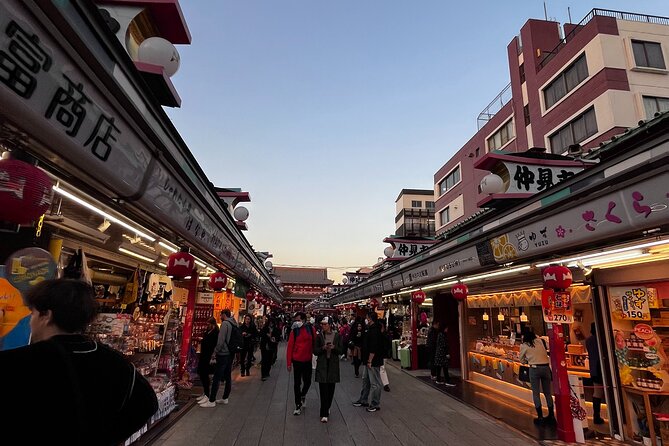
Nakamise Shopping Street runs toward Senso-ji and is lined with shops selling traditional goods, souvenirs, sweets, and snacks. It is an important part of the visit because it shows how commerce and worship have long shared the same space.
You can expect a lively street with plenty to catch your eye. The food references include crispy tempura, yakitori skewers, and traditional sweets. One particularly useful detail from the guide feedback is melon pan with ice cream, which made a memorable snack stop for one participant. Melon pan is a sweet Japanese bread with a crisp, cookie-like top, and the ice cream version is an easy treat to try while walking around Asakusa.
Here is the practical catch: the formal inclusions list only a fortune prediction. It does not clearly promise that food, drinks, or every snack described along the route is included in the $42 price. I would plan to pay separately for anything you want to eat, and ask the guide at the start if a specific tasting is part of your departure.
The shopping street can also take more time than you expect. The official walk ends around the temple and market area, and you can easily spend hours afterward looking at food, drinks, and souvenirs. That is a strength of the tour. You get a guided introduction first, then the freedom to return at your own pace.
Senso-ji Temple and its sacred grounds
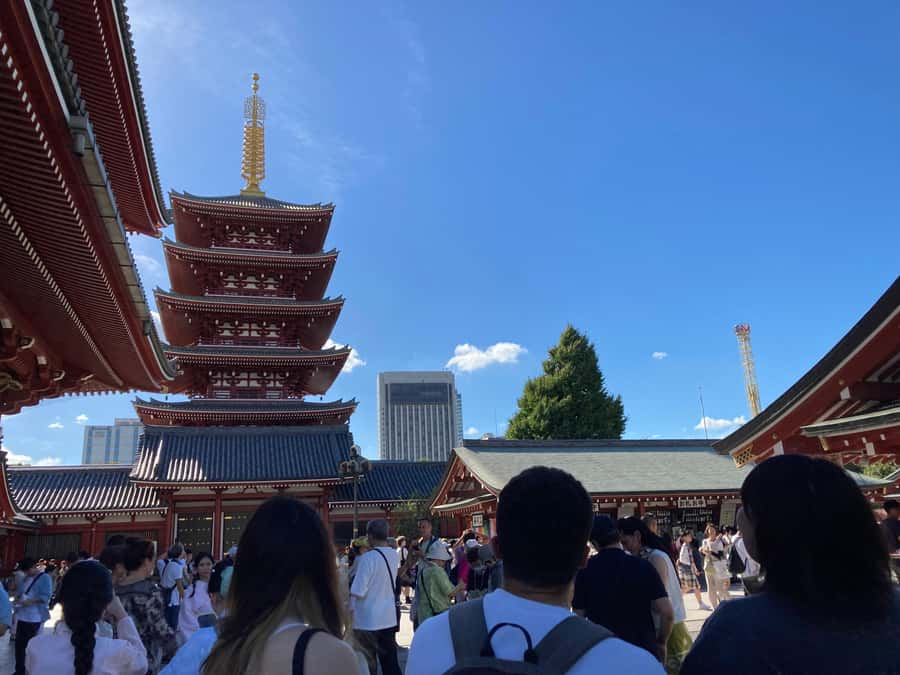
Senso-ji is the main destination, and the tour gives you a framework for seeing it. You can expect to visit the temple grounds, look toward the Main Hall, and learn how the site functions as a place of prayer rather than only a historic attraction.
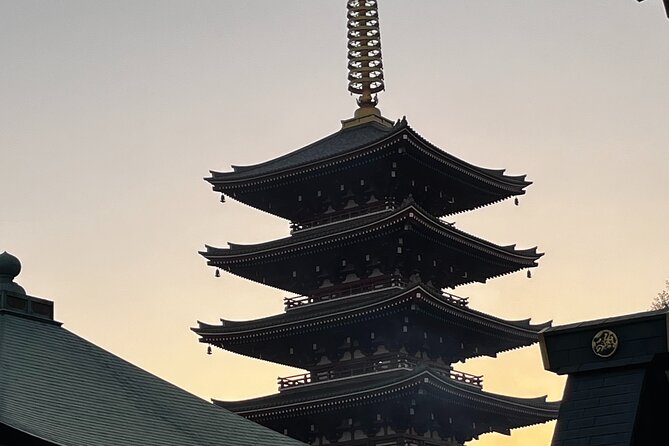
The Main Hall provides a quieter focus after the market street. You may see people offering prayers and following local customs. The tour description also refers to gardens and a pagoda, so the final section should include more than one temple structure and a chance to notice the surrounding grounds.
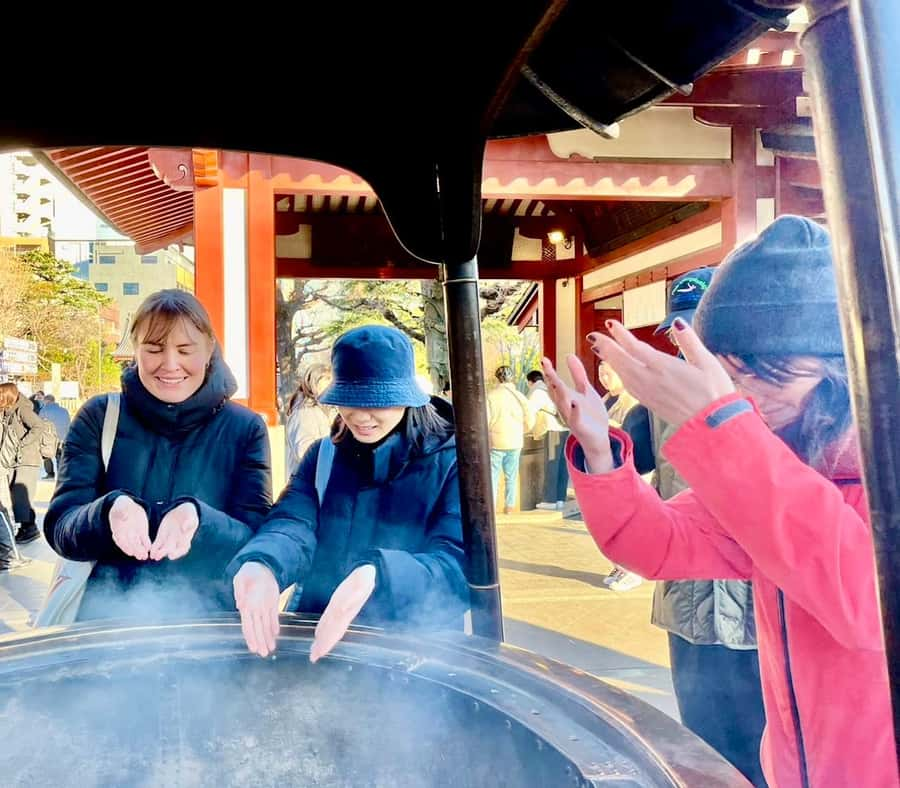
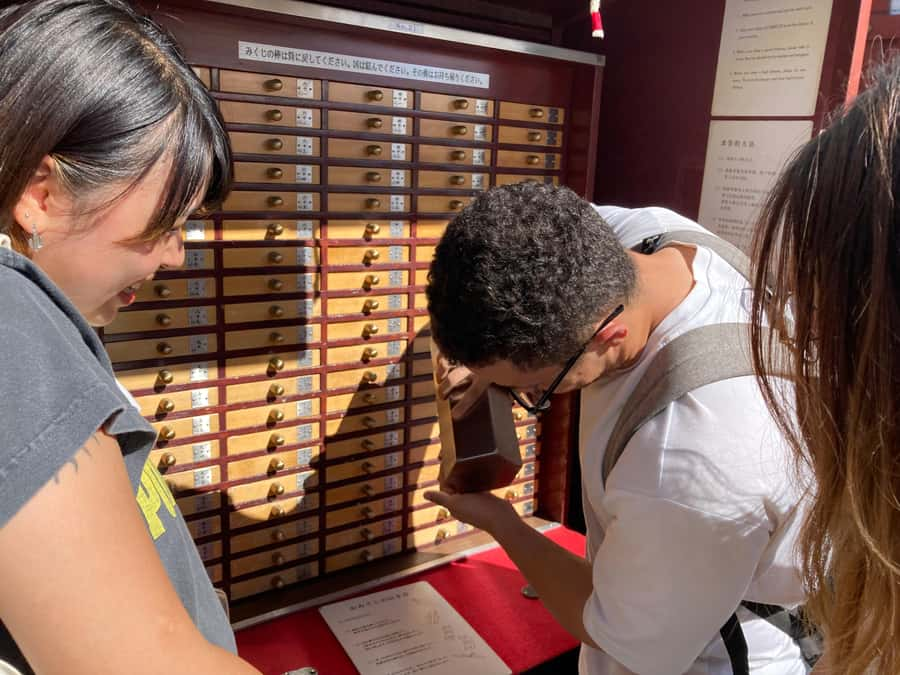
The included fortune prediction adds a small personal element. Fortune slips are a familiar part of visits to Japanese temples and shrines, and receiving one can make the visit feel less like a checklist of sights. Since no details are given about the exact procedure or whether an additional donation is needed, ask the guide if you want to understand the custom properly.
Senso-ji is not a silent retreat. Its fame brings crowds, shops, cameras, and constant movement. I like the balance of this tour because it does not pretend Asakusa is untouched or empty. You see a working religious site in the middle of a busy Tokyo district, with worship, tourism, shopping, and food all sharing the same few blocks.
What the guides add to the visit
The strongest praise goes to the guides’ explanations and the amount covered in 90 minutes. Miho received especially warm feedback for her clear English and useful advice after the tour. The guide was able to explain the river, temple, shrine, and market while keeping the walk to its promised length.
Mikio was also singled out positively, and Haruka’s Spanish ability was appreciated. These names suggest that guide quality can shape the outing, but you should not assume you will receive a particular guide unless the booking confirms it.
The tour works best if you arrive with a few questions. You might ask about prayer etiquette, the guardian figures at Kaminarimon, the difference between a temple and a shrine, or which food stalls are worth your time afterward. A small group gives you a better chance to make the tour conversational.
Still, the guide cannot turn 90 minutes into a full Asakusa day. If you want extensive shopping, a long temple visit, or detailed food tasting, treat the tour as your starting point and stay in the area afterward.
Is $42 a fair price?
At $42 per person, this is not the cheapest way to see Senso-ji. You can walk from the river to the temple without paying for a guide. The question is what the added structure is worth to you.
I think the price is reasonable if you are new to Tokyo, want English commentary, or prefer a clear route through a busy district. The guide helps connect the river, local streets, gate, shopping street, and temple, rather than leaving you to gather those pieces on your own. A group limit of 10 also gives the tour a more personal feel than a large sightseeing group.
The value is weaker if you already know Asakusa well or mainly want free time for shopping and food. You will still need extra time after the tour, and food is not clearly listed as an included expense. If you see the tour as a 90-minute orientation followed by your own exploring, the cost is easier to justify.
Free cancellation up to 24 hours before the start and the option to reserve now and pay later reduce the risk of fitting it into a changing Tokyo schedule. Starting times vary, so check availability and choose a slot that leaves room to remain around Senso-ji afterward.
Who should book this Asakusa walk?
I would recommend it to first-time Tokyo visitors, couples, solo visitors, and families who want a short cultural introduction without committing to a half-day tour. It also suits you if you like food stalls and shops but want some history before you start browsing.
The tour is a good fit for people who appreciate local detail but do not want a lecture-heavy museum visit. The river walk, temple approach, market, and fortune prediction create a varied 90 minutes.
I would be more cautious if you need extensive accessibility information, since none is provided here. The route includes walking through neighborhoods, alleys, a market street, and temple grounds, so ask the operator for current route details before booking if that matters to you.
FAQ
How long is the Asakusa walking tour?
The tour lasts 90 minutes.
What language is the tour offered in?
The tour is offered in English with a live guide.
Where does the tour meet?
The guide waits in front of the Kuramae 2-Chome Police Box next to Umaya Bridge. The guide carries a sign marked gotcha. The listed coordinates are 35.7046293, 139.7941848.
Where does the tour finish?
The route leads to Senso-ji Temple and the Nakamise Shopping Street area. The tour description says the walk ends at the temple and market.
How many people can join the group?
The group is limited to 10 participants.
Is a fortune prediction included?
Yes. A fortune prediction is listed as an inclusion.
Can I cancel for a full refund?
Yes. You can cancel up to 24 hours in advance for a full refund. You can also reserve the tour and pay later.
Should you book it?
Book this tour if you want a clear, friendly introduction to Asakusa that links the Sumida River with Senso-ji in one compact walk. The small group, strong guide feedback, and useful finish near Nakamise make it a practical first step in the area.
Skip it if you already know Asakusa or would rather spend the full 90 minutes eating and shopping on your own. For most first-time visitors, though, $42 buys more than directions. It gives you context, a sensible route, and a better idea of where to keep exploring once the guide says goodbye.
More Meiji Shrine and Senso-ji Tours in Tokyo
- Tokyo Panoramic 1 Day: Meiji Shrine, Asakusa, Odaiba and SKYTREE®
★ 4.5 · 1,222 reviews - Tokyo: Asakusa and Tokyo’s Oldest Temple Senso-ji Tour
★ 4.9 · 352 reviews - Tokyo Morning Tour: Asakusa, Meiji Shrine and Tsukiji Fish Market
★ 5.0 · 128 reviews - Tokyo Morning Tour: Meiji Shrine, Asakusa & Fish Market
★ 4.9 · 44 reviews
Just added around Tokyo
- :Tokyo,Shibuya /Meiji Shrine tour in KIMONO/English-friendly★ 5.0 · 4 reviews
- Tokyo: Snow Monkey and Zenkoji Temple Day Trip In Low Price★ 5.0 · 5 reviews
- Tokyo War History Tour: Yasukuni Shrine & War Museum★ 4.5 · 6 reviews
- Tokyo: Gotokuji Culture Walk & Lucky Cat Temple Experience★ 4.9 · 5 reviews
- Tokyo: Shibuya Sky, Harajuku & Meiji Shrine Highlights Tour★ 4.5 · 9 reviews
- Tokyo: Visit 5 Shrines & Collect Goshuin on Private Tour★ 5.0 · 3 reviews
- Tokyo: Sensoji Temple & Street Food: Private Tour with guide★ 4.6 · 8 reviews
- Tokyo’s Kitchen: Tsukiji Market Food & Culture Walk★ 4.7 · 74 reviews
Meiji Shrine & Senso-ji Tours, compared.
Asakusa Walking Tour with Sensoji Temple Visit
Read our review →
Tokyo Panoramic 1 Day: Meiji Shrine, Asakusa, Odaiba and SKYTREE®
Read our review →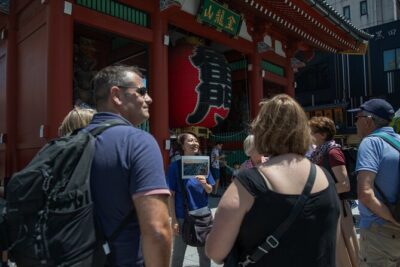
Asakusa Senso-ji Temple and Old Tokyo Walking Tour
Read our review →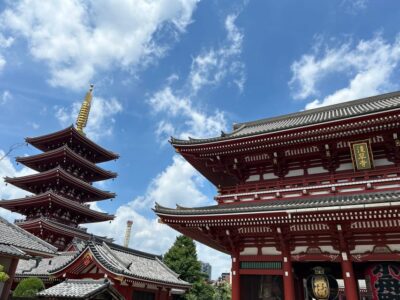
Asakusa and Tokyo’s Oldest Temple Senso-ji Tour
Read our review →
Meiji Shrine Walking Tour — Shinto & Imperial System
Read our review →
Meiji Jingu Shrine and Shinto Culture Walking Tour
Read our review →
Meiji Shrine Walking Tour — Shintoism & Imperial System
Read our review →Browse the lists this tour appears in