
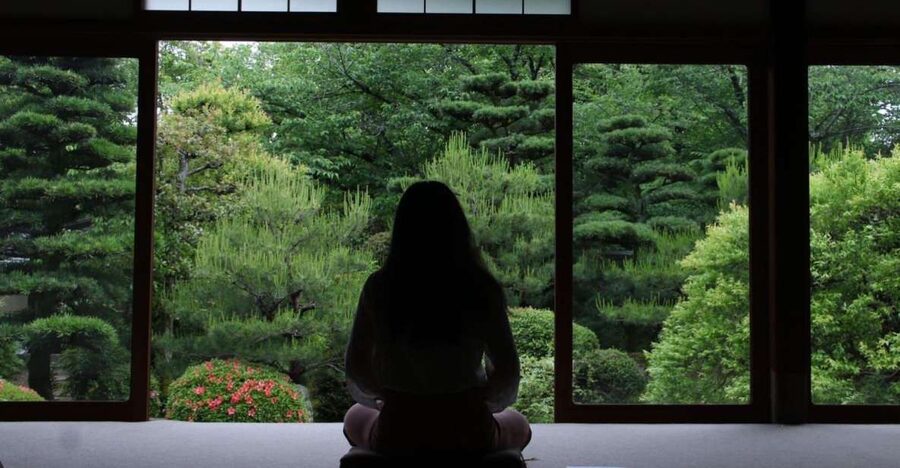
Review · KYOTO
Kyoto: Zen Experience in a Hidden Temple
Slow down in Kyoto’s quietest corner. This two-hour visit to Jusho-in Temple combines guided zazen meditation, Zen teaching, matcha, seasonal sweets, and time beside a 400-year-old garden. I like the personal touch of learning from Eitetsu Nishida, the temple’s 16th-generation abbot, and the small-group setting away from Kyoto’s busiest sights.
I also like that beginners are welcome, chairs are available for meditation, and a photographer takes pictures so you can focus on the experience. The main consideration is practical: two 20-minute meditation sessions can be physically demanding, especially if you are not used to sitting upright on the floor. The abbot’s English may also be difficult for some people to follow, though an English-speaking guide helps explain the teaching.
Key points to know before you go
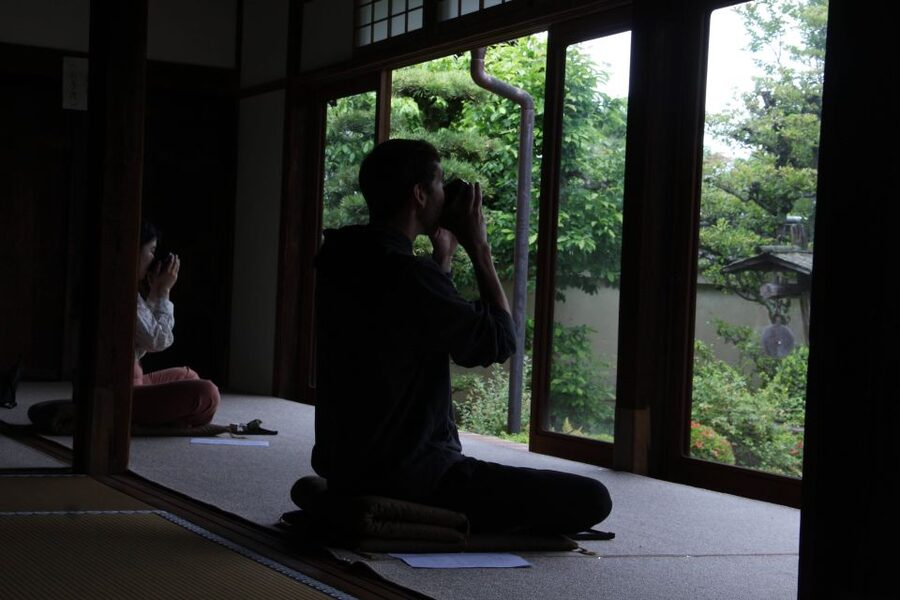
- Two 20-minute zazen sessions: You learn the basics, sit with the group, then have a short break for stretching and questions before sitting again.
- A real working Zen temple: Jusho-in dates to 1599 and is one of 46 sub-temples within the large Myoshin-ji complex.
- Tea is part of the lesson: Matcha and seasonal wagashi are used to show the connection between Zen attention and everyday actions.
- A garden with four centuries of continuity: The garden attributed to painter Eitoku Kano changes with the seasons but has remained in its original form.
- Helpful access for beginners: Chairs and blankets are available when needed, though the temple is not wheelchair accessible.
- Photos arrive later: A photographer uses a single-lens reflex camera and sends the photo data within a few days.
Why this Kyoto experience feels different
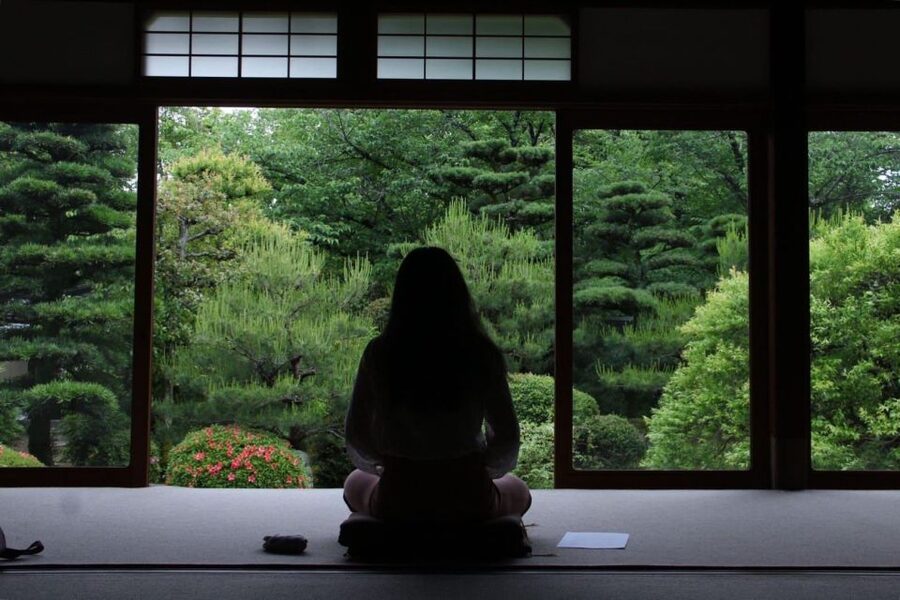
Kyoto gives you no shortage of temples. Many are beautiful, but plenty are also crowded, hurried, and full of people trying to take the same photograph. Jusho-in offers a different pace. You enter a quiet sub-temple, sit facing a garden, and spend time doing one thing at a time.
That makes this experience less about checking off another famous building and more about learning how Zen practice works. You are not simply shown a temple and sent on your way. The abbot explains zazen, sits with you, answers questions, and then connects the same attention to preparing, receiving, and drinking tea.
The setting matters. Jusho-in was founded in 1599 and belongs to Myoshin-ji, one of Japan’s largest Zen temple complexes. Myoshin-ji contains 46 sub-temples, so the meeting point at the north gate leads into a much larger religious precinct than you might expect from the quiet room at the end of the walk.
The experience has earned a perfect 5.0 rating from 437 bookings, and the praise is unusually consistent. The strongest themes are the kindness of the staff, the calm setting, the warmth and humor of the chief priest, and the careful presentation of tea and sweets.
A few more temple visits around Kyoto worth a look
- Kyoto: Tea Ceremony Ju-An at Jotokuji Temple
★ 4.9 · 3,207 reviews - Arashiyama Bamboo, Temple, Monkeys, or Secret Sake Brewery
★ 4.8 · 886 reviews - Kyoto: Arashiyama Bamboo Forest, Monkeys, Matcha & Temple Tour
★ 5.0 · 759 reviews
Meeting the 16th-generation abbot
Eitetsu Nishida is not presented as a distant religious figure. He became a monk after working as a national public servant for 10 years, then completed three and a half years of demanding training. He is also known for his cheerful nature and love of animals, details that help explain why the atmosphere feels friendly rather than solemn or intimidating.
You first receive an introduction to Zen and to the correct posture and attitude for zazen. Zen is a branch of Mahayana Buddhism that places great importance on direct experience, especially through meditation, rather than relying only on written religious teaching.
Jusho-in follows the Rinzai tradition. Rinzai Zen came to Japan in the 12th century and is associated with sudden awakening, or satori, reached through direct and sometimes intense practice. You do not need to understand every part of this tradition before arriving. The session is designed as an approachable starting point, not as a test of Buddhist knowledge.
The abbot’s teaching is one of the experience’s strongest features. He explains the practice in plain terms and uses humor to put beginners at ease. You may also have time to ask questions, which gives the session a more personal quality than a standard temple talk.
English communication deserves a small warning. Eitetsu Nishida speaks English, but his accent can be hard for some people to understand. An English-speaking guide and translator support the session, and the guides are available to clarify points. If understanding every explanation matters to you, pay close attention to the translated portions and ask for clarification when needed.
What happens during the two meditation sessions
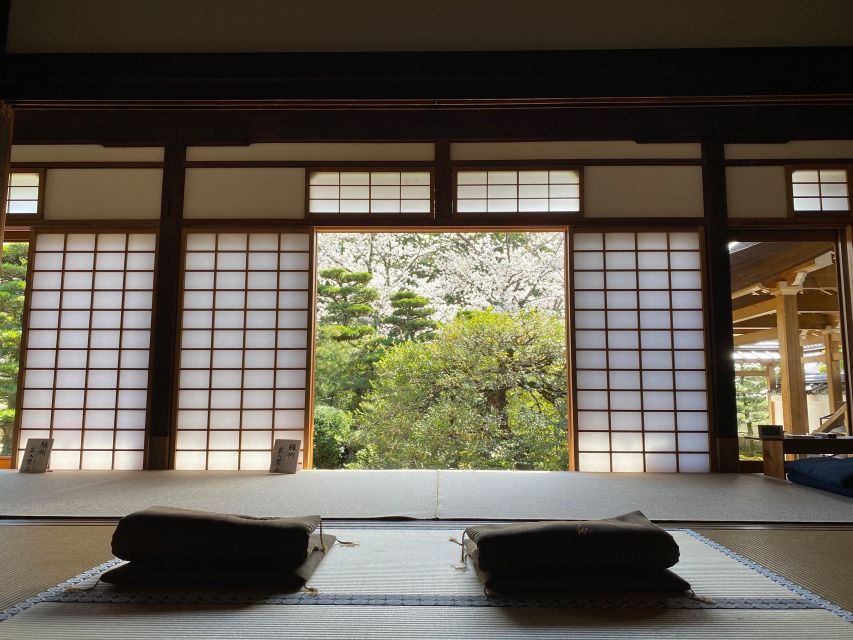
The meeting point is at the north gate of Myoshin-ji, at 18 Taniguchisonomachi. From there, a guide walks with you to Jusho-in. That short walk helps you shift from city sightseeing into the temple’s slower rhythm.
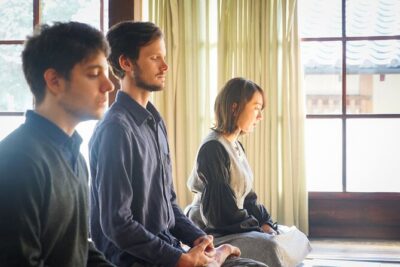
Inside, you take part in two 20-minute periods of zazen. The split format is sensible. You get a chance to settle into the posture, notice how active your mind is, and then stretch or ask questions before trying again.
Meditation is not presented as an effortless way to empty your head. In fact, one of the useful lessons is discovering how difficult it can be to stop chasing thoughts. A 20-minute session may pass quickly for one person and feel very long for another. Both reactions are normal for a beginner.
The temple provides chairs for people who cannot sit comfortably on the floor. That is important, since forcing yourself into a painful posture is a poor way to begin meditation. You may also be offered a blanket, especially in cooler weather when the doors open toward the garden.
The experience takes place rain or shine. That does not mean the weather is ignored. Sitting with the garden open in cool air can make you more aware of nature, while a rainy day can add to the quiet mood. Still, bring a layer if you tend to get cold.
Avoid wearing a rented kimono for this activity. The clothing can make it difficult to sit and meditate comfortably. Simple, loose clothing is the more practical choice, even though no special outfit is required.
The 400-year-old garden is part of the meditation
The garden is attributed to Eitoku Kano, a celebrated 16th-century painter, and has remained unchanged since it was created. You do not merely look at it for a few seconds while moving to the next attraction. The garden becomes the view in front of you during meditation and tea.
Its character changes with the calendar. Spring brings cherry blossoms, summer offers fresh greenery, autumn brings changing leaves, and winter can cover the garden in snow. Each season affects the feeling of the session, so the garden is not just a backdrop for photographs.
The room overlooking the garden is small, which helps preserve the quiet atmosphere. You may find that the limited space is part of the appeal. This is not a grand hall filled with large groups. It feels closer to a private lesson in a historic temple setting.
Photography is handled separately from the meditation. A photographer records selected moments with a single-lens reflex camera and sends the photo data within a few days. That is a useful touch because taking your own pictures during zazen would break your concentration.
The photos are not the reason to book this experience, but they make a thoughtful keepsake. They can also help you remember small details that are easy to miss when you are trying to sit still and follow the instruction.
Same place, a different morning at the gates:
- Osaka/Kyoto:Kinkakuji,Arashiyama,FushimiInariShrine,NaraPark
★ 4.1 · 1,596 reviews - Kyoto Arashiyama Walking Tour: Bamboo, Monkeys, Gardens & Secrets
★ 5.0 · 1,216 reviews - Osaka/Kyoto: Arashiyama, Nara & Fushimi Inari Shrine w/Lunch
★ 4.4 · 754 reviews - Kyoto 1 Day Tour from Kyoto
★ 4.0 · 582 reviews
Matcha, wagashi, and the Zen idea of attention
After meditation, Eitetsu Nishida explains matcha and its place in Japanese culture. The tea portion is not a rushed drink served at the end. It shows how an ordinary act can become deliberate when you pay attention to each movement.
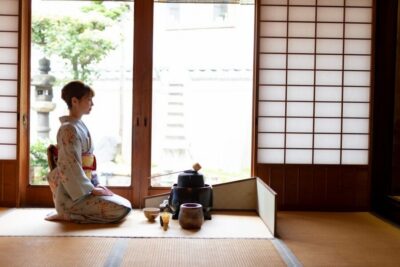
You learn how to receive and drink powdered green tea properly. The matcha is served with a traditional seasonal sweet called wagashi. The sweet is chosen to pair with the tea, and the presentation changes with the time of year.
This part works well after zazen. The meditation asks you to notice your breath, posture, and thoughts. Tea asks you to notice the bowl, the taste, the gestures, and the person serving you. The connection between the two becomes easier to understand when you experience both in the same place.
The sweets are more than a small snack. Their shape, color, and ingredients reflect the season, and the balance between a sweet wagashi and bitter matcha gives the tea service a clear purpose. Several people particularly appreciated the care taken to select the tea and confection.
You then have time to enjoy the matcha and sweets while looking into the garden. There may also be an opportunity to speak with the monk and the tea team. This relaxed conversation is where the formal lesson often becomes a friendly cultural exchange.
The people make the two hours work
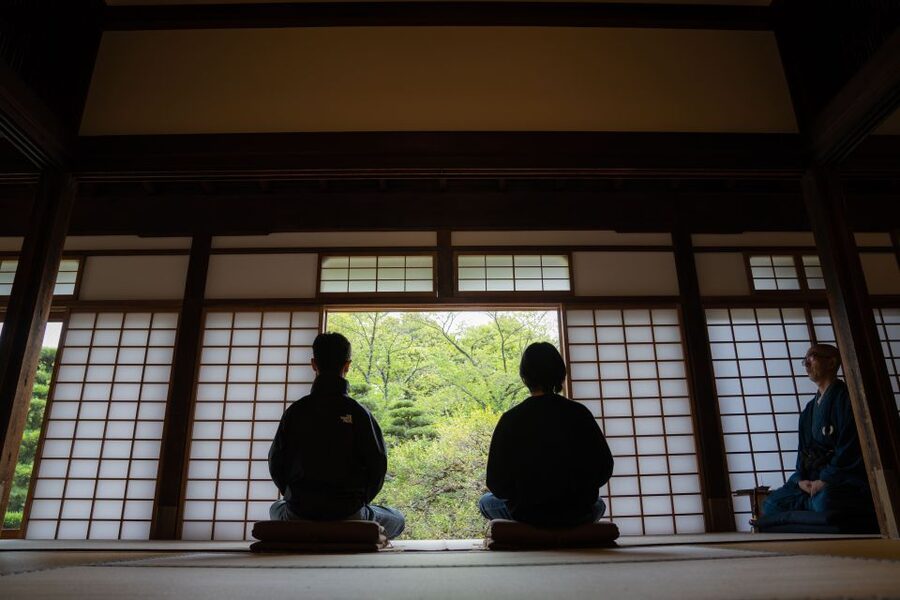
The experience uses an English-speaking guide, temple assistants, the chief priest, tea specialists, and a photographer. That may sound like a large team for a two-hour visit, but each person has a clear role.
The guide helps with the walk from Myoshin-ji’s north gate, translation, timing, and questions. Temple assistants explain the meditation basics and help people get settled. The chief priest provides the religious teaching and leads the meditation. The tea team handles the matcha and sweets, while the photographer records the visit without asking you to manage a camera.
Several named guides have received warm praise for their care, including Ursula, Nicolas, and Joondae. Ursula is especially noted for clear support and a welcoming manner. Nicolas has been praised as an effective interpreter, and Joondae went out of his way to help someone dealing with a lost phone before the session.
Those details matter because a spiritual activity can feel awkward when staff treat it as a performance. Here, the human contact appears to be a major part of the appeal. The tone is serious enough to respect the temple, but relaxed enough for children, first-time meditators, and curious adults.
The experience is available as a private booking or in a small group. Group size can affect how personal the question period feels, so choose a private option if you want more individual attention and the price works for your budget.
Is $109 a fair price?
At $109 per person, this is not a cheap way to spend two hours in Kyoto. You are paying more than you would for temple admission alone, but admission is not what you are buying.
The price includes an English-speaking guide, temple entry, instruction from the chief priest, two meditation sessions, matcha, Japanese sweets, and professional photographs delivered afterward. You also receive access to a part of Jusho-in that ordinary sightseeing does not provide.
I consider the value good for someone who wants a guided cultural activity with direct teaching and a small-group feel. The abbot, tea service, translator, and photographer each add something that would be difficult to arrange independently.
The value is weaker if you mainly want to see the garden or take pictures. Myoshin-ji can be explored more cheaply on your own, and this activity requires you to spend a meaningful part of the visit sitting quietly. You should book it for the meditation, instruction, and personal setting, not simply for a temple photo opportunity.
The reservation system allows you to reserve now and pay later, and you can cancel for a full refund up to 24 hours before the start time. A late cancellation is not refundable. Those terms give you some flexibility, but you still need to check the meeting point for the specific option you choose.
Who should book this experience?
I would recommend it most strongly to:
- First-time visitors who want more than famous sights and quick photographs
- People curious about Zen, Buddhism, or Japanese tea practice
- Anyone who already enjoys meditation or yoga
- Couples and families looking for a calm shared activity
- Visitors who want a small-group or private experience
- People who appreciate thoughtful cultural explanation in English
It also works for mixed-age groups. One booking included a 20-year-old son, while another group included children and adults who all enjoyed the session. The key is willingness to sit quietly and follow temple etiquette.
I would be cautious about booking if you dislike sitting on the floor, need wheelchair access, or want a fast-paced morning. Chairs are available, but the temple is not wheelchair accessible, and the two meditation sessions are central to the experience rather than optional extras.
After the session, allow extra time to explore Myoshin-ji if your schedule permits. The complex contains many small Zen temples, and you can also visit the main temple area. One useful note from a previous visit is that entry to the main temple building costs 500 yen, and photography is not allowed beneath its dragon ceiling.
Final verdict: a thoughtful break from Kyoto’s crowds
I would book this experience if I wanted to understand Zen through practice rather than simply read about it. The combination of two guided meditation sessions, a warm abbot, a historic garden, matcha, seasonal wagashi, and professional photos gives the visit a clear shape and lasting memory.
The main limits are the price, the floor-based meditation, and the occasional difficulty understanding the abbot’s English without translation. None of those points cancels the experience, but they are worth knowing before you reserve.
For a quiet, well-supported introduction to Zen near Kyoto, Jusho-in is a strong choice. You leave with more than a photograph of a temple. You leave having spent two hours paying attention, which may be the rarest souvenir Kyoto can offer.
FAQ
Where does the Zen experience begin?
You meet at the north gate of Myoshin-ji Temple, at 18 Taniguchisonomachi. The exact meeting point can vary depending on the booking option, so check your selected option carefully.
How long does the experience last?
The full experience lasts about two hours, including explanations of zazen, meditation, the matcha lesson, tea, sweets, and the commemorative photo.
Is the experience conducted in English?
Yes. The experience includes a live English-speaking guide. Translation support is provided during the chief priest’s teaching.
Do I need meditation experience?
No. The activity is suitable for beginners and explains the basics of zazen before the sessions begin.
How long are the meditation sessions?
You take part in two separate 20-minute zazen sessions, with time between them for stretching and questions.
Can I use a chair during meditation?
Yes. Chairs are available for people who need assistance sitting on the floor.
Is the temple wheelchair accessible?
No. The experience is not wheelchair accessible.
What does the price include?
The price includes the guide, temple entry, the chief priest’s teaching, Japanese tea and sweets, and photographs taken with a single-lens reflex camera. Hotel pickup and drop-off are not included.
What happens if I need to cancel?
You can receive a full refund if you cancel up to 24 hours before the experience. Cancellations made later are not refundable.
Just added around Kyoto
- Kyoto:Kiyomizu-dera Temple Rent a kimono and ride a rickshaw★ 4.8 · 7 reviews
- Kyoto: Kiyomizudera, Sanjusangendo, Ginkakuji and Higashiyama.★ 5.0 · 3 reviews
- Kyoto: Shakyo & Matcha in Historic Temple Garden★ 5.0 · 4 reviews
- KYOTO: Tempio Kiyomizu Pagode Gion “Geisya” (Guida Italiana)★ 4.7 · 17 reviews
- Kyoto:Quiet Arashiyama and Sagano Temples★ 4.8 · 5 reviews
- Kyoto: Kifune Shrine and the Sacred Kifune Valley Day Trip★ 4.4 · 4 reviews
- KYOTO: Golden Pagoda, Bamboo Forest, Arashiyama (Italian)★ 4.9 · 5 reviews
- KYOTO: Tour guidato tra i tesori della città (in italiano)★ 5.0 · 5 reviews
Kyoto Temple Tours, compared.
Osaka/Kyoto:Kinkakuji,Arashiyama,FushimiInariShrine,NaraPark
Read our review →
Kyoto Arashiyama Walking Tour: Bamboo, Monkeys, Gardens & Secrets
Read our review →
Arashiyama Bamboo, Temple, Monkeys, or Secret Sake Brewery
Read our review →
Arashiyama Bamboo Forest, Monkeys, Matcha & Temple Tour
Read our review →
Osaka/Kyoto: Arashiyama, Nara & Fushimi Inari Shrine w/Lunch
Read our review →
Kyoto Zen Meditation & Garden Tour at a Zen Temple with Lunch
Read our review →Browse the lists this tour appears in