
Review · KYOTO
Kyoto 1 Day Tour from Kyoto
Kyoto packs centuries of culture into one busy day. This tour makes the city’s far-flung sights manageable, with six major temples, shrines, and palaces connected by an air-conditioned coach and an English-speaking guide. I like the efficient route and the useful historical context, especially at Nijo Castle and Kiyomizu-dera.
I also like the choice of lunch plans, plus the fact that admission fees and transportation are included in the $168.43 price. The trade-off is clear: you see a lot, but most stops are short, and fast walkers or crowded roads can make the day feel rushed.
Key points at a glance
- Six major Kyoto sights in one day: Nijo Castle, Kinkaku-ji, Kyoto Imperial Palace, Fushimi Inari, Sanjusangendo, and Kiyomizu-dera.
- A practical coach route: Transportation is included, which saves you from piecing together buses and trains across the city.
- The day begins at 8:20 a.m.: Meet at the JTB Sunrise Tours Desk in the basement of Kyoto Avanti near Kyoto Station.
- Fushimi Inari requires a walk: You will walk about 15 minutes each way from the parking area to the shrine.
- Lunch is optional: Choose no lunch, a Western-style meal, or an Indian thali meal when booking.
- Guide quality matters: Guides such as KC, Miyuki, Yuki, Michi, and Yoshitaka Harada have drawn especially warm praise, though some visitors found certain guides hard to hear or too quick.
Kyoto in one day, with very little guesswork
This is a classic sightseeing day for someone with limited time in Kyoto. From the first castle to the final temple terrace, the tour covers a wide sweep of the old capital without asking you to work out local transport, entrance tickets, or the best order of stops.
The tour lasts about 9 hours and 40 minutes. It begins at 8:20 a.m. and ends at Kyoto Station around 5:30 p.m. The group can include up to 40 people, so this is not a private or slow-paced outing. It is a structured group tour built around seeing the main sights efficiently.
The basic price is $168.43 per person. That is a fair deal if you value convenience and plan to visit several paid sites. You get the coach, guide, and entrance fees, including Nijo Castle, Kinkaku-ji, Sanjusangendo, and Kiyomizu-dera. If you prefer to eat independently, the no-lunch option gives you free time to find food around Kyoto Station.
I would not choose this tour for a relaxed, photographic day at two or three places. I would choose it if Kyoto is part of a short Japan trip and you want a strong first look at the city without spending your day reading maps and waiting for buses.
More Day Trips in Kyoto:
- Kyoto to Arashiyama Day Trip – Private & Personalized
★ 4.2 · 22 reviews - Kyoto: Kifune Shrine and the Sacred Kifune Valley Day Trip
★ 4.4 · 4 reviews - Athens: Cape Sounion & Poseidon Temple Sunset Half-Day Trip
★ 4.8 · 8,241 reviews
Starting beneath Kyoto Avanti
The meeting point is the JTB Sunrise Tours Desk in the basement of Kyoto Avanti, at 31 Higashikujō Nishisannōchō, near Kyoto Station. This is a practical location, but finding the desk can take a little patience. One person described starting early and still needing extra time to locate the basement office.
Give yourself a generous margin. Kyoto Station is large, and the meeting point is not simply a coach bay outside the station. Once you find the desk, the rest of the morning is more straightforward.
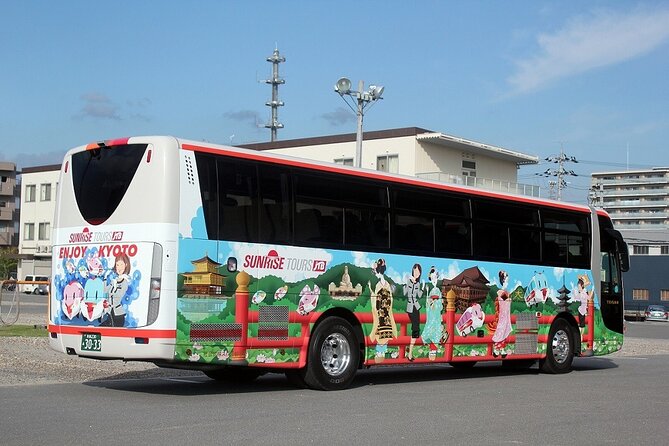
The bus is climate-controlled and heated, a real advantage during Kyoto’s hot summers or wet, cold days. Seats may not be assigned, so if sitting with your companions matters, arrive prepared for the possibility that you may need to ask politely or sit separately.
Nijo Castle: a shogun’s polished welcome
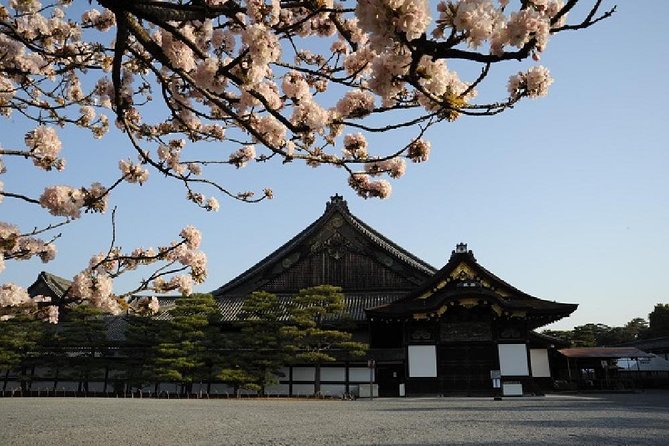
The first stop is Nijo Castle, a World Heritage site completed in 1626 for the Tokugawa shogun. The castle was built both as a residence and as protection for the Imperial Palace.
You will have about 50 minutes here, including admission. The exterior can look restrained at first, but the interior is the real reward. Lavishly decorated rooms, gold leaf, elaborate carvings, and strong color show the power of the shogunate in a way that a simple history lesson cannot.
This is one of the stops where a good guide adds real value. The castle is full of political symbolism, and the building’s purpose is easy to miss if you simply walk through looking at the decoration. The guide can explain how the rooms were arranged and why the setting mattered.
The visit is still fairly brisk. You will not have time to examine every detail at length, especially if the group is moving together. The tour order can also change because of traffic and site conditions.
Kinkaku-ji and the famous Golden Pavilion
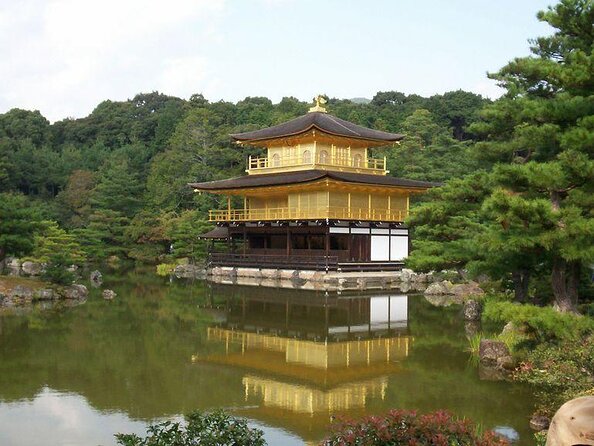
Kinkaku-ji, also called the Golden Pavilion, receives about 45 minutes. Its wooden structure is covered in thin layers of gold and reflected in a pond surrounded by a carefully arranged Japanese garden.
This is one of Kyoto’s most instantly recognizable sights, and the visit is designed around the main view. You follow the route through the garden, stop for photographs, and take in the pavilion from several angles. The gold is not subtle, but it is striking, particularly when the light catches the upper floors.
The drawback is that Kinkaku-ji is a popular stop, so the paths can feel crowded. Forty-five minutes is enough to see the pavilion and garden, but not enough for a long, quiet walk or extended contemplation. Think of this as a focused visit rather than a leisurely garden morning.
Still, this is exactly the kind of place that benefits from being included in a planned route. You arrive, see the essential view, hear why the temple matters, and move on before the schedule gets away from you.
Same place, a different morning at the gates:
- Kyoto: Tea Ceremony Ju-An at Jotokuji Temple
★ 4.9 · 3,207 reviews - Osaka/Kyoto:Kinkakuji,Arashiyama,FushimiInariShrine,NaraPark
★ 4.1 · 1,596 reviews - Kyoto Arashiyama Walking Tour: Bamboo, Monkeys, Gardens & Secrets
★ 5.0 · 1,216 reviews - Arashiyama Bamboo, Temple, Monkeys, or Secret Sake Brewery
★ 4.8 · 886 reviews
Kyoto Imperial Palace and its changing substitute
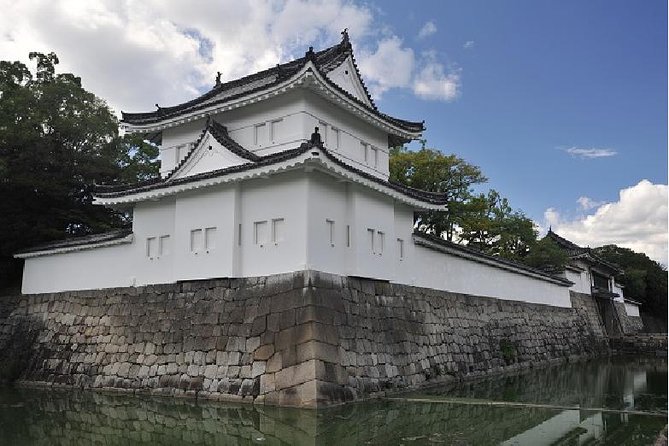
The Kyoto Imperial Palace receives about 40 minutes. It served as the Emperor’s residence until roughly 150 years ago, and the tour gives you a look at its formal spaces, restrained Japanese design, and connection to older court ceremonies.
The palace offers a useful contrast with Nijo Castle. Nijo presents the authority of the shogun through ornate interiors and political theater. The Imperial Palace is more measured, with a sense of ceremony and controlled simplicity.
The palace is closed to visitors on Mondays, on the following day when Monday is a public holiday, and on dates affected by an Imperial Household Agency event. When that happens, the tour visits Kitano Tenmangu Shrine instead. If the closure falls on the 25th, the substitute is Nishi Hongan-ji Temple.
That change is important to understand before booking. You will not receive a refund because of the alternate destination. Kitano Tenmangu and Nishi Hongan-ji are worthwhile cultural sites, but they are not the Imperial Palace, so check the calendar if the palace is a priority.
Fushimi Inari and the red torii gates
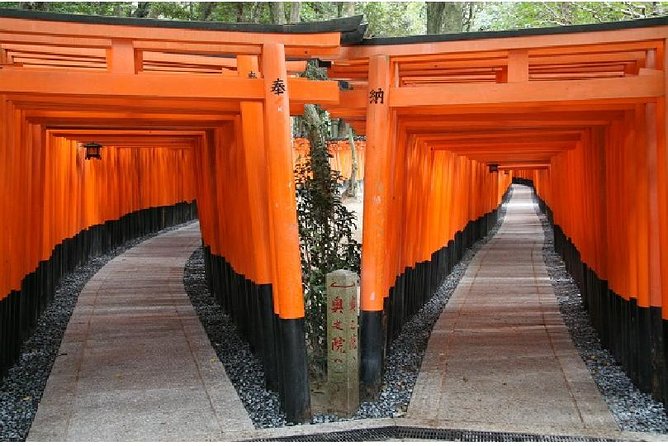
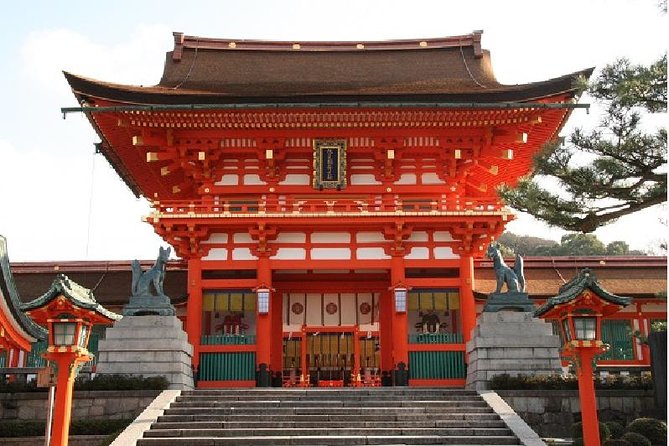
Fushimi Inari Taisha is one of Kyoto’s most recognizable shrines, known for its long lines of bright red torii gates. It is the head shrine of about 40,000 Inari shrines across Japan.
The scheduled visit lasts 30 minutes, but the practical timing is longer than that suggests. You walk about 15 minutes each way between the parking area and the shrine. That leaves limited time for exploring once you arrive.
You will see the lower shrine area and the beginning of the torii route, but you should not expect to hike the entire mountain. The famous gates are photogenic, yet the narrow paths can be crowded. Stay aware of the group and listen carefully for the meeting instructions.
This is one of the tour’s weaker stops for anyone hoping to wander independently. It is a good introduction and a fine chance to take photographs, but the short visit does not allow much room for shopping, eating, or walking far up the trail. One useful point from the tour details: if you want to spend more time here, this schedule probably will not suit you.
Sanjusangendo and 1,001 Kannon figures
Sanjusangendo receives 30 minutes. The temple is a long wooden structure housing 1,001 life-size statues of Kannon, the Buddhist deity associated with compassion.
The scale of the hall is the main experience. Inside, the repeated statues create a powerful visual effect, and the building itself is an important example of traditional wooden construction. The temple is described as the world’s longest wooden structure, which helps explain why the visit feels so different from the more familiar golden pavilion or torii gates.
Half an hour is enough to see the main hall and understand its importance. It is not enough for a slow, detailed visit. Photography rules and interior conditions may also limit how much you can record, so this stop is best appreciated in person rather than through your camera.
Kiyomizu-dera and Kyoto from the terrace
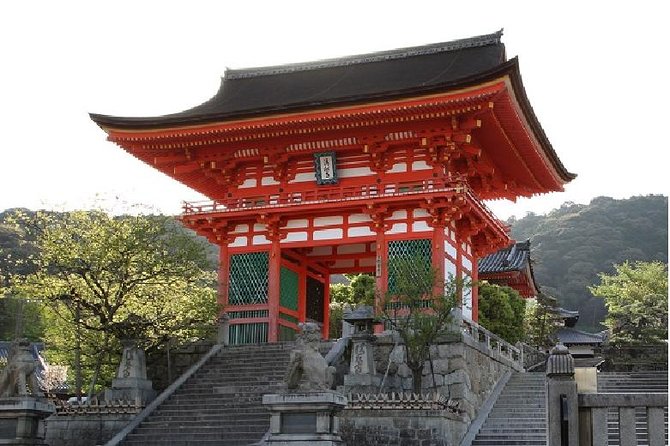
The final major stop is Kiyomizu-dera, with about 1 hour and 10 minutes. That is the longest scheduled visit, and it needs the time.
You reach the temple through a historic shopping lane lined with pottery shops. The approach is part of the experience, though it can be crowded and involves walking uphill. At the temple, the famous wooden terrace gives you broad views over Kyoto and the surrounding hills.
Kiyomizu-dera works well as the finale because it combines architecture, a pilgrimage setting, shopping, and a memorable city view. You have enough time to see the principal temple area and enjoy the terrace without feeling quite as hurried as at Fushimi Inari.
The approach and temple grounds require steady walking. The tour is not presented as strenuous, but you should wear comfortable shoes and be ready for steps, slopes, and uneven surfaces. On rainy days, the route can be less pleasant, though the tour operates in poor weather. Several people have completed the full itinerary in heavy rain, but your enjoyment will depend on suitable clothing.
The lunch choices deserve careful attention
Lunch is not automatically included in every booking. You must select the appropriate option when reserving.
The Western-style lunch is served as a set menu. A vegetarian meal is possible if you request it in advance. Same-day changes are not accepted, and halal, gluten-free, and other special meal requests are unavailable.
The Indian thali option is vegetarian and includes three curries, vegetable pakora, yogurt, naan or roti, rice, salad, and one non-alcoholic drink. People choosing the Indian thali and those choosing the Western meal eat in separate dining areas, and you cannot switch between the two on the day.
The no-lunch option may suit independent eaters best. You receive free time to find food around Kyoto Station, though that means making your own plan during a busy sightseeing day. If you want the simplest schedule, choose a lunch option. If dietary needs are complex, the no-lunch choice gives you more control.
The guide can shape the whole day
The strongest praise for this tour centers on its guides. KC is repeatedly singled out for humor, warmth, clear English, and care during very hot weather. Miyuki is praised for her energy, historical explanations, and attention to the group. Yuki, Michi, and Yoshitaka Harada also receive strong approval for clear organization and useful comments about Japanese customs and daily life.
That matters because the schedule moves quickly. A good guide keeps a large group together, explains what you are seeing, and fills the coach rides with context. The best guides do more than recite dates. They help connect the castle, palace, shrine, and temple into a picture of Kyoto’s changing political and religious life.
The experience can vary. Some people found their guide difficult to hear, especially when the group spread out. Others felt the guide walked too quickly or relied too much on notes. Keep close to the group, move promptly, and speak up early if you cannot hear.
The coach commentary is often as useful as the time at the sites. You may hear practical explanations of Japanese customs, naming traditions, and everyday life alongside the formal history.
Timing, crowds, and the real pace
This is a full day with six stops, so expect frequent transitions. The itinerary may run in a different order, and arrival times can shift because of road congestion or crowds at the sites.
The schedule is well suited to people who want an overview. It is less suited to anyone who likes to linger. You may have enough time to see the main feature at each place, but not enough to explore every side path, read every sign, or sit quietly for long.
The tour can work in hot or wet weather, but you should plan for it. Carry water, wear shoes suitable for extended walking, and keep rain protection handy. A few reviews specifically praise guides who checked on the group in extreme heat, but weather remains a real factor in how comfortable the day feels.
Children up to age five may join free, but they do not receive a bus seat or lunch unless booked under the child rate. Participants under 18 need written parental permission, and anyone under 15 or not yet in middle school must be accompanied by a parent or guardian.
Who should book this Kyoto tour?
I would recommend this tour if you have only a day for Kyoto, want the major sights, and prefer a guide to handle transport and admissions. It is particularly useful for first-time visitors staying near Kyoto Station or making Kyoto part of a larger Japan itinerary.
You should think twice if your main goal is quiet temple time, extensive photography, or a long walk through Fushimi Inari. A private guide or self-guided day would give you more freedom, but it would also require more planning and could cost more once transport and admissions are added.
At $168.43, the tour offers solid value for a tightly planned day. The included coach, guide, and admission tickets remove much of the usual friction. The price makes the most sense when you use the tour as an orientation to Kyoto, then return later to one or two favorite sites at your own pace.
Should you book it?
Book this tour if you want to cover Kyoto’s main sights in one organized day and are comfortable with a group schedule. The route is efficient, the stops are culturally important, and excellent guides such as KC or Miyuki can turn a fast sightseeing day into a useful introduction.
Skip it if you dislike fixed timing or need a specialized diet that the lunch plans cannot support. Also check the closure calendar for Kyoto Imperial Palace and Nijo Castle, since substitute sites are used without a refund.
FAQ
How long does the Kyoto day tour last?
The tour lasts approximately 9 hours and 40 minutes. It begins at 8:20 a.m. and ends at Kyoto Station around 5:30 p.m.
Where does the tour start?
You meet at the JTB Sunrise Tours Desk in the basement of Kyoto Avanti, at 31 Higashikujō Nishisannōchō, near Kyoto Station.
Where does the tour finish?
The tour ends at Kyoto Station.
Are transportation costs included?
Yes. Transportation costs and admission fees listed for the tour are included, and the group travels in an air-conditioned and heated coach.
Is lunch included?
Lunch is included only if you select a lunch option when booking. You can choose a Western-style lunch, an Indian thali lunch, or no lunch.
Can I request a vegetarian meal?
A vegetarian request can be made for the Western-style lunch if you provide it when booking. The Indian thali option is suitable for vegetarians. Halal, gluten-free, and other meal requests are not available.
What happens if Kyoto Imperial Palace is closed?
The tour visits Kitano Tenmangu Shrine when the Imperial Palace is closed. If the closure falls on the 25th, the substitute is Nishi Hongan-ji Temple.
What happens if Nijo Castle is closed?
Nijo Castle is closed on Tuesdays in January, July, August, and December, with some holiday adjustments. If it is closed, the tour visits Ryoan-ji Temple instead.
How much walking is required at Fushimi Inari?
You walk about 15 minutes each way from the parking area to Fushimi Inari Taisha Shrine. The scheduled visit itself is about 30 minutes.
How many people can join the tour?
The maximum group size is 40 people. Seats may not be designated.
Just added around Kyoto
- Kyoto: Kiyomizudera, Sanjusangendo, Ginkakuji and Higashiyama.★ 5.0 · 3 reviews
- Kyoto: Shakyo & Matcha in Historic Temple Garden★ 5.0 · 4 reviews
- Kyoto:Kiyomizu-dera Temple Rent a kimono and ride a rickshaw★ 4.8 · 7 reviews
- KYOTO: Tempio Kiyomizu Pagode Gion “Geisya” (Guida Italiana)★ 4.7 · 17 reviews
- Kyoto:Quiet Arashiyama and Sagano Temples★ 4.8 · 5 reviews
- Kyoto: Kifune Shrine and the Sacred Kifune Valley Day Trip★ 4.4 · 4 reviews
- KYOTO: Golden Pagoda, Bamboo Forest, Arashiyama (Italian)★ 4.9 · 5 reviews
- KYOTO: Tour guidato tra i tesori della città (in italiano)★ 5.0 · 5 reviews
Kyoto Temple Tours, compared.
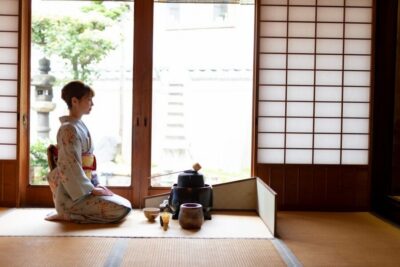
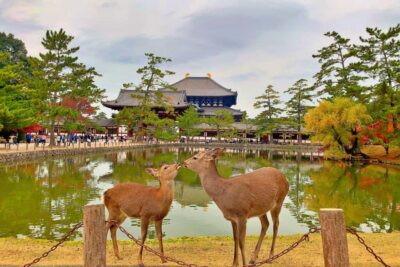
Osaka/Kyoto:Kinkakuji,Arashiyama,FushimiInariShrine,NaraPark
Read our review →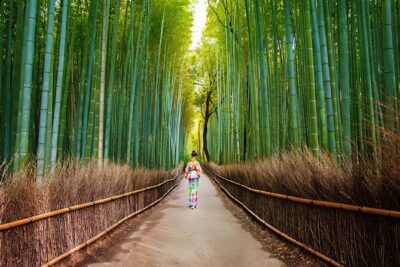
Kyoto Arashiyama Walking Tour: Bamboo, Monkeys, Gardens & Secrets
Read our review →
Arashiyama Bamboo, Temple, Monkeys, or Secret Sake Brewery
Read our review →
Arashiyama Bamboo Forest, Monkeys, Matcha & Temple Tour
Read our review →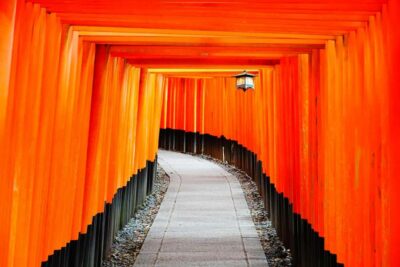
Osaka/Kyoto: Arashiyama, Nara & Fushimi Inari Shrine w/Lunch
Read our review →
Kyoto Zen Meditation & Garden Tour at a Zen Temple with Lunch
Read our review →
Browse the lists this tour appears in