
Review · JAPAN
Fukuoka’s Sacred Path: Temples, History & Culture
Start with Fukuoka’s quiet side. This three-hour private walking tour links Hakata’s most important temples and shrines with a modern shopping center, giving you a clear look at how old customs and daily city life fit together. I like the easy mix of Buddhist and Shinto sites, and I like that the route includes both peaceful temple grounds and the lively Canal City fountain show.
The main drawback is the walking. You cover the route on foot, with about 105 minutes of walking time listed between stops and the return point. That is manageable for most people, but comfortable shoes matter, and the experience may feel rushed if you want long periods of quiet sightseeing at every site.
Guides such as Andy, Paula, and Arianna have received especially warm praise for patience, cultural explanations, relaxed conversation, and useful food and market suggestions. The pace is designed to leave room for questions, although the exact feel of the tour will depend on your guide and how much time your private group spends at each stop.
Key points to know before booking
- Japan’s first Zen temple: Shōfukuji offers a calm opening away from central Hakata’s traffic and crowds.
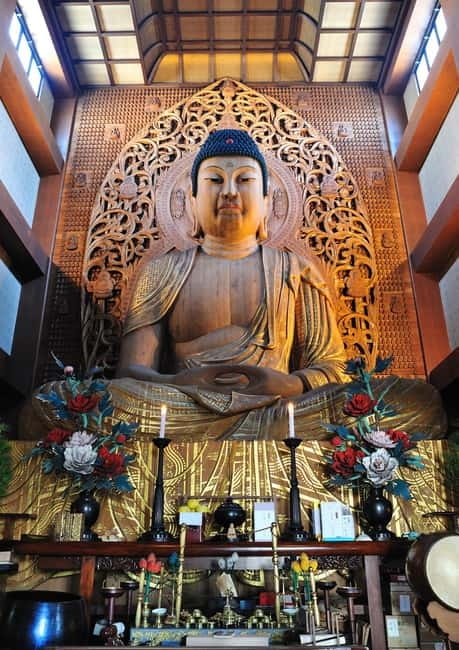
- A 10.8-meter wooden Buddha: Tōchōji’s Great Buddha is the visual centerpiece, with an unusual underground passage connected to Buddhist ideas about the afterlife.
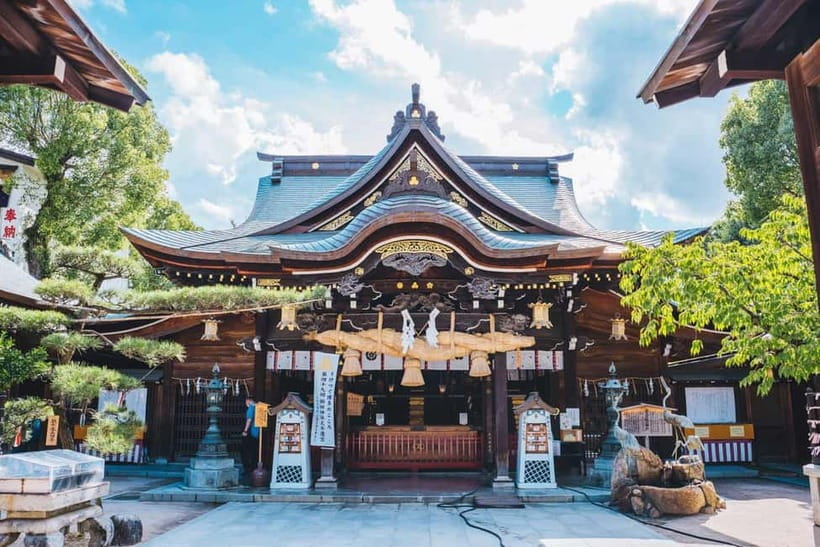
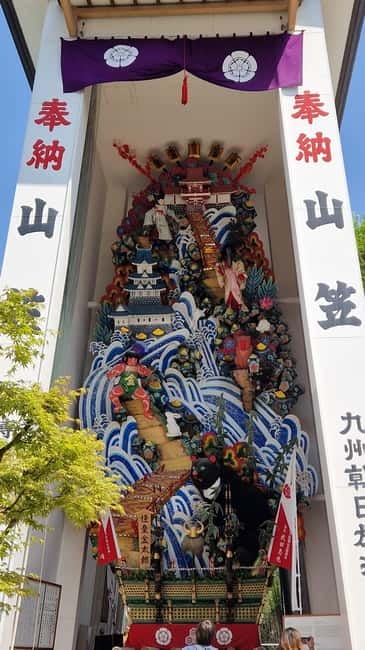
- Fukuoka’s festival heart: Kushida Shrine displays a towering Yamakasa float and connects the tour to the Hakata Gion Yamakasa festival.
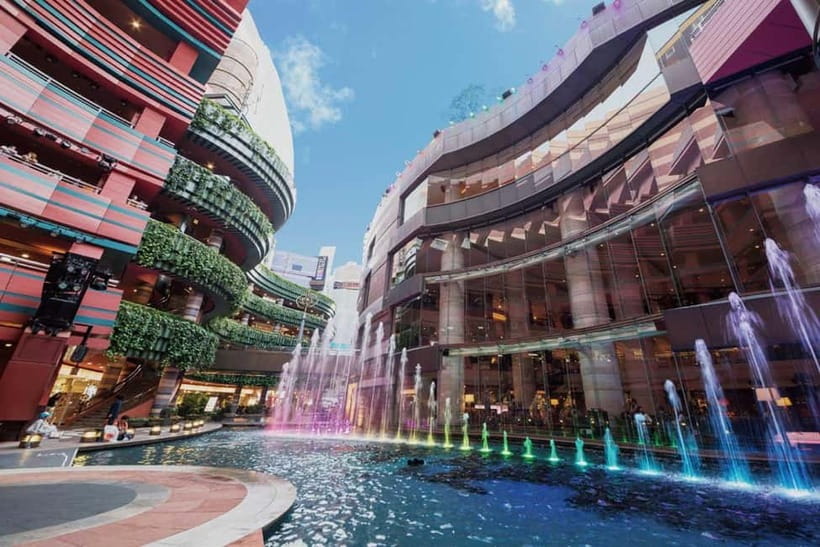
- Old and new in one afternoon: Canal City’s fountain show provides a sharp change of mood between historic religious sites.
- A private, flexible format: You can ask questions freely and set a comfortable pace, but the walk still requires steady movement.
- Good language choice: The tour is offered in English and German, with conversational Japanese available according to the experience details.
Starting beside Hakata Station
The tour begins outside the West Exit of Hakata Station, in front of the CASETiFY shop at Amu Plaza Hakata. This is a useful meeting point because Hakata Station is one of Fukuoka’s main transport hubs, but you should still allow a few minutes to find the correct exit and shop.
From there, the route starts with a 10-minute walk to Shōfukuji. This first stretch helps you shift from station noise into the older parts of Hakata. Since the tour is entirely on foot, this is also your first chance to judge the pace and make any adjustments with your guide.
I appreciate the choice of starting point. You do not waste time on a long transfer to reach the historic district, and the route ends back at the same location. That makes the experience easier to fit around a train arrival, an evening meal, or another activity near Hakata Station.
More History Tours in Japan:
- Mt. Fuji Heritage Tour: Traditional Villages, Lakes & Shrine
★ 4.5 · 509 reviews - Tokyo History: Sensoji Temple & Asakusa District Private Tour
★ 5.0 · 28 reviews - Tokyo War History Tour: Yasukuni Shrine & War Museum
★ 4.5 · 6 reviews
Shōfukuji: quiet grounds and the beginning of Zen in Japan
Shōfukuji is the first major stop, with about 20 minutes set aside for a guided visit. Founded in 1195 by the monk Eisai, it is identified as Japan’s first Zen temple. Eisai is also associated with bringing Zen Buddhism from China, giving this stop a strong place in the story of Japanese religious culture.
The appeal here is not only the date or title. Shōfukuji gives you a peaceful introduction to the tour. Traditional wooden buildings and quiet grounds create a useful contrast with the station district you have just left. Your guide can explain Zen ideas, meditation, and the role of the temple without forcing the visit into a dry history lesson.
Twenty minutes is enough to understand why the temple matters and to take in its atmosphere, but it is not a long, unhurried temple visit. You will want to listen closely and use the time well. If you hope to wander every corner or sit for an extended period, this schedule may feel brief.
Still, I think the first stop works well. It establishes the religious background for the rest of the afternoon and gives you a chance to learn basic etiquette before entering later shrines and temples.
Tōchōji and the 10.8-meter Great Buddha
A five-minute walk brings you to Tōchōji Temple, where the tour spends about 30 minutes. This is likely the most visually striking stop. The temple houses a wooden Buddha measuring 10.8 meters, described as Japan’s largest wooden Buddha.
Size alone does not explain why the statue matters. Your guide can help place it within Buddhist practice and explain why large sacred images have such power in temple spaces. The scale gives the visit a sense of ceremony, even if you are not familiar with Buddhist art.
Tōchōji also has an underground passage that symbolizes a journey through the afterlife. This makes the stop more than a quick look at a large statue. The passage adds a physical element to Buddhist teaching, though the experience may not suit anyone uncomfortable with enclosed or dark spaces. The provided information does not specify the passage’s exact length or lighting, so ask your guide what to expect before entering if that matters to you.
The 30-minute visit is a sensible portion of the schedule. It gives you time for the Buddha, the underground feature, and an explanation of the temple’s role without leaving too much of the afternoon in one place. Bring a camera, but remember that a photograph will not communicate the full scale as well as standing in front of the statue yourself.
Kushida Shrine and Fukuoka’s festival traditions

The longest walk of the route comes next, at about 15 minutes, followed by 30 minutes at Kushida Shrine. This is one of the key Shinto sites in Fukuoka and a central place for understanding the city’s public traditions.
Kushida Shrine is famous for the Hakata Gion Yamakasa festival, held each summer. A tall Yamakasa float is displayed at the shrine, giving you a chance to see the craftsmanship and size of the festival equipment outside the event itself. If you visit at another time of year, this display helps explain what the festival looks like and why it is such a major part of local identity.
This stop also gives your guide room to explain Shinto customs and shrine etiquette. You may learn how Shinto and Buddhism are practiced side by side in Japan, rather than treating them as completely separate parts of local life. That context is one of the strongest reasons to choose a guided route instead of visiting these places alone.
The shrine is an active religious site, not simply a museum. You should follow your guide’s instructions about where to walk, how to behave, and how to take photographs. Thirty minutes will give you a useful introduction, but festival fans or people interested in shrine architecture may want extra time afterward.
A few more temple visits around Japan worth a look
- Kyoto: Tea Ceremony Ju-An at Jotokuji Temple
★ 4.9 · 3,207 reviews - Tokyo: Asakusa Walking Tour with Sensoji Temple Visit
★ 4.8 · 1,583 reviews - Nikko: Kegon Falls, Lake Chuzenji & Toshogu Temple
★ 4.6 · 1,577 reviews - Tokyo: Nikko Toshogu Shrine and Kegon Waterfall Tour
★ 4.5 · 1,266 reviews
Canal City’s fountain show brings a modern change
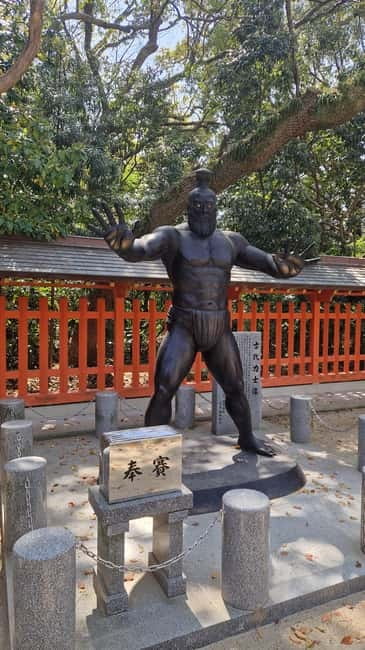
After Kushida Shrine, the group walks to Canal City Hakata for about 15 minutes of sightseeing. This is the tour’s sharpest change in mood. You move from temple grounds, shrine customs, and festival tradition into a large shopping and entertainment complex.
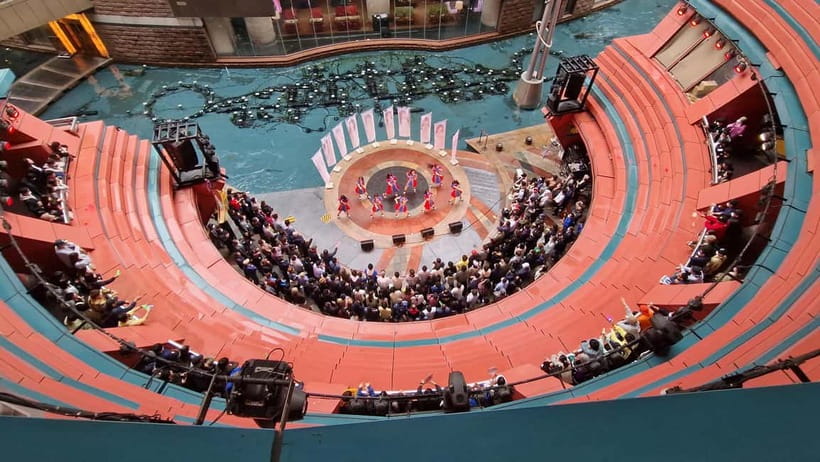
The attraction here is the fountain show, which combines water, lights, and music. The exact timing of the show can vary, so it is sensible to check availability on the day. The tour includes a stop to enjoy it, but the listed 15 minutes is fairly short. You should treat Canal City as a lively interlude rather than a full shopping visit.
I like this contrast because it keeps the afternoon from becoming a string of similar religious sites. Fukuoka is not only old temples and sacred gates. Canal City shows you the city’s modern side, and the fountain performance gives the group something visual and light after the more reflective earlier stops.
The tradeoff is simple: if shopping or architecture interests you, you will not have much free time here. The stop is designed around the fountain show, not browsing stores, eating, or exploring the complex at length.
Sumiyoshi Shrine and a calm final stop
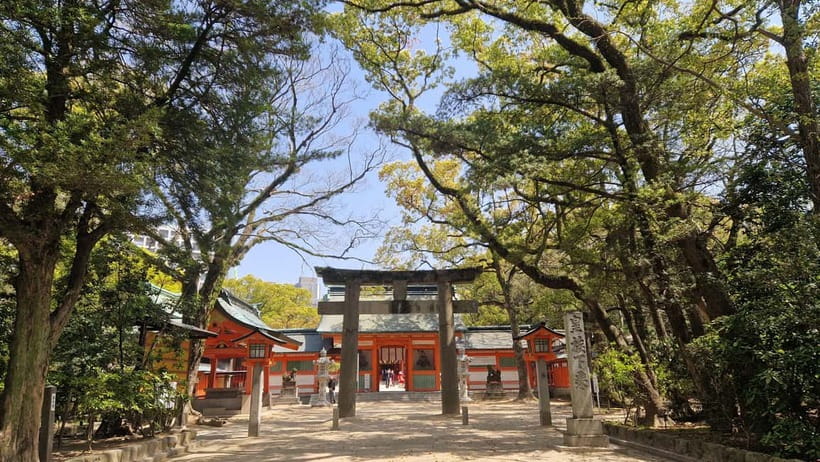
A five-minute walk leads to Sumiyoshi Shrine, where the guided visit lasts about 25 minutes. This shrine is dedicated to safe travel and protection, making it an appropriate final stop for a walking tour that begins and ends near a major transport station.
Sumiyoshi Shrine is described as one of Japan’s oldest Sumiyoshi shrines. Its vermillion torii gates and quiet setting offer a final chance to think about the customs and symbols you have encountered throughout the afternoon.
This is also where the tour’s themes come together. Shōfukuji introduced Zen, Tōchōji showed Buddhist sculpture and ideas about the afterlife, Kushida connected religion to community festivals, and Sumiyoshi brings the focus back to protection and travel. The route is not just a checklist of buildings. Each stop adds a different piece to your understanding of Fukuoka.
You then walk about 15 minutes back to the CASETiFY shop outside Hakata Station’s West Exit. The same start and finish point makes the route practical, especially if you are staying near the station or continuing by train.
What the private format adds
The experience is listed as a private group tour, which is a major advantage for this kind of visit. Religious sites often raise small questions that are easy to skip in a large group. You can ask why a gate looks different, what a ritual means, or how Buddhist and Shinto practices overlap in Japan.
A private format can also help with pace. Anthony described Andy’s approach as patient and relaxed, while Ethan praised his desire to teach Japanese culture. Frank found that Andy adapted well to the group and included conversation about life in Fukuoka. Those details suggest a tour that works best when you engage with the guide rather than simply follow from stop to stop.
The quality of the experience will still depend on who leads your tour. Andy appears in several especially positive comments, while Paula and Arianna also received praise for their guidance. Language options are English and German, and conversational Japanese is listed as available. If language is important to you, confirm the preferred language when booking.
Another useful benefit is local advice after the tour. Andy was praised for food and market suggestions, and one visitor specifically valued his after-tour tips. That can make the experience more useful on the rest of your stay, particularly if Fukuoka is your first stop in Kyushu.
Walking, timing, and comfort
The tour lasts three hours and includes walking segments of 10, 5, 15, 5, and 15 minutes. That adds up to roughly 50 minutes of listed movement between attractions, while the full schedule includes additional walking around each site. One comment specifically advises being prepared for a long walk around the temples and shrines.
You should wear comfortable walking shoes. Check the weather before you go, since the route is outdoors between stops and the experience does not include transportation. Bring a camera and money for souvenirs. Food and drinks are not included, so plan to eat before or after the tour rather than expecting a meal break during it.
The schedule is described as a leisurely afternoon walk, but leisurely does not mean inactive. You will move steadily and spend time standing. If you have limited stamina, tell your private guide at the start so the pace and explanations can be managed sensibly.
The tour does not include transport costs because the route is designed to be walked. That keeps the experience simple and helps you see the relationship between Hakata’s sites rather than viewing them through a vehicle window.
Is the $77 price fair?
At $77 per person, the value depends heavily on how much you want interpretation. You could walk between several of these locations independently, but you would miss much of the connection between Zen, Buddhist art, Shinto practice, local festivals, and modern Fukuoka.
The price includes a three-hour local guide, a private group format, four religious sites, Canal City, and cultural explanations. For a solo visitor or small group that wants direct access to a guide, that is a reasonable package. The strongest value comes from the explanations and the chance to ask questions, not from admission savings or included food.
It is less compelling if you prefer to spend a long time at each site, shop at Canal City, or move at your own pace. You are paying for a planned cultural walk, so the fixed timing matters. The route is also best suited to someone who values context and conversation more than a loose afternoon of independent wandering.
You can reserve now and pay later, and cancellation is free up to 24 hours before the start for a full refund. Those terms make it easier to fit the walk into a changing Fukuoka schedule.
Who should book this Fukuoka walk?
I would choose this tour if you are visiting Fukuoka for the first time and want a clear introduction to Hakata’s religious sites. It is also a good fit if you enjoy asking questions, want help with shrine and temple etiquette, or prefer a private guide to a large scheduled group.
History fans will appreciate the dates, founders, religious context, and festival connections. Photographers will find plenty of wooden architecture, statues, torii gates, festival equipment, and the Canal City fountain show. Food-focused visitors may also benefit from the local restaurant and market advice offered after the walk.
I would think twice if you dislike walking, need a long meal break, or want extensive time for shopping. The tour gives Canal City only a short stop, and the temple visits follow a timetable rather than leaving you free to linger.
The current rating is 5 out of 5 from 17 ratings, with repeated praise for patient guides, relaxed pacing, clear cultural explanations, and personal recommendations. That pattern is useful, but you should still confirm your language preference and prepare for a proper walking afternoon.
Final verdict: a strong first look at Hakata
Book this tour if you want Fukuoka explained through its sacred places, not simply photographed. The route gives you Japan’s first Zen temple, a huge wooden Buddha, a major Shinto shrine, a festival float, a modern fountain show, and a shrine associated with safe travel, all within three hours.
The best reason to go is the guide. With someone like Andy, Paula, or Arianna leading the walk, you can connect the buildings to everyday customs and local life. The main caution is the amount of walking and the short time at Canal City and some religious sites.
For a first afternoon in Fukuoka, I think the mix is well judged. It gives you enough structure to understand Hakata, while leaving the rest of your trip open for food, markets, and independent exploring.
FAQ
Where does the tour begin?
It begins outside the West Exit of Hakata Station, in front of the CASETiFY shop at Amu Plaza Hakata.
Where does the tour finish?
The walk returns to the same meeting point outside the CASETiFY shop near Hakata Station’s West Exit.
How long does the tour last?
The tour lasts three hours.
What languages are available?
The tour is offered in English and German. Conversational Japanese is also listed as available.
Is the tour private?
Yes. The experience is offered as a private group tour.
What sites are included?
The route includes Shōfukuji Temple, Tōchōji Temple, Kushida Shrine, Canal City Hakata, and Sumiyoshi Shrine.
Is transportation included?
No. The experience is a walking tour, and transportation costs are not included.
What should I bring?
Bring comfortable walking shoes, a camera, and money for souvenirs. You should also check the weather before setting out.
Just added around Japan
- Private guided tour: Mt. Aso volcano, grasslands, Aso Shrine★ 5.0 · 19 reviews
- Takayama Inari Shrine Tour with Private Transportation★ 5.0 · 5 reviews
- From Asakusa: Old Tokyo, Temples, Gardens and Pop Culture★ 5.0 · 47 reviews
- Goshuin Collecting tour at Asakusa Local Temples & Shrines, Tokyo★ 5.0 · 8 reviews
- :Tokyo,Shibuya /Meiji Shrine tour in KIMONO/English-friendly★ 5.0 · 4 reviews
- Tokyo: Snow Monkey and Zenkoji Temple Day Trip In Low Price★ 5.0 · 5 reviews
- Tokyo War History Tour: Yasukuni Shrine & War Museum★ 4.5 · 6 reviews
- Tokyo: Gotokuji Culture Walk & Lucky Cat Temple Experience★ 4.9 · 5 reviews
Historical Tours, compared.
Mt. Fuji Heritage Tour: Traditional Villages, Lakes & Shrine
Read our review →
Malta: Prehistoric Temples, Limestone Heritage & Blue Grotto
Read our review →
Day Trip From Addis Ababa See Historical Monastery,Stunning Nature,Animals,Birds
Read our review →
Beijing Historical Tour II including Summer Palace, Lama Temple & Panda Garden
Read our review →
“Porto: Fado Show with Guided Tour in a Historic Monastery”
Read our review →
Private Half-Day Temples and Cultural Tour in Kuala Lumpur
Read our review →
Beijing Historical Tour I – Forbidden City, Tiananmen Square & Temple of Heaven
Read our review →Browse the lists this tour appears in