
Review · KYOTO
KYOTO Tea Ceremony with kimono near by Imamiya Jinjya Shrine
Slow down with tea and silk. This Kyoto experience combines an authentic kimono fitting, hair styling, photographs, and a traditional tea ceremony near Daitoku-ji, an area closely linked with Japanese tea culture. I especially like the chance to prepare your own matcha and the guidance from a tea master with 30 years of experience.
The three-generation tea room gives the session a strong sense of place, while the staff keep the mood friendly and practical. I also like that families, couples, solo visitors, and even teenagers can take part. The main consideration is time: 90 minutes can feel short once dressing, hair, photographs, explanations, and tea preparation are all included.
Key Points Before You Book
- Choose a kimono from a Nishijin collection: You select the color and pattern before staff help dress you in the traditional layers.
- Hair styling is included: Women can have their hair arranged as part of the preparation.
- A tea master leads the ceremony: The master has studied tea ceremony for 30 years and demonstrates each stage.
- You prepare tea yourself: After watching, you have a chance to make a cup for someone else.
- The setting is near Daitoku-ji: The room has been used by three generations and sits in an area tied to Kyoto’s tea traditions.
- Small-group format: The activity accepts up to 12 people, so it is more personal than a large stage performance.
Why This Kyoto Tea Ceremony Feels Different
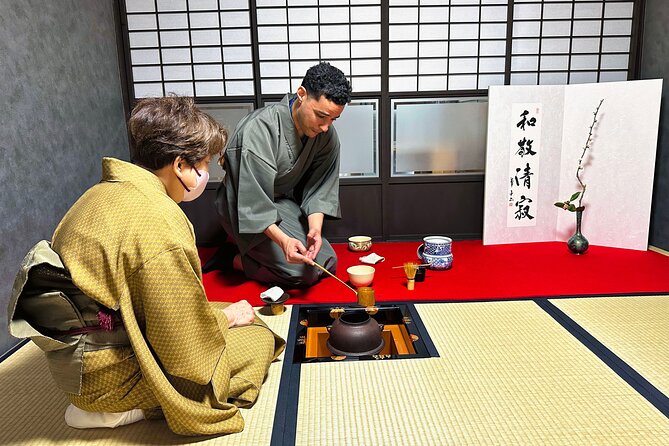
Many cultural activities give you a quick explanation, a photo, and a polite goodbye. This one asks you to take part. You choose clothing, sit through a formal demonstration, learn the manners behind the movements, and then handle the tea-making yourself.
That difference matters. A tea ceremony can look simple from the outside: a bowl, a whisk, a sweet, and a few careful gestures. The meaning is in the order, posture, attention, and respect given to the person sharing the tea. The guide explains these points instead of asking you to copy movements without context.
The kimono also adds more than a costume photo. Staff explain the meaning of different patterns and help you understand how much work goes into putting on the clothing. Dressing is a multi-layered process, and the preparation helps you respect the garment as traditional dress rather than treating it as a quick prop.
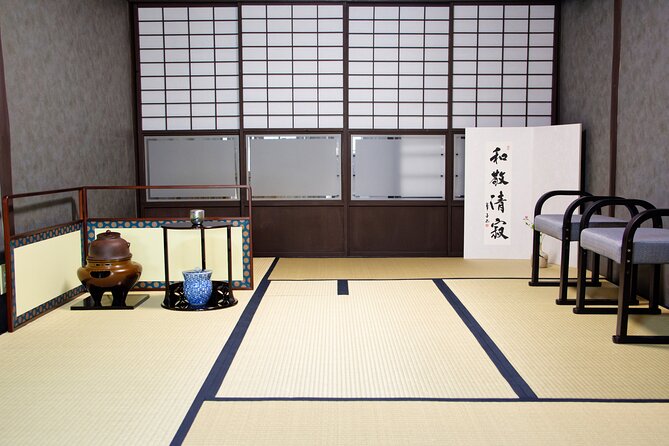
The setting adds another useful layer. The tea room has been used for three generations and is near Daitoku-ji, a temple area connected with Japanese tea culture. It is described as a little old, so do not expect a polished modern studio. For me, that sounds like part of the appeal. The room is meant to feel used and lived in, not built only for photographs.
A few more temple visits around Kyoto worth a look
- Kyoto: Tea Ceremony Ju-An at Jotokuji Temple
★ 4.9 · 3,207 reviews - Arashiyama Bamboo, Temple, Monkeys, or Secret Sake Brewery
★ 4.8 · 886 reviews - Kyoto: Arashiyama Bamboo Forest, Monkeys, Matcha & Temple Tour
★ 5.0 · 759 reviews
Choosing Your Kimono and Getting Dressed
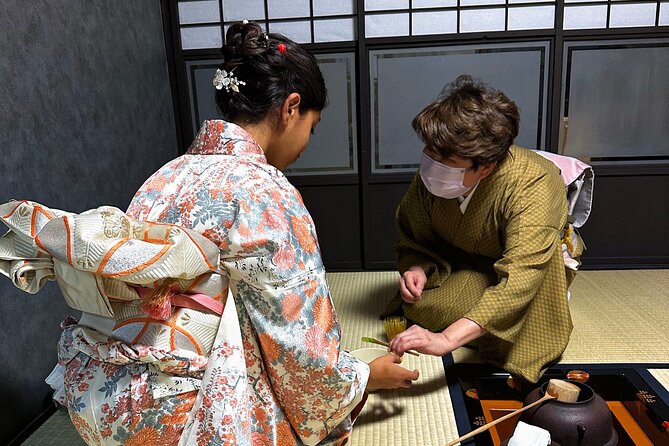
The experience begins with the kimono selection. You choose a favorite color and pattern from the Nishijin collection, then staff help you put it on correctly. Nishijin is associated with Kyoto textile making, so the selection gives you a direct connection to the city’s clothing traditions.
This is not a simple robe that you slip over your clothes. Staff manage several layers and make sure the outfit sits properly. One practical tip is to arrive with a general color preference already in mind. The selection process moves quickly, and having an idea of what you like can save time.
Women also receive a hair set before the kimono goes on. The staff are described as efficient and kind, and the hair preparation is an important part of the final appearance. Men can take part in the kimono dressing as well, making this a good choice for couples, families, and mixed groups.
I would give yourself a little breathing room before the start time. When everyone arrives at once, the dressing area can become hectic. The session is designed to handle a group, but arriving early gives the staff more room to work and gives you time to settle in.
The clothing is one of the most praised parts of the experience, but it does require patience. You will spend a meaningful portion of the 90 minutes being dressed and prepared. If your only goal is to taste matcha, this may feel like extra time. If you want to understand how formal Japanese clothing changes the feeling of a ceremony, it is worthwhile.
Photographs Before the Tea Room
Once you are dressed and your hair is arranged, there is a short photo session. Staff help with poses and take pictures, so you do not need to plan every shot yourself. This is useful because a kimono is difficult to photograph casually, especially when you are still learning how to sit and stand in it.
The photographs also give you a moment to enjoy the clothing before the more formal part begins. Staff are attentive about making people comfortable, and the photo session can help reduce any awkwardness that comes with wearing unfamiliar clothing.
Keep your expectations sensible. This is a cultural activity with photographs, not a dedicated professional portrait session. The main value is having a record of yourself dressed in the kimono and learning how to present yourself in it.
If the group includes children or teenagers, this part may be especially helpful. The photos give younger participants something active to enjoy before the quieter tea ceremony begins. Families have found that even reluctant participants can get into the experience once they are dressed and shown how to pose.
Watching a Tea Master With 30 Years of Study
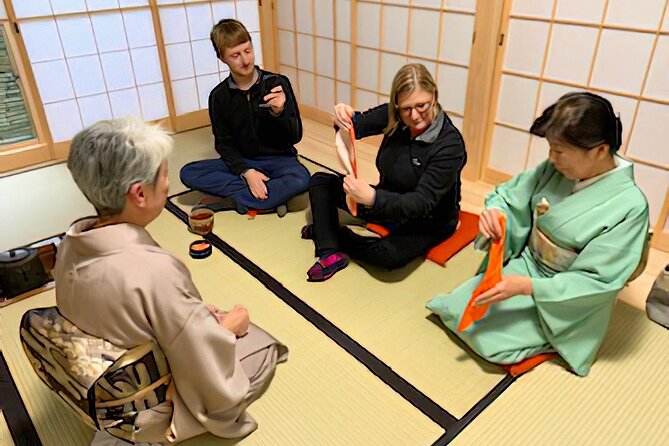
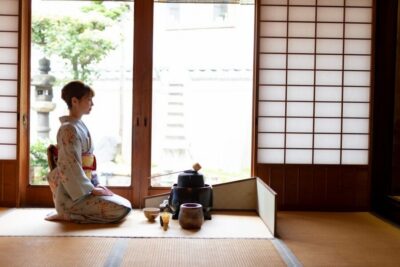
The ceremony takes place with a tea master who has studied the art for 30 years. First, the master demonstrates how the tea is prepared and served. A guide provides interpretation and explains the meaning of the gestures, the history of tea ceremonies, and the manners expected during the ritual.
The ceremony is performed in Japanese with interpretation, which gives the presentation a more natural rhythm. You hear the original language, then receive the explanation needed to follow along. The interpreter also helps with questions and gives extra information, including details about the tea ceremony fan.
A seasonal sweet is served with the tea. This is not just a snack before the matcha. In the ceremony, the sweet balances the tea and forms part of the order of service. You learn when to eat it and how to behave while receiving the tea.
The pace is quiet and deliberate. If you are used to fast sightseeing, the ceremony may feel unusually slow. That is exactly the point. You are asked to notice small movements and give your attention to the person serving you.
The setting is described as intimate rather than grand. The room has served three generations, and its age may show. I would see this as a strength for anyone who values a traditional atmosphere, though visitors seeking a sleek, high-end setting may prefer a newer venue.
Same place, a different morning at the gates:
- Osaka/Kyoto:Kinkakuji,Arashiyama,FushimiInariShrine,NaraPark
★ 4.1 · 1,596 reviews - Kyoto Arashiyama Walking Tour: Bamboo, Monkeys, Gardens & Secrets
★ 5.0 · 1,216 reviews - Osaka/Kyoto: Arashiyama, Nara & Fushimi Inari Shrine w/Lunch
★ 4.4 · 754 reviews - Kyoto 1 Day Tour from Kyoto
★ 4.0 · 582 reviews
Making Your Own Cup of Matcha
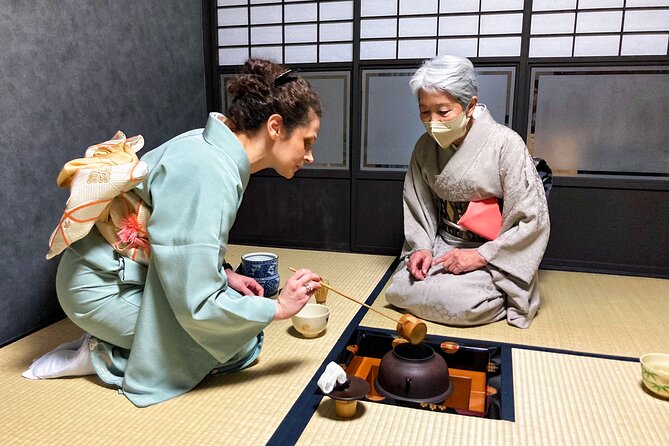
After watching the tea master, you get a chance to prepare tea yourself. This is the part that changes the experience from a demonstration into a lesson. You learn how to brew your cup and may prepare tea for another person in the group.
Do not worry about perfect technique. The point is to try the sequence, understand the basic etiquette, and feel how much control and care the process requires. Several people have described the experience as encouraging even when their own preparation was not precise.
The instructor and assistants guide you through the process, so you are not left guessing. You will also learn how to receive the tea properly and how manners shape the exchange. These details make the ceremony easier to understand when you later see one at a temple or cultural center.
The tea itself is matcha, served with a seasonal sweet. If you already drink green tea, you may enjoy comparing the strong, powdered tea with the more familiar leaf varieties. If matcha is new to you, the ceremony gives you a calm way to try it rather than rushing through a tasting.
The Location Near Daitoku-ji and Imamiya Jinjya Shrine
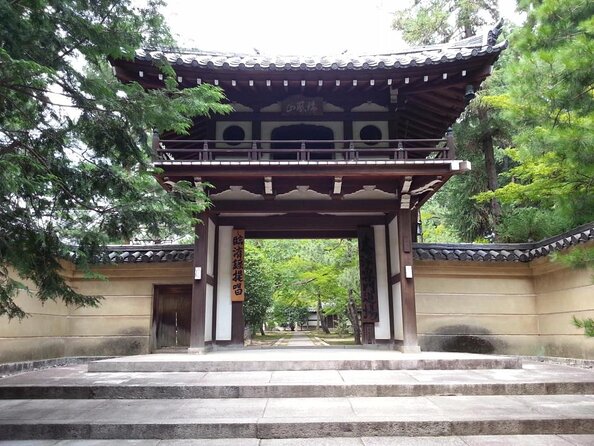
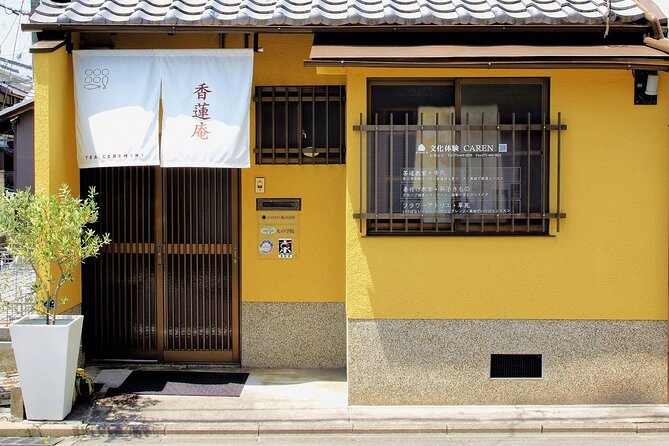
The meeting point is Tea Ceremony Caren at 74-4 Murasakino Daitokujicho, Kita Ward, Kyoto, postal code 603-8231. It is near public transportation and close to Daitoku-ji Temple, a place with longstanding ties to tea culture.
The experience is also promoted in connection with nearby Imamiya Jinjya Shrine. Some sessions include a walk to the temple area after dressing, which adds a useful outdoor moment between the kimono preparation and the ceremony. Since private transportation is not included, you need to make your own way to the meeting point.
This location is a good fit for a day focused on northern Kyoto. You can pair the tea ceremony with nearby temple visits, though the activity itself ends back at the meeting point. Plan your sightseeing carefully, because walking in a kimono may take longer than walking in regular clothes.
The area is not the center of the busiest sightseeing zone, and that is useful if you want a quieter cultural stop. It also means you should check your route before setting out. The meeting address is specific, and arriving early is sensible.
Is the $99.49 Price Good Value?
At $99.49 per person, this is not a budget tea tasting. You are paying for several linked services: kimono use, assistance putting it on, hair styling, photographs, a professional instructor, interpretation, seasonal sweets, tea, and the ceremony itself.
The value improves if you want the full cultural package. Booking separate kimono rental, hair styling, and a tea ceremony could take more planning and may not give you the same smooth connection between the activities. Here, the clothing prepares you for the ceremony, and the ceremony gives meaning to the clothing.
The price is less convincing if you only want a cup of matcha or a short explanation. You may spend much of the session on dressing and photographs, which are central features rather than optional extras. I would book it for the complete experience, not as a simple tea break.
With a maximum of 12 people, the group is small enough for personal help while still allowing you to meet people from other countries. It is not a private ceremony, so you should expect to share the room and the instructor’s attention.
Who Will Enjoy This Most
I recommend this activity to first-time visitors who want a clear introduction to Japanese tea culture. You do not need prior knowledge of tea ceremony rules, kimono, or matcha. The guide explains the steps and staff help with the clothing.
It also suits families. Teenagers who might find a lecture dull can take part in the dressing, styling, photographs, and tea preparation. Grandparents can participate as well, and the staff assist each person through the process.
Couples often get good value from the photo session, while solo visitors are not left out. One solo participant received a chance to prepare tea and found the staff welcoming. You do not need to arrive with a large group to take part fully.
The experience may be less suitable for someone who dislikes formal clothing, sitting quietly, or following a set ritual. It is also not ideal if you have a packed schedule with no room for delays. The listed duration is about 1 hour and 30 minutes, but dressing several people can make the start feel busy.
Practical Details, Weather, and Cancellations
Your mobile ticket is confirmed at booking, and the activity begins and ends at Tea Ceremony Caren. Private transportation is not included, so you handle transportation to the address yourself.
The experience requires good weather. If poor weather causes cancellation, you are offered another date or a full refund. It also requires a minimum number of participants, and if that number is not reached, you are offered another date or experience, or a full refund.
You can cancel for a full refund up to 24 hours before the start time. Cancellations or changes made within 24 hours are not refunded or accepted, and all cut-off times use local Kyoto time.
Should You Book This Kimono Tea Ceremony?
I would book this if you want a hands-on cultural experience rather than a quick photo stop. The strongest parts are the careful kimono dressing, the tea master’s long training, the calm three-generation tea room, and the chance to prepare tea yourself.
The main trade-off is the tight 90-minute schedule and the shared format. You are not booking a private portrait session or a long temple lesson. You are booking a compact introduction to kimono and tea ceremony with a small group.
Choose a color before you arrive, reach the meeting point a little early, and leave space in your schedule. For many visitors, this will be one of the more personal memories of Kyoto because you do not just watch a tradition. You take part in it.
FAQ
How long does the tea ceremony experience last?
The activity lasts approximately 1 hour and 30 minutes.
Where does the experience begin and end?
It begins at Tea Ceremony Caren, 74-4 Murasakino Daitokujicho, Kita Ward, Kyoto, 603-8231, Japan. It ends back at the meeting point.
Is kimono use included?
Yes. You choose a kimono from the available collection and receive assistance putting it on.
Is hair styling included?
Yes. The program includes help setting the hair before the kimono is put on.
Will I get to make tea myself?
Yes. After watching the tea master, you have the opportunity to prepare your own tea.
How many people can join the activity?
The experience has a maximum of 12 participants.
Is transportation included?
No. Private transportation is not included, though the meeting point is near public transportation.
What is the cancellation policy?
You can cancel at least 24 hours before the start time for a full refund. Cancellations or changes made less than 24 hours before the start time are not refunded or accepted.
Just added around Kyoto
- Kyoto: Kiyomizudera, Sanjusangendo, Ginkakuji and Higashiyama.★ 5.0 · 3 reviews
- Kyoto: Shakyo & Matcha in Historic Temple Garden★ 5.0 · 4 reviews
- Kyoto:Kiyomizu-dera Temple Rent a kimono and ride a rickshaw★ 4.8 · 7 reviews
- Kyoto:Quiet Arashiyama and Sagano Temples★ 4.8 · 5 reviews
- KYOTO: Tempio Kiyomizu Pagode Gion “Geisya” (Guida Italiana)★ 4.7 · 17 reviews
- Kyoto: Kifune Shrine and the Sacred Kifune Valley Day Trip★ 4.4 · 4 reviews
- KYOTO: Golden Pagoda, Bamboo Forest, Arashiyama (Italian)★ 4.9 · 5 reviews
- KYOTO: Tour guidato tra i tesori della città (in italiano)★ 5.0 · 5 reviews
Kyoto Temple Tours, compared.
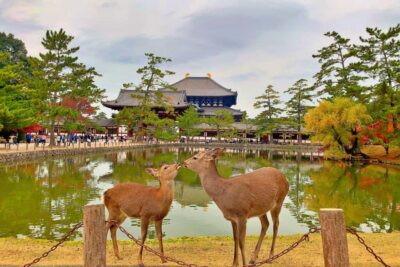
Osaka/Kyoto:Kinkakuji,Arashiyama,FushimiInariShrine,NaraPark
Read our review →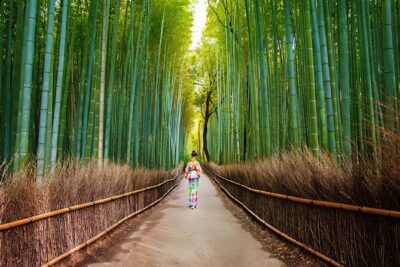
Kyoto Arashiyama Walking Tour: Bamboo, Monkeys, Gardens & Secrets
Read our review →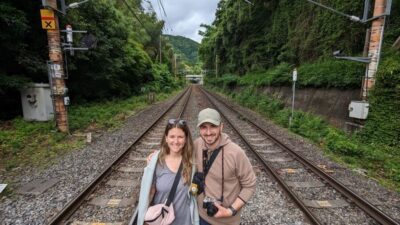
Arashiyama Bamboo, Temple, Monkeys, or Secret Sake Brewery
Read our review →
Arashiyama Bamboo Forest, Monkeys, Matcha & Temple Tour
Read our review →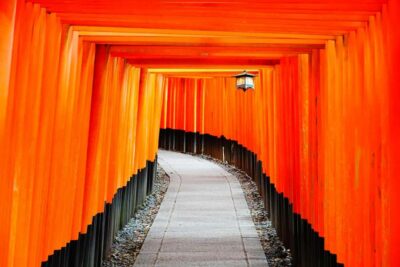
Osaka/Kyoto: Arashiyama, Nara & Fushimi Inari Shrine w/Lunch
Read our review →
Kyoto Zen Meditation & Garden Tour at a Zen Temple with Lunch
Read our review →Browse the lists this tour appears in