
Review · JAPAN
Asakusa Senso-ji Temple and Old Tokyo Walking Tour
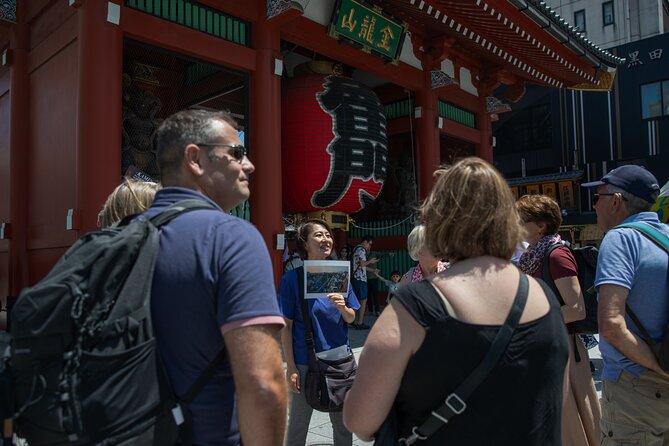
Asakusa rewards a slower first look. This two-hour walk gives you a useful introduction to Tokyo’s old quarter, with time at Senso-ji Temple, Asakusa Shrine, traditional shopping streets, Hoppy Street, and Azuma Bridge. I like the small group of no more than 12 people, which makes it easier to hear the guide and ask questions. I also like the practical cultural lessons, especially how to purify yourself, receive a fortune, and pray at Buddhist and Shinto sites.
The main drawback is that Asakusa can be extremely crowded, particularly around Kaminarimon and Nakamise Shopping Street. Finding your guide at the meeting point may take patience, and the tour moves through several busy areas rather than offering long, quiet periods inside the temple grounds.
Key things to know before booking
- A useful two-hour introduction: You cover the main sights without giving up a full day of your Tokyo schedule.
- Small group size matters: With a maximum of 12 people, you should have a better chance to hear explanations and get answers.
- Buddhist and Shinto customs are explained: The guide shows you how these two traditions appear side by side in Asakusa.
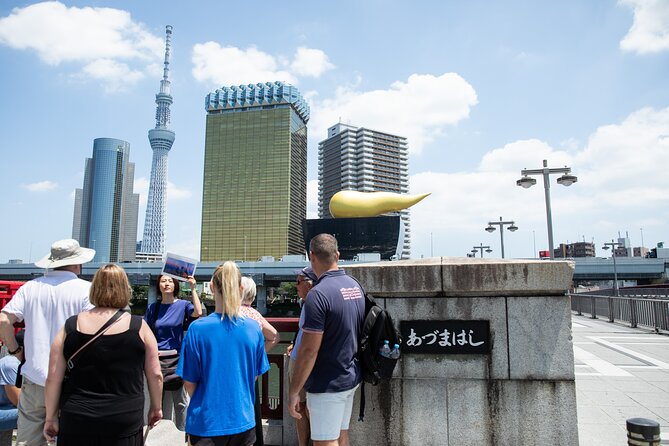
- The route ends by the Sumida River: Azuma Bridge provides views toward Tokyo Skytree and the Asahi Beer Hall.
- Guides add practical local advice: Guides such as Aya, Glenda, Polina, Keiko, Loc, Mei, and Nana have been praised for history, food tips, photos, and clear explanations.
- The price is modest: At $20 per person, the tour offers solid value if you want context instead of simply walking past the sights.
Why Asakusa makes a smart first Tokyo walk
Tokyo can feel like several cities stitched together. Shinjuku is all neon and tall buildings. Ginza is polished and expensive. Asakusa gives you a different opening chapter, one shaped by temples, traditional shops, local food, and old neighborhood streets.
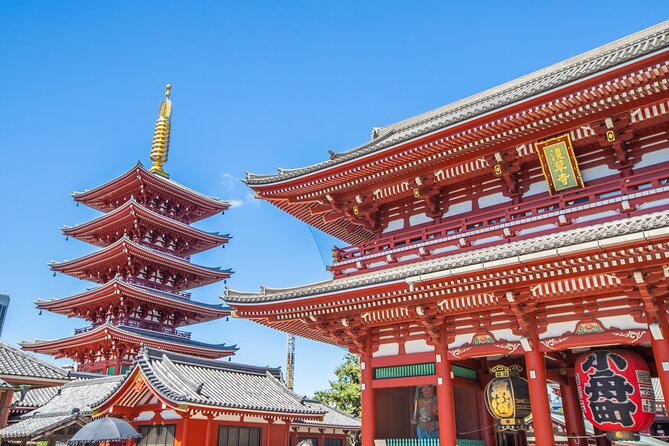
Senso-ji is the main attraction, but the surrounding area is just as useful for getting your bearings. You pass through ceremonial gates, a long shopping street, a Buddhist temple, a Shinto shrine, casual drinking lanes, and a major river crossing. In a short distance, you see several parts of Tokyo’s past and present.
I especially like this tour for a first morning in Tokyo. One person described booking it after waking earlier than planned and finding that the temple and shrine basics helped with the rest of the trip. That is exactly the value here. You are not only looking at buildings. You are learning what to do when you encounter similar religious sites elsewhere in Japan.
The tour has a 4.8 rating from 561 reviews, with 96 percent recommending it. Those numbers fit the experience described by the available feedback: the strongest praise goes to the guides’ clear explanations, friendly manner, and ability to answer questions.
More Temple Walking Tours in Japan
- Tokyo: Asakusa Walking Tour with Sensoji Temple Visit
★ 4.8 · 1,583 reviews - Kyoto Arashiyama Walking Tour: Bamboo, Monkeys, Gardens & Secrets
★ 5.0 · 1,216 reviews - Tokyo: Meiji Shrine Walking Tour — Shinto & Imperial System
★ 4.9 · 266 reviews
Meeting at Kaminarimon near Tokiwado
The tour begins at Tokiwado Kaminari-okoshi Honpo, at 1-chome 3-2 Asakusa. This is close to the Kaminarimon area, the gateway to Senso-ji and one of the busiest parts of the neighborhood.
Give yourself time to find the guide. One person specifically found the meeting area a little tricky because of the crowds. If you are standing near a large red gate, packed with people taking photographs and heading toward Nakamise, you are in the right general zone, but use the exact meeting instructions and keep your phone ready.
The tour includes a mobile ticket and confirmation arrives when you book. Transportation to the meeting point is not included, so you will need to make your own way there. The area is near public transportation, which makes this a practical start for a day of sightseeing.
Nakamise Shopping Street and the first look at Senso-ji
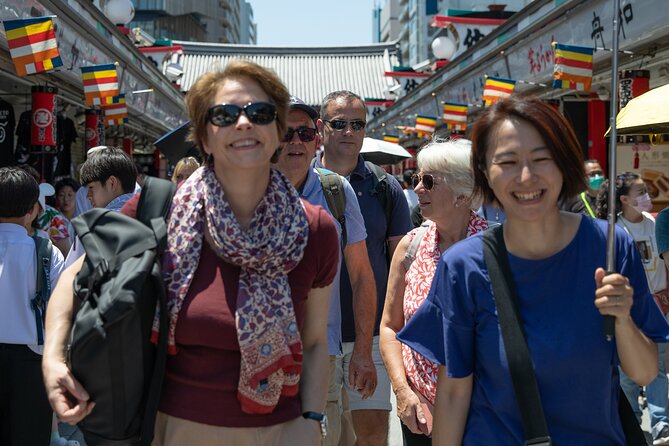
Nakamise Shopping Street leads from Kaminarimon toward Senso-ji Temple. The route is lined with stalls and shops selling traditional snacks, souvenirs, small gifts, and Tokyo-themed items.
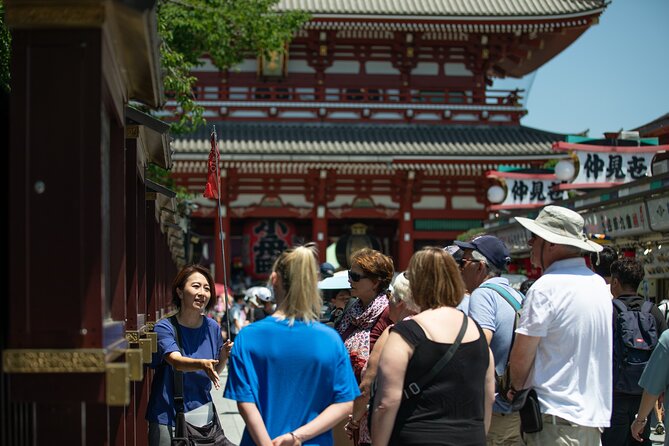
The guide helps you read this street as more than a shopping stop. It is the approach to a major religious site, so the movement from gate to market to temple is part of the experience. Without context, you may simply see a crowded row of shops. With a guide, you can pay attention to the customs, objects, and food that give the street its character.
The scheduled stop is about 10 minutes, though the walk itself connects several parts of the route. Do not expect a long shopping break here. The purpose is to introduce the approach to the temple and point out useful things to return to later.
I would save serious shopping for after the tour. The group needs to stay together, and stopping at every food stall would quickly turn a two-hour walk into half a day. Still, your guide may suggest snacks or gifts worth trying. Nana, for example, has been praised for explaining which Japanese snacks make good purchases for home or for eating in Asakusa.
Senso-ji Temple, Tokyo’s main lesson in Buddhist customs
Senso-ji receives about 30 minutes, making it the longest formal stop. This is the heart of the walk and the place where a guide adds the most value.
The temple’s history and cultural role are explained along with the way it shaped Asakusa’s identity. You learn how to approach the site, purify yourself, and pray properly. The guide can also explain the meaning of customs that may otherwise seem mysterious, including how to receive a fortune.
That practical instruction is one of the strongest reasons to book. Several guides have been praised for showing exactly how to pray at Buddhist and Shinto sites. Once you understand the basic steps, later visits around Japan become less awkward. You can take part respectfully instead of copying the nearest person and hoping for the best.
The guides also add visual help in some cases. Glenda has used a binder with pictures to explain the temple and related Japanese history. Another guide gave the group a good high vantage point for photographs overlooking the temple grounds. These details matter because Senso-ji can be confusing when you first arrive, with gates, incense, worship areas, and crowds all competing for your attention.
You should expect the temple grounds to be busy. The guide cannot remove the crowds, and you may not have much quiet time alone during the formal explanation. On the other hand, the group format lets you return on your own afterward with a better idea of what you are seeing.
More Meiji Shrine and Senso-ji Tours in Japan:
- Tokyo Panoramic 1 Day: Meiji Shrine, Asakusa, Odaiba and SKYTREE®
★ 4.5 · 1,222 reviews - Tokyo: Asakusa and Tokyo’s Oldest Temple Senso-ji Tour
★ 4.9 · 352 reviews - Tokyo: Meiji Jingu Shrine and Shinto Culture Walking Tour
★ 5.0 · 245 reviews - Tokyo: Meiji Shrine and Shinto Culture Walking Tour
★ 5.0 · 225 reviews
Asakusa Shrine and the meeting of two traditions
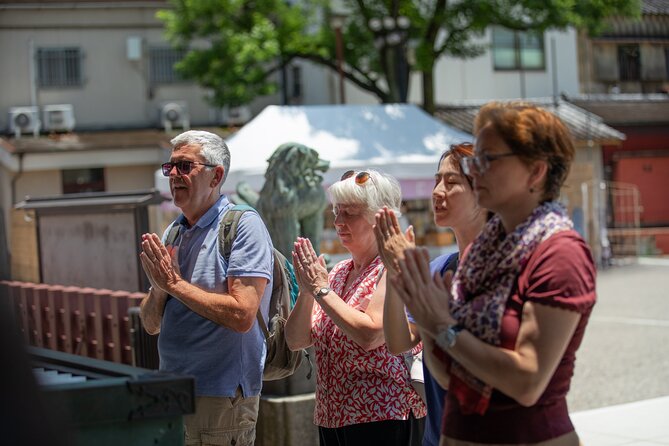
Asakusa Shrine sits beside Senso-ji and receives about 15 minutes. It is a Shinto shrine dedicated to the three men associated with the founding of Senso-ji, often called Sanja-sama, or Three Shrine.
The close pairing of temple and shrine is important. You can move from a Buddhist setting to a Shinto one within minutes, making Asakusa a clear place to learn about the difference between the two traditions. The guide explains the role of each site and the customs connected with visiting them.
This stop is short, but it gives the tour a useful balance. If you only visit Senso-ji, you may leave with an incomplete picture of the area. The shrine shows how religious life in Japan is not neatly separated into one tradition per neighborhood.
Guides have been praised for answering questions about Buddhism and Shinto in plain English. That is particularly helpful if you are visiting Japan for the first time and want more than a list of dates and names.
Hoppy Street and the everyday side of Asakusa
Hoppy Street is a 10-minute stop known for izakayas, or Japanese-style pubs, and the drink called Hoppy. Hoppy is a non-alcoholic, beer-flavored beverage often mixed with shochu, though the tour does not include food or drinks.
This part of the route changes the mood. After the formal temple and shrine grounds, you see a more relaxed side of Asakusa, one built around casual meals, drinks, and neighborhood social life. It is a helpful reminder that old Tokyo is not only about monuments.
Do not expect a tasting session. Food, drinks, and personal expenses are not included. The guide may point out places to try later, and several guides have offered dinner and snack recommendations. One person wished for more time to sample food during the walk, which is a fair limitation of a two-hour schedule.
My advice is to treat Hoppy Street as a preview. Take note of the places that interest you, then return after the tour when you can sit down without watching the clock.
Shin Nakamise and the practical shopping detour
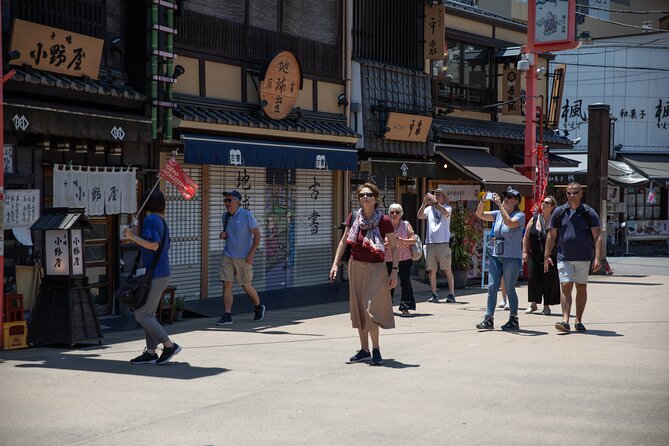
The route also includes Shin Nakamise, an extension of Nakamise Shopping Street with a more modern mix of shops and boutiques. It adds a different view of Asakusa’s commercial life.
The contrast is useful. Nakamise near Senso-ji feels closely tied to the temple approach, while Shin Nakamise brings in more contemporary shopping. Together, the two streets show how Asakusa keeps its old identity while serving modern Tokyo.
The supplied schedule does not give a precise time for this stop, so you should think of it as part of the walking route rather than a long standalone visit. The guide may point out places to eat, browse, or return to later.
Azuma Bridge and the end by the Sumida River
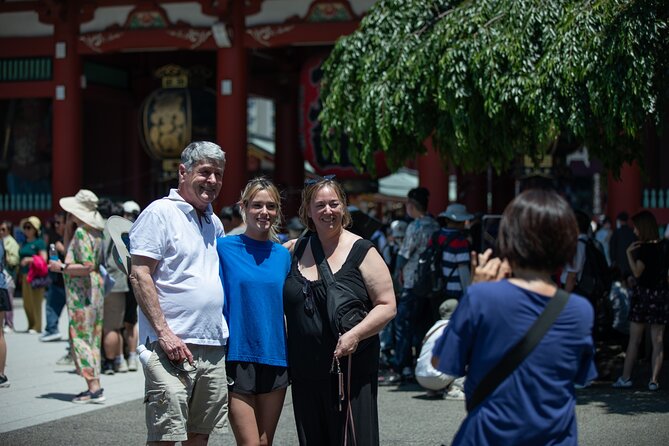
The tour finishes near Azuma Bridge at 2-chome 1-16 Kaminarimon. The bridge crosses the Sumida River and connects Asakusa with Kuramae.
This is a strong ending because it shifts your view from temple courtyards and narrow shopping streets to open water and city landmarks. From the bridge area, you can see Tokyo Skytree and the Asahi Beer Hall, including its distinctive golden sculpture.
The walk ends here rather than returning to the starting point. That is convenient if you plan to continue toward the river, Skytree, or other parts of eastern Tokyo. It also means you should plan your next move before the tour begins if you need to meet someone back near Kaminarimon.
The guides are the real value
The route is good, but the guide determines how much you get from it. The strongest comments focus on clear English, historical context, patience, and a friendly approach.
Aya has been praised for paying attention to everyone, taking photographs, answering questions, and suggesting food and shopping. Glenda is noted for a clear speaking style and strong command of English, along with useful visual material. Polina has been praised for explanations of Asakusa and Senso-ji. Keiko is described as personable and engaging, while Loc receives credit for cultural insight and an easy manner.
Other named guides include Mei, Miyu, Rio, Ayaka, Hiroko, and Nana. The consistent pattern is more important than any one name: the guide is expected to explain, not merely lead you from one address to the next.
You cannot necessarily request a particular guide, so book this for the format and route rather than for one individual. Still, the guide quality appears to be a major reason the experience earns its high rating.
Is $20 a good price for two hours?
At $20 per person, this is a sensible buy if you want an introduction to Asakusa rather than a private, in-depth historical tour. Admission to the listed sights is free, so you are paying for the guide’s time, organization, explanations, and local suggestions.
That is good value for a first visit. A guide can save you from missing the meaning of a purification fountain, praying in the wrong way, or walking through the temple grounds without understanding the layout. The small group also gives the price more weight than a large bus-style outing.
The limitations are clear. You pay for a walking tour, not a meal, transportation, temple admission, or extended free time. The route is compact and introductory. If you already know Asakusa well, you may want a longer food tour or a more specialized history walk instead.
Who should book this Asakusa walk?
I would recommend it to first-time visitors, solo visitors, couples, and anyone who wants cultural context without spending half a day on a formal tour. It is also useful early in a Japan trip because the lessons about temple and shrine behavior carry forward.
It suits people who enjoy asking questions and learning small details. It is less suitable if you want a quiet temple visit, a food-heavy outing, or lots of time for shopping during the guided portion.
The walk requires ordinary comfort with being outdoors and on foot. Most people can participate, service animals are allowed, and the group is capped at 12. Since the experience requires good weather, poor conditions can lead to a different date or a full refund. Free cancellation is available up to 24 hours before the start time. Changes or cancellations inside that window are not accepted for a refund.
Should you book it?
Book this tour if you want Senso-ji to make sense, not just appear in your photographs. The best features are the small group, practical lessons in Buddhist and Shinto customs, useful food advice, and a route that ends with open river views.
Skip it if you prefer to explore alone and read about the sights at your own pace. Also skip it if your priority is eating your way through Asakusa, since food and drinks are not included and the schedule leaves limited time for sampling.
For most first-time visitors, $20 is a fair price for two hours of orientation. Take the tour early in your Tokyo stay, listen closely, note the places you want to revisit, and leave time afterward for Nakamise, Shin Nakamise, or Hoppy Street on your own.
FAQ
How long does the Asakusa walking tour last?
The tour lasts approximately two hours.
What is the price per person?
The listed price is $20 per person.
What sights are included?
The route includes Nakamise Shopping Street near Kaminarimon, Senso-ji Temple, Asakusa Shrine, Hoppy Street, Shin Nakamise, and Azuma Bridge.
Is admission to the sights included?
The listed stops have no admission charge. The experience includes guided access to the district, but food, drinks, and personal expenses are not included.
How large is the group?
The maximum group size is 12 participants.
Is the tour conducted in English?
Yes. An English-speaking local guide leads the walking tour.
Where does the tour begin?
It begins at Tokiwado Kaminari-okoshi Honpo, 1-chome 3-2 Asakusa, Taito City, Tokyo 111-0032, Japan.
Where does the tour finish?
The tour finishes near Azuma Bridge, at 2-chome 1-16 Kaminarimon, Taito City, Tokyo 111-0034, Japan.
Is transportation included?
No. Transportation to and from the meeting point is not included.
Can I cancel for a full refund?
Yes, if you cancel at least 24 hours before the experience start time. Cancellations made less than 24 hours in advance are not refunded. If poor weather causes the tour to be canceled, you will be offered another date or a full refund.
Just added around Japan
- Private guided tour: Mt. Aso volcano, grasslands, Aso Shrine★ 5.0 · 19 reviews
- Takayama Inari Shrine Tour with Private Transportation★ 5.0 · 5 reviews
- From Asakusa: Old Tokyo, Temples, Gardens and Pop Culture★ 5.0 · 47 reviews
- Goshuin Collecting tour at Asakusa Local Temples & Shrines, Tokyo★ 5.0 · 8 reviews
- :Tokyo,Shibuya /Meiji Shrine tour in KIMONO/English-friendly★ 5.0 · 4 reviews
- Tokyo: Snow Monkey and Zenkoji Temple Day Trip In Low Price★ 5.0 · 5 reviews
- Tokyo War History Tour: Yasukuni Shrine & War Museum★ 4.5 · 6 reviews
- Tokyo: Gotokuji Culture Walk & Lucky Cat Temple Experience★ 4.9 · 5 reviews
Meiji Shrine & Senso-ji Tours, compared.
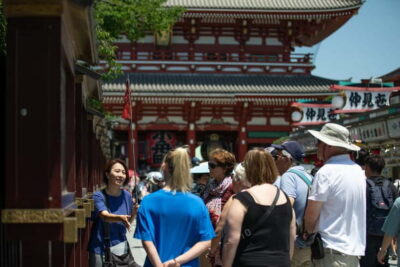
Asakusa Walking Tour with Sensoji Temple Visit
Read our review →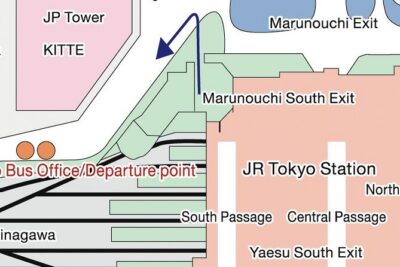
Tokyo Panoramic 1 Day: Meiji Shrine, Asakusa, Odaiba and SKYTREE®
Read our review →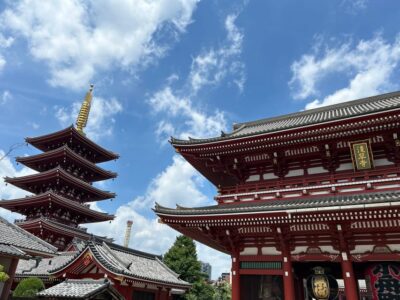
Asakusa and Tokyo’s Oldest Temple Senso-ji Tour
Read our review →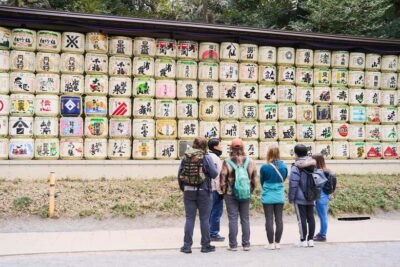
Meiji Shrine Walking Tour — Shinto & Imperial System
Read our review →
Meiji Jingu Shrine and Shinto Culture Walking Tour
Read our review →
Meiji Shrine Walking Tour — Shintoism & Imperial System
Read our review →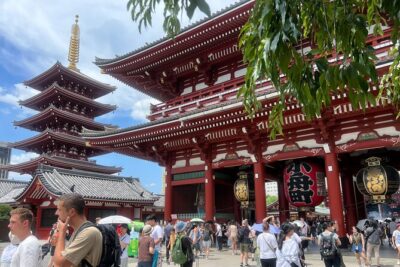
Tokyo Morning Tour: Asakusa, Meiji Shrine and Tsukiji Fish Market
Read our review →Browse the lists this tour appears in