
Review · KYOTO
Osaka/Kyoto:Kinkakuji,Arashiyama,FushimiInariShrine,NaraPark
Four major sights, one packed day. This bus tour links Nara Park, Todai-ji, Arashiyama, Kinkaku-ji, and Fushimi Inari from Osaka or Kyoto, saving you the trouble of piecing together several train rides. I like the excellent variety, from free-roaming deer and giant temple architecture to bamboo and vermilion gates. I also like the strong guides, including Harry, Gary, Tracy, Mike, Panda, and Nick, who are often praised for clear meeting instructions, history, humor, and help with photographs.
The catch is simple: this is a fast-moving group tour, not a slow cultural day. You may walk around 21,000 steps, deal with crowds, and have too little time for Arashiyama’s Bamboo Grove if you choose the Kobe beef lunch. At about $66 per person, though, the price is attractive if your priority is seeing a lot in one day.
Key things to know before booking
- Four headline stops in one day: You visit Nara Park, Todai-ji, Arashiyama, Kinkaku-ji, and Fushimi Inari without arranging several separate train journeys.
- Nara comes early: The schedule usually puts you near the deer before the day becomes even more crowded.
- Arashiyama time depends on lunch: You get about 120 minutes without lunch, or roughly 60 minutes after a 50-minute Kobe beef meal.
- Kinkaku-ji admission is included: The Golden Pavilion ticket is covered, while Todai-ji admission costs extra.
- A guide makes the tight schedule work: Strong guides such as Gary, Harry, Tracy, Mike, and Panda have helped with directions, timing, history, and photos.
- You must be punctual: The bus leaves on time, and arriving at the wrong meeting point can mean missing the entire tour without a refund.
Why this four-stop route is useful
Kyoto and Nara are easy places to underestimate. On a map, the sights look reasonably close. In practice, they are spread across different parts of the region, and popular roads can slow to a crawl. Add train changes, station walks, and the need to find each entrance, and a self-guided day can become a transport project.
This tour gives you a seat between stops and one person responsible for the schedule. That matters most at Nara Park and Fushimi Inari, where the walking areas are large, and at Arashiyama, where finding the Bamboo Grove is simple but fitting it into a larger day takes planning.
The experience is offered from Osaka or Kyoto, with the option to finish in either Kyoto or Osaka according to the booking arrangement. It lasts about nine hours, though a Kyoto departure may produce a shorter day of around eight and a half hours. Traffic, crowd levels, and late arrivals can change the timing.
You will not have the freedom of a private car or an independent day. The bus group must move together, and commentary may be given in both English and Chinese depending on the group. Still, the arrangement works well if you want the major sights without spending your holiday studying regional train connections.
More Fushimi Inari Shrine Tours in Kyoto:
- Osaka/Kyoto: Arashiyama, Nara & Fushimi Inari Shrine w/Lunch
★ 4.4 · 754 reviews - Kyoto: 3-Hour Fushimi Inari Shrine Hidden Hiking Tour
★ 4.9 · 270 reviews - Kyoto Tea Ceremony & Kiyomizu-dera Temple Walking Tour
★ 5.0 · 115 reviews
Nara Park and Todai-ji: deer, scale, and a paid temple visit
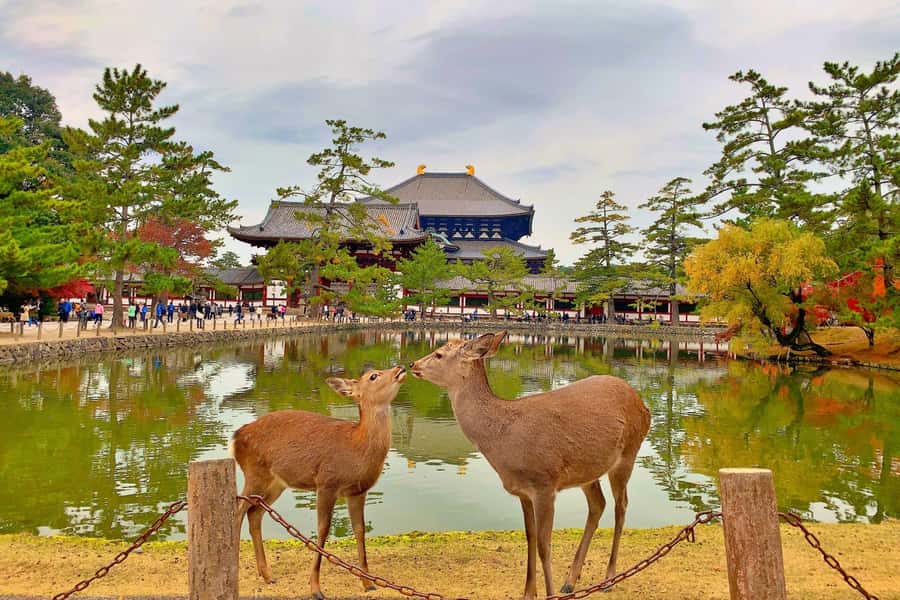
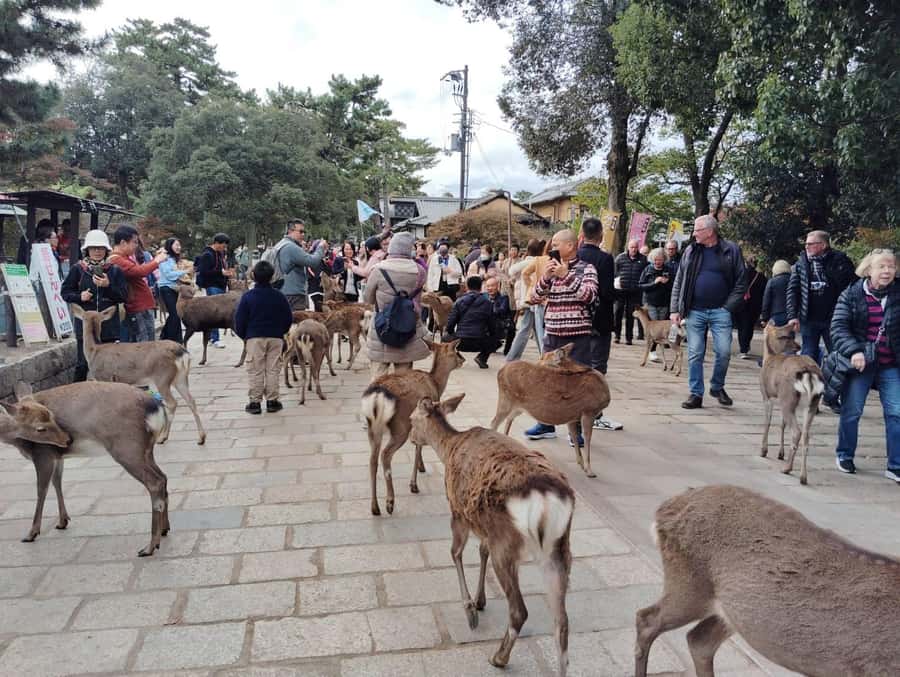
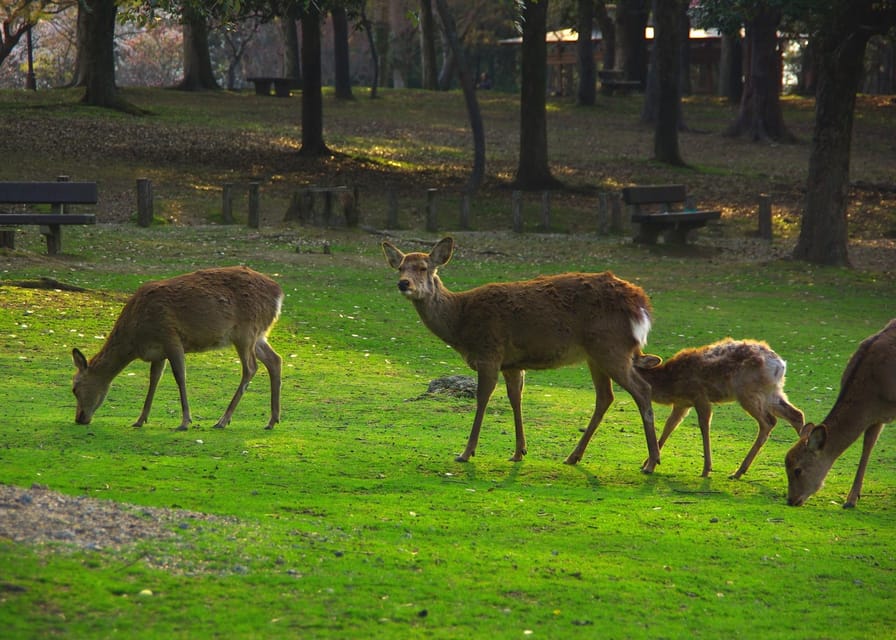
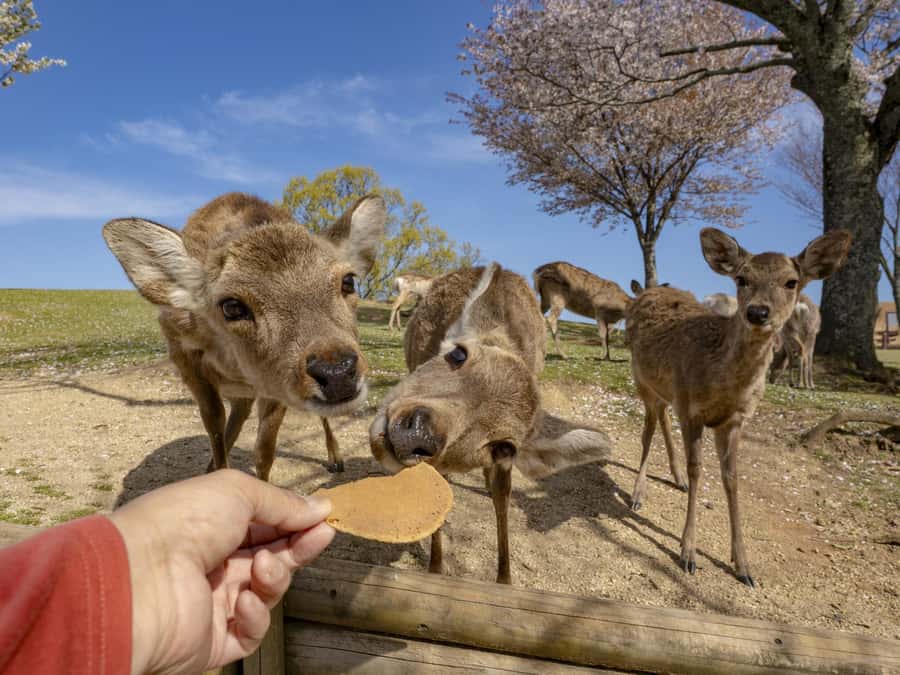
Nara Park gives the day an appealing beginning. The deer roam freely through the park and are closely tied to the identity of Nara. You can see them near the paths and interact with them, but remember that they are wild animals. Do not chase, tease, or disturb them.
The early timing is one of the tour’s better choices. Nara Park can become crowded, and reaching it near the start of the day gives you a calmer chance to watch the deer and take photographs. Do not expect a quiet woodland walk, though. This is one of Japan’s best-known attractions, and the animals are accustomed to people.
The next stop is Todai-ji, one of Japan’s most important Buddhist temples and a UNESCO World Heritage site. Its main hall is famous as one of the world’s largest wooden structures. Inside, the 15-meter Great Buddha gives the visit real weight. Even if you have seen many Japanese temples, the scale here is difficult to ignore.
A practical point: Todai-ji admission is not included. The tour covers the entrance fee to Kinkaku-ji, but you pay separately for Todai-ji. Bring enough Japanese yen or another accepted payment method for the extra ticket.
Nara is also where you need to listen closely to the guide. The group may be led to the entrance, then given time to explore. Guides such as Harry and Tracy have been praised for repeating departure times and making sure people return to the bus. That is valuable in a park with several paths and many distractions.
If you want a long, quiet visit to Nara, this is not the right format. If you want a well-timed look at the deer and Todai-ji before moving on, it is a smart use of a morning.
The Kobe beef lunch: convenient, tasty, and time-consuming
The Kobe beef lunch is an optional upgrade available with departures from Osaka. It is served as Japanese Wagyu Kobe Beef Shabu-Shabu, with an explanation of the standards and marbling associated with Kobe beef.
Shabu-shabu is a hands-on meal. Thin slices of beef are cooked briefly in hot broth, allowing the finely marbled meat to soften quickly. The meal gives you a chance to try a famous Japanese specialty without having to find a suitable restaurant during a busy sightseeing day.
The scheduled lunch lasts about 50 minutes. That is convenient, but it comes directly out of your free time in Arashiyama. With lunch, you get about 60 minutes in Arashiyama. Without lunch, you receive roughly two hours.
The quality of the lunch received strong praise, and one especially useful point is that Kobe beef aburi sushi may be ordered on site for an additional charge. Treat that as an optional extra, not part of the advertised price.
My advice is straightforward. Choose the lunch if you want an organized meal and a special Japanese beef experience, especially if you are departing from Osaka. Skip it if Arashiyama is a priority, if you prefer choosing your own food, or if you want enough time to walk beyond the main bamboo path.
Those selecting the no-lunch option have free time in Arashiyama. You can eat at your own pace and browse the local shops and food stops. That flexibility may be worth more than the convenience of the group meal.
Arashiyama Bamboo Grove: beautiful but easy to rush
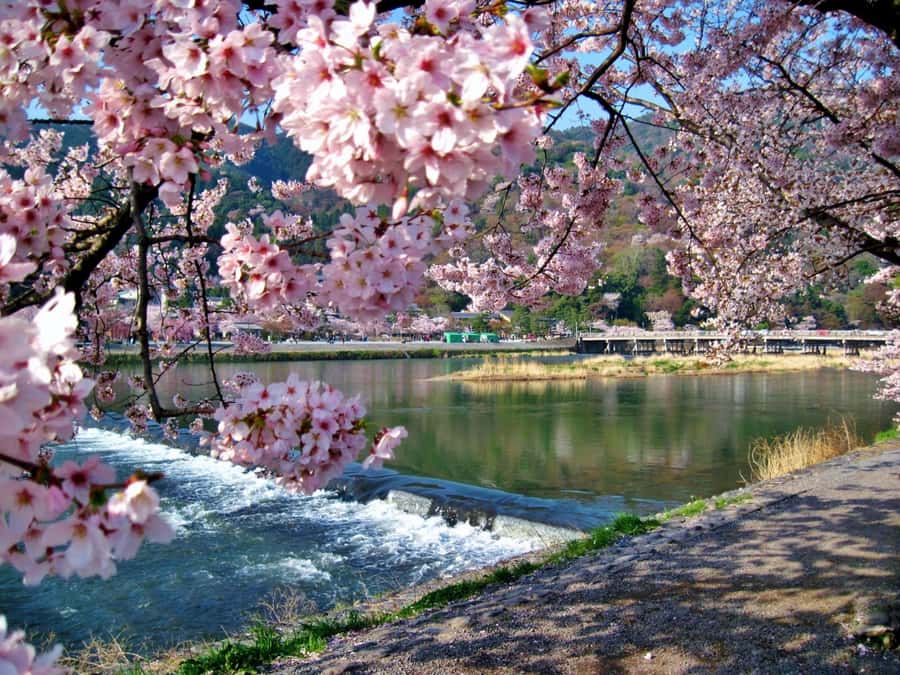
Arashiyama brings a change of mood. The Bamboo Grove is a short, striking path where tall bamboo rises on both sides and light filters through the stalks. It is one of Kyoto’s most recognizable scenes, and the setting feels very different from the large temple grounds in Nara.
The main issue is time. An hour can be enough to reach the Bamboo Grove, walk through part of it, and return to the bus if you move with purpose. It may not be enough to explore the wider Arashiyama area, linger for photographs, visit additional sights, and enjoy a relaxed meal.
Crowds make the time feel shorter. One guide, Harry, was praised for showing a beautiful shortcut, while another guide, Mike, received credit for giving clear directions and helping the group navigate the stop. A good guide can help, but no guide can remove the crowd or add another hour to the schedule.
If you take the lunch option, plan before you get off the bus. Decide if the Bamboo Grove is your first priority, then head there directly. Save shopping and food browsing for any time left afterward.
Without lunch, the two-hour window gives you a much better chance to see the grove and enjoy the surrounding area. Some people still wish they had more time in Nara instead, while others prefer the extra Arashiyama time. Your choice should depend on which setting matters more to you.
Same place, a different morning at the gates:
- Kyoto: Tea Ceremony Ju-An at Jotokuji Temple
★ 4.9 · 3,207 reviews - Kyoto Arashiyama Walking Tour: Bamboo, Monkeys, Gardens & Secrets
★ 5.0 · 1,216 reviews - Arashiyama Bamboo, Temple, Monkeys, or Secret Sake Brewery
★ 4.8 · 886 reviews - Kyoto: Arashiyama Bamboo Forest, Monkeys, Matcha & Temple Tour
★ 5.0 · 759 reviews
Kinkaku-ji: the Golden Pavilion at a measured pace
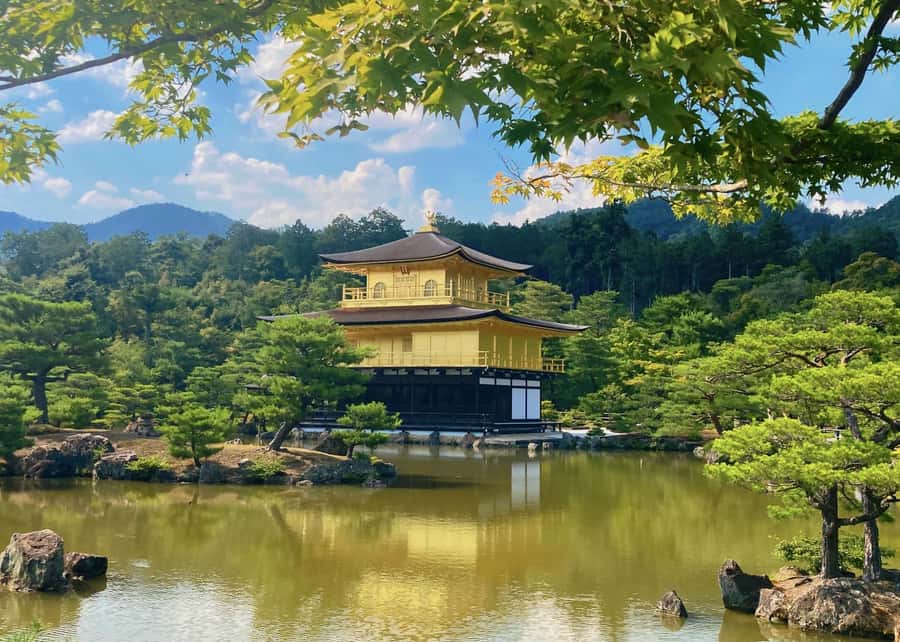
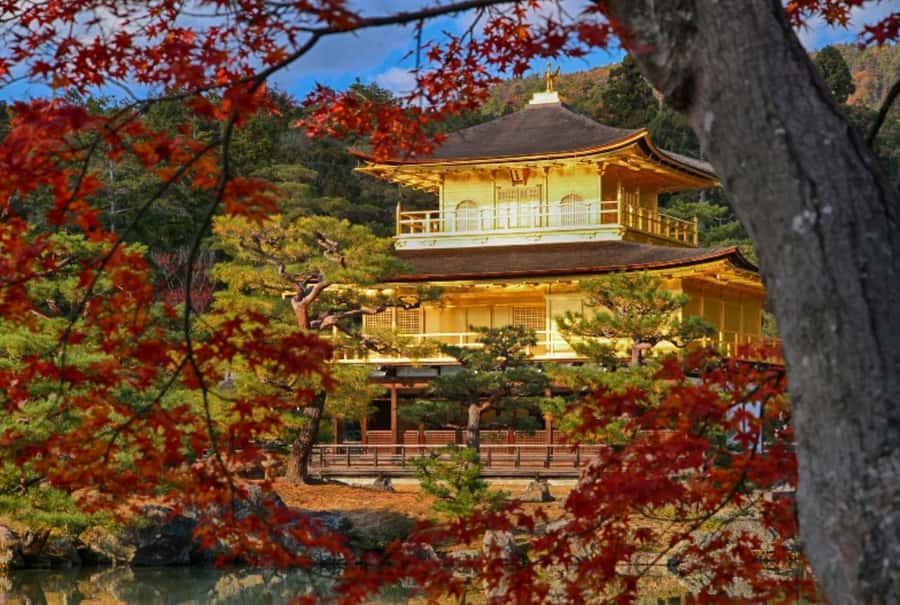
Kinkaku-ji, also called the Golden Pavilion, is the visual centerpiece of the Kyoto portion of the day. Its gold-leaf exterior reflects in the pond, with carefully maintained gardens around it. The included entrance ticket is a useful part of the $66 price because it removes one extra admission expense.
You follow a set route through the temple grounds rather than wandering freely through every part of the complex. The pavilion itself is the star, and your time is mainly for viewing, photographs, and the garden path.
Arriving later in the day can work well for the light. One account praised the afternoon timing, when sunlight brought out the gold on the building. That said, the light and crowd levels depend on traffic and the day’s schedule.
Kinkaku-ji is not a place for a long indoor temple visit. Much of the appeal comes from the view across the pond and the contrast between the bright pavilion, dark water, and garden. Keep your camera ready, but also pause long enough to take in the setting without looking only at your screen.
Because the ticket is included, this stop offers especially good value. You get one of Kyoto’s most famous sights without having to make a separate reservation or work out another route across the city.
Fushimi Inari: thousands of red gates and a final climb
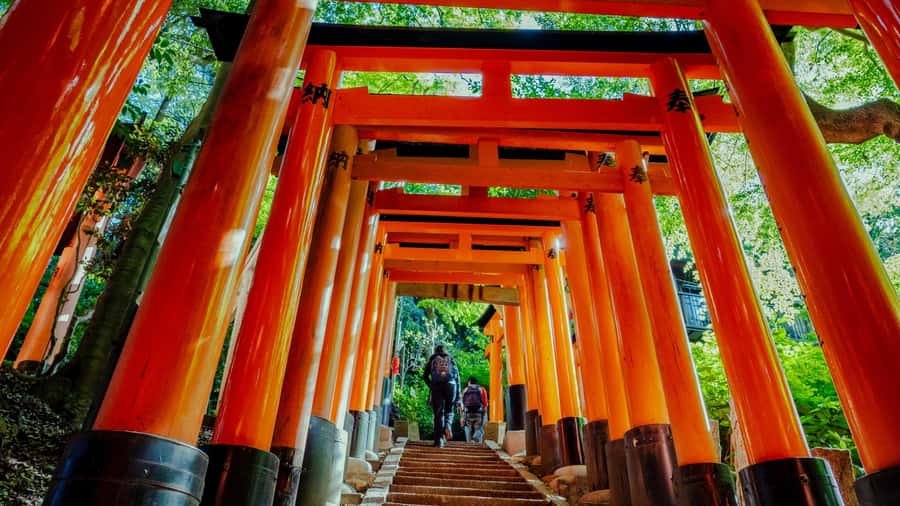
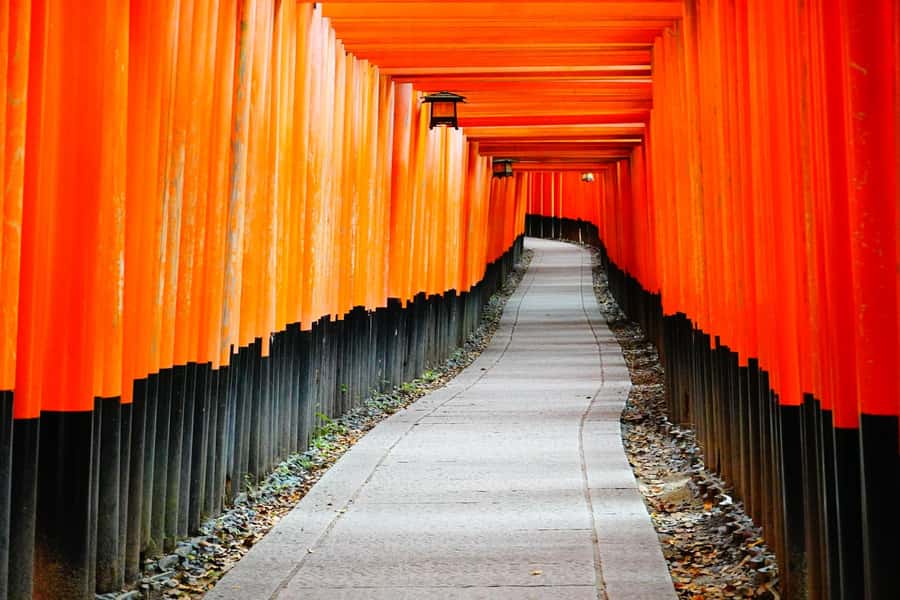
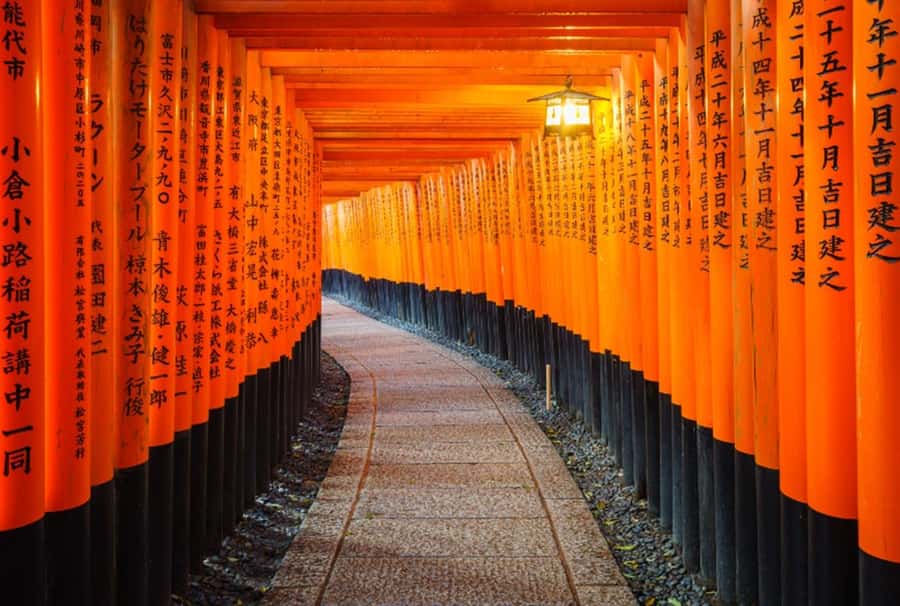
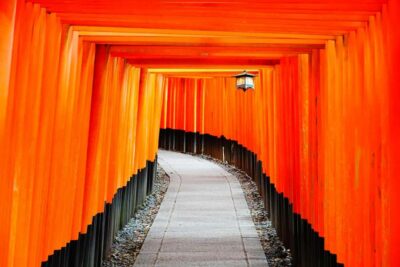
The final stop is Fushimi Inari Taisha, a Shinto shrine known for its tunnel of vermilion torii gates. The gates climb Mount Inari and were donated as prayers or offerings connected with Inari Okami, a deity associated with prosperity, household safety, and success.
The first section of the torii path is the most accessible and usually the busiest. If you have enough time, walking farther up the mountain brings a quieter feel, but this tour’s final stop is not designed for a complete mountain hike. You need to watch the clock and return to the meeting point.
Fushimi Inari is a fitting final stop because it offers a different kind of experience from Kinkaku-ji. Kinkaku-ji is a carefully framed view across a pond. Fushimi Inari is a moving path through repeated gates, stone markers, forest, and rising steps.
Wear comfortable shoes. The whole day involves substantial walking, and one account estimated 21,000 steps. You do not need to climb all of Mount Inari to enjoy Fushimi Inari, but even the lower path can be crowded and requires steady walking.
Pay close attention to where and when the bus departs. One useful criticism of the day is that some people would prefer a more obvious meeting point rather than having to remember where the bus is parked. The guide normally gives instructions, but you should also note the bus location yourself before walking away.
Guides and group size: the human side of the day
The guide can make or break a schedule this tight. The strongest praise goes to guides who keep people informed without turning the day into a lecture. Gary was especially valued for prepared itineraries, photo booklets, detailed explanations, and showing less obvious paths. Harry was praised for humor, patience, and repeated reminders about meeting times.
Tracy was described as friendly, organized, and careful about getting everyone back on the bus. Mike received praise for history, local customs, clear directions, and practical help. Panda was remembered for taking photographs and leading the group to good viewing spots. Nick was appreciated for his friendly manner and photography.
Guide quality can vary, and commentary may be shared in English and Chinese. One account found the English limited, while other accounts praised the guide’s history and cultural explanations. Expect useful information, but do not assume a long private-style talk at every sight.
The group may be large. A full bus means lower cost, but it also means more waiting when someone gets lost or misses instructions. Busy areas can split the group. If you dislike fixed departure times or group movement, a private guide or independent day may suit you better.
Transport, timing, and the real cost of the day
At $66 per person, this is good value if you use the bus to reach all four areas. You are paying for the air-conditioned vehicle, English or Chinese-speaking guide, Kinkaku-ji ticket, taxes, and the practical benefit of not organizing separate transport.
The price does not cover hotel pickup or drop-off. You start and finish at a designated meeting point, and that point may vary by booking option. Check it carefully. The bus is tied to the selected departure location, and arriving at another meeting point may mean missing the tour with no refund.
The tour is advertised at about nine hours, but traffic and other delays can change the day. Some stops may be adjusted to keep the full route possible. The return trip is your chance to rest, although the bus does not have USB ports according to one account, so charge your phone before leaving.
The day can begin early and end around dinner time. One account described leaving at 7 a.m. and returning at 7:30 p.m. That is a long stretch, especially after the walking at Nara, Arashiyama, Kinkaku-ji, and Fushimi Inari.
You can cancel up to 24 hours in advance for a full refund, and the booking allows you to reserve now and pay later. If extreme weather or a natural disaster cancels the activity, a full refund is provided.
Who should book this day trip?
I would choose this tour if I had limited time in Osaka or Kyoto and wanted to see the region’s major sights in one sweep. It is also a sensible choice for solo visitors, families who do not want to manage several train connections, and anyone who values a guide’s context and reminders.
It suits energetic people who can walk for much of the day and accept fixed times. It also works for those who want a comfortable bus between stops and do not mind sharing the day with a sizable group.
I would think twice if your main goal is slow temple visits, extended time in Nara, a full Arashiyama afternoon, or a serious climb at Fushimi Inari. The tour gives you a strong first look, not a deep visit to every place.
Should you book this Osaka and Kyoto tour?
Book it if coverage and convenience matter most. For $66, you can see Nara’s deer and Todai-ji, walk through Arashiyama, photograph Kinkaku-ji, and enter the torii gates at Fushimi Inari without arranging the transport yourself.
Choose the no-lunch option if Arashiyama is high on your list. Choose the Kobe beef lunch if you want a special meal and are happy to trade an hour of sightseeing for convenience. Either way, arrive early at the exact meeting point, wear good shoes, charge your phone, and listen carefully to the return instructions.
This is a busy day, but it is a useful one. You will not see every corner of these places, yet you will leave with a broad and memorable picture of Kyoto and Nara.
FAQ
How long does the tour last?
The tour takes approximately nine hours, although traffic and unexpected delays can change the schedule. Departures from Kyoto may last around eight and a half hours.
Can I start in Osaka and finish in Kyoto?
The tour offers departure and return arrangements involving Osaka or Kyoto. Your available start and end locations depend on the option selected when booking.
Is hotel pickup included?
No. Hotel pickup and drop-off are not included. You must go to the designated meeting point.
Is the Kinkaku-ji entrance fee included?
Yes. The entrance fee to Kinkaku-ji is included in the tour price.
Is Todai-ji admission included?
No. Todai-ji entrance is not included, so you need to pay that fee separately.
Is the Kobe beef lunch available from Kyoto?
The Kobe Beef Shabu-Shabu lunch option is available for departures from Osaka only. Kobe beef aburi sushi may be ordered separately on the day for an additional charge.
How much time do I get in Arashiyama?
With the lunch option, the schedule provides about 50 minutes for lunch and 60 minutes in Arashiyama. Without lunch, you receive about 120 minutes in Arashiyama.
What languages are offered?
The tour is offered in English and Chinese. Depending on the group size, commentary may be provided in both languages.
Just added around Kyoto
- Kyoto: Kiyomizudera, Sanjusangendo, Ginkakuji and Higashiyama.★ 5.0 · 3 reviews
- Kyoto: Shakyo & Matcha in Historic Temple Garden★ 5.0 · 4 reviews
- Kyoto:Kiyomizu-dera Temple Rent a kimono and ride a rickshaw★ 4.8 · 7 reviews
- KYOTO: Tempio Kiyomizu Pagode Gion “Geisya” (Guida Italiana)★ 4.7 · 17 reviews
- Kyoto:Quiet Arashiyama and Sagano Temples★ 4.8 · 5 reviews
- Kyoto: Kifune Shrine and the Sacred Kifune Valley Day Trip★ 4.4 · 4 reviews
- KYOTO: Golden Pagoda, Bamboo Forest, Arashiyama (Italian)★ 4.9 · 5 reviews
- KYOTO: Tour guidato tra i tesori della città (in italiano)★ 5.0 · 5 reviews
Fushimi Inari Shrine Tours, compared.
Osaka/Kyoto: Arashiyama, Nara & Fushimi Inari Shrine w/Lunch
Read our review →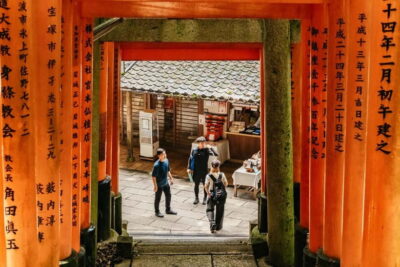
Kyoto Tea Ceremony & Kiyomizu-dera Temple Walking Tour
Read our review →Full Day Kyoto Tour : Bamboo Forest, Golden Temple, Fushimi Inari
Read our review →
Fushimi Inari Shrine and Tofukuji Temple E-Bike Tour
Read our review →
Early Morning Fushimi Inari Shrine – Beat the Crowds
Read our review →
Kyoto kiyomizu Temple : Maiko and Samurai Couple Photoshoot
Read our review →Browse the lists this tour appears in