
Review · KYOTO
Kyoto Tea Ceremony & Kiyomizu-dera Temple Walking Tour
Kyoto rewards a slow walk. This three-hour experience links Kiyomizu-dera, Yasaka Koshin-do, old shopping lanes, local snacks, and a hands-on tea ceremony in one tidy outing. I especially like the mix of famous sights and small street stops, plus the chance to make your own matcha rather than only watch someone else prepare it.
I also like that entrance to Kiyomizu-dera, several samplings, photos, and the tea ceremony are included in the $63 price. The main concern is timing: one participant missed the tea ceremony after a misunderstanding, so arrive early and confirm the schedule with your guide before the walk begins.
Key points at a glance
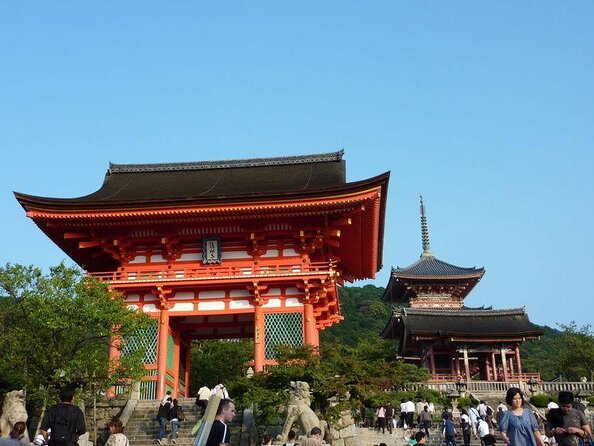
- Kiyomizu-dera from its wooden stage: See the Otowa Waterfall, wooded hills, and Kyoto from one of the city’s best-known temple viewpoints.
- A real hands-on matcha session: Learn the steps, use a bamboo whisk, taste Japanese sweets, and prepare your own green tea.
- Yasaka Koshin-do’s colorful wish balls: This small temple offers one of Kyoto’s most striking photo stops.
- Kiyomizuzaka street life: Browse old teashops, sweet shops, and traditional shops while your guide explains what you are seeing.
- Local snacks along the route: You receive a few samplings, with extra food and drinks available for purchase.
- A practical three-hour format: The tour begins and ends at Yasaka Shrine, making it easy to fit into a day in eastern Kyoto.
Why this Kyoto walking tour works
Kyoto has a way of making a simple walk feel like a full cultural lesson. A narrow lane can lead to a temple, a snack shop, a shrine, and a view of tiled roofs within a few minutes. This tour gathers several of those pieces around the Kiyomizu-dera area without asking you to plan every turn yourself.
The route is useful if you want more than a quick temple photograph. You get context about Japanese religious culture, help with local foods, and an introduction to tea ceremony customs. The guide also teaches a few Japanese phrases and explains the meaning behind the ceremony, so the experience has some structure rather than feeling like a series of disconnected stops.
I see the $63 price as fair for a three-hour guided walk. Your fee covers the Kiyomizu-dera entrance, the tea ceremony, a few food samplings, guide service, and photos taken during the outing. It is not an all-you-can-eat food tour, and you should bring cash if you want extra snacks, drinks, or souvenirs. Still, combining two temples, food tasting, and a tea activity gives the price solid value.
More Temple Walking Tours in Japan
- Kyoto Arashiyama Walking Tour: Bamboo, Monkeys, Gardens & Secrets
★ 5.0 · 1,216 reviews - Kyoto Tea Ceremony & Kiyomizu-dera Temple Walking Tour
★ 5.0 · 115 reviews - Kyoto: Fushimi Inari Shrine Walking Tour
★ 5.0 · 72 reviews
Meeting at Yasaka Shrine
The meeting point is in front of the statue at the Nishiromon Gate of Yasaka Shrine. Look for a guide holding a MagicalTrip board, and arrive 10 minutes before the stated start time.
That early arrival matters here. The walk has several timed pieces, and the tour begins promptly. One particularly useful lesson from the experience is to confirm the tea ceremony timing at the start. A participant once missed that part because of a timing misunderstanding, although the guide, Akiko, worked hard to arrange another session or a refund for people who could not return.
The tour ends back at the same meeting point. That makes the start and finish simple, but it also means you should allow time to return to Yasaka Shrine if you have a later reservation elsewhere.
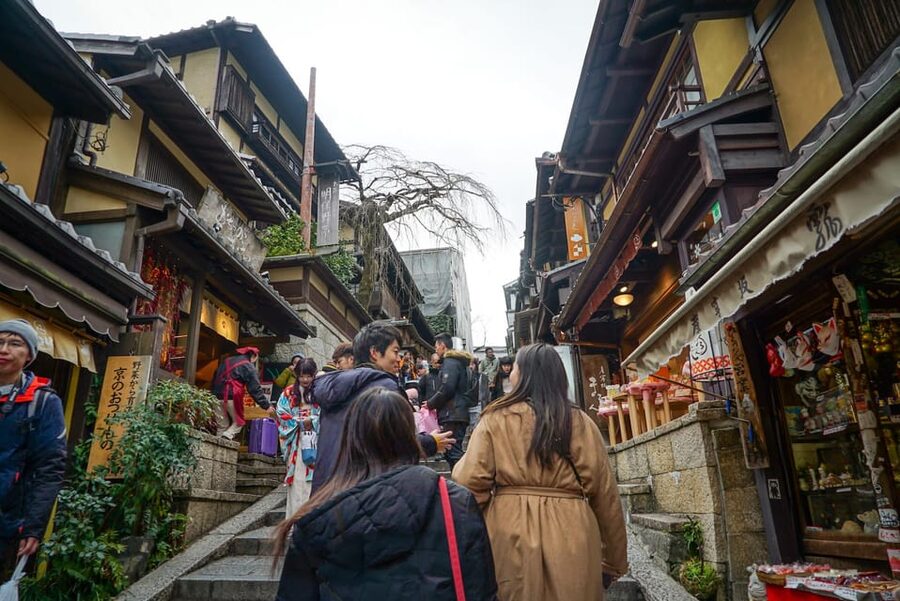
Walking through Kiyomizuzaka
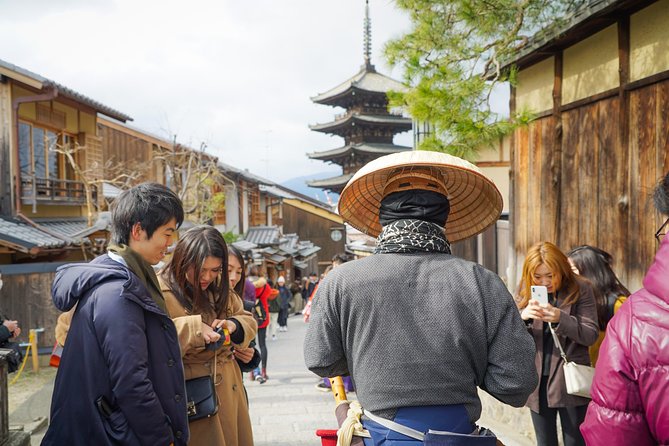
From Yasaka Shrine, the route heads toward Kiyomizuzaka, the approach to Kiyomizu-dera. This is one of the most enjoyable parts of the outing because the streets offer a strong sense of old Kyoto without needing a formal museum visit.
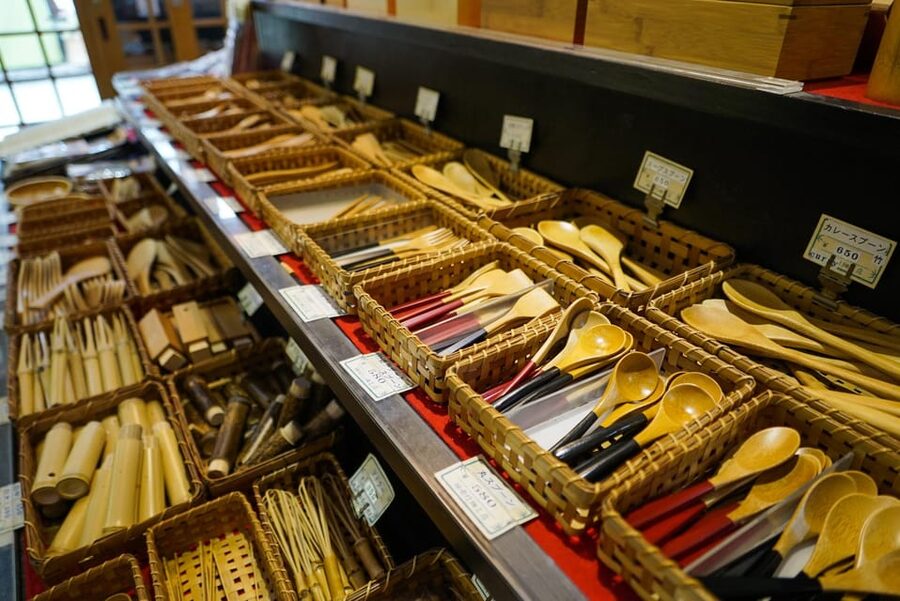
You pass teashops, sweet shops, and stores selling traditional sun-dried foods. The guide can point out what is worth tasting and help you understand the products lining the street. You may also see Maiko and Geisha moving through the area, although their appearance is not something the tour can promise.
Kiyomizuzaka is also a shopping street, so expect other people, photo stops, and a fair amount of walking. The route includes locations that are not suitable for wheelchairs or strollers. Comfortable shoes are important, and anyone with limited mobility should ask about the route before booking.
I like this part because it gives the famous temple a better setting. Instead of arriving at Kiyomizu-dera as if it were an isolated monument, you approach through the shops and lanes that have long served people visiting the temple.
The color and symbolism of Yasaka Koshin-do
Yasaka Koshin-do is a small but memorable stop. Its most noticeable feature is the collection of colorful balls hanging from the ceiling, each connected with a written wish. The bright colors make this one of the easiest places in Kyoto to photograph.
The stop also gives your guide a chance to explain Japanese religious culture in a more approachable setting. You can look at a compact sacred site, hear about the customs connected with it, and then continue on foot rather than spending the whole morning inside one large temple complex.
This is a good example of the tour’s balance. Kiyomizu-dera is grand and famous, while Yasaka Koshin-do feels smaller and more visually playful. You get both a major religious landmark and a less imposing place that many visitors might pass without understanding.
More Temple Walking Tours in Kyoto
- Kyoto: Fushimi Inari Taisha Shrine Walking Tour with Guide
★ 4.8 · 18 reviews - Kyoto: Private Walking Tour with Kiyomizu Temple & Gion
★ 5.0 · 7 reviews
Tasting Kyoto along the way
The tour includes stops at several eateries for local snacks. A few samplings are included, while any extra food and drinks are your responsibility. Bring cash so you can buy something that catches your eye.
Do not book this expecting a full meal. The food is better viewed as a series of small tastes that help you notice Kyoto’s street culture. Your guide recommends local foods, which is useful when unfamiliar sweets or dried foods fill the shop displays.
Dietary needs require care. The food is prepared in kitchens that do not belong to MagicalTrip, so allergy-free preparation and substitutions cannot be guaranteed. Tell the provider about allergies or dietary requests at least one day before the tour. The guide will make every effort to provide alternatives at other stops, but some substitutions may not be possible.
That policy is worth taking seriously. If you have a severe allergy, this may not be the right food experience unless you can confirm the arrangements in advance.
Entering Kiyomizu-dera, Kyoto’s Water Temple
Kiyomizu-dera is the main sight on the route. The temple is a UNESCO World Heritage Site and one of Japan’s best-known religious landmarks. Its name means Water Temple, a reference to the Otowa Waterfall below the main complex.
The wooden platform is the visual centerpiece. From here, you can look across trees and toward Kyoto in the distance. Cherry trees make the setting especially appealing in spring, while maple trees bring strong color in autumn. The view changes with the season, but the design of the temple platform gives you a clear sense of how the building relates to the hillside.
A guide adds value here because the temple is large and full of details that are easy to pass without explanation. You can ask about the site’s religious role, the connection with the waterfall, and the customs practiced by visitors.
The grounds can be busy, and the tour does not promise a quiet visit. The wooden platform is also a popular photo location, so your time there may include waiting for a clear view. That is part of the trade-off for visiting one of Kyoto’s most famous temples.
Drinking from the Otowa Waterfall
The route continues to the Otowa Waterfall, where you can drink its clear water. The water is traditionally linked with good luck, which gives the stop a simple ritual quality.
There may be a line, so do not expect to walk straight up every time. The wait is also one reason the timing of the day matters. If your guide is keeping the group on schedule, listen carefully to instructions about how long you have at the waterfall and where to regroup.
This is a small part of the tour, but it helps connect the name Kiyomizu-dera with the actual site. You are not only looking at a temple called Water Temple. You are visiting the water source that gives the place its identity.
Making matcha in a traditional tea setting
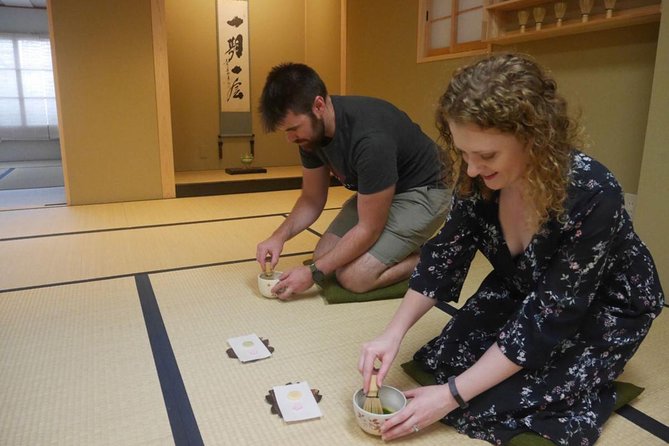
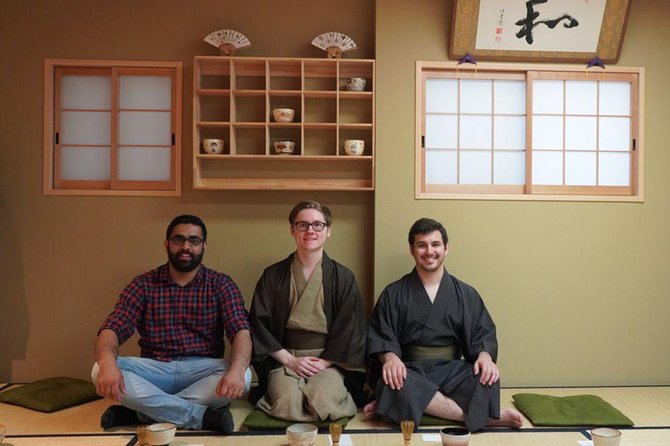
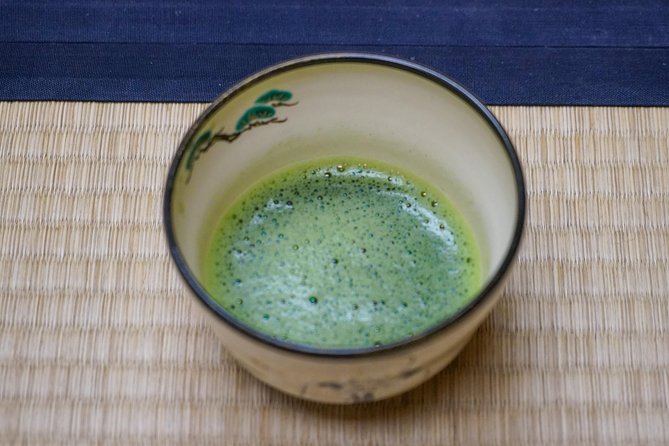
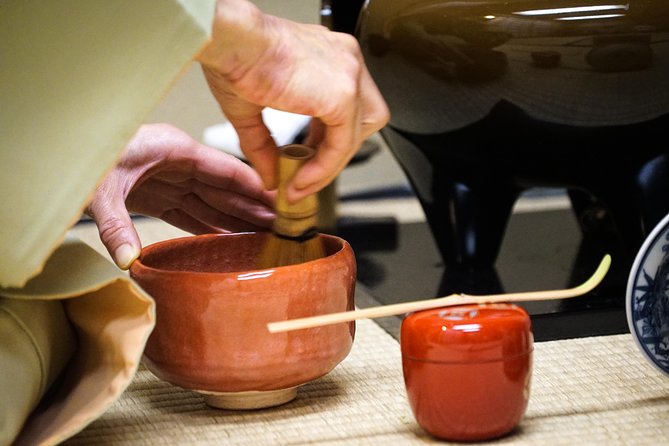
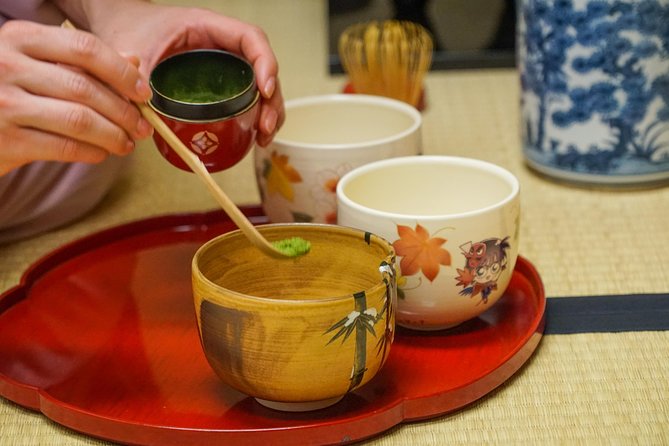
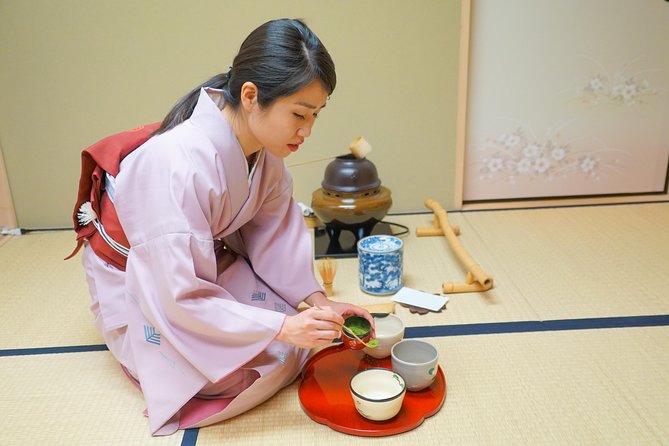
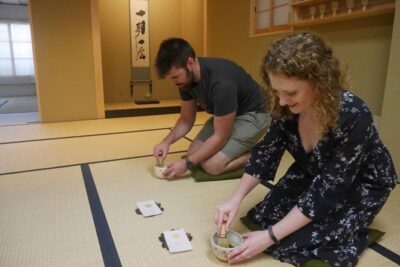
The tea ceremony is the most hands-on part of the experience. You enter a sophisticated room with tea utensils, including a bamboo whisk and distinctive tea bowls. The setting gives you a quieter contrast to the busy temple streets.
You learn the steps involved in preparing traditional matcha, then make your own green tea. Japanese sweets accompany the tea, and the guide explains some history and phrases connected with the ceremony.
I find this more useful than a demonstration alone. When you hold the whisk and follow the process yourself, you pay attention to the small movements and the order of the steps. You also gain a clearer idea of why the ceremony places such importance on utensils, presentation, and careful action.
The tea portion is also where the tour’s schedule needs the most attention. Confirm when and where it takes place before the walking portion gets underway. If you are leaving Kyoto that day, missing it could be difficult to correct, even though the guide may try to help arrange another session.
The guide makes the difference
A local guide can turn this route from a checklist into a connected story. The guide explains the shrines and temples, introduces local foods, teaches a few Japanese phrases, and takes photos during the tour.
Akiko received particular praise for being helpful and kind. She was also described as handling a scheduling problem with care when the tea ceremony was missed. Another guide was newer to the route and somewhat nervous, but still offered useful information about the temples and shrines.
That detail gives you a fair picture of the guiding style. You may get a polished expert, or you may get someone still growing comfortable with the route. The tour’s value rests partly on how clearly the guide manages the timing and explains the cultural details.
One gap to keep in mind is Gion. The walk passes through or near the area, but you may not receive much detailed background about its culture and history. If Gion is a major reason for booking, you may want a separate walking tour focused on that district.
Heat, hills, and practical comfort
Kyoto summers are hot and humid. Bring water and wear a hat, especially because the route includes outdoor walking, temple grounds, and streets where shade may be limited.
The itinerary includes slopes, uneven areas, and places that are not accessible to wheelchairs or strollers. Children under six cannot join. The tour is conducted in English.
Because the activity lasts three hours, it is long enough to feel substantial but short enough to fit before dinner or another Kyoto sight. You still need to plan for walking at a steady pace. If you want a slow photographic wander with lots of time in every shop, this organized route may feel brisk.
The cancellation policy is traveler-friendly: you can cancel up to 24 hours in advance for a full refund. You can also reserve now and pay later, which helps if your Kyoto schedule is still changing.
Who should book this experience?
I would choose this tour if you are visiting Kyoto for the first time and want a guided introduction to eastern Kyoto. It suits you especially well if you want a major temple, a small colorful shrine, street food, and a cultural activity in one morning or afternoon.
It is also a good fit for visitors who want help with the tea ceremony. Making matcha yourself is more engaging than simply watching a formal presentation, and the guide provides enough explanation to make the ritual easier to follow.
You may want a different plan if you need a fully accessible route, have strict dietary restrictions, or prefer to explore at your own pace. It is also not ideal if your main interest is detailed Gion history, since the tour gives more attention to Kiyomizu-dera and the surrounding streets.
Should you book the Kyoto tea ceremony and temple walk?
Book it if you value variety, guidance, and hands-on culture more than long stretches of free time. For $63, you receive temple admission, a tea ceremony, small food samplings, photos, and three hours with an English-speaking local guide. That is a sensible package for a first look at Kyoto’s eastern temple district.
Before booking, mark the meeting point clearly, arrive early, bring cash, and confirm the tea ceremony schedule. If you can handle some walking and accept that food substitutions are limited, this tour offers a friendly and well-rounded introduction to Kiyomizu-dera and the streets around it.
FAQ
Where does the tour begin and end?
The tour begins in front of the statue at the Yasaka Shrine Nishiromon Gate. It ends back at the same meeting point.
How early should I arrive?
Arrive 10 minutes before the activity begins. The tour starts promptly.
Is the Kiyomizu-dera entrance fee included?
Yes. The entrance fee to Kiyomizu-dera is included in the tour price.
Is the tea ceremony included?
Yes. The tour includes a traditional tea ceremony with Japanese sweets, tea utensils, an explanation of the steps, and the chance to make your own matcha.
Are food and drinks included?
A few samplings are included. Extra food and drinks are available for purchase and are not included, so bring cash.
Can children, wheelchairs, or strollers join?
Children under six are not allowed. Some locations on the route are not accessible by wheelchair or stroller.
More Fushimi Inari Shrine Tours in Kyoto
- Osaka/Kyoto:Kinkakuji,Arashiyama,FushimiInariShrine,NaraPark
★ 4.1 · 1,596 reviews - Osaka/Kyoto: Arashiyama, Nara & Fushimi Inari Shrine w/Lunch
★ 4.4 · 754 reviews - Kyoto: 3-Hour Fushimi Inari Shrine Hidden Hiking Tour
★ 4.9 · 270 reviews - Kyoto: Fushimi Inari Shrine and Tofukuji Temple E-Bike Tour
★ 5.0 · 75 reviews
Just added around Kyoto
- Kyoto:Kiyomizu-dera Temple Rent a kimono and ride a rickshaw★ 4.8 · 7 reviews
- Kyoto: Kiyomizudera, Sanjusangendo, Ginkakuji and Higashiyama.★ 5.0 · 3 reviews
- Kyoto: Shakyo & Matcha in Historic Temple Garden★ 5.0 · 4 reviews
- KYOTO: Tempio Kiyomizu Pagode Gion “Geisya” (Guida Italiana)★ 4.7 · 17 reviews
- Kyoto:Quiet Arashiyama and Sagano Temples★ 4.8 · 5 reviews
- Kyoto: Kifune Shrine and the Sacred Kifune Valley Day Trip★ 4.4 · 4 reviews
- KYOTO: Golden Pagoda, Bamboo Forest, Arashiyama (Italian)★ 4.9 · 5 reviews
- KYOTO: Tour guidato tra i tesori della città (in italiano)★ 5.0 · 5 reviews
Fushimi Inari Shrine Tours, compared.
Osaka/Kyoto:Kinkakuji,Arashiyama,FushimiInariShrine,NaraPark
Read our review →
Osaka/Kyoto: Arashiyama, Nara & Fushimi Inari Shrine w/Lunch
Read our review →
Kyoto Tea Ceremony & Kiyomizu-dera Temple Walking Tour
Read our review →Full Day Kyoto Tour : Bamboo Forest, Golden Temple, Fushimi Inari
Read our review →
Fushimi Inari Shrine and Tofukuji Temple E-Bike Tour
Read our review →
Early Morning Fushimi Inari Shrine – Beat the Crowds
Read our review →Browse the lists this tour appears in