
Review · TOKYO
From Asakusa: Old Tokyo, Temples, Gardens and Pop Culture
Tokyo tells its story street by street. This four-hour East Tokyo walk connects Senso-ji, market lanes, anime shops, and an Edo-era garden, giving you a useful picture of how the city changed without leaving its older roots behind. I like the sharp contrast between Asakusa’s temple district and Akihabara’s pop-culture streets, and I like that local train rides and standard admissions are covered.
The small group is limited to eight people, which should make it easier to ask questions and keep the guide close in crowded areas. Guides including Taka, Toru, Takee, and Michelle have earned praise for being warm, attentive, and well informed. The main drawback is the pace: six major stops in four hours means you get an introduction rather than a long visit at each place, and the route includes plenty of walking.
Key points to know before booking
- Asakusa sets the historical tone: Start at Kamiya Bar and learn how Senso-ji shaped one of Tokyo’s oldest districts.
- Ueno and Okachimachi feel more local: Street stalls, small shops, and Ameya-Yokocho show a less polished side of the city.
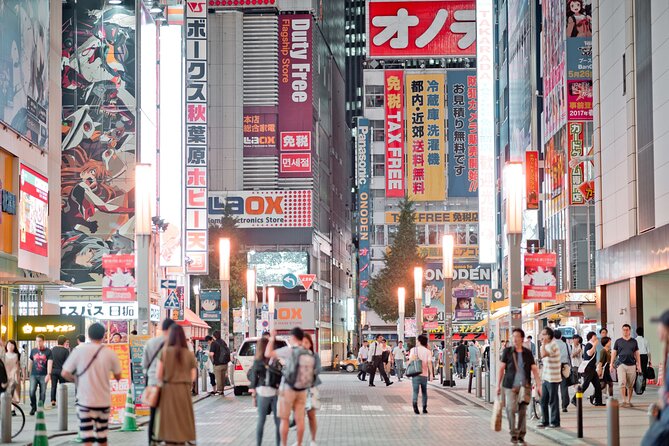
- Akihabara is more than electronics: The tour explains how Electric Town developed into a center for anime, manga, gaming, and cosplay.
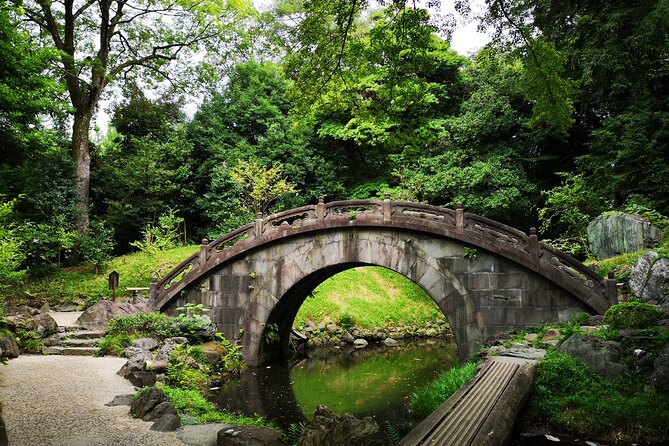
- Koishikawa Korakuen provides a quiet break: The traditional garden offers seasonal scenery after several busy neighborhoods.
- The $68 price covers useful extras: Guide costs, admissions, and local train rides are included, but food, drinks, and Tokyo National Museum admission are not.
- The format suits curious first-time visitors: English guiding, a maximum of eight participants, and wheelchair accessibility make the outing practical for many people.
Why this East Tokyo route works
Many Tokyo tours stick to famous sights in isolation. This one is more useful because it links neighborhoods with different personalities and explains how they fit together.
You begin in Asakusa, where temple tradition and old shopping streets still shape the visitor experience. Then you pass through Ueno and Okachimachi, districts known for markets, museums, and public life. Akihabara brings a sharp change in mood, while Koishikawa Korakuen gives you a final look at Japanese garden design.
That contrast is the point. You are not simply collecting photo stops. You are watching Tokyo shift from religious center to market town, from department-store and electronics district to pop-culture capital, then back to carefully planned nature.
I also like the practical size of the group. With no more than eight participants, the guide can usually explain details without shouting to a large crowd. The four-hour length works well if you want orientation early in a Tokyo visit, though you should not expect lengthy museum visits or much free time for shopping.
More Meiji Shrine and Senso-ji Tours in Tokyo:
- Tokyo: Asakusa Walking Tour with Sensoji Temple Visit
★ 4.8 · 1,583 reviews - Tokyo Panoramic 1 Day: Meiji Shrine, Asakusa, Odaiba and SKYTREE®
★ 4.5 · 1,222 reviews - Tokyo: Asakusa and Tokyo’s Oldest Temple Senso-ji Tour
★ 4.9 · 352 reviews
Starting in Asakusa at Senso-ji
Meet at Kamiya Bar in Asakusa, at 1-chome-1-1 Asakusa. The meeting point puts you in a district with a long connection to entertainment, commerce, and religious life before the walk even begins.
The Asakusa portion lasts about 45 minutes, followed by roughly 15 minutes focused on Senso-ji itself. Your guide explains the temple’s place in Japanese Buddhism and how this area developed around it.
Senso-ji is one of the most recognizable religious sites in Tokyo, but the value of a guide is helping you read the setting beyond the main gate and camera-ready view. You can ask about the temple’s age, its role in the neighborhood, and the customs you see around the grounds.
Nakamise-dori, the shopping street leading toward the temple, adds another layer. It is a place for souvenirs and snacks, but it also shows how religious sites have long drawn commerce around them. The tour presents Asakusa as a living district, not a preserved museum piece.
One useful detail is the connection to Tokyo’s transport story. About a century ago, Asia’s first subway linked Asakusa and Ueno. That fact helps explain why the next part of the tour makes sense geographically and historically.
Expect crowds around Senso-ji, especially at popular times. The guide can help you understand the area, but you will still be walking through a busy public space. Comfortable shoes are essential, and you should keep personal shopping brief if you want to stay with the group.
Ueno and Okachimachi show Tokyo at street level
The route then moves toward Ueno for about 25 minutes of guided sightseeing, followed by another 25 minutes in Okachimachi. Local train rides are included in the tour’s standard costs, so you do not need to handle each small transport expense separately.
Ueno is known for museums, cherry blossoms, and open public spaces. The tour does not include admission to Tokyo National Museum, so this is primarily a neighborhood visit rather than a museum tour. If you choose to enter the museum, that cost is extra and would likely require more time than this compact outing allows.
Okachimachi provides a different view. The area has long been associated with street vendors, small shops, and food sellers. Ameya-Yokocho is the key draw, with its market atmosphere and dense mix of businesses.
I like this stop because it avoids the polished version of Tokyo that dominates many first visits. Here, you can see commerce taking place at a human scale, with stalls and shops packed closely together. The point is not luxury shopping. It is the everyday energy of buying, selling, eating, and moving through a crowded market street.
The tradeoff is that the scene can feel hectic. Pavements may be crowded, and you will not have unlimited time to stop at each stall. If you want to sample food or shop seriously, ask the guide how much time is available. Food and drinks are not included, so budget separately for anything you purchase.
Koishikawa Korakuen brings an Edo-era pause
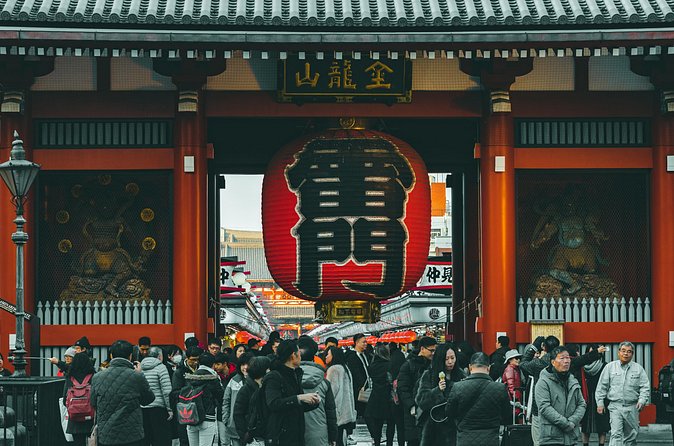
The visit to Koishikawa Korakuen lasts around 45 minutes and includes scenic views along the way. It is a welcome change after the tight streets of Asakusa, Ueno, and Okachimachi.
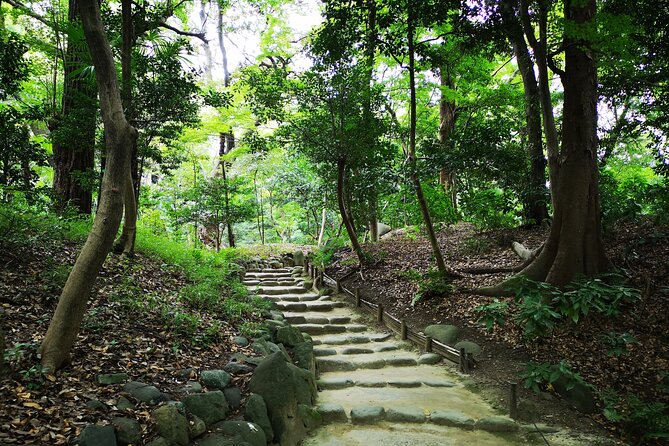
This traditional Japanese garden is presented as a link to the Edo period. Its paths and arranged views show a different side of Tokyo’s past, one built around controlled scenery, water, plants, and quiet movement rather than trade or crowds.
Season matters here. In spring, cherry blossoms shape the experience. In autumn, the garden takes on warmer colors. The supplied details do not promise a particular seasonal display, so your view will depend on your travel dates, but the garden is designed to offer something in every season.
I see this as one of the tour’s most valuable stops because it gives the route breathing room. You have already heard about temples, transportation, markets, and urban change. The garden lets you consider how older ideas about beauty and space still exist inside modern Tokyo.
Do not expect a long stroll through every path. Forty-five minutes is enough for an introduction and scenic walk, but not a full garden visit at a slow pace. If you are especially interested in Japanese gardens, you may want to return independently with more time.
A few more temple visits around Tokyo worth a look
- Nikko: Kegon Falls, Lake Chuzenji & Toshogu Temple
★ 4.6 · 1,577 reviews - Tokyo: Nikko Toshogu Shrine and Kegon Waterfall Tour
★ 4.5 · 1,266 reviews - Tokyo: Zen Meditation at a Private Temple with a Monk
★ 5.0 · 510 reviews - Mt. Fuji Heritage Tour: Traditional Villages, Lakes & Shrine
★ 4.5 · 509 reviews
Akihabara explains the city’s pop-culture side
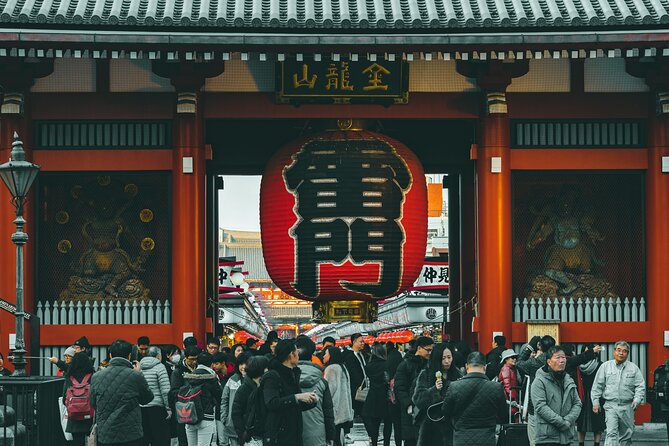
Akihabara receives about 45 minutes of guided sightseeing. It is often called Electric Town, a name tied to its long role as a center for electronics dating back to the pre-war era.
The neighborhood later developed into a major center for otaku culture, including anime, manga, gaming, and other forms of Japanese pop culture. The tour explains this shift rather than treating the area as a collection of bright signs and themed shops.
That context matters. Without it, Akihabara can seem like a loud retail district built only for fans. With an explanation of its past, you can see how electronics, hobby culture, media, and identity came together over time.
The streets may feel like a real-world manga setting, with colorful storefronts, gaming venues, and people dressed as favorite characters. Cosplay is part of the district’s public character, although the exact scene will depend on the day and time of your visit.
Forty-five minutes gives you a useful introduction, but not enough time to explore every shop. If anime, manga, or gaming is a major reason for your Japan trip, treat this stop as a guided orientation. You may want to return later on your own for shopping.
The order of the stops may also affect how you feel. Some descriptions of the experience place Akihabara before the garden, while the stated route lists Koishikawa Korakuen before Akihabara. Ask your guide at the start if the order matters to you. Either way, the contrast between modern pop culture and a traditional garden is one of the route’s strongest ideas.
What the guide adds to the experience
This tour depends heavily on the guide. The neighborhoods are easy enough to visit independently, but the value comes from knowing what connects them.
Taka was praised for giving detailed explanations around Asakusa. Takee was described as engaging, informative, and fun with children. Toru was remembered for being exceptionally kind and available, while Michelle was praised for professional guiding and fluent Italian as well as English.
Those examples suggest a friendly guiding style, but guide assignments can vary. The official language is English, so you should book expecting English commentary. The small group makes it easier to ask for clarification, especially when a temple custom, market tradition, or pop-culture reference is unfamiliar.
One especially appealing detail is the possibility of personal interaction beyond formal commentary. One family described a guide taking them to a pub and doing origami with them. That should not be treated as a guaranteed part of the tour, but it shows the sort of relaxed, human connection that can make a small-group walk memorable.
The experience also appears suitable for families, provided children can manage four hours of walking and several busy areas. Adults who prefer a fast, information-heavy introduction will likely appreciate the range. People who want long meals, extensive shopping, or quiet museum time may find the format too tight.
Is $68 a fair price?
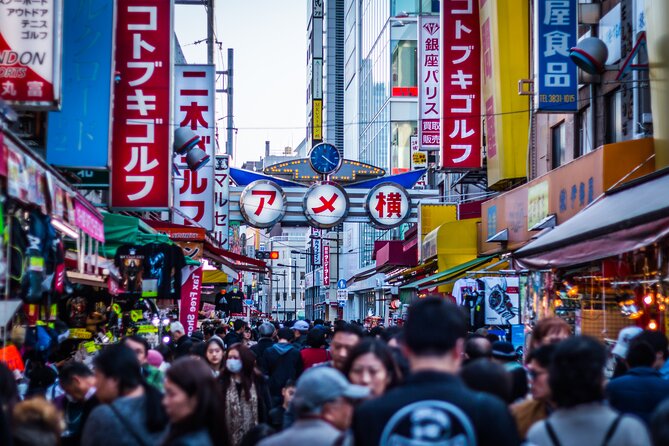
At $68 per person, the value is strongest if you plan to see these districts anyway and want help connecting them. Guide costs, standard admissions, and local train rides are included, which removes several small expenses and some route-planning work.
You are paying for interpretation as much as transportation. Asakusa, Ueno, Okachimachi, Akihabara, and Koishikawa Korakuen can all be visited independently, but it takes effort to understand their relationship and move efficiently between them.
The price is less attractive if you mainly want free time. Food, drinks, personal purchases, and admission to Tokyo National Museum cost extra. The four-hour schedule also limits how long you can stay at any one place.
For a first or second day in Tokyo, I think the price is reasonable. You get a broad introduction to East Tokyo, a small group, and a guide who can provide local context. For repeat visitors who already know these neighborhoods, booking only makes sense if you want deeper explanation or a more social walk.
Walking, access, and practical planning
Wear comfortable shoes. The tour includes multiple neighborhoods, temple grounds, market streets, a garden, and transfers by local train. Even though the route is guided, it is not a seated sightseeing trip.
The experience is listed as wheelchair accessible, which is an important plus. Still, the group passes through market areas and crowded urban streets, so you should confirm any specific mobility needs before booking.
Plan to arrive ready to start at Kamiya Bar in Asakusa. Since the route is compact, being late could mean missing the first explanation or having difficulty catching up. Keep your shopping light until the tour ends, and carry enough money for food and drinks if you want them.
Free cancellation is available up to 24 hours before the start time for a full refund. You can also reserve and pay later, which helps if your Tokyo schedule is still changing.
Who should book this East Tokyo tour?
I would recommend it most strongly to first-time Tokyo visitors who want more than a list of famous sights. You get temples, markets, transport history, pop culture, and a traditional garden in one manageable outing.
Families may appreciate the compact group and guides who can engage children. Fans of anime and gaming will like the Akihabara context, while culture-focused visitors will get more from Senso-ji and Koishikawa Korakuen than they would from a quick photo stop.
I would be more cautious if you dislike walking, want substantial free time, or plan to spend hours inside Tokyo National Museum. You may also find the pace quick if you want detailed photography at every location.
Should you book it?
Book this tour if you want a well-connected introduction to East Tokyo and value a friendly English-speaking guide. The best reason to choose it is the range: Asakusa’s temple traditions, Okachimachi’s market life, Akihabara’s modern fandom, and Koishikawa Korakuen’s quiet design all appear in one half-day.
Skip it if your priority is independent shopping or long visits at individual sights. For most first-time visitors, though, the $68 cost is fair, especially with local transport and standard admissions included. Aim for comfortable shoes, a flexible attitude, and enough time after the tour to return to the neighborhood that catches your interest most.
FAQ
How long is the Tokyo walking tour?
The tour lasts four hours.
Where does the tour meet?
The meeting point is Kamiya Bar in Asakusa, at 1-chome-1-1 Asakusa.
Which neighborhoods and sights are included?
The route includes Asakusa, Senso-ji Temple, Ueno, Okachimachi, Koishikawa Korakuen, and Akihabara.
Is the tour offered in English?
Yes. The tour includes a live English-speaking guide.
How many people can join the group?
The group is limited to eight participants.
Is the tour wheelchair accessible?
Yes, the experience is listed as wheelchair accessible.
Are admissions and local train rides included?
Guide costs, standard admissions, and local train rides during the tour are included.
Is Tokyo National Museum admission included?
No. Admission to Tokyo National Museum is extra if you choose to visit.
Can I cancel or pay later?
You can cancel up to 24 hours in advance for a full refund. Reserve now and pay later is also available.
Just added around Tokyo
- :Tokyo,Shibuya /Meiji Shrine tour in KIMONO/English-friendly★ 5.0 · 4 reviews
- Tokyo: Snow Monkey and Zenkoji Temple Day Trip In Low Price★ 5.0 · 5 reviews
- Tokyo War History Tour: Yasukuni Shrine & War Museum★ 4.5 · 6 reviews
- Tokyo: Gotokuji Culture Walk & Lucky Cat Temple Experience★ 4.9 · 5 reviews
- Tokyo: Visit 5 Shrines & Collect Goshuin on Private Tour★ 5.0 · 3 reviews
- Tokyo: Shibuya Sky, Harajuku & Meiji Shrine Highlights Tour★ 4.5 · 9 reviews
- Tokyo: Sensoji Temple & Street Food: Private Tour with guide★ 4.6 · 8 reviews
- Tokyo’s Kitchen: Tsukiji Market Food & Culture Walk★ 4.7 · 74 reviews
Meiji Shrine & Senso-ji Tours, compared.
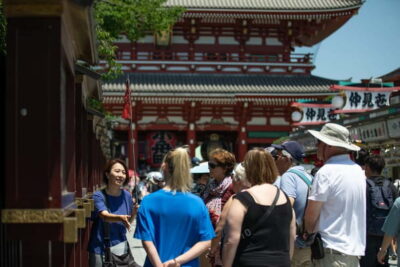
Asakusa Walking Tour with Sensoji Temple Visit
Read our review →
Tokyo Panoramic 1 Day: Meiji Shrine, Asakusa, Odaiba and SKYTREE®
Read our review →
Asakusa Senso-ji Temple and Old Tokyo Walking Tour
Read our review →
Asakusa and Tokyo’s Oldest Temple Senso-ji Tour
Read our review →
Meiji Shrine Walking Tour — Shinto & Imperial System
Read our review →
Meiji Jingu Shrine and Shinto Culture Walking Tour
Read our review →
Meiji Shrine Walking Tour — Shintoism & Imperial System
Read our review →Browse the lists this tour appears in