
Review · TOKYO
Tokyo: Harajuku Meiji Shrine to Shibuya Crossing Guided Tour
Tokyo changes character every few blocks. This two-hour walk links the calm forest setting of Meiji Jingu with Takeshita Street’s sweet-shop energy and the famous Shibuya Crossing. I like the clear cultural focus at the shrine, and I like the friendly, small-group format, limited to 10 people. The main drawback is time: two hours moves quickly, especially if you want long stops for photos or shopping.
The meeting point is easy to identify at JR Harajuku Station’s west exit, where the guide waits with a sign marked gotcha. Guides such as Shigure and Masahito have been praised for their warmth, clear explanations, and willingness to answer questions. The $78 price is reasonable if you want context and company, but less attractive if you only need directions through places you can visit on your own.
Key points at a glance
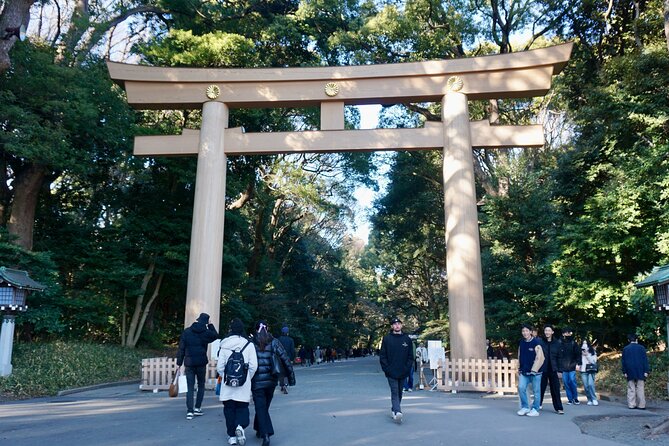
- Meiji Jingu comes first: Learn how to approach and use one of Japan’s best-known Shinto shrines, including an omikuji fortune paper.
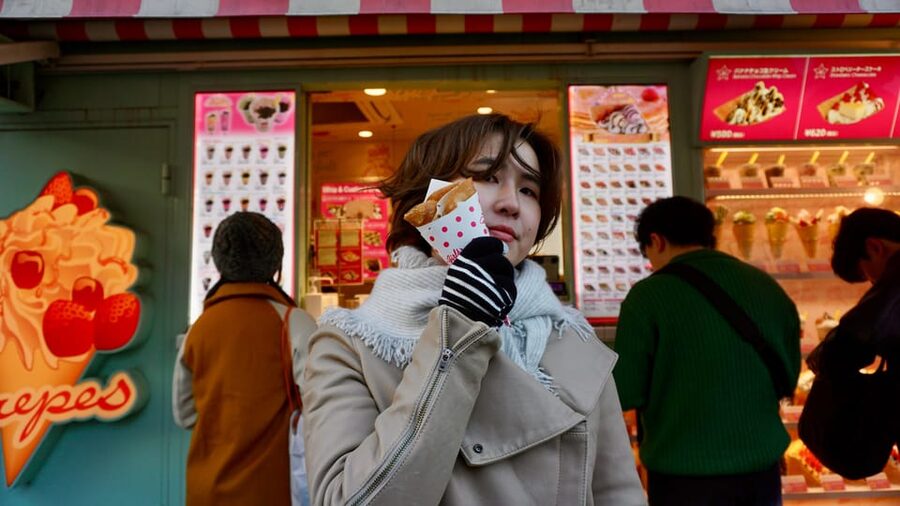
- Harajuku brings the snack stop: Walk along Takeshita Street and try a Japanese-style crepe, with the crepe cost not listed among the inclusions.
- A compact route links three Tokyo moods: Sacred woodland, youth fashion street, and high-speed Shibuya all fit into one short walk.
- Small groups keep questions possible: With no more than 10 participants, you have a better chance to speak with the guide than on a large bus tour.
- Shibuya supplies the grand finale: Take group photos at Shibuya Scramble Crossing, then see the crossing from a scenic viewing point.
- Hachiko adds a human story: The guide explains the sad tale behind the statue and its connection to loyalty.
Starting at Harajuku Station’s west exit
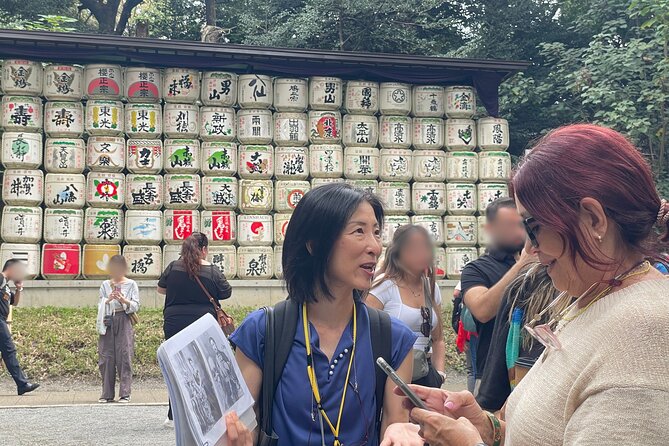
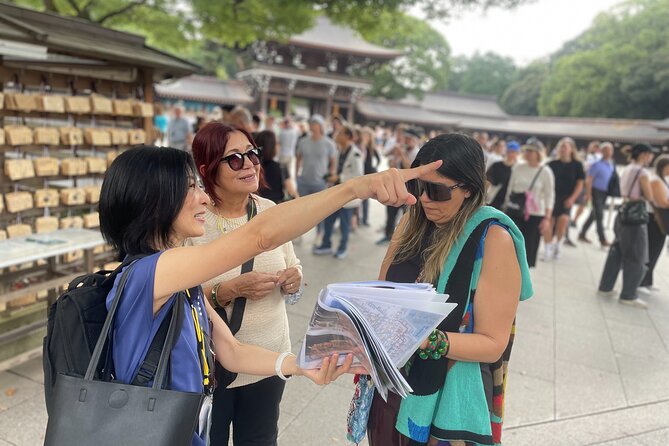
Your first task is simply finding the guide. Meet at the west exit of JR Harajuku Station, where the guide holds a sign marked gotcha. That detail matters because Harajuku has several busy entrances and the station area can feel confusing when you are still getting used to Tokyo.
The tour is conducted in English and lasts two hours. It is a walking experience, so comfortable shoes and a willingness to keep moving will help. The exact starting times depend on availability, and the route ends in the Shibuya area rather than returning you to Harajuku.
A group capped at 10 people gives this experience a more personal feel. It does not guarantee a private tour, but it should make it easier for you to ask about customs, food, shrine etiquette, or places to visit later. The strongest praise for guides Shigure and Masahito centers on their friendly manner and detailed answers, which is exactly what you want on a short cultural walk.
More Meiji Shrine and Senso-ji Tours in Tokyo:
- Tokyo: Asakusa Walking Tour with Sensoji Temple Visit
★ 4.8 · 1,583 reviews - Tokyo Panoramic 1 Day: Meiji Shrine, Asakusa, Odaiba and SKYTREE®
★ 4.5 · 1,222 reviews - Tokyo: Asakusa and Tokyo’s Oldest Temple Senso-ji Tour
★ 4.9 · 352 reviews
Entering Meiji Jingu and learning shrine etiquette
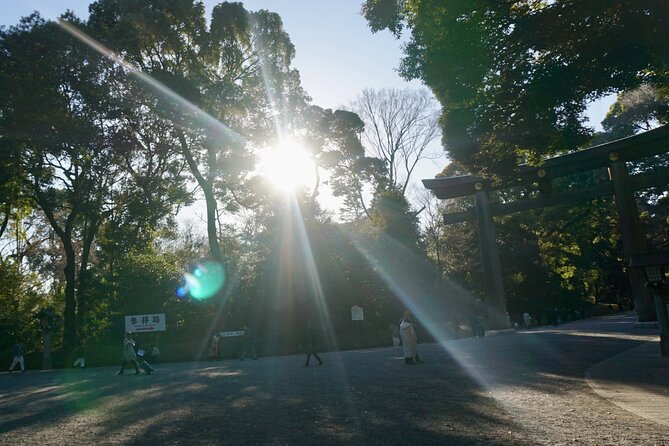
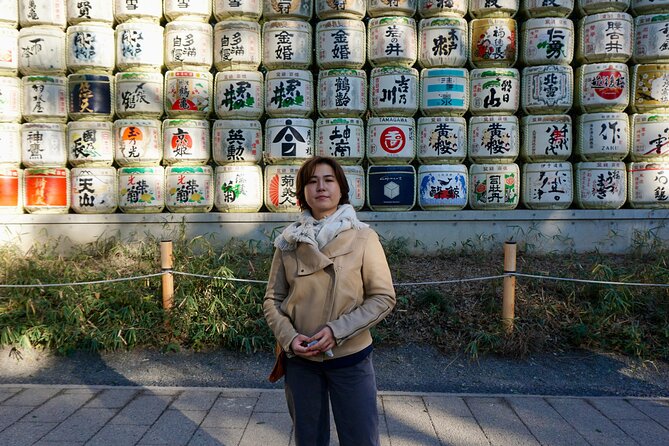
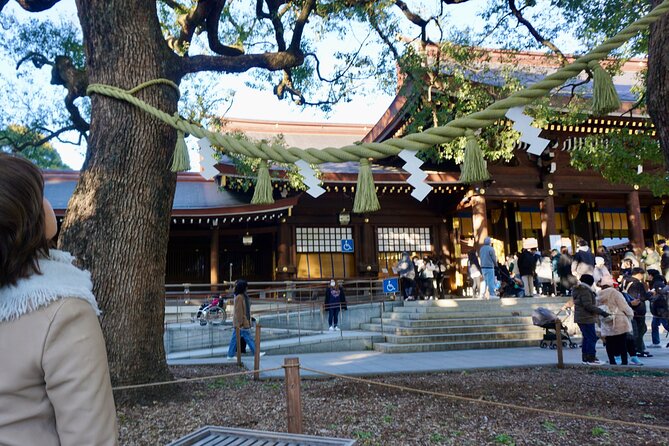
Meiji Jingu is the serious cultural heart of the tour. The shrine is dedicated to Emperor Meiji and Empress Shoken, and it is known as the most visited shrine in Japan for Hatsumode, the first shrine visit of the New Year. Even outside that holiday period, the setting gives you a clear break from Tokyo’s traffic, signs, and crowded shopping streets.
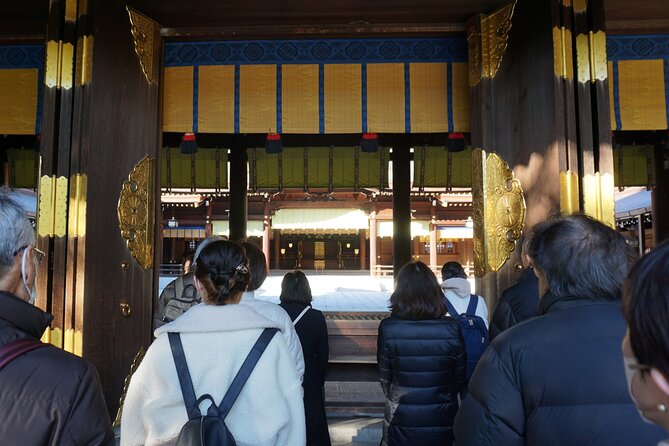
The route introduces you to the shrine’s origins and explains how to visit. That guidance is valuable because a shrine visit is not just a quick photo stop. You will have a chance to learn the basic customs, make a wish, and handle the visit with more understanding than you would by walking through alone.
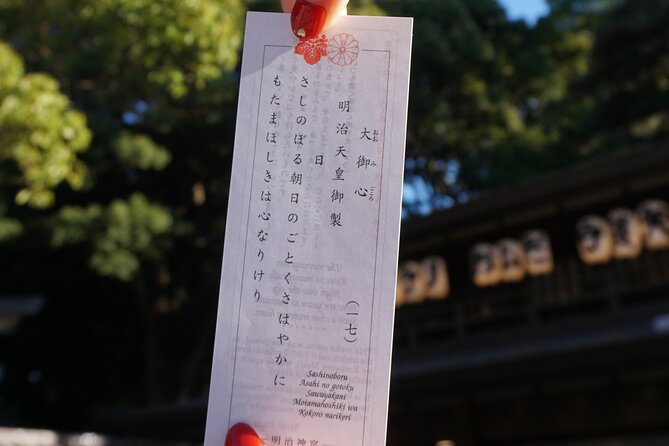
The omikuji fortune paper is included in the tour fee. This is a small but useful inclusion, since it gives you a hands-on part of the visit rather than only a talk from the guide. The experience is not described as a religious ceremony, so you should think of it as a cultural introduction with space for personal reflection.
I especially like this opening because it gives the rest of the route some contrast. You begin among trees and traditional customs, then move toward Harajuku’s fashion and food scene. That change is one of the tour’s main strengths.
Do keep your expectations in check. Meiji Jingu is famous, and popular places can feel busy, especially around major holiday periods. The tour promises an explanation of the shrine and how to visit, not an extended private meditation or an expert-level lecture in Japanese history.
Takeshita Street and the Japanese crepe stop
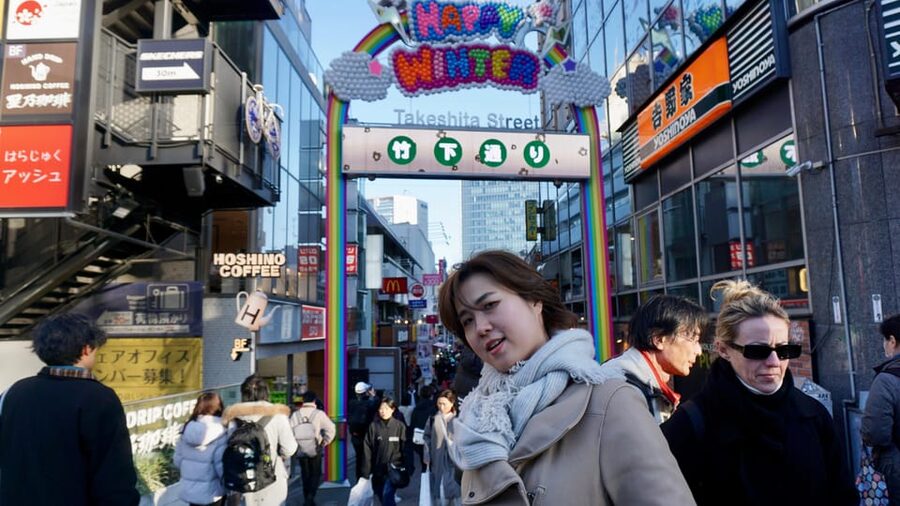
From the shrine, the experience shifts into modern Harajuku and Takeshita Street. This is where the route becomes lighter and more playful. The street is known for youth fashion, colorful shops, and Japanese-style crepes, making it a natural place to see a very different side of Tokyo.
The crepe stop is a highlight for anyone who enjoys trying local versions of familiar foods. Japanese crepes are often presented as carefully rolled treats with sweet fillings, and the guide can help place the snack within Harajuku’s popular food culture. The tour information says you will savor a crepe, but the price of the crepe is not listed as included, so plan to pay for it separately.
This is not a long food tour. You should treat the crepe as one enjoyable stop rather than expect several tastings or a detailed lesson in Japanese cooking. The short duration means you may have only limited time to browse Takeshita Street as well.
That can be a benefit. If you are new to Tokyo, a guide helps you get your bearings quickly without turning the morning into a shopping expedition. You can see the street’s character, try its signature snack, and continue toward Shibuya before the route loses focus.
It can also be a limitation for shoppers. If you want to enter many stores, compare clothes, or search for specific souvenirs, two hours will not leave much spare time. I would book this walk for orientation and atmosphere, not for serious shopping.
Walking toward Shibuya Crossing
The route then continues on foot toward Shibuya. The tour does not list a separate transport segment, so you should expect the movement between stops to be part of the walking experience. That makes the route feel connected, but it also means the pace matters.
Your guide’s role here is less about formal sightseeing and more about keeping the group together, answering questions, and helping you reach the key stops. A prior participant praised the pace as just right, while others highlighted the guides’ patience and personal attention. Those are useful qualities on a short route with several distinct areas.
As you move from Harajuku toward Shibuya, the experience shifts again. The calm atmosphere of Meiji Jingu gives way to Tokyo’s modern street life. You are not simply checking off three unrelated sights. You are watching the city change from traditional shrine culture to youth-oriented Harajuku and then to one of Japan’s most recognizable urban scenes.
You should not expect a quiet walk or a hidden side of Tokyo at this point. The appeal is the opposite: this is the public, energetic city that appears in films, photographs, and first-time Tokyo plans. The guide helps give those familiar images some local context.
A few more temple visits around Tokyo worth a look
- Nikko: Kegon Falls, Lake Chuzenji & Toshogu Temple
★ 4.6 · 1,577 reviews - Tokyo: Nikko Toshogu Shrine and Kegon Waterfall Tour
★ 4.5 · 1,266 reviews - Tokyo: Zen Meditation at a Private Temple with a Monk
★ 5.0 · 510 reviews - Mt. Fuji Heritage Tour: Traditional Villages, Lakes & Shrine
★ 4.5 · 509 reviews
Hachiko’s sad story and the meaning behind the statue
Before the tour ends, you visit the Hachiko statue. The guide explains the sad story behind this famous symbol of loyalty, adding a personal and emotional note to what could otherwise be a quick photo stop.
Hachiko is easy to treat as just another meeting point in Shibuya. Hearing the story gives the statue more weight. You are not only photographing a popular landmark; you are learning why it became associated with devotion and why people continue to gather there.
The stop also works well for groups. Hachiko is a clear landmark, and the guide can use it as a reference point while explaining the surrounding area. If you plan to return to Shibuya later, knowing this meeting spot may also help you get oriented.
The information provided does not promise a long historical talk or a special access arrangement. Expect a concise explanation suited to the tour’s tight schedule. That is enough for a meaningful introduction, but you may want a separate visit if you are especially interested in Hachiko’s full story.
Photographing Shibuya Scramble Crossing
The final major stop is Shibuya Scramble Crossing, where the group takes photos against the city scene. This is the tour’s biggest visual payoff. When the signals change, people move across the intersection from several directions, creating the famous wall of motion that makes Shibuya instantly recognizable.
The guide takes you to a scenic vantage point overlooking the crossing for the farewell. The exact viewing place is not specified, so you should not book this expecting a particular café, rooftop, or observation deck. What is clear is that the experience ends with a view of the crossing rather than simply dropping you beside it.
This final stop is especially useful if you want a group photo. Guides can help organize the moment, and the small group makes that easier than trying to gather a large crowd. Bring your camera or phone ready, since the tour will not pause forever while everyone experiments with angles.
There is a practical tradeoff here. Shibuya Crossing is famous partly because it is public and easy to visit without a guide. You can see it independently, but the tour connects it to a wider route and gives you a person to explain Hachiko, suggest photo timing, and help the group stay organized.
What the $78 price really buys you
At $78 per person, this is not a bargain-priced stroll. You are paying for a guide-led introduction to three well-known parts of Tokyo, not for admission to a major paid attraction. The listed inclusions are the tour guide and the omikuji fortune paper. The crepe is not identified as included, and no transportation or additional food is specified.
The value depends on how much help you want. If you are comfortable navigating Tokyo, reading shrine etiquette on your own, and deciding where to stand at Shibuya Crossing, you can visit the main areas without booking a tour. In that case, the price may feel high for two hours.
I see stronger value for a first visit, a short Tokyo stay, or anyone who wants cultural explanation rather than a self-guided checklist. You get a planned connection between Meiji Jingu, Takeshita Street, Hachiko, and Shibuya Crossing. You also get the chance to ask questions as you go.
The small group is important to the calculation. A 10-person limit is more useful than a large group because the guide can respond to individual interests. The praise for Shigure and Masahito focuses on warmth, detailed information, and attention to questions, all of which make a short tour feel more worthwhile.
You should also value the flexible booking terms. You can cancel up to 24 hours in advance for a full refund, and the reserve-now, pay-later option lets you hold a place without paying at once. These terms do not change the tour itself, but they reduce the risk of fitting it into a changing Tokyo schedule.
Who should book this two-hour walk
I would recommend this tour to first-time Tokyo visitors who want a simple introduction to Harajuku and Shibuya. It suits you especially well if you enjoy mixing cultural explanation with food, photographs, and a few famous city sights.
It is also a good choice for solo visitors or couples who want company without joining a very large group. The guide-led format can make a new city feel less daunting, and the small group gives you a natural way to meet other people during the walk.
Families may enjoy the variety, though the limited time means the pace could feel brisk if young children need frequent breaks. Food-focused visitors should remember that the crepe is one stop, not a full tasting tour. Dedicated shoppers may prefer to visit Takeshita Street independently, when they can spend as long as they like.
This tour is less suitable if you have already visited Meiji Jingu and Shibuya several times, want a private experience, or prefer to explore at your own speed. It is also not the right choice if you want a long shrine study, an extended food tour, or a deep explanation of every neighborhood along the route.
Final verdict: a useful first look at Tokyo
I would book this experience when I wanted a friendly cultural orientation with strong photo opportunities. Meiji Jingu gives the tour substance, Takeshita Street adds a fun snack stop, and Shibuya Crossing provides the memorable finish.
The main caution is the combination of price and duration. Two hours is enough for a focused introduction, but not enough for slow shopping, lengthy shrine contemplation, or many food stops. At $78, the guide’s quality matters a great deal, and the warm, helpful style associated with guides such as Shigure and Masahito is the reason this short route earns its strongest praise.
Book it if you want context, a manageable group, and a clean route through three very different Tokyo scenes. Skip it if you already know the area or prefer to spend the same time exploring independently.
FAQ
Where does the tour meet?
The meeting point is the west exit of JR Harajuku Station. The guide waits there with a sign marked gotcha.
How long does the experience last?
The tour lasts two hours.
What language is the tour conducted in?
The live tour guide speaks English.
How large is the group?
The group is limited to 10 participants.
Is the omikuji fortune paper included?
Yes. The omikuji fee is included in the tour.
Is the Japanese crepe included in the price?
The provided tour details do not list the crepe as an included item, so you should plan for it to cost extra.
Does the tour visit Meiji Jingu?
Yes. Meiji Jingu is the first major stop, and the guide explains its origins and how to visit.
Can I cancel the booking for a refund?
Yes. You can cancel up to 24 hours in advance for a full refund.
Just added around Tokyo
- :Tokyo,Shibuya /Meiji Shrine tour in KIMONO/English-friendly★ 5.0 · 4 reviews
- Tokyo: Snow Monkey and Zenkoji Temple Day Trip In Low Price★ 5.0 · 5 reviews
- Tokyo War History Tour: Yasukuni Shrine & War Museum★ 4.5 · 6 reviews
- Tokyo: Gotokuji Culture Walk & Lucky Cat Temple Experience★ 4.9 · 5 reviews
- Tokyo: Visit 5 Shrines & Collect Goshuin on Private Tour★ 5.0 · 3 reviews
- Tokyo: Shibuya Sky, Harajuku & Meiji Shrine Highlights Tour★ 4.5 · 9 reviews
- Tokyo: Sensoji Temple & Street Food: Private Tour with guide★ 4.6 · 8 reviews
- Tokyo’s Kitchen: Tsukiji Market Food & Culture Walk★ 4.7 · 74 reviews
Meiji Shrine & Senso-ji Tours, compared.
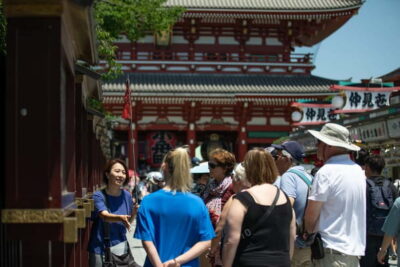
Asakusa Walking Tour with Sensoji Temple Visit
Read our review →
Tokyo Panoramic 1 Day: Meiji Shrine, Asakusa, Odaiba and SKYTREE®
Read our review →
Asakusa Senso-ji Temple and Old Tokyo Walking Tour
Read our review →
Asakusa and Tokyo’s Oldest Temple Senso-ji Tour
Read our review →
Meiji Shrine Walking Tour — Shinto & Imperial System
Read our review →
Meiji Jingu Shrine and Shinto Culture Walking Tour
Read our review →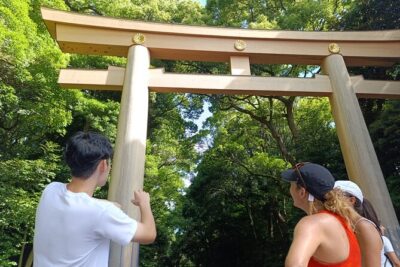
Meiji Shrine Walking Tour — Shintoism & Imperial System
Read our review →Browse the lists this tour appears in