
Review · JAPAN
Try Mindful Calligraphy Near Kanazawa’s Ninja Temple
Brush, ink, and one quiet hour. I like the real classroom setting, where you practice beside an instructor rather than watch a staged demonstration, and I love that your finished work goes directly onto a scroll or folding fan. The old house adds atmosphere, while patient English guidance makes the lesson approachable.
The main limitation is time. One hour moves quickly, especially if you want to practice several characters or make more than one final piece. Still, at $44 per person, this is a fairly priced creative break, provided you are happy with one carefully made souvenir.
- A working calligraphy school: You practice in an actual classroom, with local children sometimes attending on Thursday and Saturday afternoons.
- A 100-year-old setting: The traditional house gives the lesson a sense of place that a modern craft studio cannot match.
- Your choice of word: You select a word you like, learn its meaning, and turn it into a personal artwork.
- Patient English support: Naomi, Daiki, and the teaching team are praised for calm, friendly instruction.
- A useful location: The studio is at 1-1-26 Nomachi, near a Kanazawa Loop Bus stop and close to the city’s Ninja Temple area.
- A mindful souvenir: You leave with work made by your own hand, not a mass-produced keepsake.
Why This Calligraphy Class Feels Different
Kanazawa offers plenty of polished attractions, but this experience gives you something quieter: a brush, a sheet of practice paper, and time to pay attention.
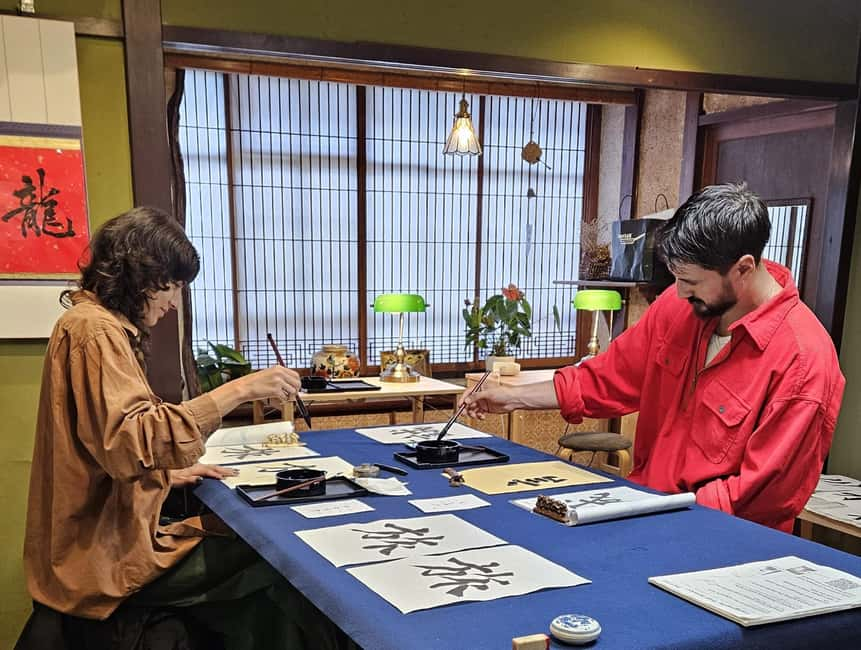
The class takes place at Culture Lab Nomachi, in a traditional house said to be about 100 years old. Calligraphy works are visible from outside, so you should be able to spot the building without much trouble. That small detail matters after a day of walking unfamiliar streets.
I like the fact that this is not presented as a performance. You are not simply watching someone produce a perfect character while you clap politely. You learn how the tools work, try basic strokes, make mistakes, and then choose how to use what you have learned.
The setting also helps. A historic Japanese house gives the hour some texture, but the activity itself remains the main event. You are there to work, not just admire the building.
Arriving Near Kanazawa’s Ninja Temple Area
The address is 1-1-26 Nomachi, Kanazawa, Ishikawa 921-8031. A Kanazawa Loop Bus stop is nearby, making public transport a practical choice.
You should look for calligraphy displayed outside the building. That visual clue is more useful than a small sign in Japanese, especially if you arrive during a busy sightseeing day and need to get your bearings fast.
The class is especially easy to pair with sightseeing around the Ninja Temple area. I would plan it as a calm pause before or after nearby historic sights rather than treat it as a standalone reason to cross the city. The one-hour length fits neatly into a morning or afternoon schedule.
Allow yourself enough time to arrive without rushing. Calligraphy rewards a settled mind, and hurrying through the door gives you the opposite mood.
A few more temple visits around Japan worth a look
- Kyoto: Tea Ceremony Ju-An at Jotokuji Temple
★ 4.9 · 3,207 reviews - Tokyo: Asakusa Walking Tour with Sensoji Temple Visit
★ 4.8 · 1,583 reviews - Nikko: Kegon Falls, Lake Chuzenji & Toshogu Temple
★ 4.6 · 1,577 reviews
The First Lesson: Brush, Ink, and Basic Strokes
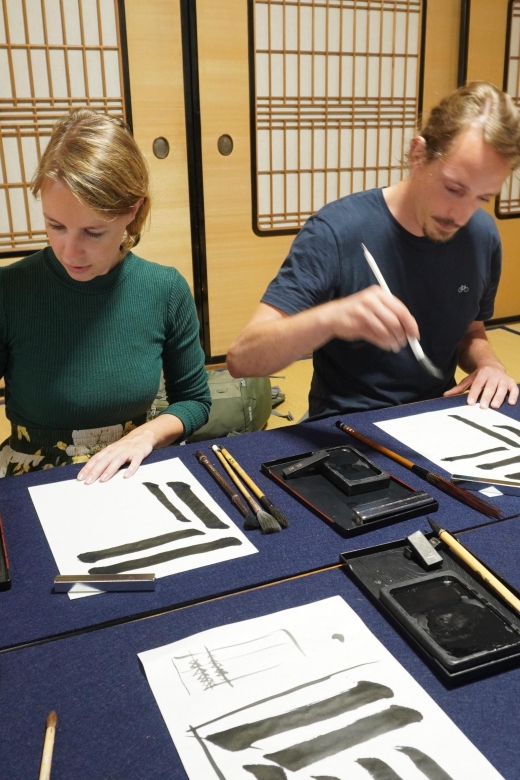
The class begins with an explanation of the tools. You learn about the brush and ink, then practice basic strokes with guide sheets.
This first stage is more important than it may sound. Japanese calligraphy is not simply drawing attractive symbols. The pressure of the brush, the direction of each movement, and the moment you lift the tip all affect the final shape.
You do not need artistic experience. The teaching team uses demonstrations and practice to help you understand the feel of the brush. English guidance is available, and the instructors are used to helping people from outside Japan.
Daiki has been praised for explaining the process clearly in English. Naomi is also repeatedly described as kind, patient, and encouraging. If you are nervous about making a mess, this is useful. The tone is supportive rather than strict.
You will probably produce a few uneven strokes. That is part of the point. The lesson shows you how much control the craft requires, while keeping the atmosphere relaxed enough for beginners.
Choosing a Word With Meaning
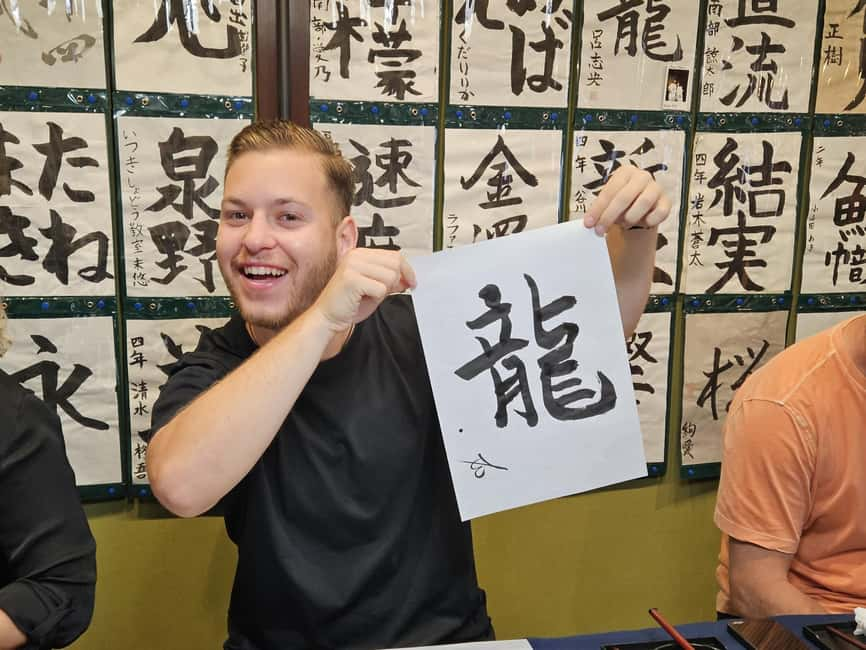
After practicing, you choose a favorite word to write. This is where the class becomes personal.
Japanese writing uses three scripts: kanji, hiragana, and katakana. Kanji characters carry meaning, while hiragana and katakana are phonetic scripts. The instructor explains the cultural background of the characters and the connection between Japanese writing and Chinese characters.
You should take your time with this choice. A word selected only because it looks attractive may not have the meaning you want. Ask about the character before you commit it to the final artwork.
This part can also be a useful introduction to Japanese culture. You are not just copying a shape. You are learning that the character has a story, a sound, and a meaning that may not be obvious to an English speaker.
The class does not promise that you will become a calligrapher in an hour. Instead, it gives you a small understanding of the discipline behind the art. That is a realistic and worthwhile goal.
Making the Final Scroll or Folding Fan
Once you have practiced enough, you create your finished piece on either a hanging scroll or a folding fan. You can take the artwork home.
This is one of the strongest reasons to book the class. The souvenir is not merely something you bought in a shop. It carries the memory of the hour, including the imperfect strokes and the satisfaction of finishing the piece.
The final attempt can feel slightly intimidating. You have practiced on guide sheets, but the scroll or fan feels more permanent. The instructors continue to offer help, so you are not left alone with a brush and a blank surface.
I would not expect museum-quality work. The value lies in making something yourself and understanding a little of the method. Several people have found the process relaxing even when they did not consider themselves skilled at art.
The presentation also makes the finished work easier to keep. A scroll or folding fan feels more special than a loose sheet of paper, and it can serve as a compact reminder of Kanazawa after you return home.
Same place, a different morning at the gates:
- Osaka/Kyoto:Kinkakuji,Arashiyama,FushimiInariShrine,NaraPark
★ 4.1 · 1,596 reviews - Tokyo: Nikko Toshogu Shrine and Kegon Waterfall Tour
★ 4.5 · 1,266 reviews - Tokyo Panoramic 1 Day: Meiji Shrine, Asakusa, Odaiba and SKYTREE®
★ 4.5 · 1,222 reviews - Kyoto Arashiyama Walking Tour: Bamboo, Monkeys, Gardens & Secrets
★ 5.0 · 1,216 reviews
A Quiet Hour, Not a Fast Tourist Show
Calligraphy has a built-in change of pace. You sit down, focus on the brush, and repeat small movements until your hand begins to understand them.
That quiet concentration is a welcome contrast to crowded sights and long walking days. You may find the experience calming because it asks you to do one thing at a time. There is no need to rush from one photo stop to another.
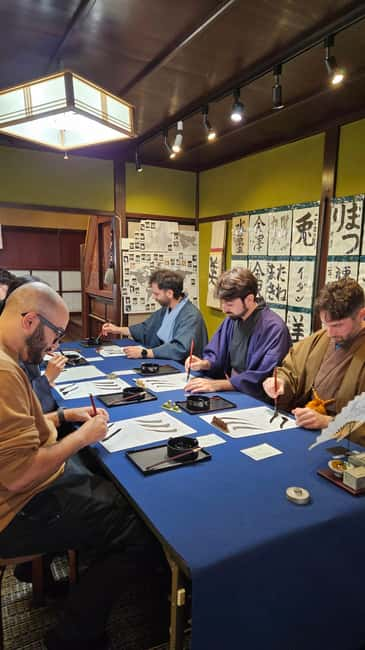
The class is also suitable for couples, friends, and families with older children. One parent had a particularly good experience attending with a son, while a group of six received individual attention and guidance. A private-group format helps keep the lesson personal.
Children under five are not suitable for the activity. That makes sense, since the lesson involves ink, delicate tools, and focused practice. Older children may enjoy it if they can sit quietly and follow instructions.
Vegans should also note that traditional calligraphy tools such as brushes and ink can contain animal-derived materials. This is a clear consideration to check before booking.
What the Teaching Style Is Like
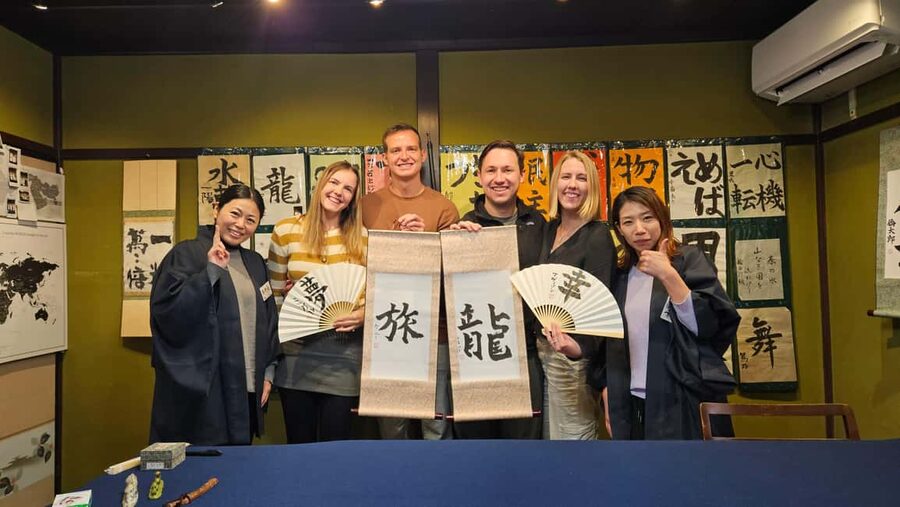
The instructors receive especially strong praise for patience and encouragement. That quality matters more here than a long lecture.
You are learning a physical skill, and your first strokes may not behave as expected. A stern instructor could make the class uncomfortable. Naomi, Daiki, and the wider teaching team are known for helping students try again without making the process feel like an exam.
The English support is another practical strength. You can ask about the characters, tools, and technique without relying only on gestures. The class is offered in English and Japanese.
Some sessions may have extra activity in the studio. On Thursdays and Saturdays after 3:00 PM, the local calligraphy school is also in session, so you might see Japanese children attending their lessons. That can add a genuine sense of daily life, although anyone seeking a completely quiet private room may prefer another time.
Because the class is private, you can expect personal attention rather than a large workshop atmosphere. The exact rhythm will depend on your group, but the format allows the teacher to adjust explanations and practice time.
Is $44 a Fair Price?
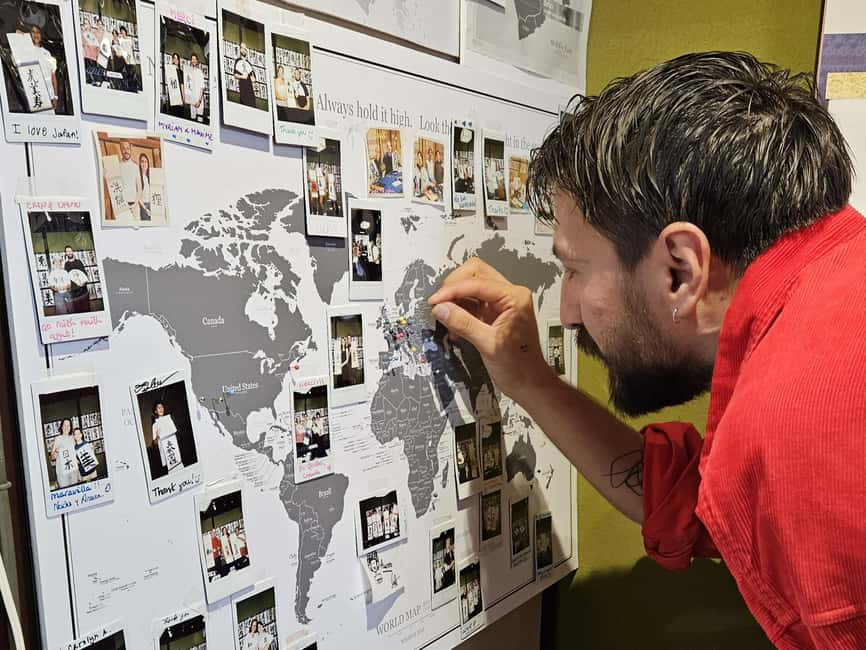
At $44 per person, the class costs more than a quick souvenir purchase, but the price includes instruction, practice materials, and your finished work on a scroll or folding fan.
The better comparison is not with buying a fan from a shop. Compare it with paying for an hour of guided cultural activity and leaving with something you made. By that measure, the price is reasonable, especially for visitors who want a hands-on experience rather than another viewing stop.
The value is strongest if you care about process. You learn brush handling, basic strokes, Japanese scripts, and the meaning behind your selected word. If you only want an inexpensive souvenir, a shop will cost less and take less time.
The class also earns value from its setting. A traditional 100-year-old house and an active classroom feel more connected to local life than a generic craft counter inside a tourist center.
I would consider the price fair for couples, families with older children, and anyone looking for a memorable Kanazawa activity that fits into a short schedule.
The One-Hour Timing: What to Expect
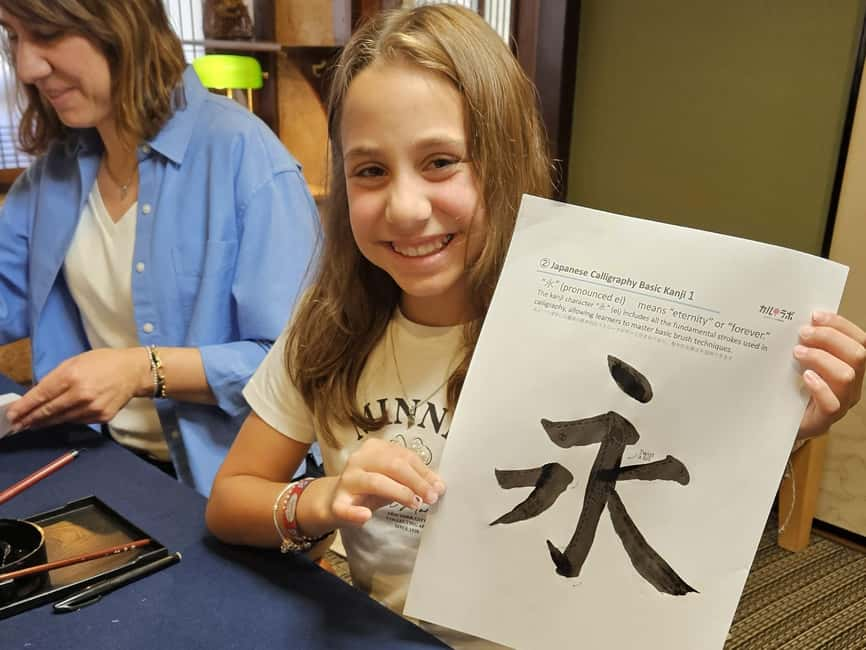
The full experience lasts one hour. That is long enough to introduce the tools, practice strokes, choose a word, and complete a final piece.
It is not long enough for a slow, detailed study of several characters. One student found the pace good but wished for more time. I would take that as useful advice: decide in advance that you will focus on one final work rather than try to produce a collection.
The hour may pass quickly because the class has several stages. The explanation of tools leads into guided practice, then word selection, then the final artwork. You are active throughout, but the work remains calm rather than strenuous.
If you are scheduling the class between major sights, keep the rest of your plan flexible enough to allow for getting to Nomachi and finding the building. The activity itself is fixed at one hour, but your surrounding transport time is not provided.
Who Should Book This Experience?
I would recommend it most strongly to you if you enjoy making things with your hands, want a souvenir with a personal story, or need a peaceful pause in a busy Japan itinerary.
It is also a good choice if you have already seen several temples and gardens and want to add a creative activity to your Kanazawa days. The class gives you context for Japanese writing while keeping the lesson practical.
Couples can work together without needing the same skill level. Parents with older children can use the class as an introduction to Japanese culture. Small groups benefit from the private format and the chance to receive direct help.
You may want to skip it if you dislike seated craft activities, want a long formal lesson, or need vegan materials. The one-hour format is friendly to beginners, but it cannot provide extensive practice.
For the best experience, think about a word before you arrive. You do not need to know Japanese, but having an idea of the feeling you want, such as strength, peace, friendship, or travel, can make the final choice easier.
Booking Details Worth Knowing
The activity costs $44 per person and lasts one hour. Starting times vary, so check availability for your date.
You can cancel up to 24 hours in advance for a full refund. A reserve-now, pay-later option is also available, which is useful when your Kanazawa schedule may change.
The activity is offered in English and Japanese. The group type is private, although local children may be present in the studio during the local school sessions on Thursdays and Saturdays after 3:00 PM.
Calligraphy tools may contain animal-derived materials, so vegans should not book this activity. Children under five are also not suitable.
Should You Book the Nomachi Calligraphy Class?
Yes, if you want an authentic, small-scale cultural activity with a souvenir you create yourself.
I especially like the actual classroom setting, the historic house, and the generous teaching style associated with Naomi, Daiki, and the rest of the team. You receive enough guidance to try something unfamiliar without feeling that every stroke must be perfect.
The short duration is the main compromise. You will learn the basics, not master Japanese calligraphy. If you accept that, the $44 price buys a thoughtful hour, a better sense of Japanese writing, and a piece of art that carries your own effort.
Plan it near your visit to the Ninja Temple area, arrive with a little time to spare, and choose your word with care. For many visitors, that is enough to turn a simple craft lesson into one of the more personal memories of Kanazawa.
FAQ
How long does the calligraphy experience last?
The class lasts one hour.
How much does the experience cost?
The price is $44 per person.
Is the class available in English?
Yes. The instructor languages are English and Japanese.
What do I take home?
You create a calligraphy artwork directly on a hanging scroll or folding fan, which you can take home.
Where does the class meet?
The meeting point is Culture Lab Nomachi at 1-1-26 Nomachi, Kanazawa, Ishikawa 921-8031. Calligraphy works are visible from outside, and a Kanazawa Loop Bus stop is nearby.
Are there restrictions on who can attend?
Children under five are not suitable for the class. Vegans should also be aware that traditional brushes and ink may contain animal-derived materials.
Just added around Japan
- Private guided tour: Mt. Aso volcano, grasslands, Aso Shrine★ 5.0 · 19 reviews
- Takayama Inari Shrine Tour with Private Transportation★ 5.0 · 5 reviews
- From Asakusa: Old Tokyo, Temples, Gardens and Pop Culture★ 5.0 · 47 reviews
- Goshuin Collecting tour at Asakusa Local Temples & Shrines, Tokyo★ 5.0 · 8 reviews
- :Tokyo,Shibuya /Meiji Shrine tour in KIMONO/English-friendly★ 5.0 · 4 reviews
- Tokyo: Snow Monkey and Zenkoji Temple Day Trip In Low Price★ 5.0 · 5 reviews
- Tokyo War History Tour: Yasukuni Shrine & War Museum★ 4.5 · 6 reviews
- Tokyo: Gotokuji Culture Walk & Lucky Cat Temple Experience★ 4.9 · 5 reviews
Japan Temple Tours, compared.
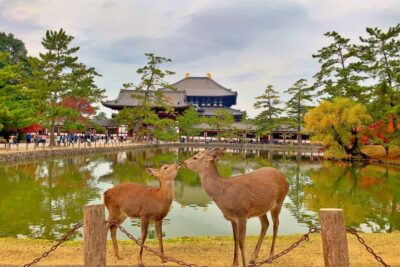
Osaka/Kyoto:Kinkakuji,Arashiyama,FushimiInariShrine,NaraPark
Read our review →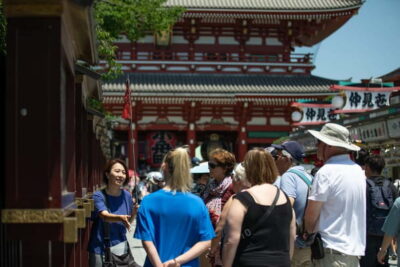
Asakusa Walking Tour with Sensoji Temple Visit
Read our review →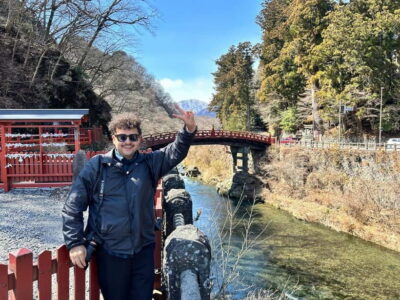

Nikko Toshogu Shrine and Kegon Waterfall Tour
Read our review →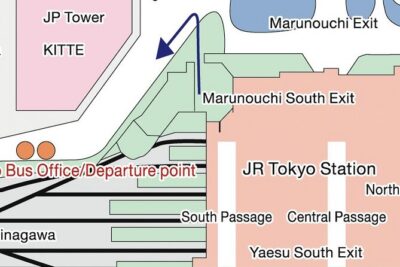
Tokyo Panoramic 1 Day: Meiji Shrine, Asakusa, Odaiba and SKYTREE®
Read our review →
Kyoto Arashiyama Walking Tour: Bamboo, Monkeys, Gardens & Secrets
Read our review →
1-Day Snow Monkeys, Zenko-ji Temple & Sake in Nagano
Read our review →Browse the lists this tour appears in