
Review · JAPAN
Nara: Great Buddha, Kasuga Shrine & Deer Park Tour
Nara puts deer beside emperors and Buddhas. This three-hour walk brings together the city’s best-known sights, from free-roaming deer in Nara Park to the enormous Great Buddha at Todai-ji. I like the way Kasuga Taisha’s lantern-lined paths add a quiet Shinto pause before the grand Buddhist temple, and I like that a local guide connects the sites instead of treating them as separate photo stops.
The guides receive especially strong praise for their warmth and personal help. Takashi, Eri, Teppei, Yayoi, Nobu, Yoshi, and others have helped visitors with questions, photographs, food suggestions, train tickets, and even finding the right bus afterward. The special inner shrine admission at Kasuga Taisha, Todai-ji admission, and deer crackers are included, which makes the $77 price reasonable for a compact introduction to Nara.
The main consideration is pace. You walk between major sights, and the route includes steps and a good deal of time on your feet. With only three hours, you get the essential Nara experience, but not much time for a slow meal, shopping, or wandering beyond the main route.
Key points to know before you book
- Sacred deer in Nara Park: You receive shika senbei, the special crackers used to feed Nara’s famous deer.
- Kasuga Taisha’s inner shrine: The price includes special admission beyond a basic look at the outer grounds.
- Todai-ji’s Great Buddha Hall: You enter one of Japan’s largest wooden buildings and see the colossal bronze Vairocana Buddha.
- A guide-led cultural walk: English and Japanese guides explain both Shinto and Buddhism, along with daily life in Japan.
- Three hours, with plenty of walking: The schedule covers Nara’s main landmarks efficiently, but it is not a leisurely full-day outing.
- Private or small-group choices: A smaller group can make it easier to ask questions and adjust the pace.
Why this compact Nara tour works
Nara was Japan’s first permanent capital in the eighth century. That early political role helped create the temples, shrines, and ceremonial traditions that still shape the city today. This tour gives you a clear route through that story without asking you to plan several major sights on your own.
I like the combination of nature, Shinto worship, and Buddhist art. Nara Park is not just a green space with animals. Kasuga Taisha is not just a photogenic shrine. Todai-ji is not just a large hall. Seen together, the three places show how religious life developed in Japan through both native Shinto practice and imported Buddhist teaching.
The guide makes a real difference here. At each stop, you can ask why the deer are sacred, how shrine purification works, or why such a massive Buddha was built. Several guides have also made the experience more personal by suggesting food, helping with local transport, or making room for extra photographs.
The overall score is 4.8 from 62 ratings, and the praise is remarkably consistent. The most repeated strengths are guide friendliness, clear explanations, patience, and help beyond the formal tour. That matters in Nara, where a good explanation can turn a crowded landmark into a place with meaning.
More Nikko and Kamakura Day Trips in Japan:
- Nikko: Kegon Falls, Lake Chuzenji & Toshogu Temple
★ 4.6 · 1,577 reviews - Tokyo: Nikko Toshogu Shrine and Kegon Waterfall Tour
★ 4.5 · 1,266 reviews - From Tokyo: Nikko Toshogu Shrine and Kegon Waterfall Tour
★ 4.0 · 42 reviews
Starting at Himuro Shrine beside Nara Park
The meeting point is in front of the torii gate of Himuro Shrine. Your guide holds a yellow DeepExperience sign, so you should be able to identify the group without much fuss. Transportation to this starting point is not included, so you need to arrange your own way there.
Beginning near Himuro Shrine puts you close to the first major section of Nara Park. The route then moves toward the deer and onward to Kasuga Taisha. This is a sensible starting area because you begin near the cultural core rather than spending the first part of the tour on a long transfer.
Your guide may ask about your interests at the start. Takashi, for example, contacted one party before the tour to learn what they wanted to cover. That kind of exchange can help you get more from a short visit, especially if you have questions about Japanese customs or need advice for the rest of your day.
Meeting Nara’s deer in the park
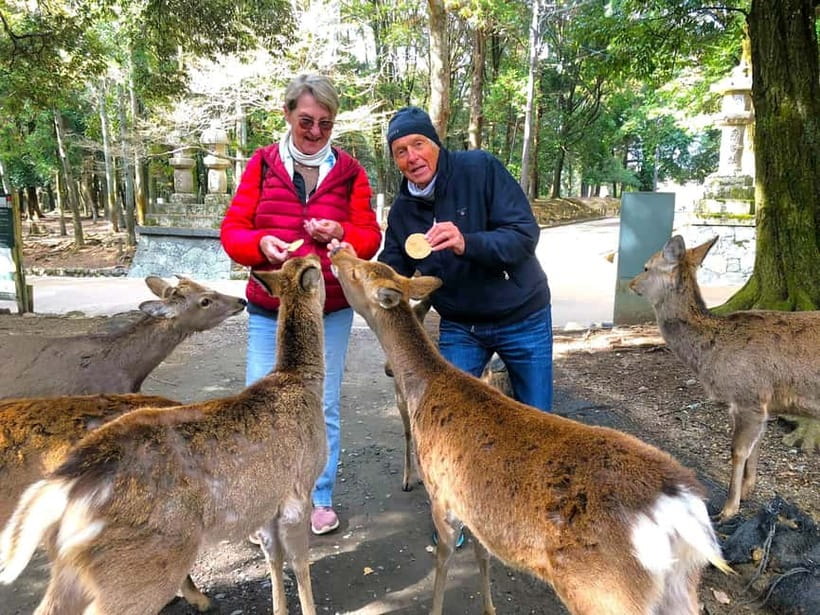
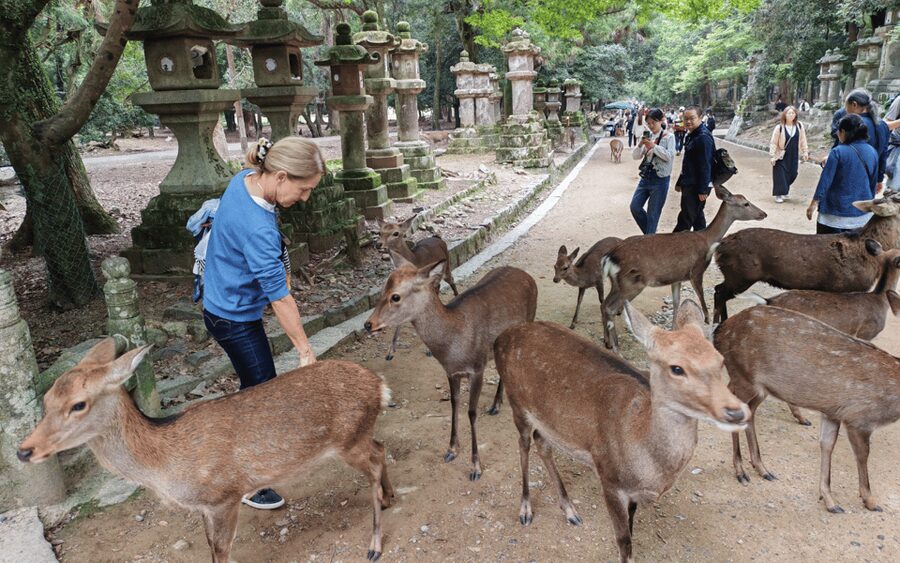
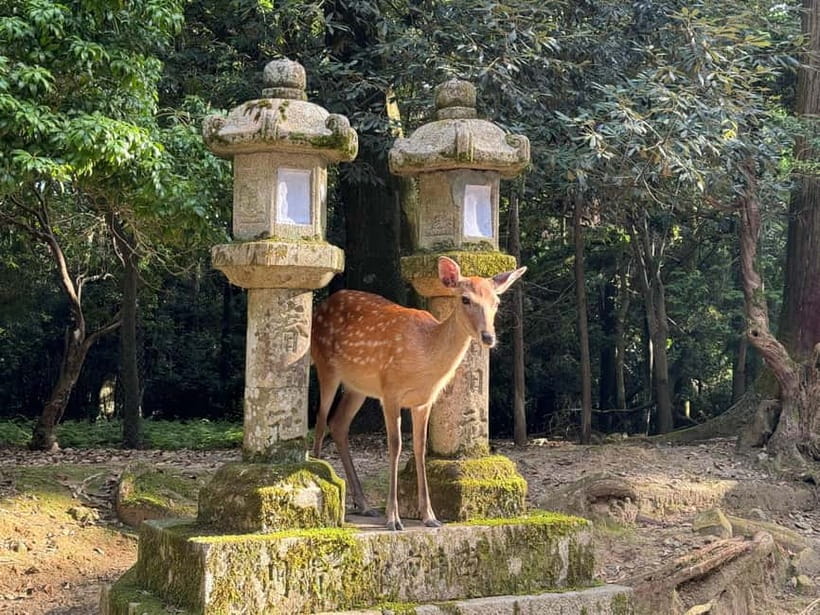
Nara Park is the tour’s most playful stop. Hundreds of deer roam freely across the grounds, and you can feed them shika senbei supplied as part of the experience. This is one of those travel moments that feels very specific to Nara: the animals are part of the city’s religious identity, not simply an attraction placed behind a fence.
Your guide explains the connection between the deer and Kasuga Taisha. In Shinto belief, they are sacred messengers, and their protected status reflects the long relationship between spiritual practice and daily life in Nara.
The planned park visit lasts about 30 minutes. That is enough time to meet the deer, feed them, and hear the basic story, but you should not expect an extended nature walk. Keep your crackers in view and follow your guide’s advice around the animals. They are accustomed to people, but they are still animals with their own behavior.
The deer stop is also useful as a gentle introduction to the rest of the tour. You get the immediate visual pleasure of the park, then learn why it matters before entering the more formal setting of the shrine. I find that progression more satisfying than seeing the deer without any cultural context.
Hot weather can affect this part of the walk. Nobu was praised for providing neck coolers during a very hot tour, while other guides helped guests manage the day with patience and care. Such gestures are not guaranteed, but they show the kind of practical attention that several guides have brought to the experience.
Walking the lantern paths at Kasuga Taisha
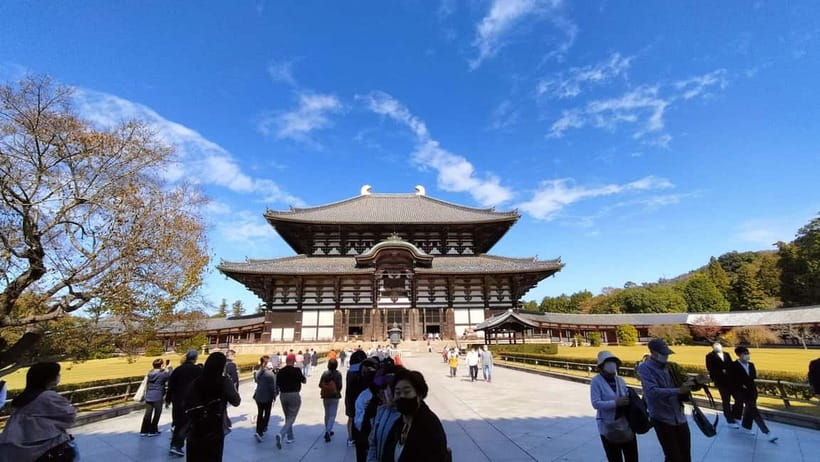
Kasuga Taisha was established in 768 and served as a major shrine for the Fujiwara clan. It sits beside an old forest area preserved for more than a thousand years, giving the approach a quieter feeling than the broad open spaces of the park.
The route through the shrine takes about an hour. You can expect your guide to explain Shinto beliefs, purification customs, and the design of the shrine buildings. This is where the tour gains depth, because the guide can explain what you are seeing before you pass through another gate or approach another sacred space.
Kasuga Taisha is famous for its bronze and stone lanterns. Worshippers donated these over many generations, and they line the paths and shrine grounds. During special festivals, the lanterns are lit, creating a very different mood from an ordinary daytime visit. Even when they are unlit, their number and age give the shrine a strong sense of continuity.
The included special inner shrine admission is an important part of the value. A basic visit to the outer grounds would still be worthwhile, but the added access gives your guide more religious and architectural details to discuss. Since this is a guided visit, you do not have to work out the meaning of each purification area or shrine feature from signs alone.
This stop can feel calm, but the walk is not effortless. You should expect uneven paths and steps, and you remain on your feet for much of the hour. If you prefer to linger silently at one shrine, the group schedule may feel brisk. If you want a clear explanation and a well-planned route, the timing works well.
A few more temple visits around Japan worth a look
- Kyoto: Tea Ceremony Ju-An at Jotokuji Temple
★ 4.9 · 3,207 reviews - Tokyo: Asakusa Walking Tour with Sensoji Temple Visit
★ 4.8 · 1,583 reviews - Tokyo Panoramic 1 Day: Meiji Shrine, Asakusa, Odaiba and SKYTREE®
★ 4.5 · 1,222 reviews - 1-Day Snow Monkeys, Zenko-ji Temple & Sake in Nagano
★ 5.0 · 1,020 reviews
Entering Todai-ji and facing the Great Buddha
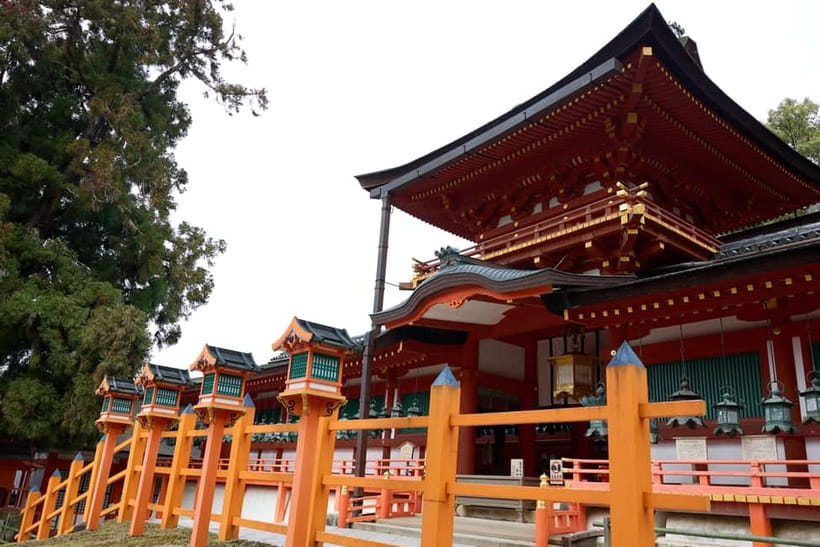
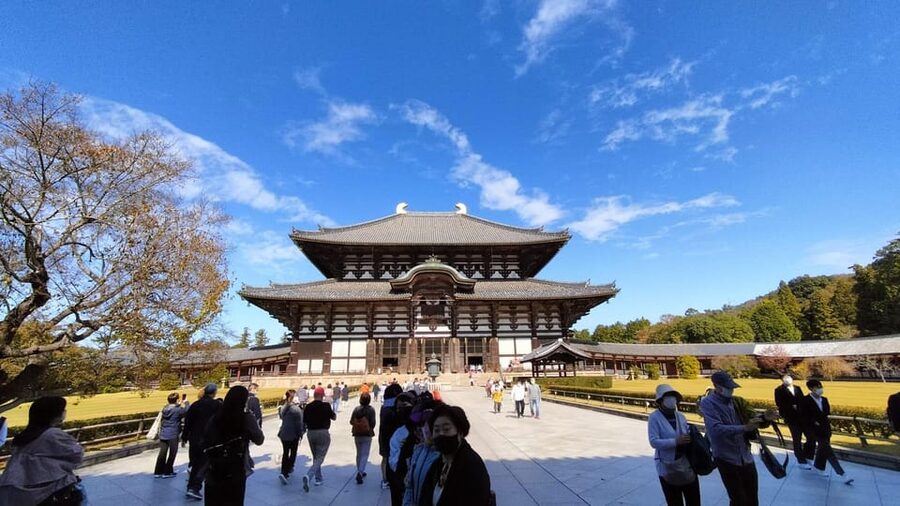
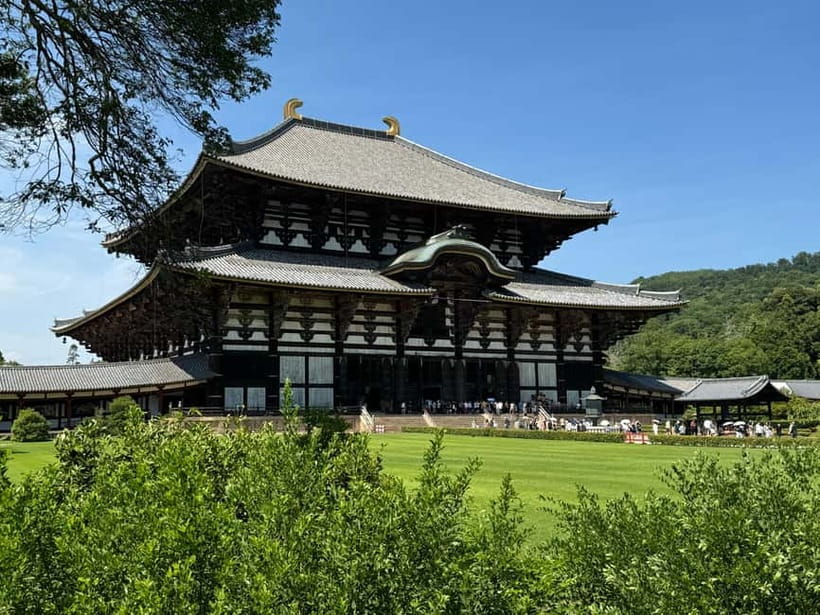
Todai-ji is the grand finale, and the scale changes dramatically. After the wooded paths and smaller shrine details at Kasuga Taisha, you enter the Daibutsuden, or Great Buddha Hall, one of the largest wooden structures in the world.
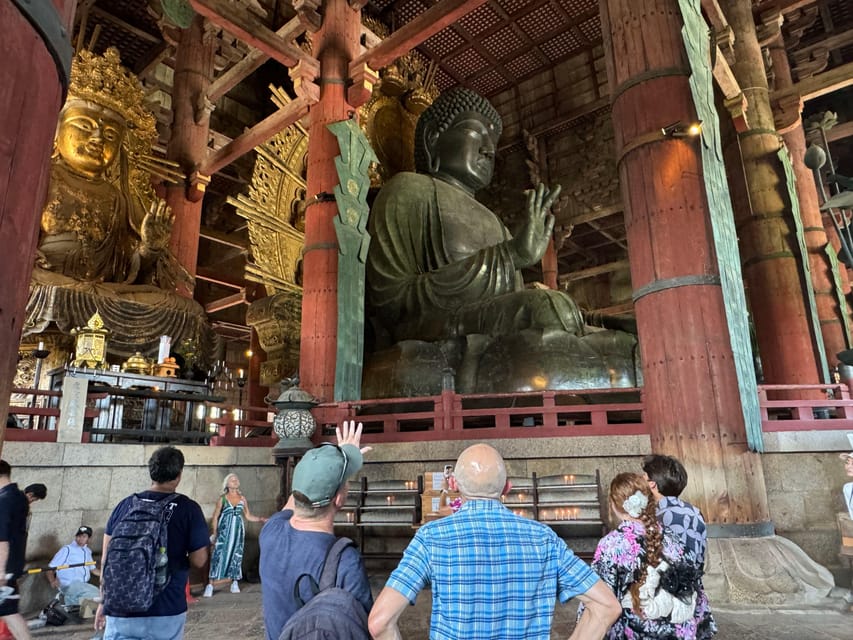
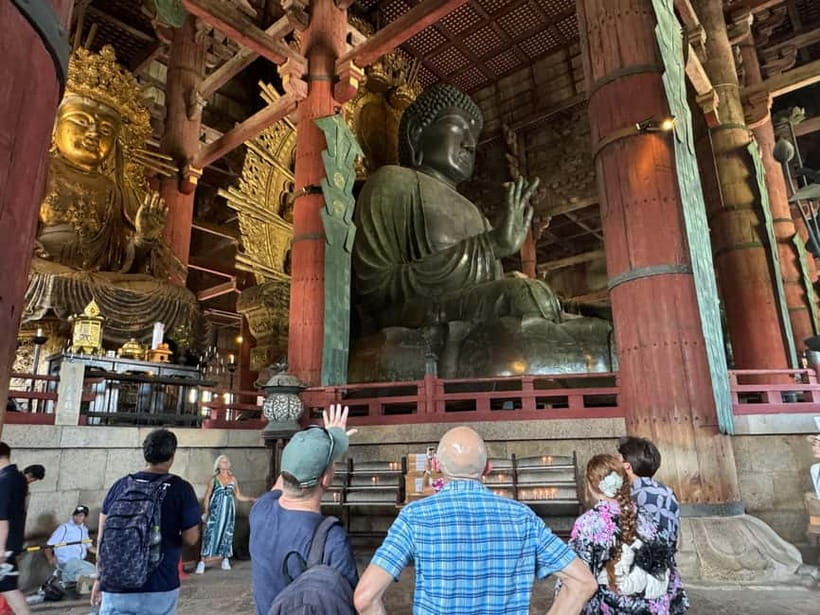
Inside is the colossal bronze Great Buddha, cast in the eighth century. The statue represents Vairocana Buddha, a figure associated with universal illumination. The project required an extraordinary amount of labor and resources, and your guide explains how its construction reflected both religious ambition and the power of early Japan’s government.
The hall is designed to make you feel small. That is not a criticism. The size is the point. The building, statue, and surrounding ritual setting communicate the scale of the Buddhist vision that shaped Nara when it served as the capital.
The Todai-ji portion lasts about an hour and includes admission. Many people find this the most powerful stop because the hall gives you an immediate visual impression before the historical explanation begins. Guides such as Yoshi and Eri have been praised for answering questions patiently and giving guests time for photographs.
A practical note: the hall can be busy, and three hours is not enough for every corner of the Todai-ji grounds. You receive a focused visit to the main sight rather than a complete temple exploration. That is a fair trade if you are seeing Nara for the first time and want the Great Buddha to anchor your visit.
What the guide adds to the three-hour route
The strongest part of this experience is not simply access to the landmarks. You can reach Nara Park, Kasuga Taisha, and Todai-ji without a guide. The value comes from having someone explain the links between them and help you use your limited time well.
Guides have been praised for several specific forms of help:
- Takashi shared historical detail, answered transport questions, and helped guests find their bus afterward.
- Teppei was described as patient, generous, and happy to discuss Japanese culture beyond the monuments.
- Eri added local insight, quieter routes, restaurant suggestions, and answers to many questions.
- Nobu helped in hot weather and assisted with an express train purchase.
- Ryan waited when traffic caused a delay and still delivered an informative visit.
- Hana combined the sightseeing route with casual Japanese conversation practice.
These details show why a private or small-group option can be useful. You can ask about religion, architecture, food, or local customs without feeling you are holding up a large crowd. You may also have more room to request photographs or a slower pace at one particular stop.
The tour is available in English or Japanese. English ability varies by guide, but the feedback consistently highlights clear communication and easy conversation. If cultural questions matter as much to you as photographs, this is a strong reason to choose a guided visit.
Is $77 fair for three hours?
At $77 per person, the tour is not the cheapest way to see Nara. You can walk through the park independently, and the major sights are connected by public areas. The price becomes easier to justify when you count the professional guide, Todai-ji admission, special inner shrine admission at Kasuga Taisha, and deer crackers.
You are also paying for planning. The route puts three major sights in a sensible order and avoids the uncertainty of deciding where to go next. For a first visit, that can save time and reduce the chance of missing the most important parts of the shrine or temple.
The value is best for someone with a tight schedule, a first visit to Nara, or a strong interest in Japanese religion and history. It is less compelling if you already know the sites well, prefer to wander alone, or want several hours for shopping and food.
The tour does not include transportation to or from Himuro Shrine, meals, drinks, or personal purchases. Build those costs and arrangements into your day. You finish near the Nino-torii area, with drop-off at either Nino-torii or the Kasuga Taisha Nino-torii, which can be useful for continuing your own visit.
Who should book this experience?
I would recommend it for first-time visitors who want the main Nara sights explained in plain English. Families and older visitors may appreciate the organized route, though anyone concerned about walking should note the steps and time spent standing.
It also suits people who like to ask questions. The guides have helped with local food advice, transport, photographs, Japanese conversation, and wider questions about life in Japan. That personal exchange is a major part of what you are buying.
You should think twice if your priority is solitude. Nara Park and Todai-ji are major attractions, and the tour follows the classic route. The guide can point out quieter spots and make small route adjustments, but this is not an off-the-beaten-path excursion.
Weather matters, too. One party had a very enjoyable experience despite heavy rain, and another dealt with intense heat. Still, comfortable shoes and a flexible attitude will make the walk easier. The tour can be rewarding in poor weather, but the deer park and shrine paths are more pleasant when conditions cooperate.
Should you book the Nara Great Buddha tour?
Book it if you want Nara’s essential sights in one well-paced morning or afternoon, with a guide who can explain the meaning behind the deer, shrine, and Buddha. The combination of included admissions, deer crackers, and strong guide support makes $77 a fair price for a short cultural tour.
Skip it if you already have detailed plans for Todai-ji and Kasuga Taisha, or if you want to spend the day moving at your own speed. For most first-time visitors, though, the tour gives Nara a clear shape: sacred deer first, lanterns and Shinto tradition next, then the overwhelming scale of Todai-ji.
FAQ
Where does the tour begin?
It begins in front of the torii gate of Himuro Shrine. The guide holds a yellow sign with the DeepExperience logo.
How long does the tour last?
The tour lasts three hours.
Which sites are included?
The tour visits Nara Park, Kasuga Taisha, and Todai-ji Temple.
Is admission to Todai-ji included?
Yes. Todai-ji Temple admission is included in the price.
Is admission to Kasuga Taisha included?
Yes. The tour includes special inner shrine admission at Kasuga Taisha.
Are deer crackers included?
Yes. Shika senbei, the special crackers used to feed the deer, are included.
What languages are available?
Live guiding is available in English and Japanese.
Is transportation to the meeting point included?
No. Transportation to and from the meeting point is not included.
Can I cancel the tour for a full refund?
Yes. You can cancel up to 24 hours in advance for a full refund.
Just added around Japan
- Private guided tour: Mt. Aso volcano, grasslands, Aso Shrine★ 5.0 · 19 reviews
- Takayama Inari Shrine Tour with Private Transportation★ 5.0 · 5 reviews
- From Asakusa: Old Tokyo, Temples, Gardens and Pop Culture★ 5.0 · 47 reviews
- Goshuin Collecting tour at Asakusa Local Temples & Shrines, Tokyo★ 5.0 · 8 reviews
- :Tokyo,Shibuya /Meiji Shrine tour in KIMONO/English-friendly★ 5.0 · 4 reviews
- Tokyo: Snow Monkey and Zenkoji Temple Day Trip In Low Price★ 5.0 · 5 reviews
- Tokyo War History Tour: Yasukuni Shrine & War Museum★ 4.5 · 6 reviews
- Tokyo: Gotokuji Culture Walk & Lucky Cat Temple Experience★ 4.9 · 5 reviews
Nikko & Kamakura Day Trips, compared.
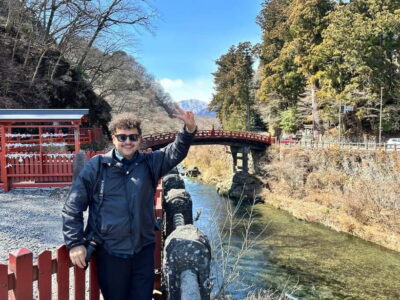

Nikko Toshogu Shrine and Kegon Waterfall Tour
Read our review →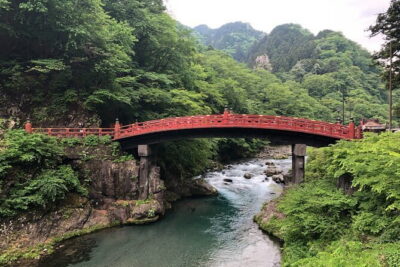

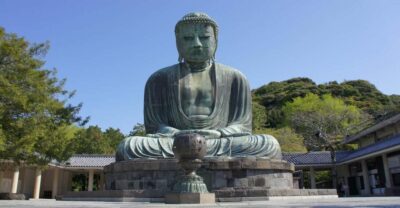
Kamakura Temples Private Guided Tour from Tokyo
Read our review →
Tokyo Nikko Toshogu Shrine Iroha-zaka Lake Chuzenji Day Tour
Read our review →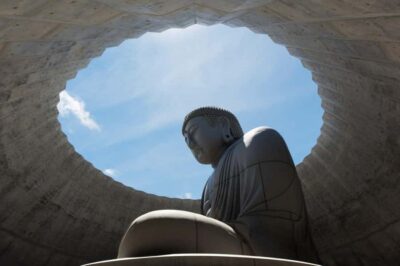
Sopporo: Hokkaido Shrine and Atama Daibutsu Full-Day Tour
Read our review →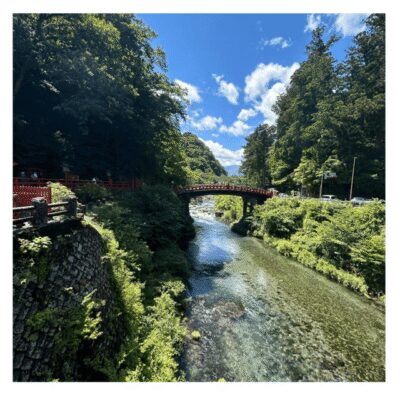
Browse the lists this tour appears in