
Review · JAPAN
Nara: Essential Private Tour with Deer Park and Temples
Nara rewards a slower morning. This three-hour private tour links the city’s main sights with a guide who can explain what you are seeing, not simply point at it. I especially like the smart route from Kintetsu Nara Station and the mix of temples, deer, gardens, and local streets. The main consideration is time: with seven stops, some visits will be fairly brief.
I also like the personal help built into the experience. Guide Masa has assisted with translation, finding an ATM, choosing a soba restaurant, and learning how to feed the deer without getting surrounded. The tour costs $126 per person, which is a fair price if you value private guidance, though independent visitors can see much of Nara Park for less.
Key points to know before you book
- Masa receives especially warm praise: Guests describe him as patient, friendly, well prepared, and excellent in English.
- The route begins at Kintetsu Nara Station: You meet near Exit 3, beside the tourist information center, after leaving through the East Gate.
- Seven stops fit into three hours: Expect a lively overview rather than a slow, museum-style visit at every site.
- Deer advice is part of the experience: Your guide can show you how to feed and approach the animals without attracting too many at once.
- Temple admissions are included: You do not need to budget separately for the listed temples and parks.
- Comfortable shoes matter: The tour includes streets, park paths, temple grounds, and several hours on your feet.
Why this short Nara tour works
Nara is easy to underestimate. Many people visit for the deer, take a few pictures, and move on. That gives you only the surface of the city. Nara was Japan’s first permanent capital, and its temples, shrines, gardens, and old shopping streets show how religion, government, art, and daily life developed together.
This tour gives you a useful first look without asking you to organize the day yourself. You start at a central railway station, walk toward the city’s major sights, and return to the same station. That simple arrangement is valuable if you have only part of a day or want help finding your way around.
The private format is the biggest advantage. You can ask questions as they come up, request more explanation at a temple, or spend less time at a stop that does not interest you. The guide also becomes a practical companion between sights, where a map alone cannot explain what you are passing.
The tradeoff is the schedule. The listed visits add up to about two hours and 50 minutes before allowing much time for walking between them. You will see all the named places, but you should not expect a long, unhurried exploration of every temple hall or garden.
More Private Temple Tours in Japan
- From Tokyo: Private Tour Snow Monkey Park & Zenko-ji Temple
★ 4.7 · 184 reviews - Tokyo Private Tour: Temples, Culture & Modern City Highlights
★ 5.0 · 56 reviews - Nagano/Tokyo: Snow Monkey and Zenkoji Temple Private Tour
★ 4.8 · 54 reviews
Meeting at Kintetsu Nara Station
The tour begins at Kintetsu Nara Station, a useful starting point for a walking route through central Nara. After leaving through the East Gate, head toward Exit 3. Go up the stairs or the escalator beside them, then look for the tourist information center.
Your guide waits nearby with a sign showing the Get Your Guide logo. This is a clear meeting arrangement, but the station has several exits, so follow the East Gate and Exit 3 instructions carefully. Arriving a little early gives you time to get oriented before the walking begins.
The station location also makes the tour practical for visitors arriving by train. Since hotel pickup and drop-off are not included, you need to reach the station yourself. At the end, you return to Kintetsu Nara Station, which makes it easy to continue your day independently.
Higashimuki Shopping Street: a gentle start
Your first guided stop is Higashimuki Shopping Street, with about 20 minutes set aside. This covered shopping street gives you a look at the everyday side of Nara before the larger temple grounds take over.
A guide adds value here because you can ask about local products, food, and the connection between the station area and the old sightseeing district. The stop is short, so think of it as an introduction rather than a shopping session. If you want souvenirs or snacks, you may need to return later on your own.
This opening also helps you shift from modern station life to Nara’s older cultural center. It is a practical place to begin because you get your bearings before entering the wider temple and park area.
Kōfuku-ji and Nara’s Buddhist story
The route then reaches Kōfuku-ji, where you spend about 30 minutes with the guide. The temple is one of Nara’s essential cultural sights, and the visit gives you an early lesson in the Buddhist traditions that shaped the city.
A good guide can make the buildings and statues easier to understand. Instead of seeing another impressive roof or pagoda, you can ask why the site matters and how its art fits into Nara’s past. Masa has been praised for explaining temple history and the statues within the religious sites in clear detail.
Thirty minutes is enough for a focused introduction. It is not enough for every corner, so listen for the parts that interest you most and ask direct questions. If you are deeply interested in Buddhist art or architecture, you may want to return independently after the tour.
Same place, a different morning at the gates:
- Kyoto: Tea Ceremony Ju-An at Jotokuji Temple
★ 4.9 · 3,207 reviews - Osaka/Kyoto:Kinkakuji,Arashiyama,FushimiInariShrine,NaraPark
★ 4.1 · 1,596 reviews - Tokyo: Asakusa Walking Tour with Sensoji Temple Visit
★ 4.8 · 1,583 reviews - Nikko: Kegon Falls, Lake Chuzenji & Toshogu Temple
★ 4.6 · 1,577 reviews
Nara Park and the deer
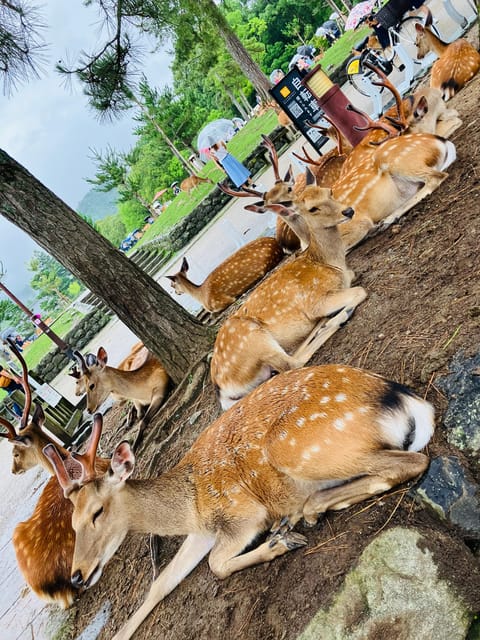
Nara Park receives another 30-minute guided visit. This is the part many people anticipate, but the deer are not simply decorative background. They are central to the experience, and learning how to approach them makes the encounter calmer and more enjoyable.
Your guide can explain how to feed the deer without being swarmed. That advice matters. Once food appears, several animals may approach at once, so watch your hands, follow the guide’s instructions, and keep the interaction controlled.
Bring a camera, but do not treat the animals as props. The information provided for the tour specifically warns against flash photography, and people with animal allergies should not book this experience. Smoking is also not allowed.
The park gives the tour a welcome change of pace after the urban streets and temple buildings. You get open paths, trees, wildlife, and room to pause. Still, 30 minutes passes quickly, particularly if you want photographs or the deer are active around you.
Himuro Shrine, a quieter pause
The next stop is Himuro Shrine, with around 20 minutes for a guided visit. Compared with the major temples, this is a shorter and more peaceful pause in the route.
A brief stop at a shrine can be useful because it shows another part of Japanese religious life. Your guide can help you notice the differences between a Shinto shrine and a Buddhist temple, as well as explain customs that may otherwise seem mysterious.
Do not expect a long private meditation here. The schedule keeps you moving toward Tōdai-ji. The value is contrast: after the deer and the large park, Himuro Shrine gives you a more contained cultural stop.
Tōdai-ji is the centerpiece
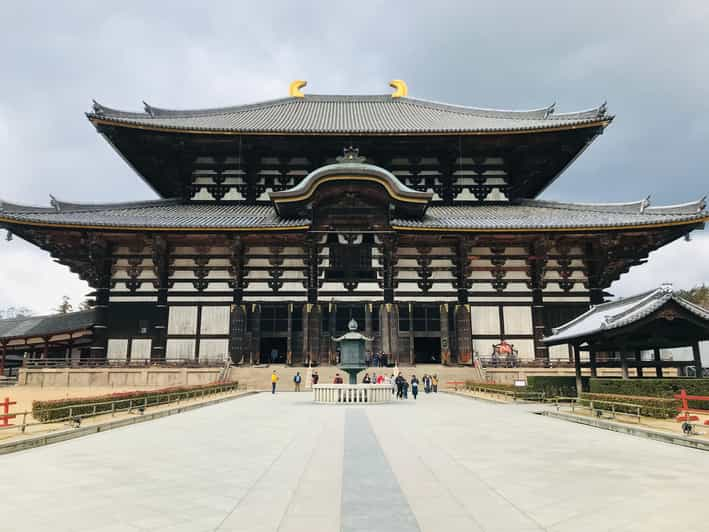
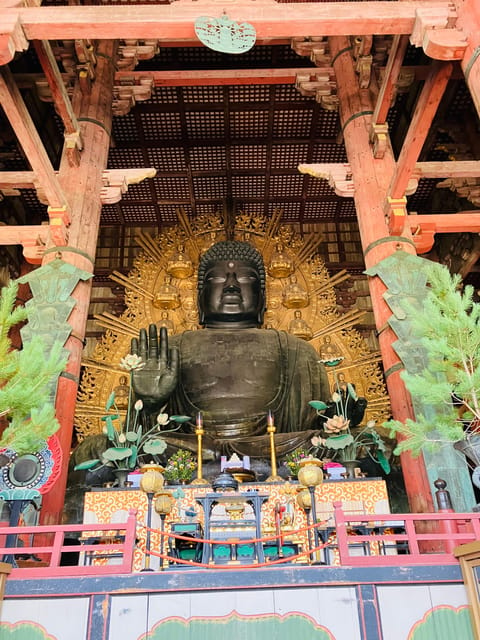
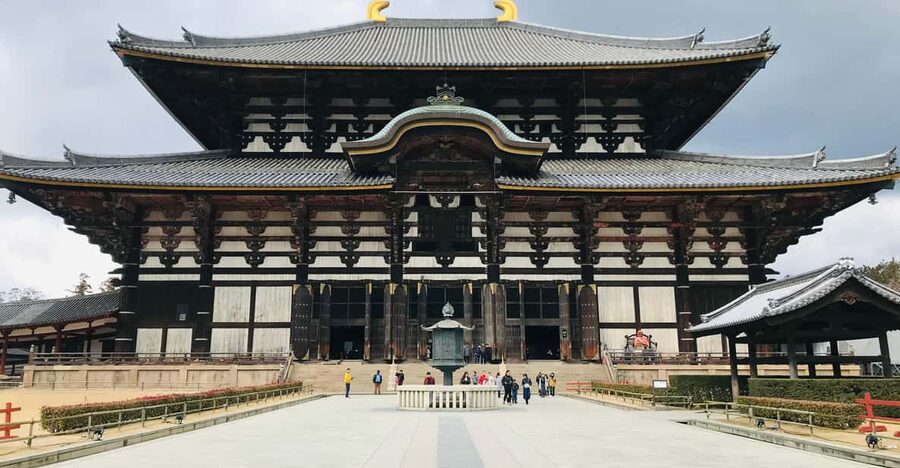
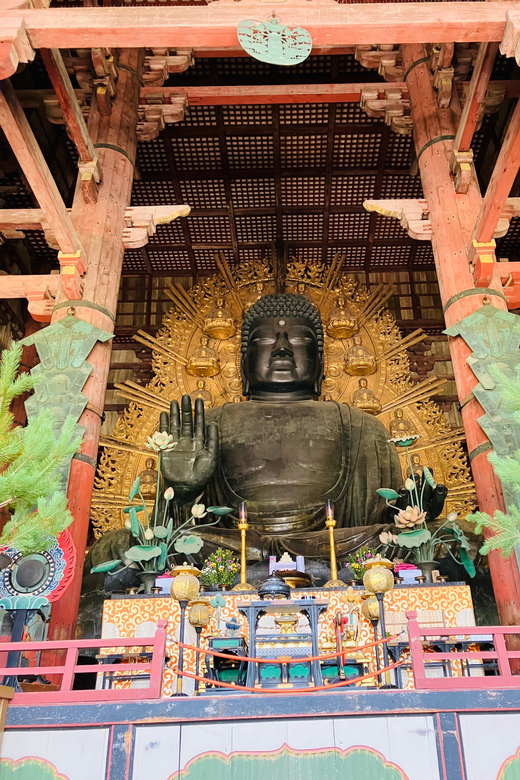
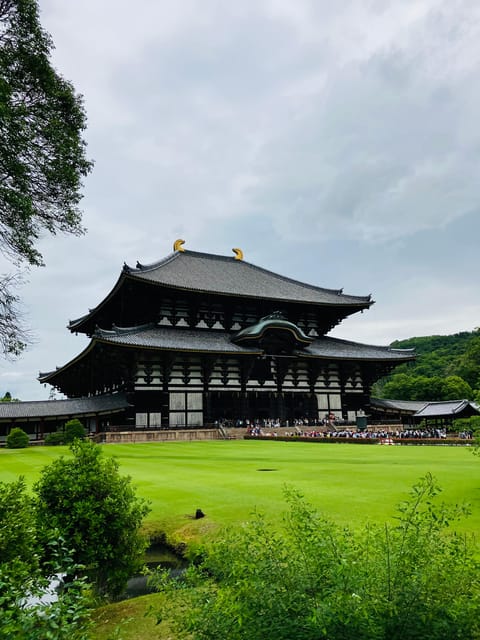
The tour gives one hour to Tōdai-ji, the longest visit of the day. That extra time signals its importance. This is the place where the scale of Nara’s religious architecture and sculpture comes into sharp focus.
Your guide can explain the temple’s history and the statues inside, which turns the visit from a quick photo stop into a more meaningful look at Japanese art and faith. The hour should give you time to enter, look around, ask questions, and absorb the setting without the same rush as the shorter stops.
Tōdai-ji is also the point where the walking schedule may feel most worthwhile. You have already seen the shopping street, Kōfuku-ji, the deer, and Himuro Shrine. By now, you have enough context to connect the buildings and artworks with the wider story of Nara.
The practical drawback is that a famous temple can be busy, and the tour schedule cannot control how long you spend in every area. If you need extensive time for photography, detailed architectural study, or quiet reflection, you may prefer to revisit Tōdai-ji later.
Yoshikien Garden closes the route
The final guided stop is Yoshikien Garden, with about 20 minutes before you return to the station. This garden provides a calm finish after the scale of Tōdai-ji and the activity of Nara Park.
You will have time to appreciate the garden’s design and natural setting, but not to linger for a long contemplative walk. The stop works best as a final change of mood, giving the route a balance between buildings and outdoor spaces.
The return to Kintetsu Nara Station keeps the tour tidy. You are not left at an unfamiliar location, and you can continue to lunch, shopping, or another destination from a known point.
What guide Masa adds
The strongest part of this experience is the guide service. Masa is described as patient, respectful, friendly, and well prepared. His English has been praised, and he is also able to prepare translated material in a guest’s native language in some cases.
That matters most at the temples. Nara’s sights can look beautiful without explanation, but a few clear details about a statue, building, or custom can change how you see the place. You can ask questions rather than waiting for a general speech to end.
Masa’s practical help is just as useful. He has helped with translation in shops, guided someone to an ATM, brought an extra umbrella, and recommended a good soba restaurant. Those are small services, but they can make a short visit feel much easier.
He also appears to adjust his pace to the people in front of him. The available comments describe a leisurely tour that did not feel hurried, along with careful attention to individual needs. Still, the route contains many stops, so it is wise to tell him early if one sight matters most to you.
Is $126 per person good value?
At $126 per person, this is not the cheapest way to see Nara. You can walk through Nara Park without a guide, and some public areas cost nothing. The price makes more sense if you are paying for interpretation, personal attention, temple admissions, and help with the practical details.
The private format is important to the calculation. You are not sharing the guide with a large mixed group, and you can ask questions throughout the route. The value improves for people who want a structured introduction, are visiting Nara for the first time, or feel unsure about navigating Japanese stations and temple areas.
Admissions to the temples and parks listed for the tour are included. Personal purchases, drinks, souvenirs, and a guide tip are not included. A gratuity is optional, but the information provided says it is appreciated.
The tour also offers free cancellation up to 24 hours before the start time and a reserve-now, pay-later option. Those policies help if your Japan schedule is still changing, but check the available starting times before you commit.
Who should book this experience?
I would recommend this tour to a first-time visitor who wants Nara’s main sights explained in one compact outing. It also suits couples, families with older children, and private groups that prefer to move at their own pace rather than follow a large tour party.
It is a good choice if you value conversation. Masa’s help with translation, food, shopping, and navigation gives the experience usefulness beyond the formal sightseeing stops.
You should think twice if you want a slow day with long periods at one temple or garden. Three hours is efficient, but it is still a survey of Nara. Pregnant women, wheelchair users, and people with animal allergies are specifically advised not to book this tour.
Wear comfortable shoes. Bring a hat, sunscreen, and camera, especially if the weather is warm. Keep flash photography off, and leave time in your own schedule if you want to shop, eat, or revisit a favorite sight afterward.
Should you book the Nara private tour?
Book it if you want a well-organized first look at Nara with a patient English-speaking guide and practical local help. The strongest reasons are the private format, Masa’s detailed explanations, the deer-handling advice, and the careful route from Kintetsu Nara Station.
Skip it if you are comfortable navigating alone and mainly want a free walk through Nara Park. At $126 per person, you are paying for guidance and convenience, not simply entrance to the sights.
For most first-time visitors with only half a day, I think the price can be justified. You will see the essential temples, meet the deer responsibly, and finish with a clearer sense of why Nara matters.
FAQ
How long does the Nara private tour last?
The tour lasts three hours.
Where does the tour begin?
It begins at Kintetsu Nara Station. After using the East Gate, go toward Exit 3 and look near the tourist information center.
Where does the tour end?
The tour returns to Kintetsu Nara Station.
What language does the guide speak?
The live guide speaks English.
Is this a private group tour?
Yes. The experience is arranged for a private group.
Are temple and park admissions included?
Yes, admission to the temples and parks included in the tour is covered.
Is hotel pickup included?
No. Hotel pickup and drop-off are not included.
What should I bring?
Bring comfortable shoes, a hat, sunscreen, and a camera.
Who should not book this tour?
The tour is not suitable for pregnant women, wheelchair users, or people with animal allergies. Smoking and flash photography are not allowed.
Just added around Japan
- Private guided tour: Mt. Aso volcano, grasslands, Aso Shrine★ 5.0 · 19 reviews
- Takayama Inari Shrine Tour with Private Transportation★ 5.0 · 5 reviews
- From Asakusa: Old Tokyo, Temples, Gardens and Pop Culture★ 5.0 · 47 reviews
- Goshuin Collecting tour at Asakusa Local Temples & Shrines, Tokyo★ 5.0 · 8 reviews
- :Tokyo,Shibuya /Meiji Shrine tour in KIMONO/English-friendly★ 5.0 · 4 reviews
- Tokyo: Snow Monkey and Zenkoji Temple Day Trip In Low Price★ 5.0 · 5 reviews
- Tokyo War History Tour: Yasukuni Shrine & War Museum★ 4.5 · 6 reviews
- Tokyo: Gotokuji Culture Walk & Lucky Cat Temple Experience★ 4.9 · 5 reviews
Private Temple Tours, compared.

Waterfalls, Water Temple & Rice Terraces Private Tour
Read our review →
Montserrat Monastery Small Group or Private Tour Hotel pick-up
Read our review →
Full-Day Angkor Wat Sunrise Private Tour with Guide from Siem Reap
Read our review →
Chiang Rai Temples: Private Tour from Chiang Mai
Read our review →
Private Tour: Teotihuacan and Guadalupe Shrine
Read our review →
Grand Palace, Wat Pho, and Wat Arun Private Tour
Read our review →
Ephesus and Temple of Artemis Private Tour from Kusadasi Port
Read our review →
Browse the lists this tour appears in