
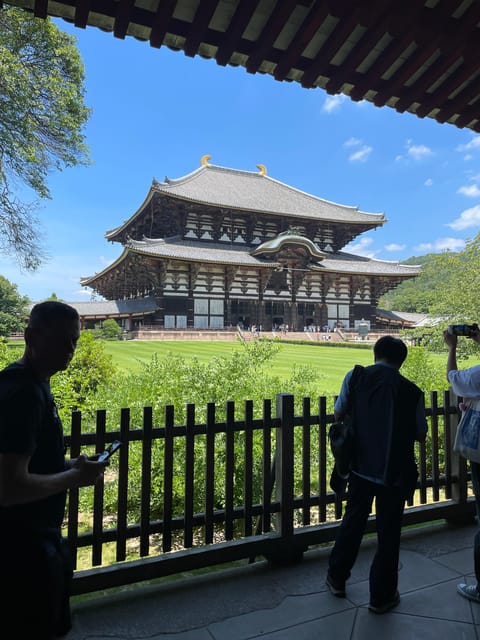
Review · JAPAN
Nara City Tour | Explore Temples, Park & Local Highlights
Nara lets deer set the pace. This five-hour guided outing gives you a simple way to reach Japan’s first capital from Osaka, meet the famous deer in Nara Park, visit Tōdai-ji and Nigatsudō, and finish with time for local snacks and shopping. I like the small group of up to eight people and the chance to ask questions along the way. I also like that the route includes both major sights and quieter temple grounds.
The main caution is the walking. You cover almost 10 kilometers, with several long stretches between stops, so this is not a gentle sightseeing stroll. The tour is best for you if you enjoy moving at a steady pace, wearing good shoes, and seeing a lot in one morning or afternoon.
Key points at a glance
- Almost 10 kilometers on foot: This is an active walking tour, not a hop-on, hop-off outing.
- Friendly deer in Nara Park: You can feed them, photograph them, and watch how they interact with people.
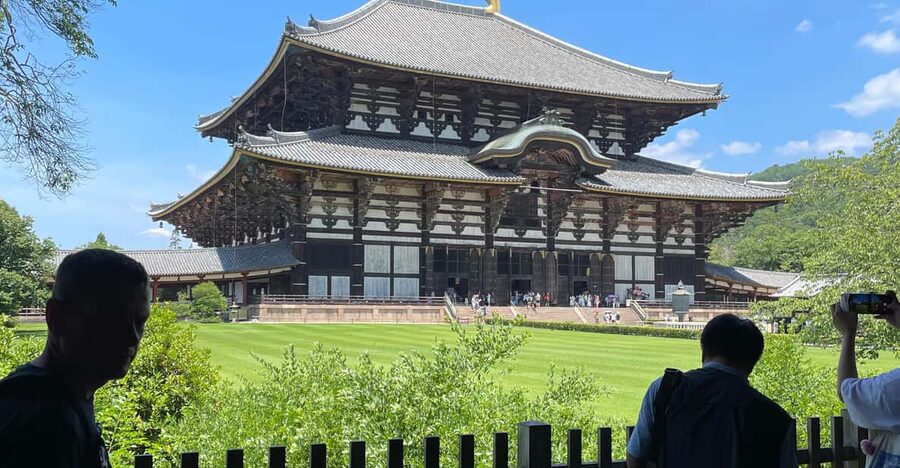
- Tōdai-ji gets proper time: The visit lasts about 40 minutes, enough to appreciate the temple without rushing through it.
- Nigatsudō adds a calmer temple stop: The February Hall offers a quieter change of pace after the main temple.
- Small groups help conversation: With no more than eight participants, it is easier to speak with the English-speaking guide.
- Rain does not cancel the outing: Bring a raincoat or umbrella, and expect fewer people at the sights on wet days.
Starting in Namba and riding toward Nara
Your meeting point is in the underground Namba Walk shopping passage, near exit B23. Look for the store between Mizuno Shop and Docomo Shop. This is in the Namba Walk area, not the subway section, so allow a little extra time to find the correct underground passage.
From there, the group takes a train for about 50 minutes. Transportation is not included in the $83 price, so you should budget separately for the train fare. The ride matters because it turns Nara into an easy half-day trip from Osaka rather than a complicated transfer project, but the five-hour schedule includes travel time. In practical terms, you get about three hours and 15 minutes of sightseeing and walking once the train rides and transfers are counted.
The guide speaks English and stays with the group through the route. That is useful at the start, when you need help getting on the right train and understanding the day’s order. One especially good feature of a small group is the chance to ask a quick question without holding up a crowd.
A few more temple visits around Japan worth a look
- Kyoto: Tea Ceremony Ju-An at Jotokuji Temple
★ 4.9 · 3,207 reviews - Tokyo: Asakusa Walking Tour with Sensoji Temple Visit
★ 4.8 · 1,583 reviews - Nikko: Kegon Falls, Lake Chuzenji & Toshogu Temple
★ 4.6 · 1,577 reviews
Nara Park and the city’s famous deer
The first sightseeing stop is Nara Park, with about 30 minutes set aside for looking around and meeting the deer. These animals roam freely through the park and around the temple approaches. They are accustomed to people, but they are still animals, so you need to follow the guide’s instructions and treat them with care.
You can feed the deer and take photographs. Bring cash, since personal expenses are not covered and food for the deer is an extra purchase. Keep your movements calm, pay attention to the deer around you, and avoid treating the encounter like a petting zoo. The appeal is seeing the animals share an old city with pedestrians, shrines, temples, and gardens.
Thirty minutes goes quickly. You should have time for a first look and some photographs, but not for a long, unhurried wander through every corner of the park. If the deer are your top reason for visiting Nara, stay focused and take your pictures early rather than assuming you can return later.
Weather can change the mood here. On a rainy day, fewer people may be around, which can make it easier to talk with the guide and move through the park. You will need waterproof clothing, though. The tour continues in wet weather.
Tōdai-ji and the scale of old Nara
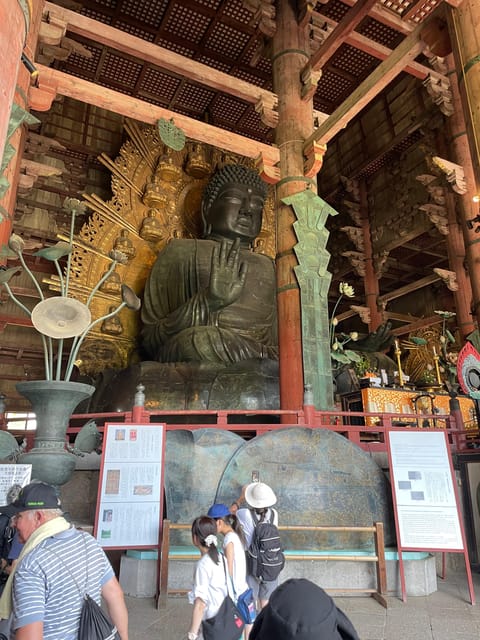
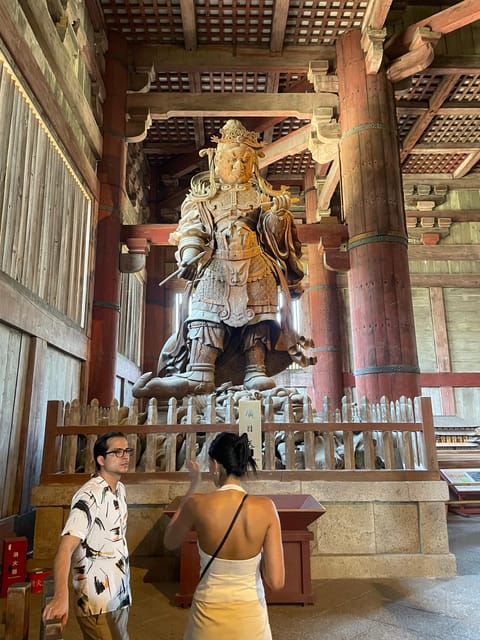
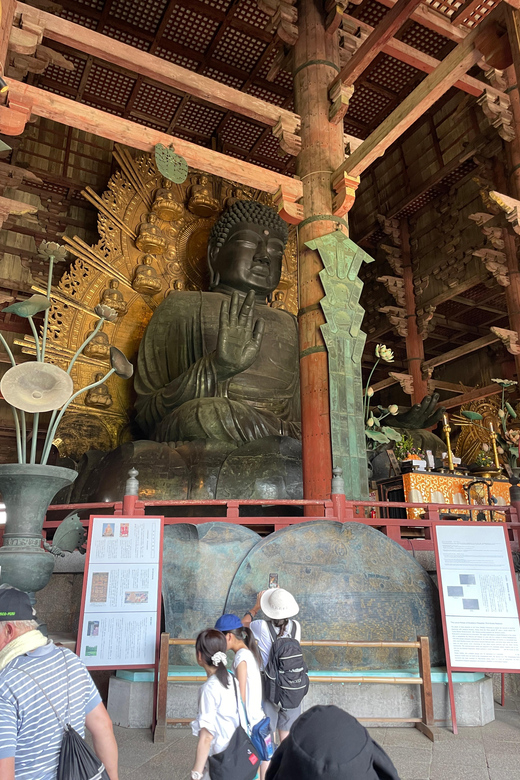
After about 15 minutes of walking, you reach Tōdai-ji for a 40-minute visit. This is the biggest temple stop on the route and the one that gives the tour its strongest sense of scale. Tōdai-ji is one of Japan’s most revered temples, and its large wooden architecture makes an immediate impression.
The 40-minute visit is a useful middle ground. You have enough time to see the main areas with the guide, listen to the explanation, and take photographs, but you are not left with hours to study every detail. If you like historical context, use this part of the tour to ask direct questions. The quality of your visit will depend partly on how much discussion you invite.
This is also where the walking pace may begin to matter. You have already covered Nara Park, and the day includes more temple paths after Tōdai-ji. Wear shoes with good support. Comfortable clothes are more important than dressing up, especially if you visit during warm weather or under wet conditions.
I would not choose this tour if your main goal is to spend a full morning inside Tōdai-ji alone. The schedule gives you a broad look at Nara rather than an in-depth study of one temple. For a first visit, that tradeoff makes sense.
Nakatanidou for a short break and local flavor
The group then walks about 10 minutes to Nakatanidou. You get around 30 minutes here for a break, free time, and shopping. This is a welcome pause after the first major temple and deer encounter.
The stop gives you a chance to look for local delicacies and browse the shopping area. Meals and drinks are not included, so this is a good point to buy something if you need food or water. You should carry cash because the tour specifically recommends it for personal expenses and deer food.
Do not expect a long restaurant meal during this portion of the schedule. Thirty minutes is better suited to a snack, a quick purchase, or a short rest. One guide also knew a good place for a late lunch, so asking your guide for food advice can be useful if your schedule leaves you hungry after the tour.
This stop adds a practical local touch. Without it, the day would be almost all park paths and temple grounds. Here, you get a glimpse of the shopping side of Nara and a chance to bring home a small craft or edible souvenir.
Same place, a different morning at the gates:
- Osaka/Kyoto:Kinkakuji,Arashiyama,FushimiInariShrine,NaraPark
★ 4.1 · 1,596 reviews - Tokyo: Nikko Toshogu Shrine and Kegon Waterfall Tour
★ 4.5 · 1,266 reviews - Tokyo Panoramic 1 Day: Meiji Shrine, Asakusa, Odaiba and SKYTREE®
★ 4.5 · 1,222 reviews - Kyoto Arashiyama Walking Tour: Bamboo, Monkeys, Gardens & Secrets
★ 5.0 · 1,216 reviews
Nigatsudō, the quieter temple stop
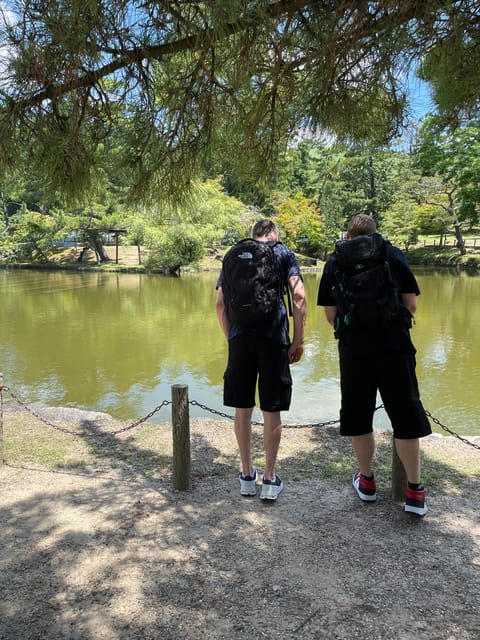
From Nakatanidou, the group walks about 20 minutes to Tōdai-ji Nigatsudō, also called February Hall. The visit lasts around 30 minutes. Compared with the main Tōdai-ji stop, this part of the route feels more peaceful and gives you time to notice the setting around the temple.
The walk to Nigatsudō is not just a transfer. It is another stretch through the historic temple area, with gardens, ponds, and old paths along the way. This is one reason the tour works well as a walking introduction to Nara. You are not simply checking off famous buildings. You are moving through spaces where nature and religious architecture sit side by side.
The shorter visit also keeps the tour from becoming too heavy on formal sightseeing. After the deer, the main hall, and the shopping stop, Nigatsudō gives you a quieter final look at Nara before the return journey.
Again, ask questions if you want more detail. One piece of direct feedback about this outing pointed to limited explanation at some sights, even though the guide was kind. That is useful advice. Do not wait silently for a long lecture. If you want to know why a building matters, what you are looking at, or how the temple connects to Nara’s past, speak up.
Returning to Osaka after a long walking day
After Nigatsudō, you walk about 25 minutes to the station before taking the train back to Osaka. The return ride takes roughly 50 minutes. By this point, the day’s distance is noticeable, so the final transfer can feel less like sightseeing and more like getting back to your base.
That is not a fault, but it is an important part of the value calculation. The $83 price includes the guide fee and the five-hour guided walking program, but not transportation, meals, drinks, deer food, or personal purchases. You are paying for the route, the company of an English-speaking guide, and help making sense of several Nara sights in one compact outing.
The price makes the most sense if you are staying in Osaka and want someone else to organize the train journey and order of visits. It makes less sense if you are comfortable navigating trains, already know Nara well, or want to spend most of the day at one temple.
What the guides add to the day
The strongest personal praise for this experience centers on the guides’ friendliness and English. Kenji was described as friendly and well informed, while Kota was praised for answering questions clearly and helping make a rainy visit easier. Those details suggest a warm, conversational style rather than a formal lecture.
That distinction matters. A small group of eight or fewer lets the guide adjust the conversation to your interests. You can ask about the deer, the temples, food, or the route. At the same time, the experience may vary depending on how much information your guide provides at each stop. If you want detailed cultural background, make that request early.
The guides also help with the unglamorous parts of the day, such as finding the correct train, keeping the group moving, and getting between widely spaced sights. That support has real value in a city where the attractions are spread across a large park and temple district.
Autumn color, rain, and the best time to go
The period from late October to mid-November can add autumn color to the temple grounds and park. If your dates fall in that window, you may see the trees at their most striking, although the exact timing can vary.
Rain does not stop the tour. A wet day can bring fewer people and make conversation easier, but you should bring a raincoat or umbrella and accept that paths may feel less comfortable. A camera is worth bringing in any season, but protect it from rain and keep your attention on the deer when you are feeding them.
Summer and winter are not discussed in detail, so I would plan around your own comfort with long walks and changing weather. The basic rule is simple: choose supportive shoes, wear comfortable clothes, and prepare for several hours outside.
Who should book this Nara tour?
I would recommend this outing to you if:
- You are staying in Osaka and want a guided day trip to Nara.
- You are visiting Nara for the first time.
- You want deer, major temples, gardens, and shopping in one organized route.
- You prefer a small group to a large coach tour.
- You enjoy walking and can manage almost 10 kilometers.
- You like asking questions and having a guide nearby for local advice.
I would be cautious if you have a mobility impairment, use a wheelchair, have a recent surgery, or have an animal allergy. The tour is specifically not suitable for those conditions, and the amount of walking makes the limitation clear. It is also not a good match if you want a slow, seated day or a specialist lecture at every temple.
The tour is aimed at English speakers, and the host or greeter speaks English. Smoking is not allowed. The group size is limited to eight, which is a good fit for people who want a more personal outing without paying for a private tour.
Should you book the Nara City Tour?
Book it if you want a well-organized first look at Nara from Osaka and you are happy to walk. The strongest parts are the friendly English-speaking guides, the small group, the deer encounter, and the mix of famous temples with a short shopping break.
Skip it if you need a slow pace, detailed academic commentary, or a full day at Tōdai-ji. Also remember that the $83 price does not include train fares, food, drinks, or personal purchases. For an active visitor who wants to see Nara’s main sights without planning every connection, this is a useful and personable choice.
FAQ
How long does the Nara City Tour last?
The tour lasts five hours, including the train journeys between Osaka and Nara.
Where is the meeting point?
Meet in the underground Namba Walk area near exit B23. The meeting place is between a Mizuno Shop and a Docomo Shop, and it is not in the subway area.
Is transportation included in the price?
No. Transportation fees are not included. The itinerary includes a train ride of about 50 minutes in each direction.
How much walking is involved?
The tour includes almost 10 kilometers of walking. Comfortable walking shoes are strongly recommended.
Can I feed the deer?
Yes. You can feed the deer in Nara Park, but deer food and other personal expenses are not included. You should follow the guide’s instructions and treat the animals respectfully.
Is the tour suitable for wheelchair users?
No. The activity is not suitable for wheelchair users or people with mobility impairments.
Does the tour operate in rainy weather?
Yes. The tour continues in rain. Bring a raincoat or umbrella and wear suitable shoes and clothing.
How large is the group?
The tour is limited to eight participants and is conducted in English.
Just added around Japan
- Private guided tour: Mt. Aso volcano, grasslands, Aso Shrine★ 5.0 · 19 reviews
- Takayama Inari Shrine Tour with Private Transportation★ 5.0 · 5 reviews
- From Asakusa: Old Tokyo, Temples, Gardens and Pop Culture★ 5.0 · 47 reviews
- Goshuin Collecting tour at Asakusa Local Temples & Shrines, Tokyo★ 5.0 · 8 reviews
- :Tokyo,Shibuya /Meiji Shrine tour in KIMONO/English-friendly★ 5.0 · 4 reviews
- Tokyo: Snow Monkey and Zenkoji Temple Day Trip In Low Price★ 5.0 · 5 reviews
- Tokyo War History Tour: Yasukuni Shrine & War Museum★ 4.5 · 6 reviews
- Tokyo: Gotokuji Culture Walk & Lucky Cat Temple Experience★ 4.9 · 5 reviews
Japan Temple Tours, compared.
Osaka/Kyoto:Kinkakuji,Arashiyama,FushimiInariShrine,NaraPark
Read our review →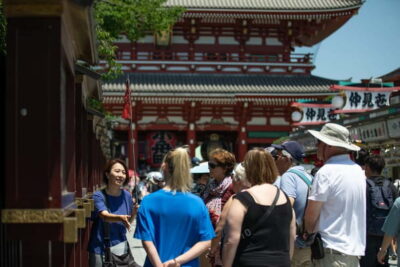
Asakusa Walking Tour with Sensoji Temple Visit
Read our review →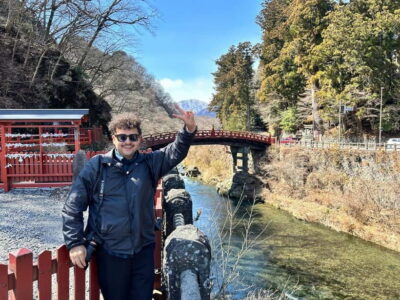

Nikko Toshogu Shrine and Kegon Waterfall Tour
Read our review →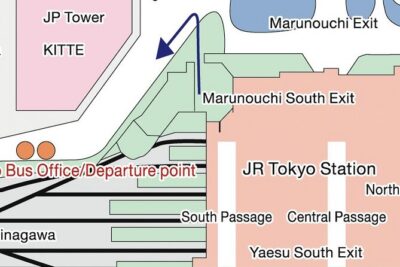
Tokyo Panoramic 1 Day: Meiji Shrine, Asakusa, Odaiba and SKYTREE®
Read our review →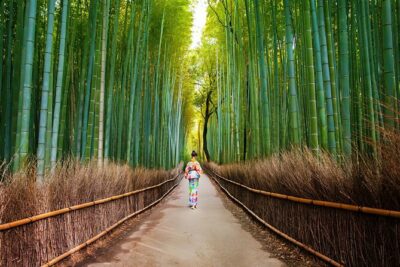
Kyoto Arashiyama Walking Tour: Bamboo, Monkeys, Gardens & Secrets
Read our review →
1-Day Snow Monkeys, Zenko-ji Temple & Sake in Nagano
Read our review →Browse the lists this tour appears in