
Review · JAPAN
Naha: Guided E-Bike Tour of the 12 Zodiac Temples
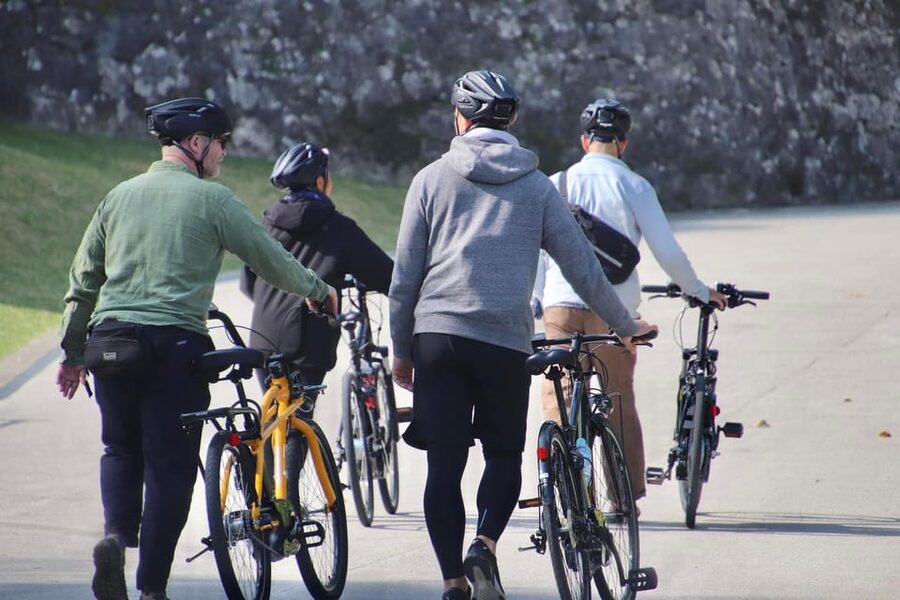
Quiet temples, red gates, and a little help from a motor. This three-hour e-bike tour gives you a practical way to reach Shuri’s tucked-away temples, shrines, springs, and side streets without fighting every hill on foot. I like the mix of Okinawan culture and gentle exercise, and I especially like that the small group is limited to five people.
The electric bikes are a real advantage in Shuri, where the route includes hills and ordinary cycling could become hard work in Okinawa’s sun. I also like the helmet intercom system, which lets you hear your guide and communicate during the ride. The main consideration is simple: you need to ride a bike confidently, and sandals are not allowed.
Several guides receive warm praise for their care and clear explanations, including Maki, Maria, Hiro, Reiji, Jojo, Sally, and Tiny. At $95 per person, the tour is not the cheapest way to see Naha, but the price includes the e-bike, helmet, guide, and access to quiet places you could easily miss on your own.
Key points to know before booking
- Small groups of up to five: You get a more personal ride and a better chance to ask questions.
- Electric bikes handle Shuri’s hills: The motor makes the route manageable, but you still need to cycle in traffic.
- Temples are the main attraction: Expect Shuri Kannon Temple, Ankokuji, Daruma Temple, Seikoji, Sogenji, and other sacred sites.
- The helmet intercom is useful: Your guide can explain the area while the group is moving.
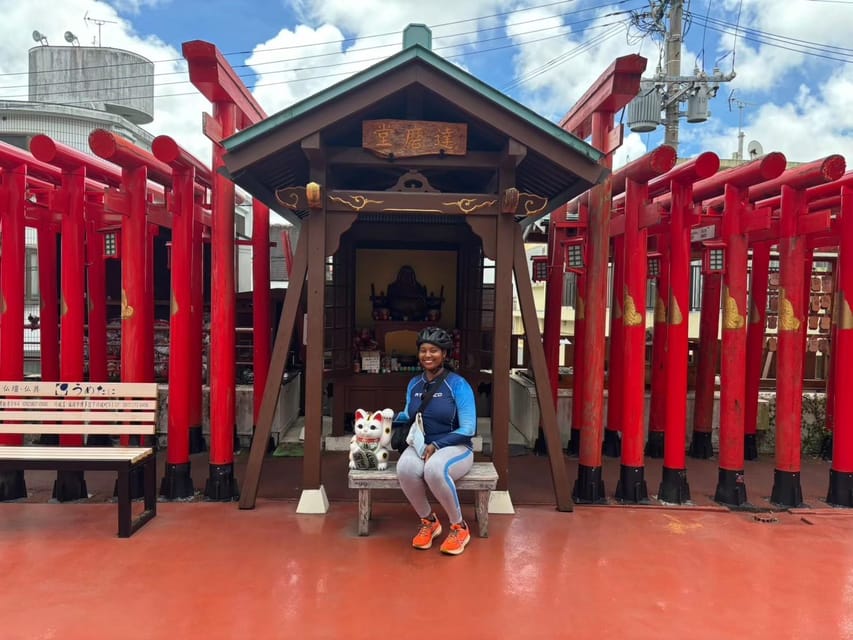
- Shureimon Gate supplies the classic photo: You can pose with your bike beneath one of Okinawa’s best-known red gates.
- Bring water and sun protection: Comfortable shoes, sunscreen, and a hat matter in Okinawa’s warm weather.
Why an e-bike makes sense in Shuri
Shuri is often associated with Shurijo Castle, but the area holds much more than its main landmark. Temples sit along narrow streets, local homes appear behind old walls, and small religious sites can be easy to pass without realizing what you are seeing.
An e-bike gives you more range than walking and a slower, more observant pace than a car. You can move between separate sites while still noticing the backstreets. The motor is particularly useful on the hills, and one rider described the steep sections as easy because of the quality of the bikes.
This is still a cycling tour, not a motor-assisted sightseeing bus. You must be able to ride, follow directions, and manage a bike around traffic. The guides give navigation help, and several visitors appreciated the way they checked that everyone was comfortable and safe, but the activity remains unsuitable for anyone who cannot cycle.
The helmet intercom system adds real value. A guide does not need to shout across the road, and you can hear explanations without stopping every few minutes. It also helps the group communicate while riding together.
More Cycling Tours in Japan:
- E-Bike Nara Highlights – Todaiji, Knives, Deer, Shrine
★ 4.8 · 186 reviews - Kyoto: Fushimi Inari Shrine and Tofukuji Temple E-Bike Tour
★ 5.0 · 75 reviews - Kyoto: Hidden Gems E-Bike Tour Through Backstreets & Temples
★ 4.9 · 54 reviews
Starting near Makishi Station
The shop is about a five-minute walk from Monorail Makishi Station, next to a post office. The tour begins and ends at the same shop, which makes the activity easy to fit into a day in central Naha.
You meet your guide there, get fitted with an electric bicycle, and receive a helmet with the intercom system. Wear comfortable clothing suitable for cycling and closed, comfortable shoes. Flip-flops and sandals are not allowed, and that rule makes sense once you consider the hills, pedals, and road riding.
Bring water, sunscreen, and a hat. Meals and drinks are not part of the price, and you will have no meal stop built into the standard tour. One guide did add a bakery stop when time allowed, but you should treat that as a pleasant extra rather than a guaranteed part of the route.
The tour lasts three hours. With a maximum of five participants, the pace can be adjusted more easily than on a large coach excursion. That small size is useful if you want to ask about temple customs, request a photo, or tell your guide that you need a short pause.
Shuri Kannon Temple and the first view of the district
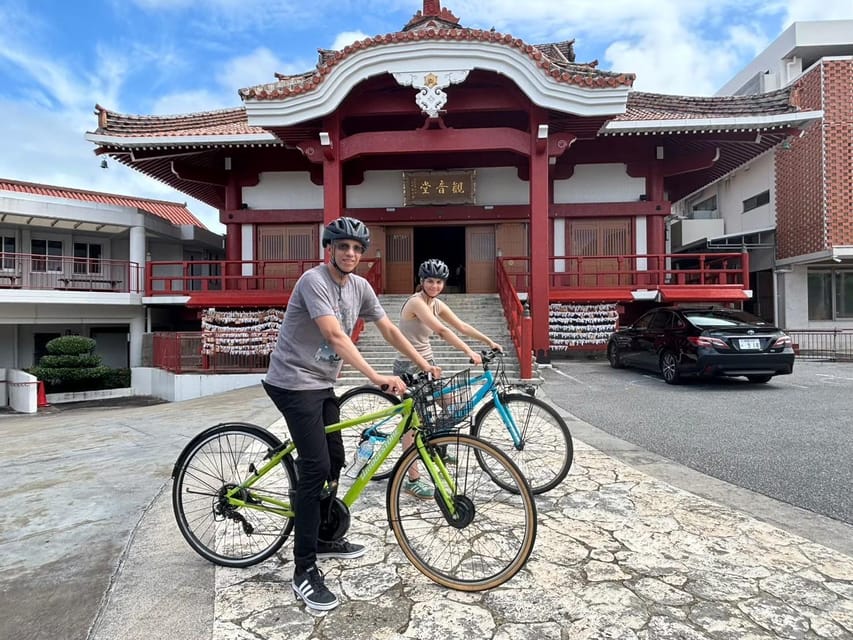
Shuri Kannon Temple, also called Shuri Kannondo, is one of the early highlights. It served as a guardian temple during the Ryukyu Kingdom period, and its bright red building and decorative carvings make an immediate impression.
The stop gives you more than a quick photograph. Your guide explains the temple’s place in the area and points out details you might otherwise pass without understanding. From the temple, you can also look out over Shuri, giving the tour an early sense of how the religious sites fit into the wider district.
This is one of the places where a guide adds clear value. Temple architecture and customs can be difficult to interpret if you are unfamiliar with Okinawan Buddhist and Shinto traditions. The guides explain the meaning behind the stops and, according to one detailed account, helped a participant collect a goshuin from each temple visited.
The tour is built around 12 zodiac temples and shrines, though the exact sites visited can depend on the route and conditions. The named stops provide a useful mix of major sights and quieter religious places rather than one long visit at a single attraction.
Ankokuji and an old gate beneath a gajumaru tree
Ankokuji Temple offers a different mood. The stop is brief, around five minutes in the published timing, but it adds a glimpse of traditional houses, an old gate, and a large gajumaru tree.
The gajumaru is a familiar Okinawan tree, with roots and branches that give religious sites a strong sense of age and place. Here, the tree is part of the scene rather than a separate attraction, and the guide helps connect it to the temple grounds.
The short visit may feel rushed if you want extended photography or quiet reflection. On the other hand, the quick stop keeps the tour moving and leaves time for several different sites. This is a sightseeing ride with many small encounters, not a long temple-study session.
A few more temple visits around Japan worth a look
- Hiroshima: Peace Park, Castle, and Mitaki Temple E-Bike Tour
★ 4.8 · 11 reviews - Kanazawa Ninja Temple Half Day E-bike tour
★ 5.0 · 4 reviews - From Siem Reap: Angkor Wat Sunrise and Temples E-Bike Tour
★ 5.0 · 52 reviews - e-Bike Cycling Tour to Arkadi Monastery Full Lunch included
★ 5.0 · 26 reviews
Shureimon Gate, Okinawa’s essential red landmark
Shureimon Gate is the most instantly recognizable stop on the route. Its red structure and ornate design have become symbols of Okinawa, and the tour builds in time for a photograph with your e-bike.
That bike photo is a small but effective touch. It records the way you saw the district, not just the landmark itself. If you are looking for a classic image from Naha, this is likely to be one of the strongest opportunities during the ride.
Do not expect to have the gate entirely to yourself. The information provided does not promise a private visit or a quiet time of day. Your guide can help with the photo, but the exact conditions will depend on activity at the gate when you arrive.
The route’s balance works well here: you see a major symbol of Okinawa, then continue toward less obvious temples and local streets. You are not spending the full three hours at only the best-known sight.
Daruma Temple and prayers for health
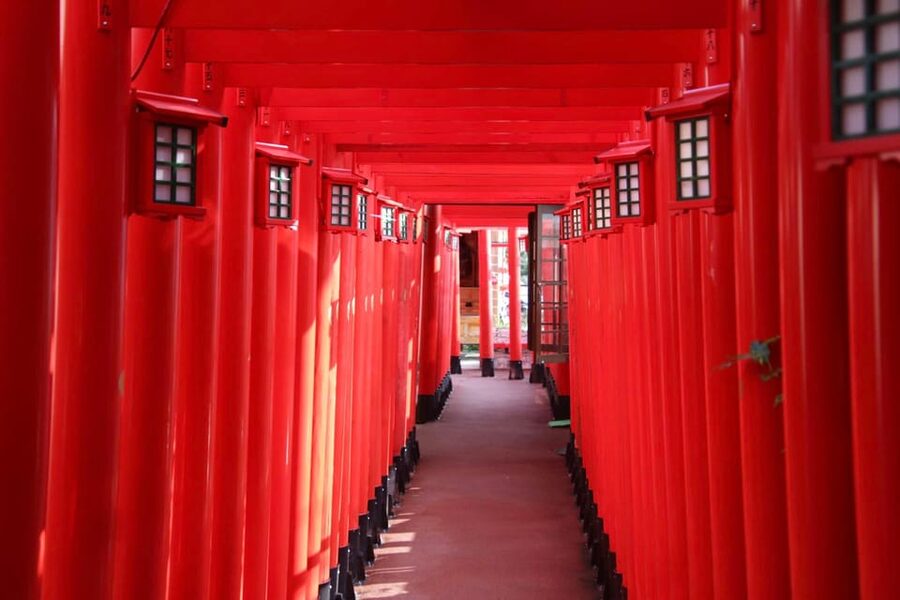
Daruma Temple is known for health and pregnancy prayers. Its red torii gate and rows of red daruma dolls create a strong visual change from the previous sites.
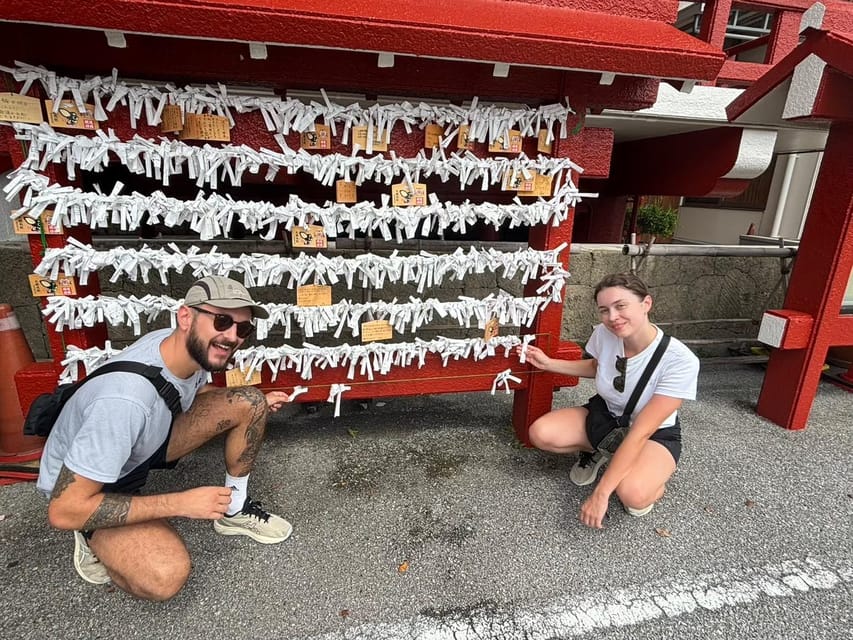
The daruma figures are not just decoration. They are linked with wishes and prayers, giving your guide a natural opening to explain local religious customs. If you are interested in the practical side of worship, ask how visitors use the dolls and what kinds of prayers are associated with the temple.
The stop is scheduled for about 20 minutes, enough time to look around and listen without feeling that you must rush immediately back to the bike. As with all religious sites, be respectful with photography and follow the guide’s advice about where to stand and what not to touch.
Seikoji Temple and a quieter pause
Seikoji Temple is described as peaceful, with a sacred atmosphere, Jizo statues, and a modern building. After the bold red gate and daruma dolls, this stop offers a calmer visual break.
The Jizo statues are especially worth noticing. They are commonly associated with protection and care, and your guide can explain their local meaning in context. The modern structure also shows that the religious life of the area is not limited to old wooden gates and traditional houses.
The scheduled visit is around 10 minutes. That is enough for an introduction and a quick look, but not enough for extended contemplation. If you prefer slow temple visits with lots of time for sketching or photography, this tour may feel brisk.
Saki Kasahigawa spring and Sogenji’s royal connection

The route also includes Saki Kasahigawa, a spring said to flow from the deep forest. The flowing water gives you a different way to connect with the area’s past. Instead of looking only at buildings and statues, you get a natural feature tied to local belief and memory.
The final major temple is Sogenji, a former royal mausoleum. Its park, gate, and gajumaru tree provide a quieter finish, with what is described as pure air around the grounds.
Sogenji helps explain why the route is more than a collection of photo stops. Royal history, Buddhist practice, sacred trees, springs, and everyday neighborhood streets all appear in one compact outing. Your guide’s explanations are important here because the visual details alone will not tell you why each site matters.
The route information gives exact visit times for some temples and cycling sections, but not every stop receives a separate timing. Weather, traffic, and the group’s pace can affect how long you stay at each place.
How the guides shape the experience
The strongest pattern in the guide feedback is personal care. Maki is praised for adapting the ride, explaining history and customs, taking photographs, and suggesting extra places when time remained. Maria is described as friendly, professional, and especially clear in English. Hiro is praised for checking hydration and bike comfort.
Other guides, including Reiji, Jojo, Sally, and Tiny, are also singled out for clear stories, safety help, and an easygoing approach. You may not receive a specific guide by request, but the range of positive names suggests that the experience depends heavily on a team rather than one individual.
The English, Chinese, and Japanese language options make the tour accessible to a wider range of visitors. If English is your preferred language, the guide feedback points to strong communication, but guide assignment is not guaranteed in advance from the information provided.
The intercom deserves another mention. It allows your guide to explain the area during parts of the ride and makes it easier for the group to stay in contact. That is a small piece of equipment, but it helps the tour feel organized and safe.
Is $95 a fair price?
At $95 per person, this tour costs more than renting a bicycle and visiting a few nearby sites independently. The comparison is not quite even, though. Your price includes the electric bike, helmet, intercom, guide, route planning, and interpretation at several temples and shrines.
The real value is access and context. Some of the temples sit along side streets and are difficult to locate without local help. You also avoid the effort of planning a route around hills, traffic, opening conditions, and the distance between sites.
I would consider the price fair for visitors who want a guided cultural outing and do not want to spend time working out the route. It is less compelling for strong cyclists who already know Shuri, speak Japanese, and prefer to explore independently.
The small group helps justify the cost. Five participants is a much better setting for questions and photographs than a large city tour. You are also paying for a guide who can adjust the experience to the group’s ability, within the limits of a three-hour schedule.
Weather, comfort, and practical limits
Okinawa’s sun can make a three-hour ride feel harder than the distance suggests. Water, sunscreen, and a hat are essential practical choices, not optional extras. Comfortable shoes and cycling-friendly clothes will make the ride easier.
The operator may change plans if the chance of precipitation exceeds 70 percent or if severe weather is expected. You should receive notice the day before in that situation. This policy is sensible for a route that combines cycling, hills, and outdoor temple grounds.
Smoking is not allowed during the tour. Temple donations, meals, and drinks are also not included, so carry some money if you want to make an offering or buy something separately.
Free cancellation is available up to 24 hours before the start for a full refund, and you can reserve now and pay later. Check the available starting times when booking, since the supplied information does not specify one fixed departure time.
Who should book this Naha tour?
I would recommend it to you if you want to see more than Naha’s main shopping streets, enjoy light activity, and value a local explanation of religious sites. It is particularly well suited to couples, families with confident cyclists, and small groups who want a relaxed private-feeling outing without booking a fully private tour.
It is also a smart choice if you are staying near central Naha and want a simple half-day plan. The start point near Makishi Station is convenient, and returning to the same shop keeps the logistics tidy.
I would hesitate if you cannot ride a bike, dislike cycling near traffic, or want long, unhurried visits at each temple. The tour covers several places in three hours, so the pace is active even with electric assistance.
Should you book the 12 Zodiac Temples e-bike tour?
Book it if you want Shuri’s lesser-known religious sites, a little exercise, and a guide who can explain the customs behind the gates, statues, trees, and springs. The electric bikes, small group, intercom helmets, and repeated praise for guides such as Maki, Maria, and Hiro make this a strong way to cover hilly ground.
Skip it if you cannot cycle or if you prefer to explore at your own slow pace. For everyone else, $95 buys more than transportation. It buys a carefully planned route through parts of Shuri that are easy to miss, with enough history and local detail to make the stops matter.
FAQ
How long does the Naha e-bike temple tour last?
The tour lasts three hours.
How much does the tour cost?
The price is $95 per person.
Where does the tour begin?
It begins at the bike shop in ダイショウビル, about a five-minute walk from Monorail Makishi Station and next to a post office.
Does the tour return to the starting point?
Yes. The tour starts and ends at the same location.
What is included in the price?
The price includes an electric bicycle rental and a guided tour with a helmet fitted with an intercom system.
Are food and drinks included?
No. Meals and drinks are not included. Temple offerings are also separate.
Which languages are available?
The tour is offered in English, Chinese, and Japanese.
How many people can join the group?
The tour is limited to five participants.
What happens in bad weather?
If the chance of precipitation exceeds 70 percent or severe weather is expected, the plans may change. The operator will contact you the day before.
Just added around Japan
- Private guided tour: Mt. Aso volcano, grasslands, Aso Shrine★ 5.0 · 19 reviews
- Takayama Inari Shrine Tour with Private Transportation★ 5.0 · 5 reviews
- From Asakusa: Old Tokyo, Temples, Gardens and Pop Culture★ 5.0 · 47 reviews
- Goshuin Collecting tour at Asakusa Local Temples & Shrines, Tokyo★ 5.0 · 8 reviews
- :Tokyo,Shibuya /Meiji Shrine tour in KIMONO/English-friendly★ 5.0 · 4 reviews
- Tokyo: Snow Monkey and Zenkoji Temple Day Trip In Low Price★ 5.0 · 5 reviews
- Tokyo War History Tour: Yasukuni Shrine & War Museum★ 4.5 · 6 reviews
- Tokyo: Gotokuji Culture Walk & Lucky Cat Temple Experience★ 4.9 · 5 reviews
E-Bikes, compared.

E-Bike Nara Highlights – Todaiji, Knives, Deer, Shrine
Read our review →
Fushimi Inari Shrine and Tofukuji Temple E-Bike Tour
Read our review →
Hidden Gems E-Bike Tour Through Backstreets & Temples
Read our review →

e-Bike Cycling Tour to Arkadi Monastery Full Lunch included
Read our review →
Nice: 7 Hills Monastery & Waterfall (EBike Tour Local Guide)
Read our review →
Hiroshima: Peace Park, Castle, and Mitaki Temple E-Bike Tour
Read our review →
Browse the lists this tour appears in