
Review · JAPAN
Miyajima: Private Rickshaw Tour to Itsukushima Shrine
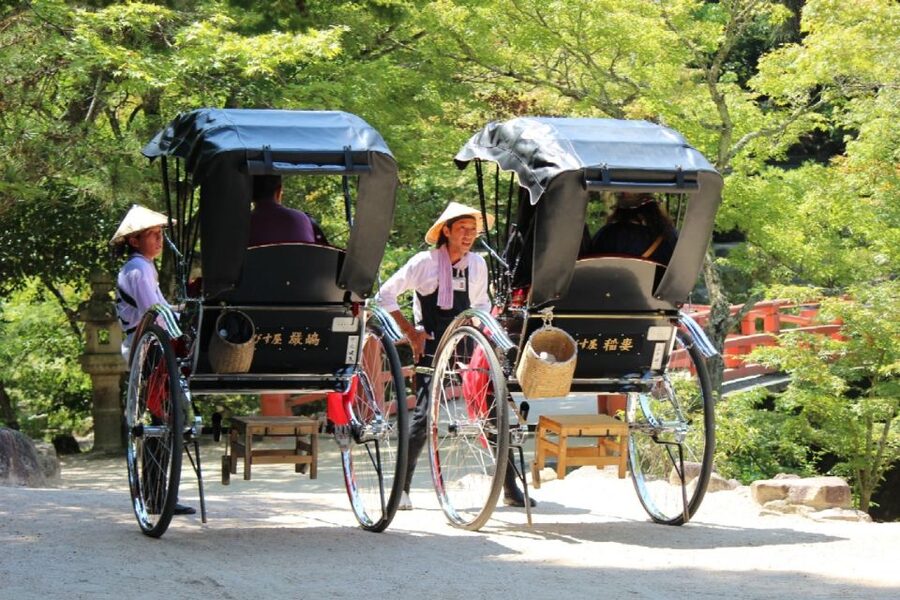
Miyajima is best seen at a gentle pace. This private rickshaw ride gives you a quick feel for the island before leading you through old streets, waterfront views, and sacred sites around Itsukushima Shrine. I like the personal guide and the chance to reach scenic corners without tiring yourself out. I also like that you can choose a short introduction or a longer route with temple visits and seaside paths.
The main consideration is space. Each rickshaw holds up to two adults on a 74-centimeter-wide seat, so booking one per person may be more comfortable for some couples or friends. The tour is also led in Japanese, though guides have used Google Translate when needed. Guides such as Kim, Jose, Shinemasa, and other local drivers have earned praise for their humor, photos, and easygoing storytelling.
Quick takeaways from the Miyajima rickshaw ride
- Meet outside the ferry terminal: Your guide waits on Miyajima, with a map and meeting-point photo sent after booking.
- Choose your route: Options range from 45 to 190 minutes, with longer rides adding Daishoin Temple, Senjokaku Shrine, parks, and seaside roads.
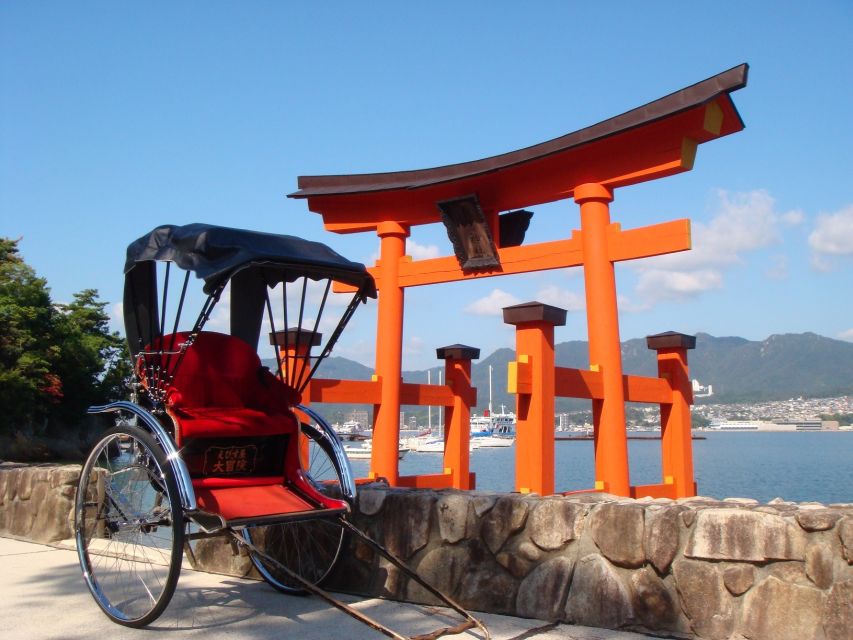
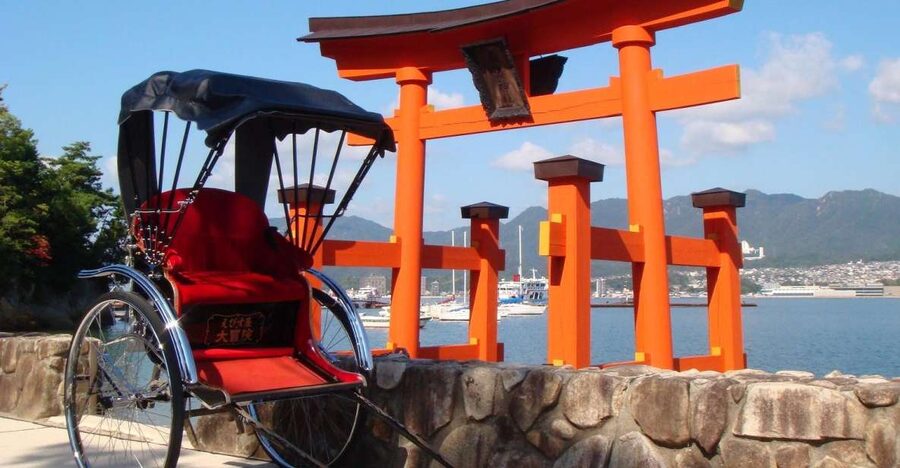
- See the torii from the waterfront: The large orange gate appears to float in front of Itsukushima Shrine at high tide.
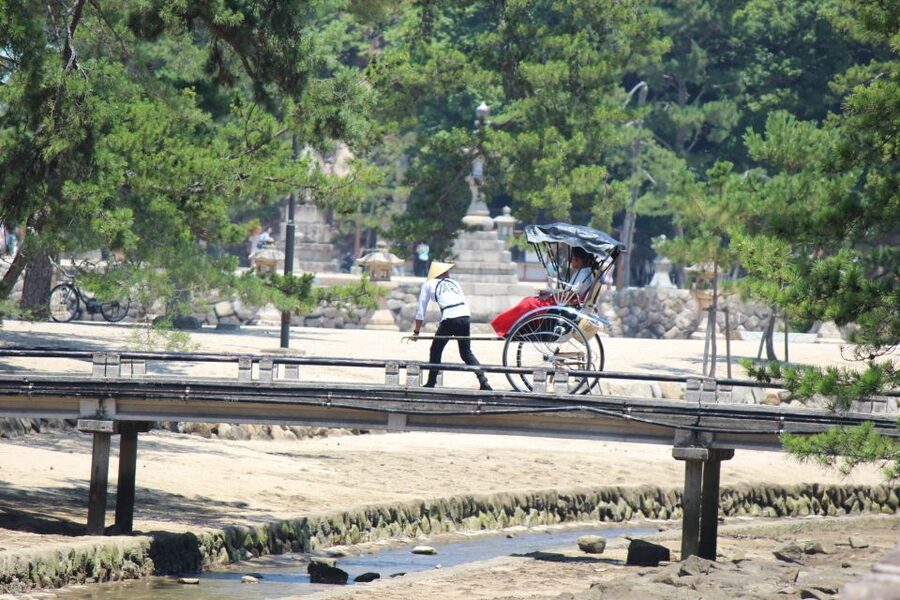
- Ride through old Miyajima: Expect townhouses, the traditional shopping arcade, quiet lanes, and views toward the sea.
- Private means flexible: You can adjust the route to suit your interests and choose your endpoint.
- Plan for extra costs: Temple and shrine admission is not included, and Senjokaku Shrine costs 100 yen.
Why a rickshaw makes sense on Miyajima
Miyajima is walkable, but a rickshaw changes the pace and the amount of information you receive. Instead of simply following the busiest street from the ferry terminal toward Itsukushima Shrine, you ride with a local guide who can point out old buildings, explain customs, and steer you toward photo stops.
That matters on an island where the main sights can feel crowded and familiar. The rickshaw gives you a moving introduction, then lets you pause for views and visits. It is part sightseeing ride, part orientation, and part conversation with someone who knows the island.
I particularly like this format for a first visit. You can quickly understand how the ferry terminal, town center, shrine, waterfront, and temple areas fit together. After the ride, you can return on foot to any place that deserves more time.
The experience is private, so you do not share the vehicle with another booking party. That makes it easier to ask questions, request photographs, or adjust the route. Several guides have been praised for their friendliness and enthusiasm. One guide, Kim, was noted for taking beautiful photos while adding humor to the ride. Jose was praised for finding less obvious places and making the island’s story easy to follow.
A few more temple visits around Japan worth a look
- Kyoto: Tea Ceremony Ju-An at Jotokuji Temple
★ 4.9 · 3,207 reviews - Tokyo: Asakusa Walking Tour with Sensoji Temple Visit
★ 4.8 · 1,583 reviews - Nikko: Kegon Falls, Lake Chuzenji & Toshogu Temple
★ 4.6 · 1,577 reviews
Starting outside the Miyajima Ferry Terminal
Your guide waits just outside the ferry terminal on Miyajima at the agreed time. After booking, you receive a map and a photograph of the exact meeting place, which is useful because the ferry area can be busy and unfamiliar when you first arrive.
The starting point keeps the tour simple. You do not need to search for a distant office or make your way across the island before the ride begins. You step off the ferry, find the guide, and start seeing Miyajima almost at once.
The first section heads toward the center of town. You pass traditional townhouses and the old-fashioned shopping arcade, where the island’s commercial side comes into view. This is a good introduction because Miyajima is more than a shrine and a torii gate. Its everyday streets, shops, and older buildings help explain how the island functions beyond its famous postcard views.
The guide can also help you notice details you might pass without context. The language of the tour is Japanese, so communication may not be as smooth as on an English-led excursion. Still, the experience can work well with simple questions, gestures, and translation tools. One guide used Google Translate when English explanations became difficult.
The waterfront and the floating torii gate
The ride continues along the waterfront toward Itsukushima Shrine. This is the moment most people picture when they think of Miyajima: the large orange torii gate set in the water in front of the shrine.
At high tide, the gate appears to float. The effect changes with the water level, so timing matters if this is your main goal. The tour description specifically highlights the gate during high tide, but it does not promise a particular tide schedule for your departure. If the floating view is essential, check the tide before choosing your start time.
The waterfront route gives you a useful angle on the shrine complex. You are not only walking toward a gate on land. You are seeing the relationship between the shrine, the sea, and the island’s religious setting. Your guide can add local context while you stop for photographs.
The experience is especially good for people who want help with photos. Guides have been praised for taking pictures and choosing attractive viewpoints. You should still remember that the torii view depends on tide, weather, and crowds. A rickshaw cannot guarantee an empty scene or perfect conditions.
Choosing the 45-minute introduction
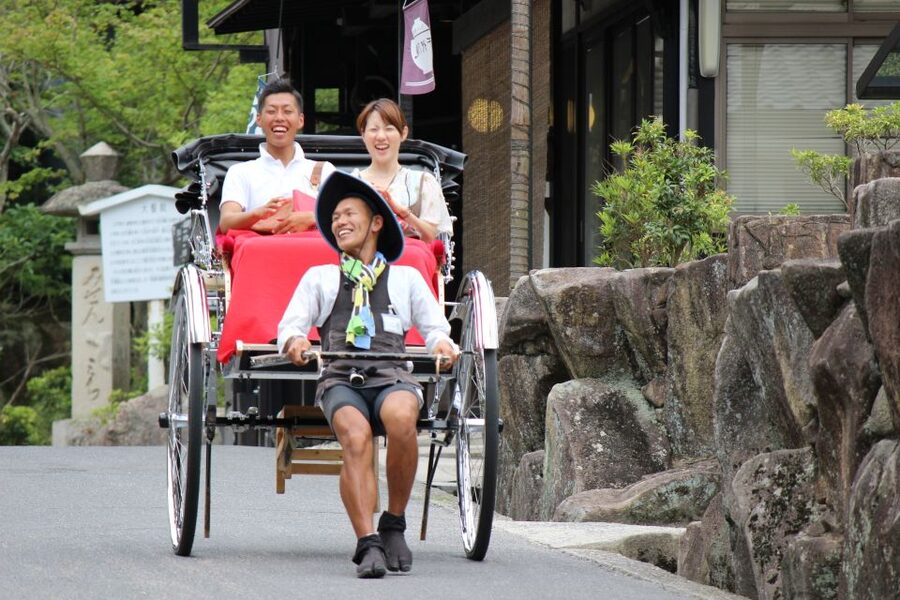
The shortest option is the most practical choice if you have limited time or only want a quick overview. The available duration range begins at 45 minutes, while the listed longer choices include 70, 130, and 190 minutes. Check the booking calendar for the exact option and departure time available on your date.
A short ride suits you if you are making a brief stop on Miyajima, have mobility concerns related to long walks, or want an orientation before exploring independently. You still get the ferry-terminal meeting, town streets, shopping arcade, waterfront, and a view toward the torii area.
One piece of feedback suggested that 30 minutes was enough for that particular guest. That is a useful reminder that the shortest route may satisfy you if you mainly want the novelty of the ride and a basic look around. At the same time, the 45-minute option may feel too brief if you want a temple visit or a slower route with several stops.
Think of this choice as an introduction, not a full island tour. You will likely get the best value from it if your schedule is tight and you plan to walk around afterward.
Same place, a different morning at the gates:
- Osaka/Kyoto:Kinkakuji,Arashiyama,FushimiInariShrine,NaraPark
★ 4.1 · 1,596 reviews - Tokyo: Nikko Toshogu Shrine and Kegon Waterfall Tour
★ 4.5 · 1,266 reviews - Tokyo Panoramic 1 Day: Meiji Shrine, Asakusa, Odaiba and SKYTREE®
★ 4.5 · 1,222 reviews - Kyoto Arashiyama Walking Tour: Bamboo, Monkeys, Gardens & Secrets
★ 5.0 · 1,216 reviews
The 70-minute route and Daishoin Temple
The 70-minute option adds Daishoin Temple, one of Miyajima’s most important religious sites. The temple is described as about 1,200 years old and is regarded as a power spot, meaning a place associated with renewed energy and good fortune.
The temple stop gives the tour more substance than a simple photo ride. You can pause, learn about the site, and take in a broad view over Miyajima. That elevated outlook is one of the strongest reasons to choose the longer option.
I would pick 70 minutes for a first visit if your schedule allows it. You get the town and waterfront introduction, then add a sacred place with a different mood from the busy shopping streets. The stop also gives you a chance to experience Miyajima as a religious island rather than only as a scenic day trip.
Admission fees to temples and shrines are not included, so keep some yen available. The supplied details do not give a separate admission price for Daishoin Temple, so confirm the current cost if you need an exact budget.
The 130-minute route and Senjokaku Shrine
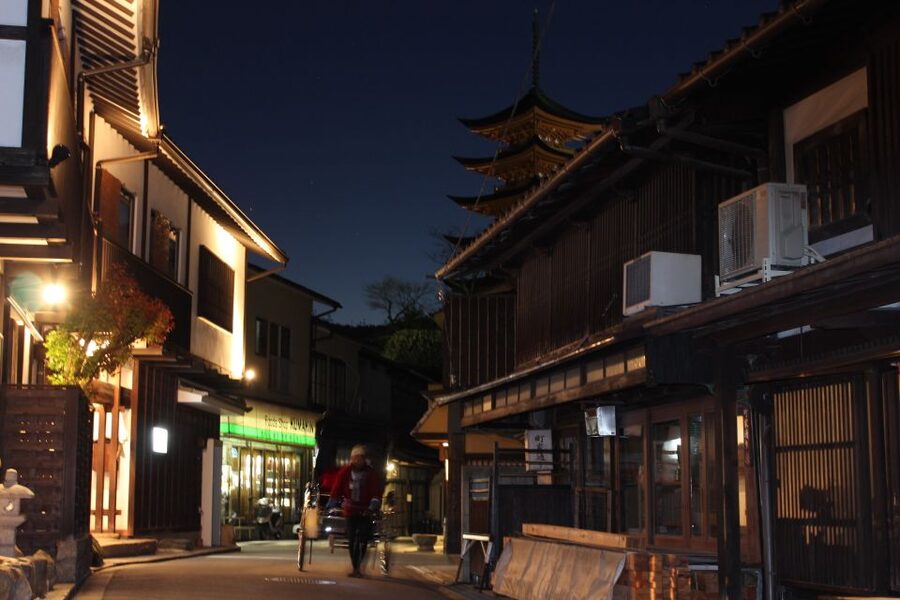
The 130-minute option adds Senjokaku Shrine. The building was ordered by Toyotomi Hideyoshi, the former shogun, and the stop gives you more time for the island’s political and religious past.
Senjokaku is also valued for its sea views. The longer ride lets you combine the waterfront torii scene with another major structure and time to hear how the site fits into Miyajima’s story.
Entry to Senjokaku Shrine costs 100 yen and is not included. That is a small extra charge, but knowing about it ahead of time avoids confusion at the entrance.
This option suits you if you want a fuller sightseeing experience without committing to the longest route. It gives the ride room to slow down, stop, and explain rather than simply passing by. It is also a better fit if you would rather have a guide connect the main sights for you than work out the route alone.
The 190-minute route through parks and seaside roads
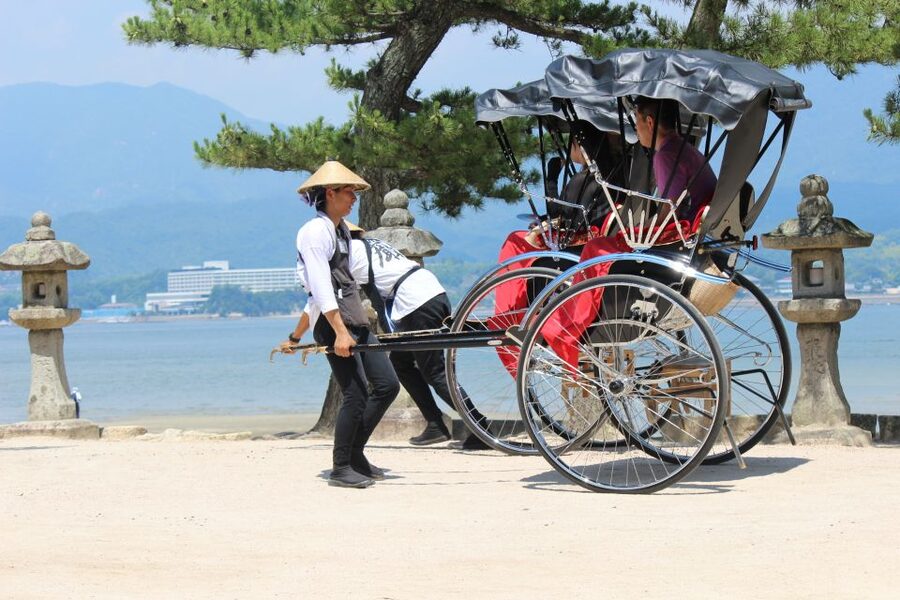
The 190-minute option is the most complete version. Along with the temples and shrines, you ride on scenic routes through parks and beside the sea.
The extra time matters because it shifts the experience away from a quick central-town circuit. You see more of Miyajima’s quieter side and have more time for conversation, photographs, and stops based on your interests.
The route is customizable. You can ask for changes based on what you want to see, and you can choose your endpoint. That flexibility is useful if you want to finish near a particular part of the island rather than automatically returning to the starting point.
I would choose 190 minutes if the rickshaw itself is a major part of your Miyajima day. It offers the broadest look at the island and gives the guide the most room to show you places you might otherwise miss. The tradeoff is simple: it costs more time and keeps you seated for longer, so it is not ideal if you prefer to spend the day walking or have a tight ferry schedule.
Deer, photographs, and the human touch
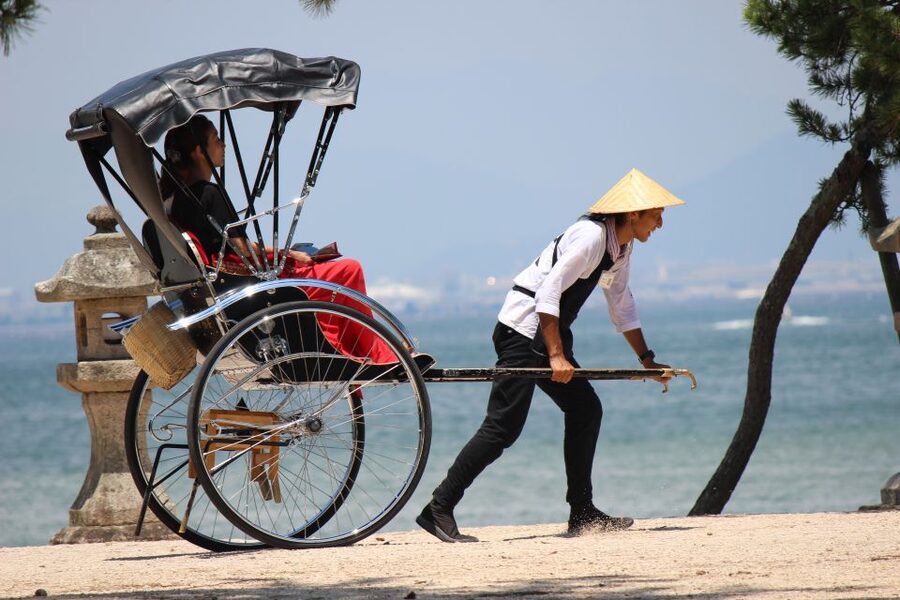
Miyajima’s deer are part of the island experience, and the tour highlights the chance to greet them. They add charm to the streets and open areas, though you should treat them as living animals rather than props for photographs.
The personal guide is the part that most improves the ride. The strongest feedback focuses on warmth, humor, local knowledge, and effort. Shinemasa was praised for listening carefully and sharing details about the island. Another guide was described as friendly and enthusiastic, helping make the ride both informative and fun.
The guides may also help you capture photographs. That is valuable when you are traveling as a couple or small group and want pictures with everyone included. The souvenir postcard and sticker are modest, but they make a pleasant little reminder of the ride.
The experience is not a formal lecture. You may receive a mix of spoken explanation, visual pointing, short translations, and conversation. If you need highly detailed English interpretation, this may not be the right format. If you enjoy a relaxed exchange and can be patient with language differences, it can feel more personal.
Price, comfort, and who gets the best value
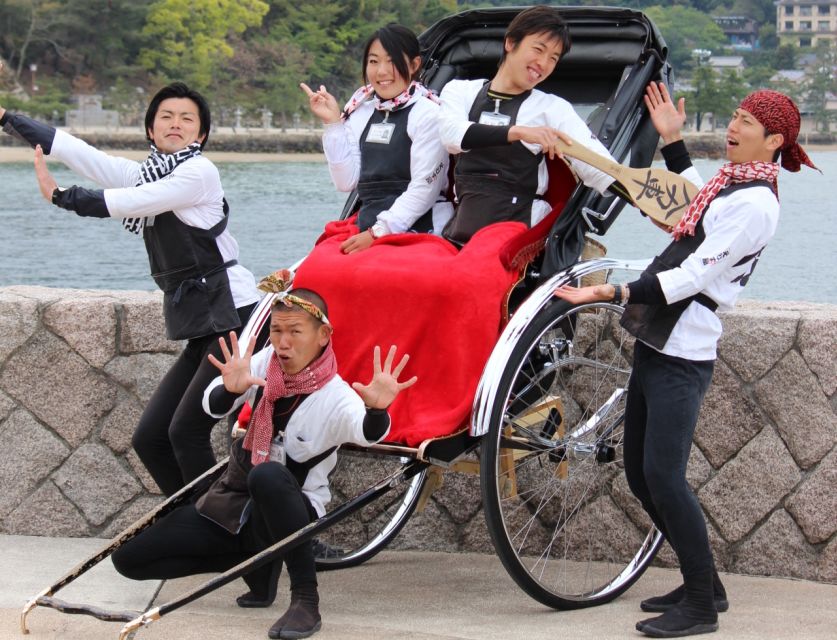
At about $51 per person, the tour is not the cheapest way to see Miyajima. Its value comes from the private vehicle, a local driver-guide, route flexibility, photo help, and the time saved by covering several areas comfortably.
The price makes the most sense for two people sharing a rickshaw and choosing a route long enough to include meaningful stops. A short ride gives you convenience and novelty, but the longer versions offer more sightseeing for the money.
Each rickshaw seats a maximum of two adults. The seat is 74 centimeters wide, or about 29.1 inches, and two adults sit side by side. That may be fine for many couples, but you may prefer separate rickshaws if you want more room.
Children aged six and under can ride free on an adult’s lap, with one child per adult and a maximum of two adults and two children in one rickshaw. A child aged six or older who uses a seat must book as an adult.
The tour is not suitable for people with back problems or pregnant women. It is specifically not recommended during the first 16 weeks of pregnancy. Selfie sticks are also not allowed.
Booking details that affect your day
Cancellation is free up to 24 hours before the tour for a full refund. You can also reserve and pay later, which helps if your Miyajima plans depend on ferry timing or changing weather.
The meeting point is on Miyajima, not at a mainland hotel or station. Allow enough time to reach the ferry terminal and get across to the island before your scheduled start.
Because the guide waits at a fixed time, keep your ferry plans realistic. A delay could make the meeting difficult. The map and meeting-point photo sent after booking should help, but you still need to watch the clock.
Temple and shrine admissions are separate. Bring a little extra cash for Senjokaku’s 100-yen entry fee and any other current admission charges.
Should you book this Miyajima rickshaw tour?
Book it if you want a private introduction to Miyajima, prefer riding to covering long distances on foot, or value a local guide who can explain the island and take photographs. The 70-minute route is my practical pick for a good balance of town streets, waterfront views, and Daishoin Temple.
Choose 130 minutes if Senjokaku Shrine matters to you. Choose 190 minutes if you want scenic roads, parks, seaside views, and the most flexible route.
Skip it if you want a fully English-led tour, dislike compact seating, have back problems, or already plan to spend the whole day walking independently. For everyone else, the private format and friendly guides make this a pleasant way to meet Miyajima before exploring its sacred sites at your own pace.
FAQ
Where does the Miyajima rickshaw tour begin?
Your guide waits just outside the Miyajima Ferry Terminal. After booking, you receive a map and photograph showing the meeting place.
How long does the tour last?
Available durations range from 45 to 190 minutes. The listed longer options include 70 minutes, 130 minutes, and 190 minutes. Check availability for the exact start times and duration on your date.
What can I see on the shortest tour?
The ride includes Miyajima’s town center, traditional townhouses, the old-fashioned shopping arcade, the waterfront, and views toward the large torii gate in front of Itsukushima Shrine.
Does the tour visit Daishoin Temple?
The 70-minute option includes Daishoin Temple. The temple is described as about 1,200 years old and offers a broad view over Miyajima. Admission is not included.
Does the tour include Senjokaku Shrine?
The 130-minute option includes a stop at Senjokaku Shrine. Entry costs 100 yen and is not included in the tour price.
Can the route be changed?
Yes. The tour can be customized according to your interests, and you can choose your endpoint.
How many people fit in one rickshaw?
A rickshaw holds up to two adults. The seat is 74 centimeters wide, or about 29.1 inches. Children aged six and under can ride free on an adult’s lap under the stated child limits.
Is the tour suitable for people with back problems or pregnant women?
No. The experience is not recommended for people with back problems or pregnant women. It is specifically not recommended during the first 16 weeks of pregnancy.
Just added around Japan
- Private guided tour: Mt. Aso volcano, grasslands, Aso Shrine★ 5.0 · 19 reviews
- Takayama Inari Shrine Tour with Private Transportation★ 5.0 · 5 reviews
- From Asakusa: Old Tokyo, Temples, Gardens and Pop Culture★ 5.0 · 47 reviews
- Goshuin Collecting tour at Asakusa Local Temples & Shrines, Tokyo★ 5.0 · 8 reviews
- :Tokyo,Shibuya /Meiji Shrine tour in KIMONO/English-friendly★ 5.0 · 4 reviews
- Tokyo: Snow Monkey and Zenkoji Temple Day Trip In Low Price★ 5.0 · 5 reviews
- Tokyo War History Tour: Yasukuni Shrine & War Museum★ 4.5 · 6 reviews
- Tokyo: Gotokuji Culture Walk & Lucky Cat Temple Experience★ 4.9 · 5 reviews
Japan Temple Tours, compared.
Osaka/Kyoto:Kinkakuji,Arashiyama,FushimiInariShrine,NaraPark
Read our review →
Asakusa Walking Tour with Sensoji Temple Visit
Read our review →

Nikko Toshogu Shrine and Kegon Waterfall Tour
Read our review →
Tokyo Panoramic 1 Day: Meiji Shrine, Asakusa, Odaiba and SKYTREE®
Read our review →
Kyoto Arashiyama Walking Tour: Bamboo, Monkeys, Gardens & Secrets
Read our review →
1-Day Snow Monkeys, Zenko-ji Temple & Sake in Nagano
Read our review →Browse the lists this tour appears in