
Review · JAPAN
Kyoto: Ninnaji Temple Entry Ticket
A quiet Kyoto day can begin here. I like Ninnaji’s late-blooming Omuro sakura and its calm five-story pagoda, and I also like the two-hour Omuro Pilgrimage course, which gives you a taste of the famous Shikoku route without requiring a long journey. The main consideration is seasonal access: the cherry-blossom area may require an extra admission fee, and the Reihokan Museum is included only with selected ticket options.
Ninnaji is a good-value choice at about $5 per person for a full day of access to the Goten Palace and gardens. You can visit in any season, but the experience changes greatly from spring to winter. The grounds are accessible to wheelchair users, although ticket booths close 30 minutes before the temple itself.
Key points to know before visiting
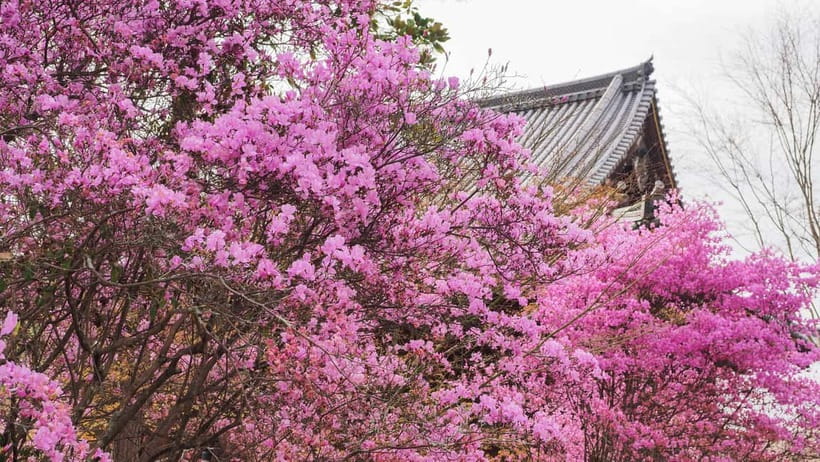
- Omuro sakura blooms late: This is one of Kyoto’s useful cherry-blossom alternatives when many other trees have already faded.
- The Goten Palace and gardens are the core visit: Your ticket gives you access to the palace area and its carefully arranged gardens, unless a special admission rule applies.
- The Omuro Pilgrimage takes about two hours: It is a shorter local version of the Shikoku Pilgrimage, with nature and temple scenery along the route.
- Reihokan Museum access depends on your ticket: Choose the relevant option if you want to see Ninnaji’s important cultural objects.
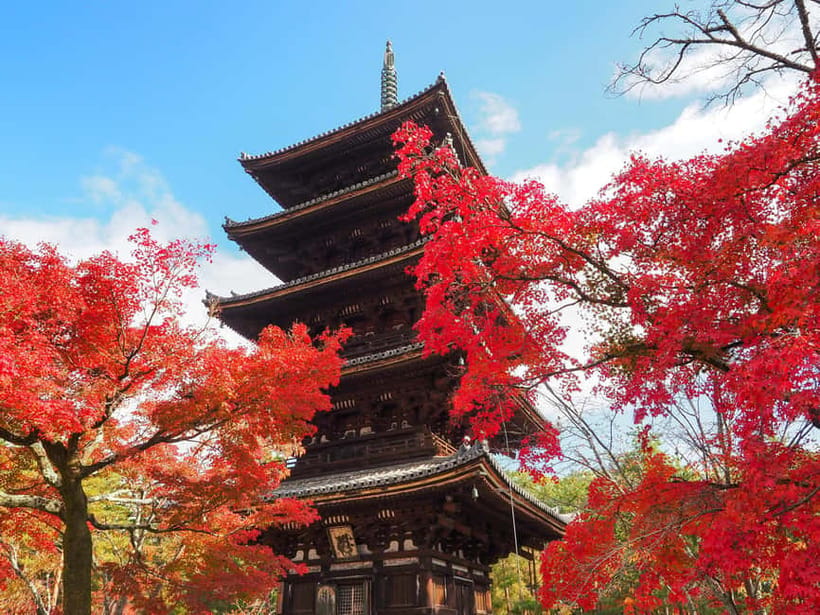
- The seasons change the mood: Spring brings flowers, summer brings Buddhist ceremonies, autumn brings red and yellow foliage, and winter can bring snow-covered gardens.
- Kannon-do may have a special guide: An informative guided visit inside Kannon-do can add useful context to the temple experience.
Why Ninnaji feels different from central Kyoto temples
Ninnaji was founded in 888 and serves as the head temple of the Omuro school of the Shingon sect of Buddhism. That age matters, but the appeal is not only historical. The temple feels like a place built for slow looking: palace rooms, gardens, a pagoda, seasonal flowers, and quiet paths all reward patience.
I would not treat Ninnaji as a quick photo stop. You can see the five-story pagoda in a few minutes, but the better visit gives you time to move through the Goten Palace and gardens, pause in the grounds, and consider the museum or pilgrimage route. The $5 price is modest for a full day, especially if you use the ticket as a flexible base rather than rushing through every sight.
The temple is also a useful choice if you want a break from Kyoto’s busiest streets. The information provided does not promise a small crowd or complete solitude, so I would not expect the grounds to be empty. Still, the religious setting, gardens, and seasonal scenery give the visit a calmer rhythm than a simple monument checklist.
More Entry Tickets in Japan:
- Lisbon: Jerónimos Monastery Entrance Ticket
★ 4.1 · 14,164 reviews - Bali: Kecak Fire Dance Show & Uluwatu Temple Entry Ticket
★ 4.2 · 3,023 reviews - Montserrat Museum and Monastery Entry Ticket
★ 4.5 · 1,740 reviews
Entering the Goten Palace and Japanese gardens
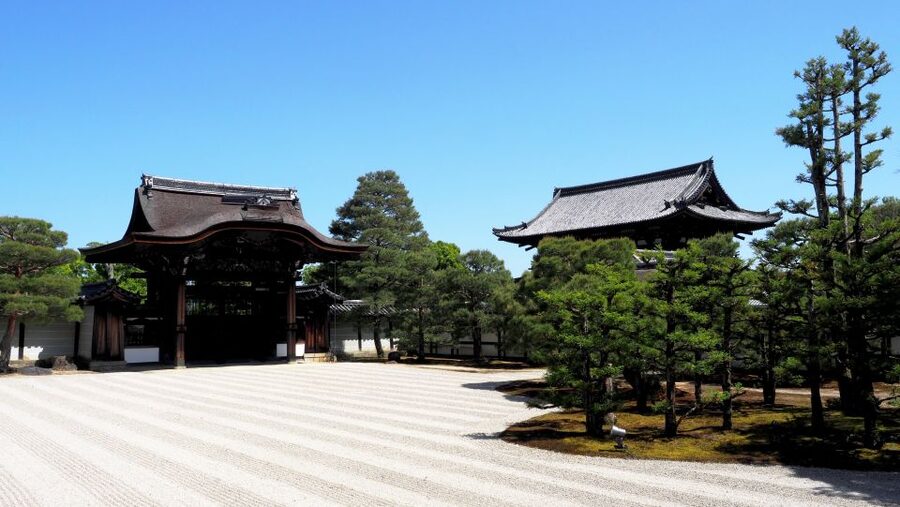
The Goten Palace and gardens are the main included areas. This is where I would begin, because the palace setting gives you a clear sense of Ninnaji’s refined side before you choose how much time to spend outside.
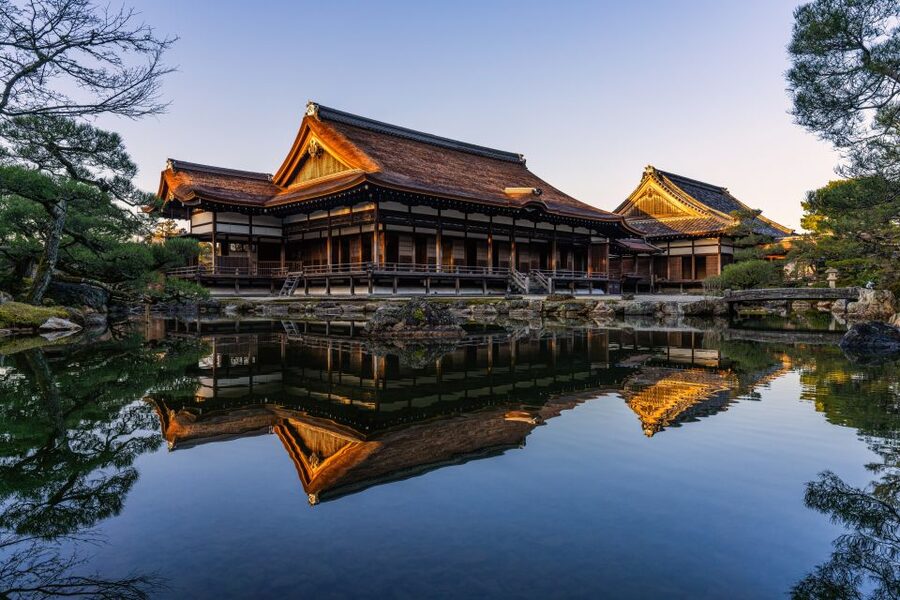
The gardens are designed for changing views rather than one single grand reveal. You may find yourself paying attention to the relationship between buildings, trees, paths, and the changing light. In winter, snow can make the garden especially quiet and spare. The snowy scenery of the Goten Palace is one of the strongest reasons to consider a visit outside the famous spring season.
The ticket covers the Goten Palace and gardens, but special admission tickets are not automatically included. Check the exact option you select if a temporary exhibition, flower event, or other special area matters to you. This is a small point, but it prevents the usual temple-ticket surprise: paying for the main grounds and assuming every seasonal feature is included.
Give yourself enough time to appreciate the palace area rather than treating it as a passage to the pagoda. The value is in the combination of architecture and garden views. If you only want a quick look at the grounds, the low ticket price still makes sense. If you enjoy traditional gardens, this is the part that justifies staying longer.
The five-story pagoda and Omuro sakura
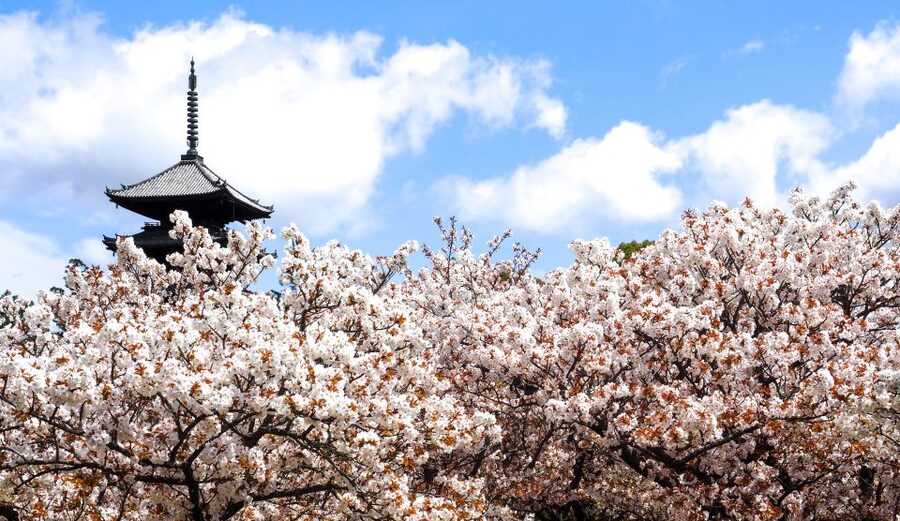
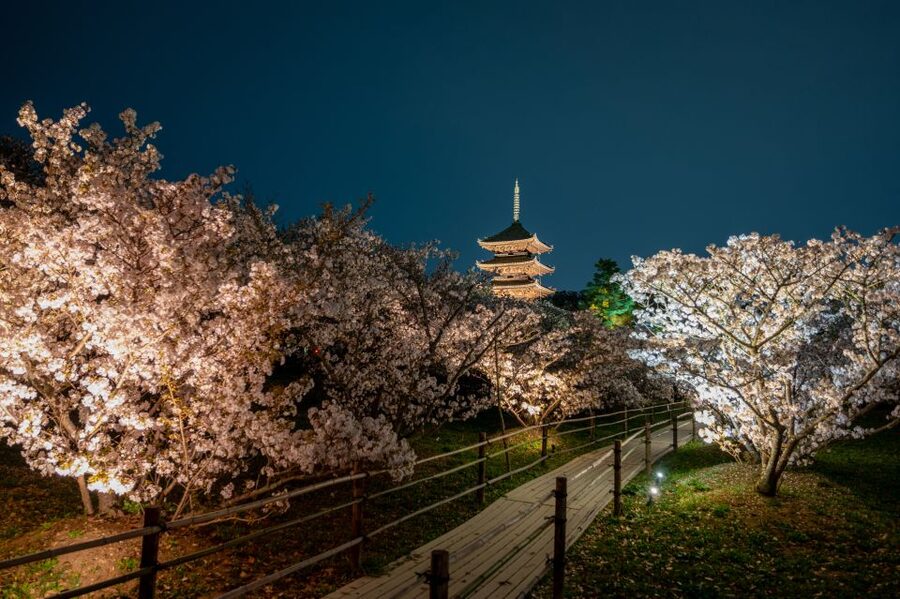
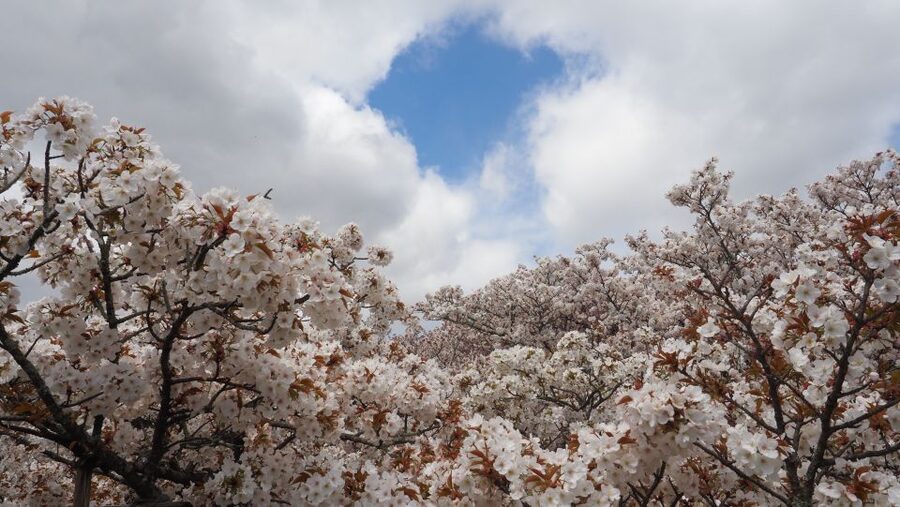
Ninnaji is especially known for its five-story pagoda and Omuro sakura cherry trees. The pagoda gives the grounds a strong visual anchor, while the cherry trees provide the temple’s most famous seasonal moment.
Omuro sakura blooms later than many of Kyoto’s better-known cherry trees. That timing can help if your visit falls after the city’s earlier blossoms have passed. It is also a reminder not to judge Kyoto’s spring by one calendar date. The exact period changes each year, and the admission period for the blossom area can change with the flowering conditions.
During cherry-blossom season, you need to pay an admission fee to enter the area beyond the Chumon inner gate and view the Omuro sakura. That fee supports the preservation of the trees. I see this as a reasonable conservation charge, but you should include it in your budget if the blossoms are the main reason for visiting.
The fee is not necessarily required for the same number of days each year. It may apply when the trees are in full bloom, so check current conditions before you arrive. If you visit outside the special blossom period, you avoid that extra charge, but of course you also miss the main spring display.
The pagoda remains worthwhile in every season. Spring frames it with flowers, autumn places it among red and yellow leaves, and winter can give the surrounding grounds a more restrained beauty. Summer brings a different atmosphere, with Buddhist ceremonies and many priests present at the temple.
Walking the two-hour Omuro Pilgrimage course
The Omuro Pilgrimage course is one of Ninnaji’s most distinctive features. It is a shorter version of the Shikoku Pilgrimage, designed to let you experience a pilgrimage setting without making the much longer trip across Shikoku.
Plan on about two hours for the route. That duration is long enough to feel like a real walk, not just an extra loop around the temple, but short enough to fit into a day of sightseeing. I would choose it if you want movement and nature after spending time around palace buildings and gardens.
The route is described as being surrounded by the sounds of nature and seasonal change. That makes it a good choice for people who want more than architecture. You might notice the atmosphere changing as you walk, with the temple setting giving way to a quieter outdoor rhythm.
Do keep the two-hour estimate in mind when planning your day. This is not a quick add-on before an appointment. If you want the Goten Palace, garden, pagoda, museum, and pilgrimage course, you should allow a substantial part of the day. The ticket is valid for one day, but that does not mean every part can be enjoyed properly in a hurried visit.
The course may suit you especially well if you are curious about pilgrimage traditions but do not want to commit to a distant, multi-day route. It is also a practical way to see a different side of Ninnaji. The drawback is simple: anyone looking only for a quick temple visit may find two hours of walking more than needed.
A few more temple visits around Japan worth a look
- Kyoto: Tea Ceremony Ju-An at Jotokuji Temple
★ 4.9 · 3,207 reviews - Tokyo: Asakusa Walking Tour with Sensoji Temple Visit
★ 4.8 · 1,583 reviews - Nikko: Kegon Falls, Lake Chuzenji & Toshogu Temple
★ 4.6 · 1,577 reviews - Tokyo: Nikko Toshogu Shrine and Kegon Waterfall Tour
★ 4.5 · 1,266 reviews
Reihokan Museum and the temple’s cultural objects
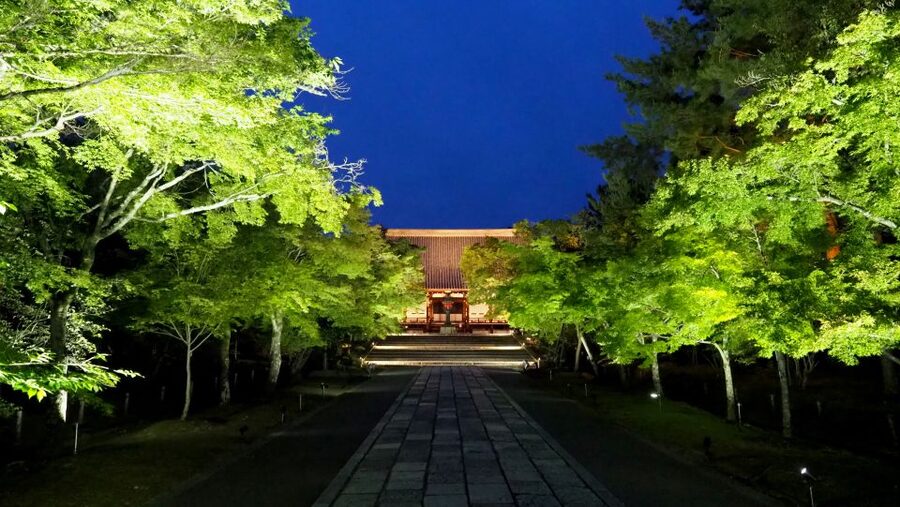
The Reihokan Museum holds important cultural items belonging to Ninnaji. This gives the visit more depth, since you are not seeing only buildings and gardens. The museum can help connect the temple’s religious role with the objects preserved inside it.
Museum entry depends on the ticket option you choose. It is not safe to assume that every $5 entry choice includes it. If the collection is important to you, select the option that specifically includes the Reihokan Museum entrance ticket.
The supplied details do not list individual objects or galleries, so I would avoid arriving with a fixed expectation about a particular artwork. Instead, think of the museum as a useful companion to the temple grounds. After seeing the architecture and gardens, the cultural items can give you a better sense of what Ninnaji has protected over time.
Special exhibitions and other seasonal admission areas may also use separate ticket arrangements. Read the included items carefully before booking. That matters more here than it would at a simple public park, because Ninnaji offers several different layers of access.
Seasonal visits from spring to winter
Ninnaji works throughout the year, but each season gives you a different reason to go.
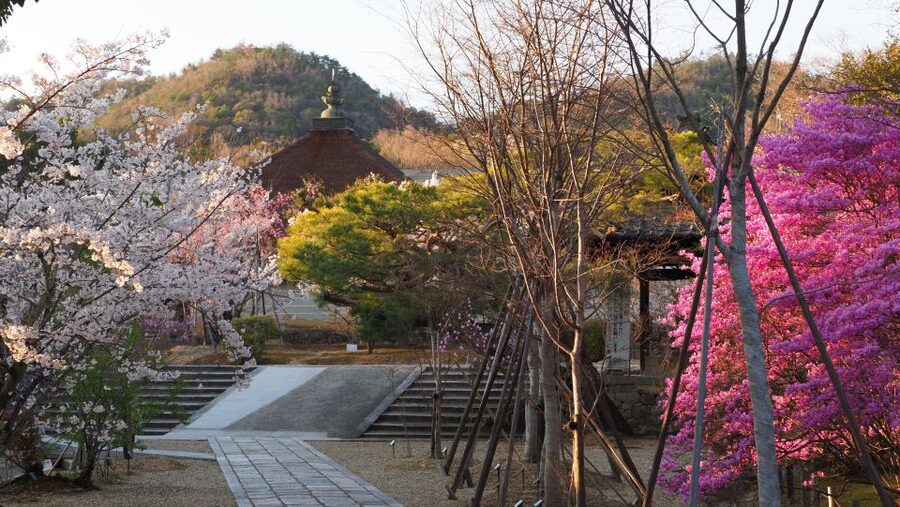
Spring: The late-blooming Omuro sakura is the headline attraction. If you arrive when the trees are flowering, expect an extra fee for the area beyond the Chumon inner gate. The exact paid period can change with the bloom, so confirm the timing before setting your schedule.
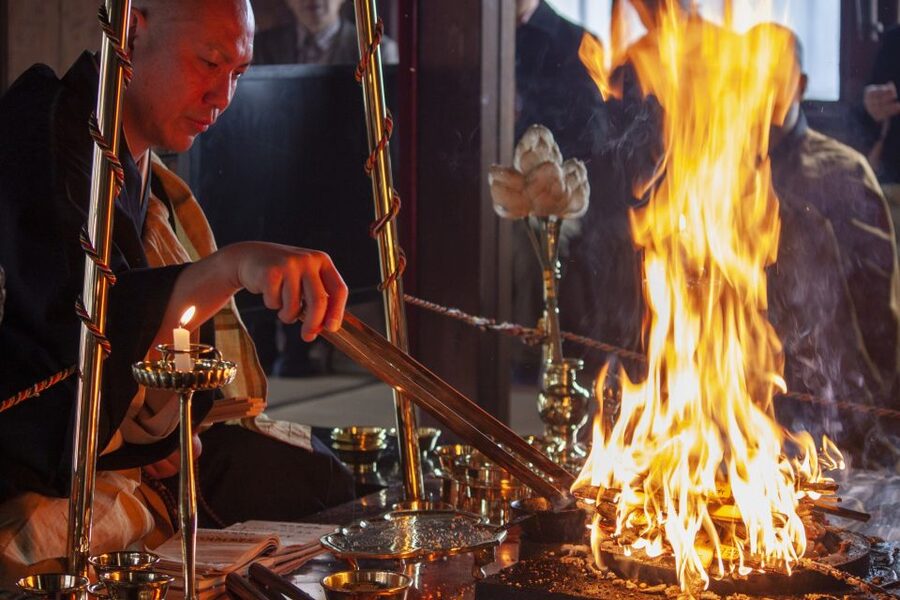
Summer: Buddhist ceremonies bring many priests to the temple. This gives the grounds a more active religious character than a purely scenic visit. Summer may be less famous than spring, but it offers a chance to see the temple functioning as a place of worship.
Autumn: Historic temple buildings are surrounded by red and yellow foliage. If you like architecture set against seasonal color, autumn may offer the best balance between visual interest and a slower visit. The available details do not specify peak dates, so plan around the season rather than one guaranteed day.
Winter: Snow can transform the Japanese garden and Goten Palace into a quiet scene. Snow is never guaranteed, but if it arrives, the clean lines of the buildings and garden can look especially striking. Winter hours are shorter, so you need to plan more carefully.
Opening hours are 9 AM to 5 PM from March through November. From December through February, the temple closes at 4:30 PM. Ticket booths close 30 minutes before closing, which means you should not arrive at the last possible moment and expect a full visit.
How much value do you get for $5?
At roughly $5, Ninnaji is inexpensive by major Kyoto sightseeing standards. The price gives you access to the Goten Palace and gardens for one day, and the temple offers enough seasonal variety to make that access useful beyond a short stop.
The value is strongest if you enjoy gardens, religious architecture, cultural collections, or a longer walk. You can build a full visit around the included areas and add the Omuro Pilgrimage course if you have the time. The museum can make the ticket more worthwhile for anyone interested in art and temple history, provided you select the correct option.
The value is weaker if you only want to see the pagoda from a distance. You can still enjoy the landmark, but the ticket earns its keep when you spend time inside the palace and garden areas. Spring visitors should also remember that the Omuro sakura area may require a separate admission fee.
Flexible booking helps here. You can cancel up to 24 hours in advance for a full refund, and the reserve-now, pay-later option lets you keep plans open. Those policies are useful when your Kyoto schedule depends on weather, blossom timing, or snow. They do not replace checking the exact seasonal access rules, but they reduce the risk of committing too early.
Accessibility and practical planning
Ninnaji is wheelchair accessible. That is useful information if access needs shape your temple choices, though the supplied details do not explain which sections or parts of the pilgrimage route have specific surface or gradient conditions. If the Omuro Pilgrimage is essential, ask at the ticket counter about the route before setting out.
Visitors with a physical disability certificate can enter free of charge. This applies only to the person with the certificate, and you should ask at the ticket counter.
Because the temple is open all day, you can choose a pace that fits your interests. I would visit the palace and gardens first, then decide whether to spend time at the museum or take the pilgrimage course. If you are visiting for blossoms, allow extra time for the special admission area and do not rely on the standard opening hours alone.
A special guided visit inside Kannon-do can be a valuable addition. It has been praised as wonderful and informative, but the available details do not give a guide’s name or a fixed schedule. Treat it as something to confirm rather than a guaranteed feature of every basic entry.
Who should buy this Ninnaji ticket?
I would recommend Ninnaji to you if you want a temple visit with several layers: gardens, palace rooms, a pagoda, seasonal flowers, cultural objects, and a two-hour pilgrimage walk. It also suits repeat visitors to Kyoto who have already seen the most famous central sights and want a slower day.
Families and mixed-interest groups may find the variety helpful. One person can focus on gardens, another on the museum, and another on the walking course. The one-day validity gives you room to avoid forcing everyone through the same pace.
I would be more cautious if you have only a short window in Kyoto and want a rapid stop. The grounds can be appreciated quickly, but the full value comes from staying longer. I would also check the ticket details carefully if the Reihokan Museum, Omuro sakura, or a special flower event is your priority.
Should you book Ninnaji?
Book it if you want a reasonably priced, full-day temple visit that changes with the seasons. The late Omuro sakura, five-story pagoda, Goten Palace gardens, and shorter pilgrimage course give Ninnaji more range than a simple photo stop.
The best time depends on your goal. Choose spring for the late blossoms, summer for the temple’s ceremonial activity, autumn for red and yellow foliage, or winter for the chance of snow in the gardens. Just remember that blossom viewing may cost extra, museum entry depends on the selected option, and winter hours are shorter.
At about $5, Ninnaji is an easy recommendation for a thoughtful Kyoto day. If you are willing to slow down and use the ticket well, it offers good value and a genuine sense of place.
FAQ
Where is Ninnaji Temple located?
Ninnaji Temple is in Kyoto on Honshu, Japan.
How much does Ninnaji Temple entry cost?
The listed price is $5 per person.
How long is the Ninnaji Temple ticket valid?
The ticket is valid for one day.
What are Ninnaji Temple’s opening hours?
The temple is open from 9 AM to 5 PM from March through November. From December through February, it is open from 9 AM to 4:30 PM.
When do the ticket booths close?
The ticket booths close 30 minutes before the temple closes.
Is the Reihokan Museum included?
The Reihokan Museum entrance ticket is included if you select the relevant ticket option.
Is there an extra fee to see the Omuro sakura?
During cherry-blossom season, an admission fee is required to enter the area beyond the Chumon inner gate and see the Omuro sakura. The fee supports preservation of the trees, and the period can vary according to the bloom.
How long does the Omuro Pilgrimage course take?
The Omuro Pilgrimage course takes about two hours.
Is Ninnaji Temple wheelchair accessible?
Yes, Ninnaji Temple is wheelchair accessible.
Can I cancel the booking for a refund?
Yes. You can cancel up to 24 hours in advance for a full refund.
Just added around Japan
- Private guided tour: Mt. Aso volcano, grasslands, Aso Shrine★ 5.0 · 19 reviews
- Takayama Inari Shrine Tour with Private Transportation★ 5.0 · 5 reviews
- From Asakusa: Old Tokyo, Temples, Gardens and Pop Culture★ 5.0 · 47 reviews
- Goshuin Collecting tour at Asakusa Local Temples & Shrines, Tokyo★ 5.0 · 8 reviews
- :Tokyo,Shibuya /Meiji Shrine tour in KIMONO/English-friendly★ 5.0 · 4 reviews
- Tokyo: Snow Monkey and Zenkoji Temple Day Trip In Low Price★ 5.0 · 5 reviews
- Tokyo War History Tour: Yasukuni Shrine & War Museum★ 4.5 · 6 reviews
- Tokyo: Gotokuji Culture Walk & Lucky Cat Temple Experience★ 4.9 · 5 reviews
Tickets, compared.
Kecak Fire Dance Show & Uluwatu Temple Entry Ticket
Read our review →

The Temple of Heaven or Summer Palace Entry Ticket
Read our review →
Valley of the Temples Ticket & App Audioguide
Read our review →

Belém Walking Tour with Jerónimos Monastery Ticket
Read our review →
Afternoon English Tour: Sounion with Temple of Poseidon Ticket
Read our review →Browse the lists this tour appears in