
Review · JAPAN
Hiroshima and Miyajima Day Trip with Itsukushima Shrine & Ferry
Two very different places, one full day. This tour links serene Miyajima with Hiroshima’s sobering Peace Memorial Park, making it a practical choice if you want both without sorting out buses, trains, and ferry tickets yourself. I especially like the included Itsukushima Shrine admission and ferry, plus the chance to hear cultural context from an English and Spanish-speaking guide. The main drawback is time: the day can feel rushed, especially at the Peace Memorial Museum.
I also like the simple $45 price. Transport from the meeting point, the ferry, and shrine admission are included, so the tour removes several small costs and decisions. You can also choose a Miyajima-only version if Hiroshima’s memorial sites are already on your schedule or you prefer a slower island visit.
The group can reach 30 people, and bilingual guiding is not perfect for everyone. Some guides, including Alan and Allan, have been praised for clear explanations and strong group management, while other departures have had trouble with audibility or long English and Spanish explanations.
Key points to know before booking
- Miyajima and Hiroshima in one day: You see the floating torii gate, Itsukushima Shrine, and the Peace Memorial Park on a tightly planned eight-hour outing.
- Ferry and shrine entry included: The $45 price covers two useful pieces that are easy to forget when planning the day yourself.
- Two meeting points are used: The full tour begins at Hiroshima Station’s North Exit bus area, while the Miyajima-only option meets outside Hiroshima Station Hiroden-Miyajimaguchi Station.
- Bilingual English and Spanish guide: This is helpful if you need either language, though the pace can be harder to follow when both are spoken back to back.
- Museum admission is extra: The Peace Memorial Park is included, but the Hiroshima Peace Memorial Museum ticket is not.
- Crowds are part of the deal: Miyajima can be packed, especially during Golden Week, so punctuality matters and the island will not feel secret or sleepy all day.
Why this pairing works so well
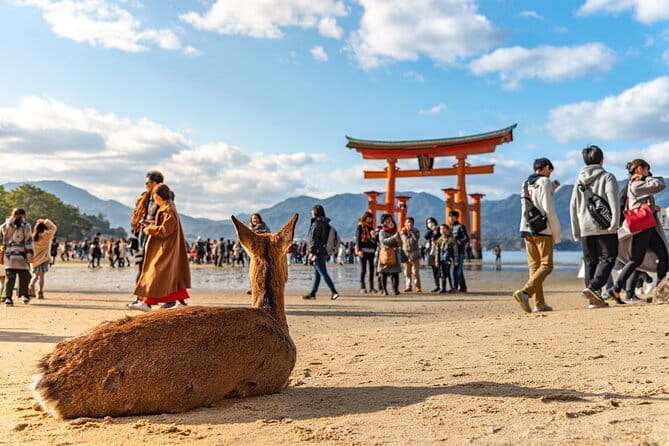
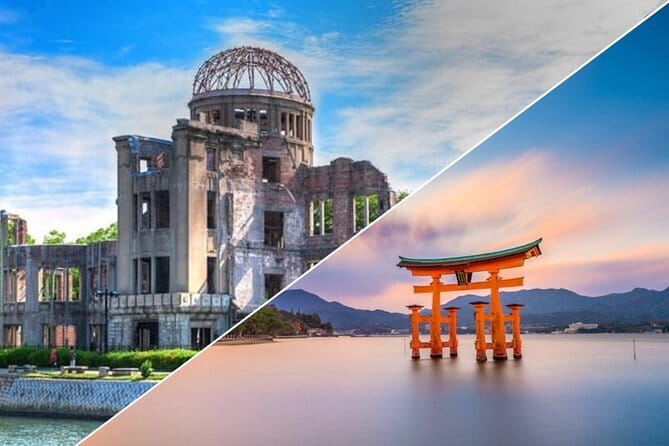
Miyajima and Hiroshima offer a sharp contrast. On the island, you get sea views, old religious buildings, narrow streets, and deer wandering through public spaces. Back in Hiroshima, the tone changes completely at the Peace Memorial Park, where monuments and museum displays confront the human cost of the 1945 atomic bombing.
I like this pairing because it gives your day emotional range without asking you to plan two separate excursions. The ferry adds a short scenic break, and the bus handles the longer connections around the city and coast. You are not spending your morning studying transit maps or wondering which ferry ticket covers which leg.
The trade-off is that neither place receives the leisurely attention it deserves. Miyajima has enough time for Itsukushima Shrine and a walk through the main streets, but you may not have time for every temple, trail, shop, or viewpoint. The Peace Memorial Park portion is also shaped by the clock, so you need to decide quickly how much time to give the museum, the Atomic Bomb Dome, and the surrounding memorials.
For a first visit with limited time, that compromise can be sensible. If you have two or more days in Hiroshima, I would consider visiting one destination independently and giving it more room.
More Day Trips in Japan:
- Tokyo Panoramic 1 Day: Meiji Shrine, Asakusa, Odaiba and SKYTREE®
★ 4.5 · 1,222 reviews - 1-Day Snow Monkeys, Zenko-ji Temple & Sake in Nagano
★ 5.0 · 1,020 reviews - Nagano: Snow Monkeys, Zenkoji Temple & Sake Day Trip
★ 4.9 · 833 reviews
Starting at Hiroshima Station
For the full Hiroshima and Miyajima option, meet your guide outside Hiroshima Station at the Shinkansenguchi Hiroba Bus Berth. Use the North Exit, go down the stairs, and head toward the bus area between stops 8 and 9. Look for the Amigo Tours sign.
This detail matters. Hiroshima Station has several exits and transport areas, and arriving at the wrong side can cost you valuable minutes. The tour asks you to be on time, and a delayed start can affect your island and museum time later.
The bus ride to the coast takes about 50 minutes. Along the way, your guide provides background on Miyajima and Itsukushima Shrine. The ride is more than a transfer, since it gives you an introduction before you reach the ferry, but the quality depends on where you sit and how clearly the guide speaks.
Some departures have had difficulty hearing explanations when the guide walks ahead. I would stay near the front of the group during walking portions, especially if cultural details are important to you. A small group of up to 30 is manageable, but it is large enough for stragglers and street noise to become an issue.
If you select the Miyajima-only option, do not go to the same bus berth. You meet outside Hiroshima Station Hiroden-Miyajimaguchi Station, where the guide waits with an Amigo Tours sign. Check your selected option carefully before the morning of the tour.
Crossing to Miyajima by ferry
At Miyajimaguchi, the bus portion ends and you make the short connection to the ferry terminal. The transfer itself is listed as about five minutes, followed by a short boat ride to Miyajima Island.
The ferry is one of the pleasures of this outing. You get a change of pace and a clear sense that Miyajima is a separate place, not simply another Hiroshima neighborhood. The island’s coastal setting makes the approach to the shrine especially memorable, even when the pier and boat are busy.
Your guide handles the ferry ticket, which is included in the price. That saves you from sorting out fares in a crowded terminal, though you should still keep the group in sight during the transfer.
Miyajima is famous for its free-roaming deer. They are part of the island’s appeal, but the island is not a quiet nature retreat. Streets around the main sights can fill quickly, and Golden Week crowds can make walking and gathering the group slower. Keep your expectations realistic: the charm comes from the mix of sea, shrine, deer, shops, and old streets, not from solitude.
Exploring Itsukushima Shrine and the floating torii
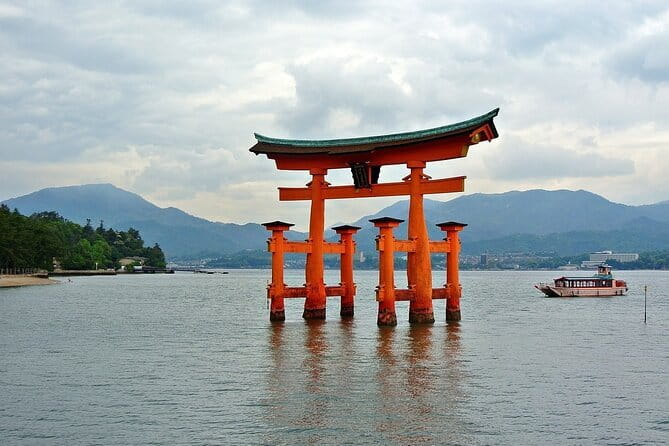
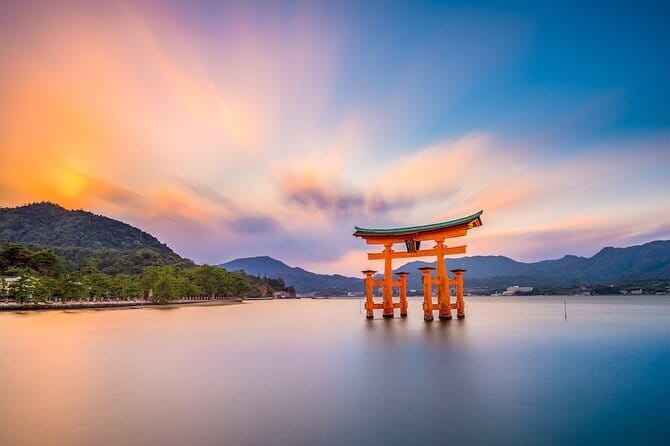
The main event on Miyajima is Itsukushima Shrine, a UNESCO World Heritage Site known for its large torii gate that appears to float offshore. The shrine admission is included, a welcome saving at this price.
Inside the shrine grounds, you can expect a strong visual contrast between the red wooden structures, the water, and the surrounding hills. The famous torii is the image most people come to see, but the shrine complex itself is the more meaningful part of the visit. Your guide can explain elements of Japanese culture and religious practice that are easy to miss if you simply walk in, take a photograph, and leave.
The tour allows about three hours on Miyajima. That is enough for the shrine, the main streets, and some free time, but it is not an open-ended island day. You may have to choose between browsing shops, eating, spending longer at the shrine, or wandering farther from the central area.
This is where your priorities matter. If you mainly want the torii gate and Itsukushima Shrine, the schedule should work well. If you want a slow meal, extensive shopping, or more time around the island, the Miyajima-only option is the better fit.
The island can also feel crowded. That does not cancel out its beauty, but it changes the mood. Arrive ready to share the main paths, wait briefly at popular photo spots, and keep the group’s meeting instructions in mind.
A few more temple visits around Japan worth a look
- Kyoto: Tea Ceremony Ju-An at Jotokuji Temple
★ 4.9 · 3,207 reviews - Tokyo: Asakusa Walking Tour with Sensoji Temple Visit
★ 4.8 · 1,583 reviews - Nikko: Kegon Falls, Lake Chuzenji & Toshogu Temple
★ 4.6 · 1,577 reviews - Tokyo: Nikko Toshogu Shrine and Kegon Waterfall Tour
★ 4.5 · 1,266 reviews
Returning to Hiroshima’s Peace Memorial Park
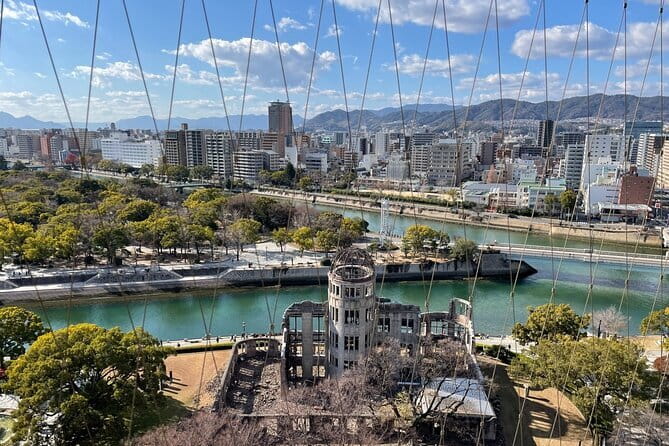
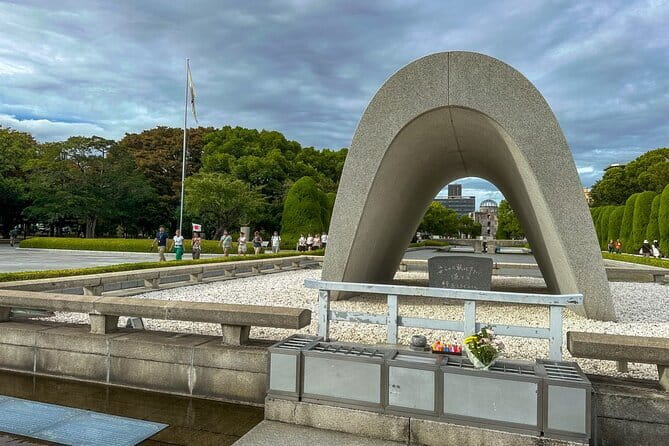
After Miyajima, the tour returns to Hiroshima for the Peace Memorial Park. This portion is included only with the Hiroshima and Miyajima option. The park is not a conventional sightseeing stop. It is a place for remembrance, and the tone becomes much more serious after the easygoing island visit.
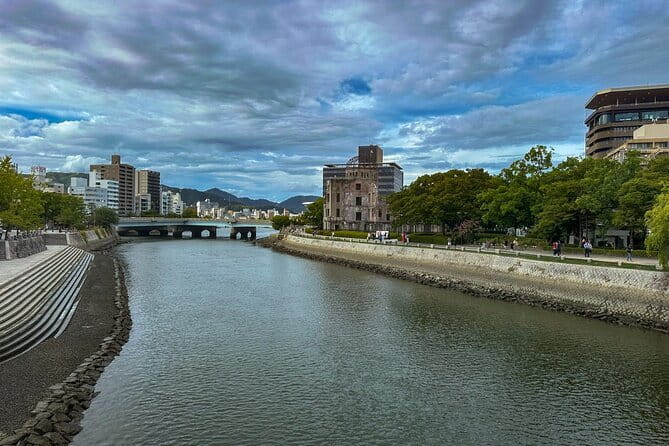
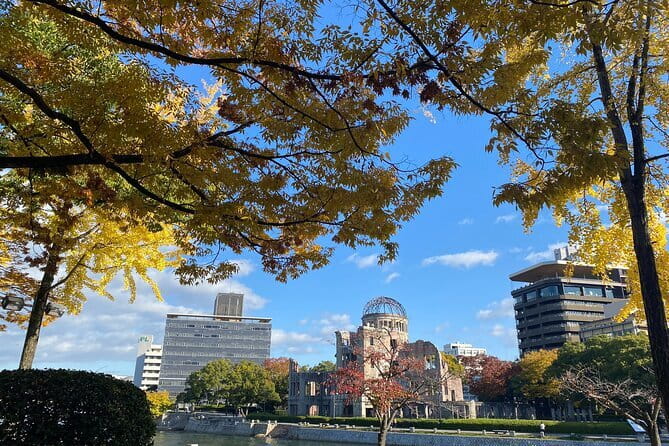
The park contains the Atomic Bomb Dome and memorials connected with the 1945 bombing. Seeing the dome in person gives the history a physical scale that photographs cannot provide. The open park also gives you space to pause between monuments rather than moving from one indoor display to another.
The schedule allows about three hours for the Hiroshima stop, but that time covers the park and related sights, not just the museum. The museum admission is not included, and the amount of time available inside can be limited. One detailed account described only about 45 minutes for the museum, which is not enough for many people who want to read the exhibits carefully.
I would decide in advance how you want to use this section. If the museum is your priority, enter promptly and accept that your time around the Atomic Bomb Dome may be brief. If you prefer to see the park, dome, and memorials with more breathing room, you may find the museum visit too compressed.
The subject matter is difficult. You should not expect an entertaining guide commentary at every turn. The value comes from having a structured way to reach the site and enough orientation to understand what you are seeing. Once there, allow yourself some quiet time.
The guide experience: useful, but dependent on the departure
The tour is conducted in English and Spanish. That is a real advantage if you need either language, and some guides handle the arrangement very well.
Alan, also referred to as Allan in one account, has been praised for informative explanations, care with the subject matter, and strong handling of large crowds. Astrid also received warm praise for guiding a meaningful day. These comments point to an important strength: the right guide can make the transfers, meeting points, and history feel much easier to follow.
Still, bilingual guiding has limits. Some departures have found it difficult when the guide moves directly from English into Spanish without a clear pause. Others wanted more detailed Japanese history and cultural background. You should expect a capable orientation rather than a specialist lecture.
A practical tip is to stay close during walking explanations. If you drift toward the back, street noise and group distance can make it hard to hear. An earpiece is not provided, and several people would have preferred one.
The tour’s 30-person maximum is neither tiny nor unwieldy. It gives you the security of a managed group, but it also means you will not receive constant personal attention. If you want long conversations with a local specialist, a private guide or smaller tour would be a better match.
What the $45 price really buys you
At $45 per person, this is a value-focused day trip. You receive transportation from the meeting point, the ferry ticket, entrance to Itsukushima Shrine, and bilingual guiding. Those inclusions matter because the day uses several connections that can be awkward to arrange independently.
The price does not include food, drinks, or entry to the Hiroshima Peace Memorial Museum. You should budget separately for lunch and any museum admission. Since the Miyajima portion includes free time, you will need to arrange your own meal rather than expecting a group lunch.
The strongest value is convenience. You pay to have the route organized, the ferry handled, and the two major destinations linked in one day. The weakest value appears if you already feel comfortable using Hiroshima’s public transport and want to spend several hours at the museum.
The mobile ticket is useful, but your meeting instructions matter more than the ticket itself. Take a moment to confirm which option you purchased and which station area applies.
Who should choose this day trip?
I would recommend it if you have one full day in Hiroshima and want a straightforward introduction to both Miyajima and the Peace Memorial Park. It is also a good fit if you dislike coordinating a bus, a ferry, and city transport in one morning.
It suits you best if you are happy with highlights rather than a slow, detailed visit. Families, first-time visitors, and people traveling on a tight schedule may appreciate the structure. The included shrine admission and ferry also keep the total cost easy to understand.
I would hesitate if the Hiroshima Peace Memorial Museum is your main reason for coming. The available museum time may feel too short, and admission is extra. I would also hesitate if bilingual commentary frustrates you or if you prefer a Japanese local guide with specialist knowledge.
For Miyajima, choose the island-only option if you want to skip the memorial park or make the island the center of your day. Confirm the different meeting point carefully, since it is not the same as the full tour’s Hiroshima Station bus berth.
Cancellation is free up to 24 hours before the start time. Changes made inside that window are not accepted, and poor weather may lead to a new date or a full refund. The activity requires good weather, so keep that rule in mind when arranging a tight onward schedule.
Should you book it?
Book this tour if you want efficient access to Miyajima and Hiroshima in one day and value having the ferry, transport, and shrine entry arranged for you. At $45, it offers a fair deal, especially for a first visit.
Skip it if you want a long, quiet Miyajima visit or several hours inside the Peace Memorial Museum. The best choice depends on your priority: easy logistics and broad coverage, or more time and depth at one place.
FAQ
How long does the tour last?
The tour lasts approximately eight hours, including transportation between Hiroshima, Miyajimaguchi, Miyajima Island, and the Peace Memorial Park.
Where does the full Hiroshima and Miyajima tour meet?
Meet outside Hiroshima Station at the Shinkansenguchi Hiroba Bus Berth. From the North Exit, go down the stairs and head to the area between bus stops 8 and 9. Look for the Amigo Tours sign.
Where does the Miyajima-only option meet?
The Miyajima-only option meets outside Hiroshima Station Hiroden-Miyajimaguchi Station. The guide waits there with an Amigo Tours sign.
Is the ferry ticket included?
Yes. The ferry ticket to Miyajima is included in the tour price.
Is Itsukushima Shrine admission included?
Yes. Entrance to Itsukushima Shrine is included.
Is Hiroshima Peace Memorial Museum admission included?
No. The tour includes the Peace Memorial Park, but admission to the Hiroshima Peace Memorial Museum is not included.
Are food and drinks included?
No. You need to pay separately for food and drinks during the day.
Is the tour offered in English?
Yes. The tour includes a bilingual guide in English and Spanish. The maximum group size is 30 people.
Just added around Japan
- Private guided tour: Mt. Aso volcano, grasslands, Aso Shrine★ 5.0 · 19 reviews
- Takayama Inari Shrine Tour with Private Transportation★ 5.0 · 5 reviews
- From Asakusa: Old Tokyo, Temples, Gardens and Pop Culture★ 5.0 · 47 reviews
- Goshuin Collecting tour at Asakusa Local Temples & Shrines, Tokyo★ 5.0 · 8 reviews
- :Tokyo,Shibuya /Meiji Shrine tour in KIMONO/English-friendly★ 5.0 · 4 reviews
- Tokyo: Snow Monkey and Zenkoji Temple Day Trip In Low Price★ 5.0 · 5 reviews
- Tokyo War History Tour: Yasukuni Shrine & War Museum★ 4.5 · 6 reviews
- Tokyo: Gotokuji Culture Walk & Lucky Cat Temple Experience★ 4.9 · 5 reviews
1-Day Tours, compared.
Cape Sounion & Poseidon Temple Sunset Half-Day Trip
Read our review →

From Malta: Gozo Day Trip Including Ggantija Temples
Read our review →
Montenegro: Durmitor, Tara & Ostrog Monastery Day Trip
Read our review →
Rhodes: Symi Island & Panormitis Monastery Day Trip by Boat
Read our review →
Small-Group Mekong Delta Day Trip: Boat Ride, Cottages & Pagoda
Read our review →
Tokyo Panoramic 1 Day: Meiji Shrine, Asakusa, Odaiba and SKYTREE®
Read our review →
Browse the lists this tour appears in