
Review · JAPAN
Takayama: Onigiri and miso soup making at a buddhist temple
Slow food, quiet temple, happy stomach. This one-hour class gives you hands-on practice making onigiri and miso soup in a temple kitchen, with friendly English-speaking instruction and a clear link between food, gratitude, and Buddhist practice. I especially like the peaceful setting and the way the class turns simple ingredients into a real cultural lesson. The main drawback is the short schedule, so you should not expect a long cooking course or an extended tour of the temple.
At $25 per person, this is a strong value if you want more than a meal but less than a full-day activity. You make your own food, eat it on site, and learn about Japanese customs from temple staff. Just remember that transportation is not included, parking may not be available, and the activity is not suitable for children under 10 or wheelchair users.
Key things to know before you book
- You cook inside the temple’s kuri: This kitchen space gives the class a setting that feels connected to temple life rather than a standard cooking studio.
- The meal is made and eaten within one hour: You get a practical introduction without giving up most of your day in Takayama.
- English instruction is available: Guides such as Kazuki and Tama have been praised for friendly, clear teaching and easy conversation.
- The lesson includes Buddhist ideas: Food is treated with care, and some sessions include a prayer or a moment to pay respects to the temple’s patron.
- The food is vegetarian-friendly: You can ask about vegetarian options when arranging your booking.
- You need to find your own way there: Enter through the gate closer to the traffic lights, then walk straight to the entrance.
Entering the temple kitchen in Takayama
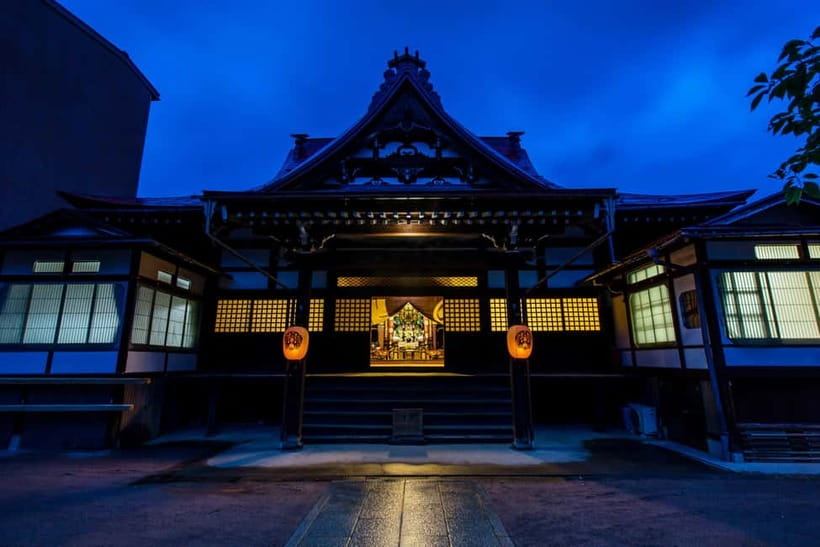
The meeting point is easy to identify once you reach the temple. You will see two gates in front. Use the gate closer to the traffic lights, walk straight ahead, and follow the directions to the entrance.
You should arrive 10 minutes early. That extra time matters here because this is a temple setting, not a large commercial attraction with a prominent ticket desk. Giving yourself a few quiet minutes also helps you shift from sightseeing mode into the slower rhythm of the class.
The cooking takes place in the kuri, the temple’s kitchen space. That detail gives the activity much of its character. You are not simply sitting at a counter in a cooking school while an instructor performs the work. You handle the ingredients, follow the steps, and then eat what you prepared in a calm religious setting.
The temple itself is part of the lesson. You may receive some background about its customs and Buddhist connections, and the cooking is presented as an act that deserves attention and thanks. One session included a prayer at the start, while another participant was invited to attend morning prayer the following day. These additions may depend on the day and the temple schedule, so treat them as possible cultural touches rather than guaranteed parts of every booking.
A few more temple visits around Japan worth a look
- Kyoto: Tea Ceremony Ju-An at Jotokuji Temple
★ 4.9 · 3,207 reviews - Tokyo: Asakusa Walking Tour with Sensoji Temple Visit
★ 4.8 · 1,583 reviews - Nikko: Kegon Falls, Lake Chuzenji & Toshogu Temple
★ 4.6 · 1,577 reviews
What happens during the one-hour class
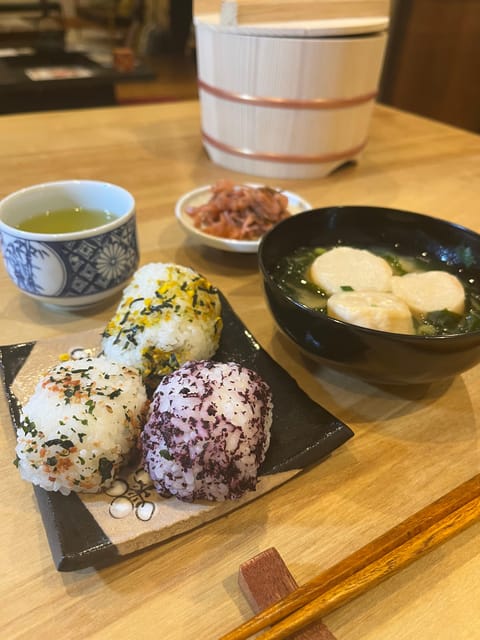
The class focuses on two everyday Japanese foods: onigiri and miso soup. Onigiri are rice balls shaped by hand, often wrapped or finished with simple ingredients. They are familiar across Japan, but making them yourself shows how much technique can go into something that looks wonderfully plain.
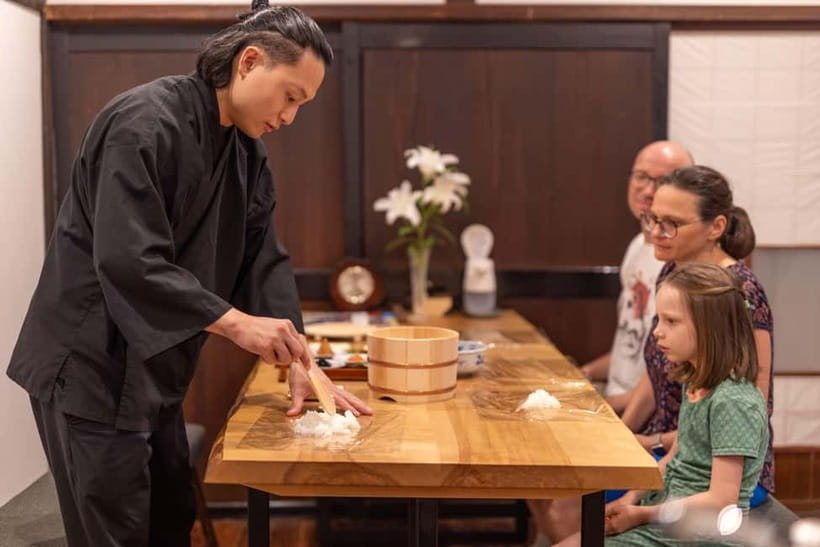
Your instructor demonstrates the process and then guides you step by step. You learn how to handle the rice and shape the balls rather than simply watching a cooking demonstration. The hands-on format is especially useful if you want to repeat the meal at home.
Fresh, seasonal ingredients are part of the experience. The exact fillings or additions are not specified in advance, so you should expect the ingredients to reflect what is being used for that session. The class is less about a fixed restaurant recipe and more about learning a traditional method with what is available.
The miso soup adds a second skill. You learn how the soup is prepared and how its ingredients come together. Several people praised the soup as one of the best parts of the meal, with one participant calling it the best miso soup they had tasted. That may sound like high praise for a simple bowl, but a fresh preparation in a quiet temple kitchen can make a familiar dish feel quite different.
The teachers explain the process in English. Kazuki is praised for being welcoming and skilled at explaining the cooking, while Tama is described as friendly and helpful. Other sessions have been led by instructors with strong English and an easy manner. The teaching style appears to be warm and personal rather than formal or rushed.
At the end, you eat the onigiri and miso soup you made. That final step matters. You are not completing a craft project and then walking away. The meal is the result of your work, and eating it in the temple gives the activity a satisfying finish.
Why the Buddhist setting changes the meal
You can make onigiri in many places in Japan. A temple kitchen gives the lesson a different purpose.
The class links cooking with respect for ingredients, gratitude, and mindfulness. You may hear about how Japanese people relate to food and why care is shown before eating. This does not turn the hour into a formal religious lecture. Instead, Buddhist ideas appear in small practical ways, such as a prayer, a respectful gesture, or a reminder not to treat food as something disposable.
I like this approach because it helps you understand the meal without overcomplicating it. Onigiri is not presented as an exotic object. It is a humble, useful food. The temple setting shows how ordinary cooking can carry cultural meaning.
If you want a detailed lesson in Buddhism, this will probably feel too brief. One participant felt that more time and context about the food and its culture would have improved the experience. That is a fair point. The class gives you a glimpse, not a complete study of temple life or Japanese religious practice.
Still, the short format works well for a busy day in Takayama. You receive enough explanation to see the connection between food and spiritual practice, then you return to your sightseeing with a recipe and a better sense of what the meal represents.
The teaching style and group atmosphere
The instructors are one of the strongest parts of this experience. The feedback is especially consistent about their friendliness, patience, and ability to explain each step in English.
That makes a difference for beginners. You do not need previous cooking experience, and you are not expected to understand Japanese kitchen terms. Clear, step-by-step help lets you focus on shaping the rice and preparing the soup instead of worrying about making a mistake.
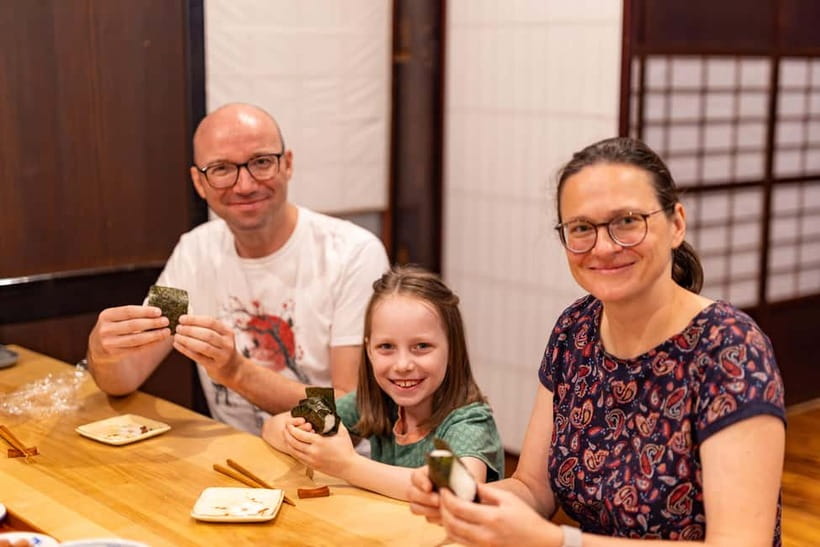
The class can feel intimate, particularly when attendance is low. One participant had the master chef to themselves, while another described a small group with personal attention. Group size may vary, so do not book on the assumption that you will receive a private lesson. But the format appears to allow useful contact with the instructor rather than leaving you lost in a crowd.
The relaxed pace is another plus. This is not a high-pressure class where you race to produce restaurant-quality food. You can ask about ingredients, cooking methods, local customs, and where to find similar items. One instructor also provided a recipe to take home, which makes the experience more useful after you leave Takayama.
Same place, a different morning at the gates:
- Osaka/Kyoto:Kinkakuji,Arashiyama,FushimiInariShrine,NaraPark
★ 4.1 · 1,596 reviews - Tokyo: Nikko Toshogu Shrine and Kegon Waterfall Tour
★ 4.5 · 1,266 reviews - Tokyo Panoramic 1 Day: Meiji Shrine, Asakusa, Odaiba and SKYTREE®
★ 4.5 · 1,222 reviews - Kyoto Arashiyama Walking Tour: Bamboo, Monkeys, Gardens & Secrets
★ 5.0 · 1,216 reviews
Is $25 good value?
At $25, the class is reasonably priced for a one-hour cultural activity that includes food, instruction, and a temple setting.
The value comes from the combination. You are not paying only for a bowl of soup and a rice ball. You receive guidance from temple staff, use the kitchen, prepare the meal yourself, eat it, and gain cultural context. The English instruction is also important because it lets you ask questions and understand the meaning behind the food.
The limitation is time. One hour is enough to learn the basic method, but not enough for a wide survey of Japanese cooking. You should not expect a market visit, a long temple tour, or a complex multi-course meal.
For me, the price makes the most sense as a compact cultural stop between other activities in Takayama. It works particularly well at breakfast or lunch because the food is part of the booking. It also gives you a useful indoor plan if you want a quiet break from walking around town.
The meal is vegetarian-friendly, which adds value for people looking for a plant-based option. You should still confirm your needs when booking, since vegetarian-friendly does not automatically answer every dietary question.
Practical details that affect your choice
You need to arrange your own transportation to the temple. The activity does not include transfers, and one person had been incorrectly told that parking would be available. If you are driving, check parking arrangements yourself rather than relying on assumptions.
The directions are simple once you arrive: look for the two gates, choose the one nearer the traffic lights, and continue straight to the entrance. Arriving 10 minutes early gives you time to handle the approach without cutting into the cooking lesson.
The activity lasts one hour, and available starting times can change. Check the schedule before planning a tight connection with another booking.
The class is conducted in English. That is a major advantage if you want to ask questions about cooking and Buddhist customs rather than simply copy the instructor’s movements.
There are a few clear restrictions. Children under 10 are not accepted, and the experience is not suitable for wheelchair users. People with altitude sickness should also avoid it. The altitude restriction may seem unusual for a short Takayama activity, but it is part of the stated guidance and should be taken seriously if it applies to you.
Cancellation is flexible up to 24 hours before the start time for a full refund. You can also reserve now and pay later, which is useful if your Japan itinerary is still changing.
Who will enjoy this experience most?
I would recommend this class to food lovers who want to learn a dish they can repeat at home. Onigiri does not require an elaborate kitchen, and the lesson gives you a practical foundation rather than only a tasting.
It also suits anyone who wants a calm cultural activity. The temple surroundings, respectful approach to food, and chance to discuss Buddhist ideas make it more meaningful than a standard lunch stop.
Solo visitors and couples can benefit from the friendly instruction, especially if you enjoy asking questions. Small groups may receive plenty of personal attention, though the exact group size is not guaranteed.
Families with older children should check the age rule carefully. Anyone under 10 cannot join, and wheelchair users should choose another activity because the experience is not listed as accessible.
You may want to skip it if you are looking for an advanced cooking course, a long temple visit, or a large menu of dishes. The focus is narrow by design: onigiri, miso soup, food customs, and a short look at Buddhist culture.
Should you book the Takayama temple cooking class?
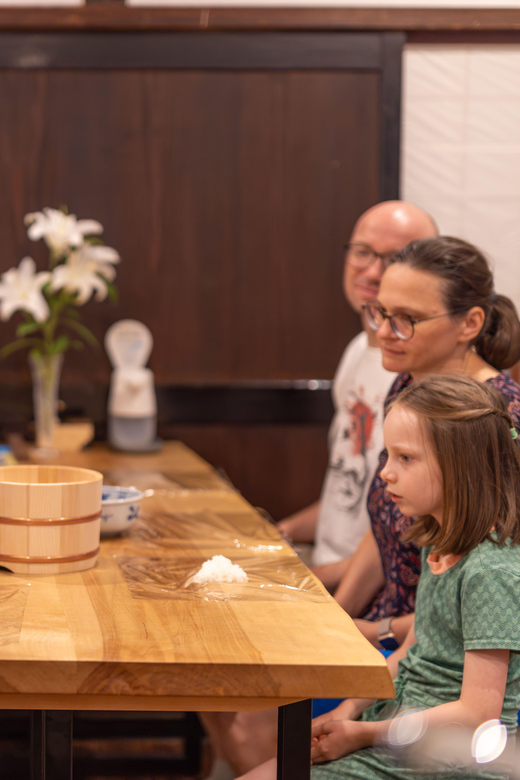
You should book it if you want a one-hour experience that combines food, conversation, and a peaceful Japanese setting. The friendly English-speaking instruction, hands-on cooking, and temple context give the class more substance than its short length suggests.
I would especially choose it for a day when you want a slower activity in Takayama. The $25 price is fair, the meal is included, and you leave with a skill you can try at home.
Just keep your expectations in proportion. This is a compact introduction, not a full cooking school or an extensive religious tour. Confirm the meeting directions, arrive early, arrange your own transportation, and allow for the possibility that the cultural explanation will be brief.
For most eligible visitors, the combination of excellent teaching, tasty food, and a respectful temple atmosphere makes this an easy activity to recommend.
FAQ
How long does the onigiri and miso soup class last?
The activity lasts one hour. Check the available starting times when booking.
Is the class taught in English?
Yes. The instructor conducts the experience in English, including guidance on preparing the dishes and information about Japanese culture and Buddhist customs.
What food is included?
The experience includes the onigiri and miso soup you prepare and eat during the class. Vegetarian-friendly options are available.
How do I find the temple entrance?
You will see two gates in front of the temple. Enter through the gate closer to the traffic lights, walk straight to the entrance, and follow the directions there.
Should I arrive early?
Yes. You should arrive 10 minutes before the activity begins.
Is the class suitable for children and wheelchair users?
The activity is not suitable for children under 10 or wheelchair users. It is also not suitable for people with altitude sickness.
Just added around Japan
- Private guided tour: Mt. Aso volcano, grasslands, Aso Shrine★ 5.0 · 19 reviews
- Takayama Inari Shrine Tour with Private Transportation★ 5.0 · 5 reviews
- From Asakusa: Old Tokyo, Temples, Gardens and Pop Culture★ 5.0 · 47 reviews
- Goshuin Collecting tour at Asakusa Local Temples & Shrines, Tokyo★ 5.0 · 8 reviews
- :Tokyo,Shibuya /Meiji Shrine tour in KIMONO/English-friendly★ 5.0 · 4 reviews
- Tokyo: Snow Monkey and Zenkoji Temple Day Trip In Low Price★ 5.0 · 5 reviews
- Tokyo War History Tour: Yasukuni Shrine & War Museum★ 4.5 · 6 reviews
- Tokyo: Gotokuji Culture Walk & Lucky Cat Temple Experience★ 4.9 · 5 reviews
Japan Temple Tours, compared.
Osaka/Kyoto:Kinkakuji,Arashiyama,FushimiInariShrine,NaraPark
Read our review →
Asakusa Walking Tour with Sensoji Temple Visit
Read our review →

Nikko Toshogu Shrine and Kegon Waterfall Tour
Read our review →
Tokyo Panoramic 1 Day: Meiji Shrine, Asakusa, Odaiba and SKYTREE®
Read our review →
Kyoto Arashiyama Walking Tour: Bamboo, Monkeys, Gardens & Secrets
Read our review →
1-Day Snow Monkeys, Zenko-ji Temple & Sake in Nagano
Read our review →Browse the lists this tour appears in