
Review · JAPAN
Hiroshima: Itsukushima Shrine and Miyajima Summit Tour
Sea, shrine, and summit make one memorable day. This private Miyajima tour brings together two sides of the island that are easy to treat separately: Itsukushima Shrine above the sea and the mountain worship found higher up. I like the clear cultural focus, and I like that the ropeway saves energy for the summit and the views.
The English-speaking guides are another strong point. Gordon Michasiw received warm praise for explaining not just Miyajima’s sights but also Japanese customs and daily life, while Hine was especially helpful to a visitor whose wife was walking with difficulty. The main consideration is physical effort: you will walk uphill, and one part of the day may feel rushed if the group spends a long time at earlier stops.
Key points to know before you book
- Itsukushima Shrine is the cultural anchor: You begin with the famous shrine built on stilts over the water, followed by time among Miyajima’s religious sites.
- The ropeway makes the mountain practical: A 30-minute cable car segment reduces the amount of climbing, but reaching the summit still requires walking.
- Shugendo gives the tour its unusual angle: You learn how mountain asceticism connects Buddhist, Shinto, and nature-based beliefs.
- The views are a major reward: From Miyajima’s upper reaches, you can look across the Seto Inland Sea and surrounding area.
- It is a private English-language experience: Your guide can explain details at a more personal pace than a large group tour.
- The day lasts 330 minutes: That is about five and a half hours, so plan for a substantial half-day outing rather than a quick shrine visit.
Why Miyajima is more than a floating torii
Miyajima is best understood as an island shaped by two kinds of worship. The sea gives the island its famous setting, while the mountain provides the harder, quieter religious experience.
Itsukushima Shrine was built above the water to protect the island’s sacred character. Rather than treating the shore as an ordinary building site, its design keeps the shrine visually connected to the sea and avoids changing the island more than necessary. That choice helps explain why the shrine feels different from a conventional temple or shrine complex.
The island’s summit adds another layer. Ascetic practitioners walked into the mountains to seek spiritual insight through physical effort, solitude, and contact with nature. This tradition is linked with Shugendo, which combines elements of Buddhism, Shinto, and mountain practice.
I like this pairing because it gives you a fuller reading of Miyajima. The shrine is not just a picture stop beside the water, and the mountain is not simply a viewpoint. Together, they show how Japanese religious life has often treated the sea, forests, rocks, and peaks as part of the sacred world.
A few more temple visits around Japan worth a look
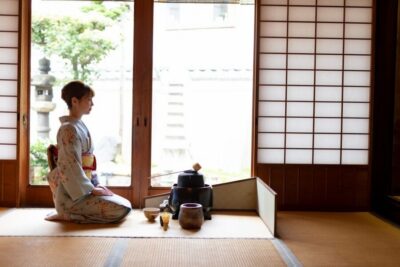
- Kyoto: Tea Ceremony Ju-An at Jotokuji Temple
★ 4.9 · 3,207 reviews - Tokyo: Asakusa Walking Tour with Sensoji Temple Visit
★ 4.8 · 1,583 reviews - Nikko: Kegon Falls, Lake Chuzenji & Toshogu Temple
★ 4.6 · 1,577 reviews
Meeting your guide at Miyajima-guchi
The tour begins in front of the Miyajima-guchi Tourist Information Center. Look for the guide holding a yellow sign with the DeepExperience logo.
This meeting point is on the mainland side, so you should allow enough time to reach Miyajima-guchi before the scheduled start. The experience finishes at the Miyajima ferry terminal, which is useful because you are not required to return to the original meeting point after the tour.
The experience is listed as a private group tour with a live English-speaking guide. That matters here. Miyajima has plenty of visible sights, but the meaning behind them is less obvious. A private guide can connect the shrine, the mountain, and Shugendo in a way that a quick self-guided visit may not.
Gordon Michasiw is named as one guide associated with the experience. His explanations cover Miyajima’s sights, Japanese life, culture, and customs. Hine is another guide praised for being kind, energetic, and especially attentive when a participant needed extra help walking. Guide quality matters on a tour like this, since much of the value comes from interpretation rather than transportation alone.
Entering Itsukushima Shrine above the sea
The first major stop is Itsukushima Shrine, with about 30 minutes of guided time. Admission is included.
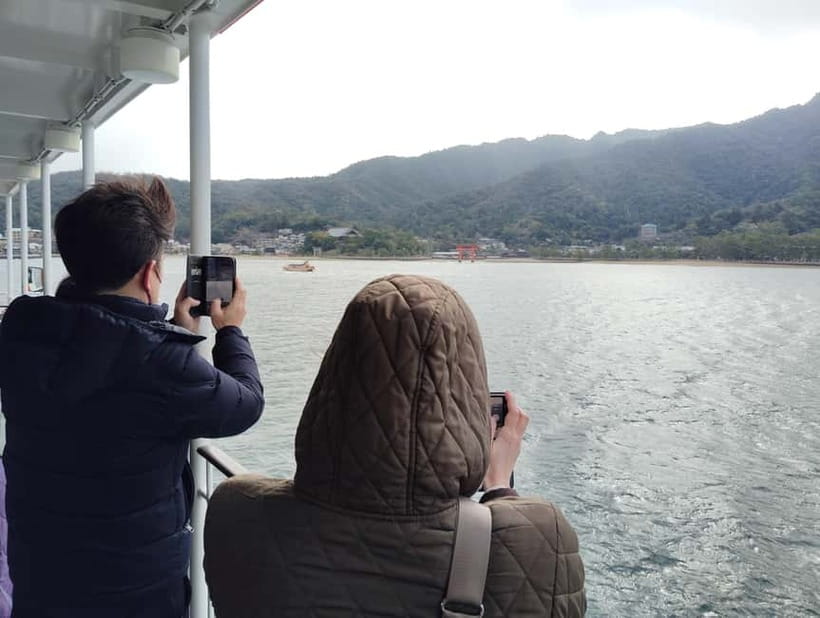
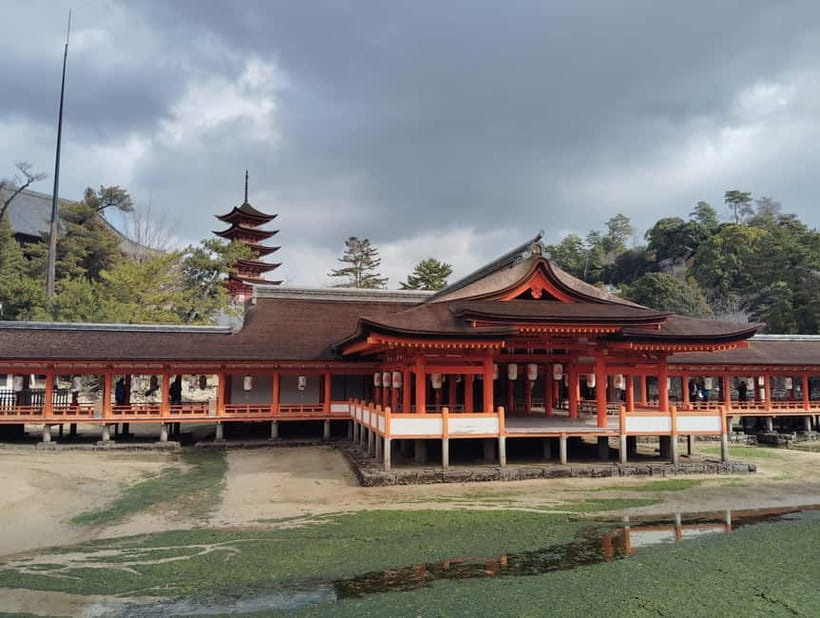
The shrine’s position above the water is the central visual moment. Walkways, pillars, and open views create a feeling that the complex belongs to both land and sea. Depending on the tide and conditions, the famous torii gate may appear surrounded by water or connected visually to the shore. The tour description emphasizes the gate against the Seto Inland Sea, so have your camera ready, but pay attention to the architectural details too.
Thirty minutes is enough for a focused introduction, though it is not a leisurely museum-style visit. You will want to hear the guide’s explanation of why the shrine was built over the sea and how the island’s sacred status shaped its design.
This stop can feel busy, especially at a famous site. The tour’s private format helps, but it cannot remove the presence of other people at one of Japan’s best-known religious landmarks. I would treat the shrine as the opening chapter rather than expect it to be the entire Miyajima experience.
Taking the ropeway toward the summit
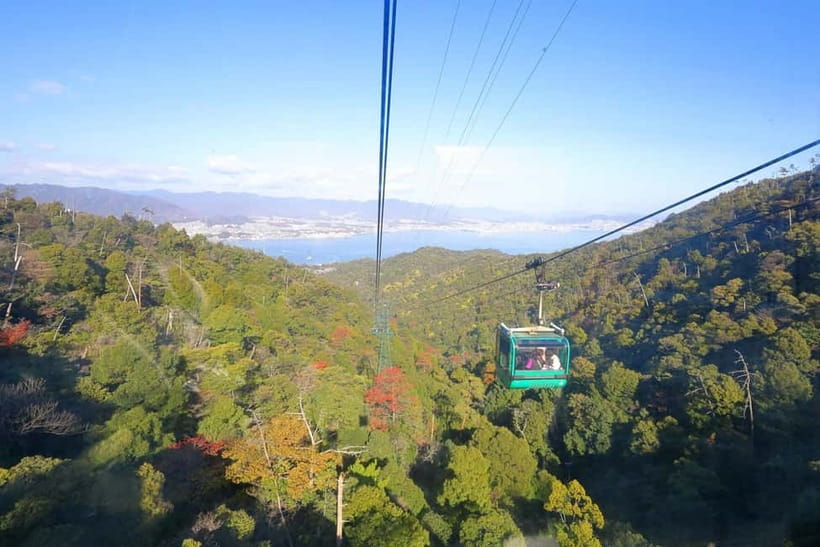
The cable car portion lasts about 30 minutes, and the ropeway fee is included. This is a practical feature, not just a scenic ride.
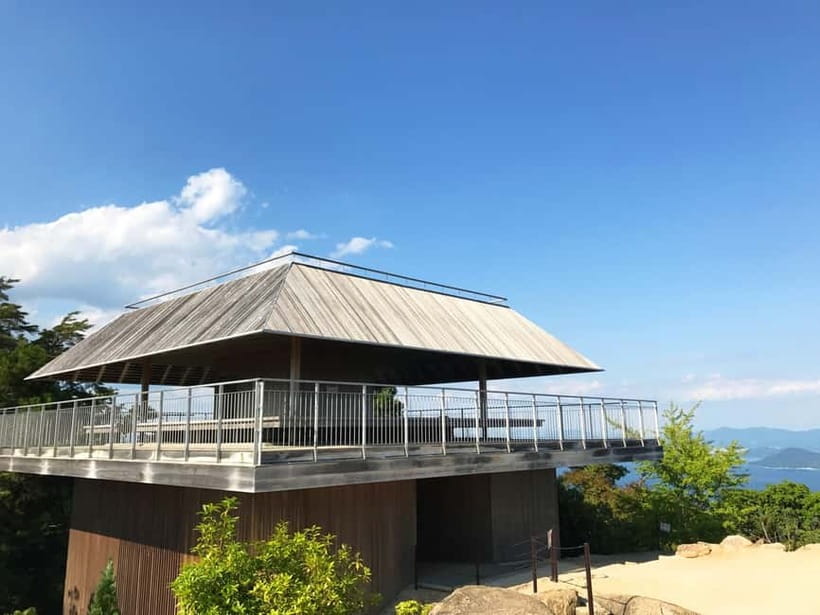
Miyajima’s mountain is a serious part of the day. The ropeway helps you gain height without turning the whole tour into a long uphill slog. You still need to walk, and the summit section remains moderately demanding, but the cable car makes the outing possible for more people who are comfortable with walking but do not want to climb the entire way from the lower part of the island.
The ride also shifts the mood. You leave the shrine’s open waterfront setting and move toward forests and mountain worship. The change helps make the island’s two religious worlds feel connected rather than artificially packaged together.
Bring water and sunscreen. The supplied guidance specifically calls for both, along with a hat and comfortable shoes. You should also expect uneven or uphill walking and wear footwear that feels secure for a moderate hike.
Same place, a different morning at the gates:
- Osaka/Kyoto:Kinkakuji,Arashiyama,FushimiInariShrine,NaraPark
★ 4.1 · 1,596 reviews - Tokyo: Nikko Toshogu Shrine and Kegon Waterfall Tour
★ 4.5 · 1,266 reviews - Tokyo Panoramic 1 Day: Meiji Shrine, Asakusa, Odaiba and SKYTREE®
★ 4.5 · 1,222 reviews - Kyoto Arashiyama Walking Tour: Bamboo, Monkeys, Gardens & Secrets
★ 5.0 · 1,216 reviews
Learning about Shugendo in the mountain setting
After the ropeway, the tour gives you about 75 minutes for a guided visit in the upper mountain area. This is the section that separates the experience from a standard Miyajima sightseeing loop.
Shugendo developed around mountain discipline and spiritual training. The tour uses Miyajima’s mountain setting to explain how Buddhist ideas, Shinto beliefs, and demanding physical practice came together. You are not simply looking at a distant peak. You are learning why people walked into the mountains, what they sought there, and how the island’s summit became part of its religious identity.
This section is valuable because the setting does much of the teaching. A guide can explain the ideas, but the climb gives you a small physical sense of the effort involved. You are moving away from the easy access of the waterfront and into a place associated with discipline and reflection.
The tradeoff is time and energy. One participant described the climb as somewhat strenuous, with roughly 30 minutes of walking up the mountain. The exact effort will depend on your pace and conditions, but you should not book this as a gentle sightseeing ride with no exertion.
If you have a mobility impairment or use a wheelchair, this tour is not suitable. It is also not a good match if you strongly dislike hills, stairs, or walking in warm weather. The ropeway reduces the burden, but it does not remove the mountain from the itinerary.
Walking to Senjokaku Pavilion
The itinerary includes about 20 minutes on foot before reaching Senjokaku Pavilion. This is a useful transition between the summit area and Miyajima’s historic religious buildings.
Senjokaku means Hall of a Thousand Mats, and the pavilion is known for its large, open interior. The tour allows about 15 minutes for a guided visit. That is enough to see the scale and hear the basic story, but you should not expect a long period to sit and study every detail.
The pavilion gives you a different architectural experience from Itsukushima Shrine. The shrine is tied to the sea and carefully arranged walkways, while Senjokaku feels more open and spacious. The contrast helps you see that Miyajima’s religious sites are not all designed around the same idea.
The walking segment can also be where the day catches up with you. If you have spent extra time taking photographs earlier, the latter part may feel compressed. One participant found the end of the activity rushed, so I would keep an eye on the time and avoid lingering too long at the first stops if you want a relaxed finish.
Seeing the five-story pagoda
Itsukushima Jinja Gojunoto, the five-story pagoda, receives about 10 minutes of guided time.
This is a short stop, but the pagoda is visually striking and gives you another example of the island’s Buddhist influence. Its height, layered rooflines, and position near other religious buildings make it an easy landmark to photograph.
The brief timing means the guide will likely focus on the main facts and the relationship between the pagoda and nearby sites. If you want extensive architectural discussion, ask questions while you are there. A private guide is most useful when you speak up about the details you care about.
The pagoda also helps reinforce the tour’s central theme. Miyajima is not limited to one religious tradition. Shinto shrines, Buddhist structures, mountain practices, and nature worship have all shaped the island over time.
The final free time and ferry terminal finish
The final listed stop includes about 15 minutes of guided time and free time before the tour ends at the Miyajima ferry terminal.
This closing window is short, but it gives you a chance to collect yourself, take a few last photographs, or ask your guide about anything you did not understand earlier. The endpoint is convenient if you plan to continue exploring Miyajima independently or return by ferry.
Lunch is not included. That keeps the price focused on the guide, admissions, and ropeway, but you need to plan your meal separately. One especially useful detail from the day’s feedback is that guide Hine took a participant to a quiet tea house away from the heaviest crowds for lunch. That was not part of the listed inclusions, so do not assume a meal or restaurant stop is guaranteed, but you can ask your guide for suggestions.
The tour does not include hotel pickup or drop-off. You are responsible for reaching the meeting point at Miyajima-guchi and arranging your onward travel after the ferry terminal finish.
Is $179 good value for five and a half hours?
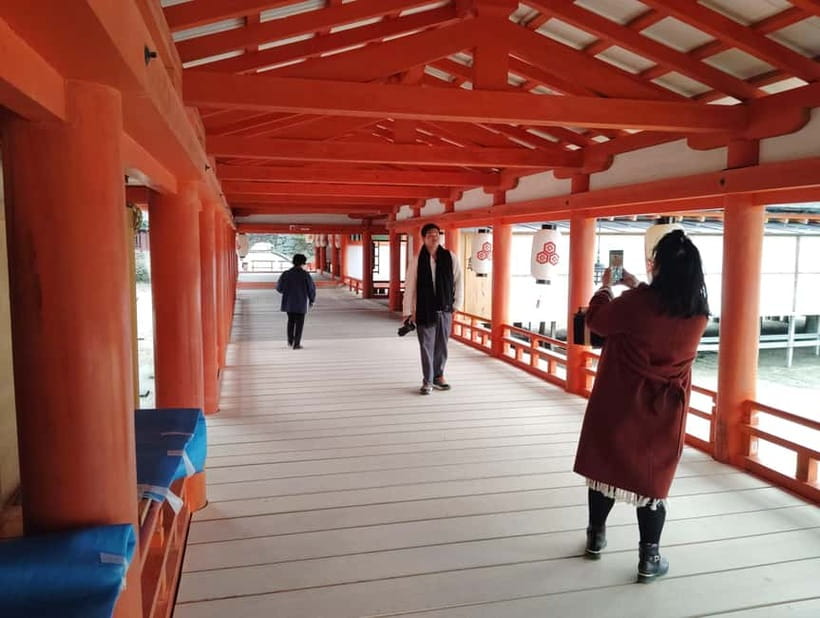
At $179 per person, this is not the cheapest way to see Itsukushima Shrine. You can visit Miyajima independently for less if you are comfortable managing the ferry, shrine admission, ropeway, walking route, and historical background yourself.
The price makes more sense if you want an English-speaking guide and a private group. You are paying for the connections between the sites, not merely entry tickets. The guide explains why the shrine sits over the sea, how mountain worship developed, and how Buddhist and Shinto ideas appear together on the island.
Admission to Itsukushima Shrine and the ropeway are included, as is the summit visit. Meals, hotel transfers, and personal purchases are not included. I would call the price reasonable for someone who values interpretation and a tailored pace, but harder to justify if you mainly want photographs and already know Miyajima well.
The five-and-a-half-hour duration also gives the price some weight. This is a substantial half-day, not a brief guided walk. You receive a clear route through the shrine, mountain, pavilion, pagoda, and final ferry area.
Who will enjoy this Miyajima tour most?
I would recommend it to first-time visitors who want more than the famous torii gate. It suits you especially well if you enjoy cultural context, religious history, mountain scenery, and guided walking.
The private format is useful for couples, families, and small groups with shared interests. It may also work well if one person in your party needs a little more patience on the walking sections, though the activity is still not suitable for people with mobility impairments or wheelchair users.
You should choose another plan if you want a slow, unstructured day. The route has several timed stops, and the mountain section requires steady movement. The tour is also less suitable for anyone hoping to spend hours browsing shops, eating, or lingering at the shrine.
For the best experience, wear comfortable walking shoes, carry water, apply sunscreen, and bring a hat. Smoking is not allowed during the activity. A camera is worthwhile, but the views are better when you pause long enough to look beyond the screen.
Should you book it?
Book this tour if you want Miyajima explained as a sacred island rather than treated as a single famous shrine. The strongest feature is the combination of sea worship and mountain worship, supported by an English-speaking private guide and a ropeway ride that makes the upper island reachable.
Skip it if you want minimal walking, a low-cost independent visit, or a relaxed schedule with long meal breaks. For everyone else, the $179 price is a fair trade for a focused route, included admissions and ropeway access, and the chance to understand why Miyajima’s sea and summit belong in the same day.
The reported rating is 4.9 from seven bookings, with especially strong praise for the guides, the mountain views, and the depth of the cultural explanations. That matches the tour’s real appeal: not just seeing Miyajima, but understanding why this island has been treated as sacred for so long.
FAQ
Where does the Miyajima tour begin?
It begins in front of the Miyajima-guchi Tourist Information Center. Your guide will hold a yellow sign with the DeepExperience logo.
Where does the tour finish?
The tour finishes at the Miyajima ferry terminal.
How long does the experience last?
The duration is 330 minutes, or about five and a half hours.
Is the ropeway included in the price?
Yes. The ropeway fee is included, along with admission to Itsukushima Shrine and the visit to the Miyajima summit.
Is this tour suitable for wheelchair users?
No. The experience is not suitable for wheelchair users or people with mobility impairments. You should also be prepared for a moderate amount of walking and an uphill section.
What should I bring?
Bring comfortable walking shoes, a hat, a camera, sunscreen, and water. Smoking is not allowed during the activity.
Just added around Japan
- Private guided tour: Mt. Aso volcano, grasslands, Aso Shrine★ 5.0 · 19 reviews
- Takayama Inari Shrine Tour with Private Transportation★ 5.0 · 5 reviews
- From Asakusa: Old Tokyo, Temples, Gardens and Pop Culture★ 5.0 · 47 reviews
- Goshuin Collecting tour at Asakusa Local Temples & Shrines, Tokyo★ 5.0 · 8 reviews
- :Tokyo,Shibuya /Meiji Shrine tour in KIMONO/English-friendly★ 5.0 · 4 reviews
- Tokyo: Snow Monkey and Zenkoji Temple Day Trip In Low Price★ 5.0 · 5 reviews
- Tokyo: Gotokuji Culture Walk & Lucky Cat Temple Experience★ 4.9 · 5 reviews
- Tokyo War History Tour: Yasukuni Shrine & War Museum★ 4.5 · 6 reviews
Japan Temple Tours, compared.
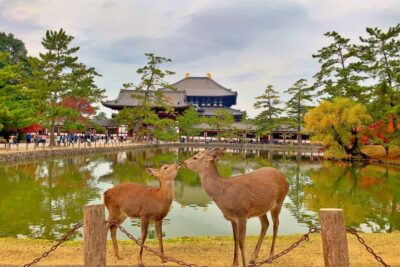
Osaka/Kyoto:Kinkakuji,Arashiyama,FushimiInariShrine,NaraPark
Read our review →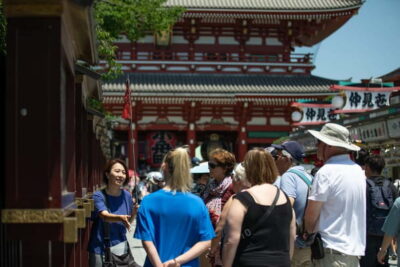
Asakusa Walking Tour with Sensoji Temple Visit
Read our review →

Nikko Toshogu Shrine and Kegon Waterfall Tour
Read our review →
Tokyo Panoramic 1 Day: Meiji Shrine, Asakusa, Odaiba and SKYTREE®
Read our review →
Kyoto Arashiyama Walking Tour: Bamboo, Monkeys, Gardens & Secrets
Read our review →
1-Day Snow Monkeys, Zenko-ji Temple & Sake in Nagano
Read our review →Browse the lists this tour appears in