
Review · TOKYO
Tokyo: Meiji Jingu Shrine & Inner Garden Guided Tour (2h)
Tokyo’s quiet green heart. This two-hour walk combines Meiji Jingu’s grand shrine grounds with the calmer paths of Shinen Garden, giving you both a cultural introduction and time to slow down. I especially like the chance to learn the handwashing ritual and proper way to pray, rather than simply passing through the shrine gates. The included omikuji and other experience fees also make the $48 price easier to justify.
I also like the tour’s focus on details many first-time visitors could miss, from the sake barrel offering to the story of the Eternal Forest. The main consideration is time: two hours is enough for a well-paced introduction, but the garden portion may be shortened if the shrine visit or walking route takes longer than expected.
Key points to know before you go
- Start at the first torii: Meet in front of Meiji Jingu’s Ichinotorii, where the guide carries a yellow DeepExperience sign.
- Learn the rituals properly: Your guide explains the handwashing custom and how to pray at the shrine.
- See the sake barrel offering: This is a useful photo stop and a gateway to understanding the Eternal Forest.
- Walk through Shinen Garden: The route includes the South Pond and may include Kiyomasa’s Well if time allows.
- Choose a private or small group format: This can make questions and cultural explanations easier.
- Meet guides with different strengths: Minoru, Kai, Kyo, and Takashi have been praised for their warmth, humor, cultural context, and clear explanations.
Starting beneath Meiji Jingu’s first torii
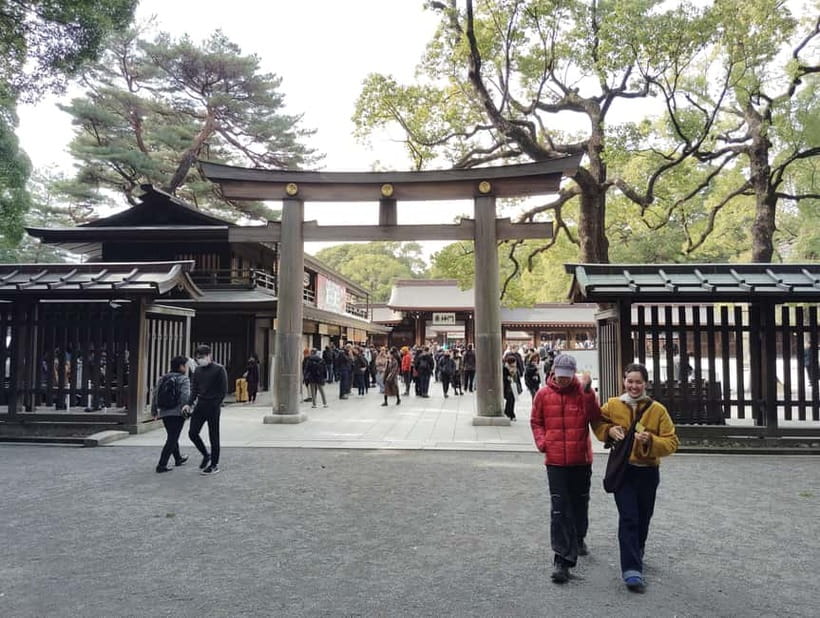
Your tour begins at Meiji Jingu’s first torii, called Ichinotorii. This is the meeting point in front of the shrine entrance, and your guide will be holding a yellow sign with the DeepExperience logo. That clear marker matters in Tokyo, where a station exit or a broad shrine approach can otherwise leave you wondering if you are in the right place.
The first walk is part of the experience, not just a way to reach the main building. Meiji Jingu is known for its forest setting, and the gradual movement through the trees helps separate the shrine from the busy city around it. The tour closes at this same torii, so you do not need to figure out a new meeting point at the end.
Your guide begins with a short introduction to the route. I like this simple opening because it gives the walk a shape: first the sake barrels and forest story, then the main shrine and its customs, followed by the garden. You are not left to guess what deserves your attention.
More Meiji Shrine and Senso-ji Tours in Tokyo:
- Tokyo: Asakusa Walking Tour with Sensoji Temple Visit
★ 4.8 · 1,583 reviews - Tokyo Panoramic 1 Day: Meiji Shrine, Asakusa, Odaiba and SKYTREE®
★ 4.5 · 1,222 reviews - Tokyo: Asakusa and Tokyo’s Oldest Temple Senso-ji Tour
★ 4.9 · 352 reviews
The sake barrels and the Eternal Forest
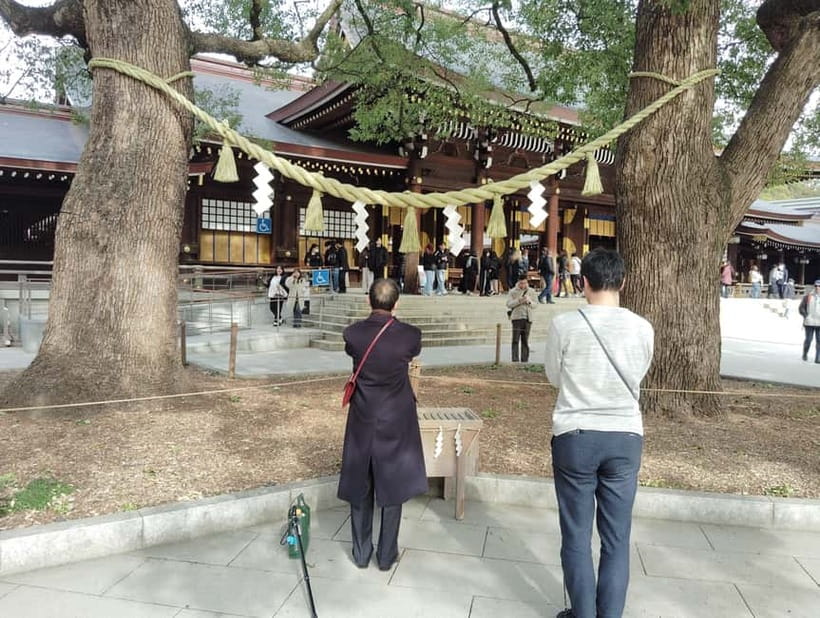
One of the first notable stops is the sake barrel offering area. Rows of barrels create an attractive photo stop, but they also give your guide a chance to explain the relationship between offerings, the shrine, and Japanese religious practice.
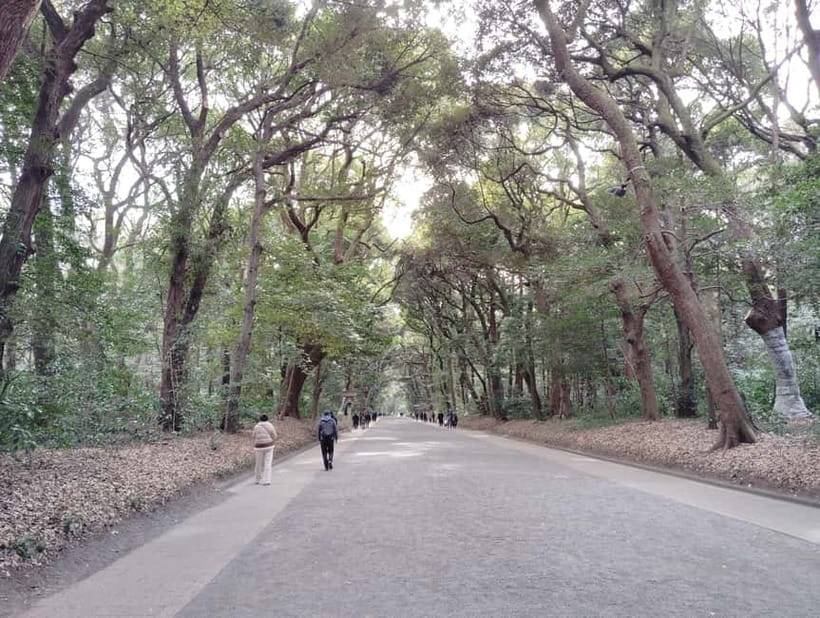
The discussion of the Eternal Forest adds useful context to what might otherwise be only a pretty path beneath tall trees. You learn why the forest is an important part of the Meiji Jingu setting and how it shapes the atmosphere of the shrine. Sunlight filtering through the branches, quiet walking, and the scale of the wooded grounds all make more sense after this introduction.
This is a good place to take photos, though I would keep the camera work brief. The point of the tour is not to collect a series of fast snapshots. It is to understand why the forest, shrine buildings, offerings, and rituals belong together.
The forest walk also sets a calm pace early in the visit. If you have just come from Tokyo’s crowded streets, this change can be striking. You get a peaceful stretch before the more formal shrine visit begins.
Handwashing before the main shrine
At the grand torii, the guide explains the traditional handwashing ritual. You will have the chance to take part before continuing toward Meiji Jingu Shrine.
This small act is one of the most useful parts of the tour. Many people arrive at a Japanese shrine unsure of what to do, and it is easy to copy the person ahead of you without understanding the purpose. Here, your guide shows you how to approach the ritual with more care.
The handwashing stop also gives you a practical lesson in respectful behavior. You are not being asked to perform a complicated ceremony. Instead, the guide helps you understand the order and meaning of a simple custom before you enter the shrine area.
I would pay close attention here and avoid treating the basin like a photo prop. The experience works best when you slow down and follow the instructions. This is exactly the sort of detail that can turn a visit from sightseeing into a more thoughtful cultural encounter.
Learning how to pray at Meiji Jingu
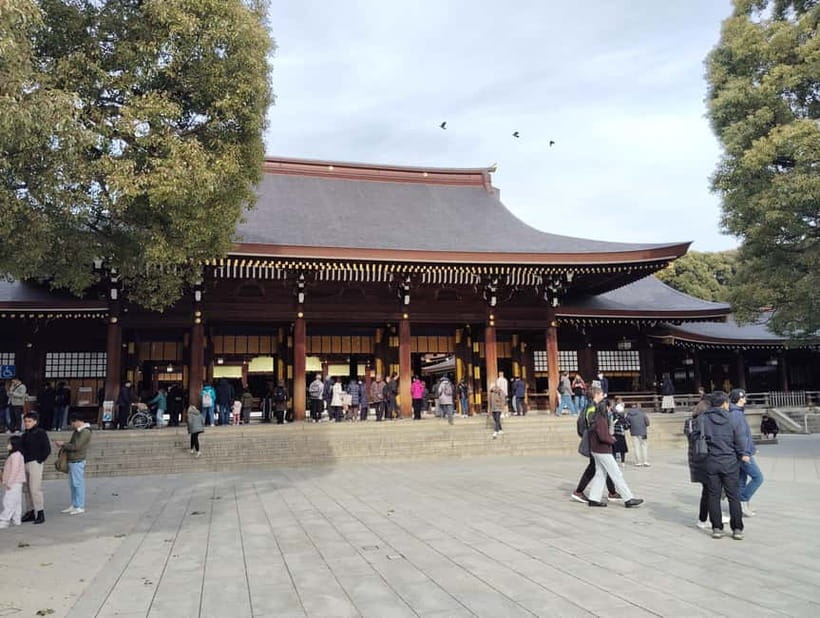
At Meiji Jingu itself, you learn the proper way to pray. Your guide explains what to do, giving you time for a quiet moment of reflection rather than rushing you through the stop.
That guidance is especially valuable for a first visit to Japan. The shrine is not just a grand structure to photograph. It is a place where people come to pray, and knowing how to behave helps you approach it with respect.
The shrine portion takes roughly an hour within the overall two-hour schedule, including the guided visit and photo opportunities. That gives you enough time to listen, look around, and take in the setting without turning the stop into a long lecture.
The tone depends partly on your guide. Minoru has been praised for detailed explanations and interesting anecdotes. Kyo has been described as easygoing and funny, while also helping connect Japanese religious practice with contemporary life. Takashi has received particular praise for historical background and a friendly manner. Kai is also noted for explaining both the shrine and Japanese culture in an approachable way.
Those names are useful because they hint at the kind of experience you may receive. The guides are not simply moving you from one checkpoint to another. Their role is to answer questions and add cultural context. Since the tour is offered in English and Japanese, confirm the language you need when booking.
A few more temple visits around Tokyo worth a look
- Private 2 Hour Guided Tour to Philae Temple from Aswan
★ 5.0 · 45 reviews - 2 Hours Tour in Philae Temple
★ 4.0 · 38 reviews - Ninh Binh Jeep tour:2 hours visit Bich Dong, Thai Vi temple
★ 3.8 · 38 reviews - Paestum: 2-Hour Greek Temples & Archaeological Museum
★ 4.8 · 19 reviews
Omikuji, fortune-telling, and protective charms
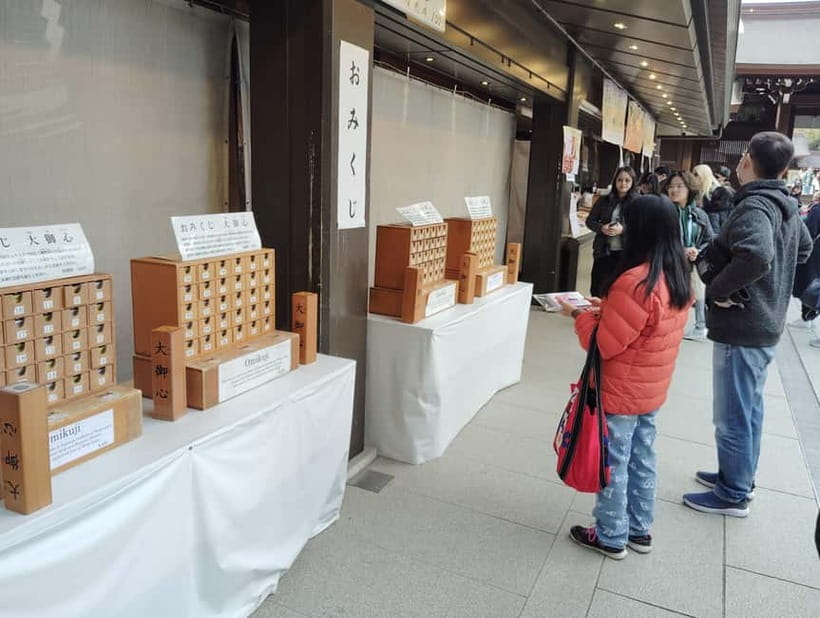
After the prayer lesson, the tour includes a fortune-telling experience through omikuji. This is a lighter part of the visit and provides a change of pace after the more formal shrine customs.
Omikuji can be a fun way to take part in a familiar Japanese tradition, even if you treat the result as entertainment. The fee is included, along with other stated experience costs, so you do not need to budget separately for that part of the tour.
You may also receive a protective charm if you would like one. The activity is optional in spirit, so you can enjoy the custom without feeling pressured to purchase or accept anything beyond what suits you.
I like that the fortune-telling comes after the prayer instruction. The sequence lets you first understand the respectful side of the shrine, then enjoy one of its more playful visitor experiences. It keeps the tour from feeling too formal while still giving the religious setting proper attention.
A quieter path through Shinen Garden
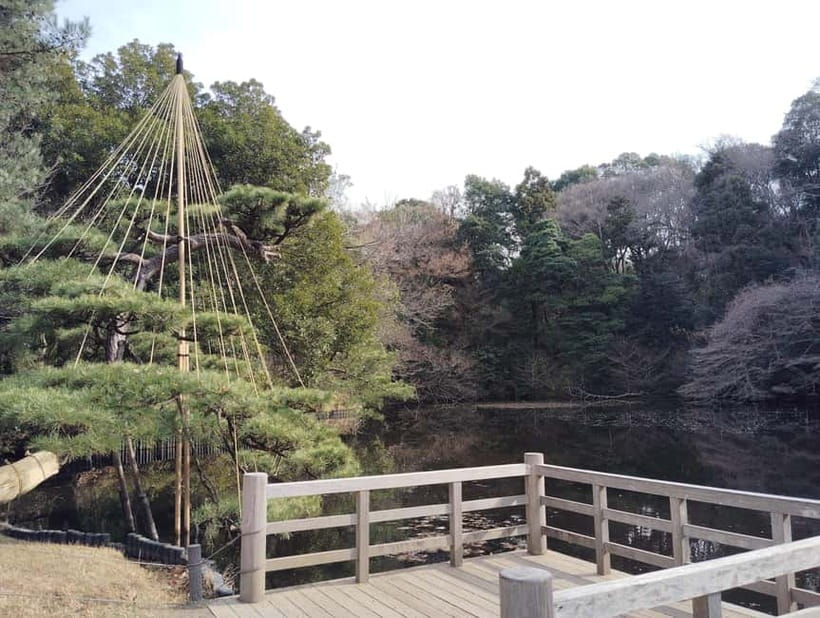
The second hour focuses on Meiji Jingu’s Shinen Garden, with particular attention to the South Pond. This part changes the mood again. The shrine visit is structured around ritual and explanation, while the garden offers a slower walk and space to notice water, trees, and the peaceful setting.
Entrance to the garden is included in the $48 price, which is important when judging the tour’s value. You are not paying only for an escort through the shrine grounds. You are also receiving guided access to a separate garden area and the cultural explanation that links it to the wider Meiji Jingu visit.
The South Pond is the main garden focus. You might find this section especially appealing if you prefer a quieter setting after the grand torii and shrine buildings. It also gives the guide more room to explain the setting without the same concentration of visitors around you.
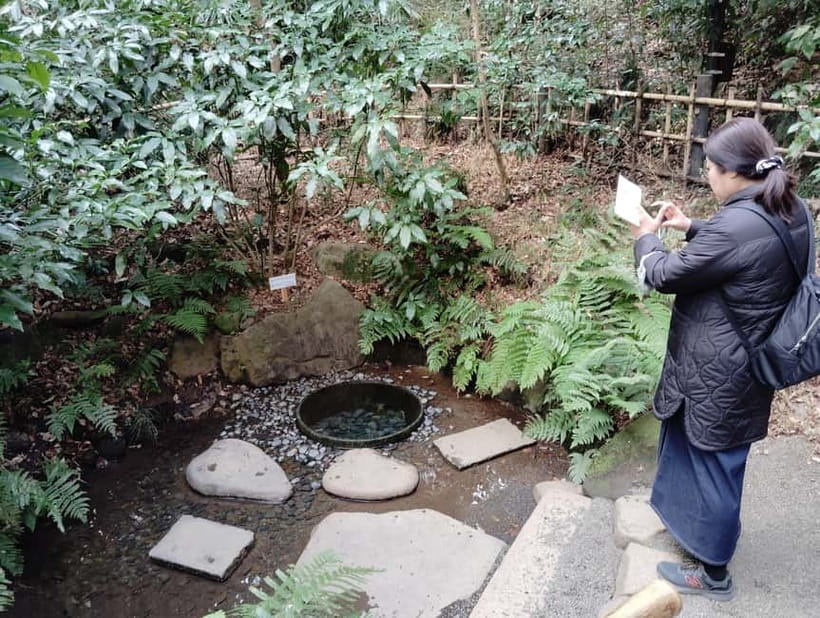
Kiyomasa’s Well may be included if time allows. That qualification matters. It should be treated as a possible extra stop, not a guaranteed part of the route. If visiting the well is important to you, ask the guide at the start how the timing looks that day.
The garden walk can feel short if you want a long, unhurried stroll. This is the clearest limitation of the two-hour format. You get a useful introduction to the South Pond area, but you are not signing up for a full garden afternoon.
What the $48 price really covers
At $48 per person, this tour sits in a reasonable range for a guided cultural visit in central Tokyo, especially because several costs are included. The price covers the guide, entrance to Meiji Jingu Garden, omikuji, and other stated experience fees.
The real value comes from the explanations. You can walk through the shrine grounds on your own at no charge, but you may miss the meaning of the sake barrels, Eternal Forest, handwashing ritual, and prayer customs. If those details matter to you, the guide adds something that a self-guided visit may not.
The tour also reduces the uncertainty of a first shrine visit. You know where to meet, what to look for, and how to behave at the main ritual points. That can be worth more than a simple list of facts, particularly if this is your first introduction to Japanese spirituality.
Still, I would not choose this tour if you want a completely free-form garden visit or extensive time for photography. The schedule is compact, and the route has a clear order. You are paying for direction and explanation, not unlimited wandering.
Private and small group options are available. A smaller format can be useful if you want to ask questions about Japanese culture, religion, or modern life. Kyo’s approach, for example, has included contemporary context and even help with understanding a first konbini visit, showing how some guides may connect the shrine visit to daily life in Japan.
Timing, meeting details, and practical planning
The tour lasts two hours, with starting times based on availability. Plan to arrive at the first torii in front of Meiji Jingu, not at the main shrine building or the garden entrance. Look for the yellow DeepExperience sign.
There is no private transportation included. That is not a major issue for this experience because the visit is built around walking through the shrine and garden grounds. You should wear shoes suitable for a steady walk and allow yourself enough time to reach the meeting point before the scheduled start.
Food and drinks are not included. The tour is short, so this mainly means you should handle refreshments before or after the visit rather than expecting a café stop during the route.
The tour is available with a live English guide, and English and Japanese are listed as guide languages. If language is central to your experience, check the available option when you reserve.
Free cancellation is available up to 24 hours before the start for a full refund. You can also reserve now and pay later, which is useful when you are still arranging a Tokyo schedule.
Who will enjoy this Meiji Jingu walk?
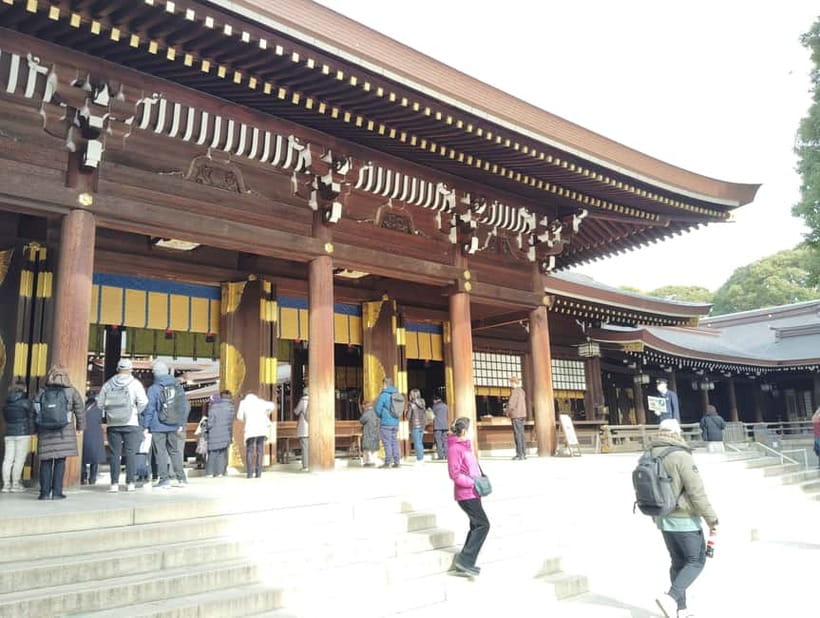
I would recommend this experience to first-time visitors to Tokyo who want more than a quick photo at a famous shrine. The ritual instruction is practical, and the guide helps you understand what you are seeing without requiring prior knowledge.
It also suits couples, families, and small groups who prefer a gentle cultural activity over a packed sightseeing route. The walk has peaceful stretches, a fortune-telling stop, and enough structure to keep the visit moving.
You may also enjoy it if you are curious about how tradition fits into present-day Japan. Kyo’s easy humor and contemporary explanations, along with the historical background provided by Takashi, suggest that the guiding style can go beyond dates and formal labels.
I would hesitate to book it if your main goal is a long garden walk, extensive independent photography, or a full-day study of Meiji Jingu. Two hours gives you a strong introduction, but it cannot cover every corner or answer every possible question.
Should you book the Meiji Jingu guided tour?
Book it if you want clear cultural guidance, shrine etiquette, and a garden visit in one compact outing. The included garden admission and omikuji improve the value, while the guides add the human element that makes the rituals easier to understand.
The strongest parts are the handwashing and prayer instruction, the explanation of the Eternal Forest, and the calm route through South Pond. The main tradeoff is limited time, with Kiyomasa’s Well dependent on the schedule.
At $48, I see this as a good choice for a first or second Tokyo visit, especially if you want a friendly guide and a small-group or private setting. If you already know shrine customs and prefer to wander alone, save the money and explore at your own pace. For everyone else, this is a thoughtful way to meet Meiji Jingu without treating it as just another stop on a city checklist.
FAQ
Where does the Meiji Jingu tour begin?
The meeting point is in front of Ichinotorii, the first torii of Meiji Jingu. The guide will hold a yellow sign with the DeepExperience logo.
How long does the tour last?
The tour lasts two hours.
What languages are available?
A live English guide is available, and English and Japanese are listed as guide languages.
Is admission to Meiji Jingu Garden included?
Yes. Entrance to Meiji Jingu Garden is included in the tour price.
Is omikuji included?
Yes. Omikuji and other stated experience fees are included.
Will the tour visit Kiyomasa’s Well?
The tour may visit Kiyomasa’s Well if time allows. The guaranteed garden focus is the South Pond area.
Just added around Tokyo
- :Tokyo,Shibuya /Meiji Shrine tour in KIMONO/English-friendly★ 5.0 · 4 reviews
- Tokyo: Snow Monkey and Zenkoji Temple Day Trip In Low Price★ 5.0 · 5 reviews
- Tokyo War History Tour: Yasukuni Shrine & War Museum★ 4.5 · 6 reviews
- Tokyo: Gotokuji Culture Walk & Lucky Cat Temple Experience★ 4.9 · 5 reviews
- Tokyo: Shibuya Sky, Harajuku & Meiji Shrine Highlights Tour★ 4.5 · 9 reviews
- Tokyo: Visit 5 Shrines & Collect Goshuin on Private Tour★ 5.0 · 3 reviews
- Tokyo: Sensoji Temple & Street Food: Private Tour with guide★ 4.6 · 8 reviews
- Tokyo’s Kitchen: Tsukiji Market Food & Culture Walk★ 4.7 · 74 reviews
Meiji Shrine & Senso-ji Tours, compared.
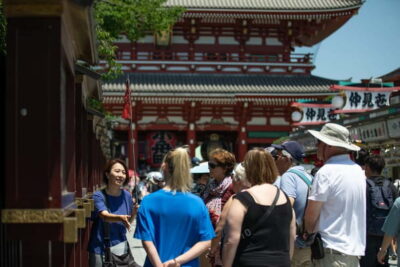
Asakusa Walking Tour with Sensoji Temple Visit
Read our review →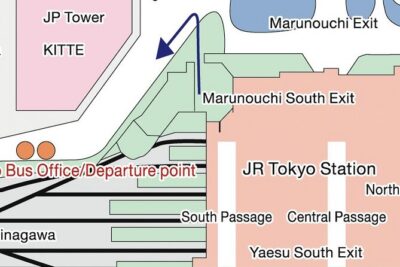
Tokyo Panoramic 1 Day: Meiji Shrine, Asakusa, Odaiba and SKYTREE®
Read our review →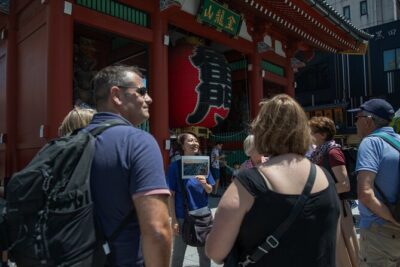
Asakusa Senso-ji Temple and Old Tokyo Walking Tour
Read our review →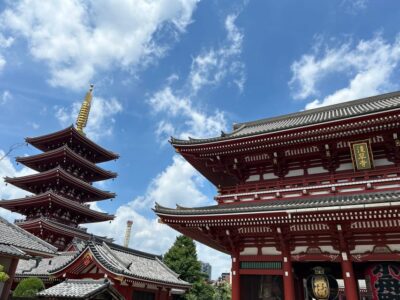
Asakusa and Tokyo’s Oldest Temple Senso-ji Tour
Read our review →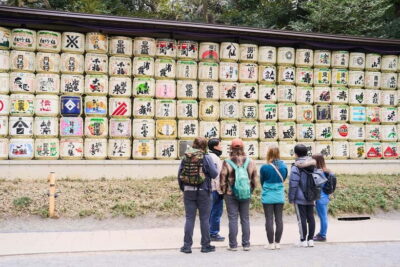
Meiji Shrine Walking Tour — Shinto & Imperial System
Read our review →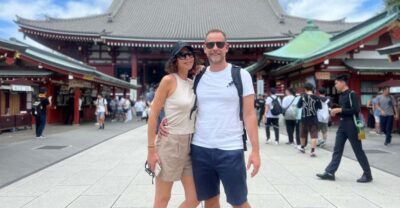
Meiji Jingu Shrine and Shinto Culture Walking Tour
Read our review →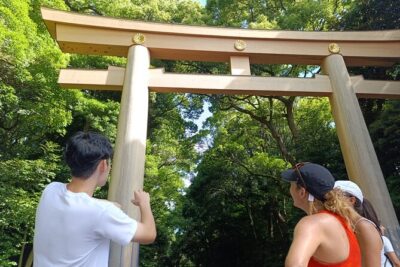
Meiji Shrine Walking Tour — Shintoism & Imperial System
Read our review →Browse the lists this tour appears in