
Review · TOKYO
Tokyo: Buddhism and Shinto Temple Tour with a Real Local
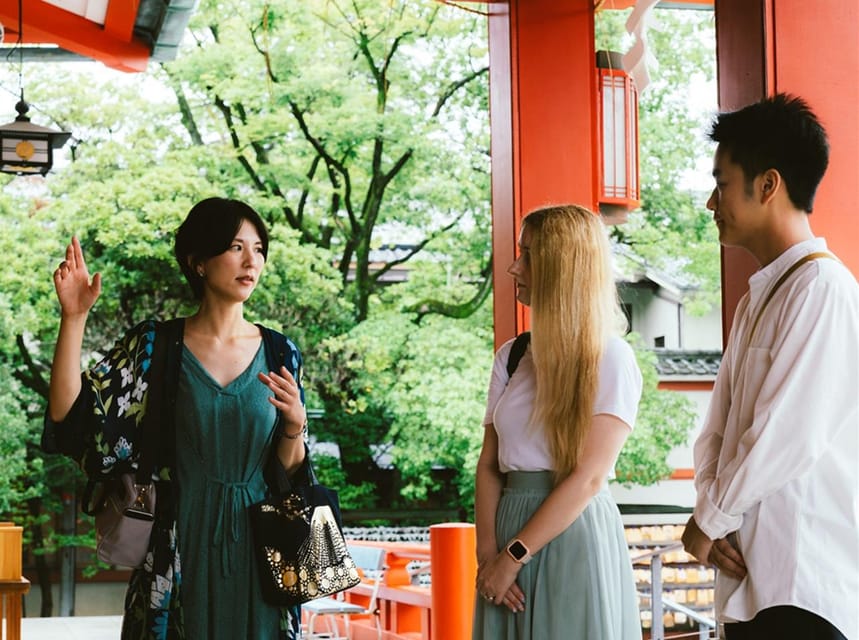
Tokyo’s spiritual side rewards a slower pace. This small-group walk pairs Manami Watanabe, a local guide with a Ph.D. in cultural heritage protection, with two very different religious sites. I especially like the careful explanation of Buddhist and Shinto customs, plus the chance to watch the Fukagawa Fudo-do fire ceremony without treating it like a stage show.
The tour also visits Tomioka Hachimangu Shrine, where you learn about sumo, sake, fortune papers, wish plaques, and goshuin stamps. My one caution is that the two-hour schedule is compact, and the ceremony comes with strict rules: no indoor photography, video, or audio recording, and respectful behavior matters more than getting the perfect view.
Key points at a glance
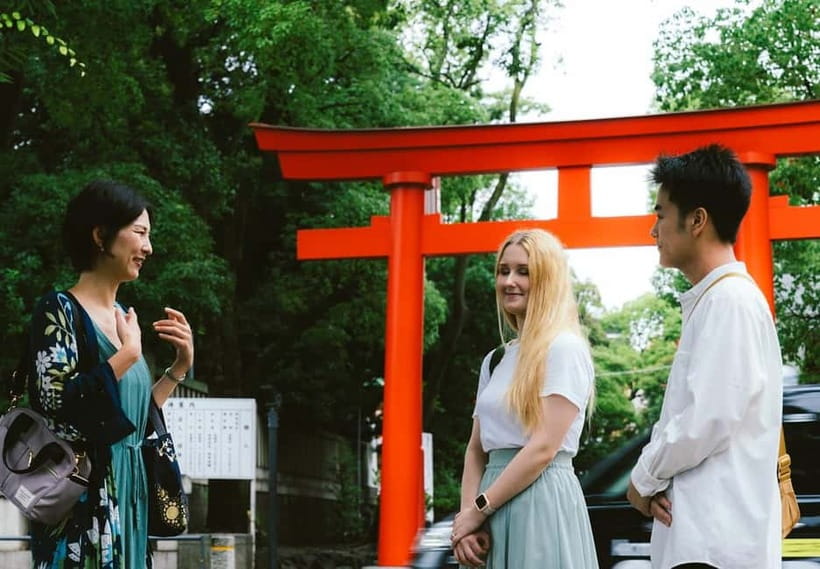
- A local guide with academic training: Manami Watanabe was born and raised in the area and explains Japanese religion with both personal and scholarly insight.
- A serious Buddhist fire ceremony: The 40-minute visit to Naritasan Fukagawa Fudo-do includes drumbeats, flames, quiet observation, and scene-by-scene guidance.
- Two religions in one neighborhood: You compare Buddhist and Shinto customs instead of seeing each site as just another pretty building.
- A small group of six or fewer: The format gives you room to ask questions and hear explanations clearly.
- A useful etiquette lesson: You learn where to sit, how to behave, what to photograph, and why certain actions can be rude.
- A real local ending: Tomioka Hachimangu connects the visit to sumo, sake, local traditions, and Manami’s family ties.
Starting at Monzen-nakacho Station
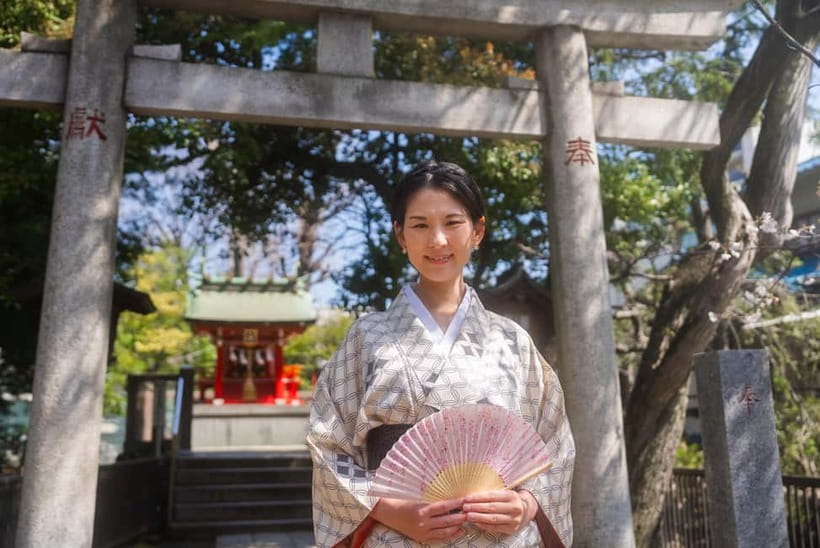
The tour begins outside Exit 4 of Monzen-nakacho Station, served by the Oedo and Tozai subway lines. Look for the red sign of Kusuri no Fukutaro directly outside the exit.
This meeting point needs care. Monzen-nakacho has more than one drugstore with the same name, and using another exit can send you in the wrong direction. Use the stairs at Exit 4 rather than an elevator, since the drugstore is easier to spot from street level.
From here, you walk through Monzennakacho, a historic East Tokyo district in the Shitamachi part of the city. Shitamachi means the old low-town neighborhoods, areas traditionally linked with working communities and local life rather than grand imperial avenues or major sightseeing zones.
That setting is part of the appeal. You are not racing between Tokyo’s biggest attractions. Instead, you are looking at a neighborhood where religious buildings, waterways, local customs, and daily routines sit close together.
The tour lasts two hours and is limited to six participants. That is a useful size for a subject that depends on questions. You can ask Manami why a shrine and temple use different symbols, or stop for clarification when a ritual seems unfamiliar.
A few more temple visits around Tokyo worth a look
- Tokyo: Asakusa Walking Tour with Sensoji Temple Visit
★ 4.8 · 1,583 reviews - Nikko: Kegon Falls, Lake Chuzenji & Toshogu Temple
★ 4.6 · 1,577 reviews - Tokyo: Nikko Toshogu Shrine and Kegon Waterfall Tour
★ 4.5 · 1,266 reviews
Oyoko River and Tatsumi-shindo
The first two stops are short, with about 10 minutes at Oyoko River and another 10 minutes at Tatsumi-shindo. These are not long sightseeing stops, but they help place the temples and shrine in their local setting.
At the river, you begin seeing Monzennakacho as a lived-in neighborhood rather than a collection of religious buildings. Manami uses the area to explain the connection between place, community, and worship.
Tatsumi-shindo adds another layer before the main temple visit. The exact focus depends on the day and the group’s questions, but the purpose is to prepare you for the differences between Buddhist and Shinto practice.
I like this gradual start. If you walked straight into the fire ceremony without any background, you could easily mistake a serious religious service for a cultural performance. These opening stops give you enough context to watch with more respect and understanding.
Naritasan Fukagawa Fudo-do fire ceremony
The centerpiece is the 40-minute visit to Naritasan Fukagawa Fudo-do, a Buddhist temple known here for its fire ceremony. You can expect strong drumbeats, flames, chanting or ritual activity, and a formal atmosphere.
The most useful part is Manami’s explanation during the ceremony. She provides explanation sheets and talks you through what is happening scene by scene. You are not left trying to work out the meaning of each movement from a distance.
The ceremony is not presented as entertainment. It is an everyday Buddhist activity for the local community, and that changes how you should approach it. The tour deliberately avoids taking the front middle seats simply to give the group the best possible view. Those places should be available to Buddhist worshippers.
That choice may mean your view is not perfect. I consider that a fair trade. You are being taught how to enter a religious setting as a respectful observer, not how to claim the best seat in the house.
There are also small details that many first-time visitors would miss. Sitting with crossed legs on chairs may be viewed as rude to Buddha and the monks. Photography is not allowed inside, and video and audio recording are also prohibited. Listen carefully before the ritual begins, then put your phone away.
The fire ceremony can be impressive, but it is worth keeping expectations in check. This is not a theatrical show designed for tour groups. The power comes from seeing a genuine religious practice while understanding why the participants treat it seriously.
Admission to the ceremony is included in the tour price, which matters because it removes one extra expense and lets you focus on the experience. Bring a few small coins if you want to take part in the customary offering, though coins are optional and not included.
Comparing Buddhist and Shinto customs
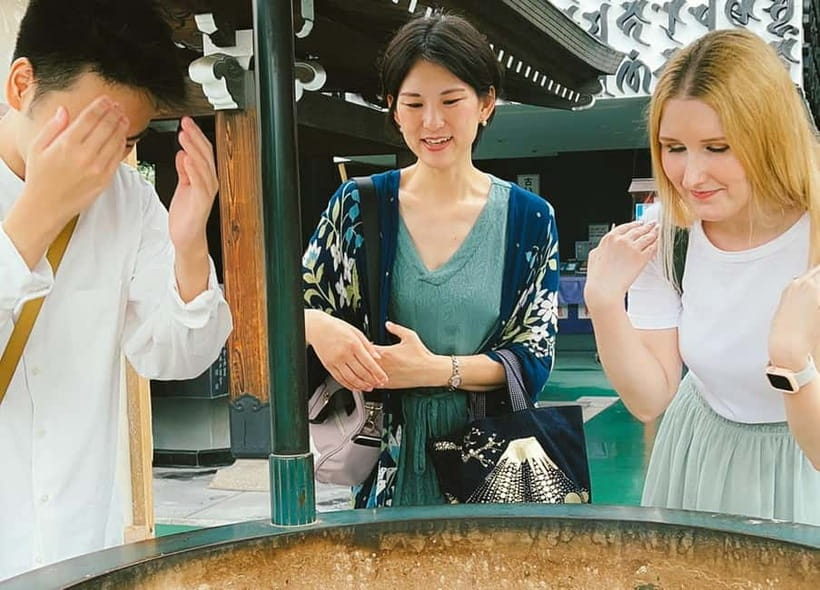
One of the strongest reasons to choose this tour is the direct comparison between Buddhism and Shinto. Many first-time visitors see a temple and shrine, take a few pictures, and move on. That leaves out the part that explains how these traditions function in Japanese life.
Manami explains how Buddhism and Shinto differ, while also showing how Japanese people may take part in both. This is a useful correction to the idea that a person must choose one religion in the Western sense.
You learn how to visit temples and shrines properly, including basic manners and what various objects mean. The practical instruction is valuable because religious sites in Japan can look open and informal, yet small actions still carry meaning.
The tour also covers photography rules. That may seem minor, but it saves you from an awkward mistake. A temple interior is not simply an attractive backdrop, and the right approach is to check first rather than assume a camera is welcome.
Shawls are available for anyone who needs to cover shoulders or knees. You should still arrive in suitable clothing, avoiding short skirts, sleeveless shirts, and see-through clothing. Shoes are not allowed indoors, so wear comfortable footwear that you can remove easily.
Same place, a different morning at the gates:
- Tokyo Panoramic 1 Day: Meiji Shrine, Asakusa, Odaiba and SKYTREE®
★ 4.5 · 1,222 reviews - Tokyo: Zen Meditation at a Private Temple with a Monk
★ 5.0 · 510 reviews - Mt. Fuji Heritage Tour: Traditional Villages, Lakes & Shrine
★ 4.5 · 509 reviews - Tokyo: Samurai Entertainment Night Show in Kanda Shrine
★ 4.6 · 417 reviews
Tomioka Hachimangu Shrine and local traditions
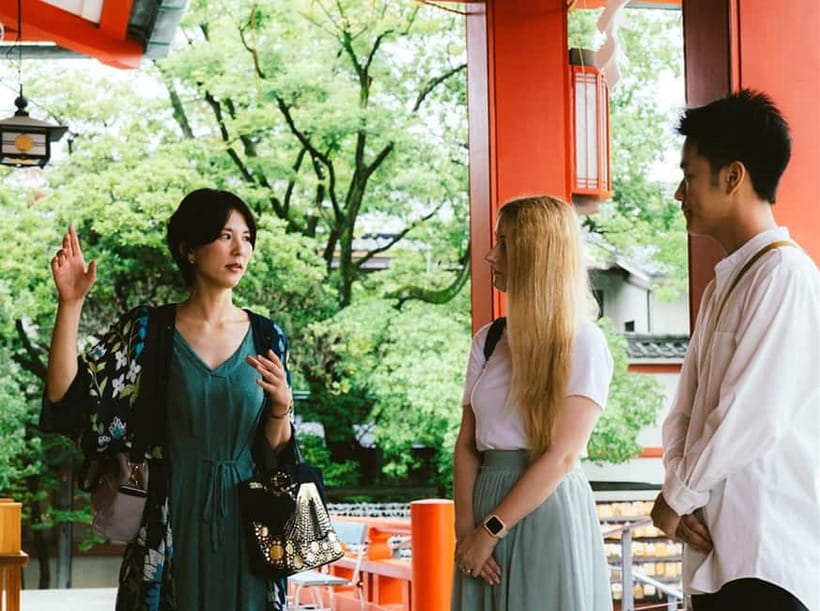
After the Buddhist temple, the tour moves to Tomioka Hachimangu Shrine for about 25 minutes. The atmosphere shifts. Instead of the fire ceremony’s intensity, you get a calmer setting for learning about Shinto symbols and local customs.
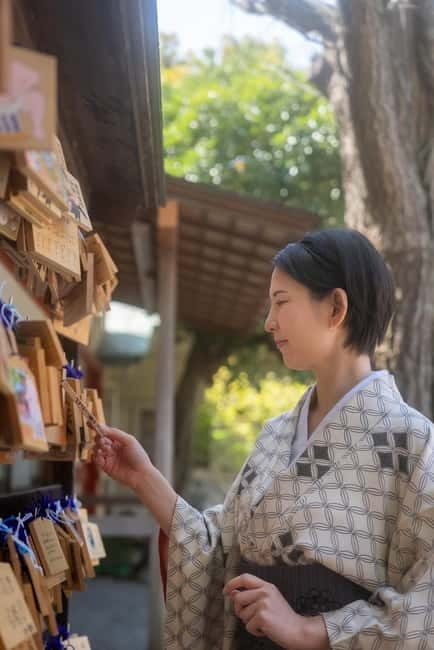
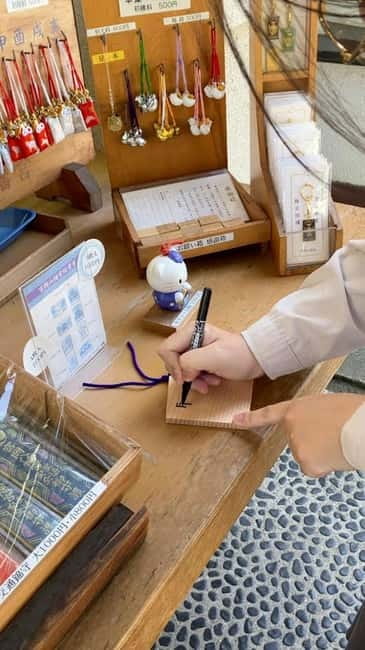
Manami explains white fortune-telling papers, wooden wish plaques, goshuin stamps, and other features you may see at a Japanese shrine. These objects can look decorative if you do not know their purpose. With an explanation, they become part of a larger system of prayer, hopes, gratitude, and personal tradition.
The shrine also gives you a chance to learn why sake matters to Shinto practice. You hear about the role of sumo and see the impressive sumo rocks associated with the shrine. This is a welcome change from a standard shrine visit focused only on gates and architecture.
Tomioka Hachimangu is especially meaningful because of Manami’s family connection to the place. Her family stories help link public religious customs with personal memory. That gives the final stop a warmer, more local feel than a basic fact-filled lecture.
The visit is only 25 minutes, so do not expect a long independent exploration. The benefit is focus. Manami points out the important details and explains their meaning before the group returns to Monzen-nakacho Station.
What the small group changes
A group limited to six participants suits this experience better than a large bus tour. Religious etiquette is easier to explain when everyone can hear, and you can ask a question without interrupting a crowd.
The format also helps during the ceremony. The guide can remind you when to remain quiet, explain what is happening, and answer questions before or after the ritual. That personal attention is one reason Manami receives such strong praise for her patience, kindness, and ability to explain difficult cultural details clearly.
This is not a tour for someone who wants to cover many famous Tokyo landmarks. You see a small part of the city, and the value comes from interpretation rather than quantity.
The experience also suits people who enjoy asking questions. One visitor described being able to learn a great deal about Japanese religions and rituals in a short time, especially with a very small group. That is exactly where this tour works best.
Price, timing, and practical value
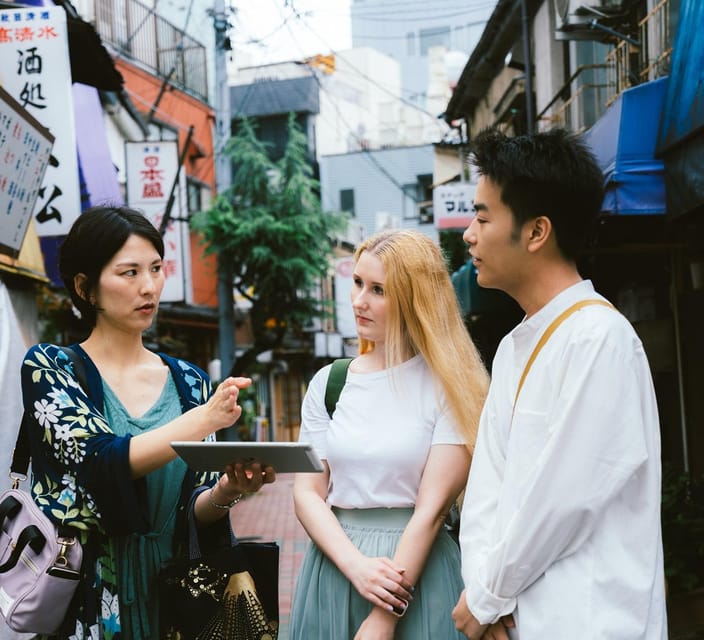
At $62 per person, the tour is not the cheapest way to spend two hours in Tokyo. You can visit a shrine or temple independently for little or no admission cost. The price makes more sense if you want a guide to explain customs, secure access to the fire ceremony, and help you avoid etiquette mistakes.
The included temple admission adds some direct value. The bigger benefit is Manami’s time and interpretation. A sign can tell you what a shrine object is called, but it rarely explains why it matters or how it fits into Japanese religious life.
The schedule is also efficient. In two hours, you cover the river, Tatsumi-shindo, the Buddhist temple, and Tomioka Hachimangu Shrine, then return to the station. You do not need to dedicate half a day to the experience.
I would pair this tour with a separate visit to Tokyo’s major sights rather than using it as your only cultural activity. It gives you a thoughtful look at East Tokyo, but it does not cover the city’s wider history, museums, food scene, or famous districts.
Cancellation is free up to 24 hours before the start time, and you can reserve now and pay later. Check the available starting times when booking because the tour runs at scheduled times rather than whenever you arrive.
Who should book this experience
I would recommend this tour to first-time visitors who want more than a quick photo at a temple. It is also a good choice if you are curious about how Buddhism and Shinto coexist, or if you worry about making a mistake during a religious visit.
It suits adults and older children who can remain quiet during the ceremony and follow clothing and photography rules. Children under five are not accepted, and the experience is not suitable for people over 80.
You should choose something else if you want a relaxed walk with plenty of free time. The itinerary is tightly timed, and the fire ceremony requires respectful silence and attention. You also need to be comfortable giving up photography inside.
Bring cash for optional offerings, water, and comfortable shoes. Avoid hats, smoking, short skirts, sleeveless shirts, and see-through clothing. If you need more coverage, shawls are available.
Should you book this Tokyo temple tour?
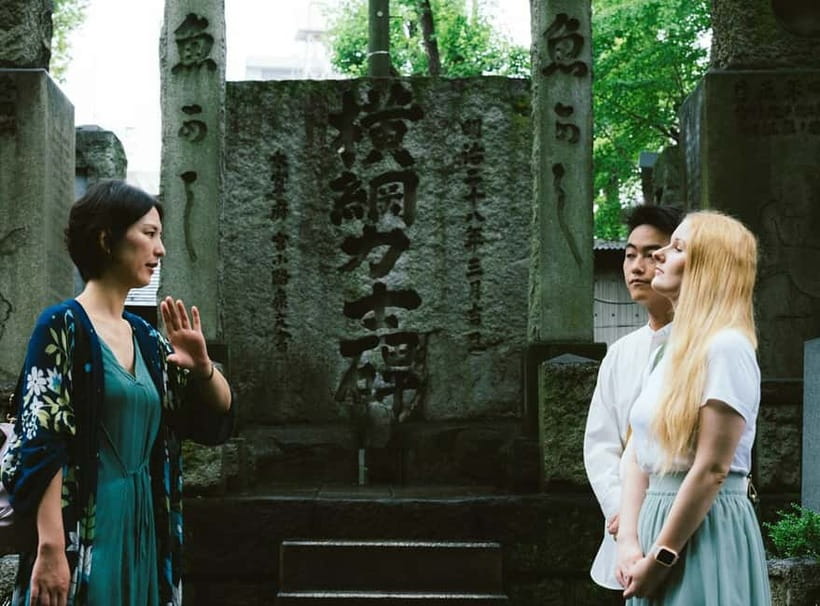
Book it if you want a small, thoughtful experience led by someone who knows both the area and the subject. Manami’s local ties, Ph.D. background, patience, and careful handling of the fire ceremony are the main reasons this tour offers more than a standard temple walk.
Skip it if your priority is photography, shopping, food, or famous Tokyo landmarks. The rules are firm, the ceremony is not a show, and the two-hour schedule leaves little room for wandering.
For the right visitor, $62 is fair value. You receive a local guide, temple admission, a small group, a Buddhist ceremony, a Shinto shrine visit, and practical instruction you can use at other religious sites across Japan.
FAQ
Where does the tour meet?
Meet outside Exit 4 of Monzen-nakacho Station, served by the Oedo and Tozai subway lines. Look for the Kusuri no Fukutaro drugstore with the red sign.
Should I use a particular station exit?
Yes. Use Exit 4, not another exit. There is another Kusuri no Fukutaro location nearby, and using the wrong exit can lead you to the wrong drugstore.
How long does the tour last?
The experience lasts two hours and returns to Monzen-nakacho Station.
How many people can join?
The tour is limited to six participants.
What language is the tour offered in?
The live guided tour is offered in English.
Is admission to the fire ceremony included?
Yes. Admission to the fire ceremony at Naritasan Fukagawa Fudo-do is included.
Can I take photographs or record the ceremony?
Photography inside, video recording, and audio recording are not allowed.
What should I wear and bring?
Wear comfortable shoes and suitable clothing. Avoid short skirts, sleeveless shirts, see-through clothing, and hats. Bring cash and a drink. Shawls are available for anyone who needs to cover their shoulders or knees.
Can I cancel or pay later?
You can cancel up to 24 hours in advance for a full refund. Reserve now and pay later is also available.
Just added around Tokyo
- :Tokyo,Shibuya /Meiji Shrine tour in KIMONO/English-friendly★ 5.0 · 4 reviews
- Tokyo: Snow Monkey and Zenkoji Temple Day Trip In Low Price★ 5.0 · 5 reviews
- Tokyo War History Tour: Yasukuni Shrine & War Museum★ 4.5 · 6 reviews
- Tokyo: Gotokuji Culture Walk & Lucky Cat Temple Experience★ 4.9 · 5 reviews
- Tokyo: Shibuya Sky, Harajuku & Meiji Shrine Highlights Tour★ 4.5 · 9 reviews
- Tokyo: Visit 5 Shrines & Collect Goshuin on Private Tour★ 5.0 · 3 reviews
- Tokyo’s Kitchen: Tsukiji Market Food & Culture Walk★ 4.7 · 74 reviews
- Tokyo: Sensoji Temple & Street Food: Private Tour with guide★ 4.6 · 8 reviews
Tokyo Temple Tours, compared.
Asakusa Walking Tour with Sensoji Temple Visit
Read our review →

Nikko Toshogu Shrine and Kegon Waterfall Tour
Read our review →
Tokyo Panoramic 1 Day: Meiji Shrine, Asakusa, Odaiba and SKYTREE®
Read our review →
Mt. Fuji Heritage Tour: Traditional Villages, Lakes & Shrine
Read our review →
Samurai Entertainment Night Show in Kanda Shrine
Read our review →
Asakusa and Tokyo’s Oldest Temple Senso-ji Tour
Read our review →Browse the lists this tour appears in