
Review · AZERBAIJAN
Gobustan, Mud volcanoes, Fire temple, Fire mountain PRIVATE TOUR
Ancient rock art meets burning hills. This nine-hour private outing takes you from Baku to Gobustan’s petroglyphs, bubbling mud volcanoes, the Ateshgah Fire Temple, and Yanar Dag. I especially like the private vehicle and the chance to set your own pace, plus the strong English-speaking guides, including Rajab, Nigar, Mahmed, and Valah. The main drawback is the extra $23 in entrance fees, which brings the real cost to about $112 per person before lunch.
I also like how much ground you cover in one day without joining a large group. You get archaeology, religion, geology, and local stories in one outing. The tradeoff is a long day with several drives, and the mud volcano stop can feel more rugged and less polished than the other sites.
Key points to know before booking
- Gobustan reaches back thousands of years: See more than 6,000 rock drawings, with museum displays covering life from roughly 5,000 to 20,000 years ago.
- The private format is the big advantage: Your group has its own vehicle and guide, so you can spend more time at a site if you wish.
- Four very different stops fit into one day: Ancient carvings, mud volcanoes, a former fire-worship site, and a natural gas flame each show a different side of Azerbaijan.
- The full cost is about $112 per person: The tour price is $89, while admission fees add another $23. Lunch is not included.
- Pickup begins at 9:30 a.m.: You are collected within Baku and dropped at Fountain Square at the end.
- Book ahead during busy periods: This outing is often reserved about 30 days ahead, a useful clue if your Baku dates are fixed.
Why this makes a good first day outside Baku
Baku can fill several days with grand architecture, cafés, and museums, but the country begins to make more sense once you leave the city. This tour links four sites that are hard to combine by public transport in a single day.
The route is especially useful if you have only a short stay. You do not have to arrange separate taxis, work out rural transport, or guess how long each stop will take. Your guide handles the driving and connects the sights with stories about early human life, Zoroastrian beliefs, and Azerbaijan’s long relationship with fire.
The private arrangement matters here. You can ask questions as they arise, stop for photographs, and spend longer at Gobustan if the carvings catch your interest. You also avoid the fixed rhythm of a large coach group.
Still, do not expect a relaxed half-day outing. The tour lasts about nine hours, and part of that time is spent on the road. The reward is range. In one day, you move from prehistoric art to natural gas flames and religious architecture.
More Private Temple Tours in Baku:
- Baku: Burning Mountain & Zorastrian Temple Private Tour
★ 4.9 · 34 reviews - Gobustan, Mud volcanoes, Fire temple, Fire mountain PRIVATE TOUR
★ 5.0 · 28 reviews - Ateshgah Fire Temple and Yanardag Fire Mountain Private Tour
★ 5.0 · 6 reviews
Gobustan’s rock drawings and the museum
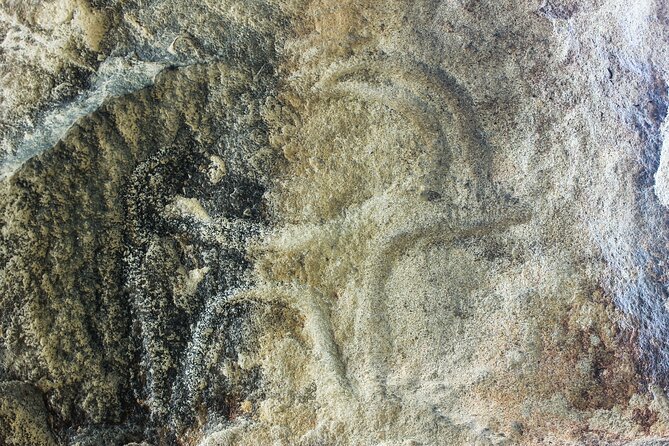
Gobustan is the intellectual center of the day. Begin at the interactive museum, where touch screens and 3D panoramas explain how people lived in the region thousands of years ago. Displays cover the natural setting, archaeological work, cultural development, and objects dating from about the fourth to second millennium BC.
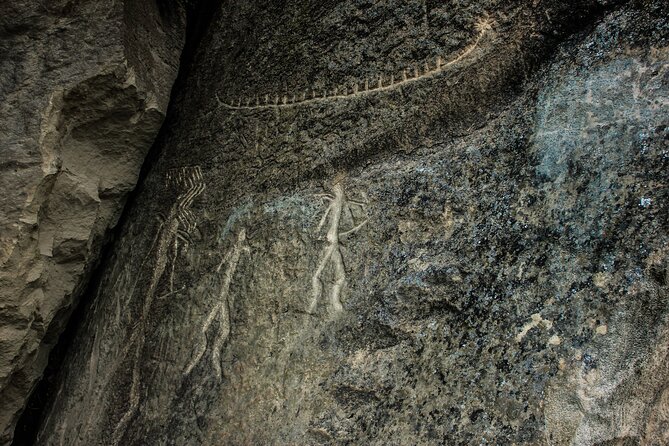
This museum stop gives you useful context before you reach the open-air rock site. Without it, the carvings can look like scattered marks on stone. With a guide explaining the figures and their setting, you have a better chance of seeing scenes of hunting, dancing, animals, and daily life.
The age range here is striking. The displays describe human activity from around 5,000 to 20,000 years ago, while the wider collection includes more than 6,000 rock drawings. That makes Gobustan more than a quick photo stop. It is a place where small marks on stone open a window onto people who had no written records.
Your guide is important at this point. Ask for explanations of the symbols, the archaeological work, and the way the area changed over time. Valah, for example, has been praised for linking the rock art with early human life and later Zoroastrian beliefs. That connection gives the morning a clear theme rather than making it a simple succession of stops.
The open-air section requires more attention to your footing and surroundings than the museum. You are visiting a rocky site, not a polished indoor attraction. Wear sensible shoes, bring water, and allow your guide to set the pace.
Gobustan is also the stop most likely to reward patience. You may understand the museum quickly, but the rocks take a little time. Look closely at the surfaces and listen to the explanation instead of rushing from one carving to the next.
Admission is not included. Gobustan and the other sites together add $23 to the listed tour price, so include that cost when comparing this outing with other day trips from Baku.
The mud volcanoes: strange, brief, and memorable
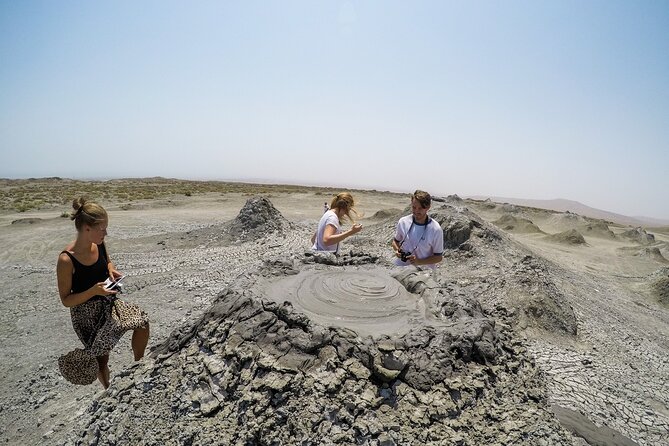
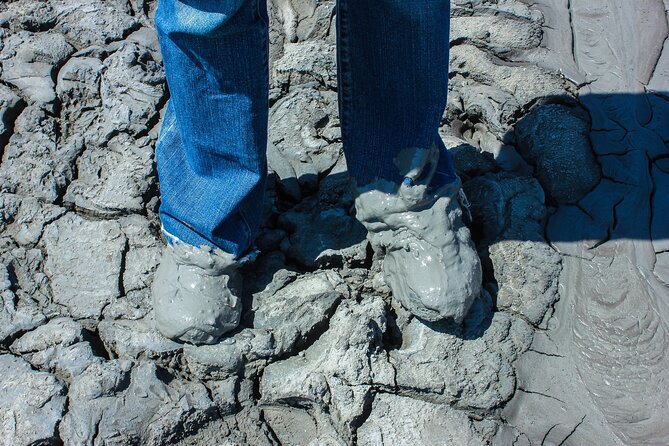
The mud volcanoes provide the day’s oddest sight. Instead of bright lava, you see mud and gas pushing up through small cones and pools. The scene is earthy, open, and unusual, with a rougher feel than the museum or fire temple.
Plan on about an hour here. That is enough for a close look and photographs, but it is not a full geological excursion. The stop works best when you treat it as a short encounter with one of Azerbaijan’s distinctive natural features.
The approach can be part of the fun. One account describes reaching the volcanoes in vintage Ladas, an old-fashioned local transport detail that adds character. Since the tour information does not guarantee that vehicle on every departure, ask when booking if this matters to you.
This stop may be less comfortable for anyone expecting paved paths and formal facilities. The ground can be uneven, and the setting is exposed. Your guide can make the visit more rewarding by explaining what creates the mud and why the region has so many of these formations.
For families, this may be one of the easiest places to keep children interested. Mahmed has been especially good at involving toddlers in the activities, according to the supplied account. The bubbling mud is naturally attention-grabbing, though you should still follow site instructions and keep children close.
The volcanoes are also a useful reminder that this is not just a history tour. The day moves between human stories and unusual geology, so the pace rarely feels repetitive.
Ateshgah Fire Temple and the story of sacred flame
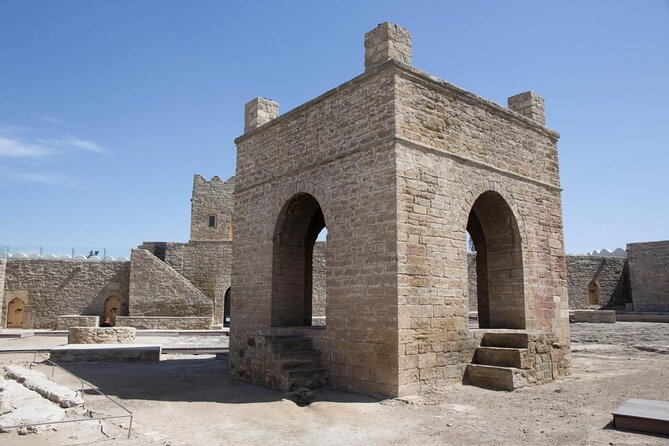
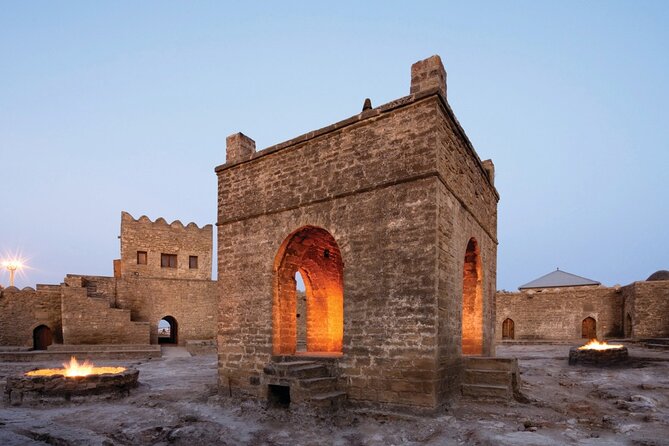
Ateshgah, often called the Fire Temple of Baku, shifts the focus from natural forces to religious practice. Persian and Indian inscriptions show that the site was used by Hindu and Zoroastrian worshippers. Its first recorded mention dates to the seventh century AD.
The complex includes cells used by fire worshippers, along with objects found during archaeological work. Look for cookware, stone slabs with inscriptions, and clothing elements. These details help you picture the people who lived and worshipped here, rather than seeing only a courtyard of old walls.
This is where your guide’s storytelling can make a real difference. The temple’s connection to fire is easy to understand, but the overlap of Persian, Indian, Hindu, and Zoroastrian traditions deserves a careful explanation. Ask how the inscriptions relate to the site and how fire functioned in worship.
The visit lasts about an hour, which gives you enough time to walk through the cells and examine the exhibits without turning the stop into a race. It is also a more structured and visitor-ready site than the mud volcanoes.
Do not expect the temple to look exactly as it did in ancient times. The value is in the surviving layout, inscriptions, objects, and religious associations. Your guide helps separate documented history from the stories that have gathered around the flames.
The temple adds human depth to the day. Gobustan shows early people recording life in stone. Ateshgah shows later communities giving fire a sacred role. The two sites are separated by thousands of years, but together they create a clearer picture of Azerbaijan’s past.
A few more temple visits around Baku worth a look
- Baku: Gobustan, Volcanoes, Fire Temple and Yanardag Day Trip
★ 4.7 · 433 reviews - Gobustan & Mud, Fire Temple, Burning Mountain (Group & Private)
★ 4.5 · 418 reviews - Gobustan-Mud Volcan-Fire Temple and Mountain Tour/Entrance inc
★ 5.0 · 267 reviews - Baku:Gobustan Mud Volcanoes Temple & Entry tickets included
★ 4.8 · 178 reviews
Yanar Dag, the Burning Mountain
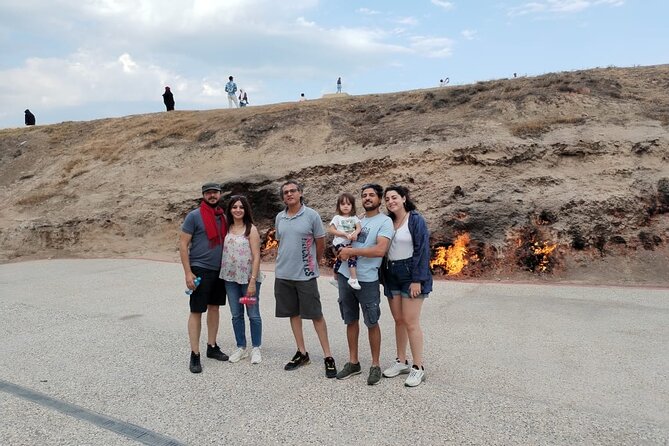
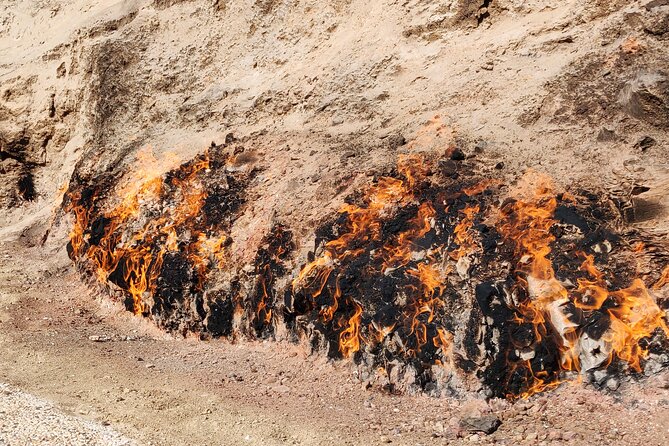
The final stop is Yanar Dag, whose name means Burning Mountain. Here, natural gas flames burn on a hillside on the Absheron Peninsula. The fire has continued from ancient times, and the site remains linked with pilgrimage from Iran and India.
You spend about 40 minutes at Yanar Dag. That is usually enough to see the flames, take photographs, and hear the explanation of the site’s religious importance. The visit is short, but the image is powerful: fire rising directly from the earth with no visible campfire beneath it.
This is a good final stop because it brings the tour’s central theme into plain view. At Gobustan, people recorded their world. At Ateshgah, fire became part of worship. At Yanar Dag, natural gas still burns from the ground.
The site can feel more like a managed attraction than a remote wilderness setting. That is not necessarily a flaw, especially if you want a straightforward visit with limited walking. Just keep your expectations realistic. You are seeing a natural flame at a designated site, not spending an afternoon in an untouched mountain area.
The tour ends with drop-off at Fountain Square in central Baku. That is useful if you want to continue your evening in the city rather than return to your hotel immediately.
Private transport, guides, and the pace
Pickup begins at 9:30 a.m. from your location within Baku. You travel in an air-conditioned vehicle with an accredited guide, and only your group takes part in the activity.
That setup gives you more control than a group excursion. If a question leads to another question, you can keep talking. If one stop interests you more than expected, you have a better chance of using your time well. You can also ask for help with photographs and local suggestions.
Guide quality appears to be one of the strongest parts of the experience. Rajab has been praised for clear English, detailed answers, and useful recommendations around Baku. Nigar has been described as warm and genuinely enthusiastic about her country. Mahmed has worked well with young children, while Valah has connected archaeology and Zoroastrian history in a clear way.
Of course, the exact guide depends on the date. The useful lesson is to make the most of the private format. Tell your guide what interests you, ask about local life, and do not be shy about requesting more context at Gobustan or Ateshgah.
The vehicle also matters because the day includes several stops outside Baku. A clean, comfortable car makes the long schedule easier. The supplied accounts specifically praise punctual pickup and a comfortable vehicle, although one pickup problem required a phone call to sort out. The company handled that situation well, but it is still wise to keep your phone available around departure time.
What the $89 price really covers
The listed cost is $89 per person. Add $23 for entrance fees, and the practical total is about $112 per person. Lunch is not included, so allow extra money for food as well.
That price is easier to justify for couples, families, or small groups who value private transport and a dedicated guide. You are paying not only for entry to the sights, but also for a full day of driving between sites that are spread outside Baku.
The value is weaker if you prefer to move slowly through one museum or spend a whole day at Gobustan. This tour is designed for range, not deep study at one location. You pay for the ability to see four different places in one organized outing.
Group discounts may be available, which can improve the value for larger parties. Since the tour is often booked around 30 days ahead, check the final price and ticket details when choosing your date.
Who will enjoy this day most
I would choose this tour if you want a clear introduction to the history and natural features around Baku. It suits first-time visitors, couples, families, and anyone who wants a private day without arranging several separate rides.
It is also a good fit if archaeology interests you but you do not have specialist knowledge. The museum, open-air carvings, and guide explanations give you enough background to appreciate Gobustan without reading up beforehand.
Families can benefit from the variety. The mud volcanoes offer a curious natural spectacle, the museum has interactive displays, and the fire sites give children memorable images to connect with the stories.
You may want a different plan if you dislike long drives, exposed outdoor areas, or a tightly packed day. The tour includes plenty, but it does not leave much space for an unplanned lunch or a slow afternoon.
Wear comfortable shoes and prepare for changing conditions at outdoor sites. The experience requires good weather, and poor conditions can lead to a new date or a full refund.
Should you book this private Baku tour?
I would book it if you have one free day outside Baku and want the broadest useful introduction to the region. The mix is unusually strong: prehistoric carvings, bubbling mud, religious architecture, and a natural flame.
The best reason to choose it is the private format. Guides such as Rajab, Nigar, Mahmed, and Valah have helped make the day personal, clear, and family-friendly. The main caution is the added $23 admission cost and the long schedule.
Book this tour when you want to see several major sights efficiently, with a guide who can explain what you are looking at. Skip it if you would rather explore one site slowly or avoid a full day on the road.
FAQ
What time does the tour start?
Pickup begins at 9:30 a.m. from your location within Baku.
How long does the tour last?
The full experience lasts approximately nine hours.
Is this a private tour?
Yes. Only your group participates, with private transportation and an accredited guide.
What sites are included?
The tour visits Gobustan Rock Art, the mud volcanoes, Ateshgah Fire Temple, and Yanar Dag, also called Burning Mountain.
Is hotel pickup available?
Pickup is offered from locations within Baku. The tour ends at Fountain Square in Baku.
Are admission tickets included?
No. Entrance fees are not included. The additional ticket cost is listed as $23.
Is lunch included?
No. Lunch is not included in the tour price.
What happens if bad weather cancels the tour?
If poor weather causes cancellation, you can receive a different date or a full refund. Cancellation by you is fully refundable when made at least 24 hours before the start time.
Just added around Baku
- Gobustan, Mud volcanoes, Fire temple, Fire mountain GROUP TOUR★ 4.5 · 19 reviews
- Qobustan rock arts, Mud Volcanoes, Fire temple Ateshgah, Yanardag★ 5.0 · 30 reviews
- Ateshgah Fire Temple & Yanar Dag mountain (Group & Private)★ 4.5 · 7 reviews
- Baku: Gobustan, Mud Volcano, Fire Temple & Burning Mountain★ 4.0 · 9 reviews
- Fire Temple and Fire Mountain Tour★ 5.0 · 22 reviews
- Gobustan, Mud volcanoes, Fire temple, Fire mountain PRIVATE TOUR★ 5.0 · 28 reviews
- Private Absheron Peninsula Atesgah Temple & Fire Mountain★ 5.0 · 4 reviews
- Gobustan, Mud Volcano, Burning Mountain and Fire Temple Tour★ 5.0 · 12 reviews
Private Temple Tours, compared.

Waterfalls, Water Temple & Rice Terraces Private Tour
Read our review →
Montserrat Monastery Small Group or Private Tour Hotel pick-up
Read our review →
Full-Day Angkor Wat Sunrise Private Tour with Guide from Siem Reap
Read our review →
Chiang Rai Temples: Private Tour from Chiang Mai
Read our review →
Private Tour: Teotihuacan and Guadalupe Shrine
Read our review →
Grand Palace, Wat Pho, and Wat Arun Private Tour
Read our review →
Ephesus and Temple of Artemis Private Tour from Kusadasi Port
Read our review →
Browse the lists this tour appears in