
Review · AZERBAIJAN
Ateshgah Fire Temple and Yanardag Fire Mountain Private Tour
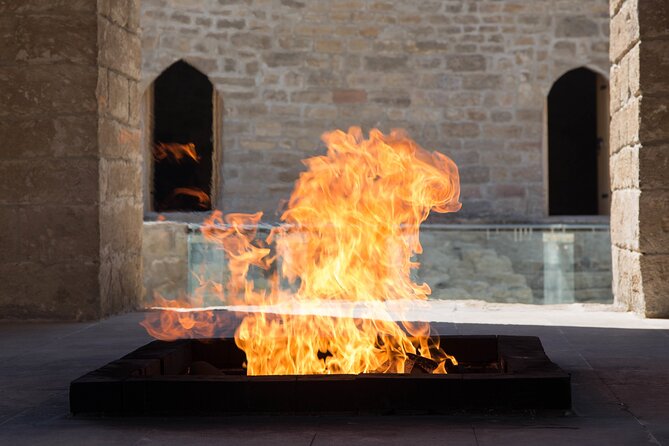
Fire still burns beneath Baku. This private half-day outing links two of Azerbaijan’s most unusual sights: Ateshgah Fire Temple, a former pilgrimage site for fire worshippers, and Yanardag, a hillside flame fed by natural gas. I like the easy private transport and the chance to connect Zoroastrian traditions with the area’s former Hindu and Sikh community. I also like that guides such as Aga and Anar are praised for clear explanations and useful Baku tips. The main drawback is that admission costs extra, and the total drive time takes up a large share of a three to four-hour tour.
This is a good choice if you want to get beyond central Baku without committing to a full-day excursion. The schedule is compact, the vehicle is air-conditioned, and your group travels alone. Just keep your expectations sensible: Ateshgah is a preserved historical complex, while Yanardag is a short natural spectacle rather than a long mountain visit.
Key points to know before booking
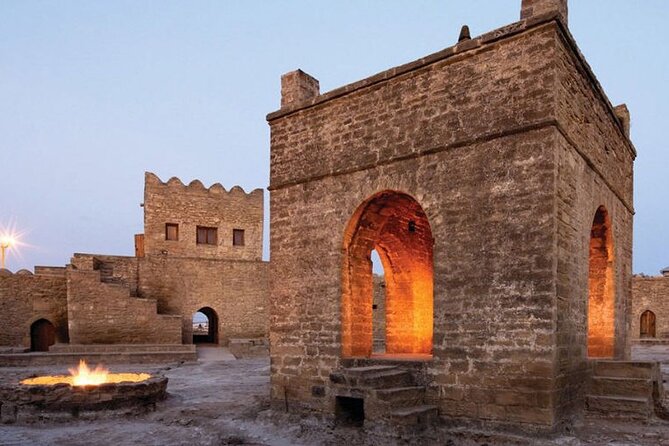
- Two fire sites in one outing: Visit the former Ateshgah pilgrimage complex, then see Yanardag’s continuous natural gas flame.
- Private transport: Only your group participates, with an English-speaking guide and air-conditioned vehicle.
- About one hour at Ateshgah: The temple’s pentagonal layout, central altar, and surrounding cells deserve the longer stop.
- Up to an hour at Yanardag: The flame itself is the focus, with time to see the wider protected area.
- Budget an extra $9: Entry to both attractions is not included, with an estimated combined ticket price of $9 per person.
- Flexible cancellation: A full refund is available when you cancel at least 24 hours before the start time.
Why these two fire sites belong together
Ateshgah and Yanardag are often grouped because both are linked to fire, but they offer different experiences. Ateshgah is a human-made religious site shaped by belief, pilgrimage, and trade. Yanardag is a natural gas fire that continues to burn from a hillside on the Absheron Peninsula.
That contrast gives the tour its purpose. At the temple, you learn how people interpreted underground flames and built a sacred place around them. At Yanardag, you see the geological cause more directly: gas rises from below the ground and burns at the surface.
The tour also introduces an important part of Azerbaijan’s religious past. Zoroastrians lived in the area for roughly 300 years, and Ateshgah was later connected with the Baku-based Hindu community linked to Sikhs. That makes the site more than a quick photo stop. You are seeing a place shaped by several religious and cultural traditions.
I would not book this outing expecting a full study of Zoroastrianism or the history of the Absheron Peninsula. The guide’s explanation will determine how much context you receive. Still, the pairing gives you a useful introduction in a short amount of time.
More Private Temple Tours in Baku:
- Gobustan, Mud volcanoes, Fire temple, Fire mountain PRIVATE TOUR
★ 5.0 · 47 reviews - Baku: Burning Mountain & Zorastrian Temple Private Tour
★ 4.9 · 34 reviews - Gobustan, Mud volcanoes, Fire temple, Fire mountain PRIVATE TOUR
★ 5.0 · 28 reviews
Reaching Ateshgah from central Baku
The drive from central Baku to the temple takes about 30 minutes. Pickup is offered, and the pickup time is included in the stated three to four-hour duration. The published meeting point is on the road to Nizami Badalan School in Aşurlu, and the tour ends back at the meeting point or at a city-center hotel according to the arrangements made for your booking.
That transport matters. Ateshgah and Yanardag are outside the center, and visiting both independently requires more planning than simply walking between central Baku sights. In a private vehicle, you avoid working out the connection between the two sites and can ask your guide questions during the drive.
The private format is also useful for families or small groups with different interests. You can ask for a slower explanation at the temple, request a short pause, or clarify a point without holding up a larger coach group. The tradeoff is that a private tour usually gives you less of a social experience than a group excursion.
The vehicle is air-conditioned, an important comfort in warm weather. No meals or drinks are included, so take water with you. The tour is near public transportation, but the supplied details do not specify a public route or travel time, so the included car is the simpler option.
Walking through Ateshgah Fire Temple
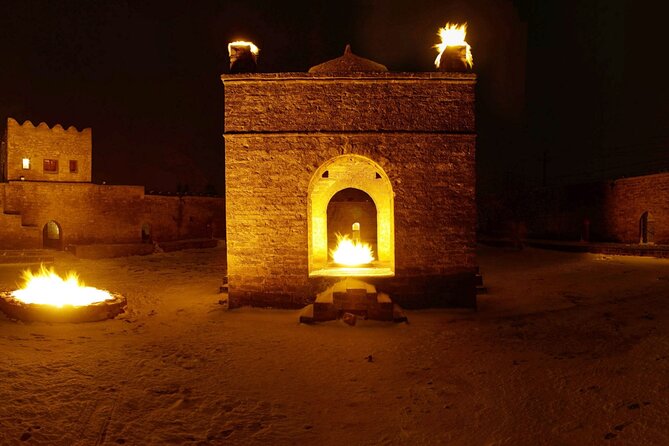
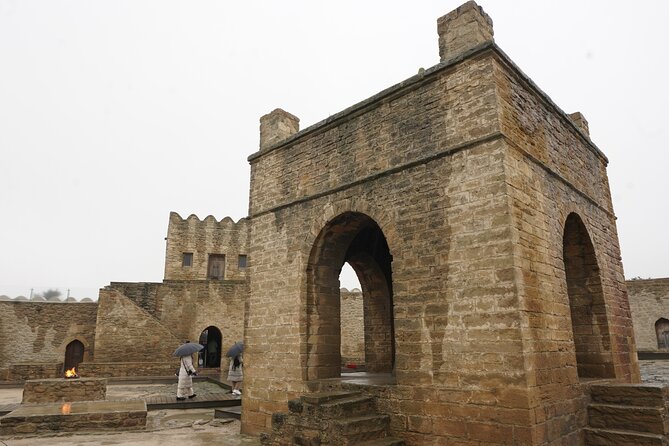
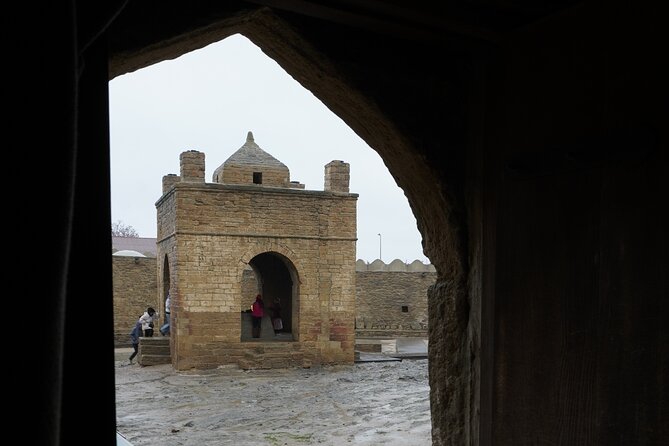
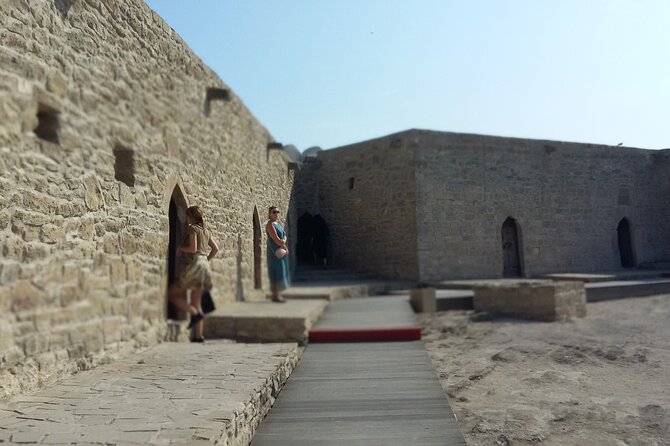
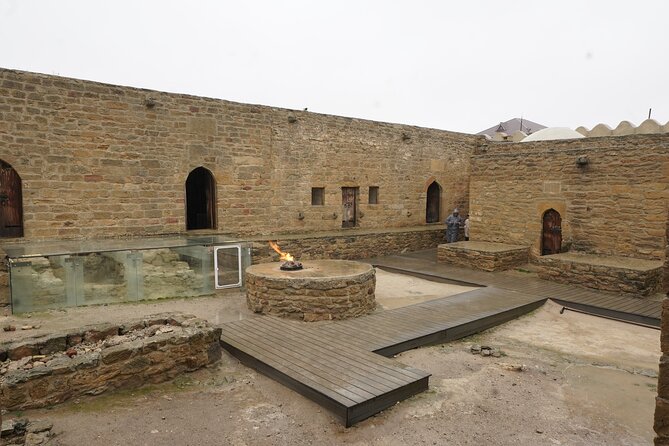
Ateshgah is a pentagonal complex built around a central altar. Cells line the courtyard, creating a compact enclosure that is easy to understand once you see the layout from inside.
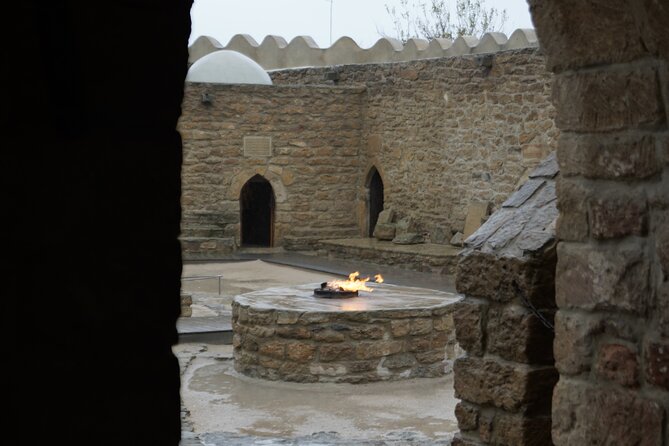
The central tetrapillar altar is the visual focus. It is the part of the site that connects the building most clearly with its former role as a place of pilgrimage for fire worshippers. The surrounding rooms, once used by monks and other religious visitors, help you picture Ateshgah as an active sacred center rather than an isolated monument.
The temple was abandoned in the late 19th century, probably as the Indian population in the area declined. That detail is especially useful because it explains why the complex is preserved as a former place of worship rather than functioning as a living temple today.
I would allow the full planned hour here. The site is not enormous, but the meaning is in the details: the five-sided plan, the cells, the altar, and the mix of religious connections. A rushed visit would reduce it to a courtyard and some old stone rooms.
Ateshgah was nominated for the World Heritage Sites list in December 2007 and later declared a state historical-architectural reserve. Those designations do not automatically make a site fascinating, but here they underline the importance of protecting a place tied to Azerbaijan’s fire-worshipping past.
Your guide can make a big difference. Aga is praised for carefully explaining the places visited, answering questions, and offering useful city advice. If your guide is Aga, ask him to explain how the Zoroastrian and Indian connections fit together. Fuad has also been praised for helping with arrangements and remaining available when needed. Anar is noted as both a strong guide and driver who helped make a day feel well organized.
One point to keep in mind: the tour description does not promise a live flame at the altar today. Ateshgah is primarily a historical and architectural visit. Yanardag is the place where you see the natural fire burning continuously.
The 50-minute road to Yanardag
The journey from Ateshgah to Yanardag takes about 50 minutes by car. That is the longest single transfer on the outing, so the tour is not three to four hours of constant sightseeing. Pickup, driving, explanations, and return transport all count toward the total.
For some people, that will feel like a fair price for convenience. You see two important Absheron sights in one afternoon without arranging separate transport. For others, the road time may feel high compared with the amount of time spent at each site.
I would treat the drive as part of the outing rather than a flaw. The two attractions are separate, and a private vehicle gives you a chance to rest between visits. If you want a slow, detailed archaeological day, choose a longer excursion. If you want the essential fire-related sights near Baku, this timing works well.
A few more temple visits around Baku worth a look
- Baku: Gobustan, Volcanoes, Fire Temple and Yanardag Day Trip
★ 4.7 · 433 reviews - Gobustan & Mud, Fire Temple, Burning Mountain (Group & Private)
★ 4.5 · 418 reviews - Gobustan-Mud Volcan-Fire Temple and Mountain Tour/Entrance inc
★ 5.0 · 267 reviews - Baku:Gobustan Mud Volcanoes Temple & Entry tickets included
★ 4.8 · 178 reviews
Seeing the flame at Yanardag
Yanardag is a natural gas fire burning continuously on a hillside. The gas seeps steadily from below the surface, which keeps the flame going. Unlike the nearby mud volcanoes of Lokbatan or Gobustan, Yanardag has no mud or liquid flowing from the ground.
That difference is worth noting. You are not visiting a bubbling mud field or climbing a mountain in the usual sense. Yanardag is a protected natural area where the main attraction is the line of fire along the slope.
The planned visit lasts 30 to 60 minutes, including the guide’s explanation and time to see the larger area. That should be enough for most people. The fire is the clear centerpiece, and the site does not require a long hike according to the information provided.
Try to give yourself time to look beyond the first photograph. The important feature is not only the visible flame but the reason it continues: a steady supply of underground gas. Your guide can connect this natural feature to the older religious beliefs that made fire so important in the region.
Some people may find Yanardag less substantial than Ateshgah. That is fair. It is a powerful visual stop, but it is brief and simple. The value comes from seeing a natural fire in place, not from a large museum or a long walking route.
What the private format adds
This is a private activity, so only your group participates. That gives you more control than a standard shared excursion. If one person wants more history at Ateshgah and another wants to move on, the guide can respond to your group rather than a busload of people.
The English-speaking guide is included, as is the air-conditioned vehicle. The strongest praise attached to this experience focuses on friendly, patient service and clear explanations. One guide was praised for being patient and answering questions, while another was singled out for making the day smooth and memorable.
The available feedback also points to a useful extra: local advice. Aga is praised not only for explaining the monuments but also for giving city tips. That can add practical value if you are still deciding what to see in Baku.
Do not expect a formal lecture at every stop. The details supplied promise a professional guide, but guide style can vary. Some guides may give a fuller historical explanation, while others may keep the visit lighter and more conversational. Ask questions if you want more detail.
Is $55 a fair price?
The price is $55 per person. For that fee, you receive a private tour, an English-speaking guide, and an air-conditioned vehicle, with hotel pickup offered. The attraction tickets are separate, with an estimated combined cost of $9 per person.
That puts the likely total near $64 per person before any food or drinks. For a solo visitor, that may feel expensive for three to four hours. For two or more people sharing a private vehicle and guide, the value improves because the convenience is spread across the group.
I like the fact that the extra admission charge is stated clearly. You can budget for it instead of discovering at the entrance that the price excludes both major stops. Bring a little extra in case the final ticket price differs from the estimate, but the supplied figure is $9 for the combination.
The best value comes from the transport and time saved. You are not paying only to enter two sites. You are also paying to connect them from central Baku, avoid arranging the transfers yourself, and have a guide explain what you are seeing.
Who will enjoy this outing most?
I would recommend this tour to first-time visitors who want a short introduction to Baku’s outer sights. It suits couples, families, and small groups who prefer a private vehicle and direct guidance.
It also works well if you have only an afternoon free. The three to four-hour schedule leaves room for other plans, though you should remember that traffic and pickup timing are part of the stated duration.
History fans will probably enjoy Ateshgah more than Yanardag. Anyone interested in unusual natural features may feel the opposite. The best match is someone who wants both: a former religious complex and a live natural flame.
Most people can participate, according to the supplied information. If you need a specific accessibility arrangement, ask the provider before booking because detailed accessibility information is not provided.
Booking details and cancellation
Confirmation is provided at the time of booking. Pickup is offered, but you should confirm the exact pickup arrangement because a meeting point is also listed. The activity ends back at the meeting point or at a city-center hotel, depending on the arrangement.
Free cancellation is available if you cancel at least 24 hours before the start time. Within 24 hours, the amount paid is not refunded, and changes made during that period are not accepted. The cutoff uses local time in Azerbaijan.
Should you book the Ateshgah and Yanardag tour?
Book it if you want an efficient, private way to see two distinctive Absheron sights without spending a full day away from Baku. The combination is strong: Ateshgah gives you the human and religious story, while Yanardag gives you the burning natural phenomenon.
I would be less enthusiastic if you want long visits, extensive archaeology, or a full meal stop. The driving takes a meaningful portion of the schedule, admission costs extra, and Yanardag itself is a short visit.
For most first-time visitors, though, the tour offers a sensible balance of history, natural spectacle, private transport, and local guidance. Ask for a detailed explanation at Ateshgah, bring water, and budget about $9 beyond the tour price for entry. With those points in mind, this is a practical half-day addition to a Baku itinerary.
FAQ
How long does the tour last?
The total duration is approximately three to four hours, including pickup time, driving, visits, and the return to the meeting point or city-center hotel.
What places does the tour visit?
The tour visits Ateshgah Fire Temple and Yanardag, also called Fire Mountain, on the Absheron Peninsula.
How long is the drive from central Baku to Ateshgah?
The drive from central Baku to Ateshgah takes about 30 minutes by car.
How long is the drive from Ateshgah to Yanardag?
The road trip from Ateshgah to Yanardag takes about 50 minutes by car.
How much time is planned at Ateshgah?
The planned visit at Ateshgah lasts about one hour.
How much time is planned at Yanardag?
You will spend approximately 30 to 60 minutes at Yanardag, including the explanation and time to visit the area.
Are attraction tickets included?
No. Entry to Ateshgah and Yanardag is not included. The estimated combined ticket price is $9 per person.
Is transportation included?
Yes. An air-conditioned vehicle is included, along with pickup offered for the tour.
Is this a private tour?
Yes. Only your group participates in the activity.
What is the cancellation policy?
You can receive a full refund if you cancel at least 24 hours before the experience starts. Cancellations or changes made less than 24 hours before the start time are not refunded or accepted.
Just added around Baku
- Qobustan rock arts, Mud Volcanoes, Fire temple Ateshgah, Yanardag★ 5.0 · 30 reviews
- Gobustan, Mud volcanoes, Fire temple, Fire mountain GROUP TOUR★ 4.5 · 19 reviews
- Ateshgah Fire Temple & Yanar Dag mountain (Group & Private)★ 4.5 · 7 reviews
- Gobustan, Mud volcanoes, Fire temple, Fire mountain PRIVATE TOUR★ 5.0 · 47 reviews
- Baku: Gobustan, Mud Volcano, Fire Temple & Burning Mountain★ 4.0 · 9 reviews
- Fire Temple and Fire Mountain Tour★ 5.0 · 22 reviews
- Gobustan, Mud volcanoes, Fire temple, Fire mountain PRIVATE TOUR★ 5.0 · 28 reviews
- Private Absheron Peninsula Atesgah Temple & Fire Mountain★ 5.0 · 4 reviews
Private Temple Tours, compared.

Waterfalls, Water Temple & Rice Terraces Private Tour
Read our review →
Montserrat Monastery Small Group or Private Tour Hotel pick-up
Read our review →
Full-Day Angkor Wat Sunrise Private Tour with Guide from Siem Reap
Read our review →
Chiang Rai Temples: Private Tour from Chiang Mai
Read our review →
Private Tour: Teotihuacan and Guadalupe Shrine
Read our review →
Grand Palace, Wat Pho, and Wat Arun Private Tour
Read our review →
Ephesus and Temple of Artemis Private Tour from Kusadasi Port
Read our review →
Browse the lists this tour appears in