
Review · AZERBAIJAN
Gobustan, Mud volcanoes, Fire temple, Fire mountain GROUP TOUR
Earth bubbles, ancient carvings, and sacred flames. This nine-hour Baku tour links four unusual sights that are difficult to combine by public transport. You visit Gobustan, climb near active mud volcanoes, see the Ateshgah Fire Temple, and finish at the burning hillside of Yanar Dag.
I like the variety and the efficient route. In one day, you move from prehistoric rock art to Zoroastrian and Hindu religious history, then to natural gas fires. I also like the air-conditioned vehicle and small-group format, which is capped at 20 people. The main drawback is cost clarity: the $59 price does not include admission fees listed at about $23, and lunch is extra.
I also recommend keeping expectations realistic about guiding. The overall score is a strong 4.6 out of 5, but one published account described an inexperienced guide who gave little information. The operator disputed that report and said it could not match the booking, so this appears to be an isolated concern rather than the general pattern.
Key points to know before booking
- Gobustan combines a modern museum with open-air petroglyphs, making the first stop more than a quick photo break.
- Azerbaijan has about 350 of the world’s roughly 800 mud volcanoes, and this tour takes you close to active craters.
- Ateshgah Fire Temple reflects both Hindu and Zoroastrian connections, with inscriptions and archaeological objects inside the complex.
- Yanar Dag is a natural gas fire, not a volcanic lava flow, and has burned on an Absheron hillside since ancient times.
- The group can include up to 20 people, so it is smaller than a large coach tour but not an intimate private outing.
- The listed price excludes about $23 in entrance fees, plus your lunch, so budget closer to $82 before food.
Why this Baku day trip makes sense
Baku is an easy base for seeing Azerbaijan’s Absheron Peninsula, but the sights are spread out. This tour solves the transport problem by using one air-conditioned vehicle and arranging a full loop from Baku, with pickup from your location in the city and drop-off at the end.
The route also has a useful story arc. Gobustan introduces early human life and rock art. The mud volcanoes show the country’s unusual geology. Ateshgah explains the religious meaning once attached to natural flames, while Yanar Dag gives you the living natural phenomenon itself.
That range is the best reason to book. You are not spending nine hours looking at four similar monuments. Each stop has a different subject, and the changes help the day keep its pace.
The advertised start is 9:30 AM. The complete outing lasts about nine hours, though exact time at each place can vary with road conditions and the group. You should expect a full day, not a casual half-day excursion.
A few more temple visits around Baku worth a look
- Baku: Gobustan, Volcanoes, Fire Temple and Yanardag Day Trip
★ 4.7 · 433 reviews - Gobustan & Mud, Fire Temple, Burning Mountain (Group & Private)
★ 4.5 · 418 reviews - Gobustan-Mud Volcan-Fire Temple and Mountain Tour/Entrance inc
★ 5.0 · 267 reviews
Gobustan Museum and petroglyphs after 9:30 AM
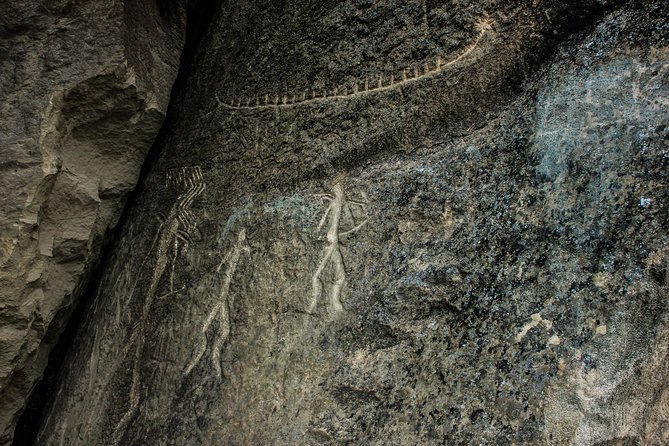
The first major stop is the Gobustan Rock Art Museum. It provides context before you reach the open-air rock sites, which is important because the carvings can be easy to underestimate if you see them without explanation.
Inside, interactive displays cover the area’s prehistoric people, natural setting, archaeology, and cultural development. Touch screens and three-dimensional panoramas show how people may have lived between 5,000 and 20,000 years ago. Exhibits also include objects dated roughly from the fourth to second millennia BC.
I like this museum because it gives you a way to read the rocks. Instead of seeing only weathered marks on stone, you get an introduction to the people who made them and to the work of archaeologists who studied the area.
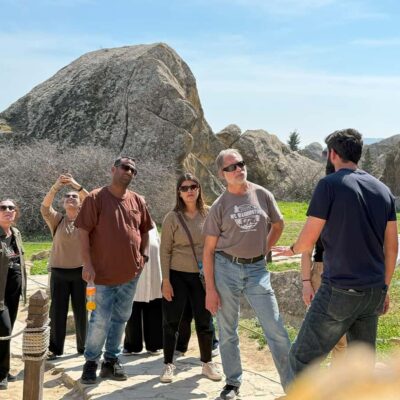
The museum portion is followed by an open-air visit to the Gobustan rocks. This is the UNESCO-listed part of the day and the most important stop for anyone interested in early human art and archaeology. Your guide takes the group among the rocks, where you can see the petroglyphs in their original setting.
The entire Gobustan section is scheduled for about two hours. That is enough time for both the indoor displays and the outdoor site, but you should listen carefully to the guide’s instructions about timing. The tour has several later stops, so this is not an open-ended archaeological walk.
The admission ticket is not included. Entrance fees for all paid sites are listed separately at about $23 in total, so carry that added cost in mind from the start.
Mud volcanoes and Azerbaijan’s bubbling earth
After Gobustan, the tour heads to the mud volcanoes. This is one of the more unusual stops around Baku, and it gives the day a physical, slightly messy edge that a standard city sightseeing trip cannot offer.
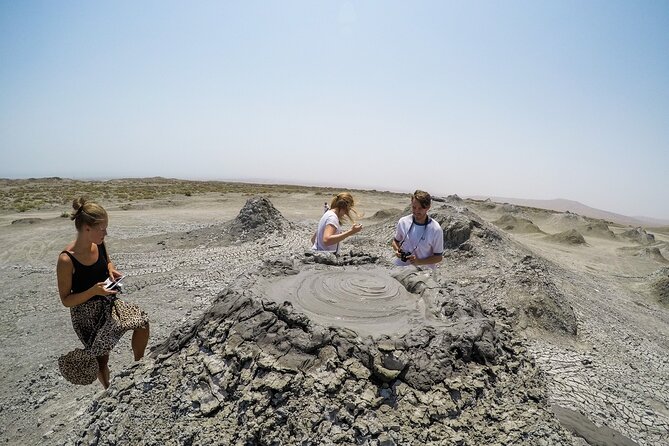
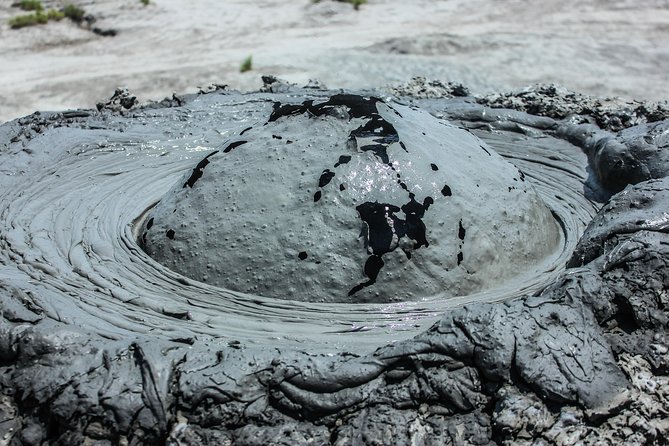
A mud volcano does not erupt molten rock. Instead, mud, gas, and mineral material bubble or push up through the ground. Azerbaijan is especially known for these formations, with about 350 of the world’s estimated 800 mud volcanoes located in the country.
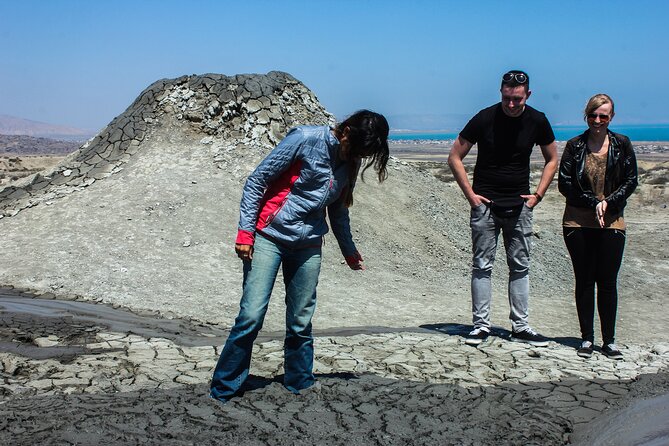
The tour takes you to active craters, and you can climb near them to look into the formations. That close approach is a major part of the appeal. You are not viewing them from a distant road pull-off. The ground-level experience helps you understand why these small cones look and behave so differently from ordinary volcanoes.
The description also notes that volcanic clay and mud have been used in treatment connected with nervous-system, skin, and rheumatic conditions. It says the material is used in chemical, construction, and pharmaceutical work as well. The tour is primarily a sightseeing experience, so you should not treat the mud as a spa treatment or apply it to your skin unless your guide specifically permits it.
This stop lasts about one hour. Conditions can feel more exposed than at the museum, and the experience is weather dependent. Wear practical shoes and clothing that you do not mind taking onto uneven ground. That advice is based on the fact that you climb near the craters, not on any promise of a polished visitor walkway.
The one-hour lunch break in central Baku
Before the second half of the route, you receive an hour for lunch in central Baku. Lunch is not included, so you choose and pay for your own meal.
This break is useful for two reasons. First, it gives you a proper pause after the morning’s outdoor stops. Second, it separates the prehistoric and geological portion of the day from the religious and natural-fire portion that follows.
The exact restaurant is not specified, so you should not book this tour expecting a particular meal or included tasting. Keep the break within the allotted hour, since the afternoon still includes Ateshgah and Yanar Dag.
Same place, a different morning at the gates:
- Baku:Gobustan Mud Volcanoes Temple & Entry tickets included
★ 4.8 · 178 reviews - Gobustan, Mud volcanoes, Fire temple, Fire mountain PRIVATE TOUR
★ 5.0 · 47 reviews - Gobustan & Mud, Fire Temple, Burning Mountain, H.A. Center
★ 4.6 · 46 reviews - Ateshgah Fire temple and Burning mountain tour
★ 4.5 · 42 reviews
Ateshgah Fire Temple and the story of sacred flame
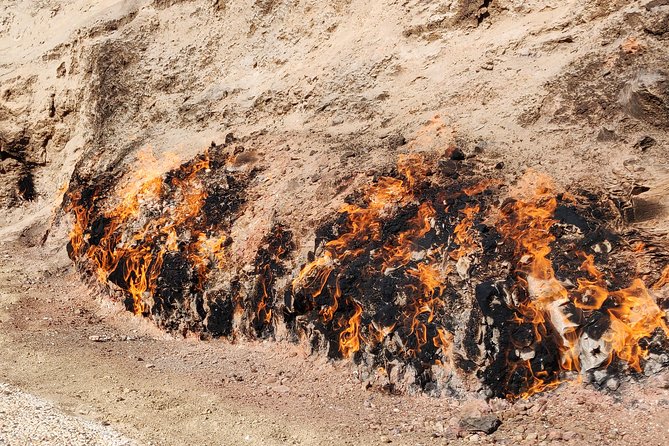
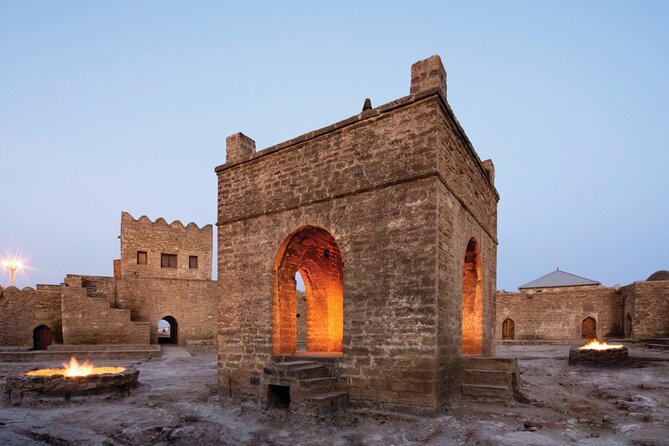
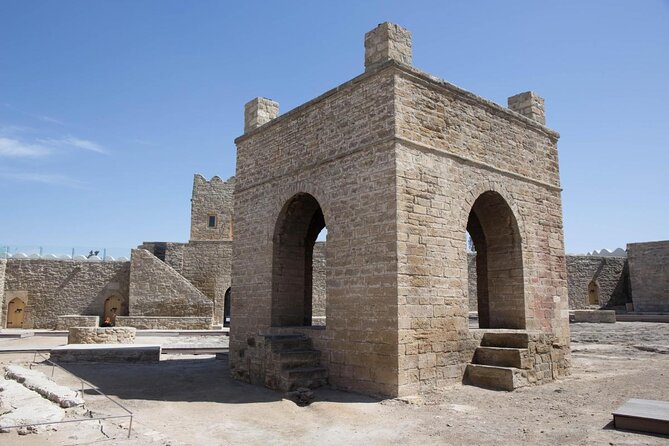
The Ateshgah Fire Temple is the most historically layered stop. It was used as a place of Hindu and Zoroastrian worship, and the first recorded mention of the temple dates to the seventh century AD.
The complex contains cells where fire worshippers lived or stayed, along with historical objects found during archaeological work. You can see cookware, stone slabs with inscriptions, and clothing-related items. These details make the site more useful than a simple courtyard visit because they suggest how the religious complex functioned.
The temple’s importance comes from its connection to natural gas fires in the Absheron region. For centuries, flames rising from the ground were treated as sacred by people who linked fire with religious belief. The surviving structure helps explain why pilgrims and worshippers came here.
The tour allows about one hour at Ateshgah. That is a reasonable amount of time for the cells, displays, and central courtyard, especially with a guide explaining the inscriptions and religious background.
I would pay attention to the distinction between the site’s original religious traditions and the way it is presented today. Ateshgah is not simply an old fire temple with one single story. Persian and Indian inscriptions point to its connections with different communities and beliefs.
Admission is extra. The guide is included, and that matters here because the meaning of the temple is easier to grasp with explanation than through architecture alone.
Yanar Dag, the Burning Mountain
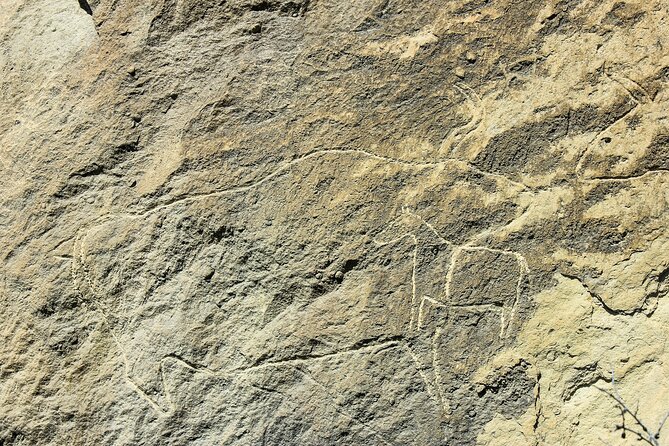
The final stop is Yanar Dag, whose name means Burning Mountain. It is a natural gas flame that has burned on a hillside of the Absheron Peninsula since ancient times.
This is a compact visit, scheduled for about 40 minutes. The fire itself is the focus, but the setting gives it meaning. After seeing Ateshgah, you can understand why naturally burning gas inspired pilgrimage and worship in the region.
Yanar Dag is not an erupting volcano and does not produce lava. It is a gas flame on the side of a hill, which makes it a different sight from the mud volcanoes earlier in the day. The contrast is worth noticing: one stop is wet, bubbling earth, while the other is a steady fire fed by gas below the ground.
The site is part of the Yanardag State Historical, Cultural and Natural Reserve. Pilgrims from Iran and India still come to visit the burning mountain, continuing a connection between these flames and religious tradition.
Forty minutes should be enough for the viewpoint and an explanation from the guide. It is also a good final stop because the fire gives the day a clear ending before you return to Baku.
What the $59 price really covers
At $59 per person, the tour offers reasonable value for a full day if you want transport, a guide, and several distant sights in one booking. The air-conditioned vehicle is included, as is an accredited guide.
The important catch is the added entrance cost. The tour information lists ticket fees of $23, bringing the practical pre-lunch total to about $82. Since lunch is also excluded, your actual spending will be higher.
That price can still make sense if you value convenience. Organizing Gobustan, the mud volcanoes, Ateshgah, and Yanar Dag separately would require arranging transport between several locations and working out the order. This package removes that planning burden.
The value is weaker if you only want one or two of the attractions. In that case, a shorter outing may suit you better. This tour earns its price through coverage, not through luxury. It is a long sightseeing day in a shared vehicle, not a private cultural guide with flexible timing.
The group size is limited to 20 people. That is small enough to be more manageable than a full-size coach, though you should not expect every question to receive extended individual attention.
Guide quality and the shape of the day
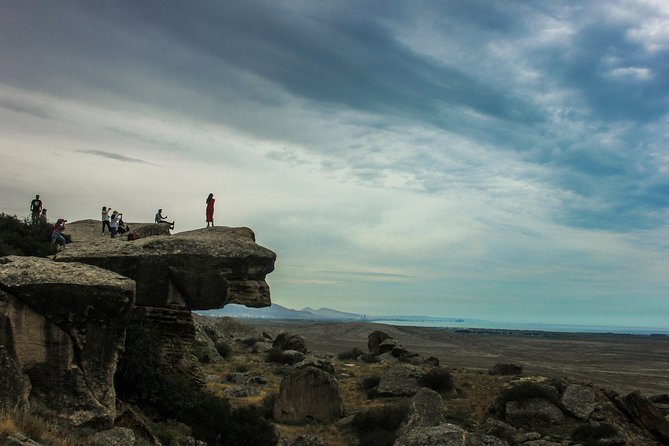
The tour includes an accredited guide, and the guide’s role is most important at Gobustan and Ateshgah. Both places need interpretation. At Gobustan, you want help understanding the petroglyphs and museum displays. At Ateshgah, the guide can connect the inscriptions, cells, and fire worship traditions.
The published score of 4.6 out of 5 suggests that the guiding and organization usually work well. One account described a guide who appeared inexperienced, offered little information, and slept during part of the drive. The operator rejected that account, saying it could not find a booking under the writer’s name and asking for the guide’s name.
I would treat that as a reason to keep your expectations sensible, not as a reason to dismiss the tour. Guide quality can shape a cultural day, so ask questions when a site interests you and pay attention to the guide’s name at pickup. If the explanation is thin, your own museum time and the sites themselves still provide value, but the experience will feel more like transport with stops than a guided cultural tour.
Practical advice for a comfortable day
You should plan for a long day with several changes of setting. The vehicle is air-conditioned, but the itinerary includes outdoor visits at Gobustan, the mud volcanoes, and Yanar Dag.
A few simple choices will help:
- Wear shoes suitable for climbing near the mud volcanoes.
- Bring money for the separate entrance fees and lunch.
- Keep the one-hour lunch break in mind when ordering.
- Arrive ready for the 9:30 AM start.
- Use the pickup information carefully, since the tour begins with collection from locations within Baku.
- Expect drop-off in Baku at the end, with the stated end point at Fountain Square.
The experience is mobile-ticket based, and confirmation is provided at booking. It is listed as suitable for most participants and is located near public transportation, though that does not replace the included vehicle for the full route.
The tour requires good weather. If poor weather causes cancellation, you are offered another date or a full refund. It also requires a minimum number of participants, with the same general choice of another date, another experience, or a refund if that minimum is not reached.
Free cancellation is available up to 24 hours before the start time. Changes or cancellations inside that 24-hour window are not accepted for a refund.
Who should book this four-stop tour
I would choose this experience if you have one full day in Baku and want to see the region’s best-known cultural and geological sights without arranging a car yourself.
It suits you especially well if you enjoy:
- Archaeology and early human art
- Strange natural formations
- Religious history linked to fire
- Full-day sightseeing
- Guided group transport
- Seeing several major sights in one outing
Families and general sightseers may like the variety, since the day changes subject often. The interactive Gobustan museum can also help younger visitors connect with the outdoor carvings.
You may want another option if you prefer slow visits, private guiding, or long meals. The nine-hour schedule covers a lot of ground, and a group of up to 20 limits flexibility. People who dislike uneven outdoor areas should also think carefully about the mud volcano stop.
Should you book it?
Book this tour if you want an efficient introduction to the Baku region beyond the city center. Gobustan gives you ancient art, the mud volcanoes add an unusual natural stop, Ateshgah supplies cultural depth, and Yanar Dag ends the day with a memorable flame.
Before paying, add the listed $23 admission cost and lunch to the $59 tour price. If that total fits your budget, the route offers solid value for a full day of transport and guided sightseeing.
I would skip it only if you want a relaxed pace or a private experience. For most first-time visitors with limited time in Baku, the mix of prehistoric carvings, bubbling mud, sacred fire, and natural gas flames makes this a worthwhile day outside the capital.
FAQ
How long does the tour last?
The tour lasts approximately nine hours, beginning around 9:30 AM and ending with drop-off in Baku.
What attractions are included?
The route includes Gobustan Rock Art Museum and the open-air Gobustan rock site, nearby mud volcanoes, Ateshgah Fire Temple, and Yanar Dag.
Is Gobustan a UNESCO World Heritage Site?
Yes. Gobustan is presented as a UNESCO World Heritage Site on this tour.
Are entrance tickets included?
No. Admission is not included. The listed ticket fees total about $23.
Is lunch included?
No. The tour provides an hour-long lunch break in central Baku, but you pay for lunch separately.
Is transportation included?
Yes. An air-conditioned vehicle and an accredited tour guide are included.
How large is the group?
The tour has a maximum of 20 participants.
Where does the tour start?
The stated start point is on the road to Nizami Badalan School in Baku, with pickup available from locations within Baku. The start time is 9:30 AM.
Where does the tour end?
The stated end point is at Fountain Square in Baku, with drop-off at your location in Baku also described at the end of the tour.
Can I cancel for a full refund?
Yes. You can cancel at least 24 hours before the start time for a full refund. Cancellations or changes made less than 24 hours before the start are not accepted for a refund.
Just added around Baku
- Qobustan rock arts, Mud Volcanoes, Fire temple Ateshgah, Yanardag★ 5.0 · 30 reviews
- Ateshgah Fire Temple & Yanar Dag mountain (Group & Private)★ 4.5 · 7 reviews
- Gobustan, Mud volcanoes, Fire temple, Fire mountain PRIVATE TOUR★ 5.0 · 47 reviews
- Baku: Gobustan, Mud Volcano, Fire Temple & Burning Mountain★ 4.0 · 9 reviews
- Fire Temple and Fire Mountain Tour★ 5.0 · 22 reviews
- Gobustan, Mud volcanoes, Fire temple, Fire mountain PRIVATE TOUR★ 5.0 · 28 reviews
- Gobustan, Mud Volcano, Burning Mountain and Fire Temple Tour★ 5.0 · 12 reviews
- Private Absheron Peninsula Atesgah Temple & Fire Mountain★ 5.0 · 4 reviews
Azerbaijan Temple Tours, compared.
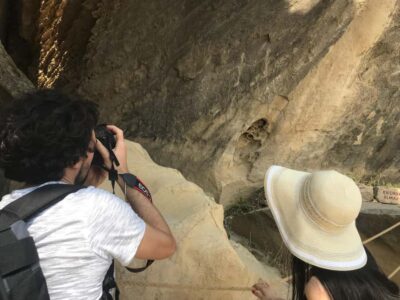
Gobustan, Volcanoes, Fire Temple and Yanardag Day Trip
Read our review →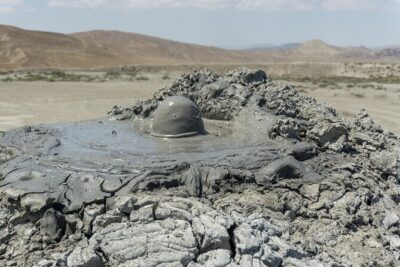
Gobustan & Mud, Fire Temple, Burning Mountain (Group & Private)
Read our review →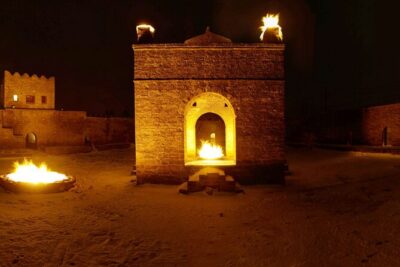
Gobustan-Mud Volcan-Fire Temple and Mountain Tour/Entrance inc
Read our review →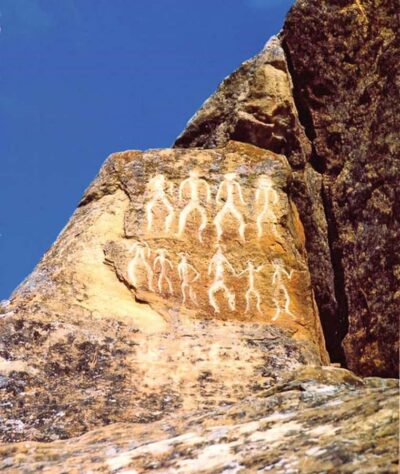
Gobustan Mud Volcanoes Temple & Entry tickets included
Read our review →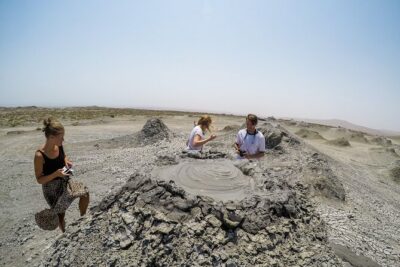
Gobustan, Mud volcanoes, Fire temple, Fire mountain PRIVATE TOUR
Read our review →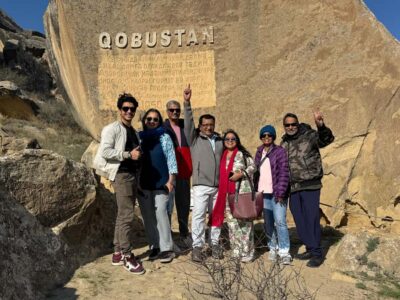
Gobustan & Mud, Fire Temple, Burning Mountain, H.A. Center
Read our review →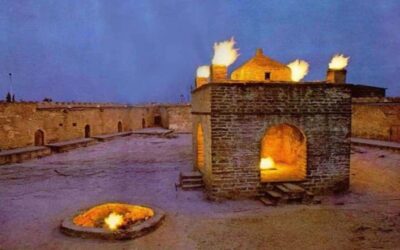
Gobustan, Mud Volcanoes, Fire Temple, & Yanar Dag Tour
Read our review →Browse the lists this tour appears in