
Review · AZERBAIJAN
Gobustan-Mud Volcan-Fire Temple and Mountain Tour/Entrance inc
Fire, rock art, and bubbling mud await. This full-day trip from Baku packs Azerbaijan’s most unusual sights into one outing, from the Caspian views at Bibi-Heybat Mosque to the ancient petroglyphs of Gobustan and the ever-burning flames of Yanardag. I especially like the small-group format and the fact that a guide, hotel pickup, bottled water, and several entrance tickets are included. I also like the range of places covered: this is not just an archaeological trip or a fire-themed outing.
The main caution is time. The tour lasts about seven to eight hours, but two to three hours can go into driving, and Baku traffic may stretch the day. The $30 price is attractive for a group trip, though you should confirm exactly which entrance-ticket option you have selected and whether the off-road mud-volcano ride is included.
Key points to know before booking
- Six contrasting stops: See Bibi-Heybat Mosque, Gobustan’s mud volcanoes, ancient rock art, Ateshgah Fire Temple, Yanardag, and the Heydar Aliyev Center.
- Mud volcano access requires an off-road ride: The route to the volcanoes uses a separate cash fee unless it is included in your group-tour option.
- Entrance tickets may depend on the option selected: Gobustan rock art, Ateshgah, and Yanardag are included only when the correct ticket option is booked.
- Expect a long day on the road: Transport between sites can take two to three hours in total, with Baku traffic affecting the return.
- Guide quality matters: Guides including Elshad, Rosi, and Dinara have been praised for being friendly, entertaining, and informative.
- The group is capped at 15 people: That gives you a more personal setting than a large coach, though vehicle comfort can vary.
Why this Baku day trip is worth considering
Baku is polished, modern, and easy to explore on foot, but Azerbaijan makes more sense when you see what lies beyond the capital. This trip connects several very different places in one day. You get a mosque beside the Caspian Sea, a barren area of bubbling mud, prehistoric rock carvings, two fire sites, and one of the city’s boldest modern buildings.
I like this mixture because it gives you a quick introduction to several sides of the country. You are not spending the whole day in museums or sitting through one long historical lecture. The scenery changes often enough to keep the ride interesting.
The price is another strong point. At $30 per person, the tour can be good value if you want hotel pickup, transport, a multilingual guide, bottled water, and the main entrance tickets. It is especially useful if you do not want to arrange a separate vehicle to Gobustan or work out how to reach the Absheron fire sites.
Still, the low price comes with a group-tour tradeoff. You cannot control how long each stop lasts, and the day may run later than expected. One account described a start about 30 minutes late and an end roughly three hours later than planned. I would avoid scheduling an important evening activity after this tour.
A few more temple visits around Baku worth a look
- Baku: Gobustan, Volcanoes, Fire Temple and Yanardag Day Trip
★ 4.7 · 433 reviews - Gobustan & Mud, Fire Temple, Burning Mountain (Group & Private)
★ 4.5 · 418 reviews - Baku:Gobustan Mud Volcanoes Temple & Entry tickets included
★ 4.8 · 178 reviews
Bibi-Heybat Mosque and the Caspian opening
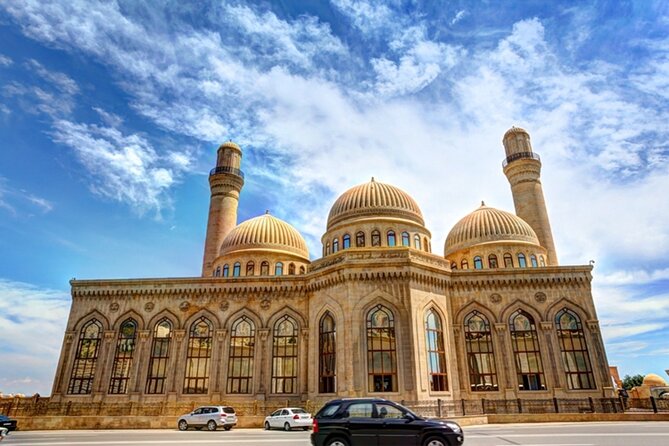
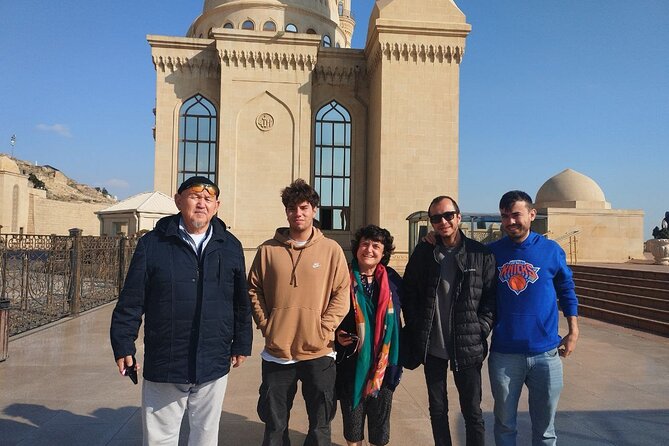
The first stop is Bibi-Heybat Mosque, usually allowed about 30 minutes. This is a short visit, but it gives the day a graceful start. The mosque’s exterior and interior are worth seeing, and the surrounding gardens offer views toward the Caspian Sea.
Your guide is expected to explain the mosque’s cultural importance, so this is more than a quick photo stop. The setting also helps you get your bearings before heading into the more remote areas outside Baku.
Thirty minutes is enough for a look around, not a slow architectural study. If you want extended time for photography or quiet reflection, you may find this stop rushed. Modest clothing is sensible at a mosque, and you should follow any instructions about entering the religious areas.
Gobustan’s mud volcanoes and the rough road out
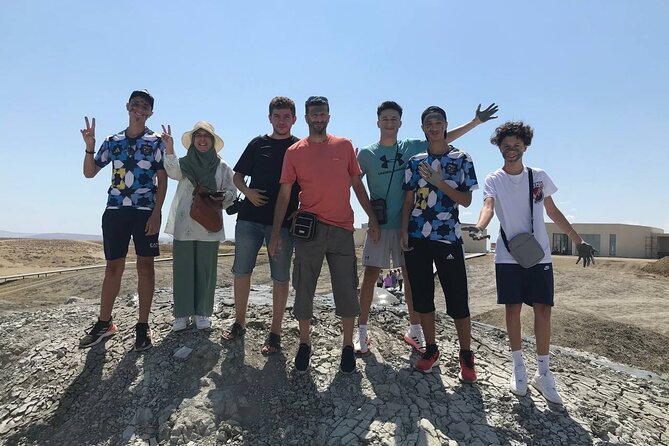
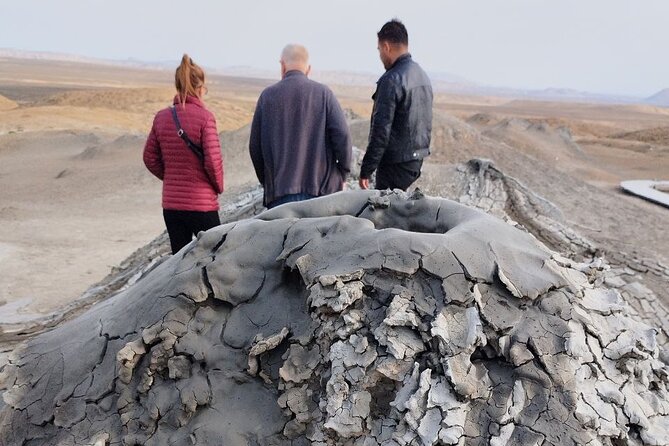
The mud volcanoes are among the day’s most unusual sights. Azerbaijan has an estimated 300 of the world’s roughly 700 mud volcanoes, with many found around Gobustan and the Caspian region. Instead of shooting out molten rock, these formations push cold mud and gases from underground, creating an otherworldly patch of earth.
You may see small cones, wet pools, and occasional bubbling activity. The appeal is visual and geological rather than polished or theatrical. This is a remote-feeling stop where the ground itself provides the show.
The trip to the volcanoes can be as memorable as the volcanoes. A separate off-road vehicle, often described as a rugged Lada ride, takes you over an uneven route. That ride adds character, but it may not suit anyone who dislikes jolting roads or has mobility concerns.
Pay close attention to the ticket details. The mud-volcano admission is listed separately from the main entrance tickets, and the off-road vehicle fee may require cash unless you choose the group option that includes it. The information for this experience is not fully consistent on that point, so confirm before departure. The tour price is only a bargain if you know what is covered.
Some people find the mud volcanoes underwhelming once they arrive. I would set your expectations correctly: this is not a dramatic eruption site. The pleasure comes from the odd setting, the rough ride, and the chance to see a natural feature that looks unlike the usual Baku attractions.
Gobustan Rock Art and life recorded in stone
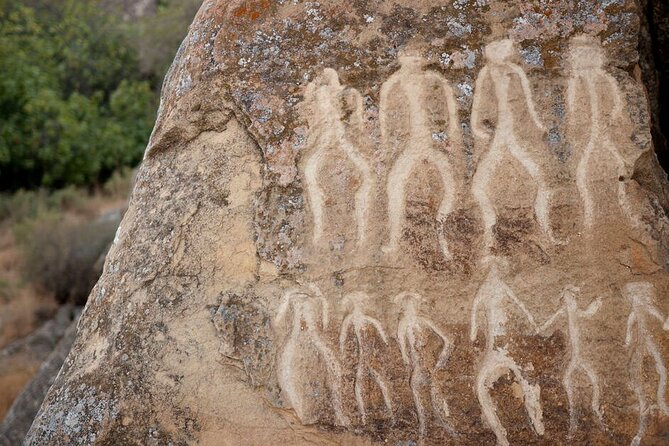
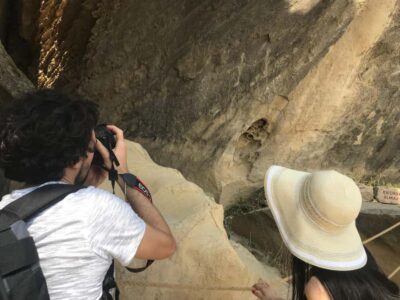
Gobustan’s rock art gives the day its strongest link to ancient human life. The petroglyphs show people, animals, hunting scenes, and everyday activity carved into stone thousands of years ago.
A one-hour visit gives you time to examine the carvings and hear how they fit into Azerbaijan’s past. The value here is not just the age of the drawings. The scenes offer a direct look at what mattered to early communities: food, movement, animals, ceremony, and survival.
A guide makes a real difference at Gobustan. Without explanation, some carvings can be easy to miss or difficult to interpret. With context, a simple line in the rock becomes part of a larger story about the people who lived in this region.
Wear shoes suitable for walking over uneven ground and bring sun protection. The site is open and exposed, and there is little reason to expect a shaded museum-style visit. The entrance ticket is included only with the appropriate booking option, so check that detail when paying.
Same place, a different morning at the gates:
- Gobustan, Mud volcanoes, Fire temple, Fire mountain PRIVATE TOUR
★ 5.0 · 47 reviews - Gobustan & Mud, Fire Temple, Burning Mountain, H.A. Center
★ 4.6 · 46 reviews - Ateshgah Fire temple and Burning mountain tour
★ 4.5 · 42 reviews - Baku: Gobustan, Mud Volcanoes, Fire Temple, & Yanar Dag Tour
★ 4.8 · 36 reviews
Ateshgah Fire Temple and the old flame tradition
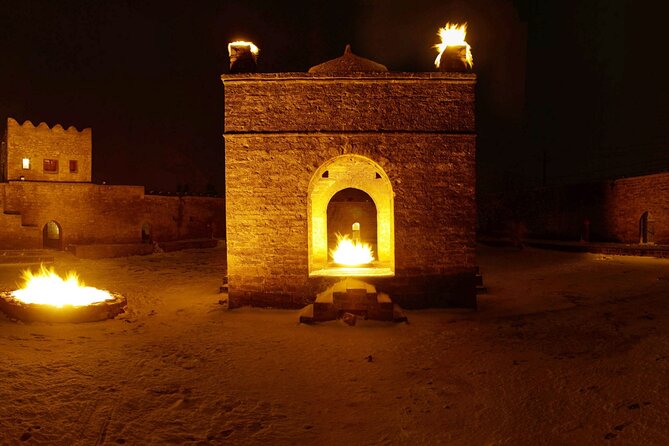
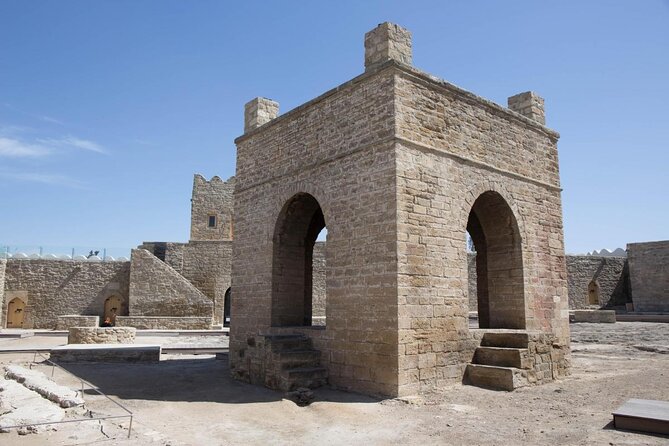
Ateshgah, often called the Fire Temple of Baku, is one of the most rewarding stops. The site was built around a natural gas vent where flames once burned from the ground. Its courtyard, stone rooms, and central fire area reflect the religious traditions connected with fire worship.
The temple is linked with Hindu, Sikh, and Zoroastrian traditions, giving it a wider cultural background than its name might suggest. Your guide can help explain how a natural gas flame shaped the beliefs and architecture of the site.
You get about an hour here, which is a useful amount of time for seeing the courtyard and learning about the buildings. This is also one of the better places to pause for photographs because the architecture is compact and distinctive.
For many people, Ateshgah becomes the highlight of the day. I understand why. The combination of a real natural phenomenon, an unusual religious setting, and Azerbaijan’s changing gas supply makes the site feel both ancient and connected to the modern country.
Lunch is not included. Some tour arrangements stop at a pleasant lunch place, but this should not be treated as guaranteed. Ask your guide about the timing and carry a small snack if you prefer not to depend on the meal stop.
Yanardag, the hill that still burns
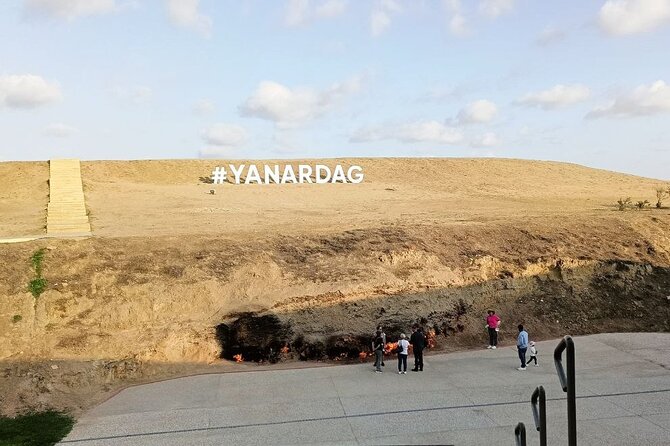
Yanardag, or Yanar Dag, is a naturally burning gas site near Digah village. Gas rises from the ground and feeds a flame that has burned for centuries. The fire is smaller than it once was because extensive gas extraction in the Absheron area reduced the available supply, but it remains an unusual sight.
You get roughly an hour here, including time to view the flames and take a break at a nearby café. The café offers a view toward the fire, which makes this a more relaxed stop than the rough Gobustan section.
Yanardag works best when you think of it as a natural curiosity, not a huge wall of fire. The flames are real, persistent, and tied to the region’s gas-rich geology. Seeing Yanardag after Ateshgah also helps connect the two sites: one is a built religious complex, while the other is the natural source of the fire tradition.
The return route from Absheron can be slowed by Baku traffic. This is one reason the stated seven to eight hours should be treated as an estimate rather than a firm promise.
The Heydar Aliyev Center and Baku’s modern face
The final listed stop is the Heydar Aliyev Center, designed by Zaha Hadid. Its sweeping white forms avoid conventional right angles, making it one of Baku’s most recognizable buildings.
The center hosts exhibitions, concerts, and other cultural events. Even if you only have time to admire the exterior, the building provides a sharp contrast to Gobustan’s stone carvings and Ateshgah’s old walls.
The scheduled visit is about an hour, but the exact experience may depend on the day’s pace and the time available. One account praised the tour but wished there had been enough time to go inside. If entering the center is important to you, ask the guide early in the day whether the schedule allows it.
This stop is best for architecture fans and photographers. It also gives the tour a useful ending, bringing you back from ancient sites and natural flames to contemporary Baku.
Guides, vehicles, and the feel of the group
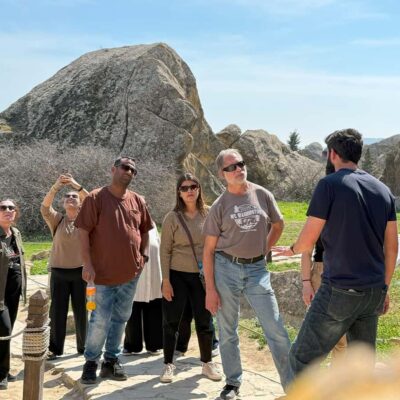
The experience is limited to a maximum of 15 people, which is a sensible size for this route. You get the social ease of a shared tour without the scale of a large coach group.
Guide quality can shape the whole day. Elshad has been praised for being fun, informative, and entertaining. Rosi has been described as welcoming, good-humored, and full of information, while Dinara has been praised for keeping the group interested and explaining local culture clearly. The available guide languages are English, Arabic, Russian, Spanish, and Turkish.
That said, service may not be identical every day. One private booking had problems with limited information, no English from the driver, missing water, and entrance fees that were not expected. A private vehicle also cost much more in that case. Make sure you book the group version if you want the advertised group value, and confirm the guide language and inclusions in writing.
Air conditioning, hotel pickup, hotel drop-off, bottled water, and photo stops are included. Vehicle comfort can vary, and one account raised concerns about the bus. The road to the mud volcanoes is particularly rough, so this is not the right outing if you need a smooth ride all day.
What the $30 price really buys you
At $30, this is a strong value for a full-day group trip if your selected option includes the main entrance tickets. You are paying for a broad route that would be awkward to arrange independently in one day, especially without a car.
The value drops if you need to add several entrance charges, pay separately for the off-road ride, or book a more expensive private vehicle. The wording around tickets is important: Gobustan rock art, Ateshgah, and Yanardag are included when the correct option is selected, while the mud-volcano access has separate conditions.
Before departure, confirm four things:
- Which entrance tickets are included
- Whether the off-road vehicle fee is covered
- The expected pickup time
- The likely return time
The free cancellation policy is generous if your plans change. You can cancel at least 24 hours before the local start time for a full refund. Cancellations or changes within 24 hours are not refunded, and poor weather or failure to reach the minimum group size may lead to a new date, another experience, or a full refund.
Who should book this tour
I would choose this trip if you have limited time in Baku and want to see the country’s best-known sights beyond the city center. It suits curious first-time visitors, architecture fans, people interested in ancient cultures, and anyone who likes unusual natural features.
It is less suitable if you want slow visits, long photo sessions, or a precise schedule. The day covers a lot of ground, and the route can feel tiring. Families and older visitors should also consider the rough road to the mud volcanoes and the amount of time spent in transport.
Final verdict: a useful first look at Azerbaijan
I would recommend this tour for its variety, low group price, and strong set of destinations. The fire temple, Yanardag, and Gobustan rock art offer real cultural and geological interest, while Bibi-Heybat Mosque and the Heydar Aliyev Center show two very different sides of Baku.
Book it if you want broad coverage and do not mind a long day. Skip it if you prefer deep, unhurried visits or cannot tolerate uncertain timing. The best way to protect the value is to confirm the ticket option, off-road fee, language, and pickup details before you go.
FAQ
How long does the tour last?
The tour lasts approximately seven to eight hours. Transport between locations can account for two to three hours, and Baku traffic may make the day longer.
What places are visited?
The tour visits Bibi-Heybat Mosque, the Gobustan mud volcanoes, Gobustan rock art, Ateshgah Fire Temple, Yanardag, and the Heydar Aliyev Cultural Center.
Is hotel pickup included?
Yes. Hotel pickup and drop-off are included.
Are entrance tickets included?
Entrance tickets for Gobustan rock art, Ateshgah, and Yanardag are included when the correct option is selected. Confirm the selected option before booking.
Is the mud-volcano off-road ride included?
The off-road vehicle fee is listed as cash unless it is included in the group-tour option. Confirm this detail before departure.
Is lunch included?
No. Lunch is not included in the tour price.
What languages are available for the guide?
Guides may be available in English, Arabic, Russian, Spanish, and Turkish.
How many people can join the tour?
The maximum group size is 15 people.
Can I cancel for a full refund?
Yes, if you cancel at least 24 hours before the experience starts according to local time. Cancellations within 24 hours are not refunded.
Just added around Baku
- Gobustan, Mud volcanoes, Fire temple, Fire mountain GROUP TOUR★ 4.5 · 19 reviews
- Qobustan rock arts, Mud Volcanoes, Fire temple Ateshgah, Yanardag★ 5.0 · 30 reviews
- Ateshgah Fire Temple & Yanar Dag mountain (Group & Private)★ 4.5 · 7 reviews
- Gobustan, Mud volcanoes, Fire temple, Fire mountain PRIVATE TOUR★ 5.0 · 47 reviews
- Baku: Gobustan, Mud Volcano, Fire Temple & Burning Mountain★ 4.0 · 9 reviews
- Fire Temple and Fire Mountain Tour★ 5.0 · 22 reviews
- Gobustan, Mud volcanoes, Fire temple, Fire mountain PRIVATE TOUR★ 5.0 · 28 reviews
- Gobustan, Mud Volcano, Burning Mountain and Fire Temple Tour★ 5.0 · 12 reviews
Azerbaijan Temple Tours, compared.
Gobustan, Volcanoes, Fire Temple and Yanardag Day Trip
Read our review →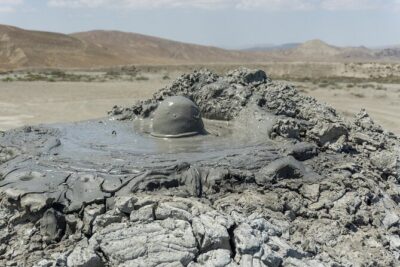
Gobustan & Mud, Fire Temple, Burning Mountain (Group & Private)
Read our review →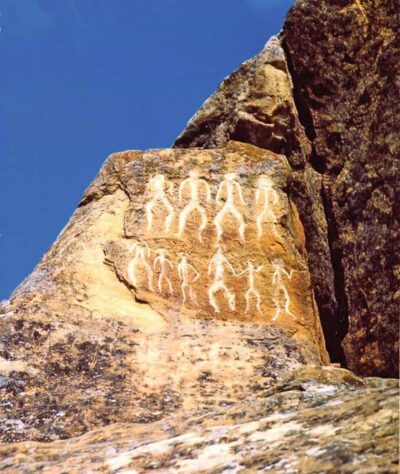
Gobustan Mud Volcanoes Temple & Entry tickets included
Read our review →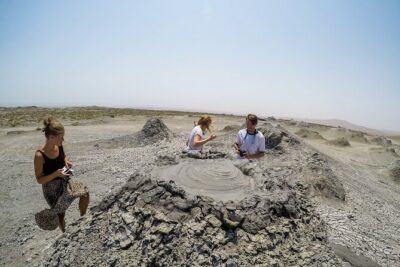
Gobustan, Mud volcanoes, Fire temple, Fire mountain PRIVATE TOUR
Read our review →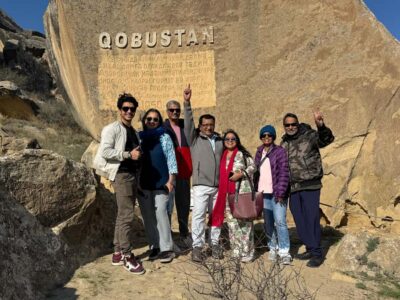
Gobustan & Mud, Fire Temple, Burning Mountain, H.A. Center
Read our review →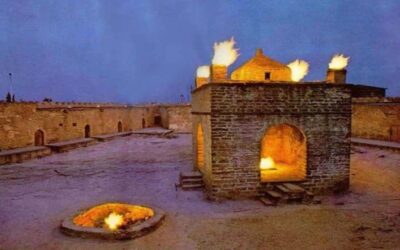
Gobustan, Mud Volcanoes, Fire Temple, & Yanar Dag Tour
Read our review →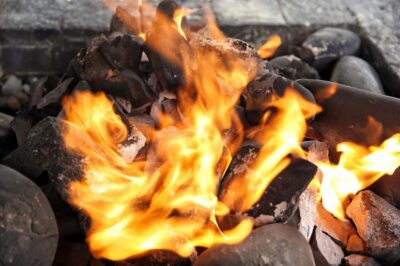
Atashgah Fire Temple & Burning Mountain Half-Day Tour
Read our review →Browse the lists this tour appears in