
Review · OSAKA
Osaka Temple :Warm Bamboo Oil Massage – Deep Restore〈90min〉
Quiet time is hard to find in Osaka. This temple experience pairs a 90-minute full-body oil massage with bamboo myofascial work, Zen meditation, incense, matcha, and a traditional tea ceremony. I like the unusual mix of serious body treatment and gentle cultural activities, and I like that the group is limited to three people. The main consideration is the price: at $129 per person, this is more than a standard massage, so you should value the temple setting and cultural program as much as the treatment itself.
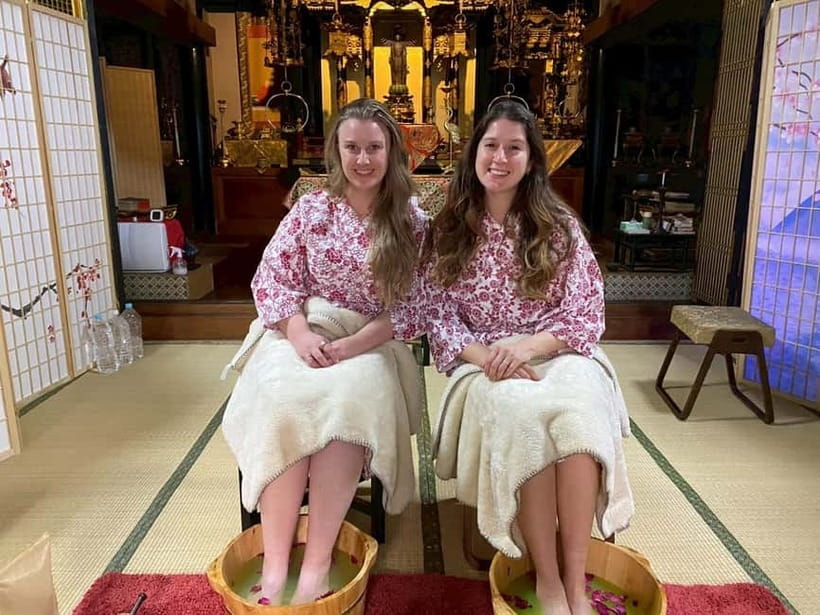
The experience lasts about two hours, with a simple yukata, foot bath, incense offering, meditation, massage, Japanese sweets, and complimentary smartphone photos. English and Japanese are available, and the small setting should feel personal. Zen meditation may be shared unless you request a private experience, so absolute silence and solitude are not guaranteed.
Key points to know before booking
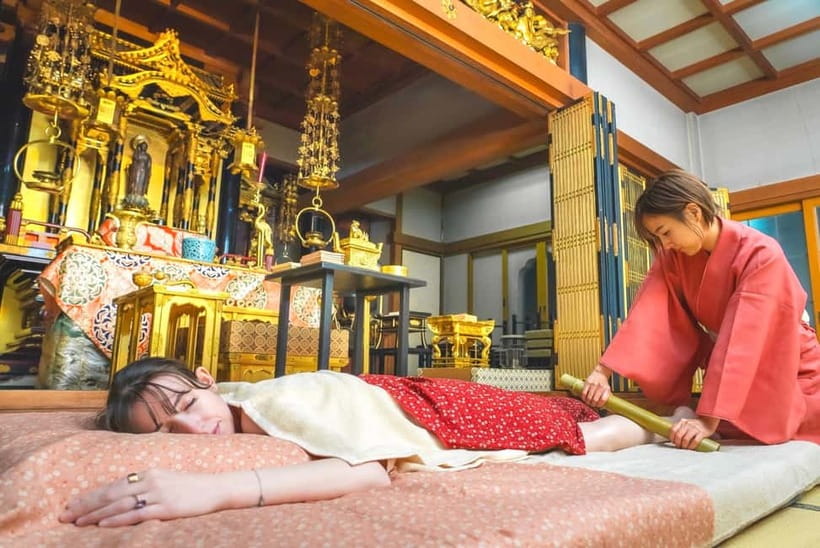
- The massage is the main event: Warm bamboo tools and hand-applied oil are used for full-body work and myofascial release.
- The cultural program is substantial: You visit the temple, offer incense, learn about Japanese worship customs, and take part in a tea ceremony.
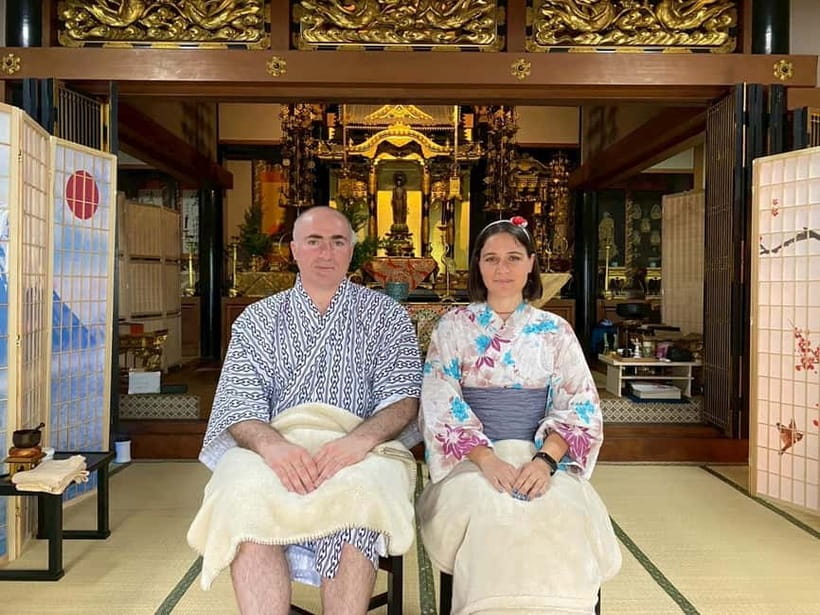
- You change into a yukata: The simple traditional garment helps the visit feel distinct from an ordinary spa appointment.
- The group is tiny: A maximum of three people makes this a more personal activity than a large cultural demonstration.
- The setting shapes the experience: Bell meditation, kneaded incense, matcha, sweets, and temple surroundings create a calm rhythm.
- Navigation needs care: Use Google Maps to search for Japanese Massage -the one&only-, not the temple name.
What the two-hour schedule feels like
This is not simply a massage with a cup of tea added at the end. The visit moves through several short rituals before and after the body treatment, giving the appointment a clear Japanese cultural frame.
You begin with a welcome drink and change into a simple yukata. That first change of clothing helps mark a break from sightseeing. You are no longer rushing between Osaka attractions in street clothes, and the loose garment makes the foot bath and massage more comfortable.
The temple visit follows, including an incense offering and an introduction to the temple’s history and Japanese worship culture. The details of the temple itself are not specified, so you should not book this expecting a major sightseeing monument or a long guided tour. The value is in learning how the space is used and taking part in a small act of worship rather than ticking off another famous landmark.
Meditation comes with a bell and kneaded incense. These details matter because they give the session a slower opening than a typical spa visit. You are given time to settle before the massage begins, rather than arriving stressed and immediately lying down for treatment.
The cultural portion continues after the body care with a traditional Japanese tea ceremony, matcha, and original Japanese sweets. An explanation of the ceremony’s cultural and historical meaning is included. If you have never had matcha prepared in this setting, this part may be as memorable as the massage, particularly because you can ask questions in English or Japanese.
A few more temple visits around Osaka worth a look
- Osaka Temple Head Spa &Matcha Facial – Refresh & Glow〈90min〉
★ 5.0 · 24 reviews - Osaka Temple :Warm Bamboo Oil Massage – Deep Restore〈60min〉
★ 4.9 · 19 reviews - Osaka: Japanese Zen Massage and Facial at the Temple/180-min
★ 4.8 · 10 reviews
Why the bamboo massage is worth considering
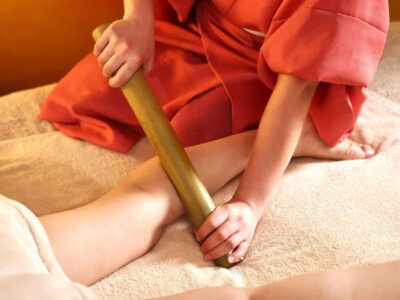
The treatment combines warm bamboo and hand massage with oil, plus myofascial release. Bamboo gives the practitioner a firm tool for working over the body, while the hands allow for more controlled pressure and softer contact.
You should think of this as a relaxation-focused treatment with a bodywork element, not a medical appointment. The description does not promise treatment for an injury or a specific condition. If you prefer strong pressure, ask about it before the massage begins. If you are sensitive to pressure, the same advice applies.
A foot bath and scrub massage come before the main body work. That is a useful transition after a day on your feet in Osaka. It also means the treatment is not limited to the back and shoulders. The full sequence includes feet, legs, and the rest of the body through the oil massage.
The title calls this Warm Bamboo Oil Massage, and warmth is part of the appeal. Bamboo tools can create a different sensation from a standard hand-only massage, especially as they move across larger muscle areas. Still, the exact pressure and technique will depend on the practitioner.
One practitioner specifically praised in the feedback is Arisa, who was described as both a talented masseuse and a guide through the wider experience. That combination is important here. You are not only receiving a treatment. You are also being led through meditation, temple customs, and tea.
A temple setting instead of a regular spa
The setting changes the mood. In a conventional spa, the massage would be the clear focus. Here, incense, a temple visit, a bell, a yukata, and tea make the appointment feel more ceremonial.
I especially like this for visitors who want a cultural activity that does not require a full day, a long train ride, or a large group. The experience gives you a close look at several Japanese customs, but each is kept short enough that the visit remains relaxing.
There is also a useful balance between participation and explanation. You offer incense, meditate, wear a yukata, and drink matcha, but you also receive context about the temple and tea ceremony. That keeps the customs from feeling like decorations added for photographs.
The limitation is that this is a packaged cultural encounter, not a substitute for spending time at a temple independently. You will receive an introduction to worship culture, but you should not expect a detailed religious lecture or extensive architectural tour based on the information available.
Meditation, incense, and Reiki
The meditation uses a bell and kneaded incense. These are simple details, but they help create a beginning and an end for the session. The bell gives you a clear cue to become quiet, while the incense adds scent and ceremony.
The activity information also describes Reiki as a non-contact Japanese energy healing method intended to support relaxation and emotional balance. However, the exact place of Reiki in the 90-minute treatment is not clearly set out. If Reiki is important to you, ask the provider before booking what is included and how long it lasts.
That small uncertainty is worth noting because the advertised experience combines several practices. Some people will enjoy the variety. Others may prefer a clearly defined massage with no additional elements. The provider can clarify the treatment format before your appointment.
Same place, a different morning at the gates:
- Kyoto: Full-Day English Guided Tour of Kyoto’s Highlights
★ 4.5 · 656 reviews - Osaka: Minoh, Katsuoji Temple, & Minoh Falls Full-day Tour
★ 4.9 · 172 reviews - Full Day Kyoto Tour : Bamboo Forest, Golden Temple, Fushimi Inari
★ 5.0 · 84 reviews - Osaka Temple Cool Foot Bath & Matcha Experience〈45min〉
★ 4.9 · 82 reviews
Matcha, sweets, and the tea ceremony
The tea ceremony is one of the strongest reasons to choose this activity over a regular massage. You receive matcha and original Japanese sweets, along with an explanation of the ceremony’s cultural and historical background.
The tea portion is not just a refreshment break. It gives you a practical introduction to how tea is prepared and presented. One person described learning about matcha as a new and calming part of the visit, while another found the treatment and tea ceremony almost magical.
I would set your expectations correctly. This is a compact cultural lesson within a two-hour appointment, not a full formal tea school session. Still, the combination of matcha, sweets, yukata, and temple surroundings makes it feel more personal than drinking green tea at a café.
The order may be adjusted by the provider, so do not plan an important appointment immediately afterward. The activity is designed to leave you calm, and rushing off to the next item on your Osaka schedule would undercut that benefit.
The yukata photo keepsake
A simple yukata is included, as are complimentary smartphone photos taken during the temple experience. This is a nice touch for couples, friends, or solo visitors who want a record of the occasion without arranging a separate photo session.
The photos are taken with a smartphone, so you should expect an informal keepsake rather than professional portrait work. The charm is in the setting and the clothing. You get a small visual reminder of the meditation, tea, and temple visit, not a full photography package.
The photo is also useful for visitors who want to share the experience with family at home. Just remember that the yukata is described as simple, and the photos are complimentary smartphone images. That keeps the offering straightforward and avoids creating the wrong expectation.
Price and what you receive for $129
At $129 per person, the price is fair only if you want the whole package. A 90-minute oil massage alone may be your priority, but the cost also covers the welcome drink, yukata, temple visit, incense offering, meditation, foot bath, scrub massage, bamboo treatment, tea ceremony, sweets, and photos.
The maximum group size of three adds value. You are not being placed in a large class with a distant instructor. The small format supports more direct guidance, especially when you are learning how to take part in the incense offering, meditation, or tea ceremony.
Couples may find the price easier to justify because the activity creates a shared memory without requiring much planning. The couple feedback was especially positive about using the visit as a way to slow down during a trip.
For a solo visitor, the decision depends on your priorities. If you want the lowest-cost massage in Osaka, this is not the obvious choice. If you want a calm cultural appointment with body care built in, the combination is more convincing.
The strongest value comes from the variety and the setting. You can spend two hours moving from temple customs to meditation, then from foot care to bamboo massage, and finally to matcha and sweets. That is a lot more distinctive than booking a standard spa treatment.
Who will enjoy this most
I would recommend this experience to:
- Couples who want a quiet shared activity
- Solo visitors interested in Japanese customs
- Anyone looking for a slower break during a busy Osaka itinerary
- First-time visitors curious about matcha and temple etiquette
- People who enjoy relaxation more than sightseeing checklists
- Visitors who appreciate small groups and personal instruction
It may be less suitable if you want a powerful sports massage, a long temple tour, or a completely private meditation session. Meditation may be shared with other people unless you request a private experience, and the cultural explanations are part of the appointment rather than a separate extended tour.
The English and Japanese language option is helpful for international visitors. The feedback includes people from France, Belgium, Hong Kong, the United Kingdom, Switzerland, and the United States, with repeated praise for the welcome, calm atmosphere, massage, and tea explanation.
Finding the meeting point in Osaka
Follow the map instructions carefully. Search Google Maps for Japanese Massage -the one&only-. Do not enter only the temple’s name, because that may send you to the back entrance and leave you searching.
If the massage listing does not appear clearly, search for the restaurant Tossa de coracao. The meeting point is right next to it. This is the kind of small navigation detail that can save you from arriving flustered, which is not the ideal start for a meditation and massage.
The information does not provide a full transport guide or a precise neighborhood description, so check the route before leaving your hotel. Allow enough time to find the correct entrance, especially if you are unfamiliar with Osaka’s map layout.
Booking details that matter
The activity lasts two hours, while the treatment itself is listed as 90 minutes. That difference accounts for the welcome, changing, temple activities, foot bath, tea ceremony, and photos.
You can cancel up to 24 hours in advance for a full refund. The reserve now and pay later option also helps if your Osaka schedule is still changing. Availability depends on the starting time you choose.
Reservations for three people are available by email. Since the normal group is limited to three, contact the provider directly if you want to arrange the full group together.
The provider is Japanese Massage 唯一無二, also presented as the one&only. English and Japanese support is available. The small group format is a good fit for people who want guidance without the feel of a large tour.
Final verdict: should you book it?
I would book this if you want a calming cultural activity, not just a massage. The bamboo treatment, foot care, meditation, incense, yukata, matcha, sweets, and temple setting work together to create a memorable two-hour break from Osaka’s faster pace.
The experience earns its price through the complete program and small group size. The most praised elements are the massage, peaceful atmosphere, warm welcome, tea ceremony, and the care shown by the women running the experience. Arisa is a name worth requesting if she is available, based on the especially strong praise for her massage and guidance.
I would skip it if your only goal is the cheapest body treatment or if you need a fully private meditation session without asking in advance. For couples, solo visitors, and anyone curious about Japanese hospitality in a quiet setting, this is one of the more distinctive ways to spend two hours in Osaka.
FAQ
How long does the Osaka temple experience last?
The full activity lasts two hours. The massage portion is listed as 90 minutes, with the remaining time used for the welcome, changing, temple visit, meditation, foot bath, tea ceremony, and photos.
What is included in the massage?
The treatment includes a foot bath and scrub massage, warm bamboo massage, hand-applied oil massage, and myofascial release with bamboo.
Is a yukata provided?
Yes. A simple yukata is included, and you change into it at the beginning of the experience.
Is the tea ceremony included?
Yes. The activity includes a traditional Japanese tea ceremony, matcha, original Japanese sweets, and explanations about the ceremony’s cultural and historical meaning.
Is meditation private?
Zen meditation may be shared with other people. You can request a private experience if that is important to you.
What languages are available?
The experience is offered in English and Japanese.
How many people can join?
The activity is a small-group experience limited to three participants. Reservations for three people can be arranged by email.
Where should I meet the provider?
Search Google Maps for Japanese Massage -the one&only-. Do not search only for the temple name, since that may take you to the back entrance. If needed, search for the restaurant Tossa de coracao, which is next to the meeting point.
Just added around Osaka
- Osaka Temple :Warm Bamboo Oil Massage – Deep Restore〈60min〉★ 4.9 · 19 reviews
- Osaka: Sumiyoshi, Osaka’s Most Iconic Shrine – Private Tour★ 4.7 · 4 reviews
- Osaka: Temple Tour and Traditional Calligraphy Lesson★ 4.9 · 24 reviews
- Osaka: Private Tour of Shitennoji, Osaka’s Oldest Temple★ 4.5 · 6 reviews
- Osaka Temple Head Spa &Matcha Facial – Refresh & Glow〈90min〉★ 5.0 · 24 reviews
- Osaka: Mind & Spirit Balance Temple Reiki Healing★ 5.0 · 41 reviews
- Osaka Morning Tour: Shitennoji Temple, Shinsekai &Doutonbori★ 5.0 · 23 reviews
- Osaka: Minoh Waterfall & Katsuo-ji Temple Half-Day Tour★ 4.7 · 27 reviews
Massage, compared.
Osaka Temple :Warm Bamboo Oil Massage – Deep Restore〈60min〉
Read our review →
The Grand Palace, Wat Phra Kaew, Wat Pho Tour with Massage option
Read our review →
Japanese Zen Massage and Facial at the Temple/180-min
Read our review →Browse the lists this tour appears in