
Review · OSAKA
Osaka/Kyoto: Arashiyama, Nara Park, Fushimi Shrine Tour
See three classic sights in one day. This $51 day tour links Arashiyama, Nara Park, and Fushimi Inari from Osaka or Kyoto, saving you the work of arranging several train rides and local connections. I like the efficient route and the generous sightseeing stops, but the day includes a lot of bus time and requires careful attention to meeting times.
I also like the mix of experiences: bamboo paths and mountain scenery in Arashiyama, free-roaming deer in Nara, and thousands of red torii gates at Fushimi Inari. The main caution is that the tour is mainly conducted in Chinese, while English and Korean assistance depends on availability when you book.
Key points at a glance
- Three major sights in one day: Visit Arashiyama, Nara Park, and Fushimi Inari without changing trains between every stop.
- Morning in Arashiyama: You get about two hours for Togetsukyo Bridge, the bamboo forest area, and nearby lanes.
- Deer at Nara Park: The stop lasts roughly 80 to 90 minutes, enough for the park and a quick look toward Kasuga Taisha.
- Red torii at Fushimi Inari: Allow your time wisely, since the shrine grounds extend far up Mount Inari.
- Shared bus transportation: The route starts in Osaka or Kyoto and returns to Kyoto or Osaka, but traffic can affect the schedule.
- Basic commentary only: In smaller groups, the driver may also act as guide, with limited explanations rather than a full guided tour.
One day, three famous Japanese sights
This is a sightseeing sampler rather than a slow cultural tour. You move from Osaka or Kyoto to Arashiyama, then continue to Nara, and finish at Fushimi Inari before returning by bus.
That route covers a lot of ground. It also gives you a useful first look at three different sides of the Kansai region: Arashiyama’s wooded scenery, Nara’s open park and deer, and Fushimi Inari’s dramatic religious setting.
The planned schedule begins at 8:00 in Osaka and around 9:20 in Kyoto. Arashiyama is scheduled for about 10:00, Nara for 13:15, and Fushimi Inari for 15:20. The bus should reach Kyoto around 17:00 and Osaka around 18:00.
These times are useful targets, not guarantees. Traffic, weather, group size, or changes at a site can shorten a stop or bring you to the next location early. You should treat the day as a structured overview, not a minute-by-minute promise.
More Fushimi Inari Shrine Tours in Osaka:
- Full Day Kyoto Tour : Bamboo Forest, Golden Temple, Fushimi Inari
★ 5.0 · 84 reviews - Osaka/Kyoto:Kinkakuji,Arashiyama,FushimiInariShrine,NaraPark
★ 4.1 · 1,596 reviews - Osaka/Kyoto: Arashiyama, Nara & Fushimi Inari Shrine w/Lunch
★ 4.4 · 754 reviews
Arashiyama from 10:00: bamboo, bridge, and limited time
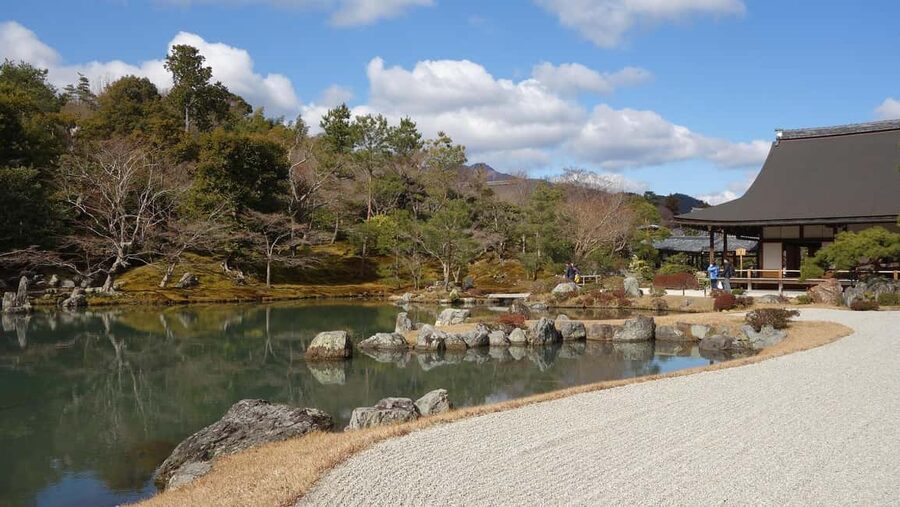
Arashiyama is the most scenic opening stop. The area is known for its bamboo forest paths, wooded hills, and the Katsura River crossing beneath Togetsukyo Bridge.
Two hours gives you enough time to see the main sights, but not enough for an unhurried exploration of every temple and side street. I would head first toward the bamboo forest, then make my way to Togetsukyo Bridge if the group meeting instructions allow it. That order helps you see the most recognizable places before the clock starts to press.
The bamboo paths are atmospheric, but they are also one of the area’s most popular stops. You might find the lanes crowded, especially during peak periods. The tour’s early arrival is helpful, since morning usually offers a better chance of enjoying the greenery before the day becomes more crowded.
Arashiyama works well as a photography stop. The bamboo trunks create strong vertical lines, while Togetsukyo Bridge gives you broad views across the river and toward the surrounding hills. Seasonal scenery is part of the appeal, although the exact view depends on the time of year.
Do not expect a long temple visit here. The schedule favors a quick, self-guided look at the main area. Wear shoes suited to walking and keep an eye on the bus departure time. Losing a few minutes at a shop or café can make the return to the meeting point uncomfortable.
Nara Park from 13:15: deer and open green space
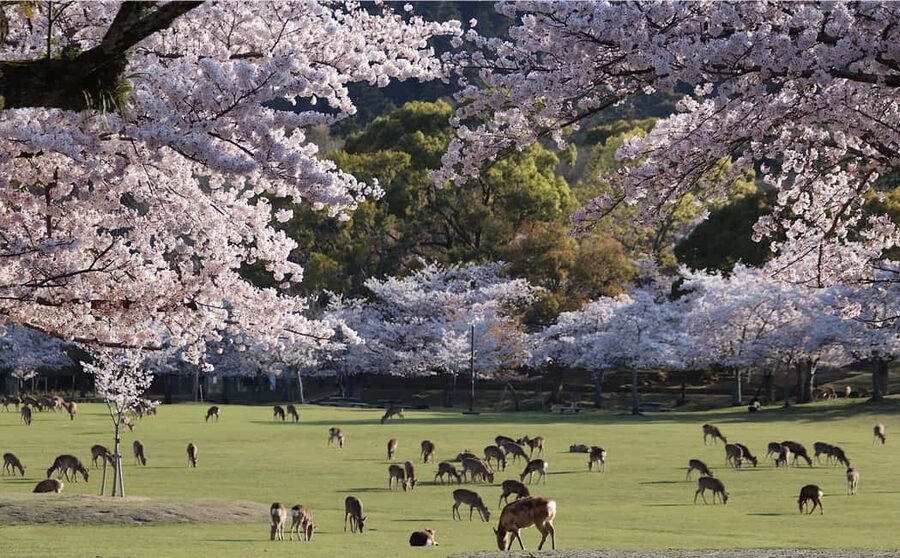
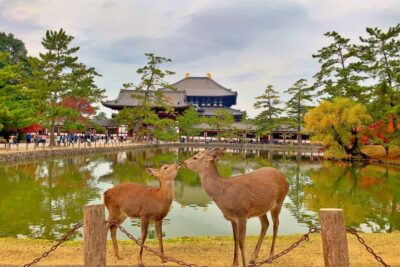
The Nara stop lasts about 80 to 90 minutes. That is enough to meet the famous deer and walk through a section of Nara Park, but it is short for seeing every nearby temple.
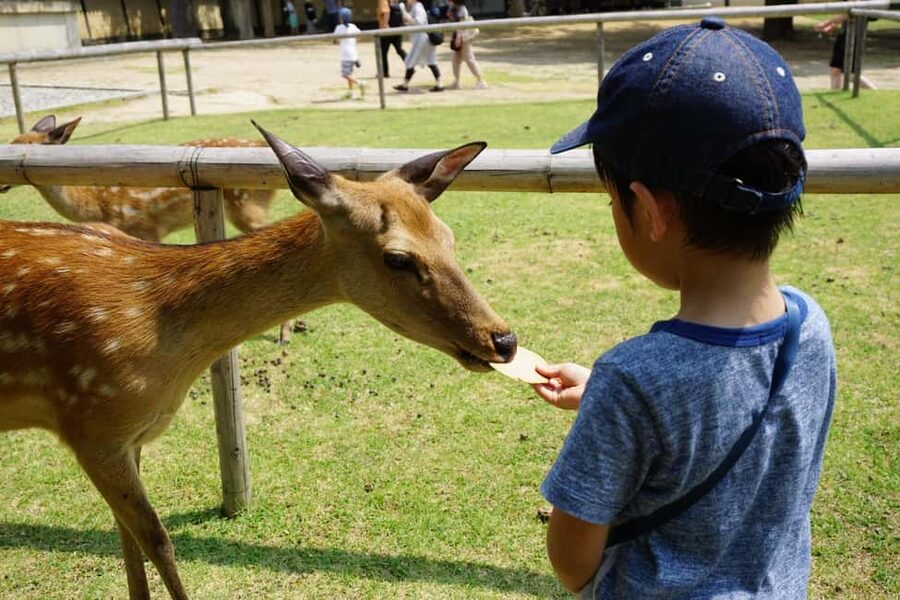
More than 1,000 deer roam freely in the park. They are regarded as messengers of the gods and are protected as a national natural monument. That gives the encounter more meaning than a simple animal attraction, though the deer are also very used to people.
The park sits near Kasuga Taisha Shrine, so you can combine a deer walk with a glimpse toward one of Nara’s important sacred sites. Still, you will need to choose. If your priority is feeding or photographing deer, focus on the park. If you want a proper shrine visit, use the time more carefully and avoid wandering too far from the meeting area.
The tour does not include meals or drinks. Nara is a natural place to pause for food, but this schedule does not leave much room for a full restaurant meal. A small purchase may be possible during free time, though food is not allowed inside the vehicle. Plan ahead rather than assuming lunch will be built into the day.
The Nara stop is especially good for families and first-time visitors. Children usually find the deer memorable, and the open park gives you a break from dense city streets. The drawback is that a short stop can feel rushed if you want both the deer and Kasuga Taisha.
Fushimi Inari from 15:20: the day’s strongest visual moment
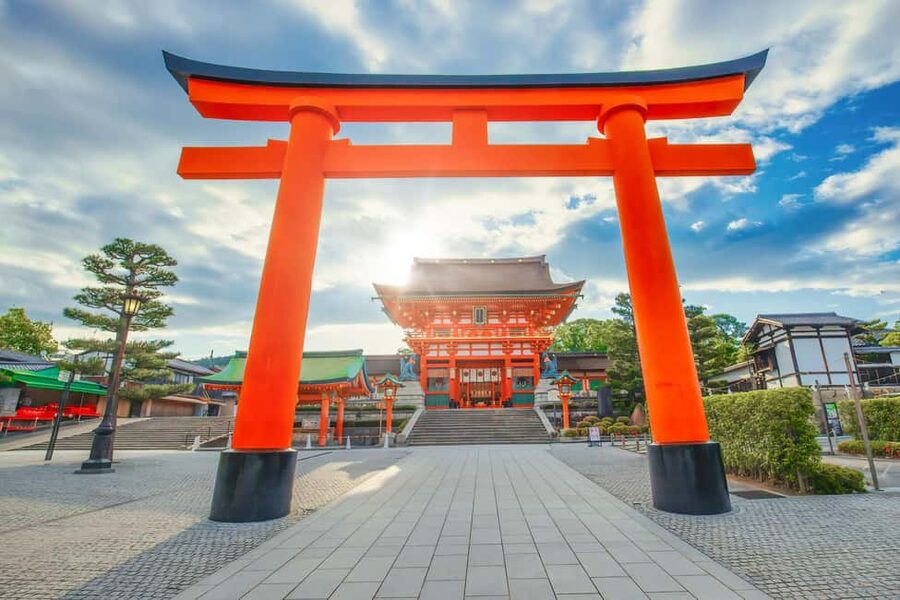
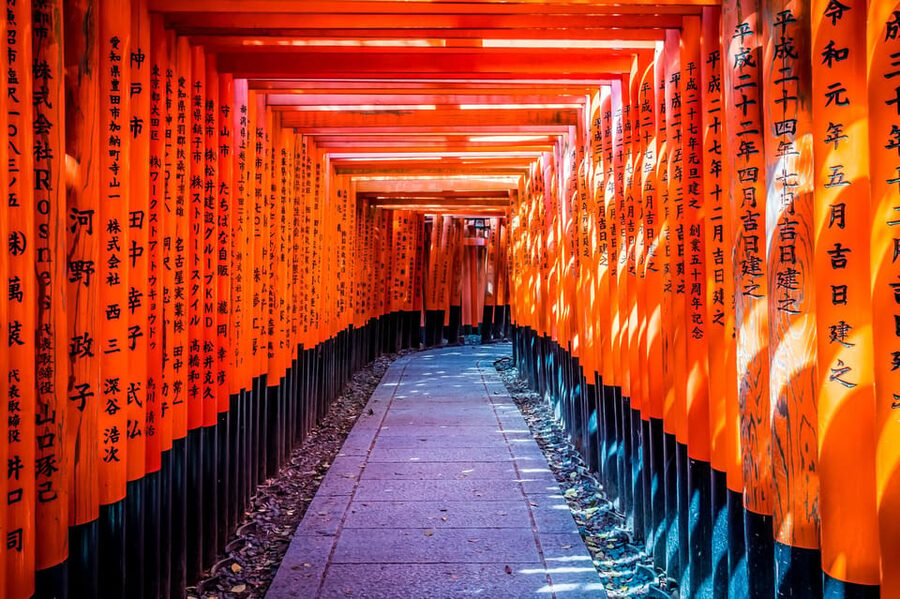
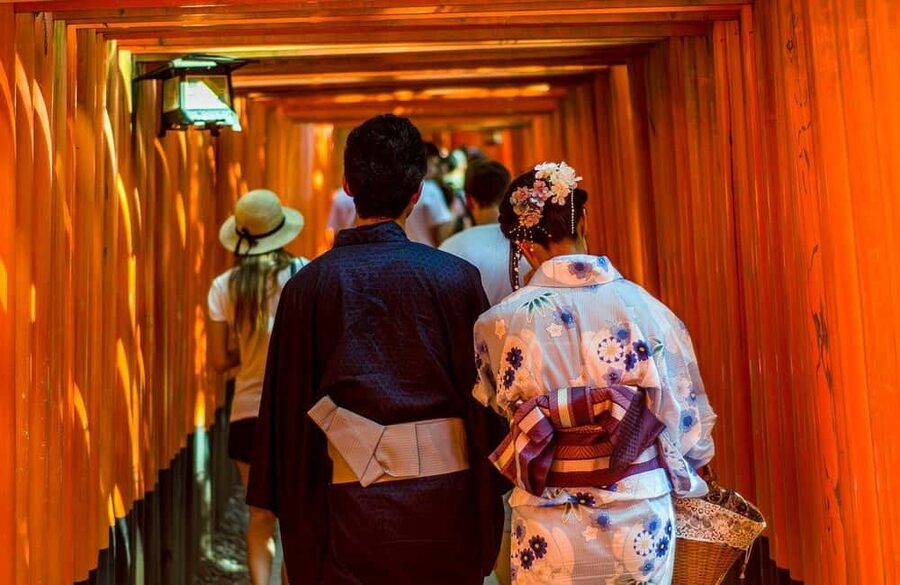
Fushimi Inari Taisha is the final major stop and arguably the most striking one. Its long rows of red torii gates lead into the wooded slopes of Mount Inari.
The shrine was founded in 711 and serves as the head shrine for roughly 30,000 Inari shrines across Japan. Inari is associated with rice, prosperity, and business, while fox figures appear throughout the shrine grounds as messengers.
You get about 80 to 90 minutes here. That is enough to pass through the famous lower gates, see the main shrine area, and begin the uphill route. It is not enough to walk the entire mountain circuit at a relaxed pace.
This is where good time management matters most. The lower torii gates are usually the busiest and most photographed. Walking farther uphill often brings a quieter feel, but every extra step also means more time needed to return. I would set a turnaround point before climbing and leave a cushion for the bus.
The path is not flat. If you have limited mobility, stay near the lower shrine grounds, which are easier to manage. The activity is described as wheelchair accessible, but the mountain route itself includes slopes and steps, so the practical experience may vary by section.
Fushimi Inari is a fitting final stop because it gives the day a strong visual finish. You get a place that feels different from the river scenery of Arashiyama and the open park at Nara. The tradeoff is that late-day traffic or delays can reduce the time available here.
A few more temple visits around Osaka worth a look
- Osaka: Minoh, Katsuoji Temple, & Minoh Falls Full-day Tour
★ 4.9 · 172 reviews - Osaka Temple Cool Foot Bath & Matcha Experience〈45min〉
★ 4.9 · 82 reviews - Osaka: Mind & Spirit Balance Temple Reiki Healing
★ 5.0 · 41 reviews - Osaka: Minoh Waterfall & Katsuo-ji Temple Half-Day Tour
★ 4.7 · 27 reviews
What the bus route saves, and what it costs
The price is $51 per person. That includes transportation, tolls, parking, fuel, and a guide or host who speaks Chinese, English, Japanese, or Korean depending on the arrangement.
For a visitor who wants convenience, this is a fair price. You avoid working out separate connections between Osaka, Arashiyama, Nara, and Fushimi Inari. Parking and highway costs are also handled for you, which matters on a route that crosses several parts of the region.
The cost is less attractive if you are comfortable using Japanese trains and buses. Public transportation may be faster, cheaper, and more flexible, especially because the road route moves from Osaka to Kyoto, then Nara, back to Kyoto, and finally Osaka. That backtracking can make the day feel like roughly 75 percent transportation, depending on traffic.
The bus is best viewed as a convenience service, not a luxury ride. Shared transportation with other international visitors may be used. In a small group, the driver may also serve as the guide, which means you should expect basic onboard information rather than detailed lectures at each site.
That arrangement can work well when the host is organized and helpful. Names praised in booking feedback include Levi, CC, and HuaHua, with specific approval for clear practical help and polite service. The quality of the day can depend heavily on the person assigned and on how clearly the meeting instructions are handled.
Guide language and the level of explanation
The tour is mainly conducted in Chinese. English and Korean-speaking staff may be available if requested at booking, but language service is not guaranteed.
This point matters. If you want historical context at every shrine, a private guide, or detailed explanations inside each site, this may not meet your needs. The experience provides transport and a basic overview, with self-guided sightseeing at the stops.
If you mainly want to reach the sights, get orientation, and receive simple directions, the format may be enough. I would download or save information about Arashiyama, Nara Park, and Fushimi Inari before departure so you can make better use of your free time.
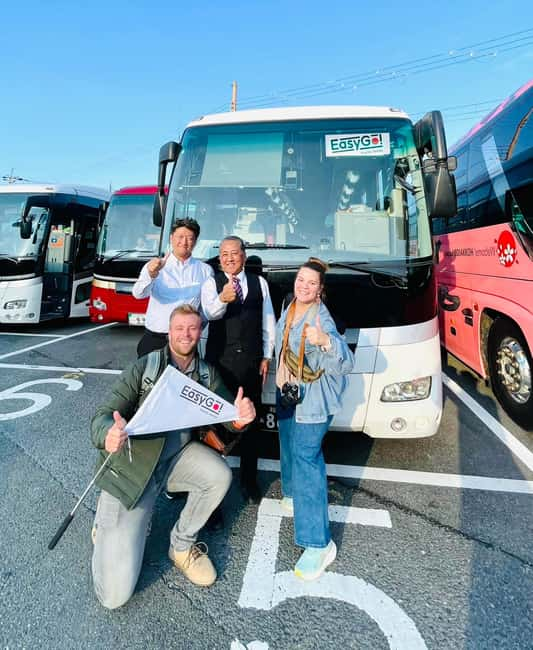
Do not expect the guide to contact you in advance. Go directly to the assigned meeting point and look for staff wearing an EASY GO vest or holding an EASY GO flag. The exact meeting point depends on the option selected, with locations listed near Kyoto Station’s Hachijo exit and Dotonbori in Osaka.
There has been at least one serious complaint about confusion over the departure time, with a family arriving after the bus had left and receiving poor follow-up help. That makes one rule essential: confirm the exact departure time shown for your booking, arrive early, and remain near the marked meeting point. Do not rely on a last-minute message from the guide.
The comfort level for families and older visitors
The tour can suit families because it handles the long transfers and includes the deer park, which is an easy hit with children. It also works for people who want a broad first look at the region without planning every train connection.
The day is long, though. You leave early, ride between several cities, walk at three large attractions, and return in the evening. At each stop, you need to watch the clock and return to the bus independently.
Older visitors or anyone with mobility concerns should be especially careful at Fushimi Inari. The lower grounds are more manageable, while the route up Mount Inari includes uphill sections. Arashiyama and Nara also involve walking, even though neither requires you to complete a mountain route.
The vehicle is wheelchair accessible, but accessibility at each attraction is not identical. Ask about the specific vehicle and route arrangement when booking if this is important for you.
What to bring for a smoother day
Pack lightly. Food is not allowed in the vehicle, and loose bags can make transfers and boarding slower.
I would bring:
- Comfortable walking shoes
- Water and any snacks you plan to eat outside the vehicle
- A phone with the meeting point and schedule saved
- A small umbrella or weather protection
- Cash or a payment method for personal purchases
- A portable battery for photos and maps
Keep your ticket or booking details easy to show at check-in. The guide may not contact you in advance, so you need to be self-sufficient at the start.
The tour includes tolls, parking, and fuel, but not meals, drinks, or personal expenses. It also does not include professional guided commentary at the attractions. Think of the host as a coordinator and basic guide, not a private cultural expert.
Cancellation, weather, and schedule changes
You can cancel up to 24 hours in advance for a full refund, and the reserve-now, pay-later option allows you to keep your plans flexible.
Weather and road conditions matter here. Heavy traffic can change the arrival times, while poor weather or a natural disaster can lead to alterations or cancellation. A stop may be shortened, the next stop may begin early, or the day may finish earlier than planned because of closures or restricted visiting hours.
That uncertainty is normal for a long road day. I would avoid booking an important evening reservation immediately after the expected return, especially from Osaka. The planned arrival is about 17:00 in Kyoto and 18:00 in Osaka, but traffic can change that.
Who should book this day tour?
I would consider it if you have limited time in Kansai, want to see the region’s headline sights, and prefer one organized vehicle to several independent connections.
It is also a good fit for first-time visitors who want a simple overview. You can see bamboo, deer, torii gates, and two historic cities in one day, then decide which place deserves a longer return visit.
I would hesitate if you prefer slow mornings, long temple visits, local meals, or detailed guiding. Independent transport will likely give you more control and may cost less. You will also avoid the pressure of returning to a shared bus at fixed times.
Should you book it?
Book this tour if convenience matters more than flexibility. For $51, the transport, tolls, parking, and route planning offer solid value, especially from Osaka.
Skip it if you already feel comfortable navigating Kansai by public transportation or if you want deep cultural commentary. The strongest parts are the well-chosen stops and the amount you can see in one day. The weakest parts are the long bus stretches, limited time at each location, and possible uncertainty over language support and departure instructions.
If you do book, arrive early, confirm the exact meeting point and departure time, request your preferred language at booking, and treat each stop as a focused visit rather than a complete tour.
FAQ
Where does the tour start?
The available starting locations are near Kyoto Station’s Hachijo exit and in Dotonbori, Osaka. The exact meeting point depends on the option you book.
How long does the tour last?
The scheduled duration is 10 hours. The planned return is around 17:00 in Kyoto and 18:00 in Osaka, though traffic and weather can affect the timing.
Which attractions are included?
The tour visits Arashiyama, Nara Park, and Fushimi Inari Taisha Shrine.
How much free time is provided at each stop?
Arashiyama is scheduled for about two hours. Nara Park receives roughly 80 to 90 minutes, and Fushimi Inari receives about 80 to 90 minutes, depending on the final schedule and road conditions.
Is food included?
No. Meals, beverages, and other personal expenses are not included. Food is also not allowed inside the vehicle.
What languages are available?
The tour is mainly conducted in Chinese. English, Japanese, and Korean support may be available, but English and Korean service depends on the arrangement made at booking.
Can I cancel the reservation?
Yes. You can cancel up to 24 hours in advance for a full refund. The reserve-now, pay-later option is also available.
Just added around Osaka
- Osaka Temple :Warm Bamboo Oil Massage – Deep Restore〈60min〉★ 4.9 · 19 reviews
- Osaka Temple :Warm Bamboo Oil Massage – Deep Restore〈90min〉★ 5.0 · 14 reviews
- Osaka: Sumiyoshi, Osaka’s Most Iconic Shrine – Private Tour★ 4.7 · 4 reviews
- Osaka: Temple Tour and Traditional Calligraphy Lesson★ 4.9 · 24 reviews
- Osaka: Private Tour of Shitennoji, Osaka’s Oldest Temple★ 4.5 · 6 reviews
- Osaka Temple Head Spa &Matcha Facial – Refresh & Glow〈90min〉★ 5.0 · 24 reviews
- Osaka: Mind & Spirit Balance Temple Reiki Healing★ 5.0 · 41 reviews
- Osaka Morning Tour: Shitennoji Temple, Shinsekai &Doutonbori★ 5.0 · 23 reviews
Fushimi Inari Shrine Tours, compared.
Osaka/Kyoto:Kinkakuji,Arashiyama,FushimiInariShrine,NaraPark
Read our review →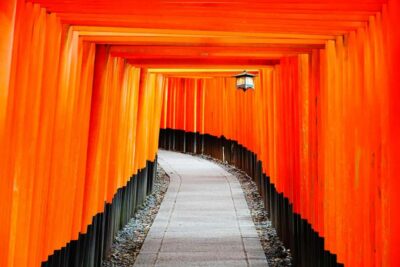
Osaka/Kyoto: Arashiyama, Nara & Fushimi Inari Shrine w/Lunch
Read our review →
Kyoto Tea Ceremony & Kiyomizu-dera Temple Walking Tour
Read our review →Full Day Kyoto Tour : Bamboo Forest, Golden Temple, Fushimi Inari
Read our review →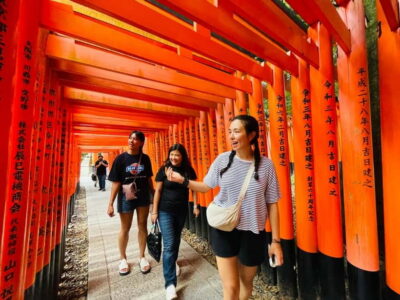
Fushimi Inari Shrine and Tofukuji Temple E-Bike Tour
Read our review →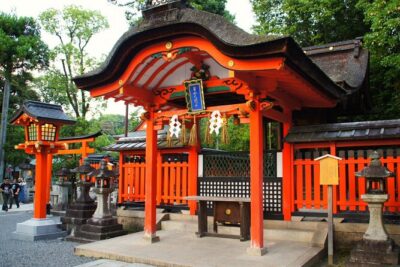
Early Morning Fushimi Inari Shrine – Beat the Crowds
Read our review →Browse the lists this tour appears in