
Review · SIEM REAP
3-Day Angkor Wat Tour with Kulen Mountain & Floating Village
Sunrise sets the tone. This three-day Siem Reap tour pairs Angkor Wat at dawn with quiet countryside, jungle temples, Kulen Mountain, and a boat ride through Kampong Phluk. I like the wide range of places covered, and I like the human touch from guides such as Moni, Sam, Phanne, and Kamsan, who are praised for patience, humor, and clear explanations. The main drawback is the pace: three early starts and a long final day can leave you tired.
The tour also serves up small local moments, from Khmer noodle soup and palm cake to children waving along village roads. The $139 price is only the tour cost, though, so you must add temple, park, and boat fees, plus most meals. Still, if you want one organized trip that reaches well beyond the main Angkor temples, this is a strong choice.
Key points to know before booking
- Angkor Wat begins before sunrise: Hotel pickup runs between 4:30 and 5:00 am on Day 1, with time to explore the temple before the crowds build.
- The route covers more than the standard temple loop: You visit the Small Circuit, Grand Circuit, Banteay Srei, Beng Melea, and the temples of Kulen Mountain.
- Kulen Mountain adds nature and sacred sites: Waterfalls, a reclining Buddha, and the River of Thousand Linga break up the temple-heavy schedule.
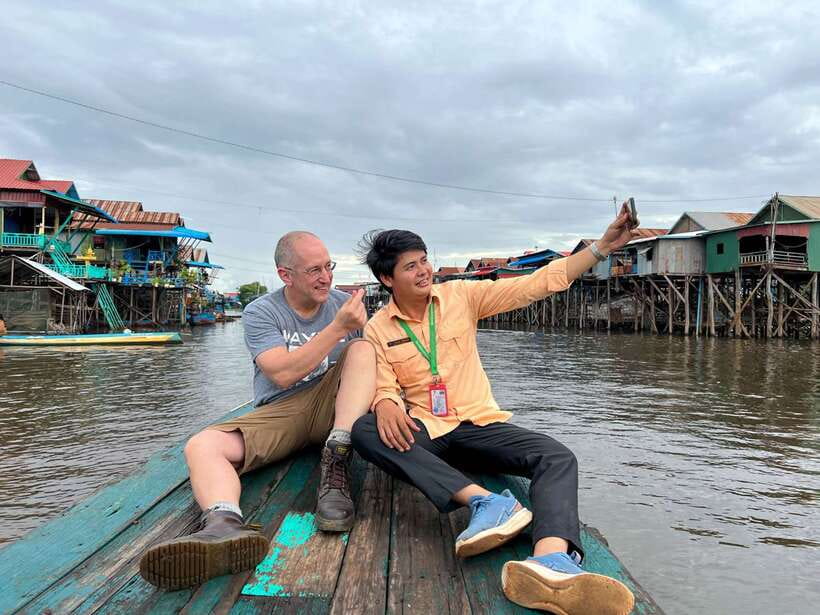
- Kampong Phluk gives the final day a local focus: You take a boat through a floating village on Tonle Sap Lake and see homes raised on long poles.
- Guides are a major strength: Sam, Moni, Phanne, Kamsan, Dara, Mony, and others are praised for care, humor, flexibility, and temple explanations.
- The real cost is about $236 before food: Add the three-day Angkor pass at $62, Kulen National Park at $20, and the private Tonle Sap boat at $15.
Day 1: Angkor Wat sunrise and the classic temple circuit
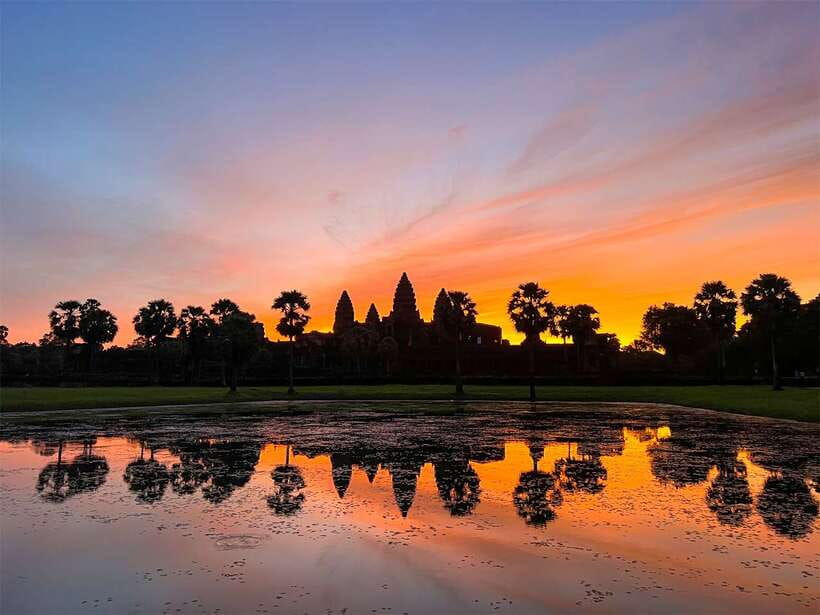
Your first pickup comes early, usually between 4:30 and 5:00 am. That sounds harsh at the hotel, but the timing matters. Angkor Wat is at its most atmospheric before the heat and larger crowds arrive, and the reflection pools can offer a fine view of the temple towers as the sky brightens.
After sunrise, you have about an hour and a half to explore the full Angkor Wat complex. This is not just a quick photo stop. You can walk through the galleries, see the scale of the central sanctuary, and study the carved walls before the day becomes crowded.
Wear sensible shoes. The temple grounds are broad, and you will spend much of the morning walking, standing, and climbing uneven stone steps. Bring water, a hat, sunscreen, and insect repellent. The tour provides cool water and towels, which are welcome after each stop.
Breakfast comes in a village after the temple visit. The meal includes local food and dessert, with options such as Khmer noodle soup, palm cake, and steamed rice dumplings with palm sugar. This is one of the more appealing parts of the schedule because it moves you away from a hotel dining room and into a simpler local setting.
The morning continues with a local market, then Pre Rup. This brick-and-laterite temple has a strong, compact shape and gives you a useful contrast with Angkor Wat’s grand scale. Your guide can help you read the basic layout and explain how temple architecture changed across the Angkor period.
Ta Prohm is the day’s great crowd magnet. Trees and large roots press into the ruins, and parts of the temple have been left in a partly overgrown state. It is one of the most memorable stops, though it can also be busy. Your guide’s timing and route choice matter here. Guides such as Moni and Kamsan have been praised for adjusting the day and helping visitors avoid unnecessary stress.
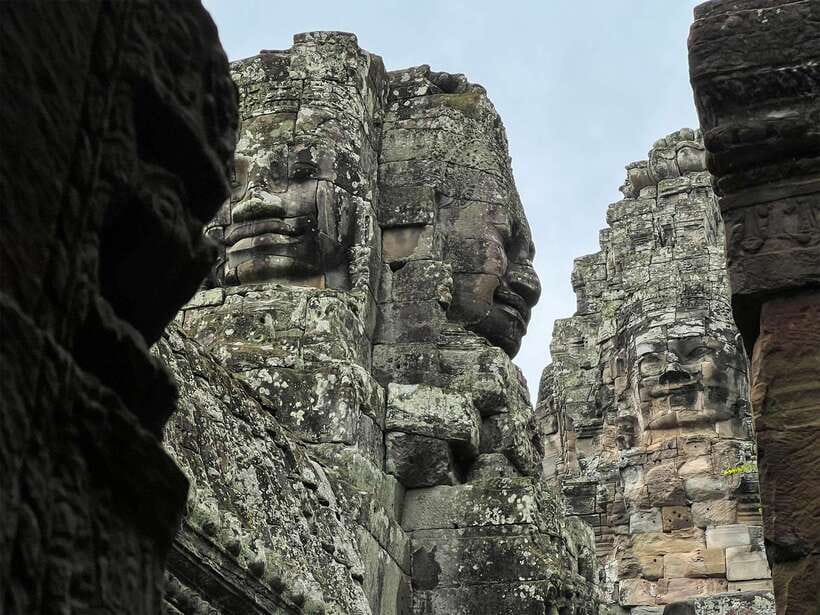
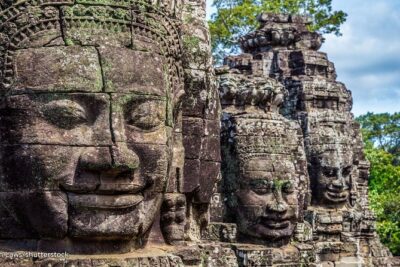
After Ta Prohm, you reach Bayon, known for its huge carved faces. The temple is more enclosed and visually confusing than Angkor Wat, so a guide is especially useful. The faces appear from different angles as you move through the towers, and the effect is much better when you understand what you are looking at.
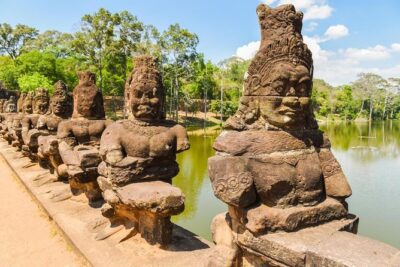
You also visit Angkor Thom’s Victory Gate. This gives the first day a satisfying finish, but do not expect a slow, relaxed schedule. Sunrise means an early wake-up, and the heat can build quickly. The first day is rewarding, but it is also the day when your energy gets tested.
More Angkor Wat Tours in Siem Reap:
- Angkor Wat Sunrise or Sunset Tour with Guide from Siem Reap
★ 5.0 · 12,109 reviews - Siem Reap: Angkor Wat: Small-Group Sunrise or Sunset Tour
★ 5.0 · 9,444 reviews - Siem Reap: Angkor Wat 2-Day Tour with Sunrise and Sunset
★ 4.9 · 4,429 reviews
Day 2: Grand Circuit temples and Banteay Srei
Day 2 begins at 8:00 am, which feels almost luxurious after the first morning. You head into the countryside around Siem Reap, where rice fields, village roads, and everyday rural life become part of the experience.
The main temple route includes Preah Khan, Neak Pean, Ta Som, and East Mebon. Each stop has a different character, which helps prevent the common temple problem of everything beginning to look alike.
Preah Khan is large and atmospheric, with long corridors and a sense of a city within the temple grounds. Neak Pean is smaller and unusual, built around a central island and associated with ancient water features. Ta Som offers another look at tree growth and old stonework, while East Mebon has a more open, elevated setting.
The guide’s role matters on this day. Without context, you may simply see walls, towers, and carvings. With explanations, you begin to notice how these sites functioned as religious, political, and civic spaces. Guides Dara, Mony, Sam, and Moni have all been singled out for clear explanations and attentive service.
Lunch is included on Day 2, with an individual dish ordered from a menu. This is useful because food costs can otherwise add up during a full day outside the city. Breakfast is not listed as included on this day, so plan to eat at your hotel before departure.
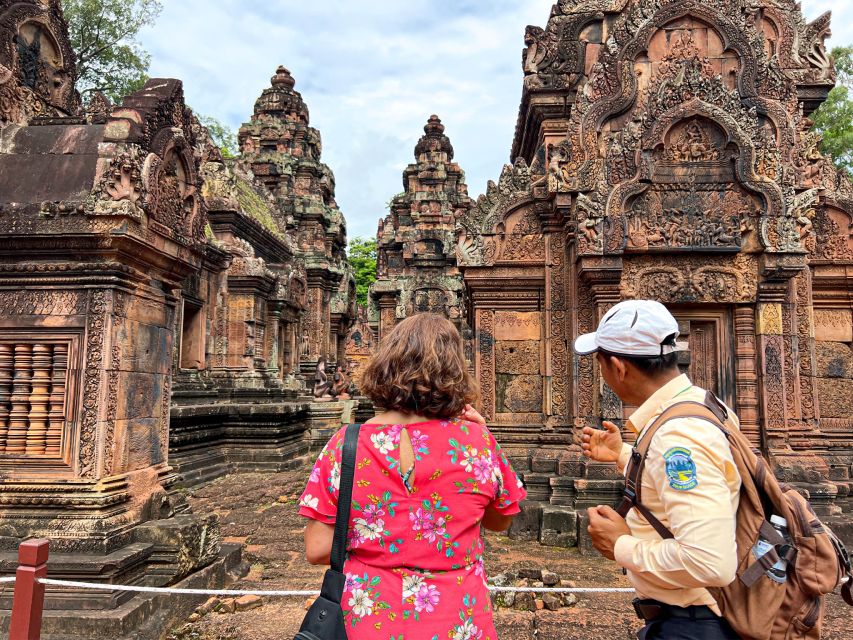
In the early afternoon, the route reaches Banteay Srei. This smaller sandstone temple is famous for finely carved reliefs and careful detail. It sits farther from the central Angkor group, so reaching it takes extra driving, but the trip is worthwhile if you care about carving and smaller-scale architecture.
Banteay Srei is not grand in size. Its appeal is precision. The pinkish sandstone and dense decoration reward a slower look, especially if your guide points out the figures and patterns.
The final stop is the Cambodian Landmine Museum. It adds a modern Cambodian perspective to a day otherwise focused on ancient temples. The visit can feel sobering, but it gives you important context about the country’s recent past and the continuing effects of conflict.
Day 2 is probably the most balanced day in the program. You get temples, rural roads, a proper lunch break, Banteay Srei, and a museum without the pre-dawn start. It is still a full day, but the rhythm is easier than Day 1.
Day 3: Kulen Mountain, Beng Melea, and Tonle Sap
Day 3 begins at 8:00 am with a drive of about one hour to Phnom Kulen National Park. The road passes through rural villages and rice paddies, giving you a look at Cambodia beyond Siem Reap’s hotel zone.
Kulen Mountain is important for more than its scenery. It is presented as the birthplace of the Khmer Empire, and the River of Thousand Linga dates to 802 AD. The carvings in the riverbed connect water, religion, and royal power in a way that makes the site feel different from the major temple complexes.
The park’s main stops include its largest and most attractive waterfalls, a reclining Buddha sculpture, and the River of Thousand Linga. The waterfall area provides a welcome change from stone corridors and temple courtyards. You can expect a more nature-focused morning, though the schedule still includes walking and uneven ground.
The entrance fee to Kulen National Park is not included. It costs $20 per person, so add it to your budget before booking. Bring your hat, sunscreen, insect repellent, and a spare layer if you are sensitive to changing temperatures around water.
Lunch is at a local restaurant before the group continues to Beng Melea. The tour information does not list this meal as included, so you should budget for it.
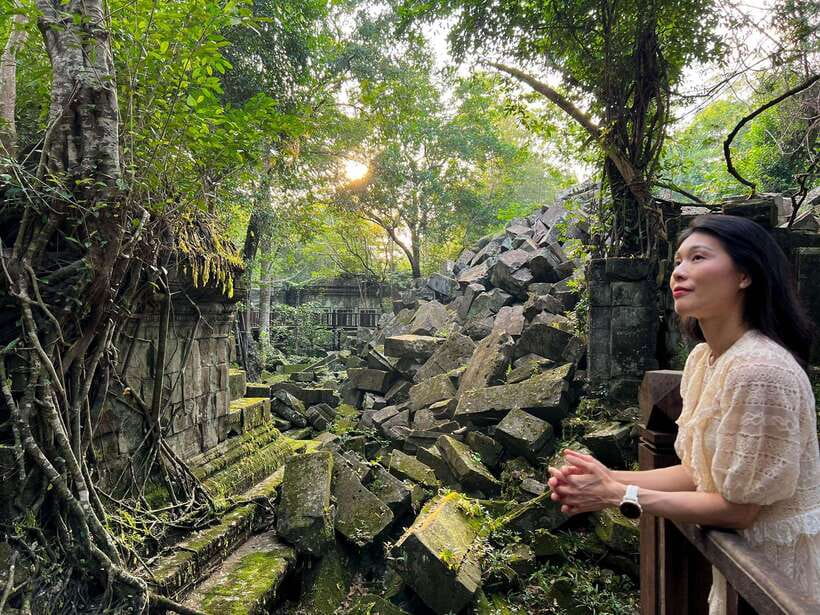
Beng Melea is a 12th-century temple surrounded by heavy vegetation, trees, vines, and moss. It has not been fully restored, which gives the site a rougher, more exploratory feel than Angkor Wat or Bayon. The ruins can be especially appealing if you prefer atmosphere over polished presentation.
The final major stop is Kampong Phluk on Tonle Sap Lake. You take a boat from the ferry area into the floating village and see how fishing families live along the lake. Many homes sit on long poles, allowing them to cope with the seasonal rise in water levels.
This is not just a scenic boat ride. It shows a way of life shaped by the lake, fishing, water levels, and village access. The boat ticket and private cruise cost $15 per person and are not included.
The final day is also the most tiring. It combines a long drive, a national park, waterfalls, a jungle temple, and a boat trip. One rating specifically found the last day slower than the first two, and that is a fair point. Kulen Mountain and Beng Melea require more travel between stops, while the boat ride is calmer and less packed with headline sights.
What the guides and drivers add
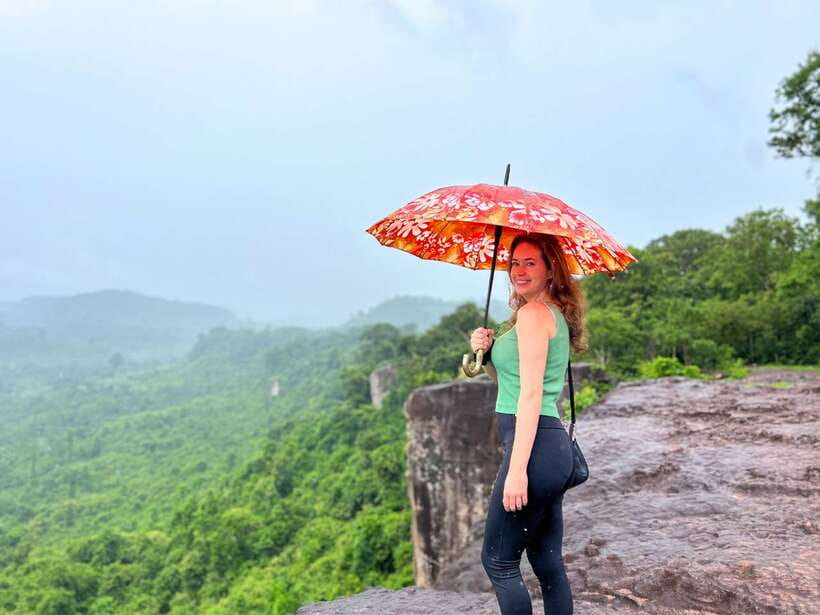
The strongest feature of this tour is the human service. Guides including Phanne, Tha, Kamsan, Sam, Moni, Dara, Mony, Ho, and Seila have been praised for care, humor, flexibility, and temple knowledge.
Phanne is described as especially clear and well organized, while driver Tha was remembered for safe driving, cold face cloths, and drinks ready after temple visits. Moni is praised for checking when breaks were needed and for handling a difficult late arrival and ticket problem with patience.
That kind of help matters in Siem Reap. The temples are spread over a large area, the mornings start early, and tickets and entry rules can slow things down. A good guide keeps the day moving without making you feel rushed.
The experience is described as a small group of up to 10 people. Some bookings may have a private option, and that can give you more say over stops and timing. If flexibility matters, confirm the exact group setup before paying. Do not assume every $139 booking has the same arrangement.
A few more temple visits around Siem Reap worth a look
- 3-Day Angkor Wat & All Interesting Major Temples & Kulen Mount Waterfall
★ 5.0 · 63 reviews - Angkor Region: 3-day Private Tour of Top Temples
★ 5.0 · 47 reviews - From Siem Reap: Angkor Wat and Floating Village 3-Day Trip
★ 5.0 · 39 reviews - Siem Reap: Angkor Wat Temples & Phnom Kulen Park 3-Day Tour
★ 4.8 · 9 reviews
The price, extra fees, and overall value
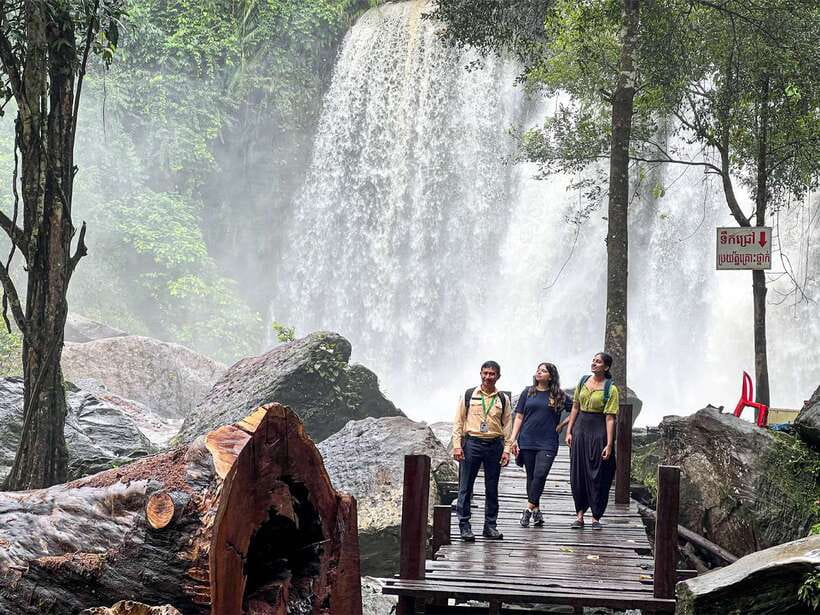
The listed tour price is $139 per person. That includes an English-speaking guide, air-conditioned private transportation, hotel pickup and drop-off, cool water, towels, breakfast on Day 1, and lunch on Day 2.
The required or likely extra charges are:
- Three-day Angkor pass: $62 per person
- Kulen National Park admission: $20 per person
- Tonle Sap private boat cruise: $15 per person
- Food and soft drinks not specifically included
That brings the listed admission and boat fees to $97, making the practical total about $236 per person before extra meals and drinks.
At that price, you are paying for coverage and convenience rather than a cheap temple transfer. The tour reaches Angkor Wat, Angkor Thom, the Grand Circuit, Banteay Srei, Kulen Mountain, Beng Melea, and Kampong Phluk. Doing all of that independently would require careful transport planning and separate arrangements.
The value is strongest if you want one guide and one vehicle for the full three days. It is less attractive if you only want the main Angkor temples, since Days 2 and 3 add long drives and extra entrance costs.
Who should book this three-day route?
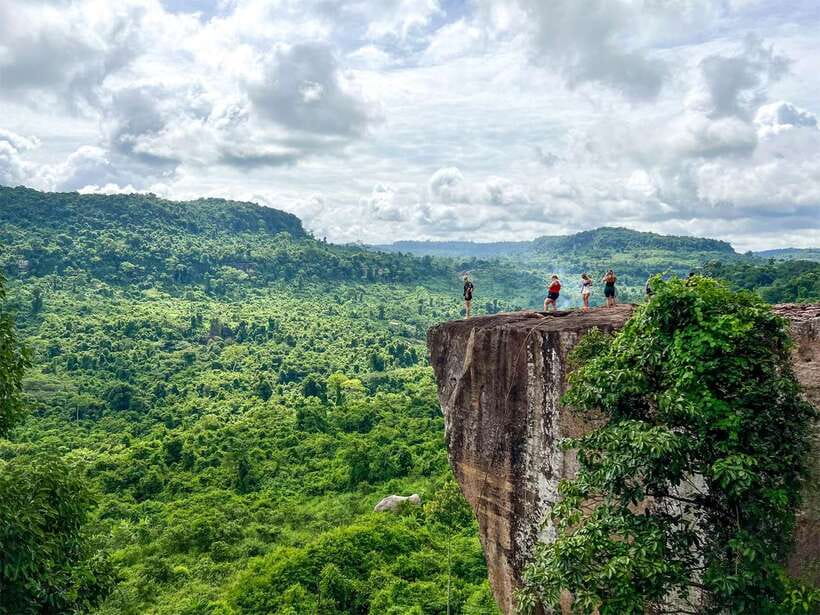
I would choose this tour if you have three days in Siem Reap and want more than the famous central temples. It suits first-time visitors who value explanations, organized transport, and a broad introduction to Cambodian culture.
It is also a good fit if you enjoy variety. One day focuses on the major temples, one mixes temples with countryside and a museum, and one combines nature, an unrestored ruin, and life on Tonle Sap Lake.
I would hesitate if you dislike early mornings, long driving days, or a fixed schedule. Day 1 starts before sunrise, and Day 3 covers a lot of ground. Visitors with limited stamina should ask about the private option and discuss breaks with the guide.
Dress respectfully at the temples. Short skirts and sleeveless shirts are not allowed. A hat, sunglasses, sunscreen, insect repellent, and comfortable walking shoes will make the three days much easier.
Cancellation is free up to 24 hours before the tour, and you can reserve now and pay later. Pickup is from your hotel lobby, where you should wait about 10 minutes before the scheduled time.
Should you book it?
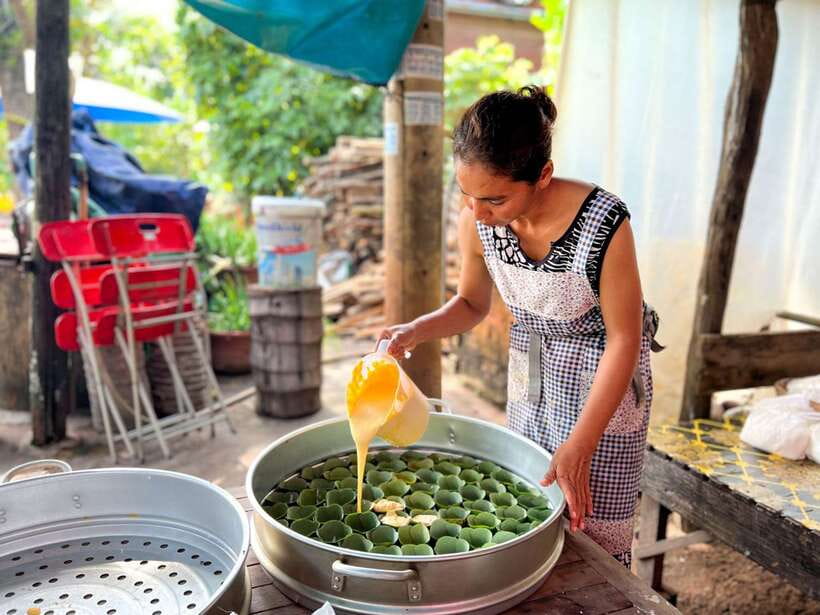
Book this tour if you want a broad, well-supported look at Siem Reap, not just a quick Angkor Wat visit. The guides and drivers appear to be the heart of the experience, and details such as cold towels, local breakfast, flexible stops, and clear temple explanations add real value.
Skip it if you want a slow holiday or prefer to explore only two or three temples. The schedule is ambitious, and the final day asks a lot of you. For an active first visit with Angkor Wat, Kulen Mountain, Beng Melea, and Kampong Phluk all included, the route earns its price once you account for the transport and admission fees.
FAQ
How long does the tour last?
The tour lasts three days.
Where does the tour take place?
It takes place in Siem Reap Province, Cambodia, including Angkor, Phnom Kulen National Park, Beng Melea, and Kampong Phluk on Tonle Sap Lake.
What time is pickup on Day 1?
Pickup is between 4:30 and 5:00 am from your hotel lobby.
What time do Days 2 and 3 begin?
Both Day 2 and Day 3 depart at 8:00 am.
Is sunrise at Angkor Wat included?
Yes. Day 1 begins with watching the sunrise over Angkor Wat, followed by about an hour and a half exploring the temple.
Is breakfast included?
Breakfast is included on Day 1 in a village. The meal may include Khmer noodle soup and traditional desserts. Breakfast on the other days is not listed as included.
Is lunch included?
One lunch with local food is included on Day 2. Food on the other days is not included in the tour price.
Are the temple and park entrance fees included?
No. The three-day Angkor pass costs $62 per person, and admission to Kulen National Park costs $20 per person.
Is the Kampong Phluk boat ride included?
No. The Tonle Sap Lake ticket and private boat cruise cost $15 per person.
What should I wear and bring?
Bring sunglasses, a hat, insect repellent, sunscreen, and comfortable walking shoes. Short skirts and sleeveless shirts are not allowed at the sites.
Just added around Siem Reap
- Sunrise at Angkor Wat Temple: 3-Hour Private Tour★ 4.7 · 30 reviews
- Small-Group Explore Angkor Wat Sunrise Tour with Guide★ 5.0 · 3 reviews
- Siem Reap: Ultimate Angkor Wat Offbeat Experience by Jeep★ 4.9 · 8 reviews
- SiemReap: Private Angkor Wat Tour in English or German guide★ 5.0 · 5 reviews
- Siem Reap : Private Tuk-Tuk Tour of the Magnificent Temples.★ 4.9 · 14 reviews
- Siem Reap: 1-Day Angkor Wat Tour in Portuguese★ 5.0 · 4 reviews
- Siem Reap: Private 4-Day Angkor Wat and Phnom Kulen Tour★ 5.0 · 9 reviews
- Siem Reap: Personalized Angkor Wat Sunrise/Set by TukTuk/Car★ 4.9 · 41 reviews
Angkor Wat Tours, compared.
Angkor Wat Sunrise or Sunset Tour with Guide from Siem Reap
Read our review →
Angkor Wat: Small-Group Sunrise or Sunset Tour
Read our review →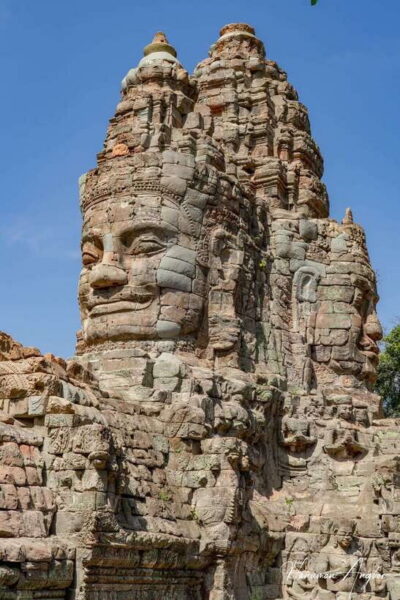
Angkor Wat 2-Day Tour with Sunrise and Sunset
Read our review →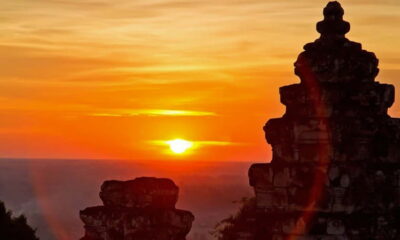
Angkor Wat Sunrise tour with Small – Group and Guide tours
Read our review →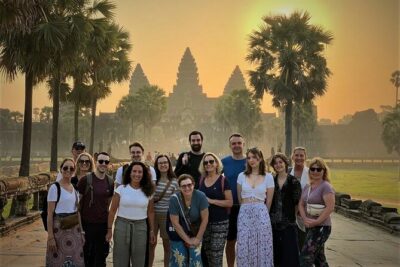
Angkor Wat Highlights and Sunrise Guided Tour from Siem Reap
Read our review →
Angkor Wat Sunset Small Group Tour with Lunch Included
Read our review →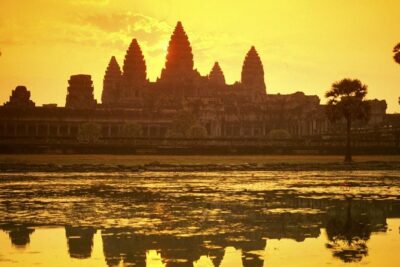
Full-Day Angkor Wat Sunrise Private Tour with Guide from Siem Reap
Read our review →Browse the lists this tour appears in