Review · SIEM REAP
3-Day Angkor Wat & All Interesting Major Temples & Kulen Mount Waterfall
Angkor is best seen in layers. This three-day private tour combines Angkor Wat and Angkor Thom with quieter temples, the Phnom Kulen waterfall, the Roluos group, Artisans Angkor, and Siem Reap’s Old Market. I like the private air-conditioned vehicle, which gives you room to adjust the pace, and I like the mix of famous sights and less-visited ruins such as Ta Nei.
The main drawback is the packed schedule. You will spend long hours in the heat, walk over uneven temple ground, leave at 5:00am for sunrise on the final day, and pay temple and park fees separately. Still, guides such as Chhay, Pal Saruon, Em Somuch, Small Mony, and Chandri have earned especially strong praise for clear explanations, photo advice, and flexibility.
Key points to know before booking
- Three full days cover far more than Angkor Wat: You visit Angkor Thom, Banteay Srei, Preah Khan, the Roluos temples, Phnom Kulen, and several smaller ruins.
- The private format is useful: Your own group travels by private air-conditioned vehicle with a driver and licensed English-speaking guide.
- Phnom Kulen changes the pace: The day includes the 1000 Lingas riverbed, a reclining Buddha, and time at a waterfall where swimming is possible.
- The advertised price is not the final cost: The $248.50 tour price excludes the $62 temple pass, the $20 Phnom Kulen entrance, and meals.
- Sunrise and sunset require stamina: Day one can end at Phnom Bakheng, while day three begins at Angkor Wat around 5:00am.
- Guide quality matters here: Past guests gave particular praise to Chhay, Pal Saruon, Em Somuch, Small Mony, and Chandri for their history lessons and willingness to adapt.
What the $248.50 price really covers
At $248.50 per person, this is not a basic group bus outing. You get a private air-conditioned vehicle, a driver, a licensed English-speaking guide, hotel pickup and return, parking fees, road tolls, drinking water, and cool wet towels.
The extra charges are important. The Angkor Wat and temple admission is listed at $62 per person, while Phnom Kulen costs another $20. That brings the known cost to $330.50 per person before food. Lunch is not included, with meals estimated at about $5 per person depending on the menu.
I see the price as reasonable for a private three-day program if you are traveling with family or friends and value control over the day. It is less attractive if you want a cheap introduction to Angkor or prefer to choose only a few temples. The vehicle, guide, and private schedule account for much of the value.
The tour is offered only to your own group, which makes the early starts easier to manage. You can also skip Phnom Bakheng’s sunset wait, Artisans Angkor, or Psar Chaa if the schedule feels too full.
More Temple and Waterfall Tours in Cambodia
- 3-Days Discovery Of Angkor: Waterfalls,Floating Village and Banteay Srei temple
★ 5.0 · 214 reviews - Phnom Kulen Waterfall and Banteay Srei Temple Tour from Siem Reap
★ 5.0 · 30 reviews - 5-Day All Major Temples & Kulen Mount Waterfall & Koh Ker & Beng Mealea
★ 5.0 · 13 reviews
Day one: from Angkor Wat to the faces of Bayon
Pickup begins at 8:00am from your hotel or guest house. The first practical stop is to buy the temple pass, then you head to Angkor Wat for about two and a half hours.
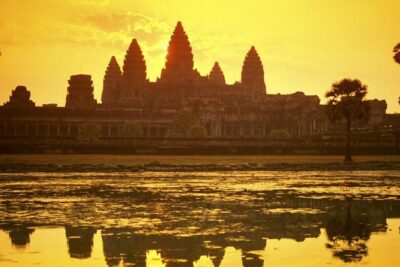
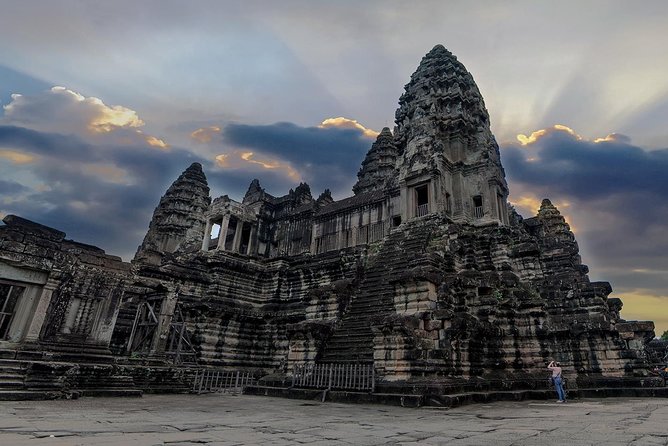
Angkor Wat rewards time. You can study the long galleries, bas-reliefs, towers, courtyards, and religious details without reducing the visit to a quick photograph. Your guide can help explain the Hindu origins of the temple and the later Buddhist use of the site.
The temple is immense, so the first visit can feel like a lot to take in. Comfortable shoes, water, and a willingness to walk are more useful than trying to rush through every corner.
Ta Prohm and the quieter Ta Nei
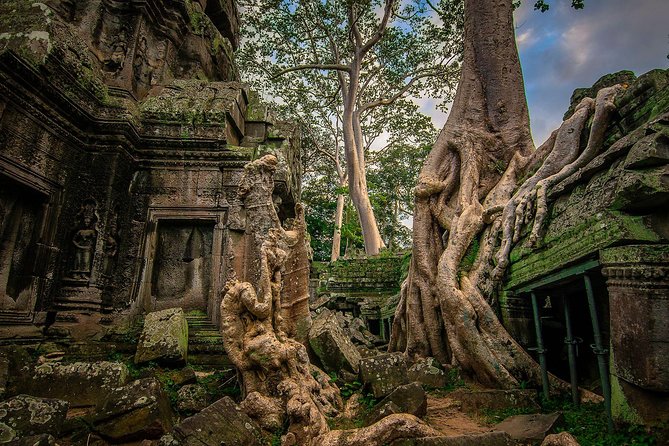
Ta Prohm takes about two hours. Its appeal comes from the massive tree roots pressing over stone walls and galleries, along with its connection to the film Tomb Raider. That movie link draws crowds, but the temple itself is more than a film set. The trees, collapsed passages, and broken carvings show how nature and time have shaped the ruins.
Ta Nei offers a useful contrast. It is smaller, less restored, and surrounded by large trees. The planned 45-minute stop is short, but this is one of the better places on the route if you want a quieter temple atmosphere after Ta Prohm.
I like the pairing. Ta Prohm gives you the famous image, while Ta Nei gives you a less polished view of the Angkor complex.
Angkor Thom’s royal center
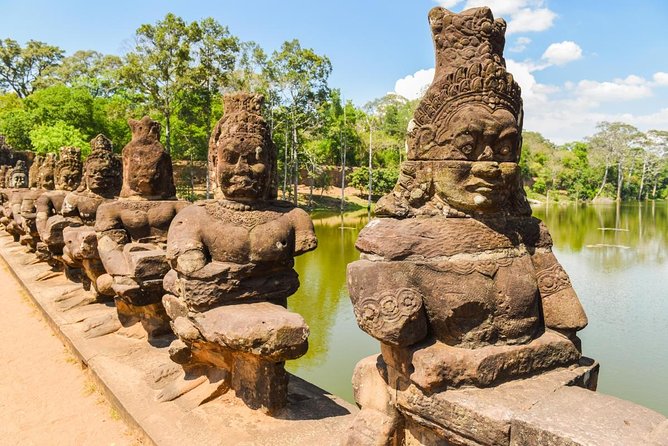
The brief stop at the Victory Gate on the eastern side of Angkor Thom is mainly for photographs. The gate leads into the former royal city and gives your guide a natural point to explain the scale of Angkor Thom.
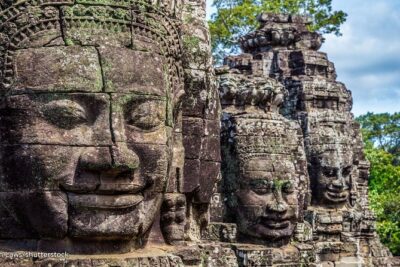
Bayon follows, with about 45 minutes inside the central temple. Its towers carry the famous large faces associated with the Buddhist ruler Jayavarman VII. The layout can be confusing, so an active guide makes a real difference here. You want to understand what you are seeing, not simply count stone faces.
Baphuon, a Hindu temple built before Angkor Wat in the 11th century, takes about 30 minutes. Behind it is a reclining Buddha added in the 16th century. The contrast between the earlier Hindu structure and later Buddhist addition helps show how Cambodian religious life changed over time.
Phimeanakas is a short 15-minute stop. This pyramid-shaped Hindu temple once sat within the royal enclosure of Angkor Thom. The nearby walls and former palace area are just as important as the small temple itself, although the visit will feel brief compared with Angkor Wat or Bayon.
The Terraces of the Elephants and the Leper King are also quick stops, about 10 minutes each. The Elephant Terrace served as a platform from which kings viewed returning armies, while the Leper King Terrace has detailed carvings and a position near the northern end of the royal area. These stops work best when your guide points out the carvings and explains their purpose.
More Temple and Waterfall Tours in Siem Reap
- 3-Day Angkor Wat & All Major Temples & Kulen Mount Waterfall
★ 5.0 · 3 reviews
Phnom Bakheng sunset
The first day may finish with a climb up Phnom Bakheng for sunset. The stop is listed at about two hours because the site limits the number of people allowed and you may need to wait.
This is an optional choice in practice. If you are tired after a full day of temples, skipping the sunset is sensible. If you want the view and do not mind waiting, it gives day one a dramatic finish. The important tip is to decide early, since the climb and waiting time add to an already long day.
Day two: Phnom Kulen’s waterfall and pink sandstone
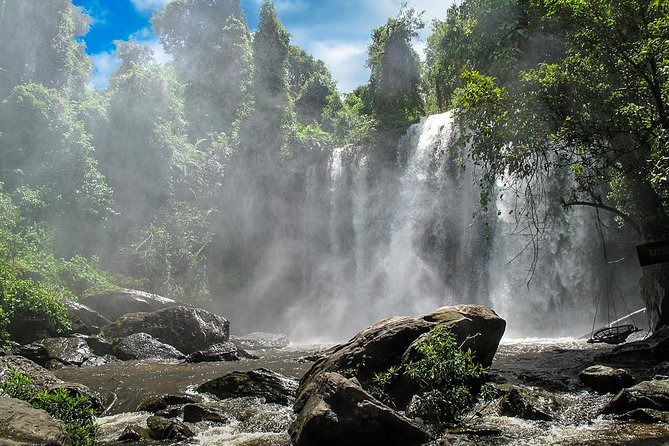
Day two moves beyond the main Angkor zone. Phnom Kulen National Park is more than 60 kilometers from Angkor Park, and the visit takes about five hours. This is the most nature-focused day, but it still includes major religious sites.
The 1000 Lingas riverbed is carved with symbols connected to Shiva. You then continue to the rock reclining Buddha, followed by the waterfall. Swimming is possible at the waterfall, making this the best chance during the tour to cool off rather than simply look at stone.
I would bring swimwear, a towel, and shoes suitable for wet ground, although the supplied information only confirms drinking water and wet towels from the tour. The long drive is the tradeoff. Phnom Kulen is worthwhile if you want a break from temple corridors, but it is not an efficient choice for someone focused only on Angkor architecture.
Banteay Srei and Banteay Samre
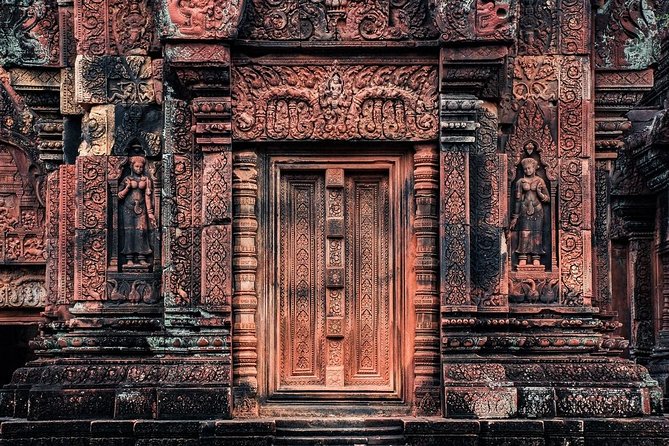
Banteay Srei takes about an hour and is built from pink sandstone. This 10th-century Hindu temple is dedicated mainly to Shiva and is known for its small scale and finely carved surfaces.
The temple feels different from the large royal monuments. Its details reward slow looking, especially if your guide can connect the carvings to Hindu ideas and the temple’s original purpose. The visit is relatively short, so do not expect an unhurried half-day here.
Banteay Samre follows for about 45 minutes. Built in the 12th century, it is thought to share some design ideas with Angkor Wat. It is a useful stop for comparing temple forms without the crowds and scale of the main monument.
Pre Rup’s brick towers
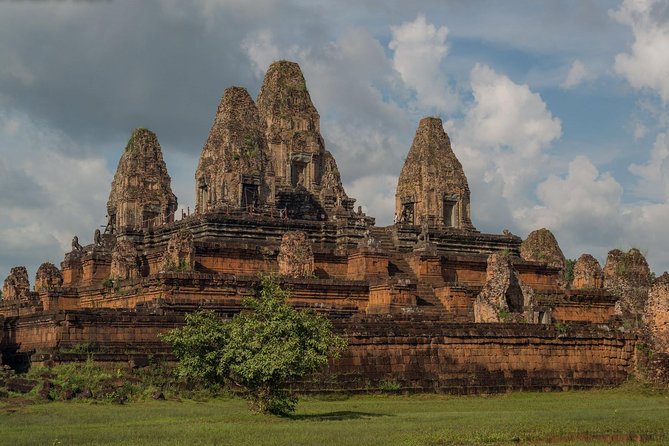
Pre Rup takes around 30 minutes. This late 10th-century Hindu temple is a temple mountain built for the gods, with associations to funerary beliefs.
The stop is compact but worthwhile because it adds another period and style to the tour. After Phnom Kulen and the detailed stonework of Banteay Srei, Pre Rup gives you a more solid, vertical ruin. By this point, however, heat and fatigue may affect how much detail you can absorb.
Day three: sunrise, Jayavarman VII, and the Roluos group
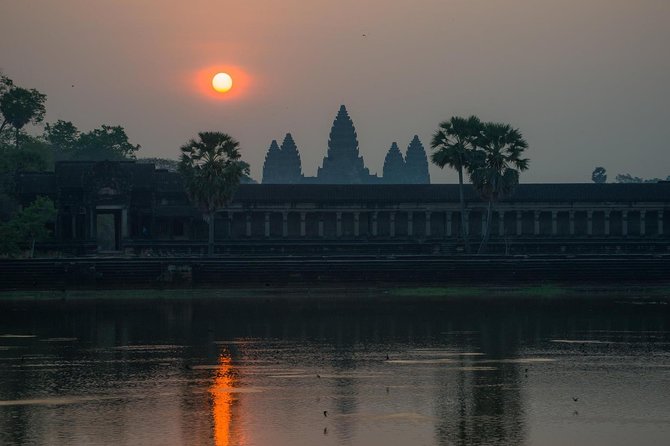
The final day begins early, with pickup around 5:00am for sunrise at Angkor Wat. The sunrise visit lasts about one hour and 45 minutes.
This is the tour’s toughest start. You need to be comfortable with an early alarm and a long day after two previous days of sightseeing. The reward is seeing Angkor Wat at a quieter hour and watching the light change around the towers. The exact conditions can vary, but the early departure is fixed in the schedule.
After breakfast, you return to the temples for Preah Khan. Built by King Jayavarman VII and dedicated to his father, this former Buddhist monastery is large and full of galleries, courtyards, and partly restored sections. The planned hour gives you enough time to see the main route, though not every corner.
Neak Pean is a small island temple in the middle of the last Baray, or reservoir. The walk to it gives the visit a different feel from the enclosed temples. You should expect a 30-minute stop, not a long exploration.
Ta Som follows for about half an hour. This smaller Buddhist temple is east of Neak Pean and works well as a quieter companion to the grander Preah Khan. Its modest scale helps keep the third day from becoming one long parade of huge monuments.
Eastern Mebon and the Roluos temples
Eastern Mebon is a three-level temple mountain with five towers and large elephant statues at its corners. The one-hour stop gives you time to look at the layout and the animal sculptures, which are among the most memorable details here.
The route then moves to the Roluos group, an early center of Khmer temple building. Lolei is a small 9th-century Hindu temple and takes about 15 minutes. Its short visit makes sense within a larger circuit, although it may feel rushed if you want detailed study.
Preah Ko was the first temple built at the ancient city of Hariharalaya. The 30-minute stop gives useful context before Bakong, the largest temple in the Roluos group.
Bakong is a major temple mountain and the first sandstone temple mountain built by Khmer rulers. The planned 45 minutes is enough for a focused visit, but you may want to spend more time here if early Khmer architecture interests you.
Lunch is taken at a restaurant along the way and is paid separately. The schedule has covered a great deal by this stage, so a proper break matters. Your guide can also adjust the pace within the private format if your group wants more time at a particular temple.
Crafts at Artisans Angkor and Siem Reap’s Old Market
Artisans Angkor is a useful change of subject after three days of ruins. The workshop is associated with stone carving, wood carving, lacquering, gilding, and silk processing.
The stop is optional. I would include it if you want to connect ancient Cambodian design with living craft skills. If you are temple-focused or tired, you can skip it without losing a major archaeological site.
Psar Chaa, or the Old Market, is also optional. It sits in central Siem Reap and provides a final look at local shopping and market life. Because both stops are flexible, you can use them as a practical way to end the tour rather than forcing yourself through another fixed attraction.
The guide and driver can shape the whole trip
A private tour is only as good as the people leading it. The strongest praise has gone to guides including Chhay, Pal Saruon, Em Somuch, Small Mony, and Chandri.
Chhay has been praised for detailed temple explanations, passion for Cambodian history, and knowing good photo positions. One guide, Em Somuch, also used shaded paths and a short bush walk to make a hot day more comfortable. Small Mony was praised for bringing the stories of each temple to life, while Chandri was noted for adjusting the schedule when needed.
Drivers named in the feedback include San, Det, and Sriang. Patience matters here because the program includes long drives, early starts, and repeated transfers between sites.
When you meet your guide, tell them what matters most: carvings, religious history, photography, quiet ruins, swimming, or a slower pace. The private setup gives that conversation real value.
Who should book this three-day program?
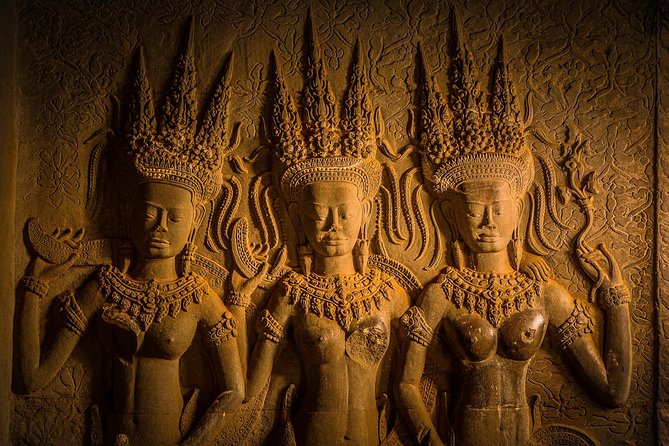
I would recommend it to first-time visitors who want a broad introduction to Siem Reap without arranging separate transport, guides, and entrance planning. It suits couples, families, and small private groups that want flexibility and a mix of temples and nature.
It is also a good fit for people who want more than the standard Angkor Wat and Bayon circuit. Ta Nei, Phnom Kulen, the Roluos temples, Banteay Srei, and Preah Khan add variety and historical range.
I would hesitate if you dislike early mornings, long drives, hot weather, or full sightseeing days. The itinerary covers a lot, and the separate admission fees make the total cost higher than the headline price.
The cancellation terms are fair: you can receive a full refund if you cancel at least 24 hours before the start time. Changes or cancellations inside that window are not accepted for a refund.
Should you book it?
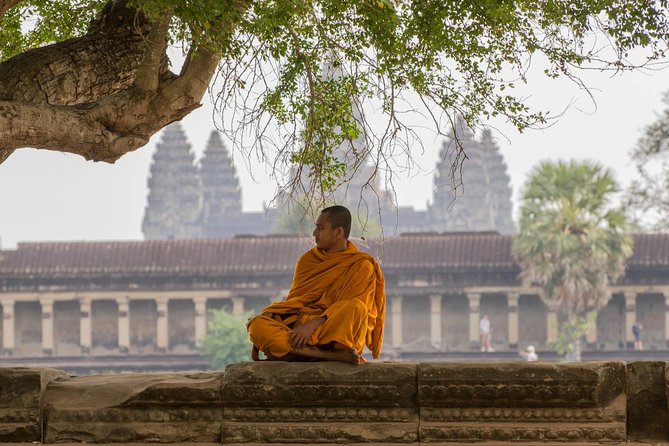
Book this tour if you want maximum temple coverage with private transport, a licensed English-speaking guide, and a full day at Phnom Kulen. The best reasons are the range of sites, the option to adjust parts of the program, and the consistently strong praise for guides such as Chhay and Pal Saruon.
Choose a shorter or more focused plan if you want slow temple study. This itinerary is ambitious, and its value depends on your energy, group size, and interest in seeing many different places. For an active three-day introduction to Angkor and its surrounding sights, it offers a strong mix of famous monuments, quieter ruins, water, crafts, and local history.
FAQ
How long is the tour?
The experience lasts approximately three days.
Is hotel pickup included?
Yes. Pickup and return to your hotel or guest house are included.
Is this a private tour?
Yes. Only your group participates in the activity.
What type of vehicle is provided?
The tour includes a private air-conditioned vehicle with a driver.
Is an English-speaking guide included?
Yes. A licensed English-speaking guide is included.
Are temple entrance fees included?
No. Angkor Wat and the other temple admissions are listed separately at $62 per person.
Is Phnom Kulen National Park included in the price?
The park visit is part of the itinerary, but the $20 entrance fee is not included.
Can you swim at Phnom Kulen?
Yes. The itinerary includes time to swim at the waterfall.
Are meals included?
No. Lunch is not included. Meals are estimated at about $5 per person, depending on the menu.
What time does the sunrise day begin?
The guide plans to pick you up at about 5:00am on day three for sunrise at Angkor Wat.
More 3-Day Experiences in Siem Reap
- Angkor Region: 3-day Private Tour of Top Temples
★ 5.0 · 47 reviews - From Siem Reap: Angkor Wat and Floating Village 3-Day Trip
★ 5.0 · 39 reviews - 3-Day Angkor Wat Tour with Kulen Mountain & Floating Village
★ 5.0 · 12 reviews - Siem Reap: Angkor Wat Temples & Phnom Kulen Park 3-Day Tour
★ 4.8 · 9 reviews
More Angkor Wat Tours in Siem Reap
- Angkor Wat Sunrise or Sunset Tour with Guide from Siem Reap
★ 5.0 · 12,109 reviews - Siem Reap: Angkor Wat: Small-Group Sunrise or Sunset Tour
★ 5.0 · 9,444 reviews - Siem Reap: Angkor Wat 2-Day Tour with Sunrise and Sunset
★ 4.9 · 4,429 reviews - Siem Reap: Full-Day Angkor Wat Guided Tour with Sunset
★ 4.9 · 3,803 reviews
Just added around Siem Reap
- Sunrise at Angkor Wat Temple: 3-Hour Private Tour★ 4.7 · 30 reviews
- Small-Group Explore Angkor Wat Sunrise Tour with Guide★ 5.0 · 3 reviews
- Siem Reap: Ultimate Angkor Wat Offbeat Experience by Jeep★ 4.9 · 8 reviews
- SiemReap: Private Angkor Wat Tour in English or German guide★ 5.0 · 5 reviews
- Siem Reap : Private Tuk-Tuk Tour of the Magnificent Temples.★ 4.9 · 14 reviews
- Siem Reap: Private 4-Day Angkor Wat and Phnom Kulen Tour★ 5.0 · 9 reviews
- Siem Reap: Personalized Angkor Wat Sunrise/Set by TukTuk/Car★ 4.9 · 41 reviews
- Siem Reap: 1-Day Angkor Wat Tour in Portuguese★ 5.0 · 4 reviews
Angkor Wat Tours, compared.
Angkor Wat Sunrise or Sunset Tour with Guide from Siem Reap
Read our review →
Angkor Wat: Small-Group Sunrise or Sunset Tour
Read our review →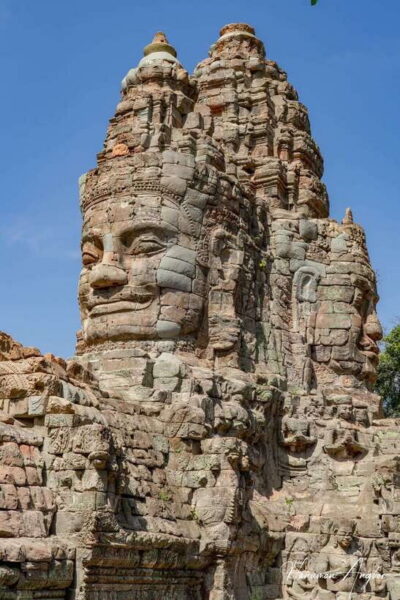
Angkor Wat 2-Day Tour with Sunrise and Sunset
Read our review →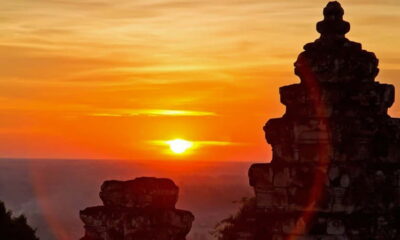
Angkor Wat Sunrise tour with Small – Group and Guide tours
Read our review →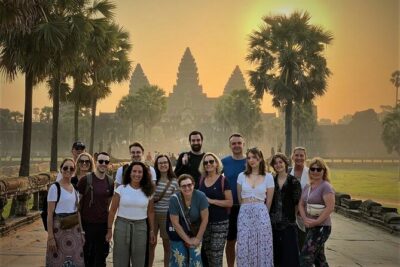
Angkor Wat Highlights and Sunrise Guided Tour from Siem Reap
Read our review →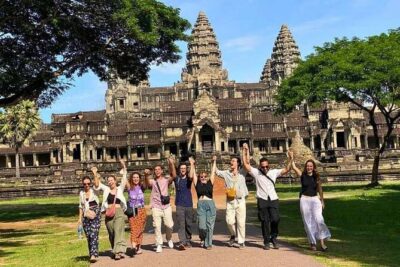
Angkor Wat Sunset Small Group Tour with Lunch Included
Read our review →