
Review · AZERBAIJAN
Qobustan rock arts, Mud Volcanoes, Fire temple Ateshgah, Yanardag
Fire, mud, and ancient rock art. This private tour packs Azerbaijan’s strangest sights into one long day, linking Baku with Qobustan, the mud volcanoes, Ateshgah Fire Temple, and Yanar Dag. I like the private vehicle for up to seven people, which keeps the day more flexible than a large coach outing. I also like the local guide’s clear explanations, especially at the rock-art sites and fire temples.
The main drawback is the schedule. Nine hours is a lot of time on the road, and the mud volcano stop can be less polished than the historic sites. Museum admission is also extra, with total ticket costs listed at about $15 per person. Still, if you have only a short stay in Baku, this gives you a useful first look at Azerbaijan’s ancient past and its famous natural fires.
Key points to know before booking
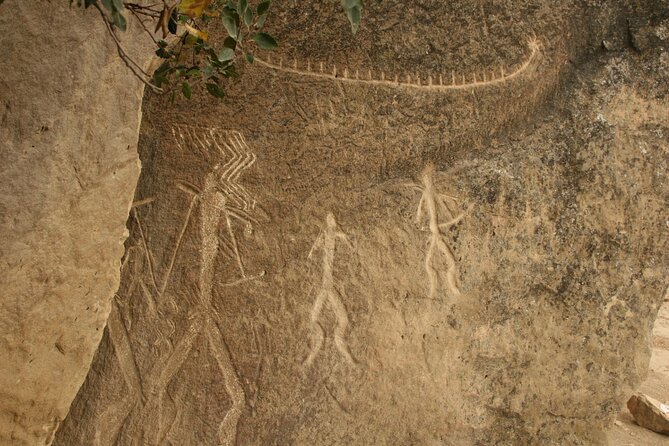
- More than 6,000 rock drawings fill Qobustan: The UNESCO-listed preserve offers one of Azerbaijan’s strongest links to prehistoric life.
- A private group of up to seven shares the $250 price: The cost can be good value when divided among several people.
- The tour covers four very different places: You move from Zoroastrian fire worship to oil-related mud volcanoes and ancient hunting scenes.
- The day lasts about nine hours: The length makes this a serious sightseeing day, not a quick side trip.
- Museum tickets are not included: Plan for roughly $15 per person in admission costs.
- Good weather matters: The operator can change the date or provide a full refund if poor weather forces cancellation.
Why this day trip matters in Azerbaijan
Azerbaijan is often introduced through Baku’s modern architecture, broad boulevards, and old city walls. Those sights are worth your time, but they do not fully explain the country’s nickname, the land of fire. This tour takes you outside the city to the natural gas flames, sacred sites, and underground forces that shaped that idea.
I like the way the day joins several separate stories. At Ateshgah, you learn how natural gas fires became tied to religious practice. At Yanar Dag, you see a flame still burning from the hillside. At the mud volcanoes, the connection shifts from worship to geology, oil, and gas.
Qobustan gives the trip its oldest chapter. The reserve is about 60 kilometers from Baku and includes more than 6,000 rock drawings spread across roughly 1,000 rocks. The site also holds more than 100,000 archaeological objects. Those numbers help explain why Qobustan is on the UNESCO World Heritage List, but the real value comes from seeing the carvings in the setting where they were made.
A few more temple visits around Baku worth a look
- Baku: Gobustan, Volcanoes, Fire Temple and Yanardag Day Trip
★ 4.7 · 433 reviews - Gobustan & Mud, Fire Temple, Burning Mountain (Group & Private)
★ 4.5 · 418 reviews - Gobustan-Mud Volcan-Fire Temple and Mountain Tour/Entrance inc
★ 5.0 · 267 reviews
Ateshgah Fire Temple and the old worship of flame
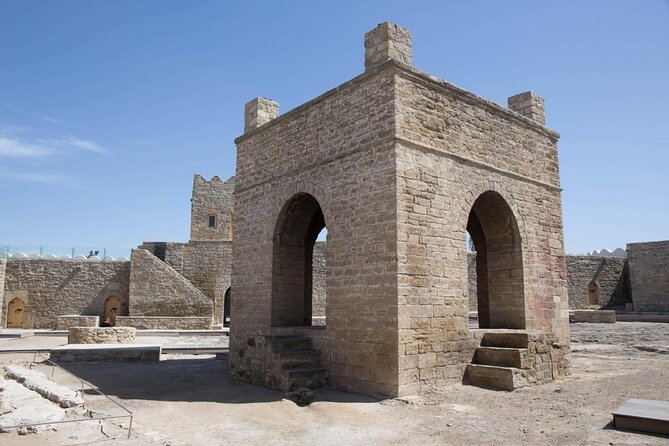
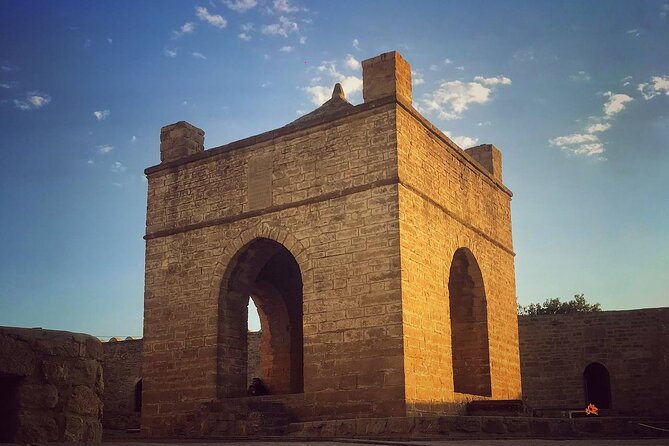
The Ateshgah Fire Temple is usually the first stop, with about 30 minutes set aside for the visit. The name refers to the fire temple, and the site is connected with natural gas escaping from underground and catching when it meets oxygen.
The present buildings date mainly from the 17th and 18th centuries. They were built by a Hindu community connected with Sikhs in Baku. That detail makes Ateshgah more interesting than a simple monument to Zoroastrianism. The site reflects several religious and cultural links that passed through this part of the Caucasus.
Its earlier sacred role reaches back much farther. Zoroastrians used the area as a place of worship, treating the never-ending flame as a sign of divine power. Your guide can help separate the ancient religious story from the later construction you see today.
The stop is fairly short, so expect a focused visit rather than a long study of every structure. Thirty minutes gives you time to see the temple complex and hear the main explanation, but not necessarily to linger over every display. If religious history interests you, you may wish the schedule allowed more time.
Admission is listed separately from the tour price. The overall museum ticket cost is given as about $15 per person, so add that to your budget before you book.
Yanar Dag, a hillside flame that still burns
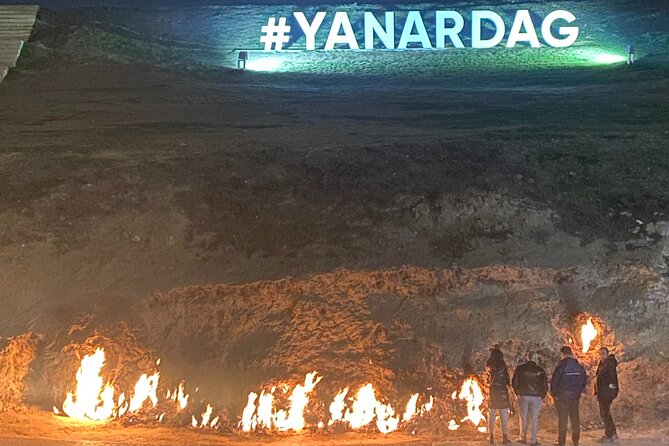
Yanar Dag is the shortest stop, with about 15 minutes planned. Its name means burning mountain, and the attraction is a natural gas flame rising from the hillside.
This is the most direct answer to the question of why Azerbaijan became known as the land of fire. Unlike Ateshgah, which involves a built religious complex, Yanar Dag presents the natural phenomenon itself. Fire comes from gas below the ground, giving the hillside a strange and memorable appearance.
The stop is brief because the main sight is concentrated in one place. You will have time to look at the flame, hear about its connection with old fire worship, and take photographs. Do not expect a long walk or a large archaeological site.
The short visit can be a positive thing late in a busy day. You see the attraction without spending another hour on a single feature. Still, if you enjoy geology, the 15-minute schedule may leave you wanting more explanation.
Mud volcanoes and Azerbaijan’s unusual geology
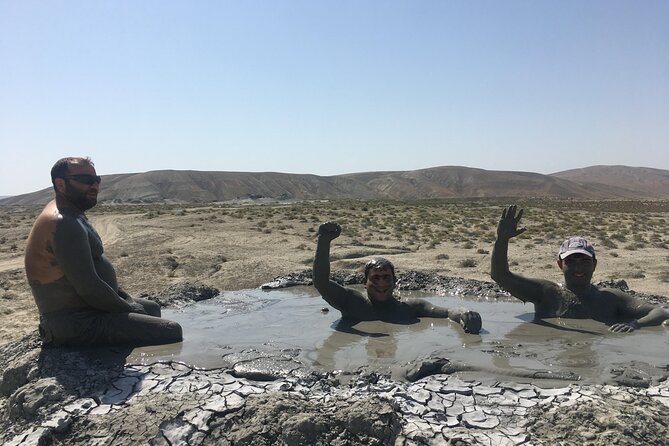
The mud volcanoes are one of the tour’s most unusual stops, and about an hour is planned here. Azerbaijan has around 350 of the world’s roughly 800 mud volcanoes, making the country a major center for this type of geological activity.
These are not ordinary volcanoes filled with hot lava. They push out mud, gases, and liquid material. Their activity is linked with oil and gas fields, including areas such as Lokbatan, Garadagh, Neft Dashlari, and Mishovdagh.
That connection gives the stop a useful place in Azerbaijan’s modern story. The country is famous for oil, and the mud volcanoes show how underground pressure, gas, and petroleum deposits affect the surface. Material from the volcanoes is also used in chemical and construction industries and in pharmacology.
The setting can feel more basic than the formal museum sites. You may find rough ground and an open-air visit rather than a carefully arranged attraction. Wear practical shoes and keep your expectations centered on the oddity of the geology, not on comfort or polished facilities.
The stop also has a link to space research. NASA geologists have studied Azerbaijan’s mud volcanoes because some of their forms and materials are useful when considering the surface of Mars. That does not mean you are looking at a piece of Mars, of course, but it adds a fun scientific angle to a place that can otherwise seem like a field of bubbling mud.
Same place, a different morning at the gates:
- Baku:Gobustan Mud Volcanoes Temple & Entry tickets included
★ 4.8 · 178 reviews - Gobustan, Mud volcanoes, Fire temple, Fire mountain PRIVATE TOUR
★ 5.0 · 47 reviews - Gobustan & Mud, Fire Temple, Burning Mountain, H.A. Center
★ 4.6 · 46 reviews - Ateshgah Fire temple and Burning mountain tour
★ 4.5 · 42 reviews
Qobustan Museum and the oldest stories in the tour
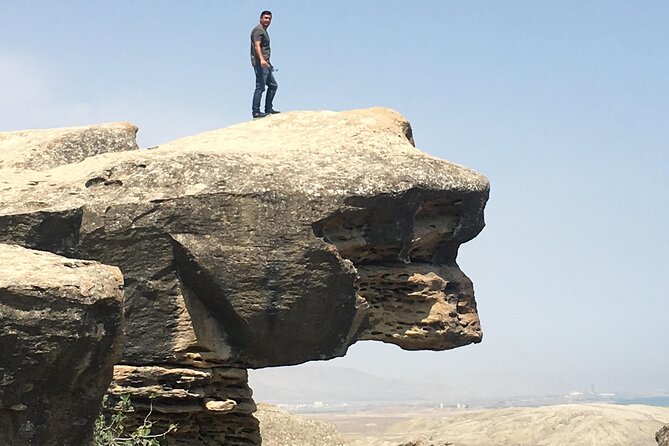
Qobustan National Historical-Artistic Preserve is the centerpiece for anyone interested in early human life. The area is described as an open-air museum, and its main appeal is the density of its rock engravings.
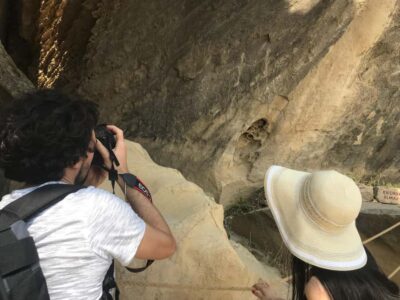
More than 6,000 drawings appear on about 1,000 rocks. The images record people, animals, hunting scenes, and daily life from ancient periods. The guide’s explanation matters here because the carvings do not always speak for themselves. A good account of how the images were made and what they may represent turns a collection of markings into a story about the people who lived in this region.
The reserve also contains more than 100,000 artifacts. The museum portion helps place the outdoor carvings in a wider setting, giving you a better idea of how archaeologists study the site and connect objects with human activity.
Plan for about an hour at Qobustan. That is enough to get the main story and see important examples, but the area has enough material to reward a longer visit. If prehistoric art is your main reason for booking, this is the part of the day to protect. Avoid treating it as just another quick photo stop.
Qobustan is also the reason this tour has more substance than a simple collection of unusual sights. A flame on a hillside is memorable, and a mud volcano is strange, but the rock art gives you a direct connection to people who lived here thousands of years ago.
The route, vehicle, and group size
The tour lasts about nine hours and includes pickup, private transportation, an air-conditioned vehicle, and WiFi on board. You travel with your own group rather than joining a large shared party.
That arrangement is especially useful for families, couples traveling with friends, or small groups who want to split the cost. The maximum group size is seven, and the $250 price is charged per group. At the full size, the transport and guide cost works out to about $36 per person before museum tickets. For two people, the per-person cost is much higher, so value depends heavily on how many people share the booking.
The air conditioning matters during a full day that includes outdoor stops. Qobustan and the mud volcanoes are not indoor-only visits, and the drive between Baku and the sites adds to the heat and fatigue of the day. WiFi is a useful extra, though it should not be the main reason you choose the tour.
A multilingual local guide is included. That is important because the sites are connected by several different subjects: prehistoric art, Zoroastrianism, Hindu and Sikh connections, natural gas, oil fields, and geology. The strongest part of the experience is likely to be the spoken context that ties these places together.
What to pack and how to pace the day
Wear shoes suitable for uneven outdoor ground. The tour includes open-air rock art and mud volcanoes, so comfort matters more than dressing for a formal museum visit.
Bring water and plan for a full day away from your hotel. Lunch is not included, so you need to budget for that separately. The tour provides transport and a guide, but food is your responsibility.
Keep the schedule in mind when deciding what to photograph. Ateshgah receives about 30 minutes, Yanar Dag about 15 minutes, the mud volcanoes about an hour, and Qobustan about an hour. These times are enough for a broad introduction, but they do not allow unlimited wandering.
The order begins with the fire-related sites, moves to the mud volcanoes, and finishes at Qobustan. That sequence gives the day a useful change of subject, although the final stretch may feel long if you are tired. The nine-hour duration is best understood as a full excursion rather than a relaxed half-day outing.
Is $250 a fair price?
For a private group, the price can be sensible. Seven people sharing $250 pay far less per person than two people booking the same vehicle and guide. The package includes air-conditioned transport, private service, a professional multilingual guide, pickup, and WiFi.
The ticket costs reduce the value slightly because museum admission is not included. Set aside about $15 per person for the listed museum tickets, plus lunch and any personal spending. Since the tour reaches several distant sights in one day, arranging separate taxis or trying to piece together public transport could be inconvenient, especially if you do not speak the local language.
The price is strongest when you care about efficiency and explanation. If you only want to see one or two sites, a private nine-hour tour may be more than you need. If you want all four places during a short Baku stay, the cost buys a simple plan and a dedicated vehicle.
Who should book this Baku excursion?
I would choose this tour if you have limited time in Azerbaijan and want to cover the country’s most distinctive sights beyond central Baku. It suits anyone interested in ancient cultures, religious history, geology, oil, or photography.
It is also a good match for a small private group. Families and friends can share the fixed price, and the private format means you are not placed with strangers. The tour is described as suitable for most participants, allows service animals, and is near public transportation for the meeting arrangements.
You should think twice if you dislike long day trips or prefer to spend several hours at one archaeological site. The schedule moves quickly, and the mud volcano stop may feel plain compared with the formal museum and temple sites.
The tour requires good weather. You can cancel at least 24 hours before the start time for a full refund. If poor weather causes the operator to cancel, you are offered another date or a full refund.
Should you book this tour?
Book it if you want a broad, efficient introduction to Azerbaijan outside Baku. The combination of UNESCO-listed Qobustan, ancient rock art, fire temples, a natural hillside flame, and mud volcanoes is hard to duplicate in one day.
The best value comes when six or seven people share the $250 group price. Add the museum tickets and lunch, wear sensible shoes, and prepare for a long day. I would not choose it for a slow, detailed archaeological visit, but I would recommend it for a first trip when you want to understand why Azerbaijan is called the land of fire.
FAQ
How long does the tour last?
The tour lasts approximately nine hours.
How much does the private tour cost?
The cost is $250 per group, with up to seven people included.
What places does the tour visit?
The tour visits Ateshgah Fire Temple, Yanar Dag, the mud volcanoes, and Qobustan National Historical-Artistic Preserve Museum.
Is transportation included?
Yes. The tour includes private transportation in an air-conditioned vehicle, pickup, and WiFi on board.
Are museum tickets included?
No. Museum tickets are not included. The listed total cost is about $15 per person.
Is lunch included?
No. Lunch is not included in the tour price.
Can I cancel the tour for a refund?
Yes. You can cancel at least 24 hours before the experience start time for a full refund.
What happens if bad weather cancels the tour?
You will be offered a different date or a full refund if poor weather causes the experience to be canceled.
Just added around Baku
- Gobustan, Mud volcanoes, Fire temple, Fire mountain GROUP TOUR★ 4.5 · 19 reviews
- Ateshgah Fire Temple & Yanar Dag mountain (Group & Private)★ 4.5 · 7 reviews
- Gobustan, Mud volcanoes, Fire temple, Fire mountain PRIVATE TOUR★ 5.0 · 47 reviews
- Baku: Gobustan, Mud Volcano, Fire Temple & Burning Mountain★ 4.0 · 9 reviews
- Fire Temple and Fire Mountain Tour★ 5.0 · 22 reviews
- Gobustan, Mud volcanoes, Fire temple, Fire mountain PRIVATE TOUR★ 5.0 · 28 reviews
- Private Absheron Peninsula Atesgah Temple & Fire Mountain★ 5.0 · 4 reviews
- Gobustan, Mud Volcano, Burning Mountain and Fire Temple Tour★ 5.0 · 12 reviews
Azerbaijan Temple Tours, compared.
Gobustan, Volcanoes, Fire Temple and Yanardag Day Trip
Read our review →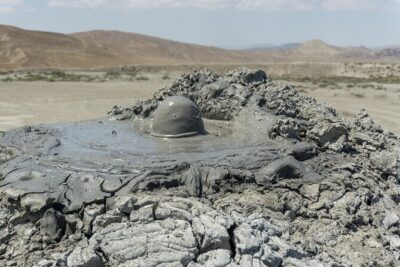
Gobustan & Mud, Fire Temple, Burning Mountain (Group & Private)
Read our review →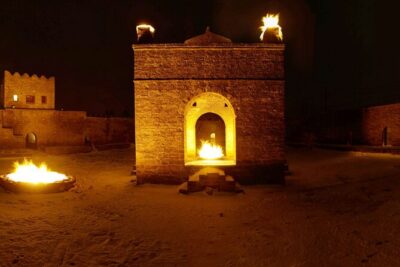
Gobustan-Mud Volcan-Fire Temple and Mountain Tour/Entrance inc
Read our review →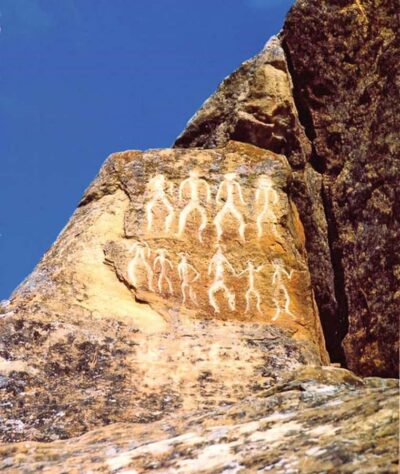
Gobustan Mud Volcanoes Temple & Entry tickets included
Read our review →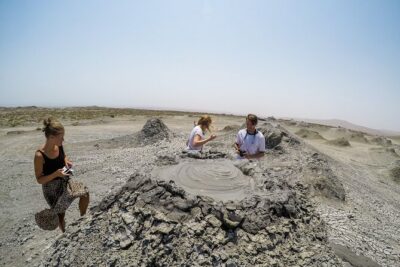
Gobustan, Mud volcanoes, Fire temple, Fire mountain PRIVATE TOUR
Read our review →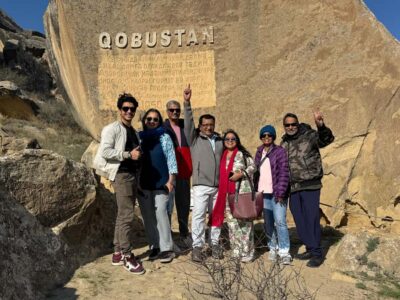
Gobustan & Mud, Fire Temple, Burning Mountain, H.A. Center
Read our review →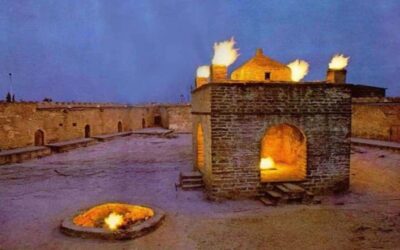
Gobustan, Mud Volcanoes, Fire Temple, & Yanar Dag Tour
Read our review →Browse the lists this tour appears in