
Review · AZERBAIJAN
Gobustan and Fire temple Tour with Polish speaking guide
Mud volcanoes and sacred flames make an unusual day out. From Baku, this $65 tour links Gobustan’s bubbling earth and ancient rock drawings with Bibiheybat Mosque, Azerbaijan’s first drilled oil well, Ateshgah Fire Temple, and Yanardagh’s hillside flame. I like the way it joins geology, archaeology, religion, and oil history in one route. I also like that hotel pickup, return transport, a Polish-speaking guide, and bottled water are included.
The main point to consider is the extra entrance cost. If tickets are not included in your selected option, you pay 30 AZN separately: 15 AZN for Gobustan’s rock art and mud volcanoes, and 15 AZN for Ateshgah and Yanardagh. The schedule also leaves little time for a full visit inside the Heydar Aliyev Center, which is used as a final photo stop instead.
Key points at a glance
- Gobustan combines mud volcanoes with prehistoric rock art, giving you two very different sights in the same region.
- The Polish-speaking guide adds useful context, especially when the tour moves between ancient rituals, oil production, and modern Azerbaijan.
- Bibiheybat Mosque provides a calm architectural stop between the open terrain of Gobustan and the fire sites of Absheron.
- The world’s first drilled oil well connects the day to Azerbaijan’s oil boom, a major part of the country’s modern story.
- Ateshgah and Yanardagh show two forms of sacred fire, one shaped by human worship and the other by natural gas.
- The $65 price includes transport and hotel pickup, but entrance fees may add 30 AZN unless you choose the ticket-inclusive option.
Why this route works as a Baku day trip
Many tours around Baku focus on one theme. This one does not. It moves from prehistoric carvings to Islamic architecture, industrial history, Zoroastrian worship, and a natural gas fire. That broad mix is the main reason I would consider it for a first visit to Azerbaijan.
You are not simply being driven from one photo stop to another. The route gives your guide several stories to connect. Gobustan shows how early people recorded animals, rituals, and daily life. The oil well explains how Azerbaijan became known for petroleum. Ateshgah shows the pull of fire as a religious symbol, while Yanardagh shows the same element in its raw natural form.
The trade-off is pace. Because the tour covers several places from Baku, you should expect a full day of movement and short visits at some stops. If you prefer one museum or archaeological site explored slowly, this may feel busy. If you want a wide look at the area around Baku, the range is a real strength.
A few more temple visits around Baku worth a look
- Baku: Gobustan, Volcanoes, Fire Temple and Yanardag Day Trip
★ 4.7 · 433 reviews - Gobustan & Mud, Fire Temple, Burning Mountain (Group & Private)
★ 4.5 · 418 reviews - Gobustan-Mud Volcan-Fire Temple and Mountain Tour/Entrance inc
★ 5.0 · 267 reviews
Gobustan’s mud volcanoes: bubbling earth outside Baku
Gobustan’s mud volcanoes are the day’s strangest sight. Instead of red-hot lava, these low volcanic formations push cool mud and gases toward the surface. You can see the mud bubble and ooze, creating a rough, unusual setting that feels far removed from the city.
The appeal is visual and geological. The volcanoes are not polished or arranged for visitors. Their appeal comes from watching the earth behave in a slow, messy, natural way. I like this stop because it gives the tour a physical start. You are not only hearing about Azerbaijan’s past. You are seeing a rare natural process.
Conditions at a mud volcano site can be basic. The supplied information does not specify walking distances, surfaces, or facilities, so wear practical shoes and be ready for outdoor exposure. The guide can help explain what you are looking at, which matters here because the formations may seem simple at first glance.
This is also a place where expectations matter. Do not picture a dramatic eruption. The action is bubbling and oozing, not explosive. The reward is the oddness of the scene and the chance to see a geological feature that has shaped the identity of Gobustan.
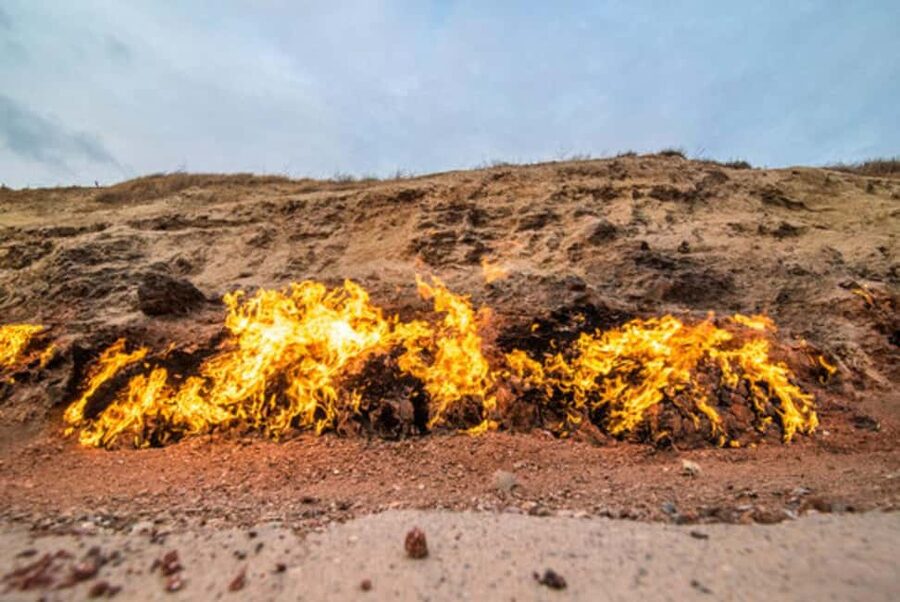
Gobustan rock art and the record of early life
The rock art gives the tour its strongest link to ancient people. Petroglyphs carved into stone show scenes and symbols from thousands of years ago, offering clues about the lives of early settlers in the region.
I find rock art most rewarding when the guide explains what you are seeing. A collection of carved figures can blur together without context. A Polish-speaking guide can help you follow the meaning and importance of the images without relying on scattered signs or a translation app.
The value here is not just age. These carvings are a direct record made by people who lived in this area long before modern cities, roads, or written accounts. They can make the past feel less abstract. You are looking at marks left on the stone itself, not a reconstruction in a museum.
Gobustan’s rock art and mud volcanoes are treated as one paid section of the tour, with an entrance cost of 15 AZN if tickets are not included. Check the option you book so the total price does not surprise you.
Bibiheybat Mosque and a change of mood
Bibiheybat Mosque brings a clear change after Gobustan. The open, rough terrain gives way to a carefully designed religious building with a strong connection to Azerbaijan’s cultural life.
The stop is useful even if you are not planning a religious visit. The mosque adds architecture and local tradition to a day otherwise dominated by rocks, mud, and fire. You can admire the design, learn why the site matters, and see a more settled side of the area around Baku.
As with any mosque visit, dress and behavior should be respectful. The tour information does not give specific clothing rules or visiting hours, so your guide is the best source for practical instructions on arrival. Since the exact time at the mosque is not stated, think of it as an important stop on a broad route rather than a long architectural study.
I like its place in the schedule. It breaks up the outdoor stops and gives you a chance to shift your attention from prehistoric markings to a living religious setting.
Same place, a different morning at the gates:
- Baku:Gobustan Mud Volcanoes Temple & Entry tickets included
★ 4.8 · 178 reviews - Gobustan, Mud volcanoes, Fire temple, Fire mountain PRIVATE TOUR
★ 5.0 · 47 reviews - Gobustan & Mud, Fire Temple, Burning Mountain, H.A. Center
★ 4.6 · 46 reviews - Ateshgah Fire temple and Burning mountain tour
★ 4.5 · 42 reviews
Azerbaijan’s first drilled oil well
The oil well stop explains why petroleum is so closely tied to Azerbaijan’s identity. The site is described as the world’s first drilled oil well, making it more than an old industrial curiosity. It points to the beginning of a major change in how oil could be extracted and used.
This is where a guide’s commentary can make a large difference. A wellhead alone may not look dramatic. Its importance comes from the story around it: the growth of oil production and the transformation of Azerbaijan during the oil boom.
I appreciate that this stop is included because it keeps the day from becoming a simple list of ancient and religious sites. Azerbaijan’s story is also industrial and modern. The oil well gives you a way to understand that side of the country.
Do not expect an oil museum or a long technical presentation unless your guide provides one. The information supplied describes a stop where you learn about the well and its role in oil history. Treat it as a concise historical visit between larger attractions.
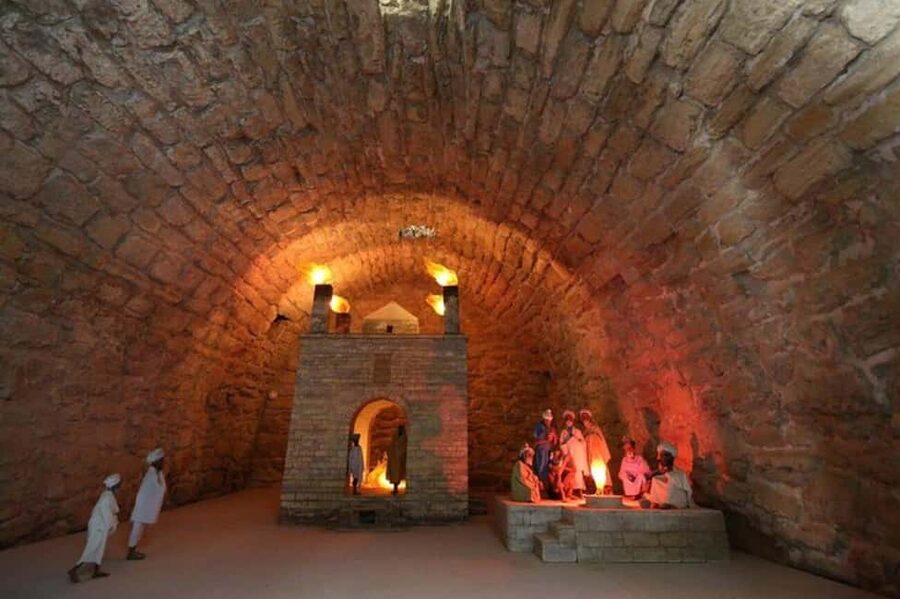
Ateshgah, the Fire Temple of Baku
Ateshgah is one of the tour’s central stops. The temple is associated with Zoroastrians, Hindus, and Sikhs, and its fame comes from natural gas-fueled flames. The site brings together religion, trade routes, and Azerbaijan’s long relationship with fire.
The temple’s importance is best understood through the contrast between the building and the natural force that inspired it. Human beings created a sacred setting around flames that came from the ground. That link gives Ateshgah more meaning than a standard historic building visit.
Your guide’s explanation is especially useful here. The site has several layers of religious association, and a short visit can otherwise leave you with only the image of a courtyard and fire. Listen for how different communities used or honored the site, and how natural gas shaped the local spiritual tradition.
Ateshgah is paired with Yanardagh for entrance purposes. If tickets are not included, the combined charge for Ateshgah and Yanardagh is 15 AZN. That is reasonable for two major Absheron sights, but remember that the Gobustan ticket is separate.
Yanardagh and the fire that does not go out
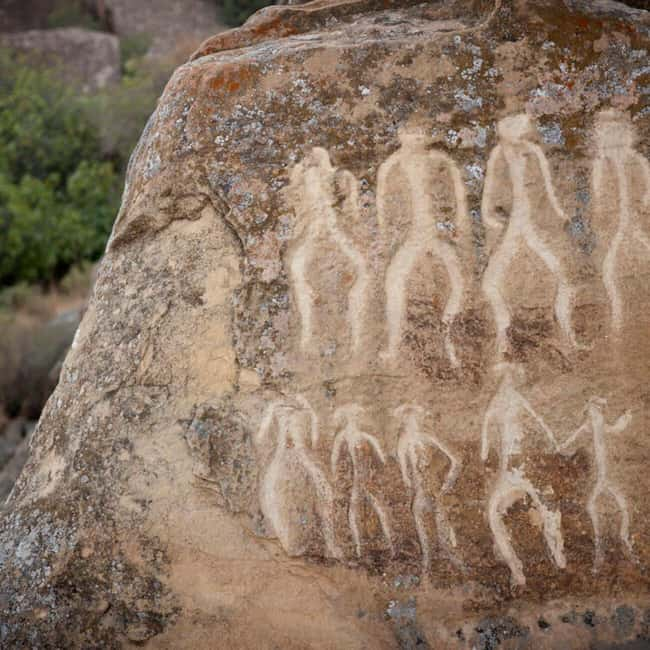
Yanardagh, or Burning Mountain, is a natural gas fire burning continuously on a hillside. It is a simple sight with strong visual impact: a flame rising from the ground, fed by gas beneath the surface.
The site works well after Ateshgah because you can compare a sacred temple built around fire with a natural flame that needs no temple at all. The contrast helps explain why fire has held such power in this region for centuries.
Yanardagh is likely to be a short stop, since the attraction centers on viewing the hillside fire and hearing its story. That is not a criticism. Some sights are best experienced without a long visit, and this one gives the day a memorable final natural feature.
The practical limitation is that the tour information does not provide exact timing, seating, or facilities. Keep your schedule flexible and follow the guide’s instructions. You may find the stop more atmospheric at certain times of day, but no lighting or timing details are provided, so do not book based on a promised sunset view.
The Heydar Aliyev Center photo stop
The Heydar Aliyev Center is the final point, but the group does not enter the building because of time limits. Instead, you visit it as a sightseeing and photo stop.
That distinction matters. The center is known for its striking modern design, so even an exterior visit gives you a chance to photograph one of Baku’s most recognizable buildings. But if you want to see the exhibitions or interior spaces, this tour will not provide that.
I see the photo stop as a pleasant finish rather than a main reason to book. It adds a modern architectural note after a day focused on older sites, natural gas, and early oil production. Just keep your expectations clear: this is not an interior museum visit.
What the $65 price really covers
At $65 per person, the tour offers good value if you want transport between widely separated sites. Hotel pickup and drop-off, roundtrip transportation, a Polish-speaking guide, and a bottle of water are included. Arranging all these stops independently could take more planning, especially if you do not speak Azerbaijani or Russian.
The guide is the most important part of the price. These sites are spread across different subjects, and the day makes more sense when someone explains the links between them. A Polish-speaking guide is particularly useful if you prefer detailed interpretation in Polish rather than managing an English-language tour.
The entrance fees need close attention. If your selected option does not include tickets, add 30 AZN: 15 AZN for Gobustan’s rock art and mud volcanoes, plus 15 AZN for Ateshgah and Yanardagh. Bibiheybat Mosque, the oil well stop, and the Heydar Aliyev Center photo stop are not identified as separate paid entries in the supplied details.
The price is strongest for visitors who value convenience. It is less compelling if you plan to visit only one or two sites and are comfortable arranging your own transport. For a wide-ranging day with a Polish guide, the included transfers make the cost easier to justify.
Who will enjoy this tour most
I would recommend this tour to you if you want a broad introduction to the Baku region. It suits people who enjoy unusual geology, ancient carvings, sacred sites, architecture, and industrial history in equal measure.
It is also a strong match for Polish-speaking visitors who want historical explanations in Polish. The one available rating is a perfect 5 out of 5, with a direct recommendation, which supports the idea that the overall format works well for guests looking for a guided day rather than independent exploration.
Families and first-time visitors may like the simple structure: pickup, transport, guided stops, and return to your hotel or a central location. The day still includes outdoor sites, so plan for changing conditions and practical footwear.
You may want another option if you dislike group schedules, want long photography sessions, or prefer to spend hours inside a single museum. The Heydar Aliyev Center is only visited from outside, and the broad route means no one attraction receives the whole day.
Practical booking advice
Choose the ticket-inclusive option if you prefer to know the full cost before departure. If you select the option without tickets, carry enough money for the 30 AZN total entrance charge.
Confirm your pickup details carefully. Pickup and drop-off are available at your hotel or a central location, which is convenient, but the exact meeting arrangement depends on your booking. Transportation is described as comfortable, and bottled water is included.
The tour permits reservation with payment later, and cancellation is available up to 24 hours in advance for a full refund. That flexibility helps if your Baku schedule may change.
Should you book it?
Book this tour if you want one well-organized day that explains several sides of Azerbaijan: prehistoric Gobustan, Islamic architecture, oil production, sacred fire, natural gas, and modern Baku. The Polish-speaking guide and included transportation are the strongest reasons to choose it.
Skip it if your priority is slow travel or a full interior visit to the Heydar Aliyev Center. Also check the ticket option before paying. With the extra entrance fees added, the final cost is higher than $65, but the combination of transport and a Polish guide still makes it a practical choice for a first look beyond central Baku.
FAQ
What does the tour cost?
The listed price is $65 per person. Entrance fees may be extra unless you select an option that includes tickets.
Are entrance tickets included?
They are not necessarily included. If you do not select the ticket-inclusive option, the entrance fees total 30 AZN: 15 AZN for Gobustan rock art and mud volcanoes, and 15 AZN for Ateshgah and Yanardagh.
What language does the guide speak?
The tour is offered with a Polish-speaking guide. The included details also describe the guide service as multilingual.
Is hotel pickup included?
Yes. Hotel pickup and drop-off are included. Pickup can also be arranged from a central location.
What transportation is provided?
Roundtrip transportation in comfortable transport is included in the tour price.
Is water provided?
Yes. Each participant receives a bottle of water.
Does the tour enter the Heydar Aliyev Center?
No. The Heydar Aliyev Center is the final sightseeing and photo stop. Groups do not enter the building because of time limitations.
Can I cancel the tour?
Yes. You can cancel up to 24 hours in advance for a full refund. You can also reserve now and pay later, which keeps your plans flexible.
Just added around Baku
- Gobustan, Mud volcanoes, Fire temple, Fire mountain GROUP TOUR★ 4.5 · 19 reviews
- Qobustan rock arts, Mud Volcanoes, Fire temple Ateshgah, Yanardag★ 5.0 · 30 reviews
- Ateshgah Fire Temple & Yanar Dag mountain (Group & Private)★ 4.5 · 7 reviews
- Gobustan, Mud volcanoes, Fire temple, Fire mountain PRIVATE TOUR★ 5.0 · 47 reviews
- Baku: Gobustan, Mud Volcano, Fire Temple & Burning Mountain★ 4.0 · 9 reviews
- Fire Temple and Fire Mountain Tour★ 5.0 · 22 reviews
- Gobustan, Mud volcanoes, Fire temple, Fire mountain PRIVATE TOUR★ 5.0 · 28 reviews
- Private Absheron Peninsula Atesgah Temple & Fire Mountain★ 5.0 · 4 reviews
Azerbaijan Temple Tours, compared.
Gobustan, Volcanoes, Fire Temple and Yanardag Day Trip
Read our review →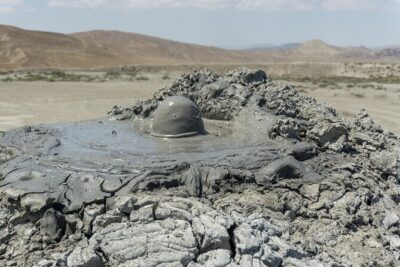
Gobustan & Mud, Fire Temple, Burning Mountain (Group & Private)
Read our review →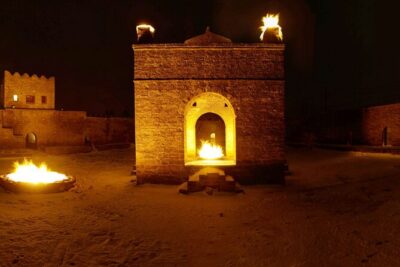
Gobustan-Mud Volcan-Fire Temple and Mountain Tour/Entrance inc
Read our review →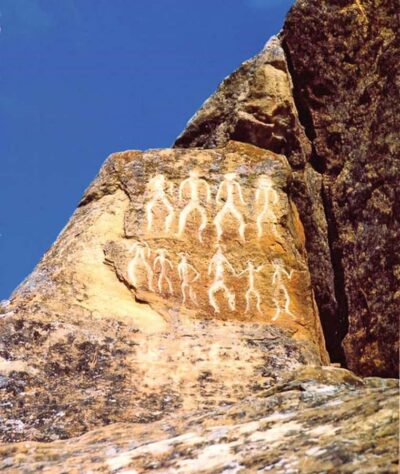
Gobustan Mud Volcanoes Temple & Entry tickets included
Read our review →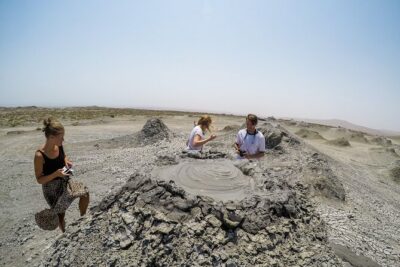
Gobustan, Mud volcanoes, Fire temple, Fire mountain PRIVATE TOUR
Read our review →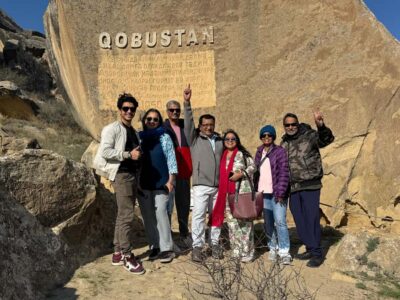
Gobustan & Mud, Fire Temple, Burning Mountain, H.A. Center
Read our review →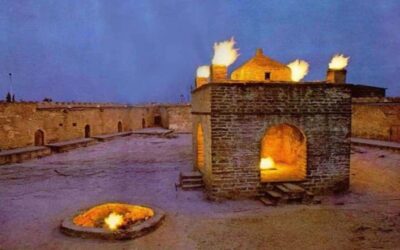
Gobustan, Mud Volcanoes, Fire Temple, & Yanar Dag Tour
Read our review →Browse the lists this tour appears in