
Review · KATHMANDU
Kathmandu Spiritual Sites: Bodhnath & Pashupatinath Tour
Sacred Kathmandu comes alive at dusk. This four-hour tour links Boudhanath Stupa and Pashupatinath Temple, two of the city’s most important religious sites, while adding public transport, local streets, prayer wheels, sadhus, riverside cremation ghats, and the evening Aarati ceremony. I especially like the small maximum of 12 people and the chance to see these places with context instead of simply taking photographs and moving on.
I also like the way the tour joins Buddhist and Hindu traditions in one afternoon. The public transport ride adds a slice of ordinary Kathmandu life, and the sunset timing puts you at Pashupatinath when the Bagmati River fills with people gathering for prayer. The main drawback is that the outing involves about two kilometers of walking, crowded religious spaces, and an emotionally serious cremation area. It is not a quiet temple stroll.
At $60.56 per person, the tour is good value if you want a guided introduction rather than arranging transport and entrance arrangements yourself. The price includes transportation between the meeting point and the sights, entrance fees, an English-speaking Nepali guide, and the evening Aarati offering of lights. It begins at 3:00 p.m. outside Hotel Marshyangdi in Thamel and ends back at the same meeting point.
Key points to know before booking
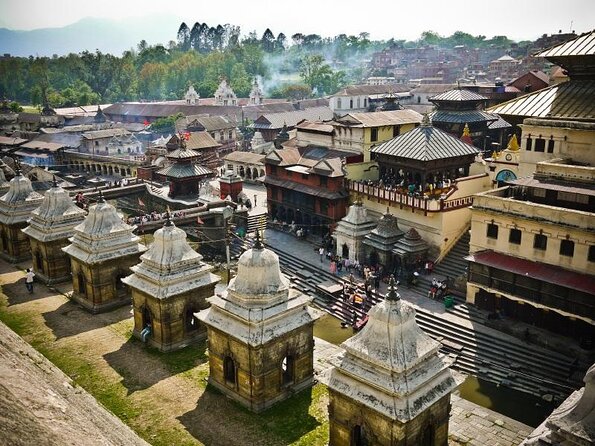
- Two major religious sites in one afternoon: Visit Boudhanath, a center of Tibetan Buddhism, then Pashupatinath, one of Nepal’s most important Hindu sites.
- The sunset Aarati is the emotional high point: Join the crowd beside the Bagmati River as lamps and prayers are offered to Lord Pashupatinath.
- Public transport is part of the lesson: You do not simply move between attractions in a private vehicle. You see a more ordinary side of Kathmandu.
- A guide adds real value: Guides such as Rita, Rozit, Amit, Subash, Bipin, and Ramhavi have been praised for clear explanations, patience, photography help, and keeping groups together.
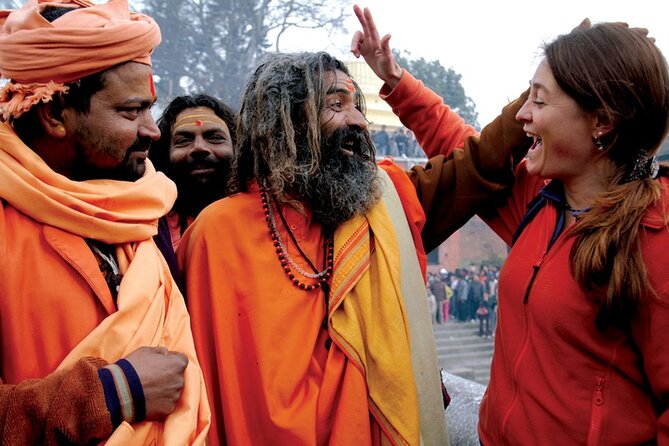
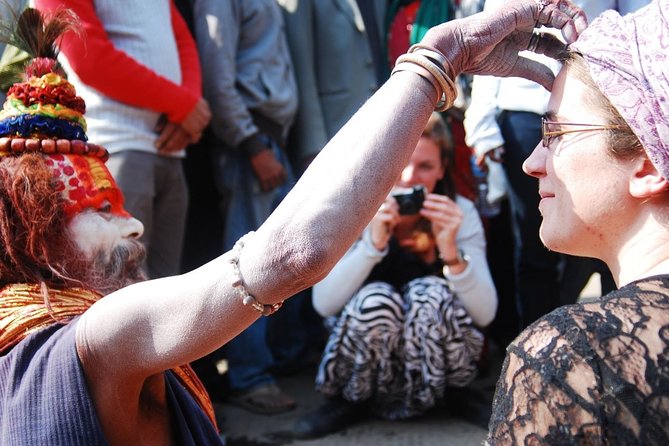
- Expect crowds and sensitive moments: Sadhus, palm reading, and cremation ghats are part of the setting, but you need to behave carefully and respectfully.
- The format suits a short Kathmandu stay: Four hours gives you a useful introduction without consuming a full day.
Why these two sites belong together
Boudhanath and Pashupatinath are not interchangeable temple stops. They show two different religious worlds that share the same city.
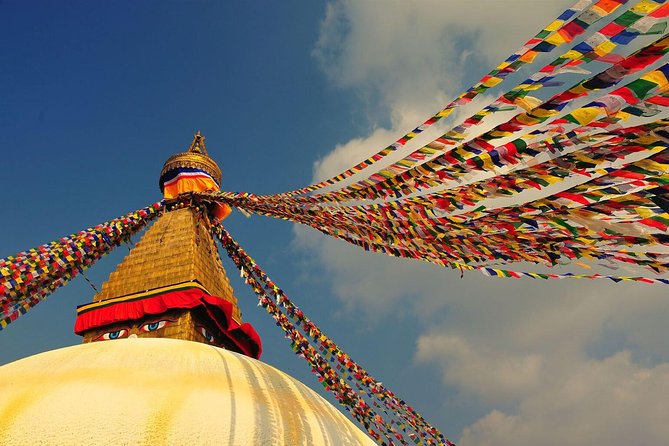
Boudhanath is a major center of Tibetan Buddhism in Nepal. Its huge white dome, gilded details, prayer wheels, butter lamps, and steady circle of worshippers create a calm rhythm. You walk around the stupa in a clockwise direction, turning prayer wheels and watching people offer prayers.
Pashupatinath is dedicated to Shiva and is one of the holiest Hindu shrines in Nepal. The complex sits along the Bagmati River, where religious devotion and death rituals are closely connected. Here, you may see sadhus in bright clothing, worshippers gathering for prayer, and cremation ceremonies taking place near the river.
I like this pairing because the guide can explain the contrast. At Boudhanath, the focus is on Buddhist prayer and repeated movement around the stupa. At Pashupatinath, the setting brings Hindu ideas about birth, death, devotion, and release into view. Without guidance, you could easily miss what you are seeing.
A few more temple visits around Kathmandu worth a look
- Kathmandu: Chandragiri Cable Car and Monkey Temple Tour
★ 4.8 · 139 reviews - From Kathmandu: 2 Stupas and Kopan Monastery Spiritual Tour
★ 4.8 · 115 reviews - Lunch with Nuns – Monastery
★ 5.0 · 75 reviews
Starting in Thamel at 3:00 p.m.
The meeting point is Hotel Marshyangdi on Chaksibari Marg in Thamel. Thamel is Kathmandu’s main tourist district, so it is a practical place to begin. The area has hotels, restaurants, shops, spas, and nightlife, making it easy to reach before the tour.
The activity starts in the afternoon and runs for about four hours. That timing matters. You visit Boudhanath while there is still enough daylight to see the stupa clearly, then reach Pashupatinath as the light softens and the evening prayers begin.
The group size can reach 12 people, though smaller groups and private arrangements are possible. A group of this size is large enough to feel social but still manageable. At Pashupatinath, stay close to your guide. The crowds can swell around the river during Aarati, and it is easy to lose sight of your group.
One past participant praised a guide named Amit for both his cultural explanations and his help with phone photography. That detail is worth noting because the best guides here do more than recite facts. They help you understand where to stand, what to watch, and how to behave.
Boudhanath: prayer wheels and a measured rhythm
The first major stop is Boudhanath Stupa, with about 1 hour and 25 minutes set aside for the visit. Entrance is included.
The stupa is one of the largest in the world and a central place of Tibetan Buddhism in Nepal. Your guide explains the meaning of the site before you join the walking circuit. You can rotate the prayer wheels along the route, offer prayers, and light a traditional butter lamp if you choose.
The walking circuit is simple, but do not rush it. Watch the local worshippers as they move around the dome. Some people walk quietly, while others pause at shrines or prayer wheels. The religious activity is not arranged for an audience, which makes the visit feel more genuine than a staged cultural show.
The optional butter lamp offering costs extra. The activity information says these offerings support local communities, so it can be a useful small contribution if you want to take part. You do not need to buy one to appreciate the site.
Your guide should also explain the symbols around the stupa and the basics of Buddhist practice. This is where the tour’s educational value begins. You will leave with more than a photograph of the famous eyes painted on the dome.
The timing is generous enough for questions and photographs, but the site may be especially active on a holiday. One account described the stupa as full of activity during a holiday visit, with picture-worthy scenes in every direction. That can be a gift for photographers, though it also means more people and less room to move at your own pace.
The public transport connection
After Boudhanath, the tour uses public transport as part of the route to Pashupatinath. Transportation costs are included from the meeting point to Boudhanath and from Pashupatinath back to the endpoint, but the ride itself is not meant to feel like a private transfer.
I see this as one of the tour’s best features. You get a glimpse of how people move around Kathmandu, rather than spending the entire outing behind a vehicle window. The ride may feel crowded or outside your comfort zone, especially if you are used to private sightseeing cars.
That is also the tradeoff. Public transport can be less predictable and less comfortable than a dedicated vehicle. If you want polished, quiet transfers, this is not the right format. If you want a more ordinary slice of city life, it adds useful texture to the afternoon.
Same place, a different morning at the gates:
- Kathmandu: Pashupatinath Temple Evening Aarati Tour
★ 5.0 · 36 reviews - Chandragiri Cable Car & Monkey Temple Tour- Private/Group
★ 5.0 · 32 reviews - Kathmandu: Pashupatinath Temple Aarti Night Tour
★ 4.8 · 29 reviews - Sacred Pashupatinath: Aarati,Cremation Rites & Boudha Stupa
★ 5.0 · 18 reviews
Walking from Boudhanath to Pashupatinath
The route includes roughly two kilometers of walking, with about 15 minutes on foot between the two sites mentioned in the schedule. Wear shoes that are comfortable on city streets and temple grounds.
This is not a strenuous trek, but the total outing is active. You will be walking, standing, moving through crowds, and keeping track of your group. Children can join, and children under six are allowed to participate free of charge, but parents should consider the late afternoon timing, the crowds, and the serious atmosphere near the cremation ghats.
The guide can make the walking more interesting by pointing out daily details along the way. Several highly praised guides, including Rita, Rozit, Subash, Bipin, and Ramhavi, were described as friendly, patient, and willing to answer questions. That personal approach matters here because the route is not just a transfer between monuments.
Pashupatinath and the Bagmati River
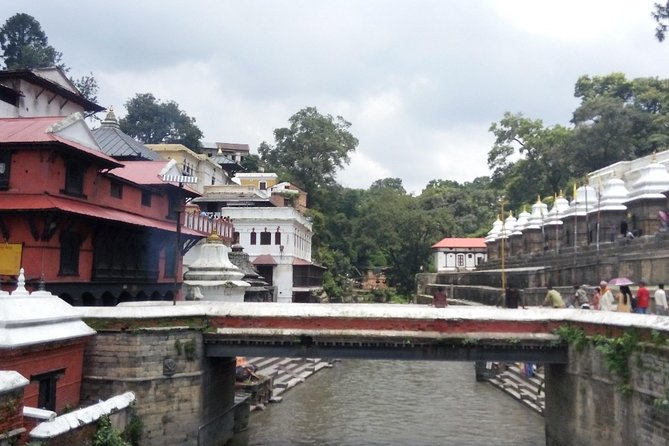
The tour allows about 2 hours and 20 minutes at Pashupatinath, making it the longer and more layered stop.
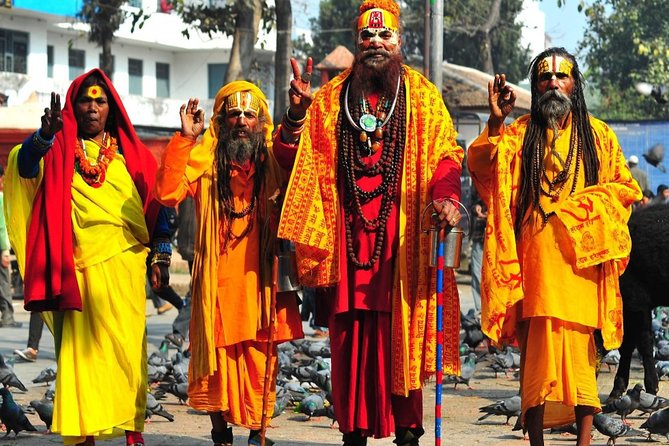
Pashupatinath is a 17th-century temple dedicated to Shiva and a UNESCO World Heritage site. Your guide explains Hindu beliefs, including the importance of the cycle of birth and death. The complex is also associated with sadhus, Hindu holy men who give up material possessions as part of their religious devotion.
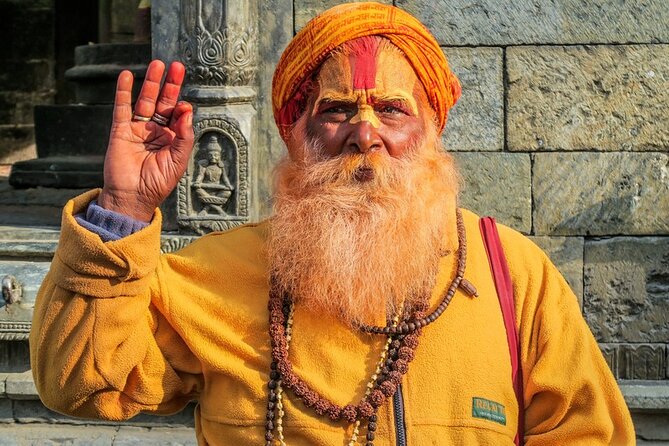
You may see sadhus in colorful clothing around the site. A local sadhu may accept an alms offering, and photographs or interaction can involve a fee. The supplied information gives a figure of about $7.50 for taking pictures or speaking with sadhus, though the exact amount can vary. Your guide can help negotiate, but you should never assume anyone is available for a photograph.
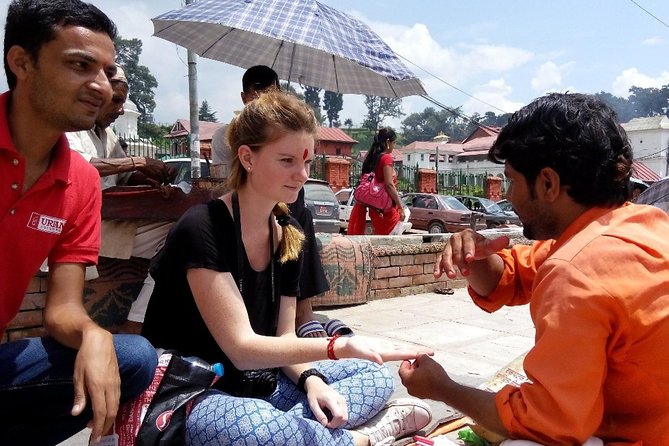
The palm-reading visit is also optional and costs extra. The stated range is about $7.50 to $9 per person. Treat it as a cultural add-on, not a required part of the tour. If palm reading does not interest you, you can spend that time paying attention to the architecture, river, and religious activity.
The Bagmati River area requires sensitivity. Cremation ceremonies take place along the river, and you may see the ghats in use. The instructions are clear: do not take photographs or watch these rituals out of respect for mourning families. This is a place to lower your camera, keep your distance, and let the guide explain the setting without turning private grief into a sightseeing display.
That balance is important. The cremation ghats are part of Pashupatinath’s religious life, but they are not a performance. I appreciate the warning because it helps you avoid the common mistake of treating every striking scene as a photo opportunity.
The Aarati ceremony at sunset
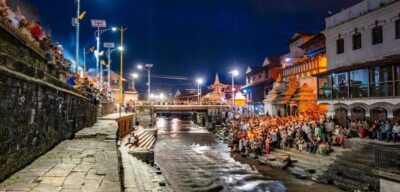
The tour reaches its most memorable point as daylight fades. Along the eastern side of Pashupatinath, people gather beside the Bagmati River for Aarati, an offering of lights to Lord Pashupatinath.
The ceremony is described as mesmerizing, and the setting explains why. Lamps, movement, music, prayer, and a large local crowd come together beside the river. You are not watching from a detached stage. You are part of a public religious gathering, so the mood can feel intense and crowded.
Stay near your guide and group. This is the moment when a small group has a real advantage. A guide who knows the area can help you keep your bearings and explain what is happening without forcing you to push through the crowd.
Ramhavi was praised for keeping the group together during a very crowded visit. That is exactly the sort of practical care you want here. A guide’s job is not only to provide religious background. It is also to help you move respectfully and safely through a dense gathering.
Do not expect a quiet, private ceremony. The value comes from seeing a living tradition with local worshippers, not from having a perfect viewing position. If you dislike crowds, the Aarati may feel overwhelming. If you are willing to stand back, listen, and follow local behavior, it can be the strongest part of the afternoon.
What the guide adds for your money
At $60.56, this is not the cheapest way to see two Kathmandu landmarks. You could possibly visit independently for less, particularly if you are comfortable arranging transportation and learning the religious context on your own.
The price becomes easier to justify because several practical costs and problems are handled for you. Entrance fees are included, public transportation between the main points is covered, and an English-speaking Nepali guide stays with you. You also get explanations of both Hinduism and Buddhism, advice about what else to see and eat in Kathmandu, and help with optional palm reading or sadhu interactions.
The guide is the deciding factor. A strong guide turns unfamiliar gestures into meaningful practice. Several guides connected with this activity, including Rita, Rozit, Amit, Subash, Bipin, and Ramhavi, have been praised for clear English, warmth, patience, photography help, and genuine care about giving people good value.
There is one reported weak point: a person once arrived at the meeting point and found no one there. That appears to be an exception against an otherwise very strong record, but it is still sensible to arrive early and confirm the meeting details in advance.
Who should book this four-hour tour?
I would choose this tour if you have limited time in Kathmandu and want a structured introduction to two major spiritual sites. It is also a good choice if you want to learn about both Hindu and Buddhist traditions without spending a full day on temples.
It suits solo visitors who want company, couples who prefer a guide, and families with older children who can manage walking and crowds. The small group limit makes it more personal than a large coach outing.
You should think twice if you want complete independence, private transport, or a quiet sightseeing experience. The public ride, walking, crowds, and cremation area make this an active and sometimes intense afternoon.
Book at least 24 hours ahead if you need the free cancellation option. A full refund is available when you cancel at least 24 hours before the start time. Lunch and dinner are not included, so plan your meal before or after the outing.
Should you book it?
Yes, if you want cultural context, local transport, and the chance to see Aarati at Pashupatinath in one efficient afternoon. The strongest reasons are the pairing of Boudhanath and Pashupatinath, the small group size, and the care shown by the best guides.
I would skip it only if you are uncomfortable around crowds, cannot walk for several hours, or prefer to explore temples without a schedule. For most people spending a short time in Kathmandu, this is a well-priced way to meet the city’s spiritual side with respect and useful guidance.
FAQ
How long does the tour last?
The tour lasts approximately four hours. It begins at 3:00 p.m. and returns to the starting meeting point.
Where does the tour start and end?
It starts at Hotel Marshyangdi on Chaksibari Marg in Thamel, Kathmandu. The activity ends back at the meeting point.
Which sites are included?
The tour visits Boudhanath Stupa and Pashupatinath Temple, both UNESCO World Heritage sites.
Is transportation included?
Transportation costs from the meeting point to Boudhanath and from Pashupatinath to the endpoint are included. The tour uses public transport for a local experience.
Are the palm reader, butter lamps, and sadhu interactions included?
No. Palm-reader fees, alms for sadhus and monks, and optional butter lamp offerings are extra. Palm reading is listed at approximately $7.50 to $9 per person, while taking pictures or interacting with sadhus may cost about $7.50.
Can children join the tour?
Yes. The tour is child-friendly, and children under six may join free of charge. The activity includes walking, crowds, and a visit near cremation ghats, so parents should consider whether the setting suits their child.
Just added around Kathmandu
- Sacred Pashupatinath: Aarati,Cremation Rites & Boudha Stupa★ 5.0 · 18 reviews
- Pashupatinath: Evening tour of temple and Aarati ceremony★ 5.0 · 3 reviews
- Kathmandu: Pashupatinath Temple Evening Aarati Tour★ 5.0 · 36 reviews
- Kathmandu: Chandragiri Cable Car and Monkey Temple Tour★ 5.0 · 9 reviews
- Kathmandu: Pashupatinath Temple Evening Aarati Tour★ 4.7 · 11 reviews
- Kathmandu: Guided Walking Tour with Monkey Temple★ 5.0 · 18 reviews
- Kathmandu: Pashupatinath Temple Aarti Night Tour★ 4.8 · 29 reviews
- Pokhara: Pagoda, Waterfall & Cave – Private Short Trip★ 3.9 · 3 reviews
Kathmandu Temple Tours, compared.
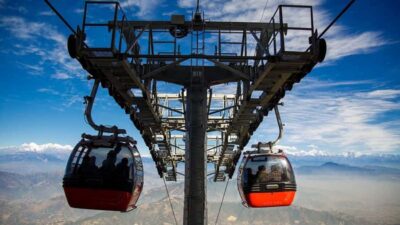
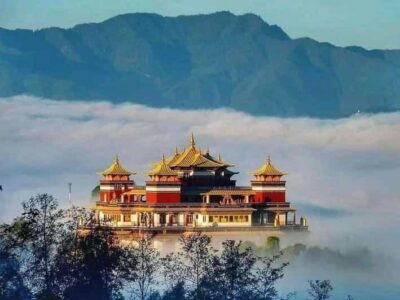
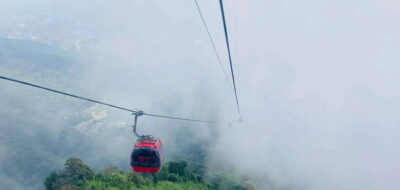
Chandragiri Cable Car & Monkey Temple Tour- Private/Group
Read our review →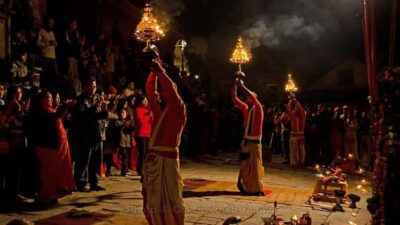
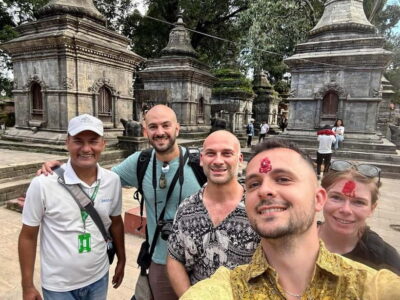
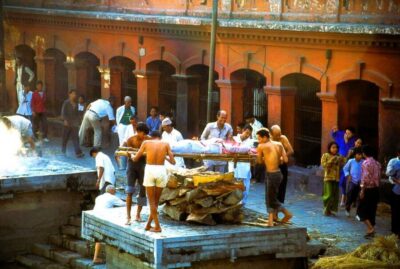
Sacred Pashupatinath: Aarati,Cremation Rites & Boudha Stupa
Read our review →Browse the lists this tour appears in