
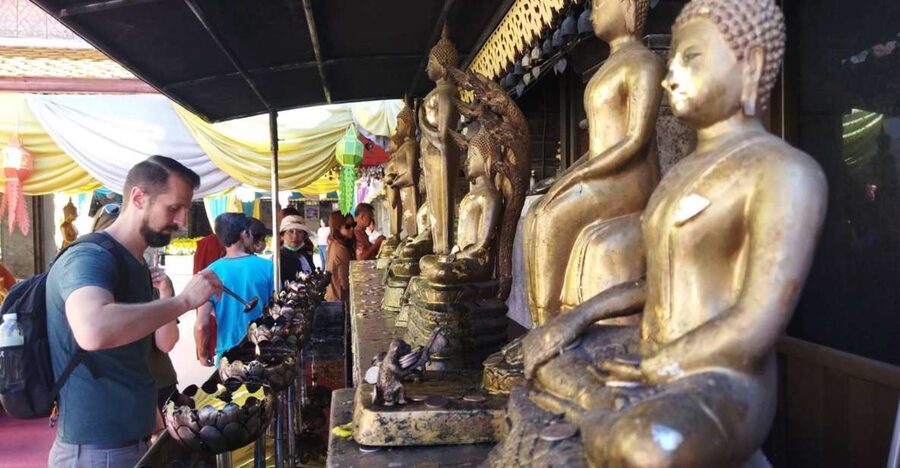
Review · DOI SUTHEP
Chiang Mai: Wat Pha Lat & Wat Phra That Doi Suthep Tour
The mountain temples feel far from Chiang Mai. I like the contrast between jungle-framed Wat Pha Lat and the glowing gold pagoda at Wat Phra That Doi Suthep, plus the cool evening timing and small-group transport. One consideration: you will walk and stand quite a bit, including 306 steps at Doi Suthep, and the tour does not use the Monk’s Trail.
I also like the human touch. Guides such as Tomtam, Ponpon, Art, Mui, and Phon have been praised for explaining Buddhist customs, helping with temple rituals, and taking photos. At roughly $24 per person, with transport, entry tickets, water, and an English-speaking guide included, this is a strong-value introduction to Chiang Mai’s mountain temples.
Key points to know before you book
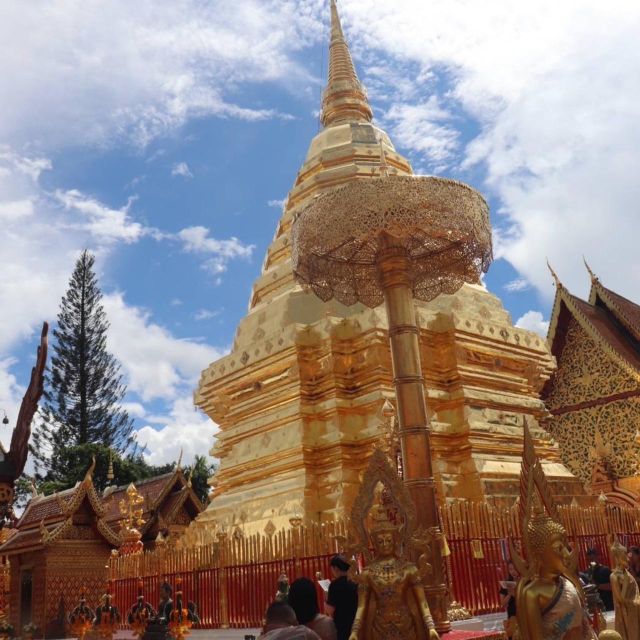
- Wat Pha Lat comes first, a quiet temple reached in a forested mountain setting with Thai and Burmese design details.
- Doi Suthep is best near sunset, when the city view changes from daylight to evening and the pagoda begins to glow.
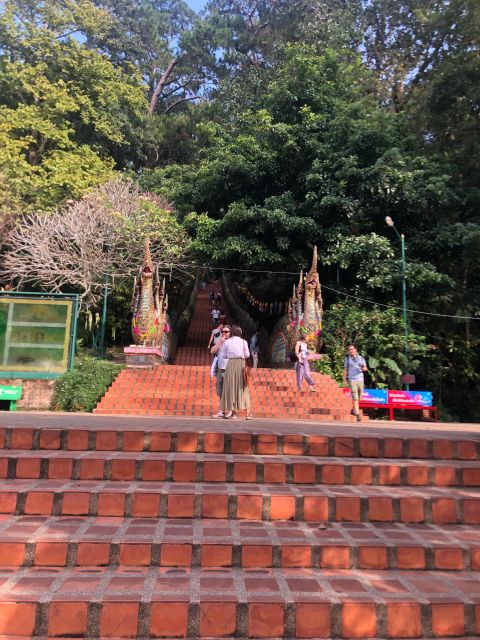
- The 306-step climb is real, though a cable car is available for 20 Baht if you prefer not to use the stairs.
- Guides add real value, especially when explaining Buddhist customs, blessings, meditation, and temple etiquette.
- The tour lasts about four and a half hours, usually running from the late afternoon until around 8:00 or 8:30 p.m.
- Dress modestly, with arms and legs covered. Short skirts and sleeveless shirts are not allowed.
Why this evening temple tour works so well
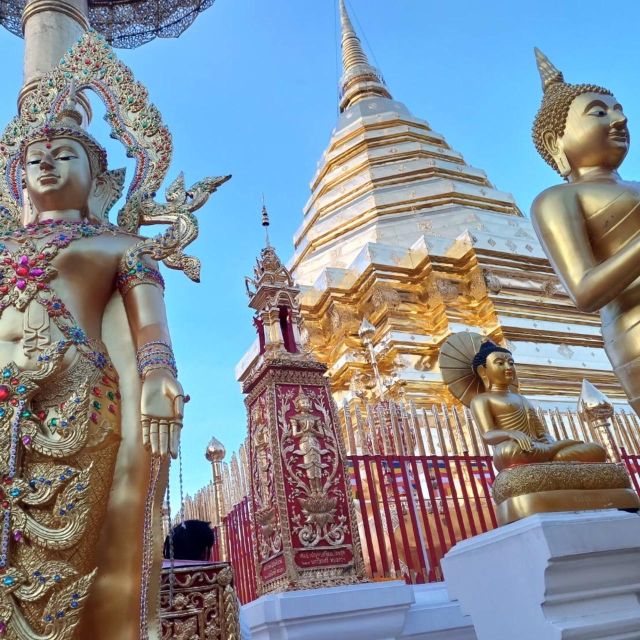
Chiang Mai’s most famous mountain temple is easy to reach by car, but seeing it well is less simple. You need transport up the winding road, a good time for the city view, and enough cultural context to understand what you are looking at. This tour handles those pieces in one half-day outing.
The timing is its biggest strength. Pickup normally falls between 4:00 and 4:30 p.m., with meeting-point pickup around 3:50 to 4:00 p.m. You visit the quieter Wat Pha Lat first, then continue to Doi Suthep as the afternoon light softens. By the time you reach the upper temple, Chiang Mai may be shifting into its evening glow.
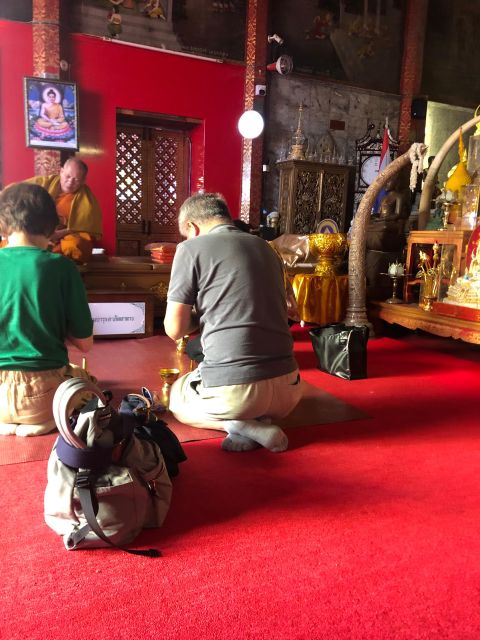
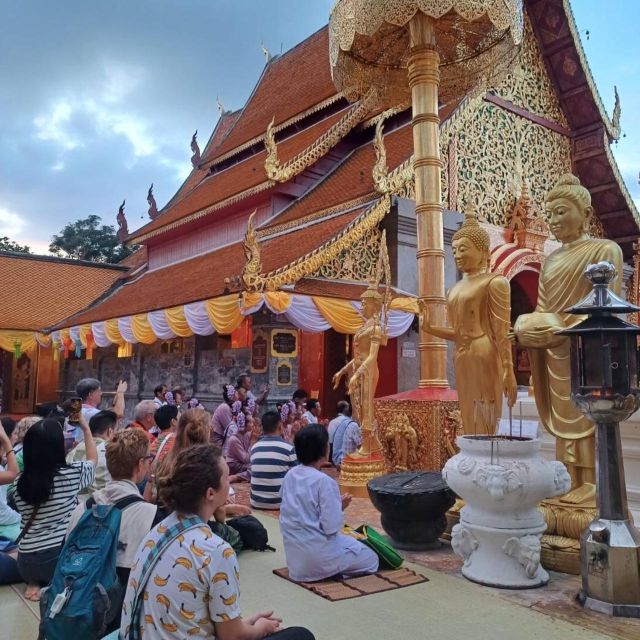
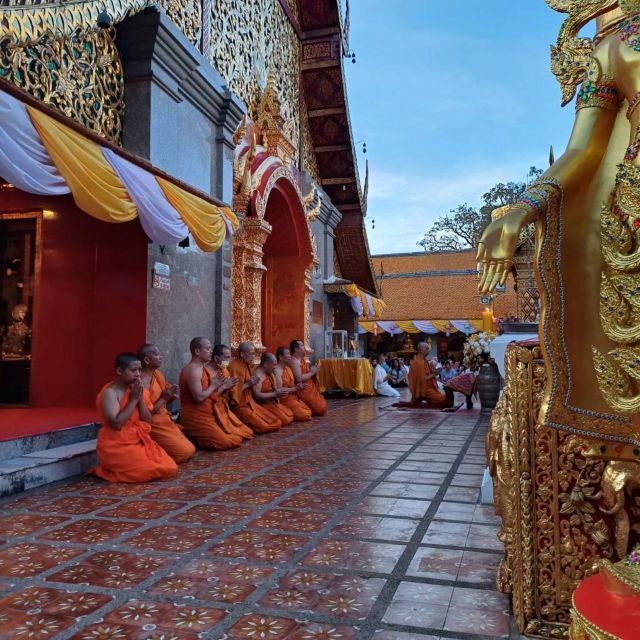
That change in light matters. Wat Pha Lat suits the stillness of late afternoon, while Doi Suthep becomes especially atmospheric as its golden pagoda and temple buildings light up. You may also hear monks chanting or praying, which adds a living religious setting rather than a simple sightseeing stop.
The tour is available as a private experience or in a small group. That gives you a better chance to ask questions than you would have on a large coach trip. It also makes the schedule easier to adjust, since the operator notes that timing is flexible.
More Doi Suthep Temple Tours in Chiang Mai:
- Chiang Mai: Doi Suthep and Wat Umong Enchanting Evening Tour
★ 4.6 · 1,811 reviews - Chiang Mai: Doi Suthep, Wat Umong, and Pha Lat Sunrise Tour
★ 4.7 · 1,425 reviews - Wat Phra That Doi Suthep spiritual Sunrise Tour with an Ex-monk
★ 5.0 · 798 reviews
Wat Pha Lat: a quiet first stop in the forest
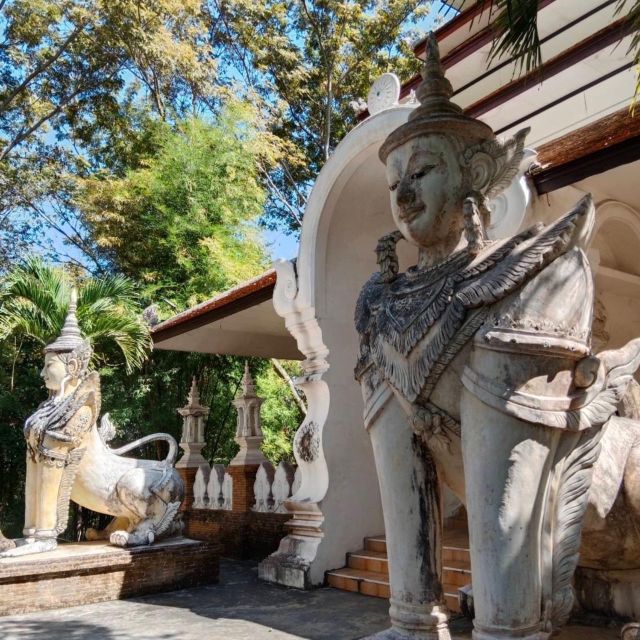
Wat Pha Lat is the more peaceful and unusual of the two temples. It sits among trees and mountain greenery, with waterfalls and the sound of running water helping create a calm mood. The setting feels removed from the traffic and city noise below.
The temple’s design mixes Thai and Burmese details. That combination gives you something different from the polished gold and formal stairway at Doi Suthep. Here, the appeal comes from the relationship between the buildings and the forest around them.
Your guide leads you through the site and explains what you are seeing before giving you time to look around. That balance is useful. You get context without having every minute filled with narration.
This stop is also a good reason to choose a guided tour instead of arranging a quick taxi visit on your own. Wat Pha Lat is not simply a monument to photograph. Its setting, religious purpose, and visual details make more sense when someone explains the customs and symbols.
The supplied information describes this as the hidden or secret temple, but keep your expectations sensible. It is still a recognized stop on a popular Chiang Mai excursion. The special part is its wooded mountain setting and quieter feel, not total solitude.
You should wear proper shoes here. The walk is not described as a strenuous trail, but you will be moving around an uneven temple setting and later tackling the steps at Doi Suthep. Sandals may be less comfortable than sturdy walking shoes.
The road to Doi Suthep and the 306-step climb
From Wat Pha Lat, you continue uphill by air-conditioned vehicle to Wat Phra That Doi Suthep. The ride saves you from arranging separate transport, and the cool van is welcome after time outside.
The mountain road is curvy. One visitor specifically noted the bends, while also praising the driver’s care and skill. If you get carsick, sit where you normally feel most comfortable and bring anything you usually use for winding roads.
At the main temple, you face the famous stairway of 306 steps. The climb is part of the character of the visit, but it is not a test you must pass. A cable car is available for 20 Baht, though that small fee is not included in the tour price.
You should think about the stairs before booking. The tour is not suitable for wheelchair users, and there is a fair amount of walking and standing. If the climb feels too much, the cable car can reduce the effort, but the temple visit still requires time on your feet.
The stairway leads to the temple grounds and the central golden pagoda. Reaching the top gives you a sense of arrival, especially after the quiet first stop. The physical climb also makes the temple feel less like a quick photo stop and more like a place you have intentionally reached.
Wat Phra That Doi Suthep at golden hour
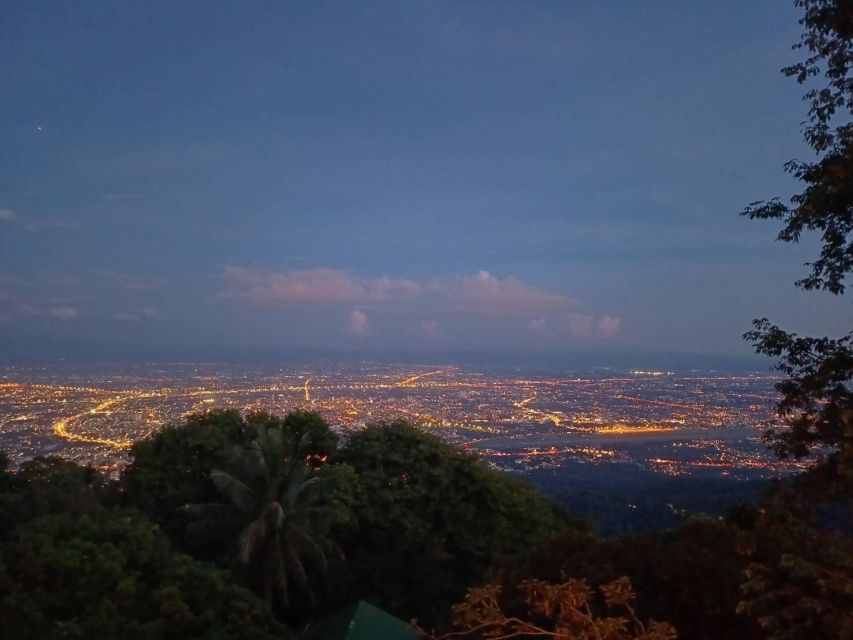
Wat Phra That Doi Suthep is one of northern Thailand’s most important Buddhist temples. The tour explains that the 14th-century golden pagoda contains a relic identified as part of Buddha’s shoulder bone, giving the site a religious importance beyond its impressive appearance.
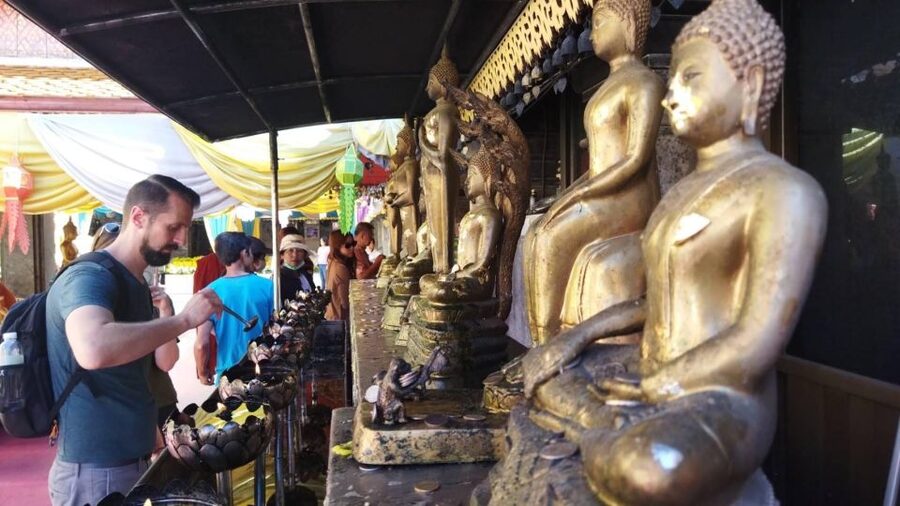
This is the larger and more formal temple visit. You have time to walk around the grounds, see the gold pagoda, take in the city view, and listen to your guide explain Buddhist traditions. Guides have also helped visitors understand how to take part respectfully in rituals, meditation, and blessings.
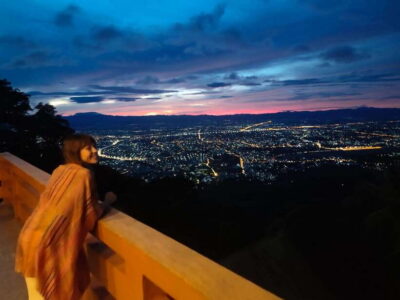
The timing is particularly good for photography. In daylight, you can see the full view toward Chiang Mai. As the sun drops, the city begins to change color, and the temple’s lights become more noticeable. Several people have described the pagoda lit at night as one of the best parts of the experience.
The evening setting can also bring a more reflective mood. You may hear monks in prayer or chanting, depending on the timing of the visit. The tour cannot promise a specific ceremony, but the schedule is designed to reach Doi Suthep during the late afternoon and evening period.
Your guide may point out where to stand for photos or offer to take pictures. This was repeatedly praised, especially by solo visitors and couples. That service is small but useful because temple visits often leave you with plenty of scenery and very few good pictures of yourself in it.
A few more temple visits around Chiang Mai worth a look
- Chiang Mai: Chiang Rai Temples, Karen Tribe and Hot Springs
★ 4.7 · 5,401 reviews - Chiang Rai White Temple and Blue Temple Day Tour
★ 4.6 · 3,366 reviews - Chiang Mai: White, Red/Black & Blue Temples Tour with Lunch
★ 4.2 · 2,017 reviews - Chiang Mai: 3 Hour Old City and Temples Guided Walking Tour
★ 4.6 · 1,568 reviews
The guides are a major part of the value
The strongest praise has gone to the guides, not simply to the temples. Names that appear often include Tomtam, Ponpon, Art, Mui, Toon, Phon, and Bird. Their styles differ, but the pattern is clear: visitors value guides who explain rather than hurry people along.
Some guides have personal experience with monastic life. Ponpon and Phon were described as former monks, which can add useful insight into prayer, blessings, Buddhist practice, and temple manners. That does not turn the outing into a formal religious lesson, but it can make the visit feel more personal and respectful.
Several guides have also helped with rituals. They may explain how to participate, provide guidance around customs, or help you understand what is happening during a blessing. You should still follow your guide’s instructions and remember that these are active places of worship, not staged performances.
The photo help is another practical benefit. Guides have taken pictures for solo visitors, couples, and families, often showing people the best viewpoints. That can save you from relying on strangers or balancing your phone on a wall.
The best guide experience will depend on who is assigned on your date. Names and individual styles can vary. Still, the consistently strong feedback suggests that the operator’s guide team is central to the tour’s appeal.
What the $24 price really includes
At about $24 per person, the tour offers good value if you want both mountain temples in one evening. The price includes air-conditioned transport, an English-speaking guide, entry tickets, and drinking water. Hotel pickup and drop-off are included when you select that option.
You can also choose a meeting point at Pharmart C Drugstore in Chiang Mai. The stated waiting window is approximately 3:50 to 4:15 p.m., though the practical pickup information gives a narrower meeting-point period of around 3:50 to 4:00 p.m. Confirm the exact time sent to you and provide a WhatsApp or Thai phone number so the operator can contact you.
Hotel pickup is available within a 2.5-kilometer radius of downtown, Thaphae Gate, and the Old City Wall. An extra fee applies if your hotel is farther away. That cost can affect the final value, so check your location before assuming the advertised price covers pickup.
Compared with arranging a private car, separate temple admissions, and a guide, the package is economical. You also avoid negotiating mountain transport and trying to time your arrival for sunset.
The price does not include personal expenses or the 20 Baht cable car. Those are small costs, but you should know about them in advance. The tour usually returns you to Chiang Mai around 8:00 to 8:30 p.m., so you still have the rest of the evening for dinner.
Clothing, walking, and temple manners
Temple dress is not a minor detail here. Wear long pants or another garment that covers your legs, along with a top covering your shoulders and arms. Short skirts and sleeveless shirts are not allowed.
Choose comfortable shoes. You will walk around both sites, climb or bypass the Doi Suthep stairway, and spend time standing. The tour is not suitable for wheelchair users, and anyone with mobility concerns should consider the amount of walking before reserving.
Remember that Wat Pha Lat and Doi Suthep are places of worship. Keep your voice low during prayers, follow signs and guide instructions, and dress with respect. If a blessing or ritual is taking place, observe first and participate only as instructed.
Children aged one to three can join free without their own seat. The parent must hold the child on the same seat, so this arrangement may not suit every family. The available information does not provide a separate child seat option.
The tour does not walk along the Monk’s Trail. If you specifically want a forest hike, this is not that experience. You are visiting Wat Pha Lat by vehicle and walking around the temple area, then continuing by vehicle to Doi Suthep.
Who should book this tour?
I would recommend it to first-time visitors who want Chiang Mai’s mountain temples without spending a full day away from the city. It suits couples, solo visitors, and small groups who value an English-speaking guide and a comfortable ride.
It is especially good for anyone interested in Buddhist culture rather than architecture alone. The explanations about customs, blessings, monastic life, and ritual behavior can turn a beautiful temple visit into a more meaningful one.
Solo visitors also benefit from the photo help and small-group format. Couples may appreciate the sunset timing and the chance to see the city lights come on. Families with very young children should check the shared-seat arrangement carefully.
You may prefer a private option if you want more personal time or have special mobility needs. You may also want a longer tour if two temples in 270 minutes sound rushed, though the schedule generally allows guided time followed by independent wandering at each stop.
FAQ
How long does the Chiang Mai temple tour last?
The tour lasts 270 minutes, or about four and a half hours. Pickup usually takes place between 4:00 and 4:30 p.m., with return to Chiang Mai around 8:00 to 8:30 p.m.
Which temples does the tour visit?
It visits Wat Pha Lat and Wat Phra That Doi Suthep. Wat Pha Lat is set in a forested mountain area, while Doi Suthep is the larger sacred temple with the golden pagoda and city views.
Is hotel pickup included?
Hotel pickup and drop-off are included if you select that option. Pickup is available from hotels in Chiang Mai and within 2.5 kilometers of downtown, Thaphae Gate, and the Old City Wall. An extra fee applies for locations farther away.
Is there an alternative to climbing the 306 steps at Doi Suthep?
Yes. A cable car is available at Doi Suthep for 20 Baht. The cable car fee is not included in the tour price.
What should I wear?
Wear comfortable shoes and clothing that covers your arms and legs. Short skirts and sleeveless shirts are not allowed at the temples.
Does the tour include the Monk’s Trail?
No. The tour does not walk along the Monk’s Trail. It visits Wat Pha Lat and Wat Phra That Doi Suthep by vehicle, with walking around the temple sites.
Is the tour suitable for wheelchair users?
No. The tour is not suitable for wheelchair users because it includes walking and standing at the mountain temples, including access considerations at Doi Suthep.
Should you book it?
Book this tour if you want a well-priced evening visit to Chiang Mai’s two most important mountain temples, with transport and cultural guidance taken care of. The combination of quiet Wat Pha Lat, the 306-step approach or cable car at Doi Suthep, and sunset over the city gives the outing a pleasing rhythm.
Skip it if you want a proper forest hike, a full-day mountain excursion, or an entirely private schedule without walking. For most first-time visitors, though, the $24 price is hard to fault. Wear modest clothes, bring comfortable shoes, and save room in your evening for a golden pagoda, monk chanting, and a city view that changes as the lights come on.
Just added around Chiang Mai
- No.1 Chiang Mai: 3-Hour Monk Trail Hike to Wat Doi Suthep & Palad★ 5.0 · 11 reviews
- Monk trails hike, Wat Phalat, Monk chanting, Wat Doi Suthep.★ 5.0 · 3 reviews
- Long Neck Village, Silver Temple & Chiang Mai Top Sites★ 4.7 · 17 reviews
- Lalita Cafe & Chiang Rai Temple(White+Blue) from Chiangmai★ 4.8 · 5 reviews
- Private : Sticky Waterfall & Secret Temple & Karen Village.★ 5.0 · 9 reviews
- Chiang Mai: Temples & Culture Tour★ 4.7 · 64 reviews
- From Chiang Mai: White Temple, Blue Temple & Black House★ 4.5 · 15 reviews
- From Chiang Mai: Lamphun and Lampang Temples Tour★ 4.9 · 33 reviews
Doi Suthep Temple Tours, compared.
Doi Suthep and Wat Umong Enchanting Evening Tour
Read our review →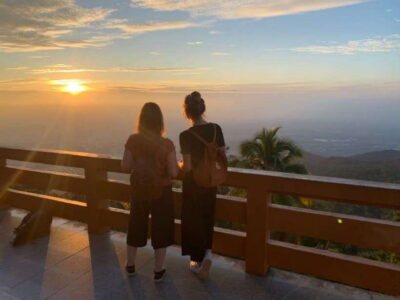
Doi Suthep, Wat Umong, and Pha Lat Sunrise Tour
Read our review →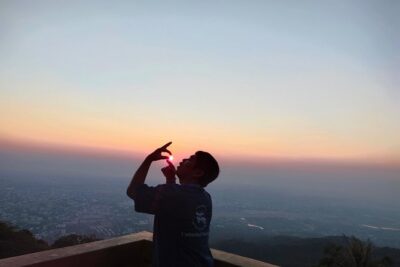
Wat Phra That Doi Suthep spiritual Sunrise Tour with an Ex-monk
Read our review →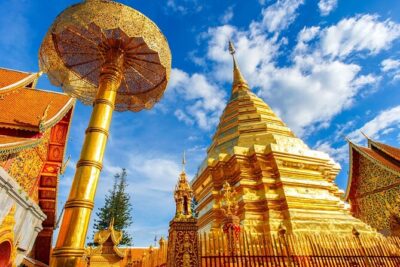
Spiritual Sunrise Wat Doi Suthep, Pha Lat, Alms & Meditation
Read our review →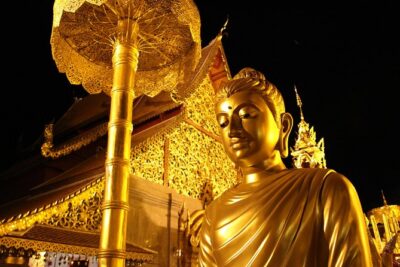
Best seller!! Amazing Night tour, Doi Suthep + Wat umong – Top Must visit!
Read our review →
Doi Suthep Temple and Waterfall by Songtaew Trio
Read our review →Browse the lists this tour appears in