
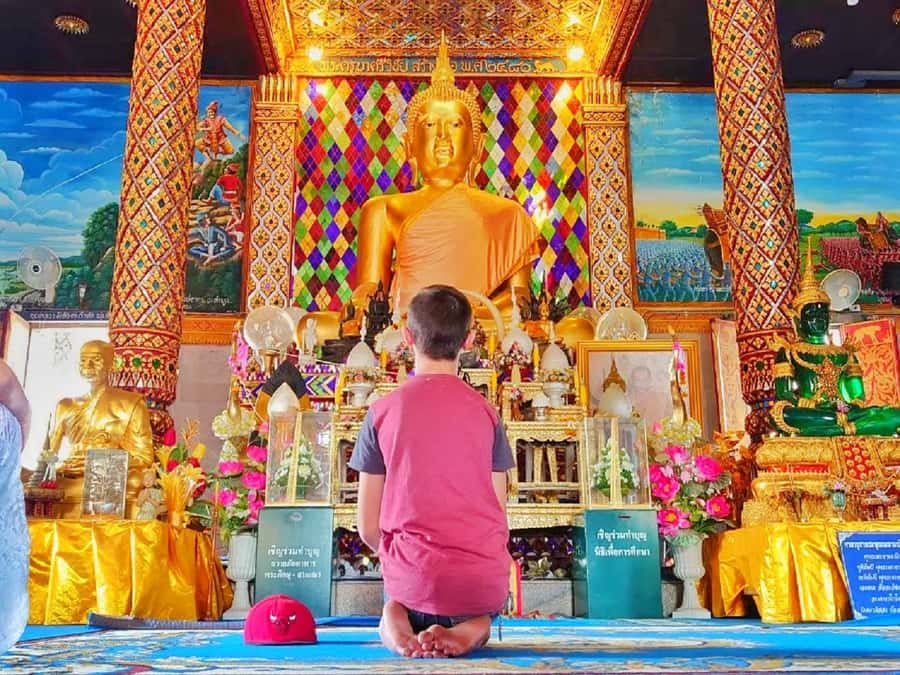
Review · CHIANG MAI
From Chiang Mai: Lamphun and Lampang Temples Tour
Temples with room to breathe. This nine-hour trip from Chiang Mai takes you to Lamphun and Lampang, two northern Thai cities with older, quieter religious sites than you usually find in Chiang Mai. I like the small group capped at nine people and the chance to ride Lampang’s traditional horse carts. The main drawback is the long day, with about 75 minutes of driving each way and extra charges for lunch and the cart ride.
I also like how much local context comes with the temples. Guides such as Wassana, Del, Sam, Art, Jackie, and Sunny have been praised for clear English, thoughtful explanations, and help ordering food. You should still prepare for strong heat, exposed temple courtyards, and a schedule that asks you to keep moving.
Five details that shape the day
- Lampang’s horse carts: A 15 to 30-minute ride costs 500 THB for a two-person cart and offers a distinctly local way to see town.
- Two historic northern cities: Lamphun connects you with the Mon Kingdom of Hariphunchai, while Lampang is known for Lanna architecture and horse carts.
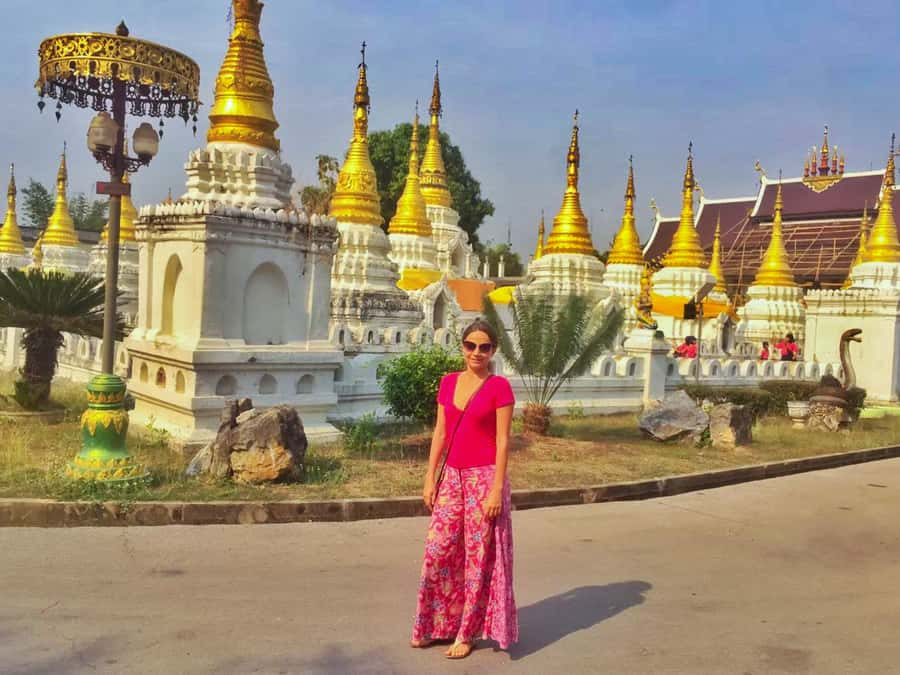
- Four important temple stops: You visit Wat Chammathewi, Wat Phra That Hariphunchai, Wat Phra That Lampang Luang, and Wat Phra Chedi Sao.
- Small-group format: The vehicle carries no more than nine participants, making questions and guide commentary easier.
- Lower-impact travel: The tour supplies water in a glass bottle and offsets carbon emissions through purchased credits.
Why Lamphun and Lampang are worth a day from Chiang Mai
Chiang Mai has plenty of impressive temples, but its popularity can make some central sites feel busy and polished for visitors. Lamphun and Lampang offer a different pace. You get older religious monuments, working town streets, local food stops, and fewer crowds at many of the temple compounds.
Lamphun was once the center of Hariphunchai, a Mon Kingdom that ruled this part of northern Thailand from the ninth to the thirteenth centuries. Lampang gives you another historical layer through Lanna buildings, old religious art, and the horse carts that have become part of the town’s identity.
This is not a tour for ticking off one grand monument and returning to Chiang Mai by lunch. It is a full day built around connections between places. The guide’s commentary matters here. David from Canada singled out Wassana for explaining the roads, local history, and daily life as the group drove. That kind of narration helps turn a long transfer into part of the experience rather than dead time.
The current rating is 4.9 from 33 ratings, with repeated praise for the guides’ English, patience, and historical explanations. That is important because the temples are much more rewarding when you understand what you are looking at.
A few more temple visits around Chiang Mai worth a look
- Chiang Mai: Chiang Rai Temples, Karen Tribe and Hot Springs
★ 4.7 · 5,401 reviews - Chiang Rai White Temple and Blue Temple Day Tour
★ 4.6 · 3,366 reviews - Chiang Mai: White, Red/Black & Blue Temples Tour with Lunch
★ 4.2 · 2,017 reviews
Wat Chammathewi and the oldest surviving stepped pagoda
Wat Chammathewi is a compact but striking opening stop in Lamphun. The temple is associated with Queen Chama Devi, and local tradition holds that her ashes rest inside the unusual square pagoda.
The pagoda is surrounded by arches containing 60 Buddha statues. Its stepped-pyramid shape is linked to the Dvaravati period, a broad cultural era that influenced much of Thailand from the sixth to the eleventh centuries. The form looks different from the tall, smooth stupas you may have seen elsewhere in Thailand, so it rewards a slow look at its structure.
You have about 30 minutes here. That is enough to see the main feature and hear the basic story, but not enough for a long, unhurried visit. If you enjoy architectural details, use the time to study the repeated Buddha figures and the square arrangement of the monument.
This is also a good place to begin thinking about the difference between northern Thai and central Thai religious architecture. The guide can explain the connection to Lamphun’s earlier Mon culture, which gives the rest of the day a useful frame.
Wat Phra That Hariphunchai beside the river
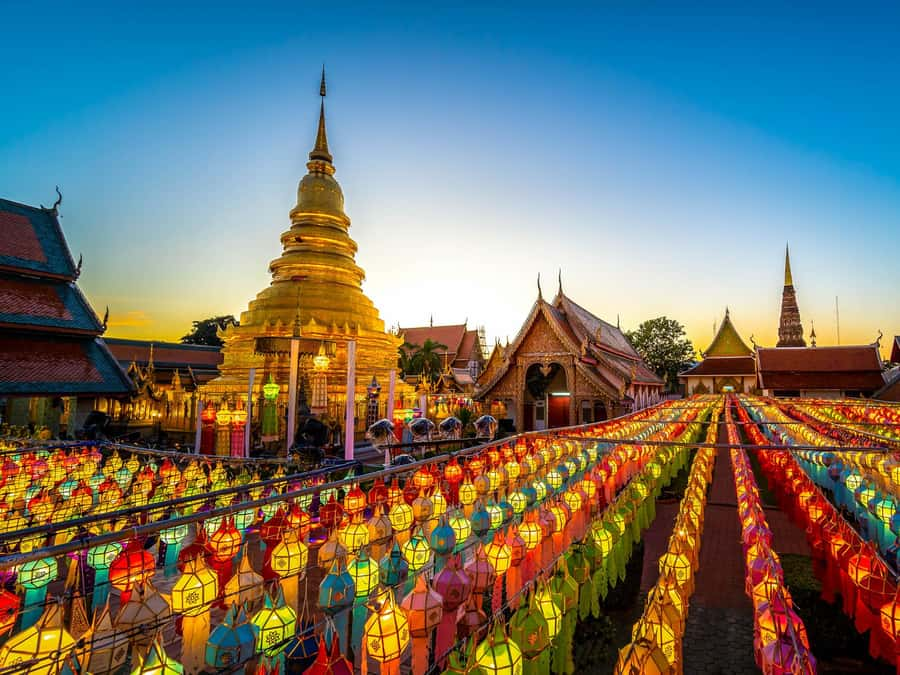
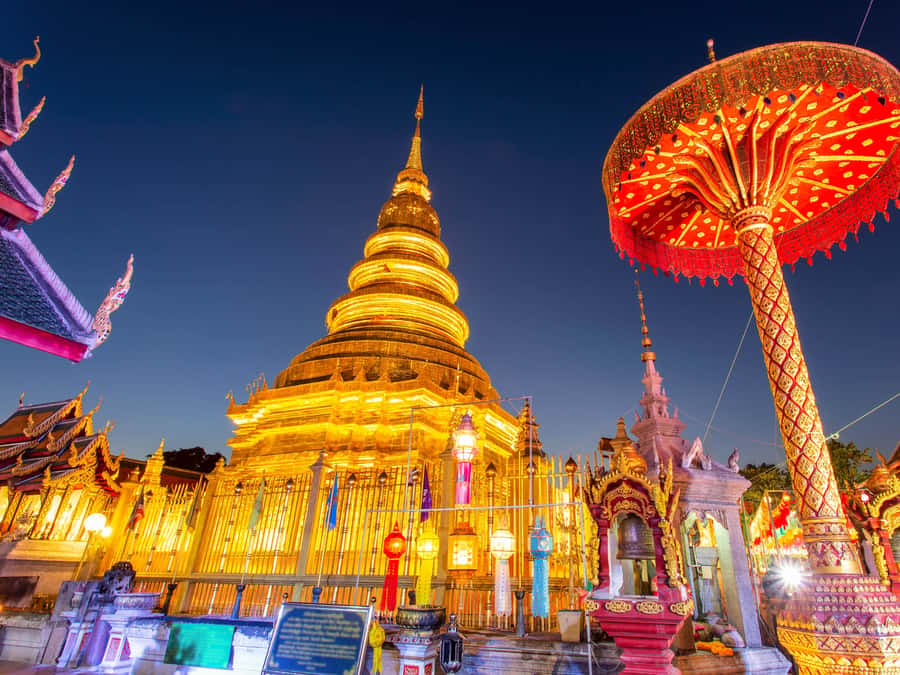
The next major stop is Wat Phra That Hariphunchai Woramahawihan, Lamphun’s largest and oldest temple compound. You have about an hour here, giving you more breathing room than at Wat Chammathewi.
The temple takes its name from Hariphunchai, the former Mon Kingdom centered in Lamphun. Its location near the river helps explain why this was such an important settlement. Religious centers, waterways, trade, and political power were closely tied together in northern Thailand.
Expect a large compound rather than a single building. The hour allows you to walk through the grounds, look at the main religious structures, and listen to the guide connect the site with the region’s earlier kingdoms. The exact details you notice will depend on the day’s pace and temple activity, but the appeal is the combination of active Buddhist worship and old city history.
Dress matters at both Lamphun temples. Bring long pants and a long-sleeved shirt, as the tour recommends. Sunscreen is also useful because parts of the temple grounds are exposed. A hat may help outdoors, though you should follow local rules when entering religious spaces.
Lunch in Lamphun, with local food rather than a fixed meal
Lunch lasts about an hour in Lamphun and is not included in the price. That keeps the tour flexible, but it means you should carry cash and budget separately for food.
A useful detail from the day’s feedback is that one group ate at a typical Thai restaurant where the staff did not speak English, and guide Art helped place the order. That is exactly the sort of small service that can make local eating less stressful. You may have the chance to try food you would not confidently order alone.
Do not expect a formal restaurant experience chosen around international preferences. The point is to eat in the town you are visiting, with the guide helping explain choices when needed. If you have dietary restrictions, communicate them clearly to the guide.
The tour also includes visits to local markets, including a food market stop in Lampang for about an hour. These stops add everyday life to a day otherwise centered on monuments. They are useful for seeing snacks, produce, and the ordinary rhythm of the town, though your personal interest in markets will determine how valuable the time feels.
Same place, a different morning at the gates:
- Chiang Mai: Doi Suthep and Wat Umong Enchanting Evening Tour
★ 4.6 · 1,811 reviews - Chiang Mai: 3 Hour Old City and Temples Guided Walking Tour
★ 4.6 · 1,568 reviews - Chiang Mai: Doi Suthep, Wat Umong, and Pha Lat Sunrise Tour
★ 4.7 · 1,425 reviews - Chiang Rai Temples: Private Tour from Chiang Mai
★ 5.0 · 1,267 reviews
Wat Phra That Lampang Luang and Lanna design
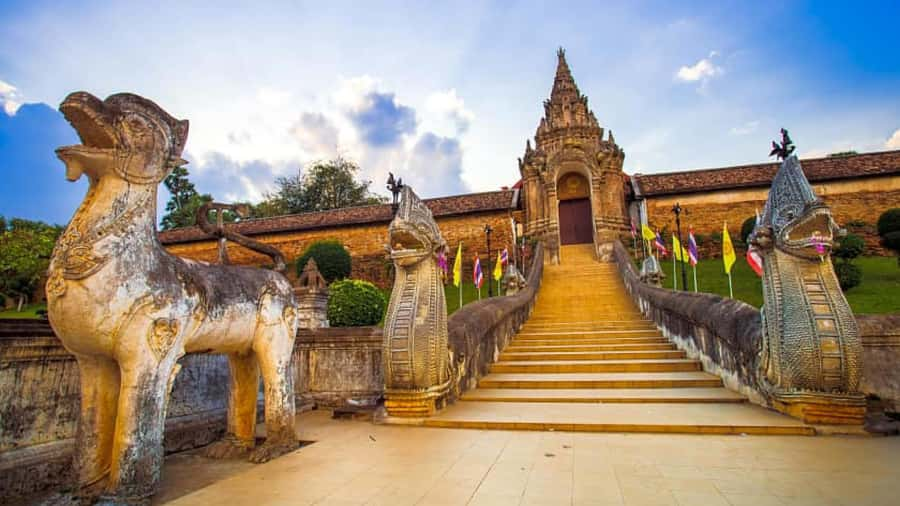
Wat Phra That Lampang Luang is the architectural centerpiece of the Lampang portion. It is described as one of the best examples of Lanna-style architecture in Thailand and dates to the thirteenth century.
The compound includes a large brick entrance gate, painted viharas, a historical museum, a sand-covered courtyard, and bronze and copper stupas. The setting is presented as calm, which makes this a welcome change from the more active parts of the day.
The viharas deserve close attention. These halls are not simply empty containers for religious images. Their painted surfaces and timber details show how Lanna religious art uses color, pattern, and layered decoration. Ask your guide to point out what is original, what has been restored, and how the buildings function for worship.
The sand-filled courtyard gives the complex a distinct feel underfoot and visually separates the structures. The combination of brick, painted wood, metal stupas, and open space makes this a site where you should slow down rather than rush from one building to the next.
Entry to Wat Phra That Lampang Luang is included. You have about 30 minutes according to the schedule, so keep your expectations realistic. You can see the key areas and hear the main explanation, but serious architecture fans may wish for more independent time.
A horse cart through Lampang
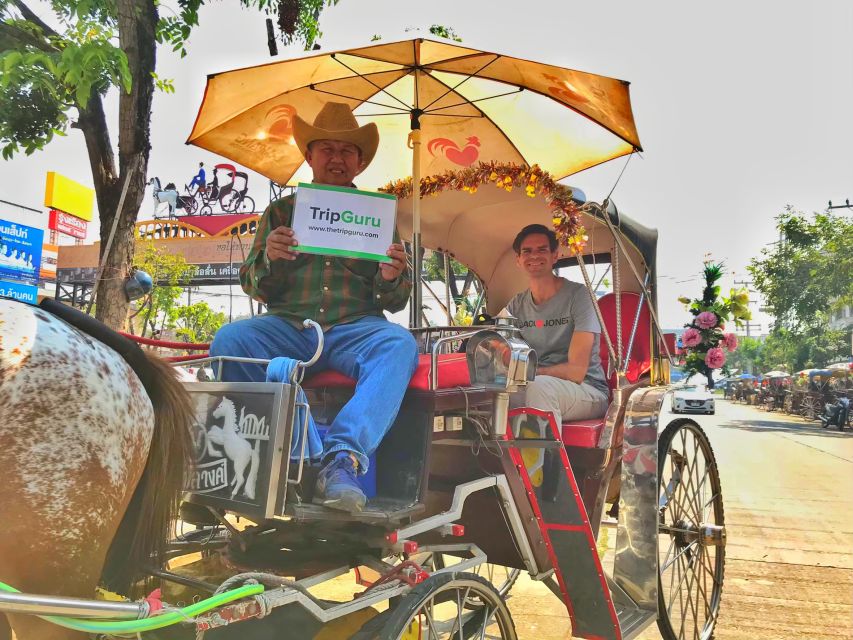
Lampang is widely known in Thailand as Horse Cart City, and the optional cart ride is one of the most unusual parts of this experience. The ride lasts about 15 to 30 minutes and costs 500 THB for a cart carrying two people.
You may travel along the Wang River or pass some of Lampang’s familiar town sights. It is not a high-speed attraction or a long countryside excursion. Think of it as a short town ride that shows how the city presents one of its old transport traditions.
For two people traveling together, the price works out to 250 THB each. Solo participants should confirm how the cart arrangement works on the day, since the stated fee is for two people. Because the ride is optional and not included, you can choose to save the money if the weather is uncomfortable or the cart is not your priority.
I see this as a good add-on for anyone who wants a direct connection with Lampang’s local identity. It also gives you a break from walking on hot temple grounds. On the other hand, if you prefer more time at the monuments, you may decide that the extra cost and short duration are not worth giving up time elsewhere.
Wat Phra Chedi Sao and the final market stop
Wat Phra Chedi Sao adds another short temple visit to the Lampang section. The schedule allows about 30 minutes, so this is a compact stop rather than a major exploration.
The temple helps round out the day by showing another religious site beyond the better-known Lampang Luang. Since the stops vary in scale, you get a sense of how sacred places fit into the wider towns rather than seeing only the most famous complex.
Afterward, the itinerary includes about an hour at a Lampang food market. This is a practical way to end the sightseeing portion. You can look at local ingredients and prepared foods, and you may find something to eat before the return drive, although personal purchases are your responsibility.
Markets can feel less structured than temple visits. You will not get the same clear sequence of monuments and explanations, but that looseness is part of the appeal. It gives you a glimpse of daily commerce rather than another carefully preserved site.
The 75-minute drive and small-group setup
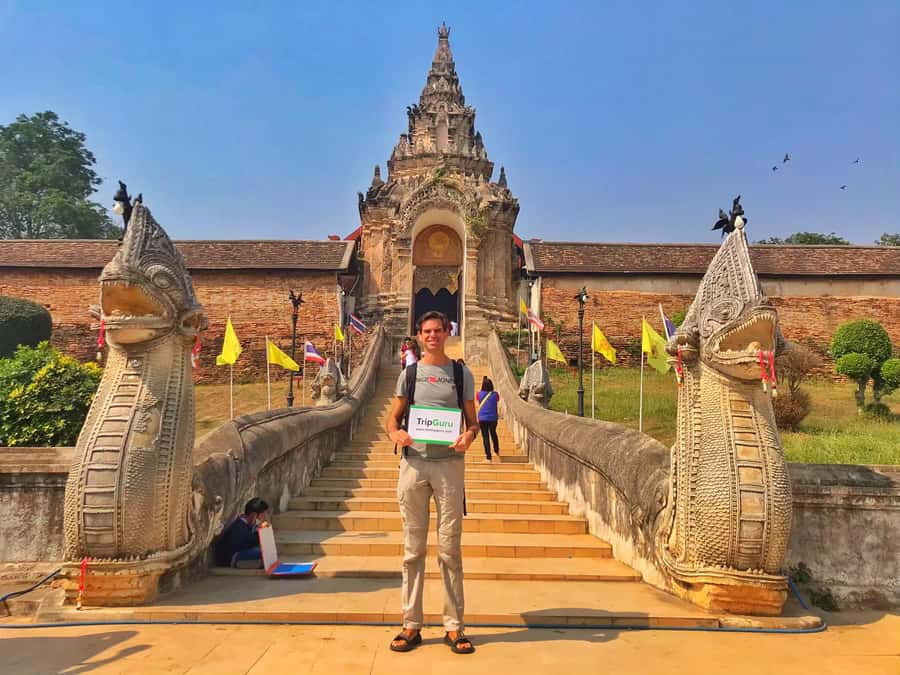
The day begins with hotel pickup in Chiang Mai and includes transport in an air-conditioned vehicle. The drive to the first area takes about 75 minutes, followed by the return to Chiang Mai after the Lampang stops.
That travel time is the main practical drawback. You spend many hours on the road, even though the destination cities are close enough to visit in one day. The benefit is that you do not need to arrange a driver, navigate unfamiliar roads, or negotiate separate temple admissions.
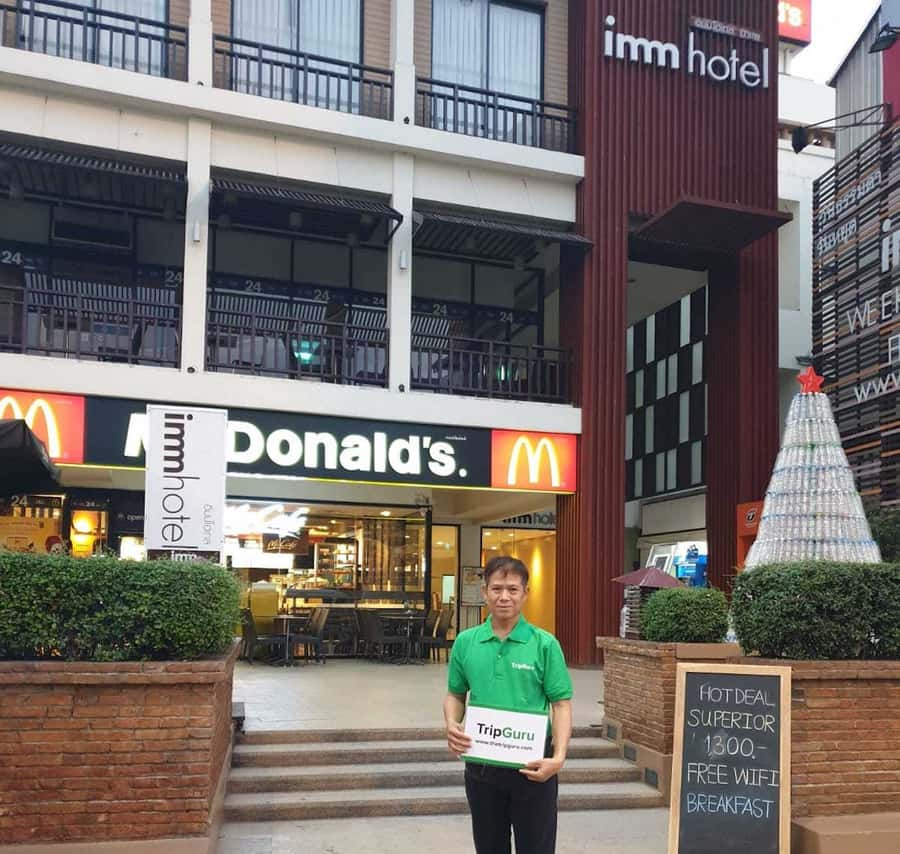
Pickup is available from hotels and registered accommodations in central Chiang Mai, generally within five kilometers of Tha Pae Gate and around the Old City, Chang Klan Road, Thapae Road, Wualai Road, the Night Bazaar, Ton Lam Yai Market, and Warorot Market. Pickup is not offered from roadsides or shopping malls.
The group limit of nine is a real advantage. You can hear the guide more easily, ask questions, and avoid the sluggish movement of a large coach group. The driver contacts you the evening before with the exact pickup time, so check your email and be ready in your hotel lobby with the TripGuru sign in view.
Transport received a 96 percent perfect score, and the guide feedback is consistently strong. Wassana was praised for being early and upbeat, Del for explaining regional history and philosophy, Sam for being helpful, and Sunny for taking the group to local places and food. These details suggest that the guide can shape the day as much as the monuments do.
Price, what is included, and where value sits
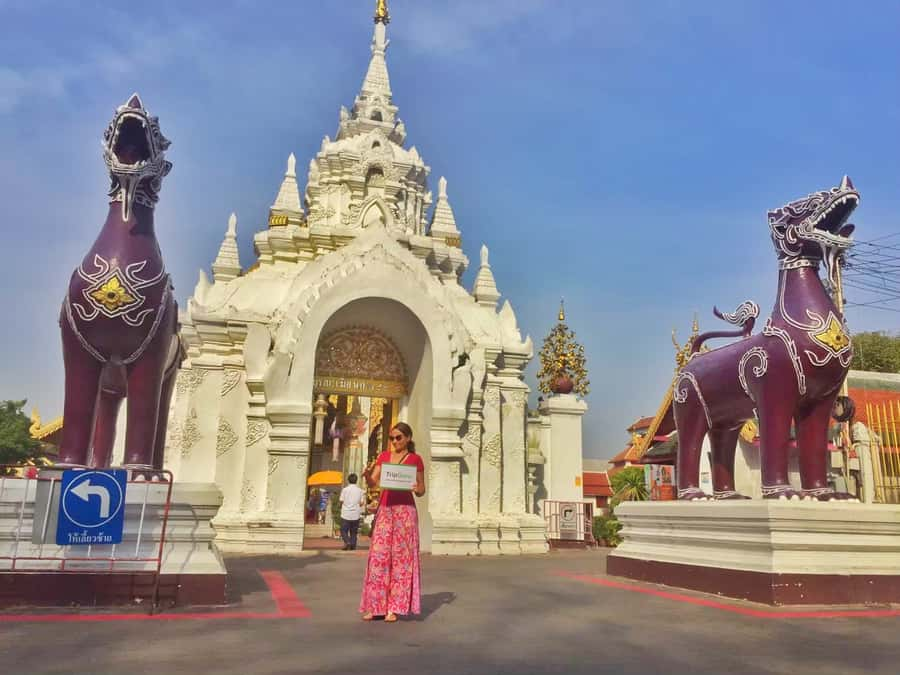
The price is $106 per person. That includes hotel pickup and drop-off from central Chiang Mai, an English-speaking guide, air-conditioned transport, entry to Lampang Luang and Hariphunchai, a glass bottle of drinking water, travel insurance, and carbon emissions offset credits.
Lunch is extra, as is the 500 THB horse-cart ride for two people. You also pay for personal purchases at the markets. Bring cash, since the tour specifically recommends it.
For a nine-hour outing with private arranged transport, several temple admissions, and a small group, I think the price is reasonable for people who value convenience and interpretation. It becomes less attractive if you mainly want independent temple time or already have access to a driver.
The sustainability measures are modest but concrete. The tour provides water in glass bottles and buys carbon offset credits. That does not remove the impact of a full day in a vehicle, but it gives you a lower-impact option than arranging several separate transfers without any environmental provision.
Who should book this day trip?
I would choose this tour if you want to see beyond Chiang Mai without planning a complicated day yourself. It suits first-time visitors who want historical context, people who enjoy temples but prefer quieter places, and anyone curious about northern Thai food and town life.
It is especially good for you if you appreciate a guide who explains connections rather than simply naming buildings. The strongest feedback centers on clear English, patient answers, regional history, and help with local food. Those qualities make a difference when the day includes four temple compounds and several cultural references.
You may want a different plan if you dislike long road transfers, hot outdoor visits, or optional costs that are not clear at the time of booking. Serious photographers and architecture fans may also want more time at each site than a guided day allows.
Wear light clothing that still covers your shoulders and knees, bring sunscreen and cash, and carry water even though a glass bottle is provided. Schedule this on a day when you can handle nine hours away from your hotel, not on a day when you need a slow Chiang Mai afternoon.
Should you book the Lamphun and Lampang tour?
Book it if your ideal day mixes old temples, local food, a small group, and a few experiences you cannot easily arrange alone. The horse cart is a fun extra, but the real value is the pairing of Lamphun’s Mon-era sites with Lampang’s Lanna architecture.
Skip it if your priority is a short excursion or long, quiet time at one monument. For everyone else, the 4.9 rating, strong guide record, included transport, and access to less-crowded northern Thai sites make this a solid use of a day from Chiang Mai.
FAQ
How long does the tour last?
The tour lasts nine hours, including transportation between Chiang Mai, Lamphun, and Lampang.
Is hotel pickup included?
Yes. Pickup and drop-off are included for hotels and registered accommodations in specified central Chiang Mai areas, including locations around Tha Pae Gate, the Old City, Chang Klan Road, Thapae Road, Wualai Road, the Night Bazaar, Ton Lam Yai Market, and Warorot Market.
What language does the guide speak?
The live tour guide speaks English.
How large is the group?
The tour is limited to nine participants.
Is lunch included?
No. Lunch is not included, and the itinerary allows about one hour for lunch in Lamphun.
How much does the horse-cart ride cost?
The optional horse-cart ride costs 500 THB for a two-person cart and lasts about 15 to 30 minutes.
What should I bring?
Bring cash, sunscreen, water, long pants, and a long-sleeved shirt. The tour also provides a glass bottle of drinking water.
Just added around Chiang Mai
- No.1 Chiang Mai: 3-Hour Monk Trail Hike to Wat Doi Suthep & Palad★ 5.0 · 11 reviews
- Monk trails hike, Wat Phalat, Monk chanting, Wat Doi Suthep.★ 5.0 · 3 reviews
- Long Neck Village, Silver Temple & Chiang Mai Top Sites★ 4.7 · 17 reviews
- Lalita Cafe & Chiang Rai Temple(White+Blue) from Chiangmai★ 4.8 · 5 reviews
- Private : Sticky Waterfall & Secret Temple & Karen Village.★ 5.0 · 9 reviews
- Chiang Mai: Temples & Culture Tour★ 4.7 · 64 reviews
- From Chiang Mai: White Temple, Blue Temple & Black House★ 4.5 · 15 reviews
- Chiang Mai: Chiang Rai Temples & Black House Discovery Tour★ 4.4 · 12 reviews
Chiang Mai Temple Tours, compared.
Chiang Rai Temples, Karen Tribe and Hot Springs
Read our review →
Chiang Rai White Temple and Blue Temple Day Tour
Read our review →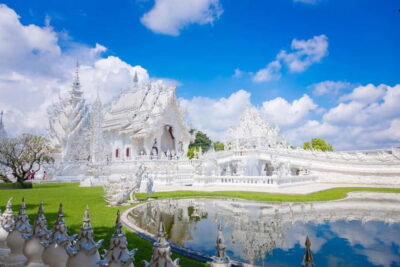
White, Red/Black & Blue Temples Tour with Lunch
Read our review →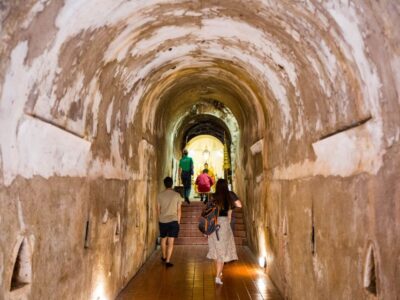
Doi Suthep and Wat Umong Enchanting Evening Tour
Read our review →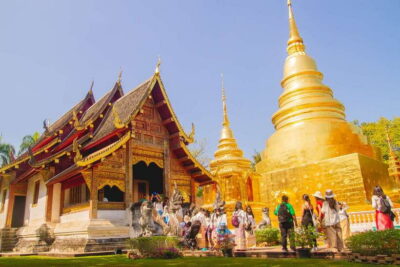
3 Hour Old City and Temples Guided Walking Tour
Read our review →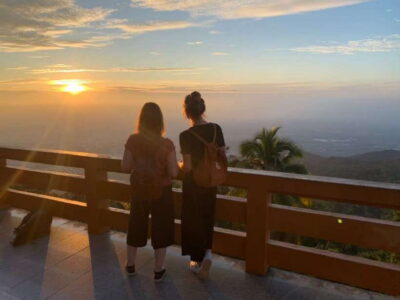
Doi Suthep, Wat Umong, and Pha Lat Sunrise Tour
Read our review →
Chiang Rai Temples: Private Tour from Chiang Mai
Read our review →
Browse the lists this tour appears in