
Review · CHIANG RAI
Chiang Rai Tour: White & Blue & Big Buddha (Red)Temples
Three striking temples make this Chiang Rai day trip appealing, especially if you want to see modern Thai religious art without arranging transport yourself. I like the White Temple’s strange, imaginative design, and I like that the day also includes the Blue Temple and the Big Buddha or Red Temple.
The natural hot spring gives you a useful break from temple visits, and lunch, entrance fees, water, and an English-speaking guide are included. The catch is the road: you may spend about three hours going north and another three hours returning to Chiang Mai, with some confusion about meeting times and where to find the guide in crowded places.
This is a small-group tour for up to 10 people, priced at $41 per person. That is fair if you value a bundled day with a driver, meals, and admission. It is less attractive if you dislike long van rides or prefer to study each temple at a slow pace.
Key points to know before booking
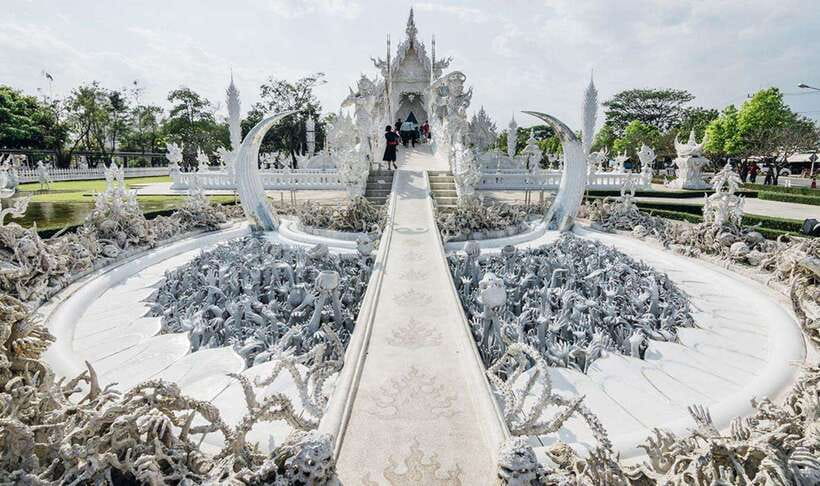
- The White Temple is modern art, not an ancient ruin: Wat Rong Khun was created by a contemporary Thai artist with grand ambitions for Chiang Rai.
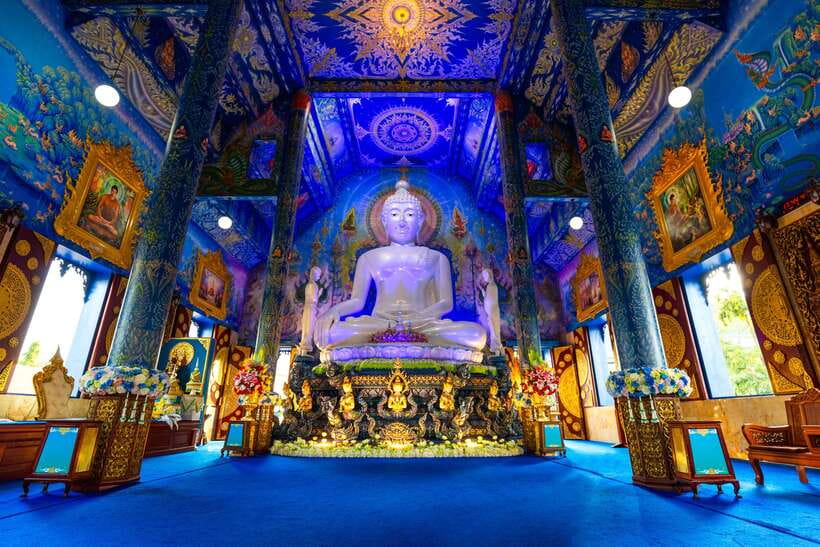
- The Blue Temple changes the mood: Its strong blue decoration gives Buddhist imagery a theatrical, modern setting.
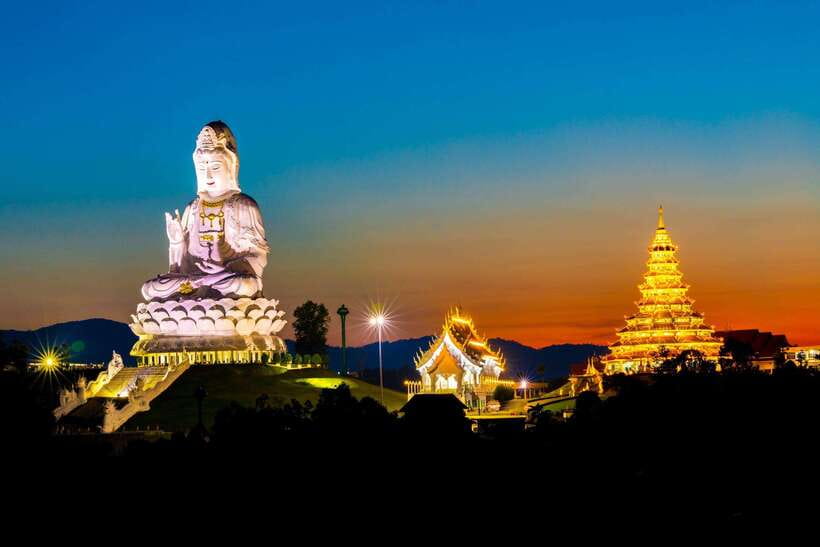
- The Big Buddha stop can be the day’s quiet surprise: Wat Huay Pla Kang grew from a small monk’s office into a large temple complex over four years.
- The hot spring is a short rest, not a full spa visit: You can warm your feet in the pools and enjoy a simple natural break.
- The van ride is the main tradeoff: Expect a full day on the road, and do not book this expecting a relaxed, unhurried schedule.
- Clear communication matters: Bring patience, listen carefully for meeting instructions, and ask where to regroup before leaving each stop.
Why Chiang Rai makes a good day trip from Chiang Mai
Chiang Rai is a sister city to Chiang Mai, but the temple experience feels different. Chiang Mai is famous for older Lanna religious architecture. Chiang Rai’s best-known sites are more recent and more personal, shaped by artists and monks with strong ideas about form, color, and symbolism.
That makes this tour useful for visitors who want more than standard golden stupas. The three main stops show three different approaches: the White Temple uses surreal images and bright white decoration, the Blue Temple relies on strong color and theatrical interiors, and the Big Buddha or Red Temple presents a more unusual large-scale religious complex.
You should also understand the geography before you commit. The tour begins in Chiang Mai and returns there the same evening. The ride can take about three hours each way, according to the practical experience reported for this trip. That is a serious part of your day, not a minor transfer between attractions.
For some people, the long ride is worth it because Chiang Rai’s temples are unlike the usual Chiang Mai sights. For others, the same time could be better spent exploring Chiang Mai at a slower pace. Your choice depends less on the $41 price than on how much you want these particular temples.
A few more temple visits around Chiang Rai worth a look
- From Chiang Mai: Chiang Rai Temples and Golden Triangle Tour
★ 4.5 · 1,770 reviews - Chiang Rai: Iconic Temples & 7 Major Sites—River View Buffet
★ 4.9 · 692 reviews - Chiang Rai: White, Blue, Red Temples, Long Neck Tour
★ 4.8 · 652 reviews
The van ride from Chiang Mai
Pickup is available within six kilometers of central Chiang Mai, with a focus on the old city. If you stay outside the old city, you need to contact the operator because a meeting point may be arranged instead.
The vehicle is an air-conditioned van with a driver. The tour is limited to 10 participants, which is better than a large coach for keeping the day manageable. Still, a small van does not remove the basic problem of distance. You will be sitting for long stretches, with several hours of driving before the main temple visits.
I would treat the journey as the cost of reaching Chiang Rai, rather than expecting the transport itself to be comfortable sightseeing time. Bring water, though drinking water is supplied, and keep your temple clothing easy to manage. You will want covered knees and shoulders at the religious sites.
The tour route is presented simply: pickup in Chiang Mai, a series of van transfers, the Chiang Rai stops, and a return to Chiang Mai in the evening. Exact starting times depend on availability, so check the schedule carefully before booking.
Mae Khachan hot spring: a useful first pause
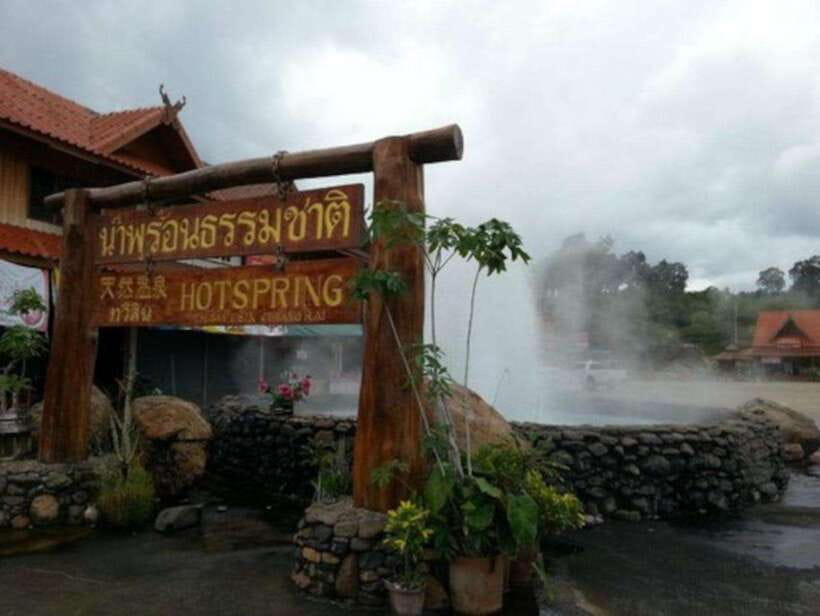
The natural hot spring at Mae Khachan gives the day an early change of pace. You can take a short break, warm your feet in the hot pools, and even enjoy a simple foot soak that feels like a natural pedicure.
Do not picture this as a long wellness session. It is a brief stop during a demanding road journey. Its real value is practical: you can stretch, step out of the van, and reset before the temple visits begin.
The hot spring also helps break up the long transfer. If you are traveling with children or simply dislike sitting for hours, this pause may be one of the most welcome parts of the day. Keep your expectations modest and use it as a chance to rest rather than as a major attraction.
Wat Rong Khun, the White Temple
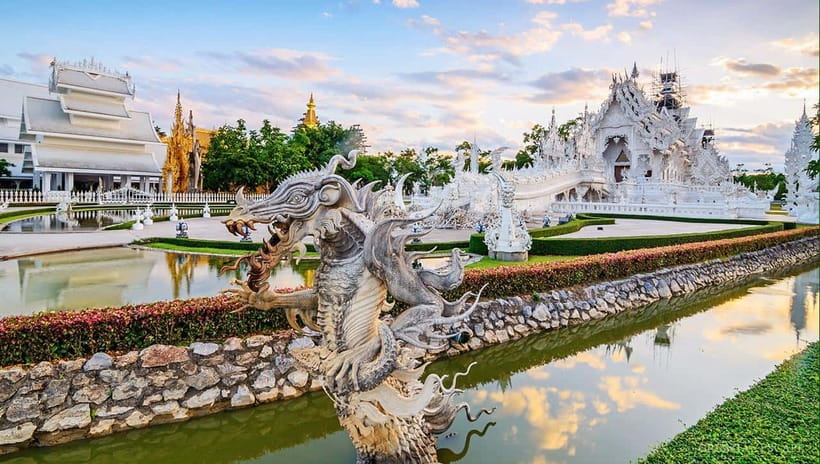
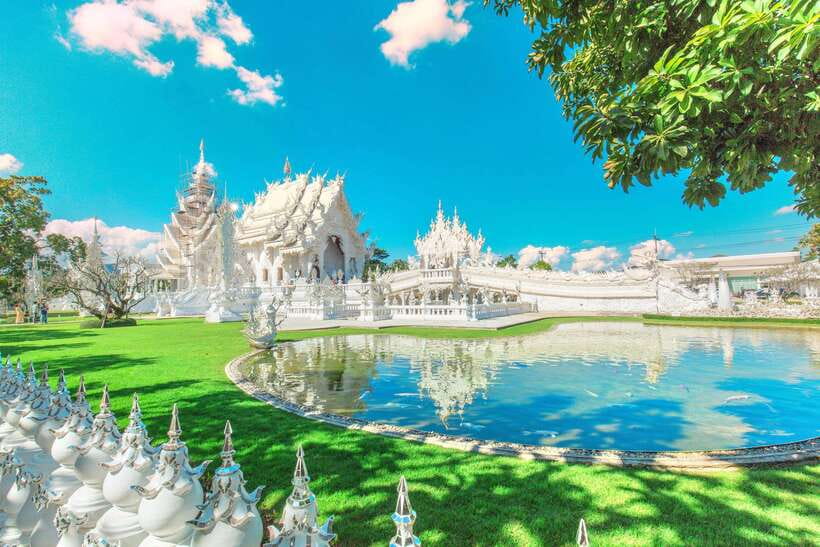
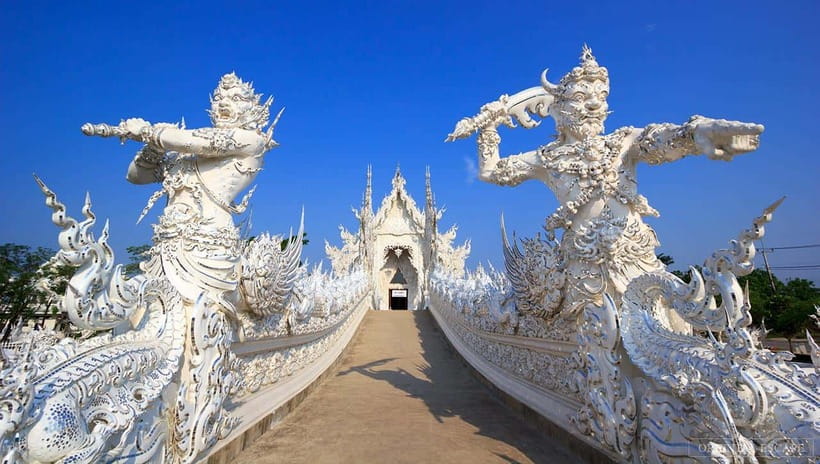
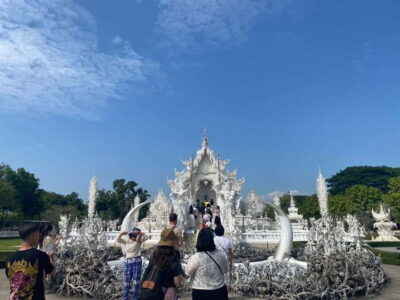
Wat Rong Khun is the tour’s headline stop. Its famous white structure looks nothing like a typical old Thai temple, and that is precisely the point. It is a modern work created by a celebrated Thai artist who wanted Chiang Rai to have a landmark on the scale of the Taj Mahal.
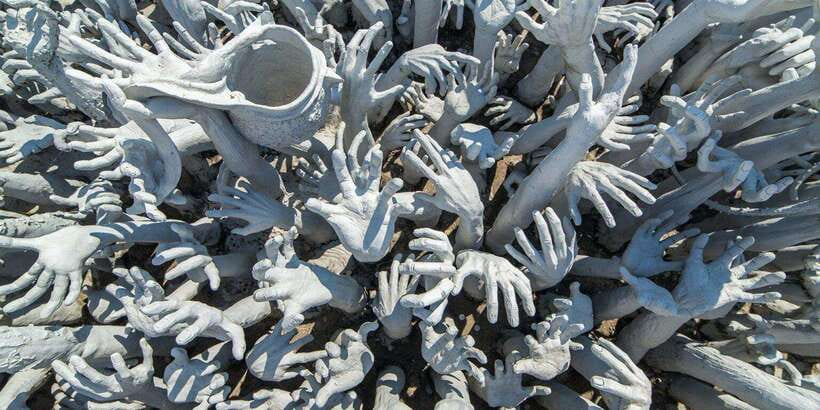
The whiteness gives the site a dreamlike quality, while the design plays with imagination rather than following a plain historical style. You are not simply looking at a preserved building. You are seeing one artist’s vision of a Buddhist temple, expressed through unusual shapes and highly detailed decoration.
That modern character is important. If you arrive expecting an ancient sanctuary, you may feel let down. If you enjoy contemporary art, symbolic design, and buildings that ask you to stop and look twice, the White Temple is likely to be the strongest reason to book the tour.
Your time here may feel short, since the day has several stops and a long return journey. Pay attention to the meeting instructions before walking off to take photographs. One practical weakness reported on this tour is a lack of clear guidance about where and when to regroup in crowded places.
Same place, a different morning at the gates:
- From Chiang Rai: Famous Temples and Golden Triangle Day Tour
★ 4.7 · 115 reviews - Chiang Rai: Half Day Tour – 3 Famous Temples & Lalita Cafe’
★ 5.0 · 79 reviews - Chiang Rai: 3 Temples, Long Neck Village & Lalitta Café
★ 4.7 · 63 reviews - Chiang Rai: 3 Temples and Golden Triangle 1 Day Tour
★ 4.8 · 37 reviews
Wat Rong Suea Ten, the Blue Temple
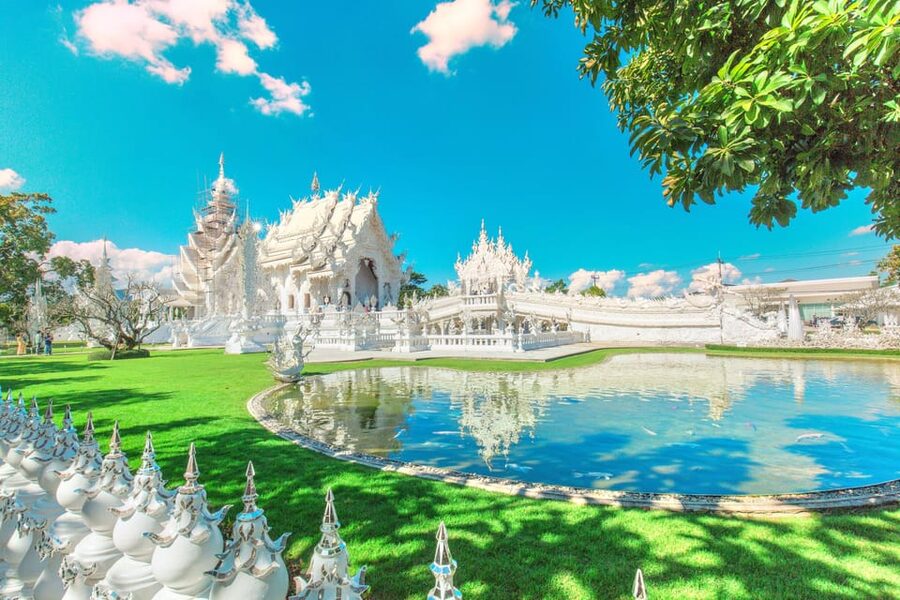
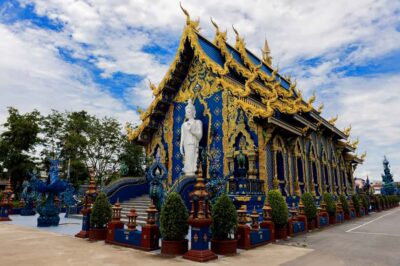
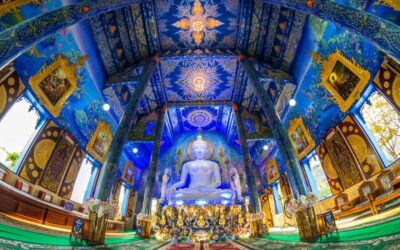
The Blue Temple offers a sharp contrast to the White Temple. Its dominant blue color gives the building a dramatic, almost theatrical feel, while the religious imagery keeps it tied to Buddhist tradition.
This is where Chiang Rai’s modern artistic identity becomes especially clear. The White Temple uses pale surfaces and surreal ideas. The Blue Temple uses color to create a stronger, more forceful mood. Seeing both in one day helps you understand that Chiang Rai’s appeal is not based on one famous building alone.
You may find the Blue Temple easier to appreciate after seeing the White Temple first. The contrast gives each one more character. At the same time, the stop can feel rushed if the group has a fixed departure time. Ask your guide exactly how long you have and where the van will wait.
The guide is meant to explain the sites in English, and a friendly guide can make these unusual temples more meaningful. Clear speech and simple meeting instructions matter here, though. Some visitors found it hard to catch all the information or know what to do next, so ask questions when anything is unclear.
The Big Buddha and Wat Huay Pla Kang
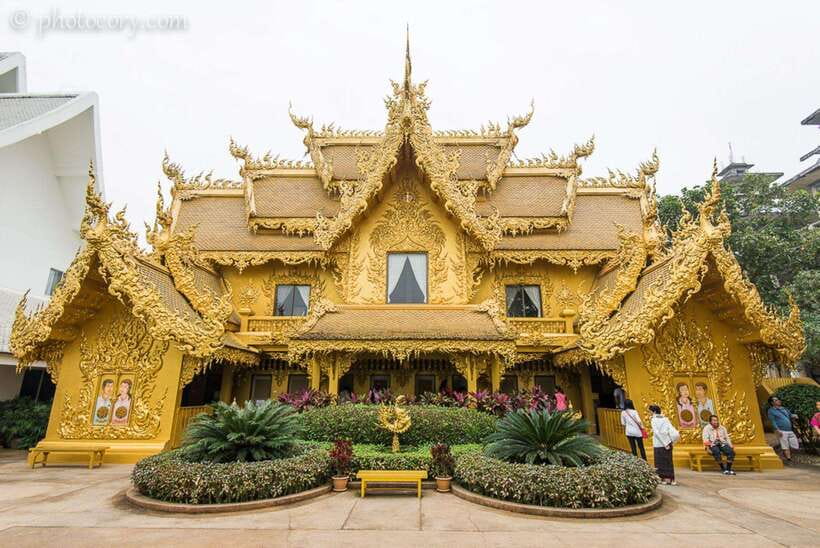
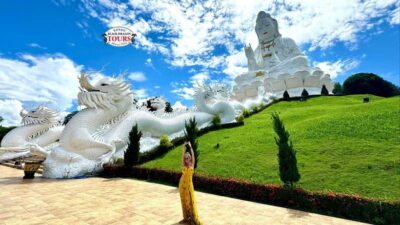
The final major stop is described as the Big Buddha Temple, Wat Huay Pla Kang, or the Red Temple. The naming can be confusing, so confirm the exact stop with your guide at the beginning of the day.
The complex began as a small office for a monk named Phra Ajarn Phob Chok. It grew over four years into the larger temple setting you see today. That origin story gives the site a different character from the purpose-built artistic spectacle of Wat Rong Khun.
The Big Buddha stop may be especially rewarding if you want something less focused on a single famous façade. The unusual design choices reflect the vision of the monk connected with its development. You get another example of how modern religious buildings in Chiang Rai can grow from individual ideas rather than from a single old architectural tradition.
A practical point matters here: one assessment of the day considered the Big Buddha stop and the Lalitta Café more worthwhile than some of the other parts. Lalitta Café is not listed as a formal included stop in the tour details, so do not assume it is part of your scheduled program. If it comes up during the day, ask whether it is included and how much time you have.
Lunch, fees, and what $41 really covers
The $41 price includes an air-conditioned van, driver, private English-speaking guide, standard entrance fees, a buffet Thai lunch, drinking water, and travel accident insurance. Vegetarian food can be arranged, and you should report allergies or other dietary restrictions to the guide.
That bundle gives the tour a reasonable value. You do not have to arrange a vehicle for the Chiang Rai journey, find the temples independently, or pay admission at each standard stop. For a visitor who wants a straightforward package, those savings in planning time matter.
The price becomes less convincing if you place a high value on comfort and flexibility. You are paying for a full day that includes a lot of road time, and the group schedule may limit how long you spend at the temples. Souvenirs, personal purchases, and tips are extra.
The buffet lunch is another practical advantage, especially on a remote day trip. Still, the supplied details do not specify the menu or restaurant style. If food is important to you, request vegetarian options or share dietary needs before departure rather than waiting until lunchtime.
The guide and the meeting-point problem
A private English-speaking guide is included, and the guide on this trip was described as friendly. That personal contact is valuable because the temples are full of artistic and religious details that are not always obvious from looking at the buildings.
The weak point is communication. Some explanations were hard to understand, and instructions about meeting times, meeting places, and the next activity were not always clear. In a crowded temple area, a guide without a flag or visible marker can be difficult to locate.
You can reduce the problem by asking three questions at every stop:
- What time do we meet?
- Where exactly will the van or guide be?
- What are we visiting next?
Keep the guide’s phone contact if one is provided, and do not wander far before confirming the regrouping point. These are small habits, but they can prevent a lot of stress on a tightly timed day.
Temple etiquette and clothing
Thai temples require respectful behavior. Cover your shoulders and knees, and remove your shoes before entering the main chapel when instructed.
The tour is not suitable for wheelchair users. You should also be ready for walking, standing, and changing between outdoor areas and temple interiors, although the supplied information does not give a precise walking distance.
Alcohol and drugs are not allowed. A quiet, respectful attitude is especially important because these are active religious places, not only photo stops. The artistic buildings may look unusual, but they still deserve the same care as older temples.
Who will enjoy this Chiang Rai tour?
I would recommend this day to you if you want to see Chiang Rai’s most distinctive modern temples but do not want to arrange a private driver. It suits first-time visitors who like unusual architecture, photography, and a clear list of included costs.
It also works well for anyone who wants a small group rather than a large bus. A maximum of 10 participants gives the guide a better chance to answer questions, even though the day may still feel hurried.
I would think twice if you dislike long van journeys, need a lot of personal space, or want detailed explanations at every stop. The tour can show you the major sites, but it may not give you enough quiet time to study each one.
The overall rating of 3.3 from three assessments reflects that split. The temples and friendly service receive praise, while the transport, unclear directions, and rushed feeling reduce the pleasure. That is a fair warning, not a reason to dismiss the tour entirely.
Should you book it?
Book this tour if the White Temple, Blue Temple, and Big Buddha are high on your Chiang Rai list and you value convenience over a slow pace. At $41, the included lunch, admission fees, guide, van, and water make the package reasonably priced.
Skip it if the thought of six hours of road travel makes you unhappy. In that case, stay in Chiang Mai or arrange a more flexible Chiang Rai plan with more time at the major sites.
If you do book, wear respectful clothing, confirm the exact Big Buddha or Red Temple stop, ask for clear regrouping instructions, and tell the guide about dietary needs before departure. With those precautions, this is a practical way to see Chiang Rai’s boldest temple art in one long day.
FAQ
How long is the Chiang Rai temple tour?
It lasts one full day and returns to Chiang Mai in the evening. Starting times depend on availability.
Where does the tour pick up passengers?
Free pickup and drop-off are available within six kilometers of Chiang Mai city center, with pickup focused on the old city. If you stay outside the old city, contact the operator for a meeting point.
How long is the journey from Chiang Mai to Chiang Rai?
The drive can take about three hours each way, with the return to Chiang Mai also taking several hours.
Which temples are included?
The tour visits Wat Rong Khun, known as the White Temple, the Blue Temple, and the Big Buddha Temple or Wat Huay Pla Kang, also described as the Red Temple.
Is lunch included?
Yes. A buffet Thai lunch is included.
Can vegetarian food be provided?
Yes. Vegetarian food can be served upon request. You should also tell the guide about allergies or other dietary restrictions.
Are entrance fees included?
Yes. Standard entrance fees for the included activities are covered.
Is an English-speaking guide provided?
Yes. The tour includes a live English-speaking guide.
How many people are in the group?
The tour is limited to 10 participants.
Can I cancel the booking?
You can cancel up to 24 hours in advance for a full refund. The tour also allows you to reserve now and pay later.
Just added around Chiang Rai
- Private trip Chiang Rai Day trip, White Temple, Blue temple★ 4.8 · 13 reviews
- From Chiang Mai: Day Trip Chiang Rai White, Blue, Red Temple★ 5.0 · 4 reviews
- From Chiang Mai : 3 Temples & Golden Triangle with Lunch★ 4.5 · 17 reviews
- From Chiang Rai 3 Temples & Golden Triangle &Tea Plantation★ 4.8 · 20 reviews
- Chiang Rai: Temple Treasures & Popular Sightseeings (Buffet)★ 4.7 · 10 reviews
- ChiangRai:Full Package!Temples,Long Neck,The Golden Triangle★ 4.7 · 9 reviews
- Chiangrai : Half Day Tour 3 Famous Temples / (Private tour)★ 5.0 · 4 reviews
- Chiang Rai:Photos of traditional Thai costumes,White Temple★ 4.9 · 26 reviews
Chiang Rai Temple Tours, compared.
Iconic Temples & 7 Major Sites—River View Buffet
Read our review →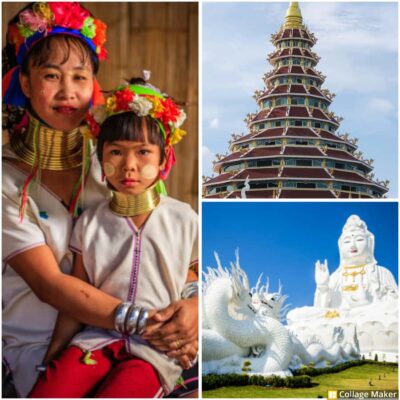
Photos of traditional Thai costumes,White Temple
Read our review →Browse the lists this tour appears in