
Review · CHIANG RAI
Chiang Rai: Iconic Temples & 7 Major Sites—River View Buffet
Chiang Rai packs a lot into one day. This 10-hour small-group tour links the province’s famous temples with the Black House, Karen village, tea plantation, Golden Triangle, and Opium Museum. I like the clear mix of art, culture, scenery, and modern Thai history. I also like that the group is limited to nine people, so guides such as Mai, Big, Gap, and Poppy can give the day a personal feel.
The included buffet lunch, water, air-conditioned van, and English-speaking guide make the $37 price attractive. You should know the schedule is full, though. The White Temple and Black House can easily absorb more time, while the tea plantation gets only about 35 minutes. The four extra admission fees also add 630 THB per person.
Seven useful things to know before booking
- The White Temple is the visual star: Allow your eyes time to adjust to its white, mirrored details and unusual sculptures.
- The day covers a huge area: You go from central Chiang Rai toward the Golden Triangle, so this is a sightseeing sweep, not a slow local walk.
- Nine people is a sensible group size: It keeps loading, questions, and photo stops easier than a large coach tour.
- The lunch is a real value point: A Thai buffet is included, with food described as suitable for vegetarian and vegan diners.
- The Karen village deserves thought: The visit offers cultural insight, but you may want to consider the ethics of this kind of tourism before you go.
- Bring cash for admissions: The White Temple, Black House, Karen village, and Opium Museum charge separately.
The day begins with Chiang Rai’s boldest temple
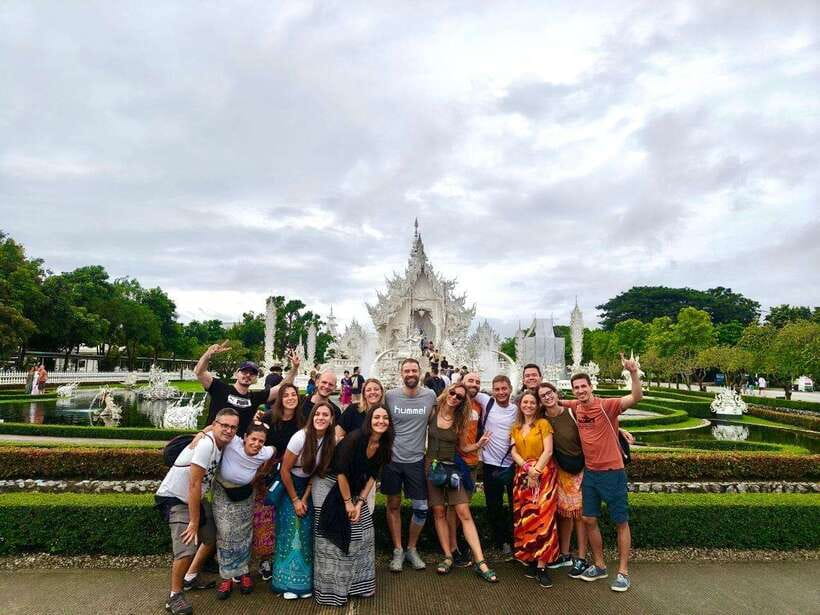
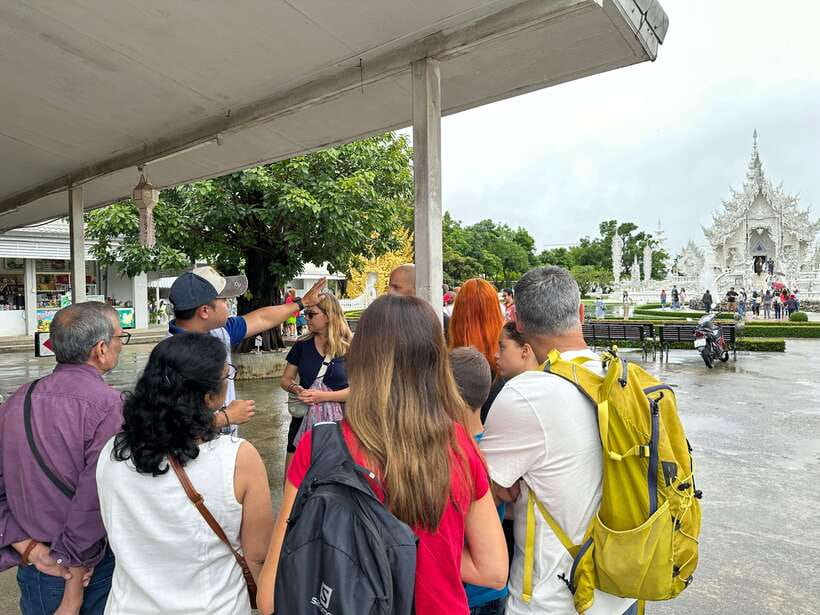
Pickup runs between 8:00 and 8:30 in Chiang Rai and Mueang Chiang Rai. The guide aims to collect everyone by 8:30, then the van heads to Wat Rong Khun, better known as the White Temple.
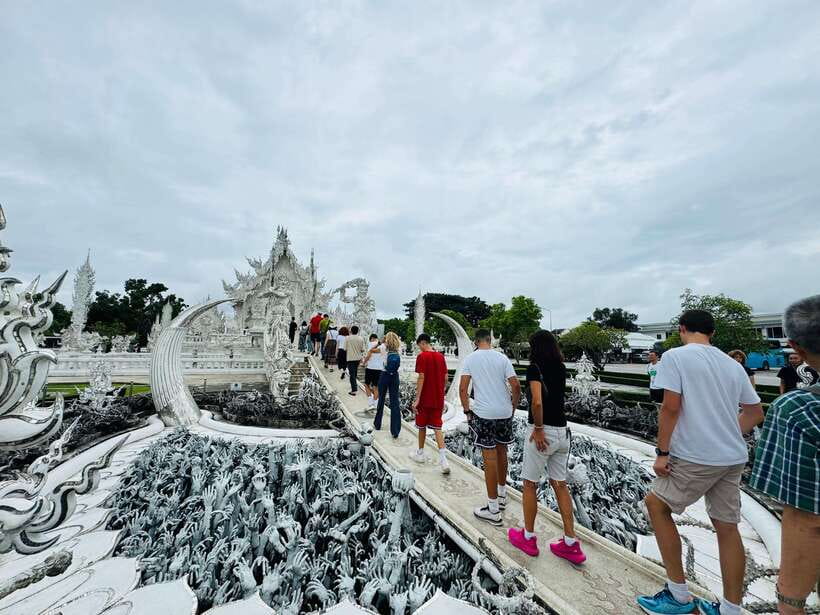
You get about one hour here, including a guided introduction, walking time, and time to explore alone. The temple was designed by national artist Chalermchai Kositpipat from 1997 onward. Its bright white surfaces, mirrored decoration, elaborate figures, and unusual wall paintings make it unlike a traditional old Thai temple.
The guide’s explanation matters here. Without context, the sculptures can seem like a strange collection of dramatic shapes. With a little background, the building becomes a modern Buddhist artwork with religious and symbolic ideas running through it.
The entrance fee is 200 THB and is not included. I would keep cash ready. The grounds can be busy, and one hour passes quickly if you stop at every photo point. Some people would prefer more time here and at the Black House, so keep that in mind if you like studying art rather than taking a quick look.
A few more temple visits around Chiang Rai worth a look
- Chiang Rai: Temple Treasures & Popular Sightseeings (Buffet)
★ 4.7 · 10 reviews - Exploring Bai Dinh Pagoda -Trang An -Mua Cave with Buffet Lunch 1 Day From Hanoi
★ 5.0 · 195 reviews - Bangkok Classic 3-Temples With Buffet Lunch Day Tour
★ 4.5 · 31 reviews
Blue Temple offers a shorter, calmer stop
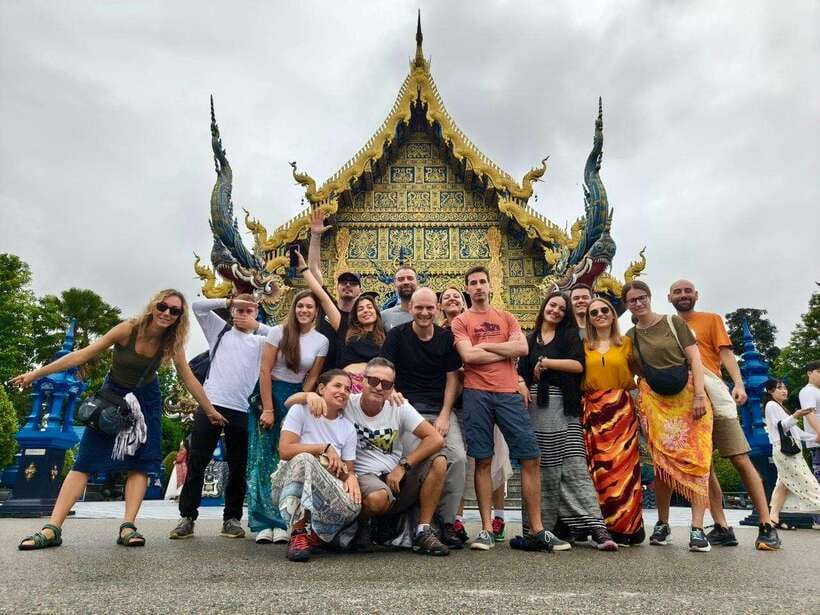
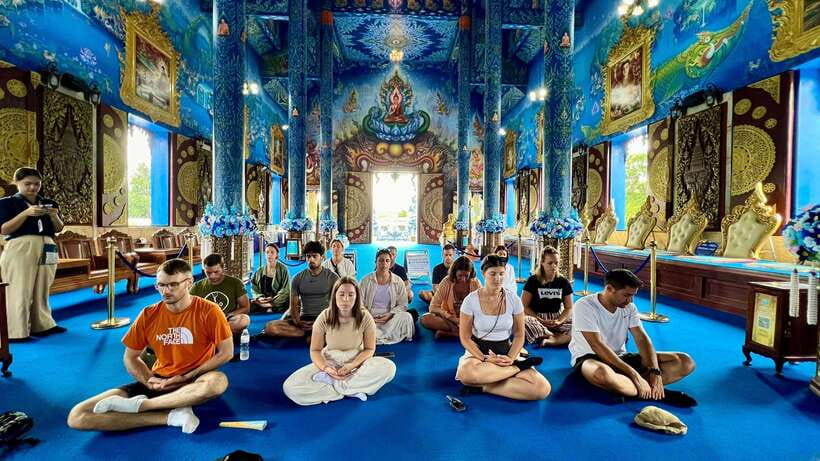
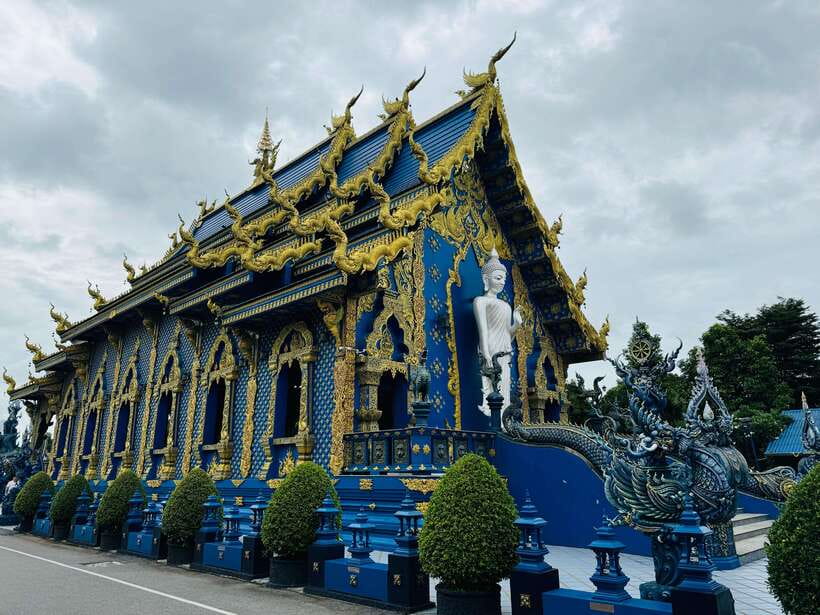
Wat Rong Suea Ten, the Blue Temple, follows with about 30 minutes. The name is often translated as Tiger Dance Temple, and the building uses strong blue and gold decoration from outside to inside.
The interior contains a large Buddha image surrounded by painted walls. This is a compact stop, but it gives you a different visual experience from the White Temple. The White Temple is pale and reflective. The Blue Temple is darker, more saturated, and more enclosed.
Your guide gives you a short explanation before free time. This is also a useful place to ask questions about local religious art and temple design. One especially practical tip from the tour is to try the blue coconut ice cream near the temple, if it is available during your visit. It is not part of the tour price, but it can be a fun local treat.
Thirty minutes is enough for the main building and photographs. It is not enough for a long, quiet visit. The tight timing is part of the bargain for seeing seven sites in one day.
Baan Dam makes a sharp change of mood
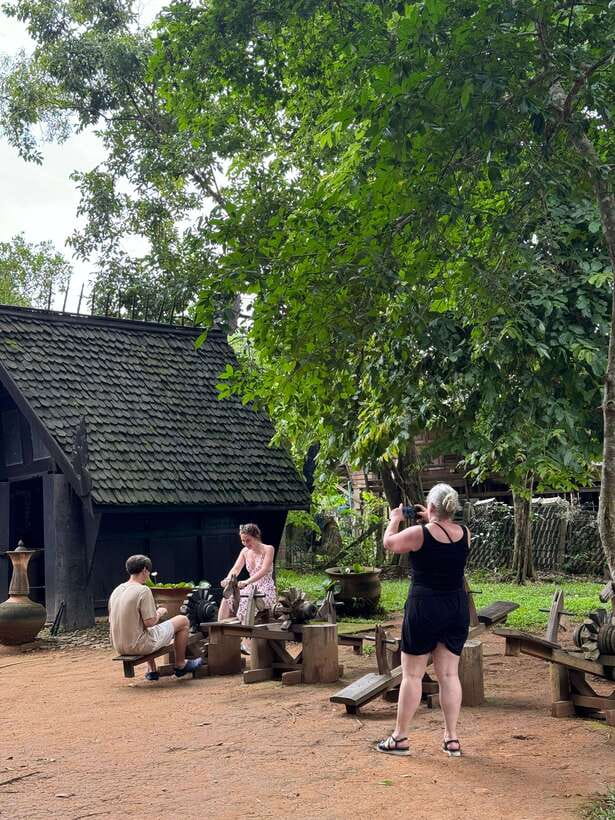
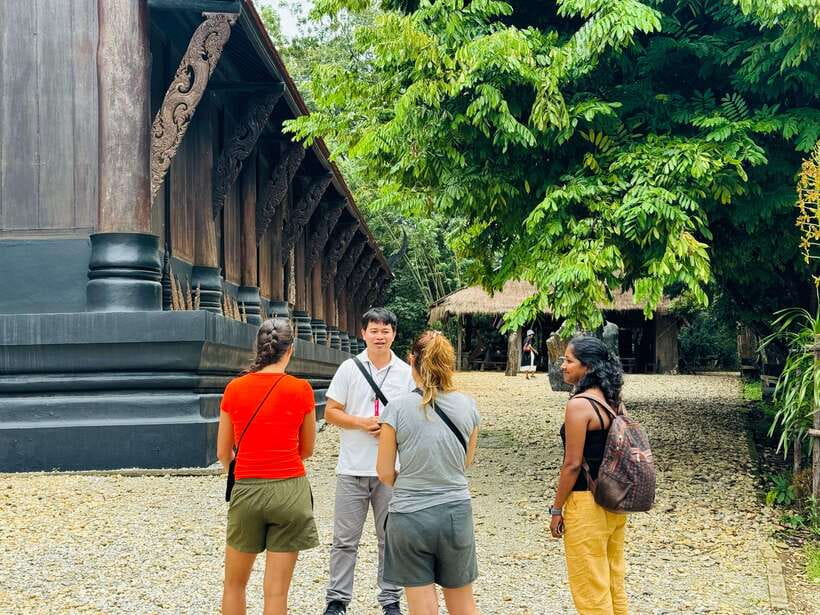
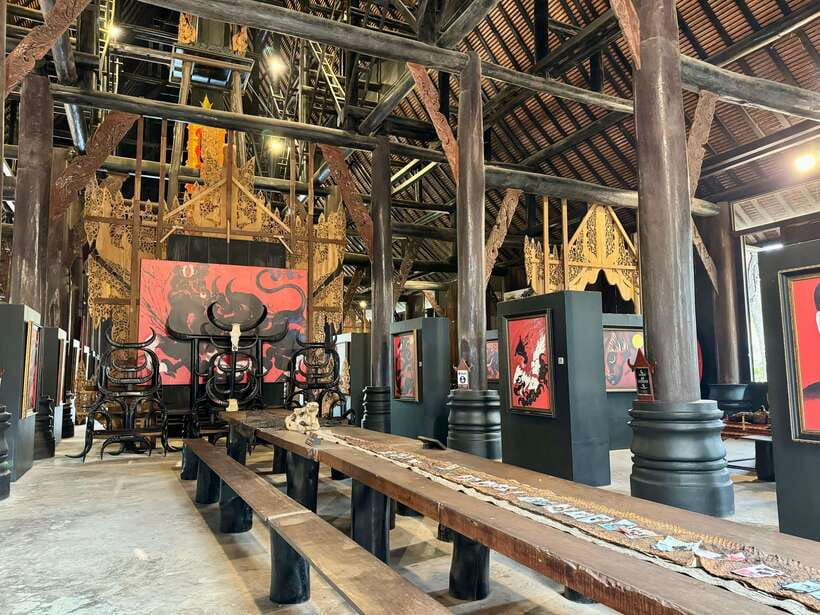
The Black House Museum, or Baan Dam, receives about 50 minutes. The name refers to a group of dark Lanna-style buildings created around antiques, woodwork, animal skins, and other unusual objects.
This is not a standard temple stop. It is a modern art setting with traditional northern Thai forms. The buildings and displays can feel dramatic, even unsettling, and the contrast with the polished White Temple is one of the strongest parts of the day.
There are also modern works, including striking three-dimensional paintings. I like this stop because it gives you a better sense of the artistic range around Chiang Rai. You are not just ticking off religious buildings.
Admission is 80 THB. Several people would prefer more time here because there is a lot to look at. If you are interested in art, ask the guide how much time remains before wandering too far from the meeting point.
The buffet lunch keeps the long route comfortable
Lunch takes about 45 minutes at a local restaurant. A Thai buffet is included, along with drinking water during the tour.
This is a practical feature, not a small extra. The route reaches far beyond the city, and stopping for a planned meal means you do not have to search for food between major sites. The buffet has also worked well for vegetarian and vegan diners, according to the tour information.
The meal is described as good local Thai food rather than a special dining event. That is the right expectation. You get a convenient chance to eat, refill your energy, and talk with the small group before the afternoon route.
Same place, a different morning at the gates:
- From Chiang Mai: Chiang Rai Temples and Golden Triangle Tour
★ 4.5 · 1,770 reviews - Chiang Rai: White, Blue, Red Temples, Long Neck Tour
★ 4.8 · 652 reviews - From Chiang Rai: Famous Temples and Golden Triangle Day Tour
★ 4.7 · 115 reviews - Chiang Rai: Half Day Tour – 3 Famous Temples & Lalita Cafe’
★ 5.0 · 79 reviews
The Karen village raises an important question
The Longneck Karen Village takes about 40 minutes. The Karen community represented here migrated from Myanmar because of political circumstances, and the stop introduces you to aspects of their culture and traditions.
This can be an important cultural visit, but it is also the part of the tour that deserves the most personal reflection. The name comes from the brass neck rings worn by some Karen women, a practice that has often been presented to tourists in a simplified way. You may find the visit informative, but you may also question how much control local people have over the way their culture is shown.
I would approach this stop respectfully. Listen to the guide, avoid treating people as photo props, and decide in advance how you feel about this kind of cultural tourism. The 300 THB admission fee is separate from the tour price.
The stop is brief, so you will receive an introduction and have some time to walk around. It is not a long community visit or a chance to understand every part of Karen life. Still, it adds a human element that the temples and museums cannot provide.
Choui Fong Tea Plantation brings open views
At Choui Fong Tea Plantation, you get about 35 minutes for tea, photographs, a guided visit, shopping, and views across the rolling tea fields.
The setting gives the day a welcome change of pace. After several buildings and museums, you are outside among rows of tea plants. You can taste fresh Oolong tea and look across the plantation. Some people find this stop less compelling than the temples, while others enjoy the scenery and the chance to buy tea or sample local treats.
One useful point from the day’s feedback is that the plantation may feel too long to some people and too short to others. A tea enthusiast could easily spend more time here. If your priority is architecture, you may prefer that extra time at the White Temple or Black House.
The visit is included, with no separate admission fee listed. Shopping is optional, so you do not need to buy anything to make the stop worthwhile.
The Golden Triangle puts the map in front of you
The route then heads to the Golden Triangle, with roughly 30 minutes for the viewpoint, a guided explanation, photographs, and a walk.
This is where Thailand, Laos, and Myanmar meet, and the view helps you understand the region’s position better than a map alone. The area is also tied to the history of opium production, so the guide’s explanation gives the scenery a serious historical frame.
Do not expect a long river excursion. A boat trip is not included. The focus is the viewpoint and the story of the border region. One possible improvement for some people would be replacing or changing part of the tea stop to allow a boat ride, but that is not part of this experience.
The Golden Triangle can feel brief because the drive from the tea plantation is longer than many earlier transfers. Still, it is an important stop for seeing how geography, trade, borders, and the opium economy shaped northern Thailand.
The Opium Museum adds context rather than glamour
The final major stop is the House of Opium, also called the Opium Museum. You have about 30 minutes for a self-guided visit after the guide introduces the area.
Admission is 50 THB and must be paid separately. The museum explains the history and effects of opium production in the Golden Triangle. This gives useful context to the earlier viewpoint and prevents the region from being treated as just a scenic photo stop.
Thirty minutes is enough for a focused visit, but it is not a full museum afternoon. The displays help you understand the economic and social forces behind the region’s past. The subject can be uncomfortable, which is exactly why this stop adds value.
At the end, you can return to your hotel or choose drop-off at the Chiang Rai Night Market. The tour usually finishes around 6:00 to 6:30 pm. The night market option works well if you still want dinner and an evening in town.
What the guide and van add to the experience
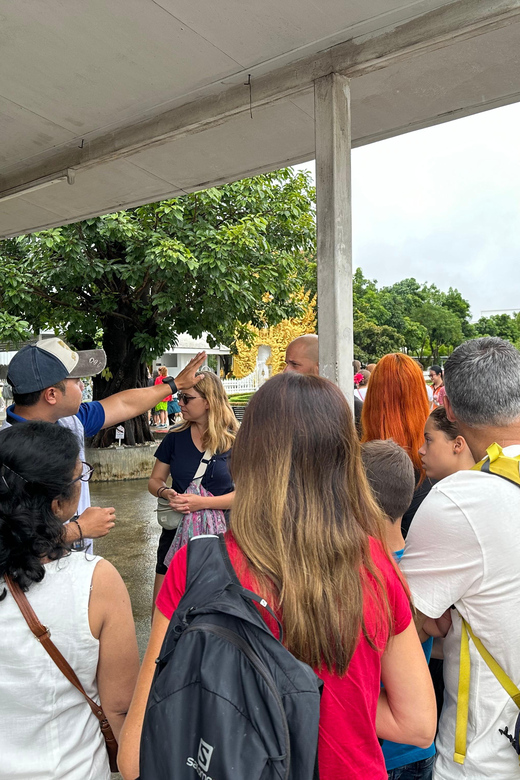
A full day like this depends heavily on the people running it. The strongest pattern in the feedback is praise for the guides’ warmth, clear explanations, humour, and willingness to take photographs.
Mai is repeatedly described as caring and well prepared. Big is praised for his energy, humour, site knowledge, and habit of checking that everyone is comfortable. Gap, Poppy, John, Bank, Ayu, and others are also named for clear English and engaging commentary. Guide quality can vary by departure, but the operation appears to use a team rather than one fixed guide.
The driver matters just as much. The route covers many kilometres, and careful driving makes a long day easier. The van is air-conditioned, comfortable, and limited to nine participants. One person even received help with an emergency pharmacy stop, which shows the kind of practical support you can hope for, though it should not be treated as a guaranteed feature.
The schedule generally allows a guided introduction followed by free time. That balance is useful. You get the story behind each place, then room to walk, take photographs, or simply look around without standing beside the guide every minute.
Is $37 good value for Chiang Rai?
At $37 per person, the tour is strong value if you want to see the main sights without arranging several separate transfers. Transport, an English-speaking guide, lunch, water, and insurance are included. The small group is especially useful because you avoid a large coach and gain easier access to the guide.
The extra fees total 630 THB:
- White Temple: 200 THB
- Black House: 80 THB
- Longneck Karen Village: 300 THB
- Opium Museum: 50 THB
You should include those charges in your real budget. The tea plantation, Blue Temple, and Golden Triangle do not list separate admission fees. Even after adding the required fees, the price remains reasonable for a 10-hour day with transport and lunch.
The tradeoff is time. You are seeing a broad slice of Chiang Rai, not studying each site at leisure. If you want a slow temple day, book separate visits. If you have one full day and want the largest possible introduction, this format makes sense.
Who should book this tour?
I would choose this tour if you are staying in Chiang Rai and want to connect the major sights in one organized day. It suits first-time visitors, couples, solo travelers, and anyone who values a guide’s explanations more than independent pacing.
It is also a good choice if you prefer not to drive unfamiliar roads or arrange transport to the Golden Triangle. The small van, included lunch, and hotel return remove much of the day’s friction.
I would think twice if you dislike long touring days, need extended time at museums, or want to avoid commercial cultural displays. Babies under one year, people over 95, those with altitude sickness, and people using electric wheelchairs are listed as unsuitable. Wear comfortable shoes, bring sunscreen, a hat, sunglasses, a camera, and cash.
Should you book the seven-site Chiang Rai tour?
Book it if you want a high-value overview with temples, art, food, tea, border history, and a museum in one day. The guide quality, careful driving, small group, and buffet lunch are the strongest reasons to go.
Skip it if your perfect day means lingering at the White Temple, spending hours at Baan Dam, or taking a boat at the Golden Triangle. For most people with limited time, though, this is an efficient and enjoyable way to understand Chiang Rai beyond its famous photographs.
FAQ
How long does the Chiang Rai tour last?
The tour lasts 10 hours. Pickup is scheduled between 8:00 and 8:30 am, and the finish is usually around 6:00 to 6:30 pm.
Where does pickup take place?
Pickup is available from two locations in Chiang Rai, both listed under Chiang Rai and Mueang Chiang Rai.
How many people are in the group?
The tour is limited to nine participants, making it a small-group experience.
What language does the guide speak?
The live guide speaks English.
Is lunch included?
Yes. A buffet lunch at a local restaurant is included. Water is also provided during the day.
Are the entrance fees included?
No. You pay separately for the White Temple, Black House Museum, Longneck Karen Village, and Opium Museum.
How much are the listed entrance fees?
The White Temple costs 200 THB, the Black House costs 80 THB, the Longneck Karen Village costs 300 THB, and the Opium Museum costs 50 THB per person.
Can I be dropped at the Chiang Rai Night Market?
Yes. At the end of the tour, you can choose hotel drop-off or drop-off at the Chiang Rai Night Market.
What should I bring?
Bring comfortable shoes, sunglasses, a hat, sunscreen, a camera, and cash. Alcohol, drugs, weapons, and sharp objects are not allowed.
Just added around Chiang Rai
- Private trip Chiang Rai Day trip, White Temple, Blue temple★ 4.8 · 13 reviews
- From Chiang Mai: Day Trip Chiang Rai White, Blue, Red Temple★ 5.0 · 4 reviews
- From Chiang Mai : 3 Temples & Golden Triangle with Lunch★ 4.5 · 17 reviews
- From Chiang Rai 3 Temples & Golden Triangle &Tea Plantation★ 4.8 · 20 reviews
- Chiang Rai: Temple Treasures & Popular Sightseeings (Buffet)★ 4.7 · 10 reviews
- ChiangRai:Full Package!Temples,Long Neck,The Golden Triangle★ 4.7 · 9 reviews
- Chiangrai : Half Day Tour 3 Famous Temples / (Private tour)★ 5.0 · 4 reviews
- Chiang Rai:Photos of traditional Thai costumes,White Temple★ 4.9 · 26 reviews
Buffet Experiences, compared.
Exploring Bai Dinh Pagoda -Trang An -Mua Cave with Buffet Lunch 1 Day From Hanoi
Read our review →
Bangkok Classic 3-Temples With Buffet Lunch Day Tour
Read our review →
Ancient City & Temples of Ayutthaya ( UNESCO ) by River Cruise with Buffet Lunch
Read our review →
Temple Treasures & Popular Sightseeings (Buffet)
Read our review →Browse the lists this tour appears in