
Review · SEOUL
Seoul: Palace, Temple and Market Guided Foodie Tour at Night
Seoul tastes better after dark. This four-hour walking tour links Changgyeonggung Palace, Jogyesa Temple, and Gwangjang Market in one well-packed evening. I like the contrast between the palace under night lighting and the noisy food stalls afterward, and I especially like that guides such as Mia, Kim, Jay, and Inha add local stories rather than simply pointing out buildings. The main tradeoff is simple: this is a moderate walking tour, not a relaxed dinner outing.
The $60 price is fair if you want several sights, entrance fees, a guide, market food, makgeolli, assorted jeon, and chopped live octopus in one booking. You should still arrive ready for four hours on foot, crowded market lanes, and an adventurous bite or two. Vegetarian and halal choices are available if you request them when booking.
Key points at a glance
- Nighttime Changgyeonggung: See a Joseon-era palace lit against the evening sky, with about an hour for guided sightseeing and photographs.
- Four Korean food tastings: Try assorted jeon, including kimchi, tofu, and meat versions, along with makgeolli and other market bites.
- Optional live octopus: The chopped octopus is included, but you decide if you want to eat it.
- Three historic neighborhoods: The route passes through Daehangno, Jongno 3-ga, Ikseon-dong, and Insadong’s cultural area.
- A strong guide makes the difference: Mia receives repeated praise for clear explanations, patience, humor, and care with the group.
- Good value for a compact evening: Entrance fees, food, and a Korean-speaking or English-speaking guide are included for $60.
Why this Seoul night tour works
Seoul can feel huge at first. Its palaces, markets, temples, shopping streets, and restaurant districts are spread across a large urban area, and it is easy to spend half a day simply figuring out where to go. This route keeps its focus on Jongno, one of the city’s best areas for connecting royal Seoul with everyday food culture.
I like the way the evening moves from quiet to lively. You begin near Hyehwa Station, close to Daehangno, then visit a palace, eat at Gwangjang Market, pass through a late-night drinking street, walk along Ikseondong Hanok Village, and finish at Jogyesa Temple. The order gives you a natural change of mood: theater district, royal grounds, food market, nightlife, traditional houses, and Buddhist calm.
The tour also has a useful cultural balance. The palace explains royal Seoul and the Joseon Dynasty. The market shows what people eat and share today. The temple gives you a quieter look at Korean Buddhism. You will not understand all of Seoul in four hours, but you will get a practical first taste of several important parts of the city.
A few more temple visits around Seoul worth a look
- Seoul Night Palace & Market Food Tour with Vehicle
★ 5.0 · 275 reviews - Seoul: Vegan Temple Food Class, Jogyesa & Changdeokgung Tour
★ 4.6 · 34 reviews - Seoul Sunrise & Sunset Hike + Temple & K-Food Adventure
★ 4.8 · 6 reviews
Meeting at Hyehwa Station and seeing Daehangno
The tour starts outside Exit 4 of Hyehwa Station. Look for a guide holding a Tripper sign. The area around Daehak-ro, usually called Daehangno, is passed during the opening section rather than treated as a full stop.
That is still a useful beginning. Daehangno is known as an arts and theater area, so the walk gives you a quick sense of a part of Seoul that feels different from the palace district. Since the route is already full, you should not expect time for a theater visit or a long neighborhood exploration.
Arrive early enough to find Exit 4 without stress. The tour ends back at the starting point, which makes the return plan easier than a route that leaves you in another part of Seoul. The meeting point is especially convenient if you are staying near a subway line serving Hyehwa.
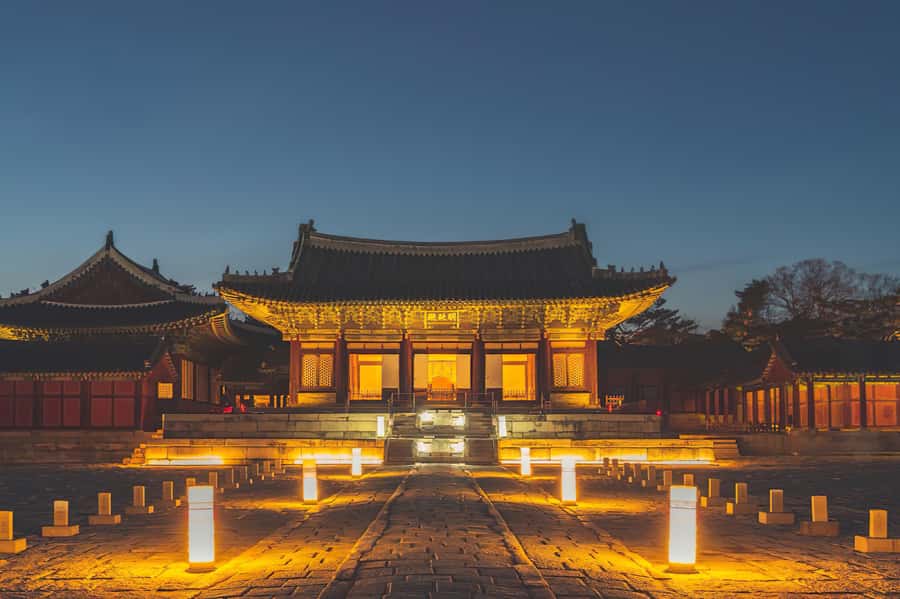
Changgyeonggung Palace under night lighting
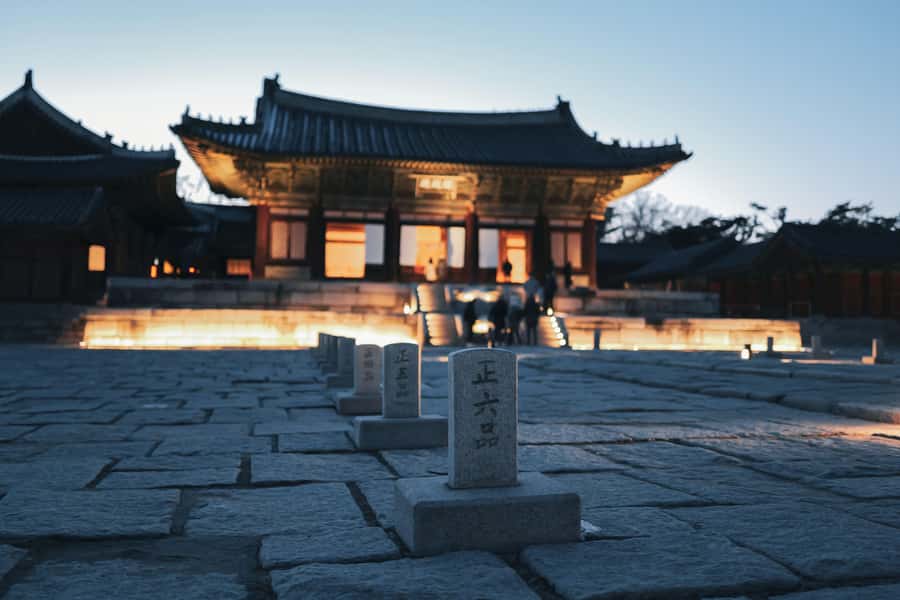
The palace is the visual centerpiece of the first half. You spend about an hour inside with a guide, including a visit and time for photographs. Changgyeonggung is a Joseon Dynasty palace, and at night its architecture takes on a different character from the bright daytime palace tours.
The lighting helps you notice rooflines, courtyards, and the shape of the traditional buildings without the same daytime glare. I like this part because the palace is not treated as a quick photo backdrop. The guide explains its role and history, giving the buildings a human context rather than leaving you to guess what each gate or hall was for.
The night setting also changes the pace. You are not simply ticking off another major Seoul sight. You are walking through a royal complex as the city darkens around it, then moving toward a market where food and conversation take over.
One practical point matters here: night access and lighting can create a more atmospheric visit, but you may see less architectural detail than in daylight. If palace interiors and fine decorative details are your main interest, a separate daytime palace visit could still be worthwhile. This tour is better for mood, storytelling, and a compact introduction.
Walking ten minutes to Gwangjang Market
After the palace, the group walks for about ten minutes to Gwangjang Market. This is a short transfer, but comfortable shoes still matter because the full route includes more walking later.
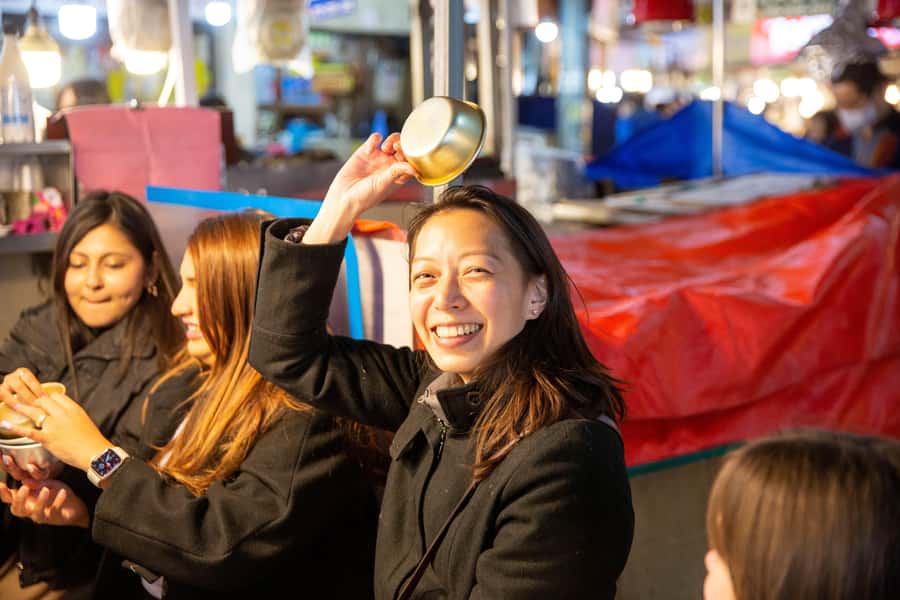
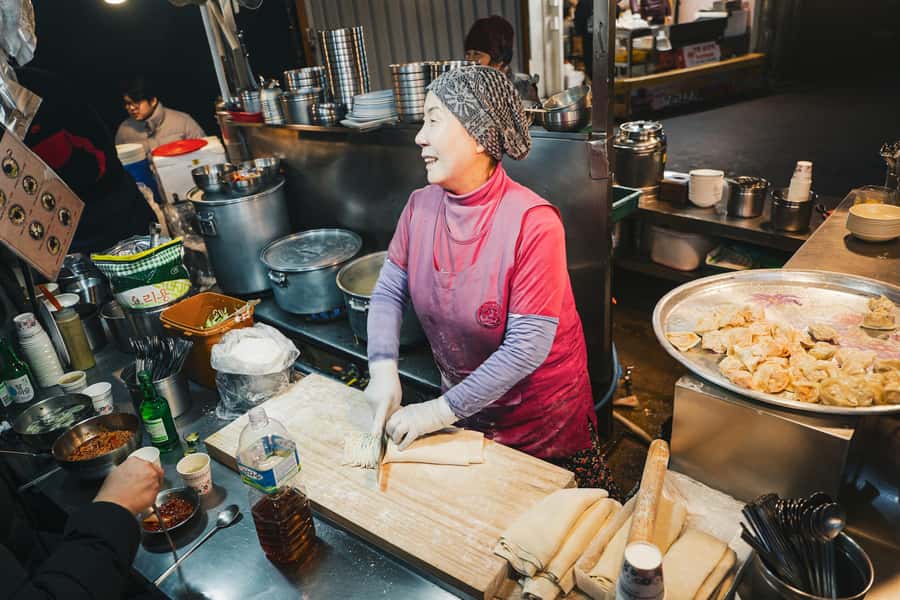
Gwangjang is where the tour becomes hands-on. Instead of receiving a list of foods and being told to try them alone, you are guided through the market’s food section. The experience includes street food, local snacks, a regional food tasting, and dinner-style portions.
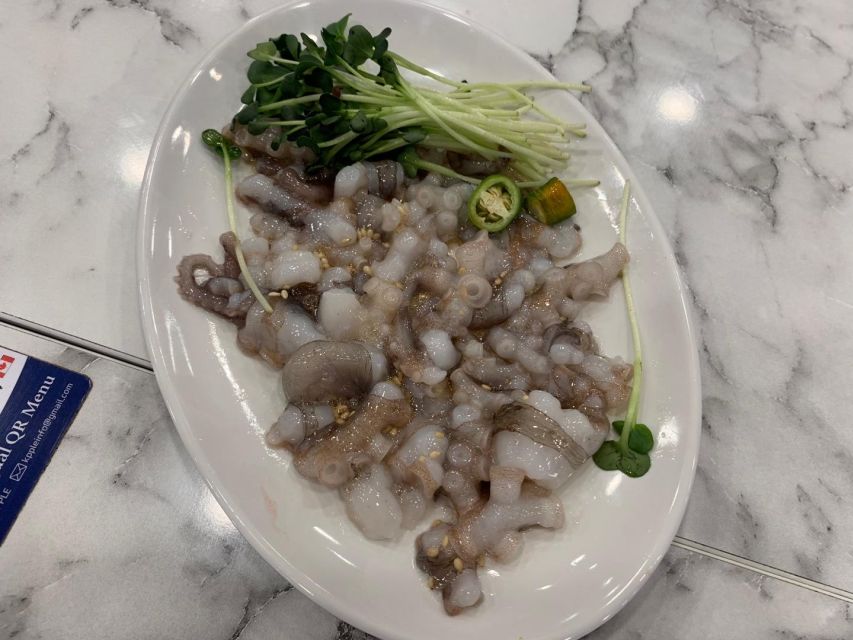
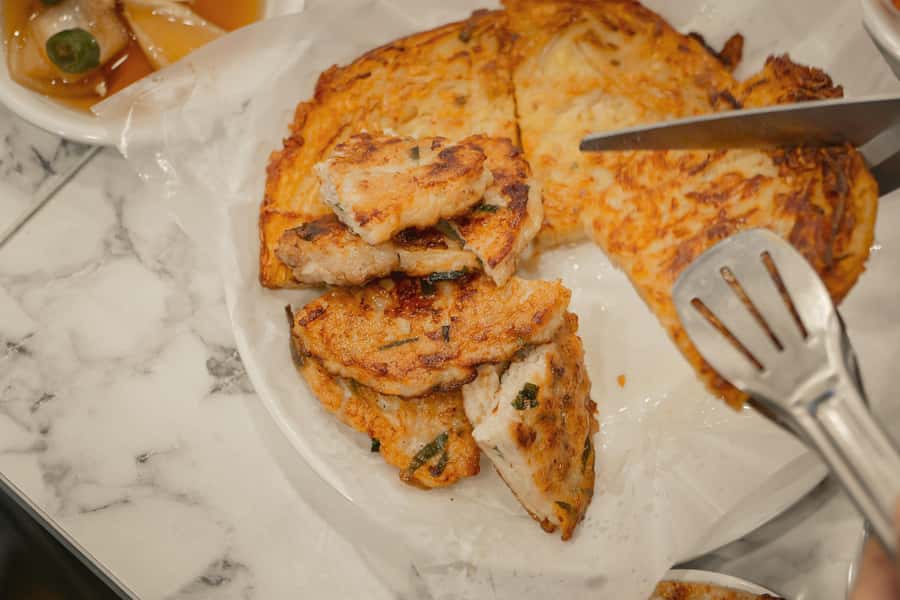
The included foods are a major part of the price. You get makgeolli, the traditional Korean rice wine, assorted jeon, and chopped live octopus. The jeon selection may include kimchi jeon, tofu jeon, and meat jeon. These savory fritters are a good introduction to familiar Korean flavors because the styles differ in texture and seasoning.
Makgeolli adds another layer to the meal. It is milky-looking rice wine with a distinct traditional character, and trying it in a market setting makes more sense than ordering it without context at a hotel bar. If you do not drink alcohol, confirm the available alternative when booking, since the listed inclusion is makgeolli.
More Market Visits in Seoul:
- Bangkok: City Highlights Temple and Market Walking Tour
★ 4.5 · 3,990 reviews - Mini Group Xian Day Tour to Terracotta Army, City Wall, Pagoda and Muslim Bazaar
★ 5.0 · 1,320 reviews - Bangkok: Railway and Floating Market Tour with Dragon Temple
★ 4.6 · 1,225 reviews - Bangkok: Night Bike Tour with Temples & Flower Market Visit
★ 4.8 · 751 reviews
The market food: what to expect
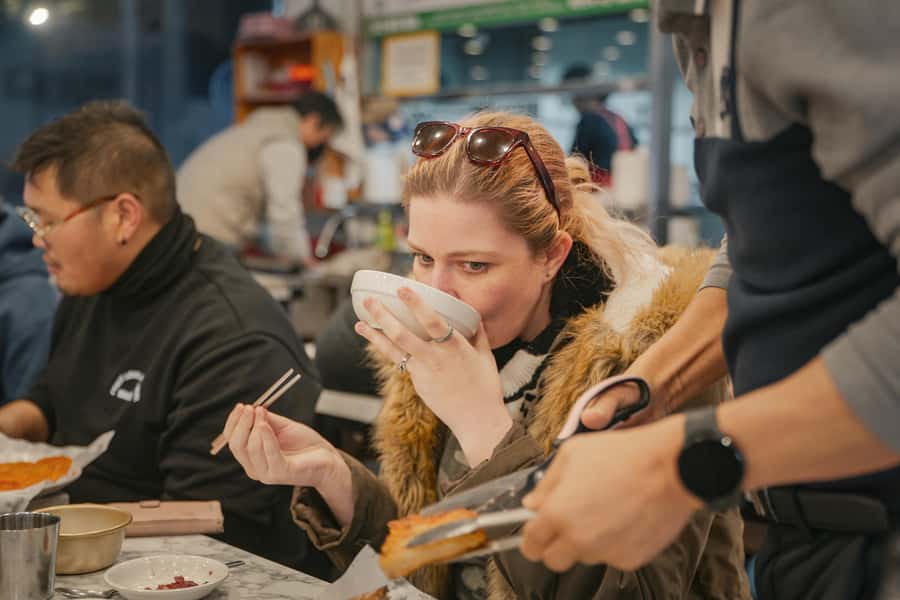
The tour does not present food as a dare-only activity. You can sample several dishes, ask questions, and choose your comfort level. That matters because the live octopus is optional. You are welcome to try it, but you are equally welcome to skip it.
Chopped live octopus is usually served in small pieces, and the texture can be the main surprise. Take the guide’s advice and chew carefully. If you are uneasy about it, focus on the jeon and other market snacks instead. The food portion still has plenty to offer without forcing one adventurous bite.
The tour also includes twisted Korean donuts, called kkwabaegi, with the added benefit of help getting through the line. That small detail can save time in a crowded food market and lets you try one of Korea’s popular sweet snacks without wasting part of the evening waiting.
A memorable detail from one outing was a stop for dumplings from the woman featured in a Netflix street-food documentary. That stop is not presented as a guaranteed separate inclusion in the formal food list, so do not book solely for it. Still, it shows the sort of local food knowledge a good guide can add when conditions allow.
You should expect an active market, not a quiet seated restaurant. Space may be tight, food is shared or sampled in stages, and the group moves according to the guide’s plan. If you want a long, private meal with your own choice of dishes, this will feel too structured. If you want to taste several Korean staples without guessing what to order, it works well.
Jongro 3-ga Pocha Street and Ikseondong
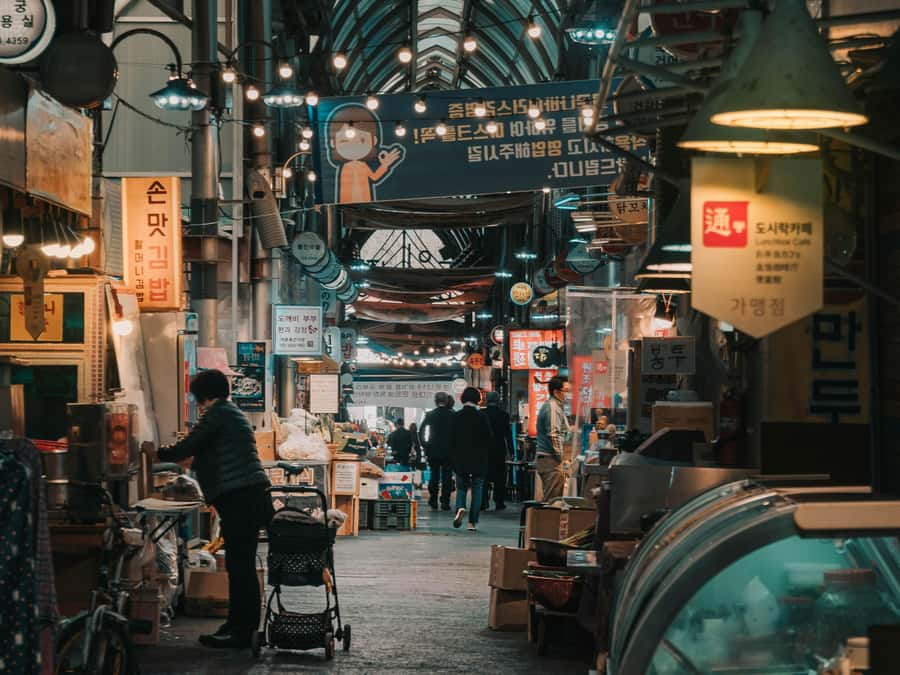
From Gwangjang Market, the route continues on foot for about fifteen minutes to Jongro 3-ga Pocha Street. The guided sightseeing stop lasts around fifteen minutes. Pocha refers to the tent-style street food and drinking culture associated with late-night socializing.
This is a brief look rather than a full bar crawl. You get a glimpse of Seoul after work, when casual food, drinks, and conversation spill into the street. It helps explain why the city feels so social at night, but you should not expect a long stop for additional drinks or a full meal here.
The walk then reaches Ikseondong Hanok Village for about fifteen minutes, including a photo stop and guided commentary. The area is known for preserved Korean hanok houses and its blend of older building forms with modern cafes, shops, and creative businesses.
The short visit gives you a useful introduction, though it will not cover every lane. If you want extensive photographs or time to browse shops, plan a separate visit during daylight or return another evening. On this tour, Ikseondong works as a compact link between the market’s energy and the temple’s quiet.
Lanterns and Buddhist calm at Jogyesa Temple
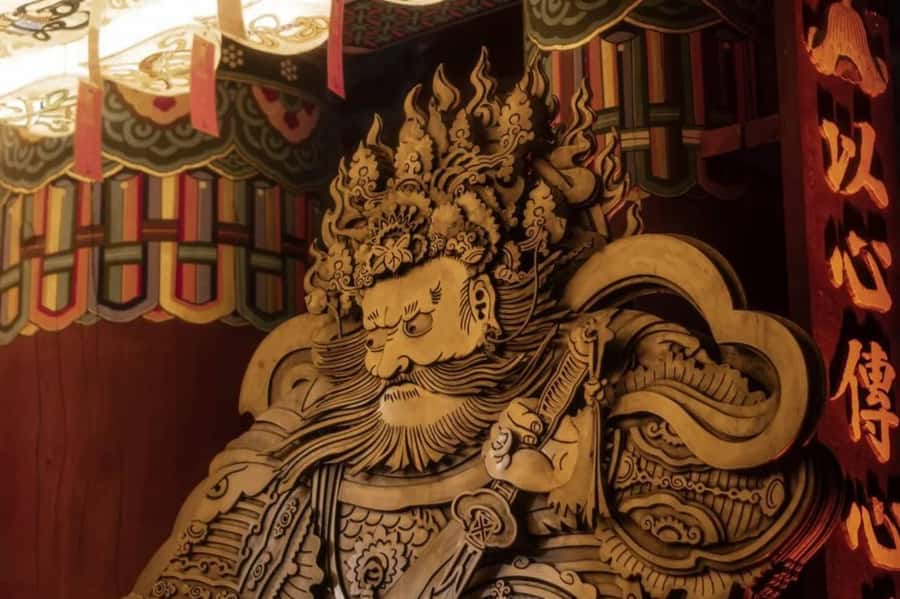
The final major stop is Jogyesa Temple, where you spend about thirty minutes. Lanterns and evening light create a calm finish after the food market and nightlife streets.
The guide explains the Buddhist setting and answers questions about the temple. One guide, Mia, was praised for taking extra time to explain Buddhism, which is exactly the sort of added context that can make a short temple visit more meaningful. You are not simply photographing lanterns. You get a clearer idea of why the site matters.
Jogyesa also gives the route a welcome change of pace. The palace is formal, the market is sensory, and Pocha Street is social. The temple asks you to slow down. I like ending here because it gives the evening some breathing room before the return journey.
As with the palace, this is a concise visit. You will see the grounds and receive an introduction, but this is not a full religious architecture seminar. If Buddhist art or temple practice is a main interest, ask questions while you are there and consider spending more time at Jogyesa on your own.
What the $60 price includes
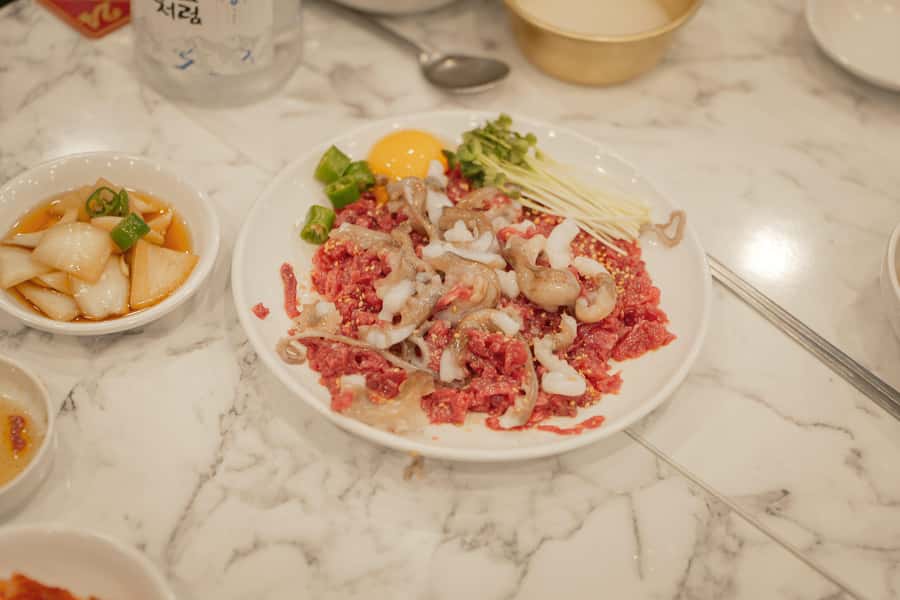
At $60 per person, the tour offers solid value for people who want sightseeing and dinner combined. Included are palace entrance fees, a history guide, Gwangjang Market street food, makgeolli, assorted jeon, and chopped live octopus.
Buying those pieces separately would require planning several stops and deciding what to order without much help. The guide is the main value. A good guide keeps the group moving, explains the background, handles the food choices, and makes unfamiliar dishes less intimidating.
The price is less attractive if you already know Jongno well or prefer choosing every dish yourself. You are paying for organization and interpretation as much as for food. I would especially consider it worthwhile early in a Seoul visit, when you want orientation and a friendly introduction to local eating customs.
The tour has a rating of 4.9 from 750 reviews, and the praise is notably consistent about the guides. Mia is frequently described as warm, patient, clear, and funny. Kim is praised for local stories and cultural explanations, while Jay and Inha are noted for making the route easy to follow and enjoyable. Thomas and Mindi also receive positive comments for kindness and useful explanations.
That consistency matters more than any single dish. Food quality can vary with timing and market conditions, but an attentive guide can make the whole evening work.
Walking, weather, and accessibility
The route lasts four hours and includes several walking sections. You should be comfortable walking between the palace, market, Pocha Street, Ikseondong, and temple. The route is described as wheelchair accessible, but the moderate amount of walking and market conditions are still worth considering when you book.
Evenings can become cold, especially during a rainy tour or in cooler seasons. One particularly cold and wet outing was still enjoyable because the guide kept the group engaged, but you should bring suitable layers and shoes with good grip. The market offers shelter in parts, but the route is not entirely indoors.
Vegetarian and halal options are available if you specify your needs during booking. Do that in advance rather than waiting until the food stop. The listed foods include meat and seafood, so clear communication is important.
The tour is offered in Korean and English. Since much of the experience depends on stories at the palace and temple, choose the language in which you can comfortably ask questions.
Who should book this evening?
I would recommend this tour to first-time Seoul visitors who want several important experiences in one evening. It suits people who enjoy walking, trying unfamiliar foods, and learning through conversation rather than moving from one photo stop to another.
It is also a good fit for solo visitors and couples who want an organized introduction to Jongno. The group setting can make the food tastings easier, since you have guidance when ordering and company while trying dishes such as live octopus or different jeon.
You may want another plan if you dislike group tours, have limited stamina, need a slow dinner, or want to spend a long time inside one palace. The route covers a lot, so each stop is concise. It gives you a broad evening picture, not an exhaustive study of any one location.
Should you book this Seoul night tour?
Book it if you want palace lights, temple lanterns, and a guided Korean food tasting in one compact route. The mix is the real strength, and the guide quality appears to be a major reason the evening works so well.
Skip it if you want an unhurried meal, a private guide, or a palace visit focused on fine detail. For most first visits, though, $60 is a reasonable price for the included food, entrance fees, cultural explanations, and four hours of structured sightseeing. Request vegetarian or halal food in advance, wear comfortable shoes, and treat the live octopus as an option rather than an obligation.
FAQ
Where does the tour start?
It starts outside Hyehwa Station Exit 4 in Hyehwa-dong, Seoul. Meet the guide holding a sign marked Tripper.
Where does the tour end?
The activity ends back at the Hyehwa Station meeting point.
How long does the tour last?
The tour lasts four hours. Starting times depend on availability when you book.
What language is the tour offered in?
The live guide can conduct the tour in Korean or English.
Is Changgyeonggung Palace included?
Yes. The tour includes palace admission and a guided visit lasting about one hour.
What food is included?
The included food consists of Gwangjang Market street food, assorted jeon fritters, and chopped live octopus. Makgeolli, Korean rice wine, is also included.
Do I have to eat the live octopus?
No. Eating the live octopus is your personal choice, and you can skip it.
Are vegetarian and halal options available?
Yes. Vegetarian and halal options are available, but you should specify your needs when booking.
Is hotel pickup included?
No. Hotel pickup and drop-off are not included. You meet the group at Hyehwa Station Exit 4.
Is the tour wheelchair accessible?
Yes, the activity is listed as wheelchair accessible. Since the route includes a moderate amount of walking, consider your comfort and physical fitness before booking.
More Shopping Tours in Seoul
- Seoul: Temple & Starfield COEX Mall Gourmet Tour in Gangnam
★ 4.7 · 22 reviews - Old Delhi Food-Spice Market-Temples Tour Soon Featured on NETFLIX
★ 5.0 · 304 reviews - Chiang Mai: Elephants, Sticky Waterfalls, Market and Temple
★ 4.9 · 227 reviews - Bangkok: Night Bike Tour with Temples & Flower Market Visit
★ 5.0 · 223 reviews
Just added around Seoul
- Seoul: War Memorial, Jogyesa Temple & Tapgol Park Tour★ 4.8 · 56 reviews
- Seoul: Vegan Temple Food Class, Jogyesa & Changdeokgung Tour★ 4.6 · 34 reviews
- Seoul Sunrise & Sunset Hike + Temple & K-Food Adventure★ 4.8 · 6 reviews
- Seoul: UNESCO Sites tour: Palace, Shrine & Bukchon Village★ 4.8 · 26 reviews
- Seoul: Temple & Starfield COEX Mall Gourmet Tour in Gangnam★ 4.7 · 22 reviews
- Seoul: Night Bongeunsa Temple Guided Tour★ 5.0 · 11 reviews
- Seoul: 4-Hour Guided Tour to Palace, Bukchon, Jogyesa Temple★ 5.0 · 3 reviews
- Gyeongbokgung Palace, Jogyesa Temple and Bukchon village★ 5.0 · 12 reviews
Seoul Temple Tours, compared.
Mt Seorak + Naksansa Temple or Nami Island Group Tour
Read our review →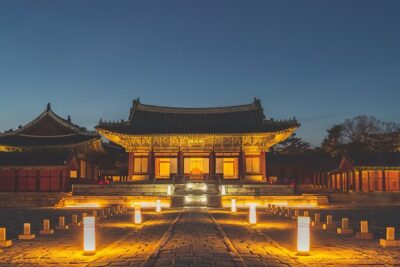
Seoul Night Palace & Market Food Tour with Vehicle
Read our review →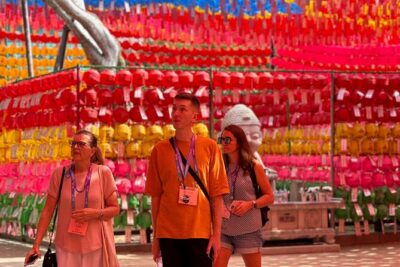
Best Things to Do – Half Day Seoul Trip (Seoul Palace & Temple)
Read our review →
Mount Seorak and Naksansa Temple One Day Tour from Seoul
Read our review →
Vegan Temple Food Class, Jogyesa & Changdeokgung Tour
Read our review →
UNESCO Sites tour: Palace, Shrine & Bukchon Village
Read our review →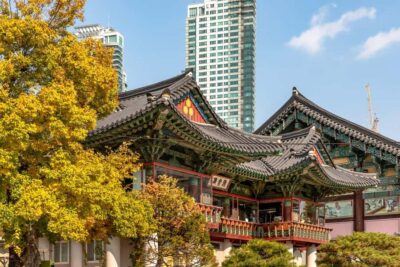
Temple & Starfield COEX Mall Gourmet Tour in Gangnam
Read our review →Browse the lists this tour appears in