
Review · SIEM REAP
2-Day Angkor Wat, Kulen Mountain, Beng Mealea and Tonle Sap
Two days, four worlds, one very early alarm. This Siem Reap trip links Angkor Wat at sunrise with jungle temples, mountain waterfalls, a Khmer-era riverbed, and life on Tonle Sap Lake. I like the wide range: you get Cambodia’s grandest monuments, quieter countryside, and an evening boat ride in one package. The cold water, chilled towels, air-conditioned van, and small group of up to 14 people are also thoughtful touches in a hot climate.
The main drawback is the pace. Day 2 covers Kulen Mountain, a picnic and swim, Beng Mealea, and Kampong Phluk, so you spend plenty of time on the road. You also need to budget separately for entrance fees, which can add a substantial amount to the advertised $69 price.
Key points to know before booking
- Sunrise begins around 4:30 to 5:00 am: Early pickup helps you reach Angkor Wat before the main heat of the day.
- Kulen Mountain includes more than waterfalls: You visit Poeng Ta Kho cliff, a reclining Buddha, and the River of Thousand Lingas.
- Beng Mealea feels rougher and wilder: Trees, roots, vines, and moss cover much of this 12th-century temple.
- Day 2 is long but varied: Expect driving, walking, swimming, a picnic, and a boat ride.
- Guides make a real difference: Guides such as Sam, Seila, Mony, Sotin, and Youk Makara have been praised for clear explanations, photography help, and patient service.
- Extra fees matter: Angkor Wat requires a $37 pass, while Kulen Mountain, Beng Mealea, and Tonle Sap have separate charges listed below.
Sunrise at Angkor Wat rewards the early alarm
The first pickup takes place between 4:30 and 5:00 am, with hotel collection in Siem Reap. You should wait in the lobby about 10 minutes before your scheduled time. That early start is not gentle, but it puts the most famous view of the trip first: Angkor Wat’s towers appearing above the reflecting water as the sky brightens.
The plan allows about an hour and a half at Angkor Wat. That gives you time to watch the sunrise, walk through the main structure, see the galleries, and take photographs before the day becomes hotter and the paths fill up. The temple is enormous, so do not expect a quick photo stop. You will walk across open ground and through stone corridors, and comfortable closed-toe shoes are worth packing.
Angkor Wat was built during the Khmer Empire and combines a huge ceremonial scale with finely carved walls. A guide can help you read the scenes rather than simply point at stones. Guides named Sam, Seila, and Youk Makara have been praised for explaining the temples, answering questions, and finding good places for photographs. Youk Makara was also noted for explaining Hindu mythology and the temple’s echo chamber.
After Angkor Wat, breakfast is served at a local family restaurant in Siem Reap. This is more useful than a rushed snack from a vehicle because you can sit down, eat properly, and recover from the early start. The meal is included on Day 1, but the exact menu is not specified.
More Angkor Wat Tours in Siem Reap:
- Angkor Wat Sunrise or Sunset Tour with Guide from Siem Reap
★ 5.0 · 12,109 reviews - Siem Reap: Angkor Wat: Small-Group Sunrise or Sunset Tour
★ 5.0 · 9,444 reviews - Siem Reap: Angkor Wat 2-Day Tour with Sunrise and Sunset
★ 4.9 · 4,429 reviews
Preah Dak adds a small taste of rural Cambodia
The stop at Preah Dak village gives the morning a change of rhythm. Instead of another major monument, you see a countryside community near the Angkor temples and taste traditional palm cake.
That small food stop matters. A trip made only of famous ruins can begin to feel like a parade of stones and dates. Preah Dak shows a living rural setting connected to the area around Angkor, and the palm cake offers a simple local taste without requiring a long detour.
Keep your expectations modest. This is a short cultural stop, not a cooking course or a full village tour. Its value is in the contrast between temple architecture and everyday rural life.
Ta Prohm shows what nature can do to a temple
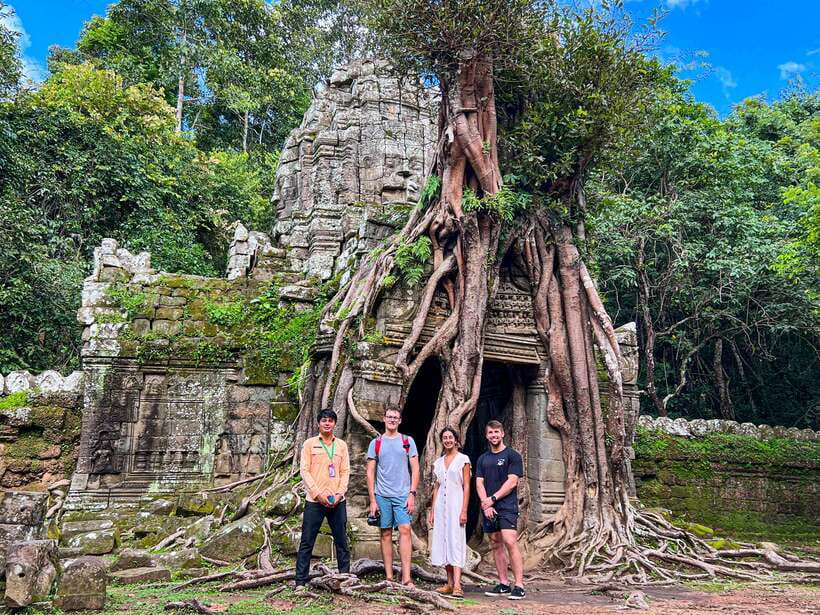
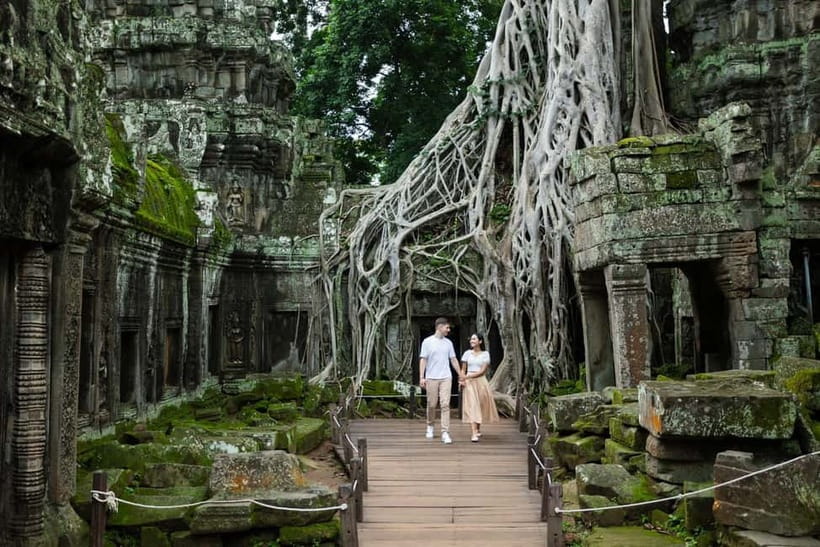
Ta Prohm is one of the most memorable stops on Day 1 because it has not been tidied into a perfectly clean archaeological park. Large tree roots push across walls and doorways, while parts of the temple remain covered by vegetation.
You will walk through galleries, courtyards, and narrow passages where stone and trees seem to share the same space. It is a strong place for photos, but it can also be crowded and uneven underfoot. Watch your footing, especially around roots and broken stones.
The appeal of Ta Prohm is visual, yet a good guide adds much more. Ask about how the temple fits into the Angkor period and why certain sections remain overgrown. The tour description presents it as a temple left largely in its original state, so the rough edges are part of the experience, not a sign that the visit is incomplete.
Angkor Thom brings the famous smiling faces
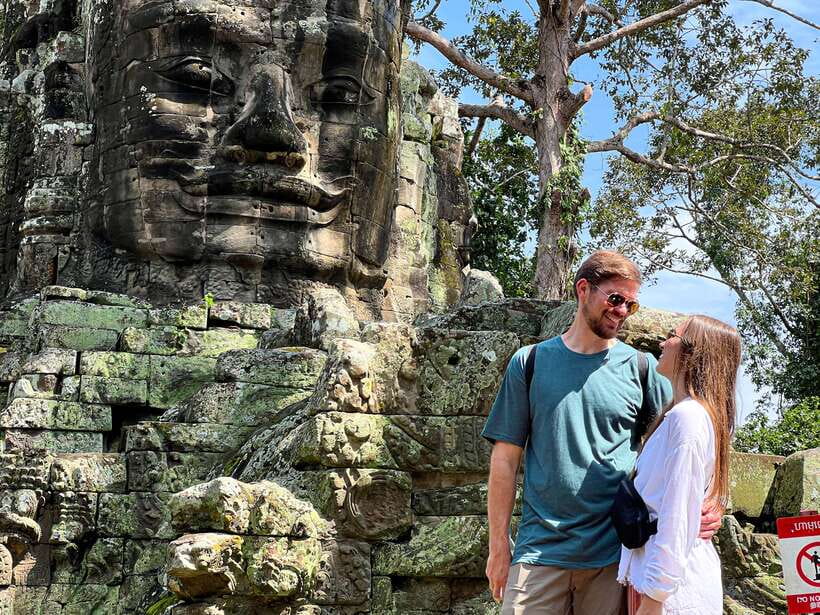
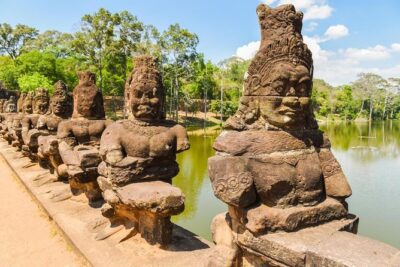
The route continues through the South Gate of Angkor Thom. The gate is lined with figures connected to the great Khmer religious and political center, and the approach gives you a sense of entering a planned city rather than visiting one isolated shrine.
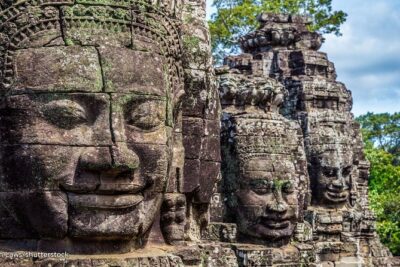
Inside, Bayon is the star. Its towers carry the famous smiling faces associated with Avalokitesvara, a Buddhist figure. The tour describes 54 towers and 216 faces, though the exact number visible can depend on how the figures are counted and how much of the temple you see. Either way, the effect is striking. Faces look out from different levels, and you keep finding another expression as you move around the stone corridors.
You also visit Baphuon, the Terrace of the Elephants, and the Terrace of the Leper King. The terraces help you understand how royal ceremonies and public viewing worked at Angkor. They are not just decorative stops. They were tied to the power of the king and the organization of the royal center.
Day 1 ends with a return to your Siem Reap hotel. It is a full morning and early afternoon, but the schedule has a sensible order: the largest temple first, breakfast and village life next, then Ta Prohm and Angkor Thom. Air conditioning in the van becomes especially welcome after the walking.
A few more temple visits around Siem Reap worth a look
- 2 Days Exclusive Temple Highlights with Sunset and Sunrise Tour
★ 5.0 · 1,157 reviews - Siem Reap: Angkor Sunrise 1- or 2-Day Guided Temples Tour
★ 4.9 · 1,132 reviews - 2-Day Angkor Wat With Small, Big Circuit and Banteay Srei Tour
★ 5.0 · 545 reviews - Siem Reap: 2-Day Temple Highlights Sunrise and Sunset Option
★ 4.9 · 445 reviews
Kulen Mountain changes stone corridors for open air
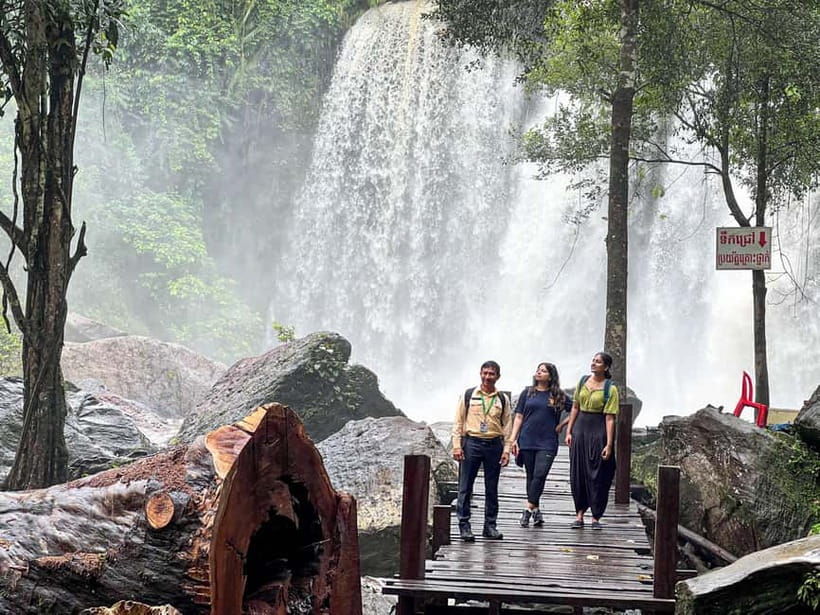
Day 2 begins with another hotel pickup and a roughly one-hour drive through rice paddies toward Phnom Kulen. You need to secure the separate Kulen Mountain ticket before entering the park. A local guide leads the mountain visits.
The change from Angkor’s stone temples to open countryside is one of the tour’s strengths. Kulen Mountain gives you forest, viewpoints, water, and religious sites rather than another set of enclosed galleries. At Poeng Ta Kho, you visit a dramatic cliff viewpoint called Amazing Cliff of Poeng Ta Kho in the tour description. The views are a good reason to bring a camera, but the exact visibility can depend on conditions.
The mountain’s main stops include waterfalls, a reclining Buddha statue, and the River of Thousand Lingas. The riverbed is associated with carvings dating from 802 AD, when the Khmer Empire began under King Jayavarman II. The lingas are Shiva symbols carved into the riverbed, and the site shows how water, religion, and kingship were linked.
The reclining Buddha gives the visit another religious layer. You will need to dress respectfully, and sleeveless shirts are not allowed on the activity. Sunscreen, a hat, sunglasses, and insect repellent are sensible additions because parts of the day take place outdoors.
A waterfall picnic gives Day 2 a needed pause
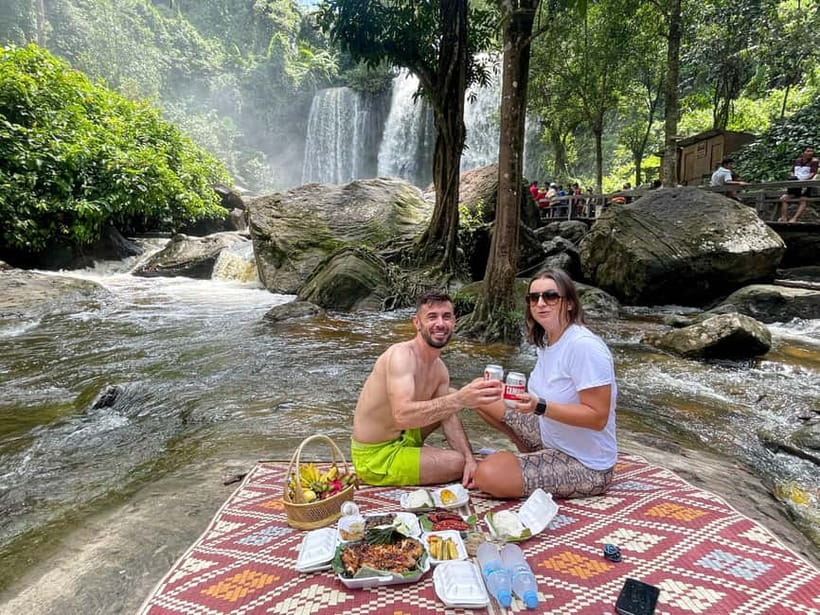
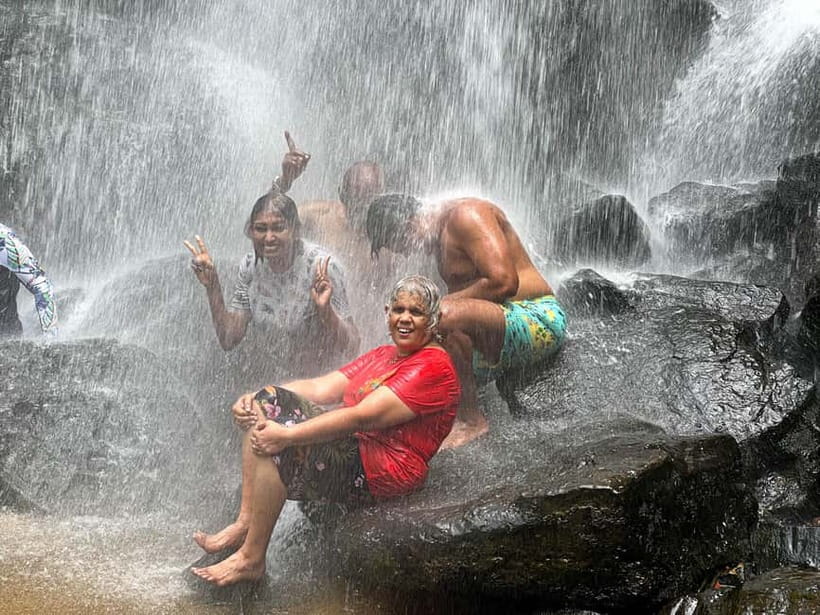
After the mountain visits, lunch is served near a waterfall. The included picnic features grilled chicken and seasonal fruit, and you have an opportunity to swim in the waterfall plunge pool.
This is one of the practical highlights of the schedule. Day 2 includes several major stops, and a meal beside the water gives you time to sit, cool down, and change from sightseeing mode to something more relaxed. The food is described as simple rather than elaborate, which suits a picnic setting.
Bring a swimsuit if you want to swim, though the official packing list does not specifically require one. A towel is provided as part of the tour, along with cool bottled water and towels for general comfort. Do not count on soft drinks being included.
Beng Mealea is the rough-edged temple stop
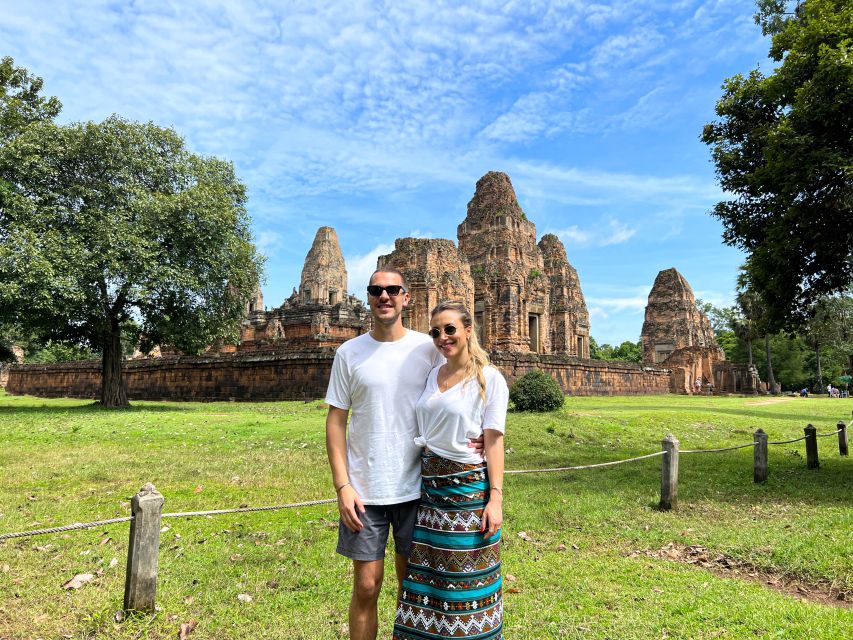
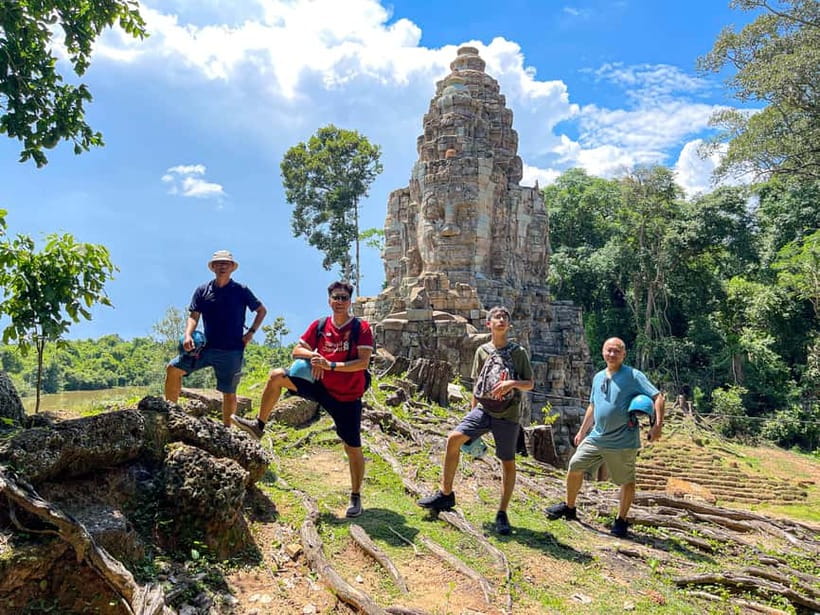
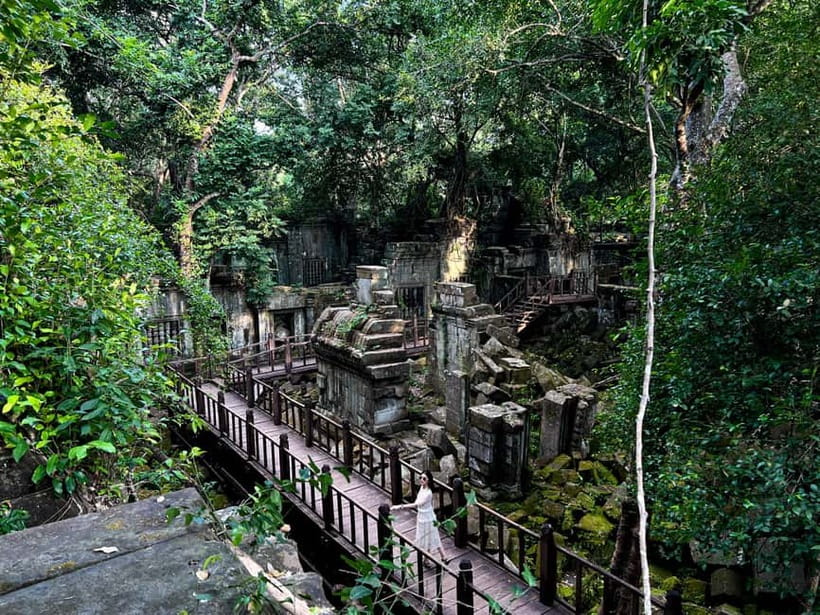
After the waterfall, the route heads into rainforest to Beng Mealea, a 12th-century temple from the Angkor period. The site is known for its collapsed sections and heavy vegetation. Trees, lianas, moss, and roots cover parts of the structure, giving it a more untamed feel than the better-prepared central temples.
I like Beng Mealea for the sense of discovery, but you should know what that means in practical terms. Broken stones and uneven paths are part of the setting. Closed-toe shoes are essential, and anyone who dislikes climbing over rough ground may find this stop tiring.
The temple is not as polished or easy to read as Angkor Wat. That is exactly why a guide matters here. You can ask how Beng Mealea fits into the wider Angkor building tradition and compare its condition with Ta Prohm. The two sites both show vegetation reclaiming stone, but Beng Mealea feels more remote and less arranged for a smooth sightseeing route.
The separate Beng Mealea fee is $10 per person, or you may use a valid Angkor pass according to the supplied details. Check the pass rules before departure so you are not surprised at the entrance.
Kampong Phluk closes the day on Tonle Sap
The final major stop is Kampong Phluk, a floating village on Tonle Sap Lake. A boat carries you past houses raised on tall stilts and through flooded mangrove forest. Families here depend on fishing, and the village gives you a look at a way of life shaped by the lake’s seasonal water levels.
The boat ride is a welcome change after two days of temples and roads. It also adds a human dimension to the tour. You are not just looking at old monuments. You are seeing homes, boats, waterways, and work connected to one of Southeast Asia’s major inland lakes.
The mangrove section may include crab-eating macaques, and the trip can be timed near sunset. One guide, Kim, was praised for arranging the floating village visit at sunset, while another itinerary description specifically mentions finishing the day with sunset over Tonle Sap. Sunset timing can depend on the schedule and conditions, so treat it as a strong possibility rather than a guarantee.
The Tonle Sap pass and boat ride cost $15 per person. That fee is separate from the tour price. You should also keep an open mind about the village visit. It is a real community, not a staged theme park, and the experience may feel busy or commercial at points because boat trips are a major part of the local economy.
What the $69 price really covers
At $69 per person, the base price is attractive for two full days with an English-speaking guide, air-conditioned transportation, hotel pickup and drop-off, Day 1 breakfast, and Day 2 picnic lunch. The vehicle is a van or minibus, and the group is limited to 14 people. That is small enough for questions without promising a private tour.
The useful extras are practical rather than flashy. You receive cool bottled water and towels, and the air conditioning has been praised repeatedly. After walking around hot temples or returning from the waterfall, those small comforts matter.
The entrance fees are not included:
- Angkor pass: $37 per person
- Kulen Mountain pass: $20 per person
- Beng Mealea: $10 per person, or a valid Angkor pass
- Tonle Sap Lake pass and boat: $15 per person
If you need all the listed admissions, your final cost may be around $141 to $151 per person, depending on whether your Angkor pass covers Beng Mealea. Confirm the current ticket arrangement before paying. The $69 figure is best understood as the guiding and transport cost, not the complete cost of sightseeing.
Guides, drivers, and the small-group setup
The strongest part of this experience is the human service. Sam has been praised for polite explanations, good English, and careful attention. Seila received high marks for taking time at each location and explaining the background while driving. Mony was described as patient and well informed, while drivers such as Theara, Tee, Mark, Moon, and Phat were praised for comfort, clean vehicles, and keeping to agreed schedules.
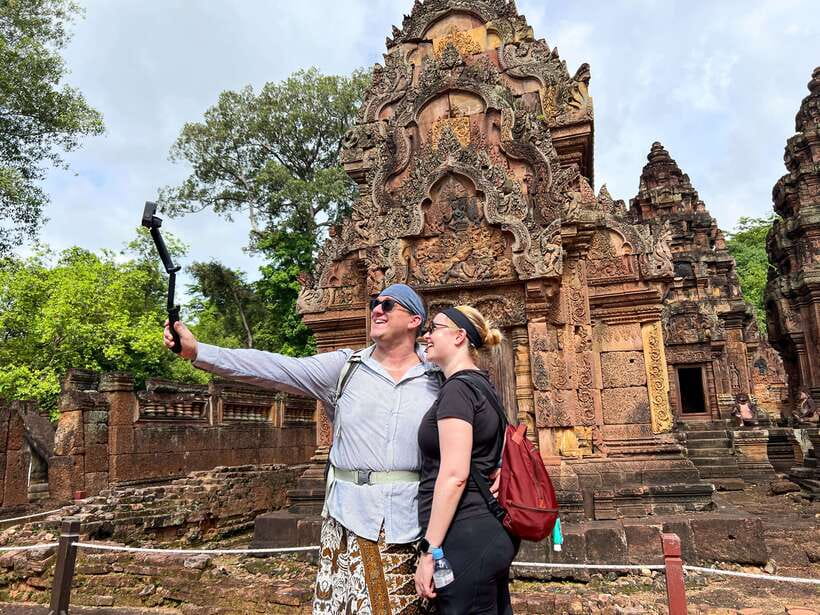
Photography help is another recurring benefit. Guides including Youk Makara and Jan were praised for knowing useful photo locations and taking strong pictures. You should still bring your own camera or phone, but it is helpful to have someone who knows where the towers, faces, gates, and roots look best.
The group limit of 14 keeps the price down while offering more personal attention than a large coach. The tradeoff is that pickup and drop-off times can vary slightly as the vehicle collects people from different hotels. Good communication with the office has been praised, so make sure your hotel details and pickup instructions are correct.
One important caution: guide quality can vary. Most of the detailed feedback is very positive, but one account described offensive religious and sexist comments from a guide on Day 1. That behavior is not acceptable. If a guide makes inappropriate remarks, tell the operator promptly. The strong praise for other guides does not erase the need for respectful conduct from every member of the team.
What to pack for two hot, active days
Bring comfortable clothes, a hat, sunscreen, sunglasses, insect repellent, and a power bank. Closed-toe shoes are especially important at Ta Prohm, Beng Mealea, and the mountain paths.
A camera is obvious, but the power bank is just as useful. You have sunrise photos, temple interiors, waterfalls, cliff views, village scenes, and sunset to capture. Bring swimwear if you plan to use the waterfall, and avoid sleeveless shirts because they are not allowed.
There is no need to bring alcohol or drugs, which are prohibited. Keep your day bag light, but make room for water and sun protection. The operator supplies cool water and towels, yet you should still carry personal essentials.
Is this the right two-day tour for you?
Book this tour if you want a broad first look at Siem Reap and prefer someone else to handle the transport. It suits you especially well if you want Angkor’s major sights but also care about rural Cambodia, mountain scenery, a waterfall swim, a less restored temple, and Tonle Sap village life.
It is less suitable if you want slow, detailed study of every temple. Day 2 is demanding, and the extra entrance fees can push the real price well above $69. You should also be comfortable with very early starts, long drives, heat, uneven ground, and a full schedule.
For the right person, the combination is excellent value. You get the classic Angkor sunrise, Bayon’s faces, Ta Prohm’s roots, Kulen’s sacred water sites, Beng Mealea’s broken jungle setting, and an evening on the lake. I would choose it for a short Siem Reap stay when time matters more than a relaxed pace.
FAQ
What is included in the $69 tour price?
The price includes an English-speaking guide, air-conditioned van or minibus transport, hotel pickup and drop-off, bottled water, towels, breakfast on Day 1, and a picnic lunch near the waterfall on Day 2.
Are entrance fees included?
No. The listed extra fees are $37 for the Angkor pass, $20 for Kulen Mountain, $10 for Beng Mealea or a valid Angkor pass, and $15 for the Tonle Sap boat and lake pass.
What time does Day 1 begin?
Hotel pickup is scheduled between 4:30 and 5:00 am for the Angkor Wat sunrise visit. You should wait in your hotel lobby 10 minutes before the scheduled pickup.
How large is the group?
The tour is a small-group experience limited to 14 participants.
Is breakfast included?
Yes. Breakfast is included on Day 1 at a local family restaurant in Siem Reap. Day 2 includes a picnic lunch near the waterfall.
Can I swim at Kulen Mountain?
Yes. The Day 2 plan includes an opportunity to swim at the waterfall plunge pool.
What should I wear?
Wear comfortable clothing and closed-toe shoes. Hats, sunscreen, sunglasses, and insect repellent are recommended. Sleeveless shirts are not allowed.
Is transportation air-conditioned?
Yes. Transportation is provided by an air-conditioned van or minibus. Bottled water and towels are also provided.
Can I cancel or pay later?
You can cancel up to 24 hours in advance for a full refund. The booking option also allows you to reserve now and pay later.
Just added around Siem Reap
- Sunrise at Angkor Wat Temple: 3-Hour Private Tour★ 4.7 · 30 reviews
- Small-Group Explore Angkor Wat Sunrise Tour with Guide★ 5.0 · 3 reviews
- Siem Reap : Private Tuk-Tuk Tour of the Magnificent Temples.★ 4.9 · 14 reviews
- Siem Reap: Ultimate Angkor Wat Offbeat Experience by Jeep★ 4.9 · 8 reviews
- SiemReap: Private Angkor Wat Tour in English or German guide★ 5.0 · 5 reviews
- Siem Reap: Private 4-Day Angkor Wat and Phnom Kulen Tour★ 5.0 · 9 reviews
- Siem Reap: Personalized Angkor Wat Sunrise/Set by TukTuk/Car★ 4.9 · 41 reviews
- Siem Reap: 1-Day Angkor Wat Tour in Portuguese★ 5.0 · 4 reviews
Angkor Wat Tours, compared.
Angkor Wat Sunrise or Sunset Tour with Guide from Siem Reap
Read our review →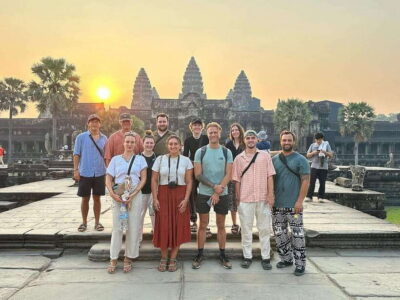
Angkor Wat: Small-Group Sunrise or Sunset Tour
Read our review →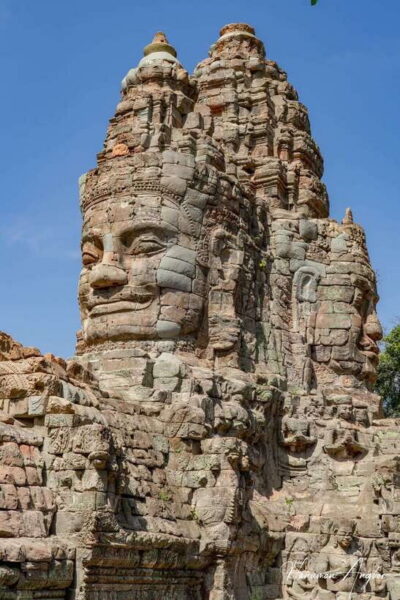
Angkor Wat 2-Day Tour with Sunrise and Sunset
Read our review →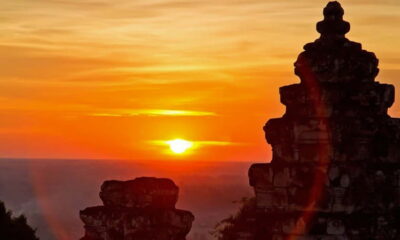
Angkor Wat Sunrise tour with Small – Group and Guide tours
Read our review →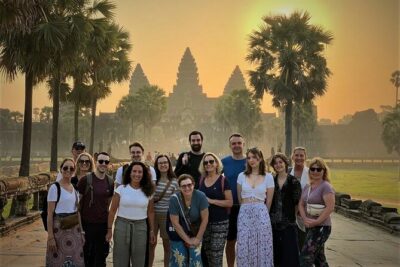
Angkor Wat Highlights and Sunrise Guided Tour from Siem Reap
Read our review →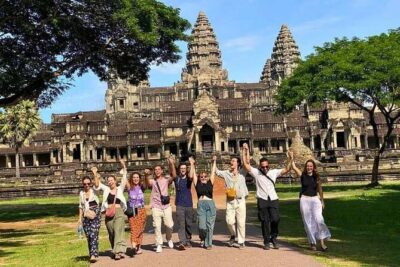
Angkor Wat Sunset Small Group Tour with Lunch Included
Read our review →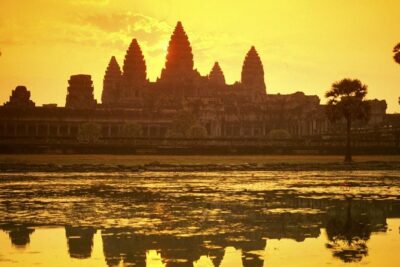
Full-Day Angkor Wat Sunrise Private Tour with Guide from Siem Reap
Read our review →Browse the lists this tour appears in